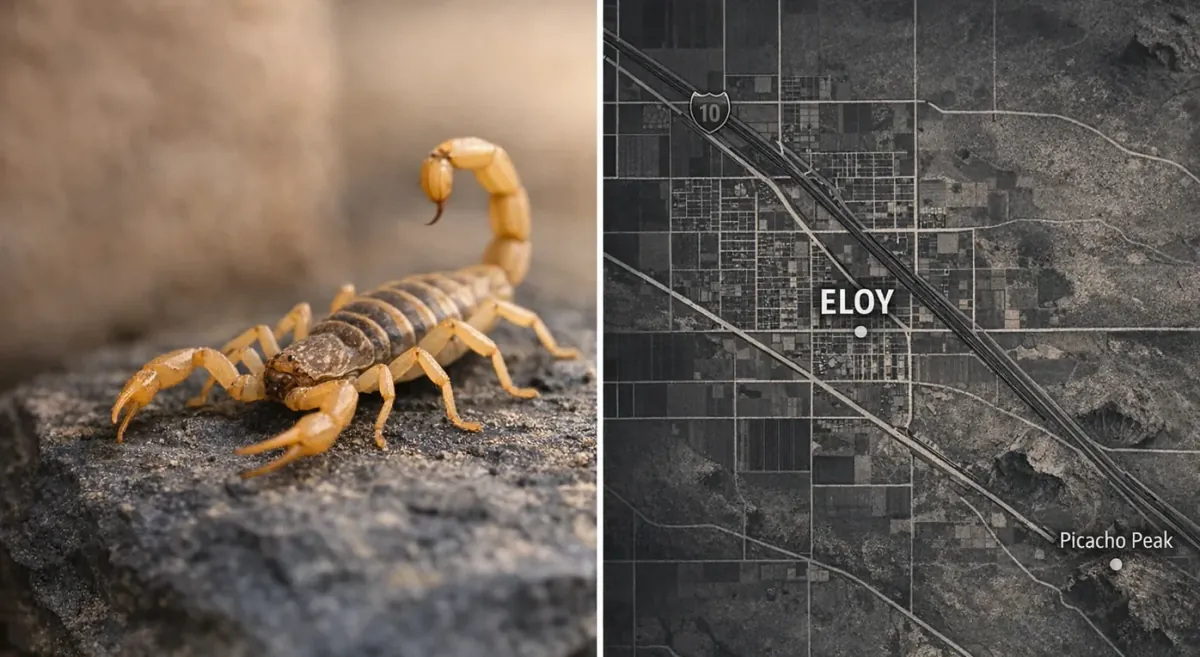
Are scorpions a problem in Eloy?
Yes — Eloy sits in the heart of scorpion country, and homeowners here can expect to run into them, especially in the warm months. Eloy is in Pinal County, part of the Sonoran Desert where the Arizona bark scorpion thrives. Statewide, Arizona accounts for 68.2% of all US scorpion exposures reported to poison control, according to Kang & Brooks 2017.
That doesn't mean panic. It means preparation. Across Pinal County, the Arizona Poison & Drug Info Center logged 71 scorpion exposures in 2025 (Pinal County 2025 Annual Report) — and those are only the cases that generated a phone call. Scorpions in Eloy, Arizona gravitate to the edges: block walls, yard debris, patio pavers, garage thresholds, and storage rooms where it's cool and dark.
Homeowners search for scorpions in Eloy because they just spotted one indoors and want to know if there are more. Scorpions come inside chasing prey — crickets, roaches, and other insects — and the moisture that draws those insects. A single sighting usually means the conditions outside your door are favorable, and that's worth taking seriously.
Does one scorpion mean there are more nearby?
Often, yes. Scorpions are nocturnal and travel along surfaces, so seeing one usually points to more activity you simply haven't spotted. Because Eloy is a high-activity area, one indoor scorpion is a good reason to check your perimeter and harborage sites rather than assume it was a lone wanderer.
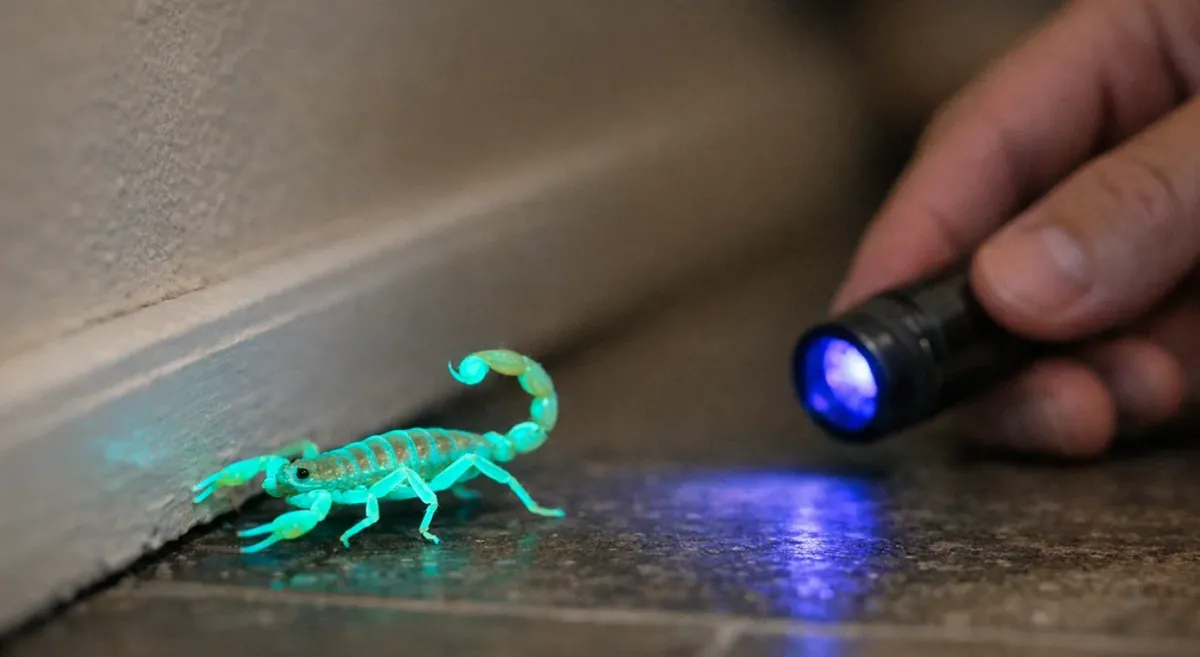
The tricky part is confirming activity when the culprits only move after dark. Scorpions glow a bright greenish color under UV light, which is why a nighttime blacklight sweep of baseboards and corners can reveal what daylight hides. If you've got kids or pets, consistent nighttime awareness matters most — that's exactly the window when scorpions roam the floors your family walks barefoot. Automated nighttime monitoring can take the guesswork out of it, since scorpions are most active when you're asleep.
Where do Eloy homeowners usually find them first?
The first find is usually in a bathroom, laundry room, closet, garage threshold, or near an exterior door. Those spots share two things scorpions want: cool, humid micro-habitats and a steady supply of insect prey. Bathrooms and laundry rooms offer moisture; garages and door thresholds offer easy entry.
In Eloy's desert setting, block-wall yards and gravel landscaping can push scorpions toward the foundation and, eventually, through the smallest gap around a door or utility line. Where the bugs go, the scorpions follow.
Which scorpion species lives in Eloy?
Public sighting databases don't show a clear "primary" species logged right around Eloy, so the smart move is to identify safely and take risk-based precautions regardless. In the Eloy and Pinal County area, the species of real medical concern is the Arizona bark scorpion (Centruroides sculpturatus), Arizona's most venomous scorpion. Other, larger desert scorpions turn up too, but they're far less dangerous.
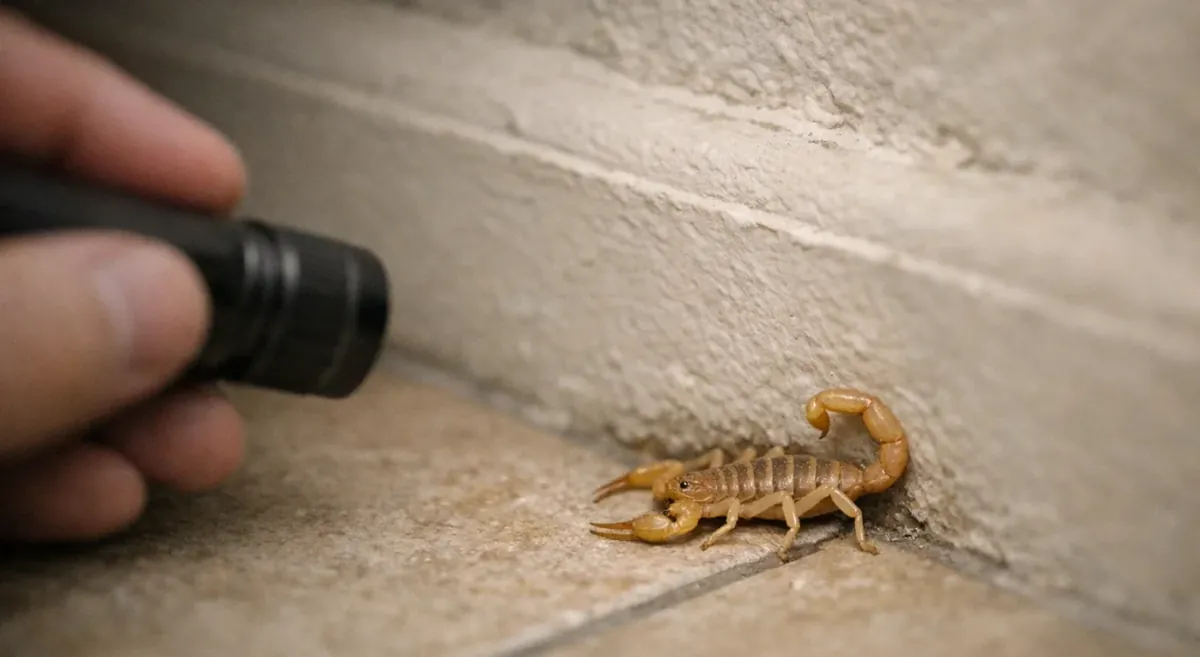
A simple homeowner approach: note the color and size, watch the behavior, and treat any scorpion you can't confidently identify as potentially medically significant until proven otherwise. Bark scorpions are small and tan; many desert scorpions are bigger and darker. When in doubt, keep your distance and capture it under a glass rather than handling it.
How can I tell if it might be an Arizona bark scorpion?
An Arizona bark scorpion is small (about 2–3 inches), light tan to yellowish, with slender pincers and a thin tail. It's the one you'll most often see up on walls or clinging to vertical surfaces. That slim, pale build separates it from the bulkier, darker desert hairy and stripe-tailed scorpions.
- Small and slender, tan to straw-colored
- Thin pincers and a thin tail (not thick and robust)
- Often found up off the ground, on walls or ceilings
These are hard to spot at night — but like all scorpions, they fluoresce vividly under a 365nm UV light, which makes a blacklight the single best tool for confirming an ID or finding one you know is in the room.
Do scorpions in Pinal County climb walls?
Yes. Arizona bark scorpions are strong climbers and can scale many textured vertical surfaces, including stucco, block walls, and wood. This is one of the traits that sets them apart from ground-bound desert species. It's also why they turn up in surprising places.
For Eloy homes, that climbing ability has practical consequences: bark scorpions can reach upper rooms and get up onto beds by way of a bed skirt or bedding touching the floor. That's why pulling the bed a few inches off the wall, losing floor-length bedding, and sealing gaps where walls meet ceilings all matter. Many Eloy homes have block-wall perimeters and stucco exteriors — textured surfaces a bark scorpion handles easily.
When are scorpions most active in Eloy?
Scorpions in Eloy are active from spring through fall, with the sharpest spike in the hot, humid stretch of late summer. August and September are the peak envenomation months in Arizona, when monsoon warmth and humidity get scorpions moving (Kang & Brooks 2017). Our month-by-month Arizona scorpion season guide breaks the whole year down.
Heat waves and monsoon rain are the big triggers. When temperatures climb and humidity rises, scorpions and their insect prey both become more active, and rain can push them toward the drier shelter of your home. Most of that movement happens after dark, which is why nighttime checks — or automated monitoring — pay off.
What time of night are scorpions most likely to roam?
Peak roaming runs from late evening through the pre-dawn hours. Nationwide data puts the busiest sting window at roughly 6 PM to midnight — about 49% of envenomations — with a second bump in the early morning (Isbister & Bawaskar 2014).
Practically, that means the highest-risk hours overlap with bedtime and the first steps out of bed in the morning. Slip on shoes only after shaking them out, don't leave towels on the floor overnight, and glance at the tile before a barefoot 2 a.m. trip to the bathroom. Scorpions are thigmotactic — they navigate by hugging surfaces — so they follow baseboards, wall edges, and furniture lines rather than crossing open floor, which is exactly where you'll find them if you look.
Does "scorpion season" mean they disappear in winter?
No — they get less active, not gone. In cooler months, Eloy scorpions retreat to sheltered harborage and slow way down, but a warm winter afternoon or a heated garage can keep stragglers moving. You'll simply see fewer of them.
Winter is actually the ideal time for off-season prevention: seal gaps, clear storage clutter, and keep an eye on garages and sheds where scorpions overwinter. Handle the exclusion work when activity is low, and you'll be ahead of the spring surge.
How dangerous is a scorpion sting in Eloy?
For most healthy adults, an Arizona bark scorpion sting is painful but manageable — think a bad wasp sting with lingering tingling. The real concern is systemic reactions, which are more likely in young children, older adults, and sensitive individuals. Arizona reports the highest rates of neuromuscular and respiratory effects of any state (Kang & Brooks 2017), so it pays to know the warning signs.
Pain at the sting site shows up in nearly 88.9% of stings, and local numbness in about 62.2% (Klotz et al. 2021). Most people never need more than soap, water, and an ice pack. Still, every Eloy family should have a plan and know when to escalate.
What does a scorpion sting feel like—and what symptoms are red flags?
A typical sting brings immediate burning pain, then tingling and numbness spreading around the site, sometimes with mild local swelling. Those symptoms are uncomfortable but not dangerous on their own.
Red flags that call for urgent evaluation include:
- Trouble breathing or swallowing
- Uncontrolled muscle twitching or jerking of the arms and legs
- Roving or darting eye movements, blurred vision
- Severe agitation or restlessness
- Drooling or excess secretions in a child
According to Dr. Meghan Spyres, medical toxicologist, Banner Poison and Drug Information Center, "They can also cause involuntary muscle movement — so jerking of the arms and legs — and even more severe, in some cases, it can cause difficulty swallowing. People's eyes can move around in weird directions." Any of those signs means get help now.
Are scorpion stings more dangerous for kids and pets in Eloy?
Yes. Children under 10 have the highest rates of systemic effects, hospitalization, and ICU admission (Kang & Brooks 2017). Smaller bodies absorb a larger relative venom dose, and little kids with small airways are more vulnerable to the drooling and swallowing problems a serious sting can cause. Our guide on why children are more at risk from scorpion stings goes deeper.
The overlap is what makes this practical: scorpions travel floors and edges at night — precisely where toddlers crawl and pets sniff around. Keeping those low, dark spaces monitored and clutter-free protects the family members least able to shrug off a sting.
What to do if you're stung in Eloy
Stay calm and act quickly. Wash the sting with soap and water, apply a cool compress, take over-the-counter pain relief if appropriate, and watch closely for the red-flag symptoms above. Most stings are managed at home, but call the Poison Help line at 1-800-222-1222 for symptom guidance — especially for a child. Our first-30-minutes first aid guide walks through it in detail.
If a severe reaction develops, effective treatment exists. Anascorp, the FDA-approved scorpion antivenom, reverses dangerous symptoms fast — in one trial, symptoms resolved within four hours in 8 of 8 children who received it, versus 1 of 7 given placebo (Boyer et al. 2009).
First 5 minutes: what to do immediately
- Wash the sting site thoroughly with soap and water.
- Remove any rings, watches, or tight items near the sting in case of swelling.
- Apply a cool compress or ice pack (wrapped in cloth) to ease pain and swelling.
- Keep the person calm and still — anxiety and movement can worsen symptoms.
- Note the time and start watching for red-flag symptoms, especially in kids.
Skip the risky home remedies — no cutting, no suction, no alcohol scrubs. Ice and monitoring are what actually help. If you just found the culprit indoors, our guide on what not to do after spotting a scorpion is worth a quick read.
When should I go to urgent care or the ER in Eloy?
Go now — or call 911 — for any severe symptom: trouble breathing or swallowing, uncontrolled muscle twitching, roving eye movements, severe agitation, or drooling in a child. These are more likely in young kids and older adults and warrant emergency evaluation, where antivenom can be given.
For anything short of that, call Poison Control first at 1-800-222-1222. As Dr. Frank LoVecchio, medical toxicologist at Banner Poison and Drug Information Center, put it: "Don't feel that you have to call 911 right away. You can call us and if we feel you have to call 911 we can patch in with 911. We have a direct line with them." For serious cases, head to the nearest emergency department — larger hospitals in nearby Casa Grande and the Phoenix and Tucson metro areas carry antivenom.
How to keep scorpions out of your Eloy home
The winning strategy is exclusion plus harborage reduction plus monitoring. Seal the gaps scorpions use to get in, remove the yard shelter that concentrates them near your foundation, and keep an eye on the rooms where they've shown up before. In Eloy's desert climate, block walls and gravel yards make that perimeter work especially important. Our roundup of the top 5 ways scorpions get into your home is a great starting point.
Focus first on the entry points that matter most: exterior door gaps, garage door weatherstripping, weep holes, and utility penetrations. Bark scorpions can slip through a gap the width of a credit card, so tight seals pay off.
Quick wins this weekend (inside the house)
Five fixes deliver the most immediate payoff:
- Install or replace door sweeps on every exterior door, including the door from the garage.
- Add weatherstripping around doors and any drafty window frames.
- Seal baseboard gaps, cracks, and openings where pipes enter walls.
- Screen or cover vents and drains where practical.
- Reduce floor clutter — piles of clothes, boxes, and shoes are prime hiding spots.
Then layer in daily habits that protect the whole family. Shake out shoes and slippers before putting them on. Pull beds a few inches off the wall and skip floor-length bedding so scorpions can't use it to get up. Shake out towels and clothing left on the floor. These small routines counter exactly how bark scorpion stings happen — often to hands and feet, when someone puts on a shoe or rolls over in bed onto a scorpion (Klotz et al. 2021).
Yard + perimeter tactics for Eloy scorpion control
Outside, take away the shelter. Move woodpiles, rock piles, and stacked pavers away from the house. Clear leaf litter and yard debris along the foundation, and thin dense groundcover that hugs the walls. Block walls and gravel offer countless daytime hiding spots, so keeping a clean, open band around the foundation makes your home less inviting.
The long game is prey reduction. Scorpions follow their food, so knocking back crickets, roaches, and other insects near the house — with lighting changes and general pest control — quietly lowers the scorpion pressure on your perimeter over time.
How to confirm you're making progress (monitoring plan)
Set a baseline, then track. After making changes, do UV checks of baseboards, corners, and entry points in the first couple of weeks; then pull back to weekly sweeps once things quiet down. Households that have seen scorpions before are the ones most likely to see them again — past sightings are the single strongest predictor of a future sting, which makes ongoing awareness worth the effort.
Nightly blacklight walks get old fast, though, and they only catch what you happen to be awake for. Automated detection systems like Scorpion Alert handle the night shift for you: the Detectors plug into wall outlets along the room perimeter where scorpions travel, shine 365nm UV light on the floor, and send a photo-verified alert to your phone within seconds of a detection — scanning only when the room is dark. Place them where risk is highest: near exterior doors and the garage, and in bedrooms and bathrooms. When an alert comes in, you grab a UV flashlight and a glass, trap the glowing scorpion, and release it outside. The hardware is included in a monthly monitoring subscription with no long-term contract — see current rates on the live pricing calculator, where the per-Detector rate drops with each one you add.
In Eloy, scorpion activity can spike on warm nights, so knowing what’s moving around your yard and entry points can make a real difference for your family and pets. If you want an extra layer of confidence after learning the warning signs, Scorpion Alert uses UV-based detection and a fast scan rate to spot scorpions in the dark and send you an alert so you can respond quickly.