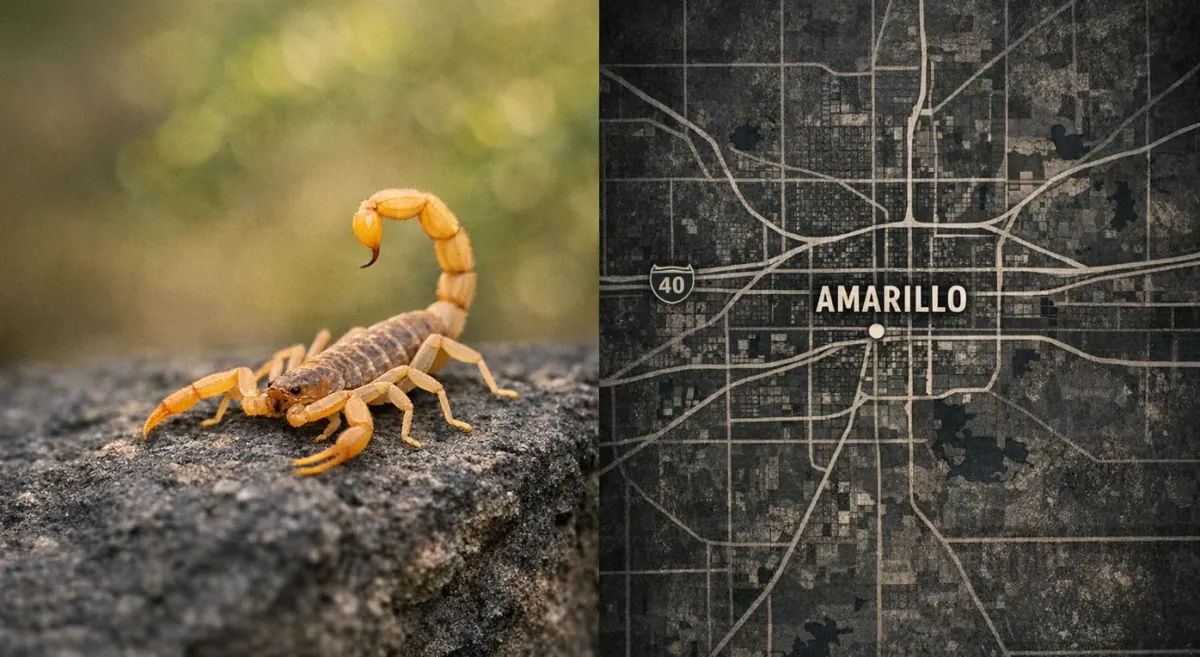
Are there scorpions in Amarillo, Texas?
Yes, scorpions live in Amarillo and across the Texas Panhandle. Most encounters happen outdoors or in transition spaces like garages, and only occasionally do scorpions wander into living areas. A single sighting is normal and usually harmless. Repeated indoor sightings in the same room point to a nearby hiding spot or entry point.
There's a real difference between a one-off visitor and a genuine problem. Finding one scorpion after a warm night is common. Finding scorpions in your bathroom three nights in a row is a pattern worth acting on.
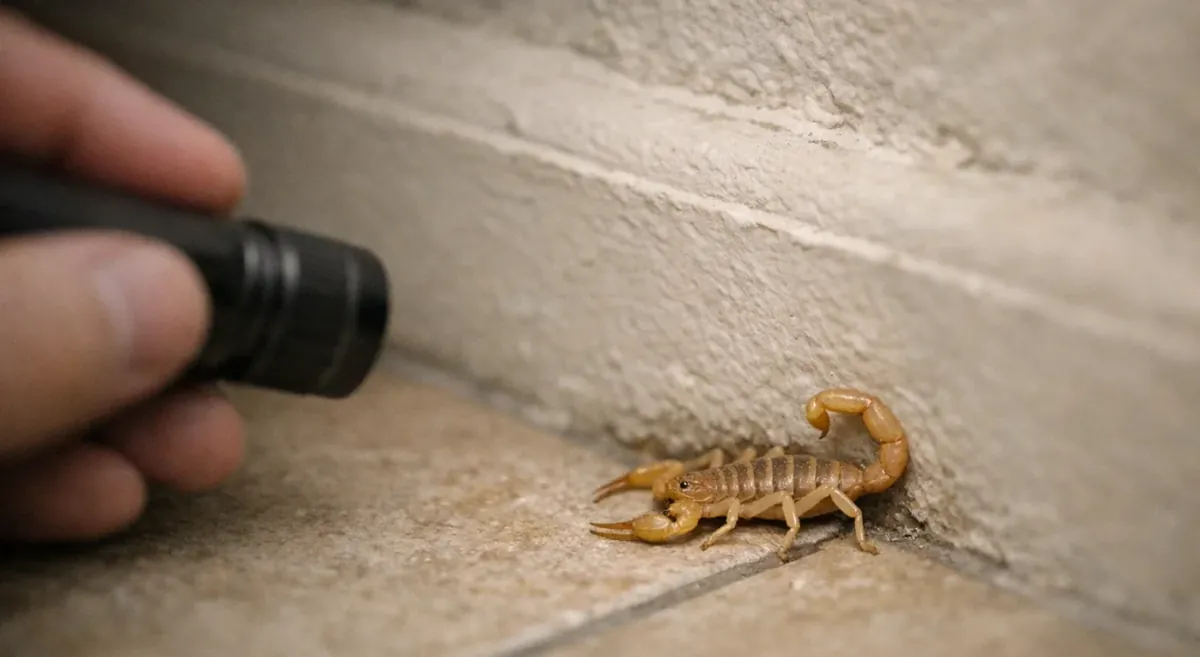
Want to take action tonight? Skip scanning open floors. Grab a flashlight and check baseboards, corners, and door thresholds instead. Scorpions travel along edges, so that's where they'll be — perimeter checks beat sweeping the middle of the room every time.
Where do scorpions usually show up (outside vs inside)?
Outdoors, look along foundation edges, block or rock borders, wood and rock piles, and the garage perimeter. Indoors, they favor cool, dark, low spots — bathrooms, laundry rooms, and closets.
Here's the "why" in plain terms: scorpions are thigmotactic, which is a fancy way of saying they hug edges as they move. They rarely stride across an open floor. They creep along walls, tuck into corners, and slip under thresholds. That behavior makes corners and doorways your highest-yield inspection spots.
Give yourself five minutes and check these hotspots:
- Baseboards behind and beside furniture
- Bathroom and laundry room corners near plumbing
- Closet floors and where shoes sit against the wall
- Garage perimeter and the door threshold into the house
- Under sinks and around water-line penetrations
If I saw one scorpion, should I expect more?
Not necessarily — but repeat sightings usually mean there's a harborage or entry point nearby, not that scorpions "travel in pairs." One scorpion is one scorpion. Several in the same area over days suggests they're getting in through a consistent gap or hiding close by.
Keep a simple log: date, time, room, and the weather that night. Patterns show up fast. Maybe every sighting follows a storm or a heat wave, or they always show up in the same corner after dark. That log tells you where to focus your sealing and cleanup.
Before you react, read up on the most common mistakes people make after spotting a scorpion — a little knowledge prevents panic and a lot of wasted effort.
Which scorpion species is most common around Amarillo homes?
Amarillo homeowners most often meet the striped bark scorpion (Centruroides vittatus). It's the most widely distributed scorpion in North America and dominant across Texas. That matters because its sting is painful but rarely dangerous — very different from the Arizona bark scorpion further west.
Thousands of people are stung by C. vittatus each year indoors and around structures, according to Yamashita & Rhoads 2017. Knowing the species helps you set your risk expectations without becoming a bug expert.
How do I identify a Striped Bark Scorpion?
A striped bark scorpion is slim and tan to yellowish, with two dark lengthwise stripes running down its back. Adults typically reach about 2 to 2.5 inches long, with slender pincers and a thin tail. Those two dark stripes are the giveaway.
Don't overthink the ID. If you're not sure exactly what you're looking at, treat it like a scorpion and follow safe handling rules either way. A look-alike doesn't change how carefully you should act.
To confirm safely, a top-down photo shows the stripes best, and placing a coin or ruler nearby gives a size reference. Never get your hand close enough to risk a defensive sting just for a better picture.
Can Amarillo scorpions climb walls or get into beds?
Yes. Striped bark scorpions can climb textured surfaces like stucco, brick, and wood, and they can turn up in bathrooms and bedrooms when heat or dryness drives them indoors. They can reach a bed by climbing a bed skirt or blanket that touches the floor.
Picture rolling over at 3 a.m. and brushing something that shouldn't be there. That's exactly the scenario a few simple bedroom rules can help prevent. Turn fear into prevention:
- Shake out shoes and slippers before putting them on
- Keep bed skirts, blankets, and sheets from touching the floor
- Move the bed a few inches off the wall
- Declutter under the bed and off the closet floor
Sealing gaps matters too. Learn the top ways scorpions get into your home so you can close those doors before they find them.
When do scorpions come out in Texas (and Amarillo) the most?
Scorpions in Amarillo are most active from late spring through early fall, and almost always after dark. Warm nights bring them out to hunt, and weather swings — heat waves, storms, and the first cold snap — can push them toward the shelter of your home.
Nights are the key. Scorpions hunt insects and seek water after sunset, traveling along baseboards and thresholds while you sleep. Certain nights raise your odds:
- Warm, still evenings
- Nights during or right after rain
- Heat waves that drive them toward cooler indoor spots
- The first cold snap, when they look for shelter
What months are peak scorpion season in Amarillo?
Watch closely from May through September, with peak activity June through August. Exact timing shifts year to year based on temperature and rainfall, so treat these months as your high-alert window rather than a hard rule.
During peak months, tighten your routine: stay on top of door sweeps, keep the yard clean, and pay closer attention to those perimeter hotspots. One simple metric helps — track your sightings per week. That's your personal baseline, and a rising number tells you it's time to act.
Why are scorpions more active at night?
Scorpions are nocturnal hunters. They come out after dark to catch insects and find water, and their edge-hugging travel puts them right along baseboards and thresholds where you least expect them. Nationwide poison-center data shows stings peak in the evening hours, roughly 6 p.m. to midnight.
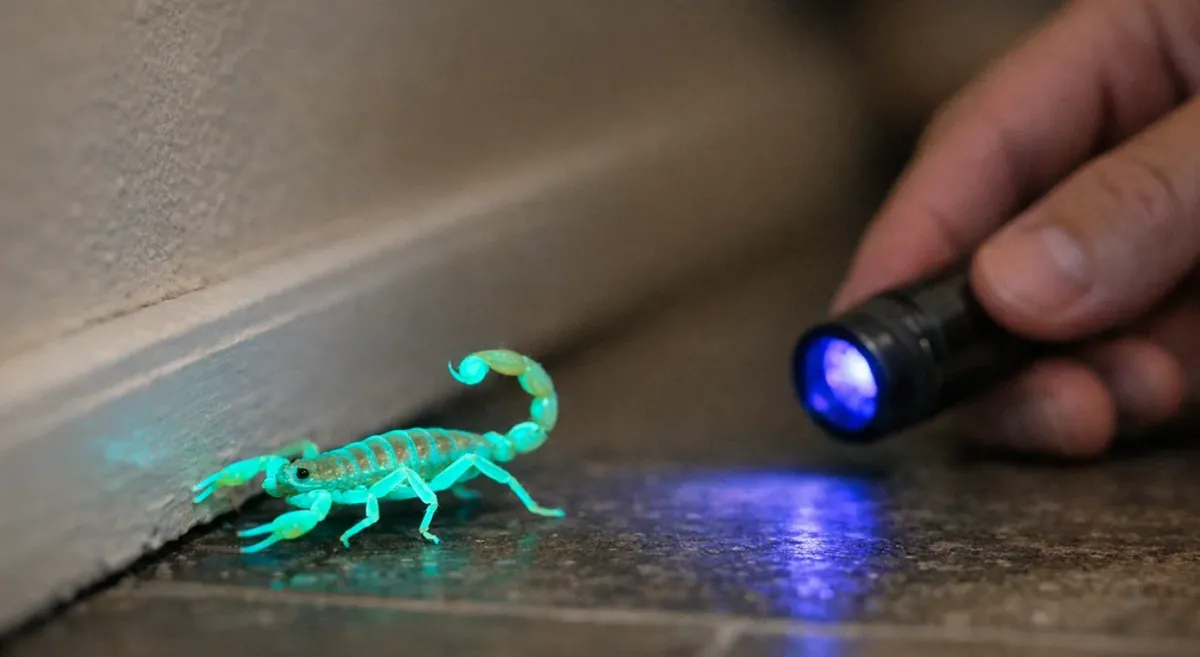
Keep a safe night routine. Wear shoes, turn lights on before you walk, and don't make a barefoot garage trip in the dark. A UV flashlight is a handy tool for confirming a sighting — scorpions glow greenish under 365nm UV light — but a flashlight alone isn't a full plan.
Is a scorpion sting in Texas dangerous—and what should I do first?
Most Texas scorpion stings are painful but not life-threatening. Striped bark scorpion stings cause sharp local pain, usually lasting 15 to 20 minutes, and rarely produce serious systemic reactions. Extra caution is warranted for young children, older adults, people with allergies, and pets.
The first 30 minutes are simple: move to a safe spot, wash the area with soap and water, apply a cool compress, remove tight rings or jewelry near the sting, and limit activity. Watch for red-flag symptoms. Keep the Poison Help line handy — 1-800-222-1222 — and have the person's age and weight, the time of the sting, current symptoms, and a photo ready if you can take one safely.
What does a Texas scorpion sting feel like?
Expect immediate sharp pain, then burning and tingling, followed by localized numbness and mild swelling. In an Arizona cohort, pain at the sting site was reported in 88.9% of stings and local numbness in 62.2%, per Klotz et al. 2021.
Most people improve within a few hours, but keep watching for symptoms that spread or worsen. With pets, a sting on the paw or snout can look different — monitor breathing and behavior closely, and call your vet if anything seems off.
When should I call Poison Control or go to urgent care?
Call right away if you notice trouble breathing, widespread hives, severe weakness, uncontrolled pain, or any concerning symptoms in a young child. Kids and pets need faster escalation than healthy adults.
Reach Poison Control at 1-800-222-1222 for guidance tailored to the situation. Children face higher risk because of their small size — here's why children are more at risk from scorpion stings.
Don't do this: no cutting the wound, no suction devices, no risky home remedies. They don't help and can make things worse.
What should I do in the first 30 minutes after a sting?
Keep it simple and act in order:
- Move away from the scorpion to a safe, well-lit spot.
- Wash the sting with soap and water.
- Apply a cool compress or ice pack to ease pain and swelling.
- Remove any tight jewelry near the sting before swelling sets in.
- Sit down, limit activity, and watch for worsening symptoms.
Then prevent a second sting tonight: keep shoes on, shake out bedding and shoes before use, and do a quick perimeter check of the room. For the complete walkthrough, see the bark scorpion sting first-aid guide.
What's the best way to control scorpions in Amarillo: DIY, exterminator, or monitoring?
The best results come from a three-part framework: seal entry points, reduce habitat and prey, then monitor to confirm it's working. DIY handles most homes. An exterminator makes sense for repeat indoor sightings or high-risk households. Monitoring verifies your progress — especially at night, when scorpions actually move.
| Approach | Best for | What it does |
|---|
| DIY sealing + cleanup | Most homes | Closes gaps and removes the reasons scorpions patrol |
| Exterminator | Repeat sightings, high-risk households | Professional inspection, exclusion, prey control |
| Continuous monitoring | Confirming results, peace of mind | Photo-verified alerts when a scorpion appears at night |
What are the highest-ROI DIY steps to keep scorpions out?
Start with exclusion, because a sealed home gives scorpions fewer places to slip in. Install tight door sweeps, replace worn weatherstripping, and caulk utility penetrations and garage gaps. Then reduce the clutter and harborage that gives them cover.
Next, fix the invitation. Scorpions follow food and water, so cutting down on insects and moisture makes your home far less appealing. Learn what attracts scorpions in your home and remove those draws.
Keep it local and practical: store garage items up off the floor, move wood and rock piles well away from the foundation, and adjust exterior lighting so bug-attracting glare sits away from doors.
When should I call a scorpion exterminator in Amarillo?
Call a pro when scorpions keep showing up in bedrooms or children's rooms, when someone's been stung more than once, or when there's clear evidence of a consistent entry point you can't find. High-risk households — homes with small kids, older adults, or anyone with allergies — should escalate sooner.
Ask the right questions before you hire. Where will they focus the inspection? What exclusion work do they recommend? What's the follow-up schedule? Be wary of anyone who promises sprays alone will solve it — exclusion and habitat change do the heavy lifting.
Expect a gradual result: fewer indoor encounters over several weeks as sealing and cleanup take hold, not an overnight fix.
How can I monitor scorpion activity without nightly blacklight walks?
Continuous monitoring tells you whether your sealing and cleanup are actually working — without you patrolling the house with a flashlight every night. Scorpions are nocturnal and hard to catch, so most of their activity happens while you're asleep and you never see it.
Scorpion Alert handles that for you. Plug-in Detectors sit on your room perimeters — right where scorpions travel — and shine 365nm UV light onto the floor. When a scorpion's greenish glow appears, you get a photo-verified push or SMS alert within seconds. The Detectors only scan when the room is dark, exactly when scorpions are on the move, and the app keeps a history of every detection with date, time, and location.
Place Detectors where risk is highest: at entry points like front, back, garage, and pet doors; in high-risk rooms like bedrooms and nurseries; and near water sources in bathrooms and laundry rooms. Instead of guessing whether your efforts worked, you'll know. For anyone dealing with scorpions in Amarillo, Texas — season, stings, and control all considered — automated detection fills the gap that DIY and pest control alone can't.
Scorpion Alert rents Scorpion Detectors as part of a simple monthly monitoring subscription — the hardware is included. Pricing starts at $3.50 per Detector per month for a single Detector and slides down to $2.00 per Detector per month at ten or more, with a one-time shipping fee at checkout. There's no long-term contract; cancel any time by emailing support@scorpionalert.com and returning the Detectors. See how it works at scorpionalert.com.
In Amarillo, scorpion activity tends to peak after dark, so focusing checks along walls, baseboards, and other edges can help you spot them before a sting happens—especially in homes with kids or pets. If you want a practical way to stay ahead of nighttime movement and tighten up your control plan, Scorpion Alert can help you monitor activity and act early.