Knowledge base

Frequently asked questions

Real questions from people just like you — about scorpion biology, prevention strategies, sting first aid, regional differences, and how Scorpion Alert's monitoring service works.

Prevention

How do I keep scorpions out?

Sealing, exclusion, prey control — the practical layer-by-layer approach.

After I kill one scorpion, how do I keep more from coming inside?

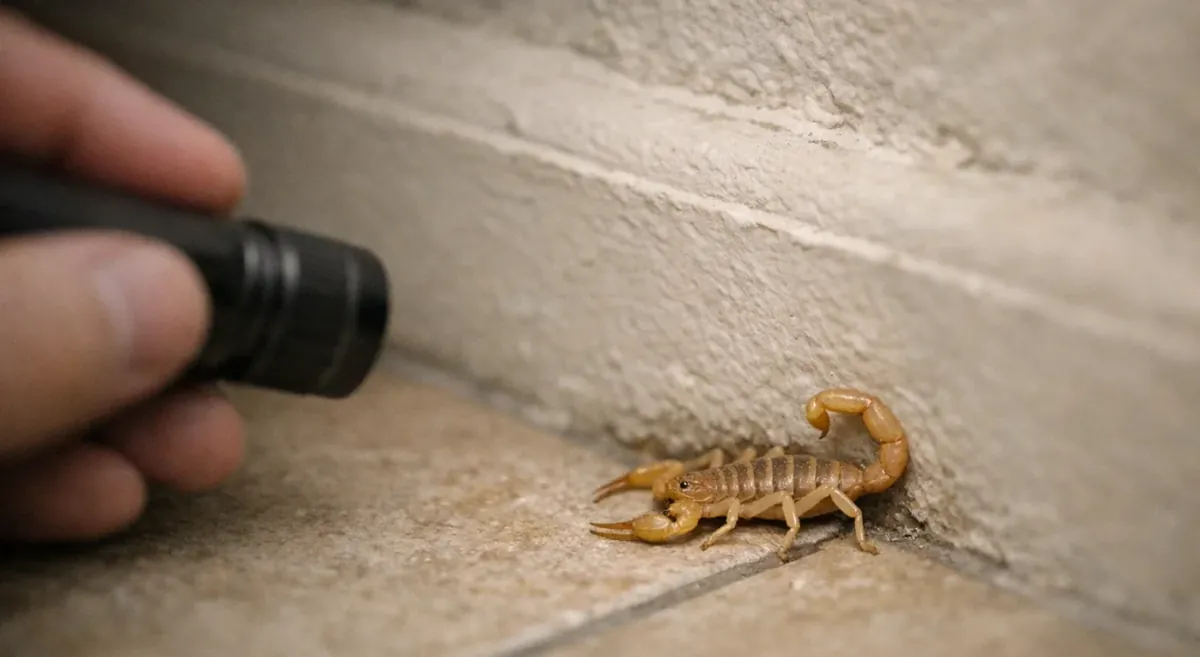
Lasting relief usually comes from prevention and early detection, not just an “instant” fix—so the article focuses on sealing likely entry points, improving door/threshold gaps, reducing clutter and moisture, and cutting down on prey insects. It also explains how perimeter monitoring (scorpions hug edges and glow under UV) helps you spot patterns and respond faster, including examples of detector placement near common entry routes. Use this checklist to keep scorpions out of your house.
Are bark scorpions really in Las Vegas, and how would they get here?

Locals report bark-scorpion-like activity, and one common explanation is accidental transport via nursery stock and landscaping materials (like palm trees) brought in from other areas. They also feel “worse” because they’re small, excellent hiders, and mostly active at night—so daytime checks often miss them. The article explains what makes them different, why homeowners care about native vs. introduced species, and why UV checks work in bark scorpions Las Vegas facts.

Are glue traps for scorpions worth it, and how should I monitor at night?

Glue traps can catch scorpions, but they’re often messy, collect dust, can snag non-target animals, and don’t tell you in real time when or where scorpions are moving. Night monitoring with a UV flashlight and perimeter-focused checks along baseboards and thresholds helps you spot patterns and respond faster—especially if you’ve seen even one scorpion. The best way to monitor scorpions indoors section compares options and explains how targeted detection complements sealing and outdoor cleanup.

Are Reddit scorpion product reviews actually more trustworthy than Amazon reviews?

Many Southwest homeowners trust Reddit more because posters usually share real context—scorpion activity level, home type, sealing attempts, and what worked (or failed) over time, instead of one-line ratings. This section explains a “real desert homeowner” method for filtering advice (repeat mentions across threads, upvotes, and specific outcomes) and sets expectations that no single product is magic. It also previews the core strategy: kill + prevent + monitor, as summarized in Reddit vs Amazon scorpion reviews.

Are scorpion stings more dangerous for children than adults?

Yes—infants and toddlers can have stronger, faster symptoms because the same venom dose affects smaller bodies more and their nervous systems are more sensitive. Most stings are treatable, but the threshold for getting medical guidance is lower for kids, especially if anything seems neurological or breathing-related. This scorpion sting risk for kids guide explains why age and size matter and how to respond quickly and calmly.

Are scorpion stings more dangerous if you’re pregnant?

Most U.S. scorpion stings aren’t life-threatening, but pregnancy can make the situation feel more intense and may raise the need for medical evaluation. The bigger concerns are indirect effects like stress, dehydration, and how symptoms (nausea, sweating, fast heart rate) can overlap with pregnancy issues. This overview of scorpion sting risk in pregnancy also explains why the scorpion species matters and why monitoring may be recommended.

Are scorpion stings worse than bee stings for most people?

For many people, scorpion stings can feel worse because the pain may come with tingling or “electric” nerve sensations, while bee stings are often more localized unless an allergy is involved. Where you live and which species is involved matters—bark scorpions are the main U.S. exception that can raise the stakes. This scorpion vs bee sting comparison also explains the difference between “hurts more” and “more dangerous,” plus when to seek urgent care.

Are scorpions common across Nevada, or is it mostly a Las Vegas problem?

Scorpion activity in Nevada depends a lot on desert climate, elevation, and landscaping, so sightings tend to cluster in warmer, lower-elevation areas more than cooler/high-elevation regions. New construction and disturbed desert soil can temporarily increase encounters in expanding neighborhoods. A single indoor sighting doesn’t automatically mean an infestation—repeat sightings in the same spots usually indicate nearby hiding areas and a steady food source described in Nevada scorpion activity by region.

Are scorpions common in California, and what areas have the most scorpions?

Scorpion activity is most common in Southern California and desert regions, but sightings can still happen in foothills and inland valleys—especially during extreme heat, drought, or major weather swings. Homeowners often see them when construction or disturbed habitat pushes them toward shelter, water, and prey insects around homes. This California scorpion hotspot guide also covers key risk areas like the Mojave, Colorado River region, Imperial Valley, and Coachella Valley.

Are scorpions in Las Vegas actually getting worse, or am I just noticing them more?

It can feel like a sudden surge—especially for newcomers—because Las Vegas has had less public awareness and fewer “how to handle it” resources than places like Phoenix. A single sighting doesn’t always mean an infestation (it could be a roaming “traveler”), but it does mean you should start monitoring since scorpions are nocturnal and hard to spot. The article breaks down what sightings usually mean and the first steps to take in scorpions in Las Vegas home guide.

Are scorpions social or do they live alone?

Most scorpions are solitary hunters that shelter and hunt alone, only coming together briefly to mate. The main “group” behavior people notice is newborns riding on the mother’s back for protection, which is parental care—not colony living. Some species may share the same shelter when conditions are good, but they still aren’t cooperative like ants or termites, as explained in this scorpions social vs solitary guide.

Are scorpions still dangerous in winter, or is the sting risk basically gone?

The risk is lower in winter, but it’s not zero—especially in garages, storage areas, and other low-traffic spots where people reach into boxes or walk barefoot. Winter stings often happen at night or when moving stored items, so small habits like wearing shoes and using gloves make a big difference. This winter scorpion sting risk tips overview covers common scenarios and what to do if you find one inside.

Stings & reactions

What if someone gets stung?

First aid, when to go to the ER, what to expect at the hospital.

Are scorpion stings more dangerous if you’re pregnant?

Most U.S. scorpion stings aren’t life-threatening, but pregnancy can make the situation feel more intense and may raise the need for medical evaluation. The bigger concerns are indirect effects like stress, dehydration, and how symptoms (nausea, sweating, fast heart rate) can overlap with pregnancy issues. This overview of scorpion sting risk in pregnancy also explains why the scorpion species matters and why monitoring may be recommended.

Are scorpion stings worse than bee stings for most people?

For many people, scorpion stings can feel worse because the pain may come with tingling or “electric” nerve sensations, while bee stings are often more localized unless an allergy is involved. Where you live and which species is involved matters—bark scorpions are the main U.S. exception that can raise the stakes. This scorpion vs bee sting comparison also explains the difference between “hurts more” and “more dangerous,” plus when to seek urgent care.

How can I feel in control of scorpions again without constantly checking?

Instead of trying to “fix it overnight,” the focus is on reducing uncertainty and having a clear response plan so your brain can stand down. The article explains how a real monitoring system can replace endless scanning, why photo-verified alerts help anxious minds, and how to keep nights quiet with smarter notification settings. It also covers sharing access and responsibilities so the burden doesn’t fall on one person in scorpion monitoring for peace of mind.

How can I prevent another scorpion sting tonight in my house?

Start with quick wins: shake out shoes, gloves, and towels; pull beds a few inches from walls; and keep floors clear near baseboards where scorpions travel. If you have a UV flashlight, do a fast perimeter scan, then follow up this weekend by sealing door sweeps, weatherstripping, and small gaps around pipes and baseboards. For extra peace of mind, consider adding nighttime detection so you’re not guessing—this prevent another scorpion sting tonight checklist lays it out step by step.

How can I prevent scorpion stings in dogs around my home?

Prevention starts with tonight’s habits: leash nighttime potty trips, do a quick UV sweep of patios/edges, and remove outdoor water sources that attract prey insects. Next, reduce habitat (clutter, wood/rock piles) and seal entry points—especially around dog doors and garage entries—then use monitoring along room perimeters where scorpions tend to travel. This prevent scorpion stings in dogs plan also explains why sticky traps can be risky in pet households and how to place them more safely if used.

How can I prevent scorpion stings in my house—especially at night?

Most indoor stings happen during “surprise” moments—reaching into shoes, towels, laundry piles, or bedding—so simple habits like shaking items out and reducing clutter near walls help a lot. It also helps to focus on where scorpions travel (edges/baseboards) and prioritize bedrooms and bathrooms, then add monitoring to catch scorpions before someone steps on them. This prevent scorpion stings at night section covers routines, realistic trap use, and where to place detection for the biggest payoff.

How can I prevent scorpion stings so we don’t have to worry about antivenom?

Prevention is the everyday solution: seal entry gaps, reduce clutter and harborage, control insects (their food source), and focus on high-risk entry points and room edges where scorpions travel. For night-time peace of mind, detection can add an early-warning layer—scorpions fluoresce under UV, and automated monitoring can help you find them without constant blacklight walks. This scorpion sting prevention checklist summarizes practical steps and what to do when you spot one.

How can I protect my baby from scorpions at home?

Check your baby's play areas daily, especially along baseboards where scorpions travel. Never leave blankets or toys on the floor overnight, and inspect cribs before placing your infant inside. Many parents use UV detection to monitor nurseries, as detailed in this guide to protecting infants from scorpion stings in high-risk states.

How can I tell if a scorpion sting is serious or just painful?

Most stings cause local symptoms like burning pain, redness, mild swelling, or tingling/numbness that may peak in the first hour and slowly improve later in the day. More concerning signs include spreading numbness, muscle twitching, uncontrolled eye movements, drooling, trouble swallowing, repeated vomiting, breathing difficulty, or extreme restlessness. This scorpion sting symptoms to watch guide also notes that young children, older adults, and people with significant medical conditions can have stronger reactions.

How can I tell if it was a bark scorpion sting or a spider bite—and how do I prevent another sting tonight?

Bark scorpion stings often cause intense pain and neurologic sensations with little or no visible skin mark, while many spider bites are more likely to show a noticeable wound or progressive skin damage (though exceptions exist). If you try to locate the scorpion, do it safely—avoid bare hands and use a container method rather than rummaging. For immediate peace of mind, this prevent another scorpion sting tonight checklist covers quick steps like shaking out shoes and bedding, reducing floor clutter, and checking room perimeters.

How can I tell if this was just one scorpion or a bigger problem?

One scorpion doesn’t automatically mean you’re in the clear—if one got in, the same path can be used again, especially at night when you’re asleep. Monitor for the next 7–14 nights, focusing on likely entry points and high-risk rooms, and record any repeats so you can spot a pattern. The article explains a simple monitoring plan and how photo-verified alerts can help in how to monitor for scorpions overnight.

How can I tell what kind of scorpion I found in my house?

Basic identification helps you gauge risk, decide how urgently to act, and know what symptoms to watch for—but color and size can be misleading. Focus on homeowner-friendly traits like pincer shape, tail thickness, overall build, markings, and behavior, and use where you found it as a clue to travel routes (not species). For a practical checklist and safety reminders, follow this home scorpion ID checklist.

Scorpion biology & behavior

About the scorpions themselves

Where they live, how they hunt, and why they end up in your home.

Are scorpions common in California, and what areas have the most scorpions?

Scorpion activity is most common in Southern California and desert regions, but sightings can still happen in foothills and inland valleys—especially during extreme heat, drought, or major weather swings. Homeowners often see them when construction or disturbed habitat pushes them toward shelter, water, and prey insects around homes. This California scorpion hotspot guide also covers key risk areas like the Mojave, Colorado River region, Imperial Valley, and Coachella Valley.

Are scorpions in Austin dangerous, or just scary?

Most Austin-area scorpion stings are extremely painful but are not usually life-threatening for healthy adults, while kids, older adults, and sensitive individuals should be treated with extra caution. Typical symptoms are sharp pain, burning/tingling, and localized swelling, while red-flag symptoms include breathing trouble, widespread hives, severe vomiting, or uncontrolled twitching. This overview of Austin scorpion sting risk highlights what to watch for and when to seek medical guidance.

Are smaller scorpions really more dangerous than big ones?

Not necessarily—size alone doesn’t predict sting severity, and in the U.S. Southwest some smaller, slimmer species can pose a bigger medical risk than large, bulky scorpions. For homeowners, “dangerous” is less about how much it hurts and more about whether symptoms can become medically significant, especially after accidental contact in shoes, bedding, or laundry. This scorpion size versus danger breakdown explains why species ID and behavior matter more than body length.

Do scorpions really climb walls, beds, and even ceilings?

Yes—some species can, and it’s a bigger concern in the Southwest because bark scorpions are strong climbers (most indoor sightings still happen along floors and baseboards). If you find one on a wall or bed, don’t swipe it with bare hands—keep kids and pets out, put on closed-toe shoes and gloves, confirm with a UV flashlight, and contain it with a cup/jar before checking nearby hiding spots like curtains or headboards. This doesn’t mean they’re “attacking” people—climbing is usually about shelter, temperature, or following prey insects, as explained in this guide to scorpions climbing walls and beds.

Do UV blacklights really help you find scorpions at night, and how do I use one?

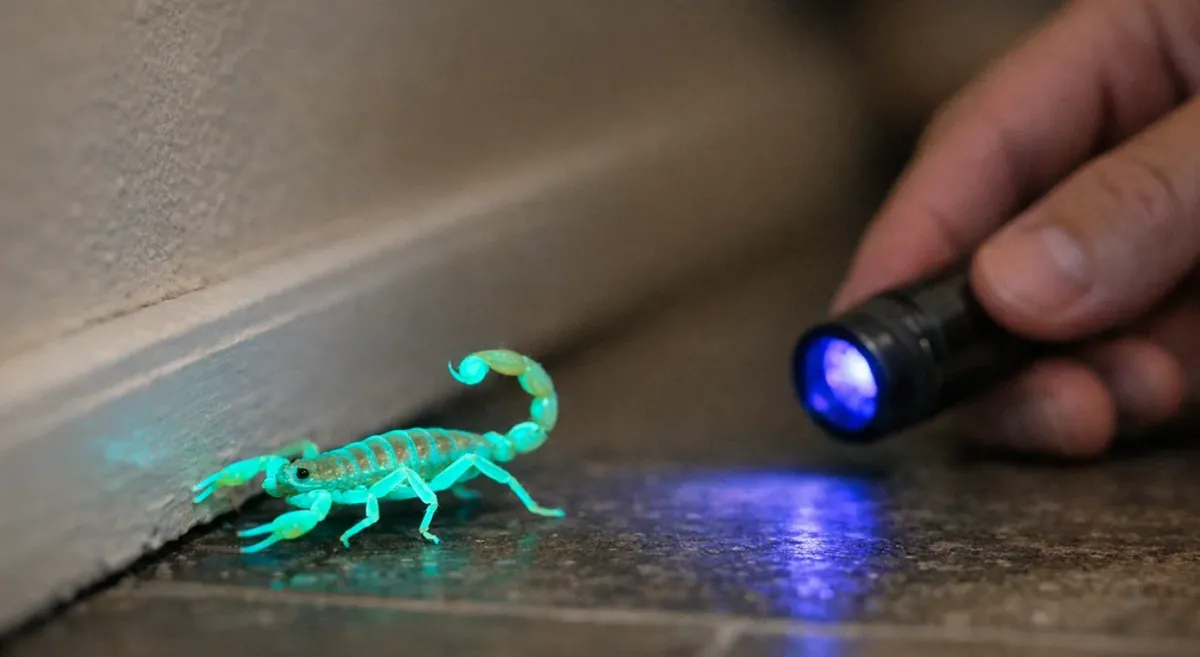
Yes—scorpions fluoresce under UV light, which can make nighttime searches much easier when you sweep slowly along baseboards, thresholds, corners, and other travel lanes. This section also covers where to look first (bedrooms, bathrooms, laundry, kitchen edges, and garages) and why UV is best for spotting scorpions, while white-light photos are often better for markings. For a step-by-step approach, see this UV blacklight scorpion search method.

Do UV blacklights really help you find scorpions at night?

This section breaks down why scorpions glow under UV and how that makes night searches more effective, especially when you scan along edges like baseboards, thresholds, and corners. It also explains why UV glow can hide subtle markings, so you’ll want to confirm color and striping under normal light when it’s safe. Get tips on using a UV light to find scorpions and taking usable ID photos.

Does finding one scorpion in my Austin home mean there are more?

Not necessarily. Striped bark scorpions, the most common species in Travis County homes, typically live alone except during mating season. However, finding a mother with babies or multiple sightings suggests a bigger issue. Understanding Travis County scorpion behavior patterns helps you determine whether you're dealing with a lone hunter or a potential infestation.

How can I confirm where scorpions are active in my house without staying up all night?

A practical approach is to monitor first, focusing on where scorpions prefer to travel: edges like baseboards, corners, thresholds, garage walls, and water-use areas such as bathrooms and laundry rooms. You can do quick, consistent UV scans at night, or use automatic perimeter monitoring that leverages their edge-following behavior and UV fluorescence to capture photo-verified detections. This walkthrough on how to monitor scorpions in your home also covers placement and what to do after a confirmed alert.

How can I identify a scorpion in my house without getting stung?

You can often narrow down what it is from 2–6 feet away by focusing on quick features like color/markings, pincer thickness, tail thickness, size, and whether it climbs. The article also explains a safe photo protocol (top-down and side profile, plus a coin/key for scale) so a pro can ID it without you getting close. Follow these safe scorpion identification tips to reduce sting risk while gathering useful clues.

How can I identify a scorpion safely without getting too close?

This section explains how to do “ID from a distance” using the most helpful traits: color/striping, pincer thickness, tail thickness, size, and whether it acts like a climber or a ground-dweller. You’ll also get a quick photo checklist (top-down and side angle, plus an object for scale) so a pro can identify it more reliably. Follow the safe scorpion identification features overview.

How can I monitor for scorpions at night without doing constant blacklight checks?

Because scorpions are most active at night, the article recommends perimeter-focused monitoring where they naturally travel—along walls, corners, and thresholds—rather than random spot-checks. It also explains what to look for in a monitoring device (like 365nm UV, photo verification, and fast alerts) and how detectors fit alongside sealing and habitat reduction. Get the full approach in this night scorpion monitoring plan.

How can I prevent scorpions in Nevada, and is there a way to get alerts at night?

The most effective plan combines sealing entry points (door sweeps, weatherstripping, gaps around pipes/cables), reducing outdoor hiding spots and insect prey, and building habits like checking shoes and clutter along walls. Because scorpions are nocturnal and fluoresce under UV, monitoring at night can catch activity early without making UV “walks” a nightly chore. This Nevada scorpion prevention and night monitoring section explains practical placement near entry points, bedrooms, and water areas and what to do if you get an alert.

Regional differences

Where do scorpions live?

Species and risk vary across Arizona, California, Nevada, New Mexico, and Texas.

Are bark scorpions really in Las Vegas, and how would they get here?

Locals report bark-scorpion-like activity, and one common explanation is accidental transport via nursery stock and landscaping materials (like palm trees) brought in from other areas. They also feel “worse” because they’re small, excellent hiders, and mostly active at night—so daytime checks often miss them. The article explains what makes them different, why homeowners care about native vs. introduced species, and why UV checks work in bark scorpions Las Vegas facts.

Are glue traps for scorpions worth it, and how should I monitor at night?

Glue traps can catch scorpions, but they’re often messy, collect dust, can snag non-target animals, and don’t tell you in real time when or where scorpions are moving. Night monitoring with a UV flashlight and perimeter-focused checks along baseboards and thresholds helps you spot patterns and respond faster—especially if you’ve seen even one scorpion. The best way to monitor scorpions indoors section compares options and explains how targeted detection complements sealing and outdoor cleanup.

Are scorpions common across Nevada, or is it mostly a Las Vegas problem?

Scorpion activity in Nevada depends a lot on desert climate, elevation, and landscaping, so sightings tend to cluster in warmer, lower-elevation areas more than cooler/high-elevation regions. New construction and disturbed desert soil can temporarily increase encounters in expanding neighborhoods. A single indoor sighting doesn’t automatically mean an infestation—repeat sightings in the same spots usually indicate nearby hiding areas and a steady food source described in Nevada scorpion activity by region.

Are scorpions common in California, and what areas have the most scorpions?

Scorpion activity is most common in Southern California and desert regions, but sightings can still happen in foothills and inland valleys—especially during extreme heat, drought, or major weather swings. Homeowners often see them when construction or disturbed habitat pushes them toward shelter, water, and prey insects around homes. This California scorpion hotspot guide also covers key risk areas like the Mojave, Colorado River region, Imperial Valley, and Coachella Valley.

Are scorpions in Austin dangerous, or just scary?

Most Austin-area scorpion stings are extremely painful but are not usually life-threatening for healthy adults, while kids, older adults, and sensitive individuals should be treated with extra caution. Typical symptoms are sharp pain, burning/tingling, and localized swelling, while red-flag symptoms include breathing trouble, widespread hives, severe vomiting, or uncontrolled twitching. This overview of Austin scorpion sting risk highlights what to watch for and when to seek medical guidance.

Are scorpions in Las Vegas actually getting worse, or am I just noticing them more?

It can feel like a sudden surge—especially for newcomers—because Las Vegas has had less public awareness and fewer “how to handle it” resources than places like Phoenix. A single sighting doesn’t always mean an infestation (it could be a roaming “traveler”), but it does mean you should start monitoring since scorpions are nocturnal and hard to spot. The article breaks down what sightings usually mean and the first steps to take in scorpions in Las Vegas home guide.

Do bug bombs, essential oils, or ultrasonic repellers work on scorpions?

Most Reddit threads consistently criticize these as a waste of money: oils provide at best modest reduction, ultrasonic devices are widely reported as ineffective, and foggers don’t solve scorpions hiding in cracks (and can miss them entirely). The section replaces each “don’t buy” with a practical plan—seal entry points, run a real exterior residual barrier on an appropriate schedule, reduce prey insects, and verify activity instead of guessing. layered scorpion control action plan also explains where Scorpion Alert fits as fast monitoring and response.

Do chickens really eat scorpions in the yard?

Chickens are relentless daytime foragers—they scratch, peck, and patrol for anything that moves, so scorpion encounters can happen, but they’re not guaranteed daily entertainment. The bigger win is often indirect: they eat crickets, roaches, and other prey that scorpions rely on, which can reduce pressure over time. Stings can happen and outcomes vary (especially for smaller birds), so don’t rely on chickens as your only line of defense—see chickens hunting scorpions in deserts for the full breakdown.

Do glue traps for scorpions work, or is there a safer way to monitor indoors?

Glue traps can catch scorpions, but they’re often messy, can snag non-targets, and may create safety issues for kids, pets, and even robot vacuums. A better long-term approach is monitoring where scorpions actually move—along room edges at night—so you can detect and respond quickly when one gets in. This section compares options and explains safer indoor scorpion monitoring.

Do I have to disclose scorpions when selling my home in Arizona?

In Arizona, disclosures generally focus on whether something is a “material and adverse fact,” so an occasional scorpion sighting may not automatically require disclosure. The bigger issue is how buyers, inspectors, and lenders react when scorpions are discovered late, which can trigger renegotiations even if the legal duty is limited. This overview of Arizona scorpion disclosure requirements explains how to disclose accurately without over-disclosing or hiding a real problem.

Do UV blacklights really help you find scorpions at night, and how do I use one?

Yes—scorpions fluoresce under UV light, which can make nighttime searches much easier when you sweep slowly along baseboards, thresholds, corners, and other travel lanes. This section also covers where to look first (bedrooms, bathrooms, laundry, kitchen edges, and garages) and why UV is best for spotting scorpions, while white-light photos are often better for markings. For a step-by-step approach, see this UV blacklight scorpion search method.

Does construction actually drive scorpions into houses?

Yes—grading, trenching, and landscaping can destroy shelter zones and displace scorpions into the nearest cool, stable structure, which is often a newly finished home. Instead of a one-time event, ongoing builds can create repeated waves as more lots are disturbed. This construction displacement scorpion explanation also covers why scorpions follow edges and end up along baseboards, thresholds, and wall lines.

Our product

How Scorpion Alert works

UV detectors, phone alerts, monitoring service, what's in the box.

After I kill one scorpion, how do I keep more from coming inside?

Lasting relief usually comes from prevention and early detection, not just an “instant” fix—so the article focuses on sealing likely entry points, improving door/threshold gaps, reducing clutter and moisture, and cutting down on prey insects. It also explains how perimeter monitoring (scorpions hug edges and glow under UV) helps you spot patterns and respond faster, including examples of detector placement near common entry routes. Use this checklist to keep scorpions out of your house.
Are Reddit scorpion product reviews actually more trustworthy than Amazon reviews?

Many Southwest homeowners trust Reddit more because posters usually share real context—scorpion activity level, home type, sealing attempts, and what worked (or failed) over time, instead of one-line ratings. This section explains a “real desert homeowner” method for filtering advice (repeat mentions across threads, upvotes, and specific outcomes) and sets expectations that no single product is magic. It also previews the core strategy: kill + prevent + monitor, as summarized in Reddit vs Amazon scorpion reviews.

Are scorpion stings more dangerous for children than adults?

Yes—infants and toddlers can have stronger, faster symptoms because the same venom dose affects smaller bodies more and their nervous systems are more sensitive. Most stings are treatable, but the threshold for getting medical guidance is lower for kids, especially if anything seems neurological or breathing-related. This scorpion sting risk for kids guide explains why age and size matter and how to respond quickly and calmly.

Are scorpions in Austin dangerous, or just scary?

Most Austin-area scorpion stings are extremely painful but are not usually life-threatening for healthy adults, while kids, older adults, and sensitive individuals should be treated with extra caution. Typical symptoms are sharp pain, burning/tingling, and localized swelling, while red-flag symptoms include breathing trouble, widespread hives, severe vomiting, or uncontrolled twitching. This overview of Austin scorpion sting risk highlights what to watch for and when to seek medical guidance.

Are scorpions social or do they live alone?

Most scorpions are solitary hunters that shelter and hunt alone, only coming together briefly to mate. The main “group” behavior people notice is newborns riding on the mother’s back for protection, which is parental care—not colony living. Some species may share the same shelter when conditions are good, but they still aren’t cooperative like ants or termites, as explained in this scorpions social vs solitary guide.

Are scorpions still dangerous in winter, or is the sting risk basically gone?

The risk is lower in winter, but it’s not zero—especially in garages, storage areas, and other low-traffic spots where people reach into boxes or walk barefoot. Winter stings often happen at night or when moving stored items, so small habits like wearing shoes and using gloves make a big difference. This winter scorpion sting risk tips overview covers common scenarios and what to do if you find one inside.

Are there better alternatives than Cy-Kick CS or Demand CS for scorpions?

Sometimes, yes—pros often mention options like Onslaught FastCap for heavier activity, while budget-friendly choices like Cyzmic CS or Bifen IT can still work if you’re disciplined about coverage. The article also emphasizes an integrated plan: a consistent exterior barrier plus monitoring so you can verify progress at night and catch the occasional indoor roamer. This best scorpion spray alternatives section lays out when to consider switching and how to measure results.

Can a cat get stung by a scorpion, and what should I do if it happens?

Yes—cats can be stung, especially when they paw at, bite, or “toy” with a scorpion in dark corners at night. Fast reflexes reduce risk but don’t eliminate it, so you shouldn’t treat a good hunter as a safety plan. This section covers practical next steps and risk reduction in cat scorpion sting risk guide.

Can a scorpion chase me or outrun me if it runs toward me?

Scorpions don’t chase people like predators—most fast movement is an escape response to get back to cover. When one seems to run “at you,” it’s often trying to reach a wall or edge route (baseboards) and you happen to be in the way. This section explains why scorpions don’t chase humans and what to do instead of chasing it across the floor.

Can a scorpion pinch you, and does it hurt as much as a sting?

Yes—pinches can happen when someone accidentally grabs or traps a scorpion during cleanup, in storage bins, under patio furniture, or when putting on shoes/clothes without checking. A pinch is usually a localized pressure or sharp pain, while a sting is more likely to cause burning/tingling and can lead to stronger nerve-related symptoms in medically important species. Kids and other higher-risk groups should treat any scorpion contact more cautiously and use targeted first-aid guidance; the article breaks down scorpion pinch vs sting symptoms.

Can multiple family members get alerts?

Yes. There are no limits to the number of people you can add to your account. They'll receive push notifications by simply by installing the app and joining your account.

Can scorpions chase you or are they trying to attack?

Scorpions usually aren’t trying to pursue people—they’re typically fleeing toward cover, especially along walls and baseboards. Stings are most often defensive, like when one is stepped on, trapped in bedding/clothes, or handled. This can scorpions chase you breakdown explains why they “hug” edges and what to do if one bolts under furniture.

Pricing

Plans, billing, and returns

What you pay, when, and what happens if you cancel.

Can multiple family members get alerts?

Yes. There are no limits to the number of people you can add to your account. They'll receive push notifications by simply by installing the app and joining your account.

How did scorpion antivenom become a rare drug—and who makes money from it?

The article explains how imported antivenom moved into a US-regulated, hospital-dispensed supply chain where “rare drug” dynamics can amplify pricing power. It translates orphan-drug exclusivity and the shortage-to-monopoly effect into plain English, then shows how billing layers and negotiated rates help create viral chargemaster numbers. It also includes practical questions to ask your hospital or insurer (itemized bill, coding, self-pay policy, and appeals) if a claim is denied. Get the full context in rare drug scorpion antivenom cost story.

How does Scorpion Alert detect scorpions while I’m sleeping?

Scorpion Alert automates the same UV fluorescence method people already trust, using UV + a camera + AI to monitor continuously in dark rooms. When it detects a likely scorpion glow, it sends a photo-verified alert with a confidence score (and can notify you if a detector goes offline). This section also covers practical setup details like plug-in power, 2.4GHz Wi‑Fi, scan frequency, and adjustable sensitivity in automated UV scorpion detection system.

How much does an ER visit for a bark scorpion sting cost in Arizona?

Costs can feel wildly unpredictable until the bill arrives, especially in the common scenario of a child getting stung at night. This section breaks down what typically gets billed (ambulance vs. self-transport, ER/facility fees, provider fees, observation time, meds, monitoring, and possible consults) and why “just watching them” can still be expensive. It also explains why some families see a few hundred dollars while others get five-figure billed charges, as outlined in this Arizona bark scorpion ER cost breakdown.

How much does the app cost?

The app itself is free. You pay for the monitoring service, which is what keeps your Scorpion Detectors working. Pricing is per Detector, per month: it starts at $3.50/Detector/month for a single Detector and slides down to a $2.00/Detector/month floor when you have ten or more. The Detectors themselves are free as part of the subscription — we ship them on a rental basis, and you return them whenever you cancel. See the pricing page for the full slider.

Is paying around $3,000 for scorpion sealing actually worth it for my home?

It depends on your sightings, home complexity (garage/attic/roofline), time, and risk tolerance—so the article offers a simple scorecard for DIY vs pro vs hybrid approaches. It also explains how to verify results by tracking sightings and monitoring wall-edge activity, including optional tools that alert you with photo-verified detections. Walk through the decision framework in is professional scorpion sealing worth it.

What are the most common scorpion entry points I should seal first?

The post gives a prioritized hit list so you can start with the biggest “leaks” first—especially doors, thresholds, sliding tracks, and garage seals that often undo other caulking work. It also covers tedious-but-critical exterior penetrations (cracks, joints, pipe/cable entries, weep holes with mesh) plus overlooked attic/ceiling pathways like recessed lights and vent registers. Use the scorpion entry points sealing checklist to stay systematic.

What should I do if my child is stung by a bark scorpion—and how can I prevent it?

The article provides a calm checklist for suspected bark scorpion stings—especially for kids—including when to go to the ER, what details to document for insurance, and what to avoid doing at home. It then shifts to prevention: how scorpions behave at night (glowing under UV and following edges) and how homeowners can move from manual blacklight checks to automated monitoring. It also highlights the highest-risk home zones—entry points, bedrooms/nurseries, and water-adjacent areas—so you’re less likely to ever need antivenom. See the full plan in Arizona bark scorpion sting prevention tips.

When do doctors give bark scorpion antivenom, and how many vials might be used?

Doctors generally escalate to antivenom when symptoms suggest more severe envenomation, not just local pain—this section explains the Grades 1–4 severity scale in plain language. It connects higher grades to more monitoring and staffing, and it shares real-world reports of 1–3 vials being used with extremely high billed prices at Arizona hospitals. It also explains what Anascorp/Anaidra is and why U.S. pricing can look shocking in this bark scorpion antivenom vial pricing guide.

Where does automated scorpion detection fit into a full scorpion control plan?

Automated detection is positioned as the “last-mile” layer that works after exclusion, cleanup, yard work, and pest control—covering the hours you can’t monitor. This section includes a placement blueprint for entry points and high-risk rooms, plus what to do immediately when an alert hits so you can act fast and safely. It also outlines typical starter quantities and transparent cost guidance in complete scorpion defense plan.

Why do I still have to hunt for scorpions with a blacklight at night?

Most homeowners still rely on walking the house or yard with a UV flashlight because it provides immediate visual proof when scorpions fluoresce. The problem is the hunt only covers a short window (often 15–30 minutes), while scorpions can roam for hours when you’re asleep or away. This section explains the limits of manual checks and why the gap exists in the first place, in manual blacklight scorpion detection.

Why is scorpion antivenom $29,000 a vial in Arizona hospitals?

Arizona families often see shocking ER bills because the $29,000 figure is typically a hospital “charge,” not what the hospital paid or what insurance ultimately allows. The article breaks down how pricing differs between Mexico retail, US wholesale acquisition, and US hospital chargemaster billing—and how needing 2–3 vials can quickly multiply costs in pediatric stings. It also previews how an older medical breakthrough ended up inside a modern pricing system that changed access. For the full breakdown, see Arizona scorpion antivenom pricing explained.

How Scorpion Alert works

Find them before they find you

Plug in your Scorpion Detectors around your home and get instant alerts with the location of the scorpion.
  • Detectors arrive ready to plug in
  • Live alerts go straight to your phone or watch, with location
  • Alert multiple family members with a single account
  • One flat monthly monitoring fee — no contract, cancel anytime
Get Scorpion Detectors
Real homes, real results

Why homeowners trust the system

Map of Phoenix, ArizonaPhoenix, Arizona
We tried everything. Pest control companies, glue traps, powders. None of it worked as well as this.
Ashley
10 scorpions detected
Map of Carlsbad, New MexicoCarlsbad, New Mexico
We were finding scorpions in our couch! Now that we're using Scorpion Detectors, we catch them before they make it that far.
Kai
8 scorpions detected
Map of Spicewood, TexasSpicewood, Texas
It’s really easy to use. You just plug them in, set them up with your phone, and you’re done. We caught 4 scorpions already.
Carmen
6 scorpions detected