Are scorpions a problem in Goodyear, AZ?
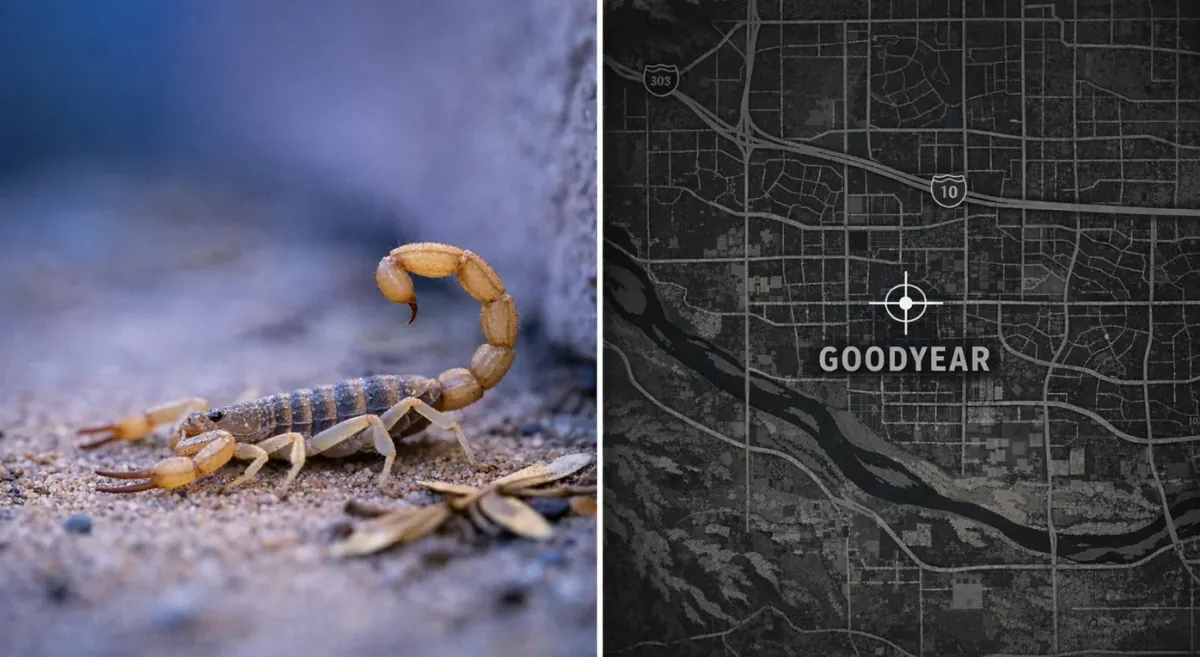
Yes — Goodyear sits inside Maricopa County, one of the highest scorpion-activity regions in the country, so finding one indoors is common and worth taking seriously. A single sighting often means more are nearby, since scorpions don’t usually travel far on their own. Stay calm, but plan to reduce indoor encounters over the coming nights.
In U.S. poison-center data, 68.2% of all reported scorpion exposures happen in Arizona — roughly 11,500 a year, according to Kang & Brooks 2017. Goodyear’s location on the Sonoran Desert edge puts it right in that hotspot.
Tonight, do three simple things: don’t panic (a sighting is manageable), increase visibility by keeping hallways and bathrooms lit before any barefoot trips, and start a sighting log. Jot the date, time, room, and weather each time you spot one. That log will quickly tell you whether this is a fluke or a pattern.
What makes Goodyear a high-scorpion area (in plain English)?
New desert-edge development disturbs natural habitat and pushes scorpions into man-made hiding spots — block walls, stucco gaps, and cool garages. When bulldozers clear desert for a subdivision, the scorpions don’t leave. They move into the nearest cracks, which are often your foundation and perimeter wall.
Certain Goodyear features raise the odds. Homes near washes, properties backing onto greenbelts, and yards ringed by perimeter block walls all create travel corridors and daytime shelter. Irrigated landscaping can make it worse by drawing in the insects scorpions hunt.
Is one scorpion a fluke, or do I have an ongoing issue?
One scorpion can be a random visitor, but three signals point to an ongoing problem: repeated indoor sightings, scorpions in multiple rooms, or sightings over several different nights. Any of those means you’re dealing with more than a one-off.
You usually won’t notice them until late because scorpions are nocturnal. They spend daylight tucked into cool cracks and come out after dark, hugging baseboards and walls as they hunt. By the time you flip on a light, one may have been traveling your perimeter for hours.
What does it mean if I find a baby scorpion?
A baby scorpion indoors often means breeding is happening nearby — or that clutter, boxes, or patio gear carried one inside. Either way, it’s a signal to step up prevention and consider a professional inspection.
Take a few immediate steps. Increase nighttime checks in kids’ and pets’ areas. Tighten clutter control, especially cardboard and stacked items. And focus on perimeter, door, and garage gaps before the next warm night, when activity climbs.
Can scorpions climb walls in Goodyear homes (and end up in beds)?
Yes. Arizona bark scorpions are strong climbers and can grip textured surfaces like stucco, drywall, and block, which is why they show up higher than people expect — on walls, curtains, and even in beds. This vertical ability sets them apart from most other scorpions in the region.
Because they climb, high-risk items deserve extra attention: bedding, hanging towels, shoes, closet shelves, and wall décor. Shake out towels and shoes before use, pull beds slightly away from walls, and keep bedding from touching the floor. Small habits like these reduce surprise contact.
Which scorpion species should Goodyear homeowners assume?
Assume the Arizona bark scorpion (Centruroides sculpturatus) until proven otherwise — it’s the dominant and most medically significant species across greater Phoenix and Maricopa County. Local reporting gaps don’t mean scorpions aren’t present; it just means not every sighting gets logged.
Bark scorpions change your plan because of their vertical access and ability to hide in elevated spots. You can’t just watch the floor — beds, shelves, and corners matter too.
What's the safest way to get a picture of a scorpion for ID?
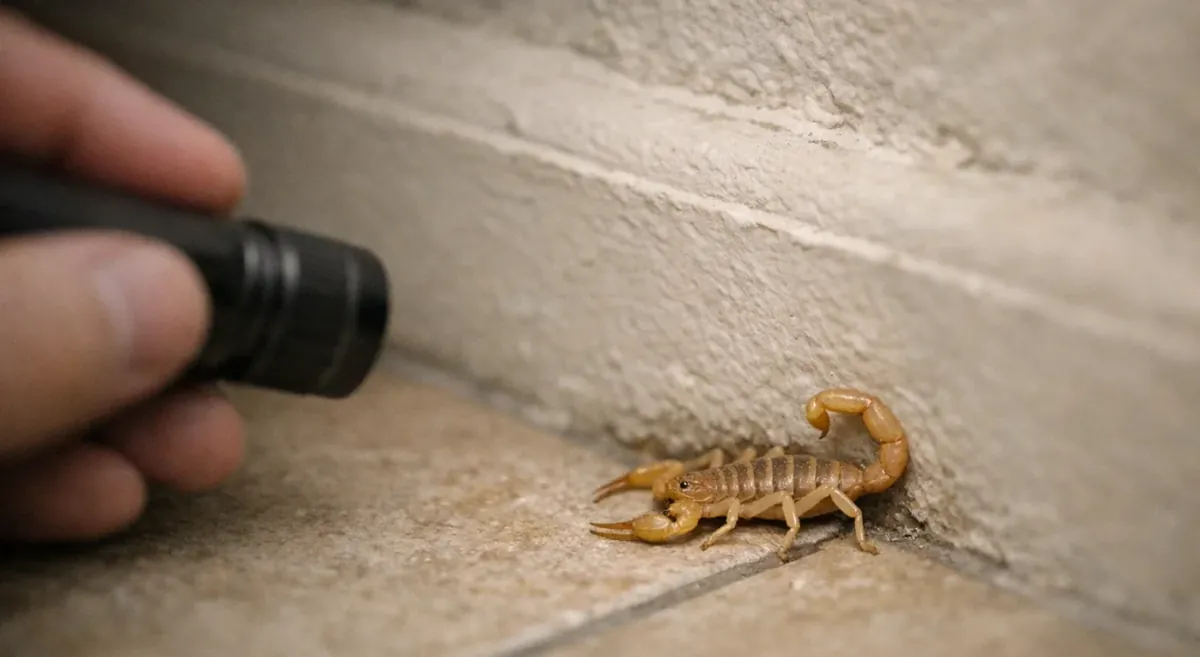
Keep your distance and use your phone’s zoom — never handle it or get close enough to risk a defensive sting. Capture the location context too: is it on a wall or floor, near a drain, or by a door? That context helps with both identification and control.
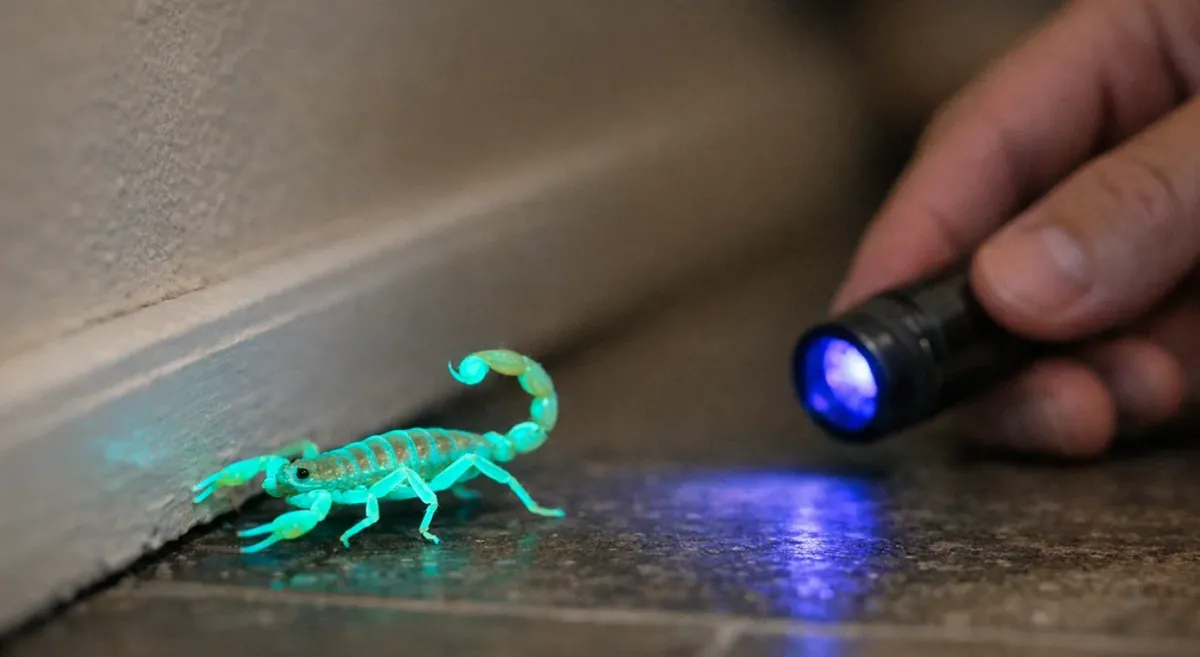
A UV flashlight is the easiest way to spot one at night, since scorpions glow a bright greenish color under 365nm light. The glow also makes for a clearer photo in the dark.
Where do wall-climbing scorpions hide indoors?
Watch the surprise zones: beds, curtains, towel stacks, closet shelves, behind picture frames, and bathroom or laundry areas. These spots combine the edges scorpions like with the shelter they seek. In Arizona residential data, 42.5% of indoor stings happen in the bedroom, per the Skolnik & Ewald 2018 FEARS survey.
During peak season, build a quick bedtime routine. Shake out shoes and towels, avoid barefoot trips to the bathroom, and give baseboards and corners a quick scan before lights-out.
When are scorpions most active in Goodyear, Arizona?
Scorpions ramp up in spring, peak through the hottest months of summer and monsoon, then taper in fall. In Goodyear, you’ll notice the first strays on warm spring evenings, a clear surge in July through September, and fewer sightings once nights cool. August and September are the peak sting months in Arizona.
Why now? Heat, humidity, monsoon storms, and irrigation all drive activity — partly by moving the insects scorpions eat. The best window to spot one is evening through midnight, when they’re hunting. Daytime sightings are rarer because they hide from heat and light.
What months are peak season in Goodyear—and what changes during monsoon?
June through September is the core peak, and monsoon storms create a surge effect. Humidity plus a flush of prey insects gets scorpions moving, and indoor sightings often spike within 24 to 48 hours of a storm.
Irrigated yards can mimic a mini-monsoon year-round, raising activity around patios, block walls, and garages even between storms. For a full timeline, see our month-by-month scorpion season guide for Arizona.
Why do I mostly see scorpions at night?
Scorpions hunt at night and hide in cool cracks and wall voids by day, so you usually notice them when the house is quiet and the lights are low. Picture flipping on the bathroom light at 2 a.m. and spotting one frozen against the baseboard.
Expect them along edges, not across open floors. Scorpions are thigmotactic — they navigate by keeping close to surfaces — so they travel room perimeters and baseboards. That’s exactly why walls matter so much.
Why do I have scorpions in my house in Goodyear (and how are they getting in)?
Scorpions come indoors when a home offers the full package: entry routes, food (other insects), water, and dark hiding spots. Break any one of those and you reduce your problem. In Goodyear, the most common discovery spots are bathrooms, laundry rooms, and garages — cool, humid, and full of gaps.
Start with a tight, prioritized checklist:
- Seal the gap under exterior and garage doors with fresh weatherstripping.
- Screen or seal plumbing penetrations under sinks and behind appliances.
- Address weep holes and cracks along the foundation and stucco.
- Cut back clutter, boxes, and debris against interior and perimeter walls.
For the full picture, read our guides on the top ways scorpions get into your home and the top things that attract scorpions.
How are scorpions getting in my house?
They arrive two ways. First, through gaps and penetrations — door thresholds, garage seals, pipe openings, and weep holes. Second, by hitchhiking in items like boxes, firewood, and patio gear you bring inside.
Their perimeter-travel behavior is the key. Scorpions follow edges and thresholds, so small gaps at ground level and along walls matter far more than a big open space. A quarter-inch gap under a door is a highway.
Why would I find a scorpion in the bathtub or sink?
Scorpions seek water, so bathrooms and laundry rooms naturally draw them. Once inside a smooth tub or sink, the slick surface traps them — they can’t climb out, so they’re still there in the morning.
A few quick habits help: keep drains closed when you can, check the tub before bathing kids, and inspect around plumbing penetrations under sinks. That’s often where they slip in.
What's the best way to keep scorpions out of your house?
Work in layers, in order. Seal the obvious gaps first, then reduce prey insects like crickets and roaches, then cut outdoor harborage near the foundation — rocks, debris, and dense plantings against the wall. Each layer removes a reason for scorpions to stay.
Here’s the Goodyear reality check: you may not hit zero overnight. But consistent, perimeter-focused work can dramatically reduce indoor encounters over a season.
How can I confirm where they're traveling at night without doing UV walks?
Use monitoring for visibility, not as a magic force field. The goal is to learn when and where movement happens so you can target your sealing and treatment instead of guessing.
Automated perimeter monitoring makes this easier. Devices like Scorpion Alert Detectors plug into wall outlets, activate only when the room goes dark, and watch the floor along the walls where scorpions travel — alerting you with photo proof within seconds instead of asking you to patrol every night.
What's the best scorpion control in Goodyear, AZ (DIY vs. pro)?
The best control is layered: exclusion, prey-insect reduction, habitat cleanup near the foundation, and targeted treatment — with professional help when sightings repeat. You can handle sealing and cleanup yourself today. Call a pro when the problem is ongoing, when someone’s been stung, or when a family member is high-risk.
How do I remove a scorpion safely right now?
Trap it without touching it — here’s the safe method:
- Grab a sturdy glass or cup and a piece of stiff paper or cardboard.
- Place the glass over the scorpion, pressing gently against the floor.
- Slide the paper under the opening to seal it in.
- Carry it outside and release it well away from the house.
Don’t do these things: never use bare hands, don’t smash it on carpet where you might miss, and never lose sight of one near beds, toys, or shoes. For more, see what not to do after spotting a scorpion.
Does Raid kill scorpions?
Not reliably or fast. Scorpions are famously resilient, and a household spray may not stop one quickly enough to prevent a defensive sting while you’re standing over it. Many homeowners empty half a can and the scorpion still scurries off.
Safer alternatives work better: mechanical capture in the moment, plus a control strategy focused on prey insects and sealing entry points. Kill the food supply and close the doors, and scorpions have less reason to be there.
Do scorpion repellents work?
Most “scorpion repellents” are overstated and don’t deliver the barrier they promise. Your money and effort are better spent on evidence-based prevention — sealing, prey control, and habitat reduction.
We cover the details in our breakdown of the top myths about scorpion repellents. For this page, keep your focus on Goodyear-specific actions.
How dangerous is a scorpion sting in Goodyear—and what are the red flags?
Most bark scorpion stings cause intense local pain, tingling, and numbness that stay near the sting site and fade over hours. Emergency red flags — especially in children — include trouble breathing or swallowing, drooling, jerking or roving muscle movements, and eyes darting in odd directions.
According to Dr. Meghan Spyres, medical toxicologist at Banner Poison and Drug Information Center, “They can also cause involuntary muscle movement — so jerking of the arms and legs — and even more severe, in some cases, it can cause difficulty swallowing. People’s eyes can move around in weird directions.”
Call Poison Control (1-800-222-1222) for any sting, and 911 for the emergency signs above. Have this ready: time of the sting, the person’s age and weight, and current symptoms. See our guides on why children are more at risk and bark scorpion sting first aid.
Can dogs smell scorpions (and should I rely on pets)?
Dogs sometimes notice a scorpion’s movement or scent, but you shouldn’t rely on them for protection — a curious pet that paws or bites at one can easily get stung on the nose or paw. Their instinct to investigate is exactly the risk.
Keep pets safer with a few steps: leash dogs for nighttime yard trips during peak season, check pet beds before bedtime, and focus floor-level protection where pets live and play.
When should I hire scorpion control in Goodyear, AZ?
Call now if you have repeated indoor sightings, a sting inside the home, baby scorpions, or high-risk family members like young kids or elderly relatives. Any of these means the problem is beyond one-off capture.
When you interview pest companies, ask three things: Do they include a thorough inspection? Will they provide a sealing and exclusion plan, not just spray? And what’s their follow-up cadence during peak monsoon season? A good company answers all three clearly.
How can automated monitoring support scorpion control between treatments?
Monitoring gives you visibility and fast response between professional visits — 24/7 autonomous detection that kicks in when rooms darken, built around how scorpions travel room perimeters at night. It tells you a scorpion is active before you find it the hard way.
Scorpion Alert Detectors deliver features homeowners actually want: photo-verified alerts with a confidence score, push and SMS notifications within seconds, and a placement plan targeting entry points and water-source rooms like bathrooms and laundry areas. Between treatments, that’s how you catch the stragglers before they catch you.
In Goodyear, scorpion activity tends to climb during the warmer months, and because they’re mostly nocturnal, a little extra nighttime awareness around baseboards and water-adjacent areas can go a long way for safety. If you want a practical tool to help you stay on top of seasonal risk and spot patterns sooner, Scorpion Alert can help you track sightings and make informed next steps.