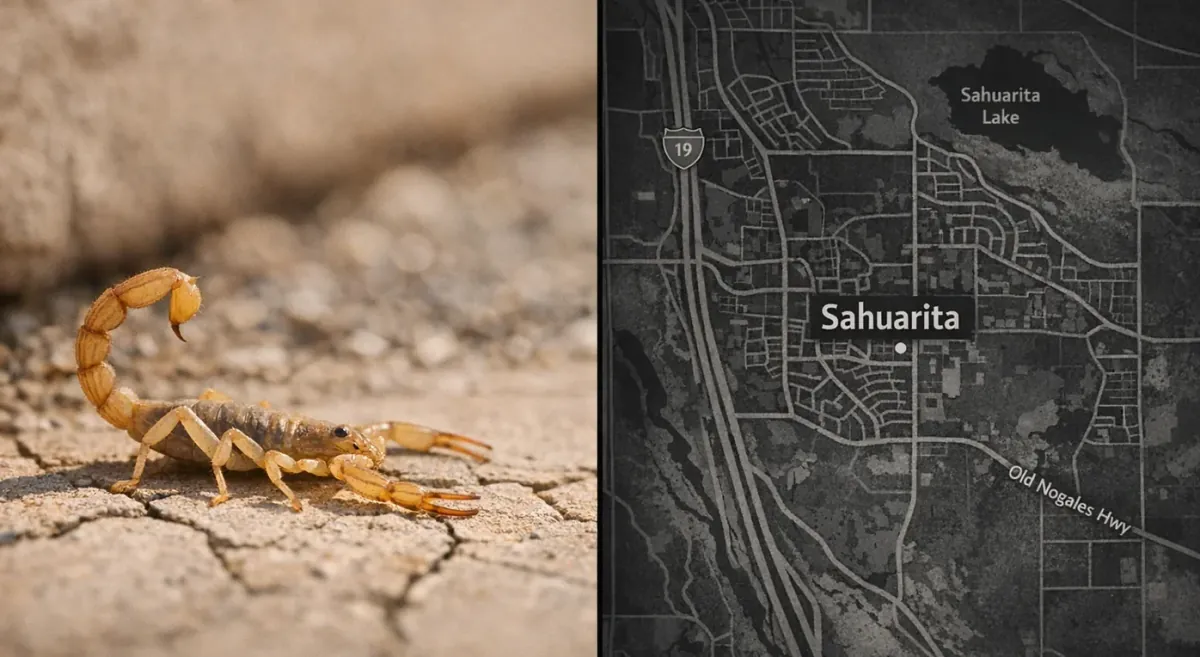
Are scorpions a common problem in Sahuarita, Arizona?
Yes. Scorpion sightings are common in Sahuarita, especially in homes near desert edges, washes, and newer construction. Arizona reports more scorpion encounters than any other state, so finding one indoors here is normal — not a sign that something's wrong with your house. The right response is a plan, not panic.
68.2% of all US scorpion exposures reported to Poison Control from 2005–2015 came from Arizona.
— Kang & Brooks 2017
Pima County sits squarely inside scorpion country, and Sahuarita's desert-adjacent neighborhoods put homes right where these animals already live. That context matters in a practical way: the goal is to figure out whether you're dealing with a one-off visitor or an ongoing issue, then respond accordingly. The rest of this guide on scorpions in Sahuarita, Arizona — season, stings, and control — walks you through each in turn.
Why do Sahuarita neighborhoods see scorpions so often?
Sahuarita gives scorpions everything they need. Block walls, rock landscaping, and shaded cracks create cool, dark hiding spots called harborage. Cluttered garages and sheds add even more. Scorpions squeeze into these gaps during the day and come out to hunt at night.
Then there's the food. Irrigated yards and outdoor lighting draw crickets, roaches, and other insects — and where the prey goes, scorpions follow. New construction adds one more wrinkle: grading and fresh builds disturb the desert and can push displaced scorpions toward newly poured foundations.
Which scorpion species might you see around Sahuarita?
Southern Arizona is home to several scorpion species, but the one that matters most medically is the Arizona bark scorpion (Centruroides sculpturatus). It's slender, straw-colored, and the only species in the region capable of a clinically significant sting. You may also encounter larger, bulkier desert scorpions whose stings are far milder.
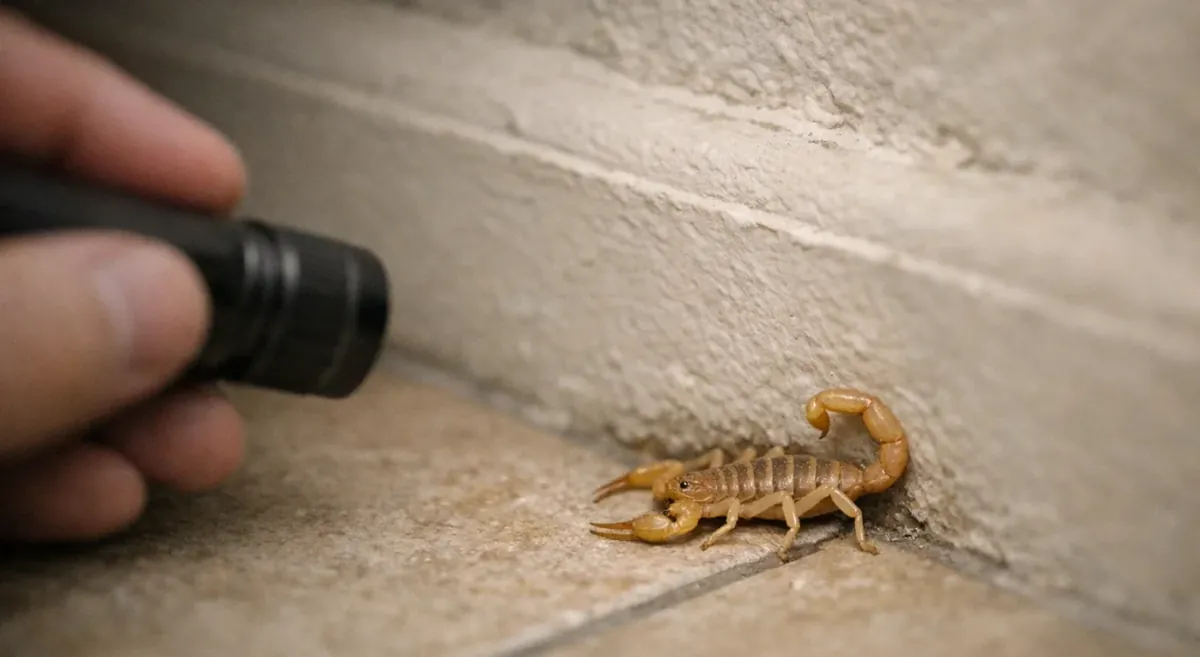
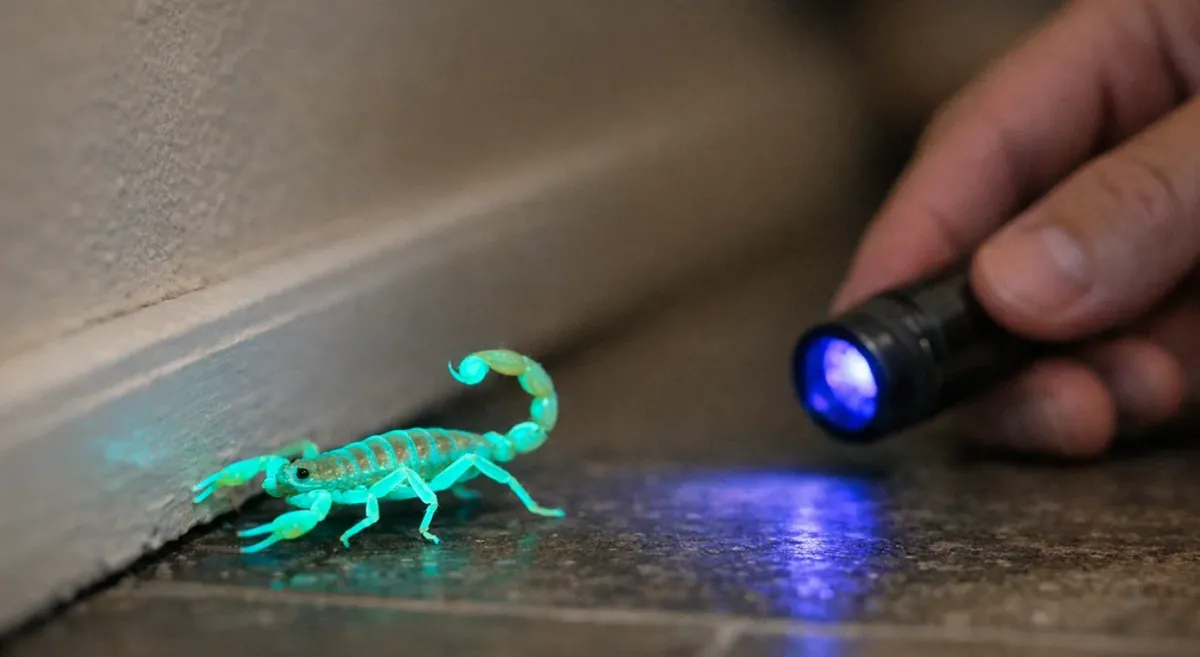
For safe identification, photograph the scorpion from a distance and never handle it. A UV flashlight helps too — scorpions glow a bright greenish color under 365nm UV light, which quickly confirms scorpion versus not-a-scorpion. Exact species certainty matters less than watching for symptoms and understanding the animal's behavior. Your home plan works the same either way.
Quick self-check: occasional visitor or active issue?
Keep a short log on your phone. Note each sighting's frequency, the time of night, the exact room, recent weather, and whether you're seeing lots of insects. A single scorpion after a storm looks very different from three in a week along the same baseboard.
Pay special attention to high-risk rooms: bathrooms, laundry rooms, bedrooms, and nurseries. These spots combine moisture, floor-level travel routes, and bare feet, which is exactly where encounters tend to happen. A simple note like "10:40 p.m., master bath, hot night after rain" builds a pattern fast.
When is scorpion season in Sahuarita, and what nights are the worst?
Scorpion season in Sahuarita runs roughly spring through fall, with activity peaking in the hottest, most humid months — often August and September. You can see scorpions year-round here, but warm evening hours drive the most encounters. The worst nights combine heat, monsoon humidity, and a spike in insect activity.
Watch for a "tonight is high-risk" combination:
- Daytime highs in the triple digits
- Recent rain or muggy, humid air
- Noticeably more crickets or bugs around outdoor lights
During peak stretches, do a quick reset this week: tighten door discipline, clear clutter off floors in high-risk rooms, and shake out shoes before slipping them on. For the deeper seasonal picture, see our month-by-month Arizona scorpion season guide.
What changes during monsoon humidity and post-rain weeks?
Monsoon weeks turn up scorpion traffic through a simple chain: rain and humidity get insects moving, more insects mean more prey, and more prey pulls hunting scorpions closer to your home. That's why sightings often cluster in the days after a storm.
During those weeks, keep routines short and consistent. Close doors promptly, check that door sweeps still seal, and do a nightly clutter reset along floors near walls. Small habits beat big cleanups you'll never repeat.
Why do scorpions show up along baseboards and in tubs at night?
Scorpions are thigmotactic — they navigate by hugging surfaces and edges. Rather than crossing an open floor, they trace baseboards, wall bases, and furniture edges as travel routes. That's exactly why homeowners find them lined up along a wall or tucked in a corner.
Picture this: you flip on the bathroom light at 2 a.m. and there's a scorpion stranded in the smooth tub. It isn't nesting there — it wandered in following the edge and couldn't get back out over the slick sides. The lesson for control is simple: if you can predict the route, you can block and monitor it.
How dangerous are scorpion stings in Sahuarita, and what symptoms matter most?
Most scorpion stings in Sahuarita cause painful but manageable local symptoms that improve over hours. The real concern is a small set of red-flag systemic symptoms, which show up mainly with Arizona bark scorpion stings and mostly in higher-risk people. Watch symptoms and timing closely — they matter far more than identifying the species.
Higher-risk groups include young children, older adults, immunocompromised people, and pets. Their smaller size or fragile health means venom can hit harder, so they deserve a lower threshold for calling for help.
What does a typical sting feel like vs. a medical emergency?
A typical sting causes immediate burning pain at the site, then tingling, numbness, and mild swelling that usually eases over several hours. In an Arizona cohort, pain at the sting site was reported in 88.9% of stings and local numbness in 62.2%, per Klotz et al. 2021.
Red-flag symptoms mean stop and get help:
- Trouble breathing or swallowing
- Roving or uncontrolled eye movements
- Severe muscle twitching or jerking
- Repeated vomiting
- Symptoms that keep getting worse
If you're unsure, call Poison Control. If symptoms are severe, seek urgent care or the ER.
Are bark scorpion stings the main concern in Arizona?
Yes. The Arizona bark scorpion is the reason scorpion stings get medical attention here, because it's the only regional species capable of clinically significant envenomation. That said, most stings still resolve without drama — children just deserve a lower threshold for calling Poison Control. According to Dr. Meghan Spyres, medical toxicologist at Banner Poison and Drug Information Center, "The young, like little kids, and then more elderly. So, the extremes of age are more at risk for these more severe reactions."
Pet owners, stay alert too. Dogs and cats investigate floors nose-first, so watch for abnormal drooling, pawing at the face, agitation, or weakness after a possible sting. Our guide on why children are more at risk from scorpion stings goes deeper.
What should you do right after a scorpion sting in Sahuarita?
Stay calm, wash the sting site, apply a cool compress for pain, and watch for red-flag symptoms while keeping the person still. Call Poison Control at 1-800-222-1222 for guidance — especially for kids — and head to urgent care or the ER for severe or rapidly worsening symptoms. Then take a few steps to prevent a second sting.
First 5 minutes: simple first aid (what to do and what NOT to do)
- Wash the sting site with soap and water.
- Apply a cool compress or ice pack wrapped in cloth to ease pain and swelling.
- Remove rings, watches, or tight items near the sting in case of swelling.
- Keep the person calm and still — anxiety can make symptoms feel worse.
- If it's safe, snap a photo of the scorpion for identification.
Skip the folklore. Do not cut the wound, try to suck out venom, or pour harsh chemicals on the skin — none of that helps, and some of it can cause harm. And don't chase the scorpion barefoot across a dark room to get your photo.
When should you call Poison Control or go to urgent care/ER?
Call the Poison Help line at 1-800-222-1222 for any sting where you want guidance, and always for young children. They'll tell you whether home care is fine or you need to be seen. Seek immediate care for severe symptoms, rapid worsening, or a sting to the face or neck.
For serious bark scorpion cases, an effective antivenom exists and can turn a scary situation around quickly. The key isn't guessing — it's timely evaluation, so let the professionals decide.
What should you do in the next 24 hours to prevent a second sting?
A sting means at least one scorpion is roaming your space, so reduce the odds of another encounter:
- Shake out shoes, clothing, and bedding before use.
- Pull beds slightly away from walls so scorpions can't travel straight in.
- Carry a flashlight when walking at night — most stings hit bare feet.
- Reset the sting room: clutter off the floor, door sweep intact, threshold gaps sealed.
For a fuller walkthrough, read our bark scorpion sting first aid guide, and see what not to do after spotting a scorpion.
What's the best Sahuarita scorpion control plan for a home (DIY + monitoring)?
The most effective plan is layered and done in order: first exclude scorpions by sealing entry points, then reduce harborage and prey around the home, then verify with monitoring so you know it's actually working. Each layer makes the next one more effective, and monitoring keeps you from guessing.
In Sahuarita, that means paying attention to block walls, rock landscaping, garages, pet doors, and water sources in bathrooms and laundry rooms. Take the layers in order.
How do you seal the most common entry points first?
Start with exclusion, because scorpions can flatten their bodies and follow edges through startlingly small gaps. Prioritize these:
- Install tight door sweeps on exterior and garage doors
- Replace worn weatherstripping around doors and windows
- Seal thresholds and garage side-door gaps
- Fill plumbing penetrations under sinks and behind appliances
Most of this is a one-weekend project with caulk, sweeps, and steel wool. For bigger sealing jobs — stucco cracks, expansion gaps, roofline issues — it's fine to hire a pro. Our roundup of the top ways scorpions get into your home shows where to look first.
What yard and garage changes reduce Sahuarita scorpion sightings fastest?
Cutting harborage and prey near the house pays off quickly. Declutter along exterior walls, lift stored items off the floor, and move firewood and rock piles away from the foundation. Fewer hiding spots means fewer scorpions parked next to your home.
Then starve them out. Address crickets and roaches, and consider swapping bright white exterior lights for warmer, less bug-attracting bulbs. The garage deserves special attention — it's a staging zone with a warm slab, plenty of clutter, and a big door that opens right into the desert night.
How can you monitor scorpions at night without constant blacklight walks?
Since scorpions travel the room perimeter, monitoring works best right there on the perimeter — not the middle of the floor. That's the whole idea behind Scorpion Alert, an optional layer that helps you verify whether your sealing and cleanup are actually working, without patrolling with a flashlight every night.
Each plug-in Detector sits in a wall outlet and shines 365nm UV light onto the floor below, watching for that telltale greenish scorpion glow. When it sees one, a two-stage check adds an AI confidence score before sending a photo-verified alert to your phone by push or SMS within seconds — the second stage helps cut down on false positives.
Place Detectors where scorpions enter and where a sting would hurt most: near the front, back, garage, and patio doors, by the pet door, and in bedrooms, nurseries, bathrooms, and the laundry room.
If you want Scorpion Alert, how many Detectors do you actually need?
A simple rule of thumb: cover your likely entry points plus the rooms where a sting would be worst, like kids' bedrooms and the master bedroom. Many Sahuarita homes start with a handful — a couple at main entries and one in each high-risk room — then add more if their detection history points to a hot spot.
Scorpion Alert runs as a monthly rental subscription, and the Detector hardware is included — there's no separate device to buy. Per-Detector pricing slides down as you add more units; check our current pricing for exact rates. You can cancel any time by emailing support@scorpionalert.com and returning the Detectors per policy. One quick setup reality check: the Detectors need 2.4GHz Wi-Fi, which nearly every home router already broadcasts.
In Sahuarita, scorpion activity can spike during the warm months, so pairing basic prevention with consistent nighttime checks can help reduce surprises and lower sting risk around your home. If you want a clearer way to spot them where they hide, Scorpion Alert uses UV-based imaging and two-stage AI detection to help you find scorpions in the dark and act quickly.