Why does one scorpion make me feel unsafe in my own home?
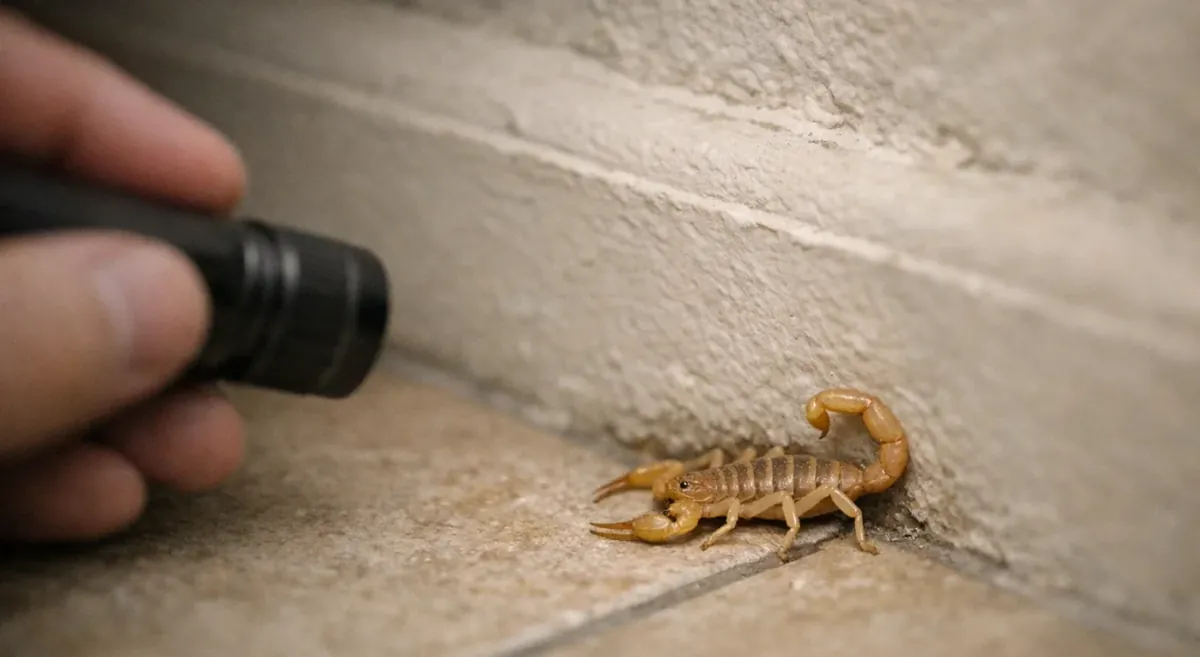
You're not being dramatic. Finding a scorpion in your home can trigger a deep, primal fear response — and for good reason. Unlike a spider in the corner or ants on the counter, scorpions show up in the most vulnerable spaces of your home. Picture this: you stumble to the bathroom at 2 a.m., flip on the light, and there it is — a scorpion on the tile next to the toilet. Or worse, you feel something move in your bed and realize you've been sharing your sheets with one.
That violation of safety isn't just in your head. 97.8% of scorpion stings happen inside the home, not outdoors (Kang & Brooks 2017). And 42.5% of indoor stings occur in the bedroom — the one place where you should feel completely safe (Skolnik & Ewald 2018). When scorpions invade bedrooms, bathrooms, and children's play areas, they shatter our sense of security where we need it most.
Here's what I promise in this article: we'll work through why your brain reacts so strongly to scorpions, how to break the exhausting cycle of constant checking, and how to build a practical plan that lets your nervous system finally stand down. We won't pretend scorpions are harmless — they're not. But we can reduce the uncertainty that keeps you up at night.
Is this reaction my brain being irrational—or protective?
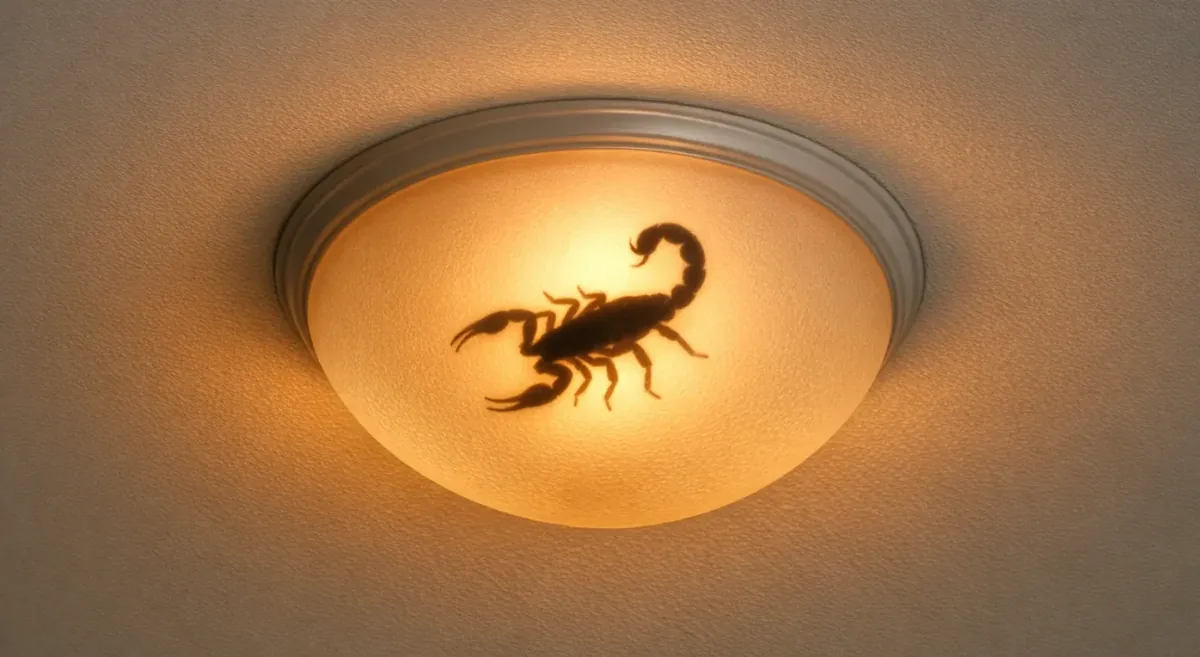
Your brain's threat-response loop goes like this: you scan the room, check the corners, feel temporary relief, then start scanning again. Sound familiar? This isn't irrational — it's your brain trying to protect you from a real threat. The problem is that the threat is unpredictable. Scorpions are nocturnal hunters that can climb walls and even ceilings, making them hard to spot until you're already close.
The goal isn't to eliminate all fear. That would be foolish when you're dealing with venomous creatures. Instead, you want right-sized vigilance paired with real safeguards. Your brain needs to know you've got a plan that actually works — not endless checking that never feels like enough.
If your anxiety feels overwhelming or persists for weeks despite taking practical steps, consider talking with a licensed mental health professional. There's no shame in getting support. Many people in scorpion-prone areas deal with this specific fear, and therapists understand it's rooted in a real safety concern, not an irrational phobia.
Why scorpions feel different than spiders or ants
Spiders tend to stay in their webs. Ants march in predictable lines. But scorpions? They show up where you're most vulnerable, often in the dead of night. You're barefoot, half-asleep, or helping a child in the bathroom when suddenly you're face-to-face with a creature that can sting.
The "where and when" factor makes all the difference. Of all foot stings, 81.9% happen to people who are barefoot (Skolnik & Ewald 2018). You're not wearing shoes in your bedroom at midnight. You're not armored up when you reach for a towel after a shower. Scorpions take advantage of these everyday vulnerable moments.
Plus, scorpions are masters of surprise. Their sandy coloring blends with floors and walls. They freeze when lights come on. By the time you spot one, you're often already within striking distance. No wonder your nervous system goes into overdrive — the threat can appear out of nowhere in spaces where you should feel safe.
Why does scorpion fear linger for weeks and mess with my sleep?
One scorpion sighting can trigger weeks of heightened alert. You find yourself checking walls before bed, scanning the ceiling at 3 a.m., and having intrusive thoughts about scorpions in your sheets. This isn't unusual — it's a common response to near-miss encounters with venomous creatures.
The timeline typically looks like this: an initial sighting creates a shock response, followed by days of hypervigilance where every shadow looks suspicious, then weeks where you can't fully relax in your own home. Some people describe it as "PTSD-like" — not to diagnose, but to capture that feeling of being constantly on edge, waiting for the next threat to appear.
The sleep problem feeds on uncertainty. Scorpions are most active at night, precisely when you're trying to be least alert. Your brain knows this. So just as you're drifting off, it jolts you awake: "Did you check behind the nightstand? What about inside the shoes?" The cruel irony is that scorpions hunt while you're supposed to rest.
What hypervigilance looks like in real life (and why it's exhausting)
Here's the nightly ritual so many people know: lights on, scan every wall from floor to ceiling, shake out the bedding, check inside slippers, look behind furniture, inspect the closet floor. Feel okay for maybe ten minutes. Then doubt creeps in — did you really check that corner thoroughly? Better look again. And again.
Sleep deprivation makes everything worse. When you're running on four hours of broken sleep, your anxiety spikes and the urge to check intensifies. Your tired brain craves certainty but can't achieve it through checking alone. You end up in a vicious cycle where exhaustion amplifies fear, and fear prevents rest.
This constant scanning is completely understandable — your brain is trying to keep you safe. But it's not sustainable. You can't be your own 24/7 scorpion surveillance system. The human nervous system wasn't designed for that level of sustained vigilance.
When does it cross from practical caution into a spiral?
Practical caution means checking shoes before putting them on and glancing around the bed before sleeping. A spiral looks different. Can't fall asleep even after your checking routine? Finding yourself checking the same spots three, four, five times? Avoiding certain rooms entirely? Seeing scorpion shapes in every shadow or piece of lint?
These are signs your anxiety has moved beyond helpful wariness. When the fear disrupts daily life — when you're exhausted but can't rest, when you can't use your bathroom without a full inspection, when intrusive thoughts about scorpions dominate your day — it's time to build a structured plan that actually reduces uncertainty instead of feeding it.
If panic attacks or intrusive thoughts feel intense and unmanageable, please seek professional support. Anxiety focused on real environmental threats (like scorpions) is common and very treatable. A therapist can help you develop coping strategies while you also take practical steps to secure your home.
How can I stop the nightly checking loop and sleep again (without ignoring safety)?
Breaking the checking loop requires setting firm boundaries around your safety routine. The key is consistency — doing the same limited checks each night, then stopping. This isn't about ignoring safety. It's about creating a sustainable routine that protects you without exhausting you.
Think of it this way: checking the same spot five times doesn't make you five times safer. It just trains your brain to believe danger is everywhere, all the time. The goal is to retrain your nervous system to trust a reasonable routine.
A structured approach can actually provide better safety than random, anxiety-driven checking. When you have a plan and stick to it, your brain can finally relax knowing you've taken appropriate precautions. Let's build that plan.
A 5-minute bedtime safety routine (pick 2 checks, then stop)
Choose exactly two checks that matter most to you. Maybe it's shaking out your shoes and doing a quick visual scan around your bed's perimeter. Or checking inside the shower and under the bathroom sink. Whatever you choose, those are your two checks. Period.
Here's the hard rule: no third round. Do your two checks thoroughly, then stop. Even if anxiety whispers "just one more look," you stop. This isn't cruel — it's retraining your brain to accept "good enough" safety rather than impossible perfection.
Why does this work? Repeated checking can increase anxiety by reinforcing the belief that danger is imminent. When you stop at two checks, you're telling your brain: "I've taken reasonable precautions. Now we rest." It can feel uncomfortable at first, but within a week, most people notice their anxiety starting to ease.
Keep a simple 'if I see one' kit so you don't rehearse worst-cases
Mental rehearsal of worst-case scenarios keeps you awake. Instead, prepare a simple response kit and put it near your bed: a flashlight, closed-toe shoes or slippers, and a clear glass or jar with a piece of cardboard for trapping. That's it.
Now create your response script: "If I see a scorpion, I put on shoes, grab the glass, trap it against the surface, slide the cardboard underneath, and release it outside." Practice this sequence once in daylight when you're calm. Avoid the common mistakes people make when panicked.
Having a pre-decided plan stops the 2 a.m. mental spiral of "What would I even do?" Your brain can rest knowing you have a clear, safe response ready. No more lying awake rehearsing disasters — you've got a plan that works.
How do I handle scorpion anxiety as a parent—or when my partner dismisses me?
Parenting adds weight to scorpion anxiety. You're not just protecting yourself — you're responsible for little ones who might not understand the danger. Children face higher risk from scorpion stings, so your heightened concern makes complete sense.
Then there's the loneliness of being dismissed. When your partner rolls their eyes at your "overreaction" or friends joke about your scorpion paranoia, it hurts. You need support, not mockery. Let's talk about handling both situations while maintaining your emotional and physical safety.
Remember: your feelings are valid whether others understand them or not. You can protect your family and advocate for your needs without apologizing for taking scorpions seriously.
If you have kids: how to validate fear without teaching panic
When your child spots a scorpion or expresses fear, try this approach: "I see you're scared. That makes sense — scorpions can sting, so we're careful around them. Here's what we do: we tell a grown-up right away, we don't touch it, and we watch where it goes from a safe distance."
Keep your explanation factual and brief. Kids need to know scorpions are dangerous without developing paralyzing fear. Teach them the shoe-check habit matter-of-factly: "In our house, we shake out our shoes before putting them on, just like we brush our teeth before bed."
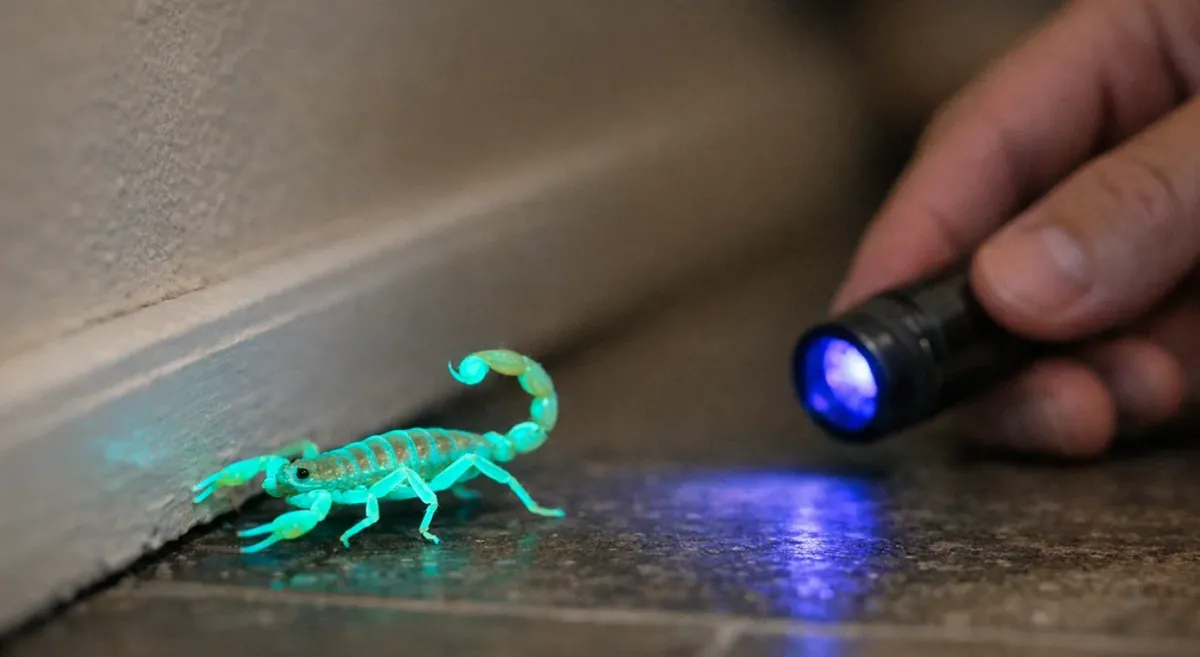
If they want more details, keep it simple: "Scorpions glow under special purple lights, and they like to walk along walls at night looking for bugs to eat." Save the detailed biology lessons for when they're older. Right now, they just need clear safety rules and calm reassurance that you're handling it.
If your partner thinks you're overreacting: a script that focuses on impact
Try this conversation starter: "I know my scorpion anxiety seems excessive to you. Here's how it's affecting me: I'm sleeping only four hours a night, I'm exhausted at work, and I can't relax in our home. I need your help with our bedtime safety routine, and I need the jokes to stop. Can we agree on a plan together?"
Suggest a team approach: "Let's decide what we'll do tonight for immediate safety, and what we'll tackle this weekend for longer-term prevention." Maybe tonight you do the two-check routine together. This weekend, you'll work on sealing the entry points where scorpions get in.
When both partners own the solution, you're not carrying all the vigilance alone. Even if your partner doesn't share your fear level, they can still support practical safety measures. Frame it as teamwork, not a debate about whose reaction is "right."
If you feel embarrassed about being 'the scorpion house'
Shame creeps in when you're the house where visitors nervously check their shoes, where you have to warn overnight guests, where your scorpion stories dominate neighborhood conversations. It can feel like a personal failing, like you should've somehow prevented this.
Here's the truth: scorpions are a regional reality across the Southwest. This is about management, not moral failure. You didn't invite them in, and having scorpions doesn't mean you're a bad housekeeper. Scorpions enter homes seeking water and prey, not because you did something wrong.
For visitors, try this boundary: "Just so you know, we do get scorpions here occasionally. I'd recommend checking your shoes in the morning, and here's a flashlight for your nightstand just in case." Then move on. No lengthy apologies, no dramatic stories. You've given them useful information — that's enough.
What actually helps me feel in control again (instead of constantly scanning)?
Here's what anxious brains need to calm down: reliable information, not endless vigilance. The difference between "checking" and "monitoring" is crucial. Checking is manual, exhausting, and never feels like enough. Monitoring is systematic, consistent, and gives you real data to work with.
Think about it — what really fuels the anxiety? It's the uncertainty. Did I actually see something move? Was that a scorpion or just a shadow? Are they coming in every night while I sleep? Without answers, your brain fills in the worst possibilities.
Modern technology offers a solution. Automated monitoring systems like Scorpion Alert use UV detection to watch for scorpions continuously, sending alerts only when there's something real to address. Instead of wondering and worrying, you get facts: yes, there's one by the bathroom door right now, or no, your bedroom has been clear all week.
Why 'proof' matters for scorpion anxiety (photos, timestamps, confidence)
Uncertainty is anxiety's best friend. When you think you saw something scurry along the baseboard but can't be sure, your brain goes into overdrive. Did I really see it? Is it still there? Should I tear apart the whole room looking?
Photo-verified alerts change everything. Instead of doubting your tired eyes at 2 a.m., you get clear evidence: here's the scorpion, here's exactly where it was detected, here's the timestamp. Now you can make a decision — grab your response kit and deal with it, or see it was hours ago and the scorpion has likely moved on.
AI confidence percentages add another layer of certainty. A 98% confidence detection demands immediate action. A 72% confidence alert might just be a cricket, so you can check more calmly. This calibrated urgency helps prevent both panic and complacency.
What does an automated scorpion monitoring system look like in a real house?
Picture outlet-based detectors placed strategically around your home — in the main bedroom, nursery, and near common entry points. These aren't bulky contraptions. Scorpion Alert detectors plug directly into standard wall outlets, right where scorpions naturally travel along the room perimeter.
Setup is straightforward: plug in the device, connect it to your 2.4GHz Wi-Fi through the guided app setup, and position it where the UV light can scan the floor below. No complex installation, no monthly battery changes. The system starts working immediately.
Family sharing means multiple adults get alerts, so you're not the only one carrying the burden of vigilance. Your partner gets the same notification you do. Now it's "we have a scorpion in the guest bathroom" instead of you being the sole worried guardian.
How Scorpion Alert reduces night anxiety specifically (not just 'pest control')
The strength is in the timing. Scorpion Alert detectors activate when rooms go dark — exactly when scorpions emerge to hunt. While you sleep, they're continuously scanning, watching for that telltale fluorescent green glow scorpions emit under UV light. You're not lying awake wondering. The system is on duty.
Alert options include both push notifications and SMS texts, so you won't miss critical detections. Worried about sleeping through an alert? Set up text messages. Need immediate awareness for your child's room? Push notifications appear instantly on your lock screen.
Fine-tune the system using confidence thresholds. Live in an older home with lots of dust and pet traffic? Adjust the sensitivity to reduce false positives. Rather have maximum sensitivity in the nursery? Set that detector to alert on lower confidence scores. You're in control of how the system protects your specific spaces.
A 'control ladder' plan for the next 7 days
Days 1-2: Implement your two-check bedtime routine and set up your response kit. Practice stopping after two checks even when anxiety pushes for more. Notice how it feels to set that boundary.
Days 3-5: Choose your monitoring approach. Will you use professional pest control services, automated detection tools, or both? Define what "success" looks like — fewer manual checks, better sleep, or simply feeling calmer in your home. Order any products or schedule any services you've decided on.
Days 6-7: Review the week. Any sightings or alerts? Adjust your approach based on real data. Maybe you need a detector in another location. Maybe your two-check routine needs slight modification. Perhaps household roles need clarifying — who responds to alerts, who handles prevention tasks. Use what you've learned to refine your plan.
Remember: you're building a sustainable system, not achieving perfection. Each day you follow your plan instead of spiraling into endless checking, you're retraining your nervous system to trust reasonable precautions. That's how you reclaim your home and your peace of mind from the emotional toll of living with scorpions (not crazy).
You’re not overreacting—living on edge at night, checking floors, and second-guessing every shadow can take a real emotional toll. If you want a steadier sense of control, Scorpion Alert helps by watching 24/7 (especially after dark) and using proven AI detection to cut down on false alarms and constant guessing—learn more at Scorpion Alert.