Is a scorpion problem a "habitability" issue in Arizona rentals?
A recurring indoor scorpion problem can rise to a habitability concern in Arizona, because landlords are generally required to keep a rental fit and safe to live in. A single scorpion is usually a nuisance. But repeated indoor sightings, stings, or baby scorpions can point to an ongoing infestation tied to the building itself — and that's where landlord responsibility often comes in.
This shift in framing matters. You're not just reporting "bugs." You're reporting a safety hazard — especially if children live in the home. Arizona bark scorpions (Centruroides sculpturatus) deliver the most medically significant sting in the United States, and small kids often react far worse than adults.
A quick disclaimer: This is general education, not legal advice. Arizona's Residential Landlord and Tenant Act and your local code govern the specifics, so check those resources or talk to a tenant attorney or legal aid office before acting on anything here.
What's the difference between one scorpion and an infestation?
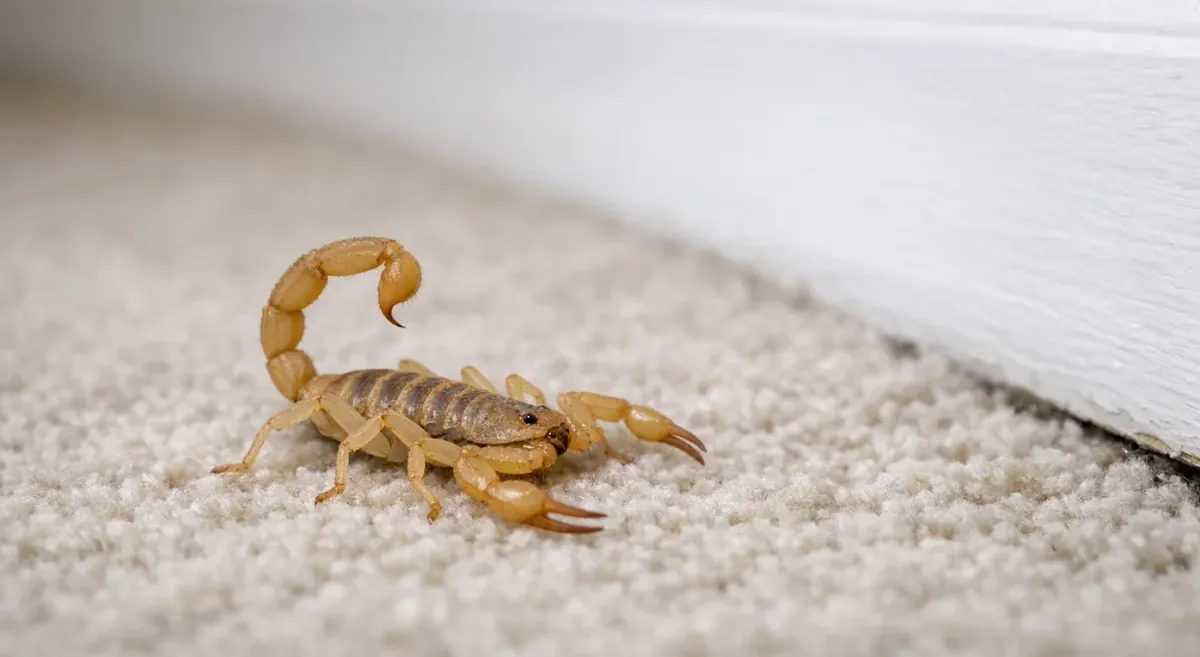
An infestation shows up as a pattern, not a single event. Watch for frequency (multiple scorpions over days or weeks), the number of rooms affected, and repeated nighttime sightings along baseboards and walls. Scorpions are thigmotactic — they travel hugging edges and surfaces — so finding them in the same corridors again and again is a red flag.
The biggest tell is baby scorpions. Tiny, pale, translucent scorpions don't wander in from the desert. They hatch nearby, which means a breeding population has set up somewhere on or in the structure. One adult might be a hitchhiker. Babies usually mean the problem is living with you.
Why bark scorpions change the stakes for tenants
Bark scorpion venom can cause more than local pain. In severe cases, it can trigger involuntary muscle jerking, roving eye movements, and trouble breathing — and the risk is highest for young children.
97.8% of US scorpion envenomations happen inside the home — not out in the yard.
— Kang & Brooks, J Med Toxicol 2017
Children under 10 have the highest rates of systemic effects, hospitalization, and ICU admission, according to Kang & Brooks 2017. That's why this is more than a nuisance complaint. If you have kids, read up on why children are more at risk from scorpion stings, and keep a bark scorpion sting first-aid plan ready before you ever need it.
Can my lease really make me responsible for scorpion pest control?
A lease clause making you handle "pest control" usually covers routine pests, but it doesn't automatically settle a scorpion problem tied to the building's condition or to tenant safety. Arizona law generally requires landlords to keep the premises habitable, and contract language can't waive that duty for serious health and safety issues. If your AZ landlord won't fix scorpions, it's worth knowing your rights before assuming the lease settles the matter.
The structural angle is key. Scorpions enter through foundation gaps, attic vents, worn weather stripping, plumbing penetrations, and shared walls — and fixing those is a building problem, not a tenant chore. A tenant can't reseal a foundation crack.
A reasonable landlord response generally means licensed pest control plus exclusion work plus follow-up visits. Not one spray and a shrug.
What "tenant responsible for pests" usually means in real life
In practice, tenant duties are about behavior, not construction. You're expected to keep the unit reasonably clean, report problems early, and avoid creating attractants like standing water, crumbs, or piles of clutter that give scorpions and their prey a place to hide.
What you can't control is the building envelope: foundation cracks, missing door sweeps, failing window seals, gaps around pipes, and harborage across a shared property. Those are exactly the entry routes scorpions exploit — see the top ways scorpions get into your home. Asking a tenant to fix them isn't reasonable.
What you should ask for (so the landlord can't offer a useless one-time spray)
Ask for a plan with dates, not a single visit. A serious request includes interior service, exterior perimeter treatment, and scheduled rechecks through peak season.
- Licensed pest control for the interior and exterior, with a perimeter treatment.
- Exclusion work: door sweeps, crack sealing, vent screens, weather stripping.
- Follow-up rechecks scheduled in advance, not "call us if it comes back."
- Documentation: invoices or work orders stating exactly what was treated.
How do I document scorpions so my landlord can't ignore it?
Document every sighting with timestamped photos and video, a written sightings log, and copies of any medical records if someone was stung — and keep all communication in writing. Objective evidence is a renter's single best source of leverage, because it turns "I keep seeing scorpions" into a record a landlord can't easily wave away.
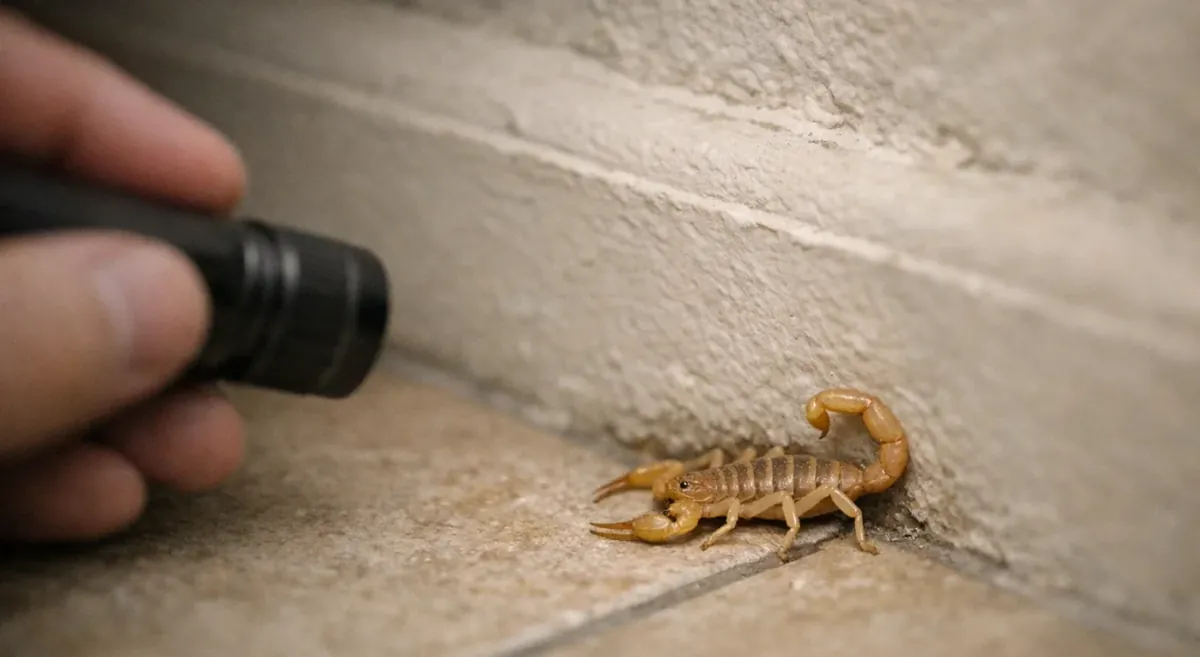
Picture this: you flip on the kitchen light at 1 a.m. and a scorpion freezes on the tile by the trash can. Snap a wide shot, then a close-up, note the time, and log it. Do that consistently and a pattern emerges on paper.
What to record every time you see a scorpion (the evidence checklist)
- Take a wide shot showing the room and location for context.
- Take a close-up clear enough to identify the species.
- Capture date and time — your phone's metadata or a visible clock works.
- Log the exact location (room, baseboard, near which fixture).
- Note who saw it and what happened next.
- Record any sting and save medical visit paperwork.
How to do a blacklight walkthrough that holds up in a dispute
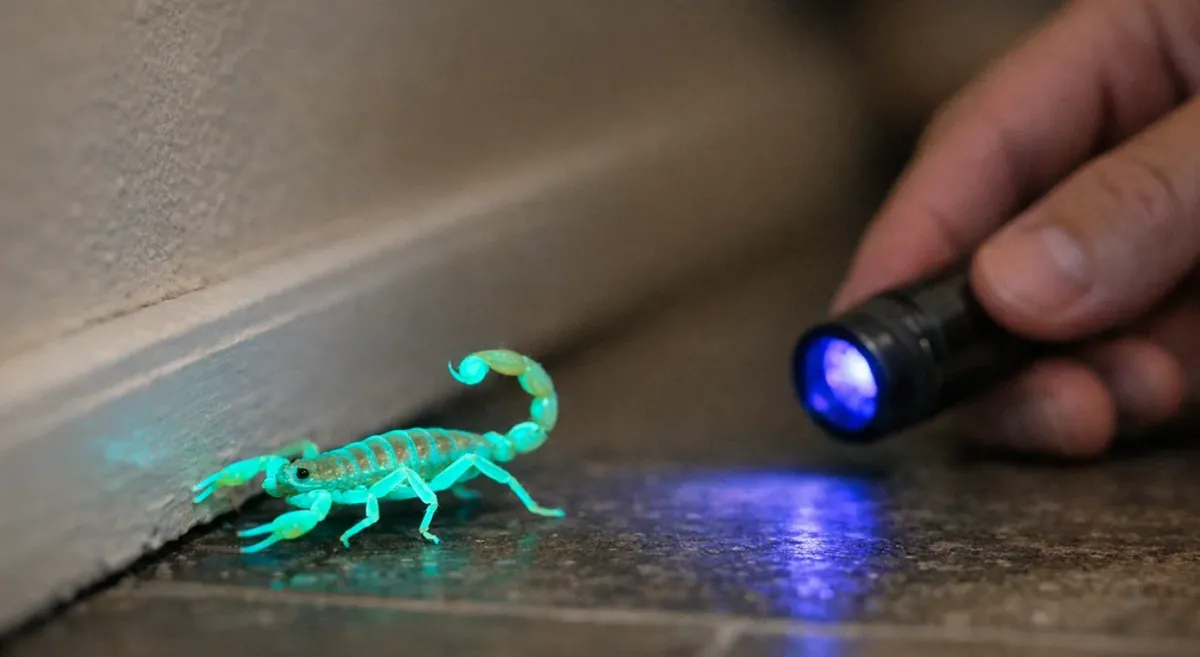
A blacklight walkthrough creates credible visual proof because scorpions glow a bright greenish-blue under 365nm UV light. Do it in full darkness for the clearest results.
- Wait until the home is fully dark, then start your UV sweep at the baseboards.
- Move to thresholds, closets, bathrooms, and the laundry room — common harborage spots.
- Narrate a video as you go, calling out each room and what you find.
- Use the same route every time so the recurring pattern is obvious.
- If you find multiple scorpions, ask your property manager or maintenance to attend a follow-up walkthrough.
Can Scorpion Alert help renters create objective proof?
Yes — Scorpion Alert is built for documentation and peace of mind. The plug-in Detectors run autonomously at night, scanning the floor along the room's perimeter only when the room goes dark, which is exactly when scorpions are most active. You're not stuck patrolling with a flashlight.
Each alert is photo-verified: it arrives on your phone with a real image and an AI confidence percentage. A timestamped photo with a confidence score is much harder for a landlord to dismiss than a text-only complaint. Detectors also send offline alerts if one disconnects, so you'll know your monitoring didn't quietly stop in the middle of a dispute.
What should I send my landlord, and how fast do they need to respond?
Send one clear written "initial notice" describing the problem and your requested actions, then add short, factual incident updates as new sightings occur. Keep it calm and attach evidence rather than venting. Use email plus certified mail, save every reply, and ask for pest-control invoices or work orders — Arizona response timelines are statute-driven, so a clean paper trail protects you.
A simple written notice template you can copy/paste
Dear [Landlord/Property Manager],
I'm writing to formally report an ongoing scorpion problem at [address, unit]. Between [start date] and [today's date], I have seen scorpions on [number] separate occasions in the following rooms: [list rooms]. [Note any stings and medical visits here.] I've attached a dated photo and video log documenting each sighting.
I'm requesting the following: (1) licensed interior and exterior pest control with a perimeter treatment; (2) exclusion work to seal entry points such as door sweeps, cracks, and vent screens; and (3) a follow-up recheck schedule. Please confirm a service date by [reasonable deadline] and provide written documentation of what is treated.
Thank you, [Your name, phone, date]
What a serious scorpion action plan looks like (not just a spray-and-pray)
A real plan has three parts working together: professional treatment, physical exclusion, and scheduled rechecks. Spraying alone rarely solves a bark scorpion problem because they're tough, and they keep re-entering through the same gaps.
Exclusion is the part that lasts — door sweeps, sealed cracks, intact window and vent screens. Ask for the whole plan in writing, with dates and scope, so "we'll send someone" becomes a documented commitment. Timing matters too; sync rechecks with Arizona's scorpion season, which peaks in the warm monsoon months.
If my landlord still won't treat the scorpions, what can I do next?
If your landlord ignores proper written notice, escalate procedurally: confirm you've followed Arizona's notice requirements, then contact tenant advocacy or legal aid and your local housing or code-enforcement office. Avoid impulsive moves like abandoning the unit or skipping notice steps — those can backfire. The goal is to stay credible, consistent, and well-documented.
The escalation ladder (from first notice to outside help)
- Send your written initial notice by email and certified mail.
- Add short incident updates with new dated evidence as sightings continue.
- Request copies of invoices and work orders for anything that was done.
- Send a calm follow-up noting the problem hasn't been resolved by the stated deadline.
- Contact tenant legal aid, housing authorities, or code enforcement for next steps.
Can I break my lease or withhold rent because of scorpions?
Sometimes, but the rules are highly procedural and fact-specific, and getting the steps wrong can leave you owing rent or facing eviction. Arizona has specific notice-and-cure requirements before any self-help remedy is even on the table.
Talk to a tenant attorney or legal aid before taking any irreversible step like withholding rent or moving out. This is exactly where your documentation pays off — strong, dated evidence is what supports any remedy you ultimately pursue.
If you have to stay for now, what immediate safety steps reduce sting risk?
You can cut your sting risk tonight with a few simple habits, even before the building gets fixed. Most stings happen on bare feet and hands during ordinary moments.
- Shake out shoes, clothing, and bedding before putting them on or climbing in.
- Pull beds a few inches away from the walls and remove bed skirts that touch the floor.
- Reduce clutter, especially piles of laundry and boxes against baseboards.
- Add temporary draft blockers or rolled towels under exterior doors.
- Wear shoes when walking around at night.
Keep that first-aid plan handy, and avoid the common mistakes covered in what not to do after spotting a scorpion.
What renter-friendly scorpion protection can I take with me when I move?
The best renter tools are portable and non-permanent, so they leave no damage and move with you to the next place. None of them require modifying the building.
- A UV flashlight for quick spot checks and confirming a sighting.
- Non-permanent exclusion: removable door sweeps, foam gap fillers, draft stoppers.
- Monitoring you can unplug and take along.
Scorpion Alert fits renters well because the Detectors simply plug into a wall outlet — no hub, no drilling — and you can place several to cover multiple rooms and entry points. A couple of practical notes renters ask about: they connect over 2.4GHz Wi-Fi, and the 365nm UV light isn't noticeable to most people at night, so it won't disturb your sleep. When you move, you unplug them and bring your protection with you.
Scorpion Alert plug-in Detectors watch the floor along your walls every night and send a photo-verified alert to your phone within seconds of spotting a scorpion's glow. Detectors are included with the monthly monitoring subscription, and you can cancel anytime. See /pricing for current rates. For renters building a paper trail — and protecting their family — it's documentation and peace of mind in one. Get Scorpion Alert and start monitoring tonight.
If your landlord is slow to respond, keeping clear, time-stamped evidence of scorpion activity can strengthen your written requests and help you document how the issue affects habitability. Scorpion Alert can help by detecting scorpions more reliably (including under UV) so you’re not relying on guesswork when you’re trying to protect your home and your rights—learn more at Scorpion Alert.