When is scorpion season in Arizona in 2026, really?
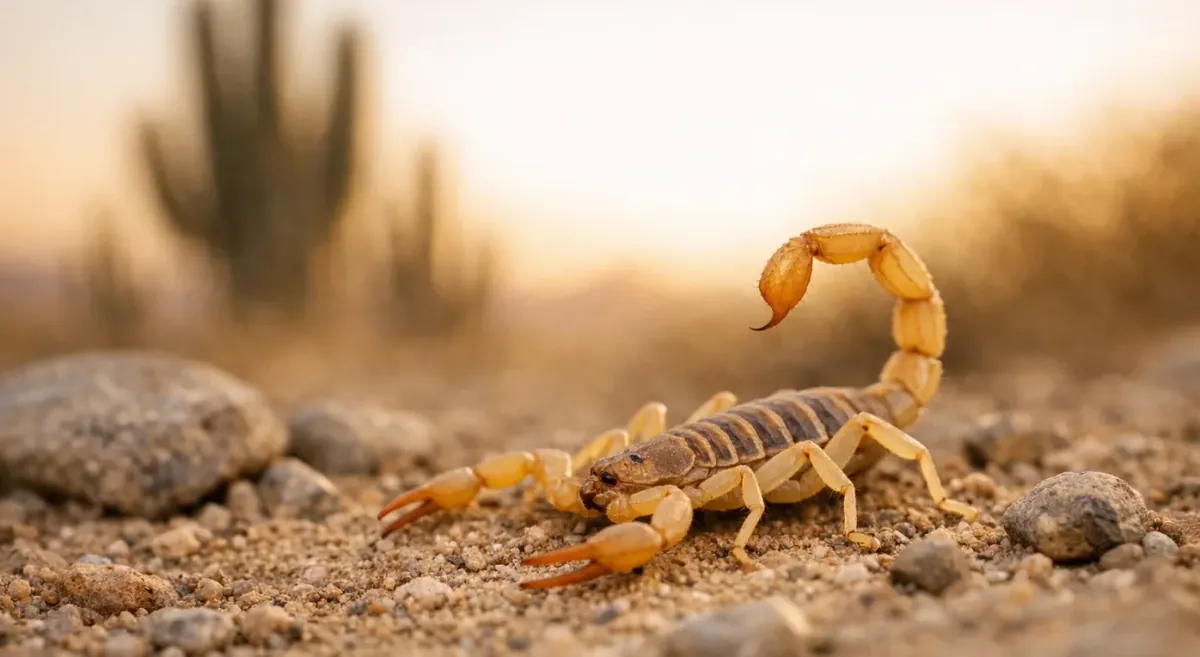
Arizona scorpion season usually runs March through October, but the calendar isn't what drives it — warm nighttime lows and moisture do. When overnight temperatures stay mild, scorpions hunt and roam more, and that's when they wander indoors. A cold snap slows them down; a warm February week can wake them right back up.
So why did you spot one in February? A stretch of warm nights — plus the shelter and water your home offers — is usually enough to pull a bark scorpion out of hiding. It's not a fluke; it's a signal. Treat it as an early heads-up for the year ahead.
Timing also shifts by neighborhood. Urban heat islands in Phoenix, Mesa, and Chandler hold warmth longer into the night, so activity there can start earlier and run later than in higher-elevation suburbs. One timeline doesn't fit every yard.
Is scorpion season a specific date or a temperature pattern?
It's a temperature pattern, not a date. The practical rule of thumb: consistent warm nighttime lows mean more hunting and movement. Once overnight temps settle into the comfortable range, scorpions get active — regardless of what the calendar says.
Even the "quiet" winter months can bring indoor sightings, especially in garages and bathrooms where warmth and moisture collect. Dormant doesn't mean absent.
81.8% of Arizona homes where someone was stung had already seen scorpions on the property. A single sighting is the strongest predictor of a future sting.
— Skolnik & Ewald 2018 (FEARS)
If you've already had a sighting, treat your home as "in season" now — regardless of month.
Why are people seeing scorpions earlier than usual?
Milder winter nights are the main reason. When cold snaps ease, scorpions stay active longer, and the shelter, warmth, and water inside your home make it an easy target. February and March become prep season — not "safe season."
Spot one early? Do these within 48 hours:
- Seal obvious gaps around exterior doors and utility lines — start with the top ways scorpions get into your home.
- Declutter along baseboards and wall edges where scorpions travel.
- Fix drips and wipe down sinks so you're not offering a water source.
- Start monitoring your entry points and bedrooms so the next one doesn't surprise you.
What weather patterns make scorpions come inside (heat waves, monsoons, warm nights)?
Two weather triggers cause most indoor encounters: extreme heat and monsoon moisture. During a heat wave, scorpions seek the cooler, stable temperatures inside your home. After a monsoon storm, rain floods their hiding spots and drives up insect prey, pushing them toward structures. Both can spike indoor sightings within a day or two.
The day before a forecasted heat wave, close up gaps around doors and keep the garage-to-house threshold sealed. The morning after a storm, check door seals and clear soggy patio debris before nightfall. For the full picture of what draws them in, see the top things that attract scorpions in your home.
During heat waves, where do scorpions go first inside a home?
They head for cool, dark, humid spots first — the garage-to-house threshold, bathrooms and laundry rooms with water, and shaded perimeter rooms. Because scorpions are thigmotactic, they navigate by hugging surfaces and edges, so they arrive along baseboards, not across the open floor.
Don't search the middle of rooms. Scan the edges. Picture the nightly route as a mini-map: door thresholds lead to baseboards, baseboards lead to water sources, and water sources sit close to bedrooms. That's the path to watch.
After monsoon storms, when is the highest-risk window?
The evening and overnight hours right after a storm are prime movement periods. Rain displaces scorpions from their harborage and stirs up insects, so activity climbs once the sun goes down.
Your post-storm routine: check door seals, clear patio debris and standing water, and tighten monitoring coverage near entry points. Because displaced insects pull scorpions toward homes, general insect control quietly supports scorpion control — fewer bugs means fewer reasons for a scorpion to visit.
What should I do before peak season hits (and what's the fastest win)?
Do three things in March (or as soon as you can) so you're not scrambling in July: exclusion, reduce water and prey, and set up monitoring. Nail these before the heat and monsoons arrive and you'll spend peak season responding calmly instead of reacting in a panic.
What's the most effective pre-season checklist for Arizona homes?
Prioritize exclusion first, then habitat. Install door sweeps, tighten the garage door seal, and close obvious utility gaps — the full entry-point guide covers the details. Then reduce clutter along walls, cut indoor moisture, and keep stored boxes up off the floor.
Overwhelmed? Try a 90-minute Saturday plan: 30 minutes on door sweeps and the garage seal, 30 minutes clearing baseboards and lifting storage off the floor, and 30 minutes fixing drips and setting up monitoring. Small window, big payoff.
How can I monitor for scorpions without nightly blacklight walks?
You can automate it. Scorpions are nocturnal, and most encounters are accidents — you won't know one is inside until you step on it or it stings someone. Good monitoring means steady coverage near entry points and high-risk rooms, running every night so you don't have to.
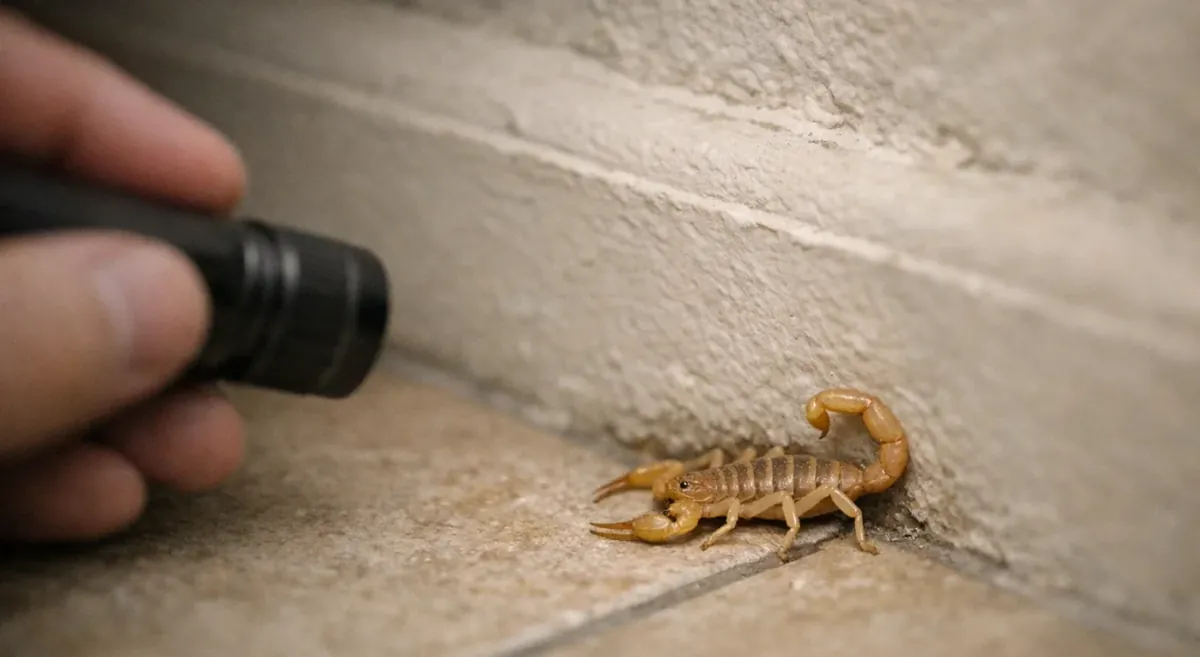
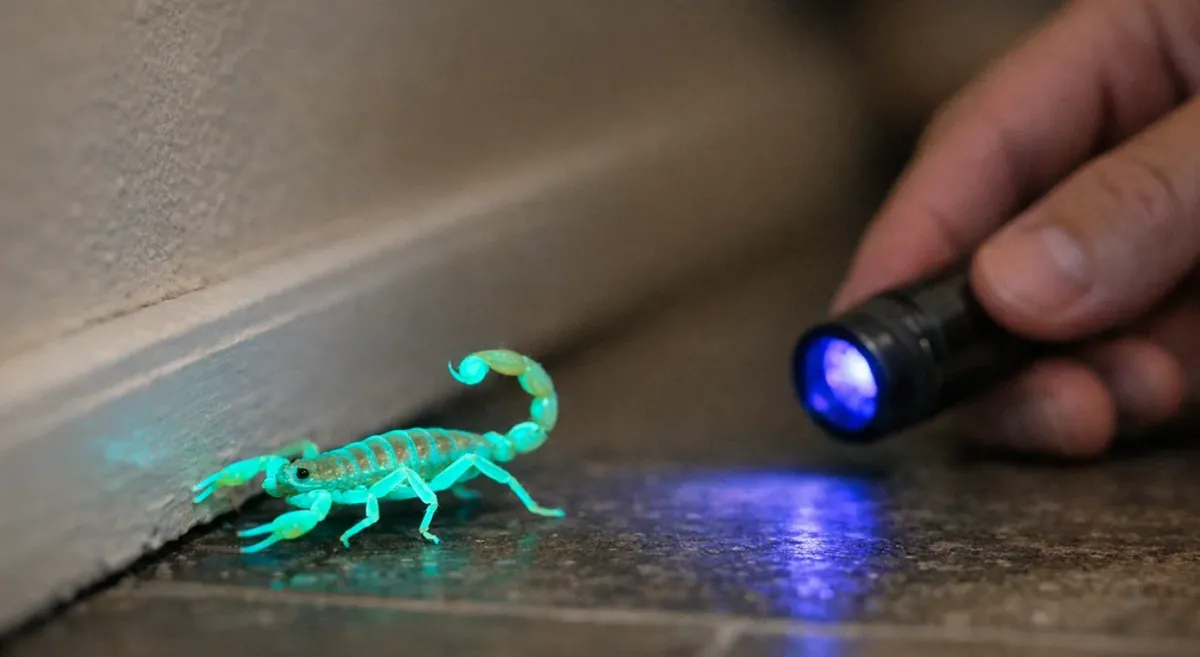
Plug-in Scorpion Alert Detectors activate when a room darkens and scan the floor continuously with 365nm UV light — scorpions glow greenish under it. When one is detected, you get a photo-verified alert with an AI confidence score, sent to your phone (with optional SMS) within seconds. Because they plug into wall outlets on the room perimeter, they sit right where scorpions naturally travel: along the edges.
Where should I place detectors or traps for the best odds?
Cover the routes scorpions actually use. The top five placements:
- The garage-to-house door
- The patio slider
- The pet door area
- The laundry room
- The hallway outside bedrooms
The 365nm UV these Detectors use produces strong fluorescence but is generally not perceptible to most people at night, so it won't disturb your sleep. Skip the messy, unreliable sticky traps and myth-driven fixes — see the myths about scorpion repellents. For real coverage, use multiple monitors across the property instead of betting everything on one spot.
What is the month-by-month Arizona scorpion season timeline for 2026?
Here's the easy-to-save version of the Arizona Scorpion Season 2026 month-by-month breakdown. Remember the caveat: timing shifts by neighborhood and elevation, so warmer, lower areas start earlier and cool later.
January–February: Is it actually dormant anymore?
Not fully. Warm night stretches plus indoor shelter and water keep some scorpions active even in deep winter, mostly in garages and bathrooms. If you see one now, start monitoring bedrooms and entry points, refresh door seals, and clear indoor clutter along walls. A jump in indoor moisture bugs sometimes precedes scorpions — an anecdotal early-season signal worth noting.
March: When should I start prevention and treatments?
March is the highest-ROI month for exclusion and for scheduling pest control before the summer rush. By March 31, "ready for peak season" looks like this: seals done, clutter reduced, monitoring live. If you're using automated alerts, verify they're audible at night — set push and SMS to break through Focus and Do Not Disturb.
April–May: Why do sightings suddenly feel more common?
Scorpions move more as nights warm, and people are outside with doors open more too — so panic posts spike. Lock in indoor routines now: shoes up off the floor, beds pulled away from walls, and toy and laundry clutter under control. Extend monitoring to kid and pet areas where floor contact is constant.
June: Does extreme heat push scorpions indoors?
Yes. As daytime heat climbs, scorpions seek the cooler indoor microclimate — which is why bathrooms and laundry rooms matter most. Fix leaks, dry sinks before bed, and keep baseboards clear. Focus monitoring on perimeter outlets near water sources and entry points.
July–August: Is this the peak because of monsoons?
Yes — this is peak, thanks to the monsoon double effect: storms displace scorpions while damp weather boosts their insect prey.
August–September are the peak envenomation months in Arizona, tracking closely with monsoon humidity and warmth.
— Kang & Brooks 2017
Your post-storm playbook: check seals, scan edges, and respond fast to alerts. Photo-verified alerts mean you walk straight to the right room instead of searching the whole house at 2 a.m.
September: Are scorpions still a risk (mating season and babies)?
Very much so — season isn't over. Late-summer activity, mating, and young scorpions can make September feel just as intense as August. Keep family safety routines tight and stay on top of indoor hiding spots. Parents, see our guide on why children are more at risk from scorpion stings.
October–December: When can I stop worrying, and what should I do in the off-season?
Don't stop too early. Warm spells in October and November can trigger late movement, so hold your precautions until nights turn reliably cool. Use the off-season for big projects: major sealing, garage door adjustments, and yard cleanup. Set up monitoring before spring so next year you're proactive, not reactive.
How do I protect my family during peak months—and what should I do if I get an alert?
Trade panic for a routine. A few nightly habits, a smart alert response, and a clear plan for stings cover most of what a household needs. Here's how each piece works.
What is a realistic nightly routine for July–September?
Keep it to 30–60 seconds. Shoes up off the floor, floors clear along the baseboards, and bedding not touching the walls — that last one matters, since scorpions travel edges and can reach a bed skirt. Add motion nightlights in hallways and bathrooms to cut down accidental contact on those 2 a.m. trips. Teach kids one simple rule: if they see something crawling, freeze and call an adult.
If I get a scorpion alert at night, what are the safest next steps?
Go straight to the alerted room and start with the edges. Because scorpions hug walls and corners, that's where you'll find it — not the middle of the floor.
- Put on closed-toe shoes and gloves before you go looking.
- Head to the room the alert flagged and scan baseboards and corners first.
- Trap it with a controlled capture — a container over the scorpion, then slide stiff paper underneath.
- Release it well away from the house, or dispose of it, without direct contact.
Photo verification means you already know what triggered the alert, so there's less guesswork and a faster response. Double-check that your alerts break through Sleep, Focus, and Do Not Disturb — an alert you can't hear won't help. Avoid the common missteps covered in what not to do after spotting a scorpion.
When should I worry about a sting, and what should I do first?
Most bark scorpion stings cause immediate burning pain, tingling, and numbness that stay local — but watch for trouble swallowing, jerking muscle movements, or roving eyes, which signal a more serious reaction. Clean the area, apply ice, and call Poison Control. Children and the very elderly are at higher risk of severe effects; parents should read our child-risk resource.
Don't panic — but act fast. For the complete plan, follow our bark scorpion sting first aid guide for the first 30 minutes.
Now that you’ve seen how Arizona’s scorpion activity rises from late spring into early fall, the biggest advantage is catching movement early—especially on warm nights when they’re most active. Scorpion Alert helps by using 365nm UV detection and continuous monitoring to capture images so you can spot scorpions even in the dark and adjust your monthly plan with confidence. Learn more at Scorpion Alert.