Resources

Can Scorpions Come Up Through Your Plumbing?

March 4, 2026

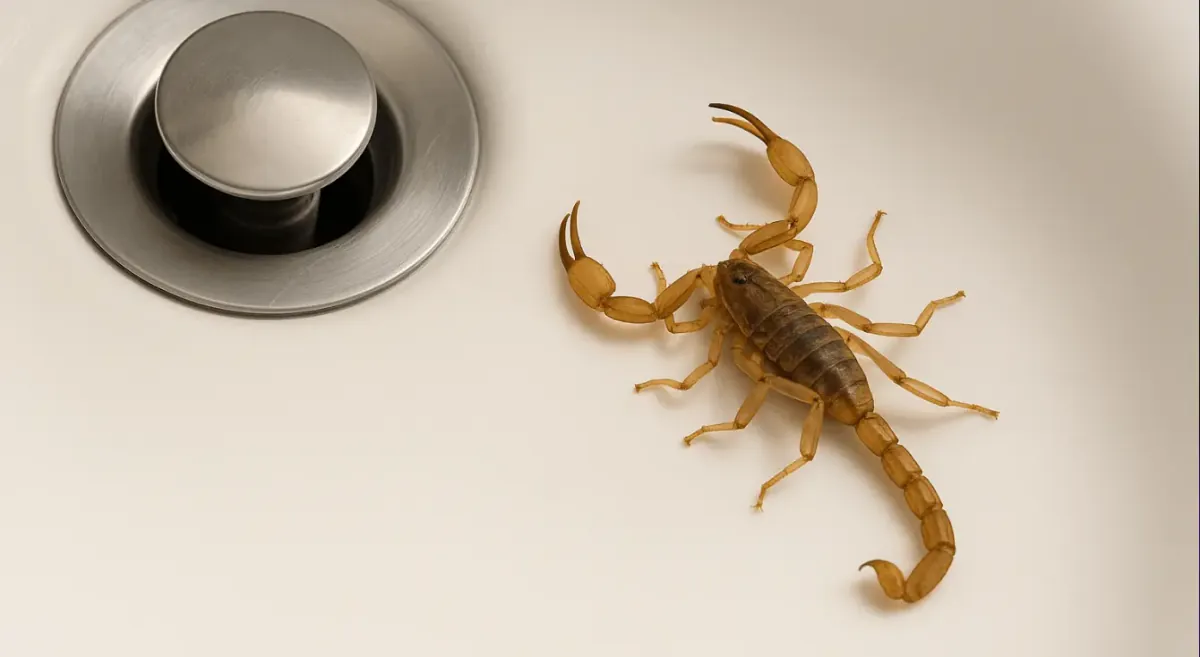
scorpion near sink drain

Can scorpions really come up through your drains?

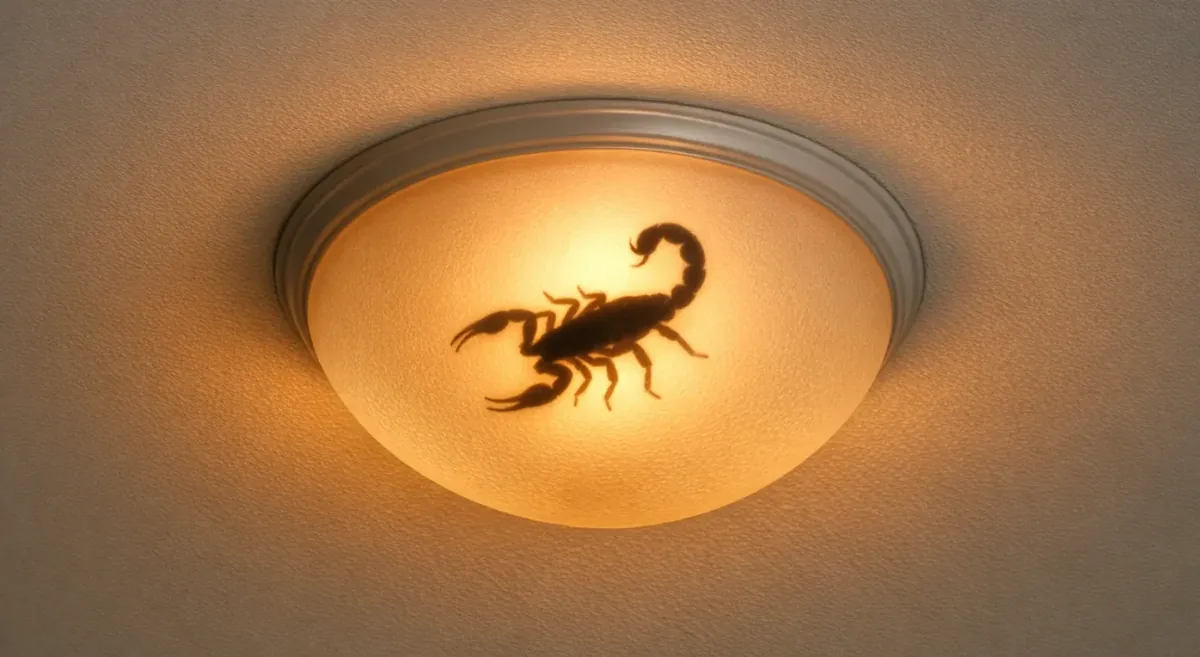
You flip on the bathroom light at 2 a.m., and there it is — a bark scorpion sitting in your bathtub like it owns the place. Your first thought? It must have crawled up through the drain. The truth is more complicated. While scorpions can technically come up through drains in certain situations, most “plumbing scorpions” are actually using gaps around your plumbing fixtures — not swimming through water lines.

Here’s what’s really happening: scorpions can’t navigate through pressurized water supply lines. They’re not aquatic creatures swimming upstream through your municipal water system. But they can crawl up through dry drains, floor drains with missing water seals, or overflow pipes that connect to the outside. The key word here is “dry” — if there’s no water barrier, a drain becomes just another tunnel.

More often, that scorpion in your bathroom came through everyday entry points. Think gaps where pipes penetrate walls, spaces under vanity cabinets, or cracks around the toilet base. Bathrooms attract scorpions because they offer moisture, darkness, and plenty of prey insects. Once inside your walls, scorpions follow their natural behavior — hugging surfaces and edges (called thigmotaxis) — which leads them straight to your bathroom’s baseboards and fixtures.

So… is it a myth or a real risk?

When homeowners say “through plumbing,” they usually picture scorpions swimming up from the sewer like some horror movie. That’s the myth part. Scorpions aren’t traveling through pressurized supply lines or navigating S-curves filled with water. They need air to breathe, just like you do.

But scorpions can do this: crawl up dry drain pipes, squeeze through unsealed pipe penetrations, and emerge from floor drains where the water seal has evaporated. They can also fall into open roof vent stacks and work their way down. In the Southwest’s dry climate, unused drains in guest bathrooms or utility rooms often lose their water seal within weeks.

The real risk? It’s more likely your scorpion came from around the pipes than through the pipes. Those quarter-inch gaps where plumbing enters your walls? That’s prime scorpion territory. The space under your bathroom vanity where pipes come through? Another easy route. These paths are far more common than true drain travel.

What it means if you found one in a bathtub

Finding a scorpion in your tub tells you something important — it probably didn’t plan to be there. Bathtub walls are slick and vertical, making them difficult for most scorpions to climb. That Arizona bark scorpion likely fell in while hunting along your bathroom walls at night and couldn’t climb back out. Think of your tub as an accidental trap.

Why do these encounters happen at night? Scorpions are nocturnal hunters. While you’re sleeping, they’re exploring your home’s perimeter, following baseboards and walls. Bathrooms are perfect hunting grounds — quiet, dark, and often home to the crickets and roaches scorpions eat. Your 2 a.m. bathroom trip just caught them in the act.

If you’ve just spotted one, grab a tall glass and a piece of cardboard. Place the glass over the scorpion, slide the cardboard underneath, and you’ve got it contained. But don’t stop there — this suggests you have entry points that need attention, and where there’s one scorpion, others may follow the same route.

How do scorpions get into bathrooms and under sinks in the first place?

Let’s talk about the boring but real entry routes scorpions use near your plumbing. In Southwest homes built on slab foundations, every pipe that enters your home creates a potential gap. Contractors cut holes for water lines, drain pipes, and gas lines. These holes are rarely sealed perfectly, especially in older homes where caulk has dried and cracked.

Under your bathroom sink, pull everything out and look at the back wall. See where the water lines come through? Those gaps around the pipes are highways for scorpions traveling through your walls. The same goes for the access panel behind your tub, the escutcheon plates around shower valves, and the surprisingly large cutout where your toilet’s water line emerges. Each penetration connects your living space to the dark wall voids where scorpions travel.

This movement pattern makes sense when you understand thigmotaxis — scorpions navigate by maintaining contact with surfaces. They don’t cross open spaces if they can help it. Instead, they follow walls, squeeze through cracks, and emerge where those walls meet your rooms. In Arizona and Texas homes, expansion gaps between the slab and walls create perfect scorpion corridors that lead straight to your plumbing penetrations.

Are gaps around plumbing pipes big enough for scorpions?

You’d be amazed how small a gap a scorpion can squeeze through. Adult bark scorpions can compress their bodies to fit through spaces as thin as a credit card. That quarter-inch gap around your sink’s drain pipe? More than enough room. The unsealed space where your washing machine hoses enter the wall? A scorpion superhighway.

Check these specific spots in your home. Under every sink, look where pipes penetrate the cabinet’s back wall — installers often cut these holes larger than needed for easier installation. Behind your toilet, examine where the water supply line enters the wall. In your laundry room, inspect the recessed outlet box where washer hoses connect. Around your tub or shower, check where the overflow drain meets the wall and where faucet stems penetrate tile.

Here’s the bonus: sealing these gaps doesn’t just stop scorpions. You’ll also block the crickets, roaches, and other insects that scorpions hunt. Cut off their food supply, and you make your home less attractive to scorpions overall. It’s prevention that works on multiple levels.

Can they come in through roof vent pipes?

Those pipes sticking up through your roof? They’re plumbing vents that allow air into your drain system. Without them, your drains wouldn’t flow properly. But an unscreened vent pipe is essentially an open door to your home’s plumbing system. Scorpions exploring your roof at night can fall in and end up anywhere your drain system goes.

While less common than gaps around interior plumbing, vent stack entry does happen. Damaged vent boots (the rubber collars that seal around roof penetrations) create gaps. Missing or torn vent screens leave pipes wide open. In older Southwest homes where rubber degrades quickly in the intense sun, these failures are surprisingly common.

The fix is straightforward but requires roof access. Install mesh screens over vent openings and replace cracked boots or collars. This isn’t just about scorpions — you’ll also keep out roof rats, birds, and debris that can clog your plumbing. Just remember that roof work in Phoenix or Tucson summers takes early-morning timing and the right safety precautions.

Do scorpions follow water lines inside the walls?

Your walls aren’t solid — they’re full of voids where plumbing, electrical, and HVAC systems run. These spaces act like hidden highways connecting every room in your house. Once a scorpion enters through an exterior gap, it can travel anywhere these voids lead. Water lines are especially attractive routes because they often have the largest penetrations and loosest seals.

Moisture makes these routes even more appealing. A slow leak under your kitchen sink doesn’t just damage cabinets — it creates a humid microclimate that attracts prey insects. Those insects draw scorpions. The scorpions follow the moisture and food sources through wall voids, eventually emerging where pipes enter your living spaces.

This is why finding one scorpion in your bathroom doesn’t mean your bathroom is the only problem area. That scorpion might have entered through a gap in your exterior wall, traveled through voids following water lines, and emerged in your bathroom simply because that’s where the hunting was good. Understanding this helps you plan more effective prevention.

What plumbing parts are supposed to block pests—and when do they fail?

Your plumbing system has built-in pest barriers — when they work. The curved pipe under every sink (the P-trap) holds water that blocks sewer gases and pests from coming up through drains. Floor drains have similar traps. Your toilet’s wax ring seals the base to the floor. These simple devices work great until they don’t.

In the Southwest’s dry climate, evaporation is your enemy. That guest bathroom you rarely use? Its P-trap can dry out in just a few weeks during summer. The floor drain in your laundry room might lose its water seal even faster. Without that water barrier, drains become open passages. Scorpions exploring your home’s sewer lines or foundation can crawl right up into your living space.

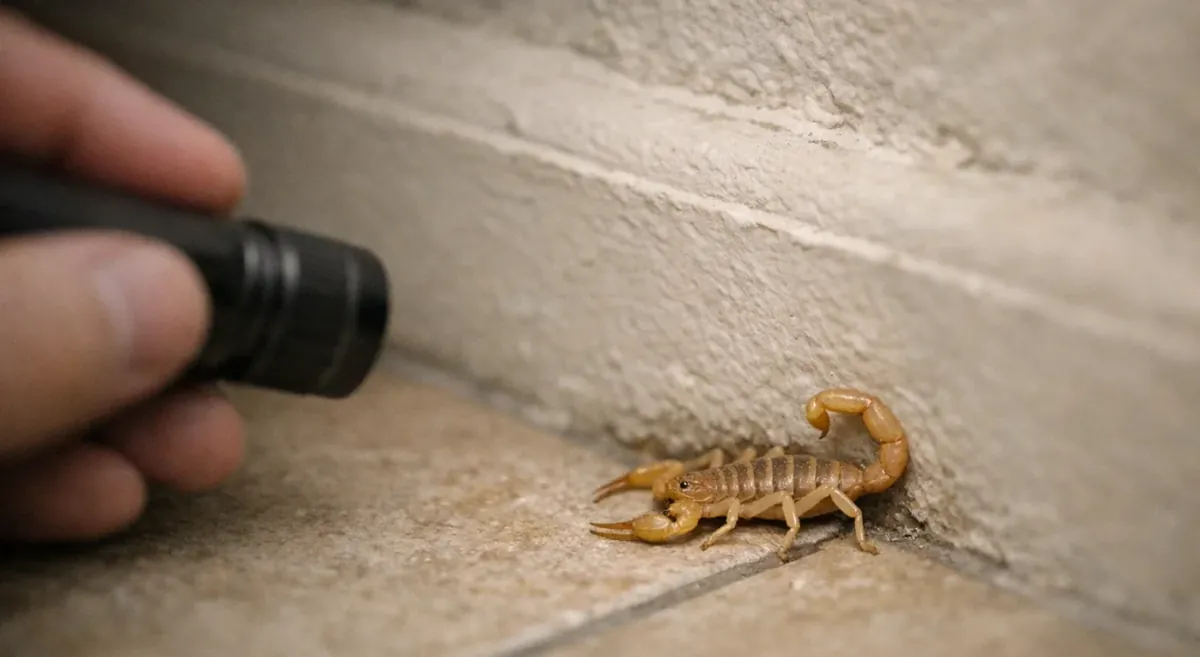
You can check your home’s plumbing barriers in under 10 minutes. Shine a flashlight down rarely used drains — you should see water. Rock your toilets gently — they shouldn’t move. Look under sinks for moisture or gaps around pipes. These quick checks can reveal problems before scorpions find them.

Do P-traps stop scorpions (and do they ever dry out)?

P-traps create a water barrier that scorpions can’t cross. When functioning properly, that U-shaped pipe under your sink holds enough water to completely block the drain passage. Scorpions can’t swim through it, and they certainly can’t hold their breath long enough to dive under. It’s simple but effective.

But P-traps dry out faster than most homeowners realize. In Arizona’s single-digit humidity, an unused sink can lose its trap seal in 2–3 weeks. Guest bathrooms, wet bars, and utility sinks are the usual culprits. Factors that accelerate evaporation include air conditioning (which removes humidity), negative air pressure from exhaust fans, and high temperatures in unconditioned spaces.

Prevention is easy — just run water in every drain monthly. Let it flow for 30 seconds to refill the trap. For fixtures you really never use, pour a tablespoon of mineral oil down the drain after running water. The oil floats on top and slows evaporation dramatically. If you’re unsure about using oil in your specific plumbing, check with a plumber — but for most homes, it’s a safe and effective trick.

Can scorpions come through floor drains or laundry drains?

Floor drains are scorpion entry points waiting to happen. Unlike sink drains that get regular use, floor drains in garages, laundry rooms, and utility areas often sit dry for months. Many older homes have floor drains that connect directly to the foundation’s French drain system — essentially a direct path from outside to inside.

Laundry drains pose similar risks. The drain where your washing machine discharges might have a trap, or it might not. Older homes sometimes have standpipes that lack proper traps. Even trapped drains can lose their seal between wash days if your laundry room runs hot. Add the attraction of lint, moisture, and dead insects that collect in these drains, and you’ve created a scorpion magnet.

Test your floor drains by slowly pouring water into them. The water should drain steadily, but you should still see water in the pipe when it stops. If water disappears completely, you’ve got a dry trap or a missing trap. Install a drain seal or trap primer to maintain the water barrier. For drains you never use, consider a tight-fitting drain cover — just remember to remove it if you ever need the drain for its intended purpose.

Could a gap at the toilet base be the real culprit?

That scorpion near your toilet might not have come through the toilet at all. The wax ring that seals your toilet to the floor can fail, creating gaps that connect to the space under your home. In slab foundations, this gap opens directly to the void under the slab where scorpions hunt. Even a properly sealed toilet can have gaps where the caulk meets the floor — and scorpions excel at finding these weak points.

Test your toilet seal by checking for movement. Put your hands on either side of the bowl and try to rock it gently. Any movement indicates a compromised seal. Look for other signs like persistent odors, moisture around the base, or discolored flooring. These all suggest gaps where scorpions could enter.

If your toilet rocks or shows gaps, you’ll need to reset it with a new wax ring — or better yet, upgrade to a modern rubber gasket seal. But here’s the important part: don’t just caulk around a leaking toilet. Fix the leak first, then seal the perimeter. Hiding an active leak leads to subfloor damage and bigger problems. A proper repair eliminates both the moisture that attracts prey insects and the gaps scorpions use.

How can I scorpion-proof plumbing entry points (step-by-step)?

Start with the quick wins — visible gaps you can seal today. Under every sink, seal gaps where pipes enter walls using silicone caulk for small gaps (under 1/4 inch) or expanding foam for larger ones. Install escutcheon plates where they’re missing. These decorative rings don’t just look nice — they cover gaps around pipes. The whole process takes maybe an hour for an average home.

Next, tackle the medium-effort fixes. Screen your roof vents using 1/8-inch hardware cloth (small enough to exclude scorpions but large enough to allow airflow). Replace dried-out caulk around tubs and showers. Install door sweeps on utility room doors. Fix any leaky faucets or supply lines — remember, moisture attracts the insects that scorpions eat.

Finally, verify your work is effective. After sealing entry points, monitor the areas where scorpions naturally travel — along baseboards and walls. This is where automated detection really helps. Scorpions can enter through AC vents too, so comprehensive monitoring helps you catch anything you missed.

Sealing around pipes and under-sink openings

Pull everything out from under your sink and really look at that back wall. You’ll likely see sloppy holes cut around pipes. Clean the area first — caulk won’t stick to dirt or grease. For gaps under 1/4 inch, use silicone caulk. Apply it neatly and tool it smooth with your finger. For larger gaps, stuff them with copper mesh first (steel wool rusts), then seal with expanding foam.

Be strategic with expanding foam — a little goes a long way. Spray in short bursts and let it expand. You can trim excess with a knife once it dries. Around drain pipes that might need future service, use removable materials like foam backer rod and caulk rather than permanent foam. The goal is a tight seal you can still service if needed.

Don’t forget less obvious spots: the hole where your dishwasher drain hose enters the cabinet, the gap around garbage disposal electrical connections, and the space where angle stops come through drywall. Each unsealed penetration is a potential entry point. Take your time and seal them all — this is detail work that pays off.

Should I screen my roof vent stacks?

Vent screening is worthwhile if you’re comfortable on your roof. Use 1/8-inch hardware cloth — smaller mesh can restrict airflow and violate plumbing codes. Cut squares slightly larger than your vent opening, form them into loose domes, and secure with UV-resistant zip ties or hose clamps. The dome shape helps prevent debris buildup while maintaining airflow.

While you’re up there, inspect the rubber boots around each vent. In the Southwest sun, these can crack and split within 5–10 years. A cracked boot creates gaps where scorpions can enter your attic, then travel down through walls. Replace damaged boots — it’s easier than you think with slip-over replacement boots that don’t require removing shingles.

Not comfortable on the roof? Hire a professional. The cost of screening vents and replacing boots is minimal compared to dealing with ongoing scorpion problems. Just make sure they understand you want pest-proof screening, not just bird guards. The mesh size makes all the difference.

Reducing moisture that attracts prey insects

Fix leaks immediately — even small drips create the humid conditions that attract crickets and roaches. Check under every sink monthly. Tighten connections on supply lines. Replace worn washers in outdoor hose bibs. That persistent moisture under your bathroom vanity isn’t just damaging your cabinet — it’s creating a buffet for scorpion prey.

Beyond fixing leaks, reduce standing water throughout your home. Empty drip pans under refrigerators. Wipe down shower walls after use. Fix gutters that overflow near your foundation. Each moisture source you eliminate makes your home less attractive to the insects scorpions hunt.

In naturally humid areas like laundry rooms, ventilation matters more than dehumidification in our dry climate. Run exhaust fans during and after washing. Keep the room clutter-free so air circulates. Store laundry supplies in sealed containers — open boxes of detergent absorb moisture and can attract pests. These simple habits break the moisture-insect-scorpion chain.

How to monitor high-risk plumbing areas without nightly blacklight walks

Manual UV flashlight patrols every night? Nobody has time for that. Focus monitoring on high-risk areas where moisture and entry points overlap — bathrooms, laundry rooms, and kitchen perimeters. Place detection tools where scorpions naturally travel: along walls and baseboards where they navigate using thigmotaxis.

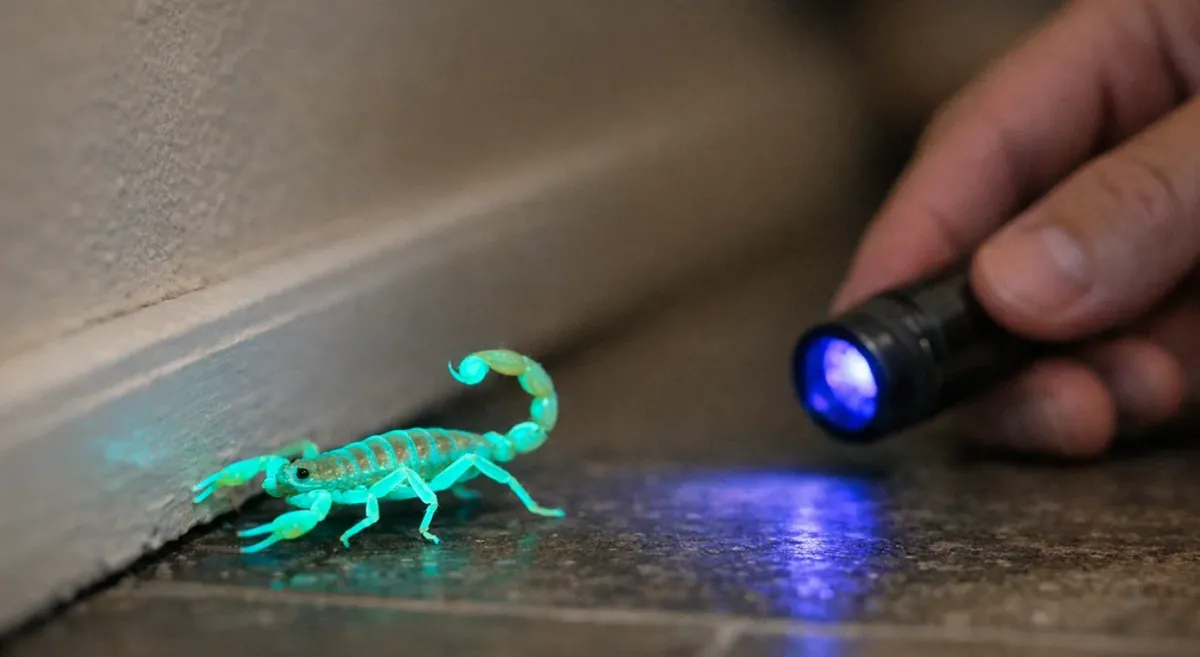
This is where automated detection makes things easier. Scorpion Alert Detectors plug into standard wall outlets — right where scorpions travel along room perimeters. They activate automatically when rooms go dark and scan continuously throughout the night using 365nm UV light that makes scorpions glow brightly. When one detects that telltale green fluorescence, you get an instant photo alert on your phone.

Automated monitoring also means coverage without extra effort. Place detectors in bathrooms, laundry rooms, and hallways between bedrooms. Each one watches its zone all night, every night. Mother scorpions can bring babies into your home, so consistent monitoring helps you catch problems early — including situations where one scorpion becomes many.

If I find a scorpion in the tub, what should I do tonight?

First, keep everyone safe. Close the bathroom door and put a towel under it. Wake up family members and have them put on closed-toe shoes — children are more at risk from scorpion stings and scorpion stings are more dangerous for pregnant women. Don’t go barefoot anywhere until you’ve checked the most likely hiding spots. That scorpion in your tub might have friends.

Next, contain the scorpion safely. Skip the shoe-smashing heroics — you’re more likely to get stung trying to kill it than catching it. Use the glass-and-cardboard method: place a clear container over the scorpion, slide stiff cardboard underneath, and flip the whole thing over. Now you’ve got it contained and can decide whether to release it far from your home or dispose of it.

Tonight, do a quick inspection. Tomorrow, start sealing entry points. This two-phase approach gives you immediate safety while planning proper prevention. Remember, finding one scorpion means others can follow the same route. Take it seriously, but don’t panic — you can handle it.

Safe removal: contain first, then decide kill vs. release

The safest capture method uses simple tools and keeps your hands far from the stinger. Grab a clear glass or plastic container at least 4 inches tall — height matters because you don’t want the scorpion reaching the rim. Add a piece of cardboard, magazine cover, or sturdy paper. Wear closed shoes and consider leather gloves if you have them.

Approach slowly — quick movements can trigger defensive behavior. Place the container over the scorpion in one smooth motion. Slide the cardboard carefully under the rim, keeping the container pressed down. Once the cardboard completely covers the opening, flip everything over. The scorpion drops to the bottom of the container, and you’re in control.

For nighttime searches in dark corners, UV light makes scorpions glow bright green — they’re much easier to spot and track. The same 365nm wavelength that Scorpion Alert Detectors use for automated monitoring works great in a handheld flashlight for active hunting. Once contained, release the scorpion at least 100 feet from your home or dispose of it if you prefer. Some homeowners report their cats kill scorpions, but don’t rely on pets for pest control.

Quick bathroom inspection checklist (10 minutes)

Start under the sink. Pull everything out and shine a light on the back wall. Look for gaps around pipes, droppings (small dark specks), or insect parts. Check the cabinet floor for moisture. Move to the toilet — inspect behind it where the water line enters the wall and around the base where it meets the floor.

Examine your tub or shower area. Pull back shower curtains and check corners. Look where the faucet handles penetrate the wall. If you have an access panel on the other side of the wall, open it and inspect inside. Don’t forget the exhaust fan — scorpions sometimes fall through damaged fan vents.

Finally, scan the baseboards with a UV light if you have one. Check inside the bathroom closet or linen storage. Pour water down any drain that doesn’t get regular use. This 10-minute inspection often reveals obvious entry points you can seal immediately with materials you already have.

How to prevent a repeat surprise tomorrow night

Tonight’s quick fixes buy you time. Roll up a damp towel and place it against the bottom of the bathroom door — scorpions rarely climb over obstacles. Move anything stored on the floor onto shelves. Close all drains when not in use. These temporary barriers won’t solve the problem, but they’ll reduce encounters while you plan permanent fixes.

Expand your monitoring to adjacent areas. Scorpions found in bathrooms often traveled through bedrooms or hallways to get there. Set up detection along the routes they use — room perimeters where walls meet floors. Multiple Scorpion Alert Detectors in key locations create overlapping coverage that catches scorpions wherever they travel.

Long-term prevention requires sealing entry points and maintaining monitoring. But you don’t have to do everything at once. Start with the bathroom where you found the scorpion, then work outward. Seal the obvious gaps, fix moisture issues, and keep watching those perimeter travel routes. Consistent monitoring tells you immediately if your prevention efforts are working — or if you need to look for additional entry points you missed.

Protect your home from scorpion intrusions with Scorpion Alert. Our advanced detection system monitors your home’s perimeter 24/7, instantly alerting you when scorpions are detected. Using UV technology that makes scorpions glow, our detectors watch the baseboards and entry points where scorpions travel. When a scorpion is spotted, you’ll receive a photo alert on your phone within seconds — no more surprise encounters in the middle of the night. Visit ScorpionAlert.com to learn how automated monitoring can give you peace of mind and protect your family from dangerous scorpion encounters.

While scorpions are far more likely to slip in through cracks and gaps than ride up your pipes, it’s still smart to keep drains sealed, traps wet, and plumbing penetrations snug—especially in scorpion-prone areas. If you want a simple way to stay on top of where they’re showing up around your home and act quickly, Scorpion Alert can help you track sightings and respond with confidence.

Hear What Our Customers Are Saying About Using Scorpion Alert

We’re in a new neighborhood with a lot of construction. Our Detectors are staying busy, but getting notifications is better than getting surprised.

Peoria, Arizona

We tried everything. Pest control companies, glue traps, powders. None of it worked as well as this.

Phoenix, Arizona

This is a really great way to solve the scorpion problem. No mess, easy to use technology.

Palm Springs, California

Let's Get Your Family Protected

A few well-placed Scorpion Detectors can help you spot them early, avoid surprises, and stop an infestation before it starts.

Account
Subscription
Detectors
Checkout

Create Your Account

No need to remember another user name or password. Use your secure Google or Apple account to sign up.

Subscribe

No matter how many Scorpion Detectors you use, your monitoring subscription is one simple, flat fee. Choose the subscription that fits you best.

$5 per month

Cancel or upgrade to our annual plan any time.

Select monthly plan

$50 per year

Get 2 months free per year when you subscribe to our annual plan.

Select annual plan

Get Scorpion Detectors

Get as many as you need. It won't change your subscription price.

$50 each

Get up to three. If you need more, get one free with a 5-pack.

$200 for a 5-pack

Get a free Scorpion Detector when you buy four.

Order 1 Detector

One Moment Please...

Related Articles

scorpion sting on skin

What Does Scorpion Venom Do To The Human Body?

Learn how scorpion venom affects humans, from mild symptoms to severe reactions, and how to respond to a sting.

->
Arizona bark scorpion in residential setting beside Cy-Kick CS and Demand CS products.

Cy-Kick CS vs Demand CS: Which Works Better?

Cy-Kick CS vs Demand CS for scorpions: active ingredients, residual, Reddit insights, dilution mistakes, and which to buy.

->
Two Arizona bark scorpions engaged in a mating dance near a doorway at night.

Do Scorpions Communicate? Mating Dance Explained

Learn how scorpions use pheromones, vibrations, and touch to communicate—and what their famous mating dance looks like.

->

Frequently Asked Questions

Where are scorpions most likely hiding inside my house?

Indoors, the highest-probability hiding and travel zones are along baseboards, corners, thresholds, and under or behind items that sit near walls (like shoes, rugs, and storage bins). Certain rooms can be higher risk when they’re close to entry points or water sources, but perimeter patterns matter more than guessing one “scorpion room.” This section provides a room-by-room scorpion hotspot checklist so you know what to inspect first, especially at night.

How can I tell if there are more scorpions without staying up all night?

A short monitoring plan can turn worry into data: for 7 days, check likely perimeter routes (baseboards, thresholds, corners) and log the date/time/room of any sightings. Because scorpions prefer traveling along edges, perimeter-focused monitoring is more effective than random searching across open floors. This 7-day scorpion monitoring plan also explains detector placement ideas and why sticky traps can be a misleading “monitoring” strategy.

If I find one scorpion, does that mean there are more—and how do I keep them out?

Scorpions typically travel alone, but a single sighting can be a useful signal that conditions nearby (gaps, clutter, moisture, or prey insects) are supporting activity. The most reliable plan is to reduce indoor hiding spots, reduce insect food sources, and harden the exterior with sealing, door sweeps, and gap fixes—using what you observe to target the likely entry areas. For a prioritized approach to keep scorpions out of your house, focus on prevention and exclusion rather than random spraying.