Why do scorpions glow under UV light?
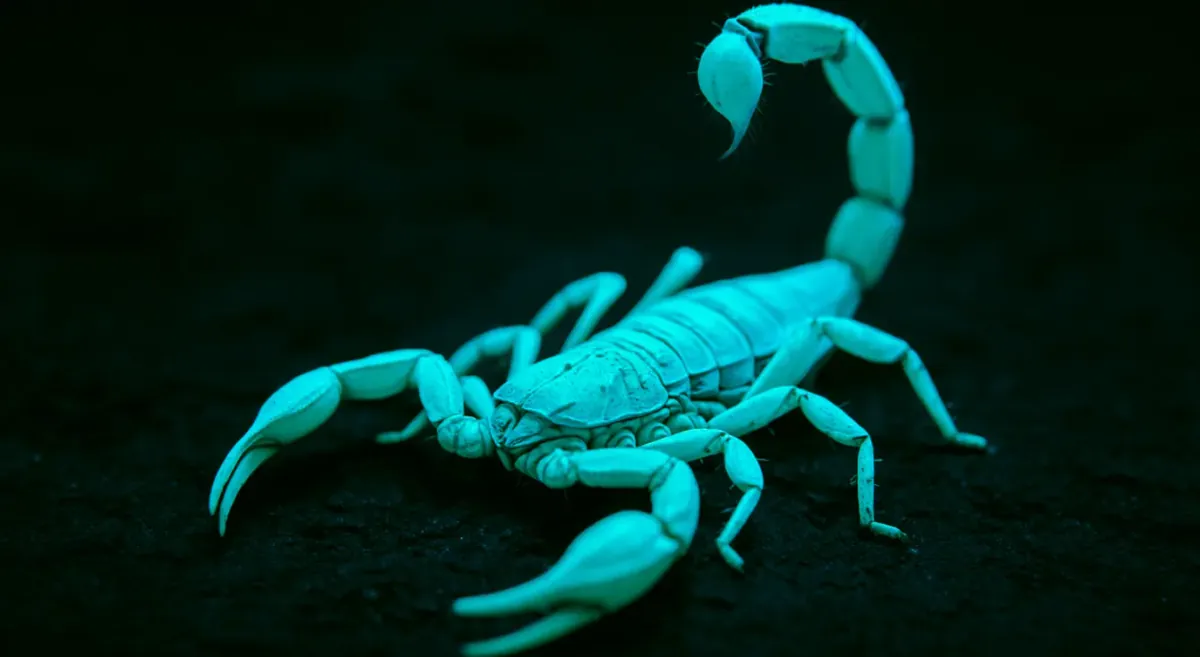
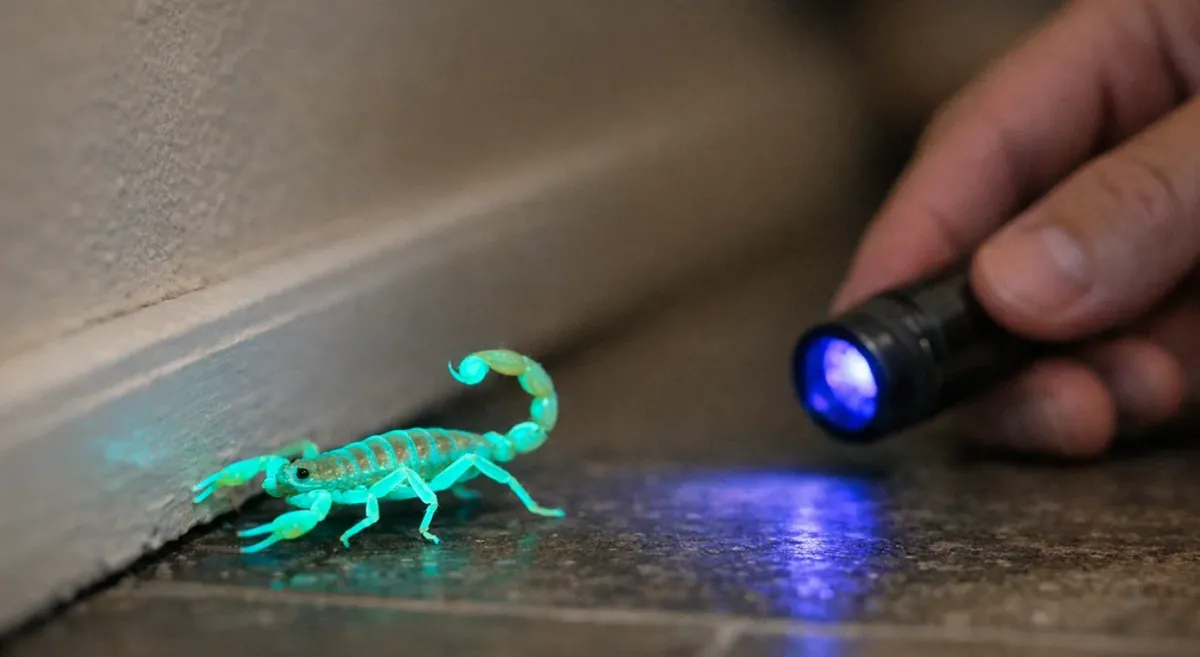
Scorpions glow under UV light because compounds in their exoskeleton's hyaline layer absorb ultraviolet energy and re-emit it as visible fluorescent light, typically appearing bright green or cyan. This fluorescence occurs across nearly all scorpion species and works best with 365nm UV wavelength flashlights in complete darkness, making them easy to spot along baseboards and walls where they naturally travel.
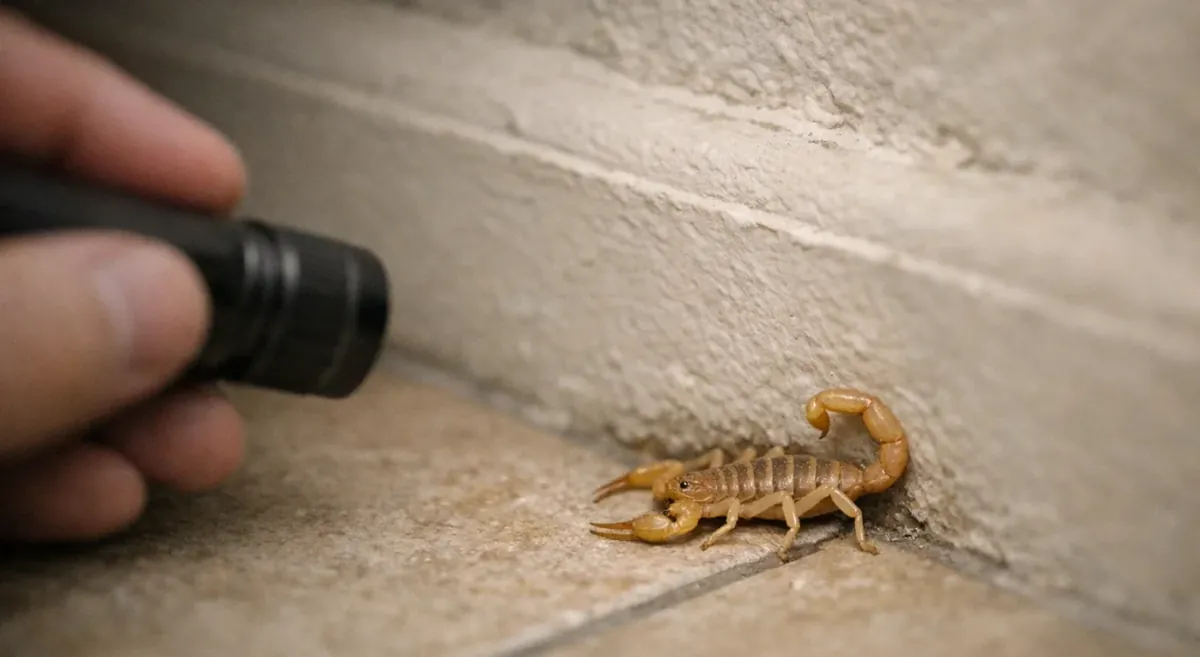
You've probably heard that scorpions glow under blacklight, but here's what's actually happening. When UV light hits a scorpion's exoskeleton, compounds in the outer layer (called the hyaline layer) absorb that UV energy and re-emit it as visible light. It's like the scorpion's shell is a natural highlighter—subtle under normal light, but impossible to miss under UV.
What you'll see is striking. Most scorpions emit a bright green or cyan glow, sometimes with hints of blue. Picture walking into a dark room with a UV flashlight and suddenly seeing a glowing green outline against your baseboard. That's not a horror movie trick—it's physics.
This fluorescence happens across nearly all scorpion species, from the Arizona bark scorpions that plague Phoenix homes to the striped bark scorpions common in Texas. The glow tells you there's a scorpion present, but it won't tell you which species you're dealing with or how dangerous it might be. A harmless desert hairy scorpion glows just as brightly as a medically significant bark scorpion.
What color do scorpions glow—and can you see it without a blacklight?
Under UV light, scorpions typically glow green or cyan, though some look more blue-green depending on the species and the UV wavelength you're using. But here's the catch: you won't see any of this under normal room lighting. Regular bulbs wash out the fluorescence completely.
Don't confuse this with bioluminescence (like fireflies). Scorpions don't produce their own light. They only glow when UV light hits them, which is why detection works best in darkness. Turn off the UV source, and the glow vanishes instantly.
When you do spot one under UV, certain features pop. The tail segments light up like a string of glowing beads. The pincers become bright outlines. Even the legs show clear definition against dark floors. If you've been searching for a scorpion that disappeared under furniture, UV makes it obvious—that bright green shape hugging the wall is hard to mistake.
Is there a proven reason scorpions fluoresce?
Scientists have debated why scorpions evolved this trait for decades. Some think it helps scorpions detect UV light levels, essentially turning their whole body into a light sensor. Others suggest it might relate to mate selection or even UV-based camouflage in their natural habitat. The research continues, with new theories emerging regularly.
But for homeowners, the practical side matters more than the theory. Whatever nature intended, that glow makes scorpions much easier to spot in your home at night. While scientists debate the "why," you can use the "how" to protect your family.
Scorpion fluorescence is basically a built-in detection system. You don't need to understand the biochemistry to use it—you just need to know that UV light plus darkness equals visible scorpions.
Does UV light attract scorpions—or make them avoid an area?
A common worry: shining UV light won't summon scorpions from your yard into your house. UV reveals scorpions already inside—it doesn't create new problems. Think of it like turning on a light in a dark room. The furniture was always there; now you can see it.
Scorpions don't seem to flee from low-level UV light either. In fact, they often pause under it, seemingly unbothered. That can work in your favor during searches. A scorpion that might scurry away from a regular flashlight beam often stays put under UV, giving you time to plan your next move.
One safety note: while UV is great for detection, avoid shining it directly into anyone's eyes. Keep the beam low, aimed at floors and baseboards where scorpions actually travel.
Will a blacklight keep scorpions away (or lure them in)?
Despite what some online forums claim, UV lights don't repel scorpions. Leaving a blacklight on won't create a barrier at your door. Scorpions simply don't respond to UV the way moths respond to porch lights.
Research shows that scorpions exposed to low-level UV continue their normal behavior. Some might pause briefly under the light, but they won't turn around and leave your home because of it. That's why UV works as a detection tool, not a prevention method.
The takeaway is simple: use UV to find scorpions, not to deter them. For actual prevention, focus on sealing entry points and reducing moisture—strategies that physically block access rather than hoping light will scare them away.
Is scorpion glow a sign the scorpion is dangerous?
A bright glow doesn't mean a more dangerous scorpion. Fluorescence intensity varies based on factors like the scorpion's age, recent molting, and the UV wavelength you're using—not venom potency. A harmless giant hairy scorpion might glow brighter than a potentially dangerous bark scorpion that poses risks to children.
Instead of judging danger by glow intensity, focus on safe handling regardless of species. Every scorpion deserves respect and careful removal. The goal is getting them outside without anyone getting stung, not trying to assess threat levels in the moment.
For specific sting risks and medical concerns, especially regarding vulnerable family members, check dedicated resources rather than relying on fluorescence as a danger indicator.
What UV flashlight is best for finding scorpions?
Not all UV flashlights work equally well for scorpion detection. The key factor is wavelength. You'll see two main options online: 365nm and 395nm. Here's the difference that matters: 365nm produces a much stronger, clearer scorpion glow.
When shopping for a UV flashlight, look for these features: true 365nm wavelength (not 395nm marketed as "close enough"), solid aluminum construction that won't break when dropped, a focused beam pattern for scanning baseboards, and ideally a filter that blocks visible purple light. Price ranges from $20-60 for quality models.
Remember, you're aiming this at floors and walls, not faces. UV can damage eyes with prolonged exposure, so keep the beam low and teach kids proper handling. A good UV flashlight is an investment in home safety—choose quality over the cheapest option.
Is 365nm or 395nm better for scorpions?
The 365nm wavelength makes scorpions fluoresce significantly brighter than 395nm. It's not subtle—the difference is immediately obvious. With 365nm, scorpions glow that distinctive bright green. With 395nm, you might see a weak, washed-out glow that's easy to miss.
This wavelength difference is why Scorpion Alert's automated detection system uses 365nm UV. When you're trying to spot a scorpion against dark baseboards at 2 a.m., you want maximum fluorescence. The stronger glow means faster identification and less time searching.
Simple rule: if you're serious about finding scorpions in your home, get a 365nm flashlight. The extra brightness could be the difference between spotting that scorpion before it disappears into a crack versus missing it entirely.
How do I use a UV light safely indoors?
Scan slowly and methodically, keeping your UV beam aimed at floors and baseboards. Start at doorways and work your way around room perimeters—that's where scorpions travel. Move the beam steadily, about one foot per second, watching for that telltale green glow.
Safety matters with UV exposure. Never shine the light at eye level or into reflective surfaces like mirrors. If kids want to help with scorpion hunting, supervise closely and teach them proper technique. Consider UV-blocking safety glasses if you'll be doing extended searches.
Keep your "scorpion kit" ready: UV flashlight, wide-mouth glass or clear container, and stiff paper or cardboard for sliding under the glass. Having these items together means you can act quickly when you spot a scorpion, rather than scrambling for supplies while it escapes.
How do I do a UV scorpion search around my home?
The best time for a UV search is 9-11 p.m., when scorpions are most active. Start with high-risk areas: bedrooms, bathrooms, and any room with exterior doors. Turn off all lights, let your eyes adjust for a minute, then begin scanning with your UV flashlight.
Here's why your search pattern matters. Scorpions are thigmotactic—they navigate by maintaining contact with surfaces. Picture a scorpion entering your home. It won't cross open floor space if it can help it. Instead, it follows the baseboard, hugs furniture legs, and travels along wall edges. This behavior, called thigmotaxis, means 90% of indoor scorpions will be within six inches of a wall or large object.
After spotting one scorpion, don't stop. Check the entire room perimeter, then trace likely entry paths. While scorpions are typically solitary, finding one often means others could have entered through the same gap.
Where should I look first (indoors and outdoors)?
Indoors, prioritize these zones: baseboards in every room, corners where walls meet, thresholds of exterior doors, gaps under and behind furniture, plus bathrooms and laundry areas where moisture attracts them. Don't forget closet floors—scorpions love hiding in shoes left against walls. 42.5% of Arizona residential scorpion exposures that occur indoors happen in a bedroom (Skolnik & Ewald 2018).
Outside, focus on the foundation line where your home meets the ground. Check patio edges, especially where concrete meets dirt. Scan near garage doors and entry points. Look under potted plants, decorative rocks, and any clutter creating shade against your home's exterior.
Remember the edge-following behavior. Whether inside or outside, scorpions rarely venture into open spaces. They stick to perimeters, which narrows your search area considerably. That's good news—you don't need to scan every square foot, just the routes scorpions actually use.
What should I do when I find one?
Stay calm and grab a wide-mouth glass or clear container. Approach slowly—sudden movements trigger their escape instinct. Place the container over the scorpion, then slide stiff paper or cardboard underneath. Once sealed, flip the container and carry it outside. Release at least 20 feet from your home.
This controlled capture beats trying to smash them. Scorpions are surprisingly fast and can squeeze through tiny gaps. Miss with a shoe, and they'll vanish into cracks you didn't know existed. Plus, dead scorpions in walls can attract other pests.
After removal, do a thorough follow-up scan. Check the entire room perimeter again, then trace back toward the nearest exterior door or potential entry point. If you found one in a bedroom, also check nearby bathrooms—scorpions often enter through gaps around plumbing or AC vents.
How can I take advantage of scorpion glow without nightly blacklight walks?
Manual UV searches work, but they're exhausting. Imagine doing that perimeter check every single night, in every room, for months. Most people give up after a week. Scorpions don't take nights off—they're exploring your home whether you're watching or not.
The solution is to automate what scorpions already tell us through their behavior. Since they follow walls and edges, monitoring should focus there too. Modern detection systems use the same UV fluorescence principle but watch continuously. Plug units into wall outlets along room perimeters, and they'll scan those high-traffic scorpion routes all night.
The goal is simple: know immediately when a scorpion enters your living space. No more morning surprises. No more wondering if one crawled past while you slept. Just quick alerts that let you respond while the scorpion is still findable—not after it's hidden somewhere dangerous.
How does automated UV detection work in a real home?
Automated detection combines scorpion behavior science with smart technology. Scorpions travel along walls (thigmotaxis) and glow under UV light—two facts that make targeted monitoring possible. Detectors in wall outlets shine UV light on the floor below, right where scorpions naturally travel.
Scorpion Alert's system uses 365nm UV for maximum fluorescence, scanning approximately every 500 milliseconds when rooms are dark. The two-stage detection process—initial on-device glow detection followed by cloud AI confirmation—dramatically reduces false positives. You won't get alerts for dust bunnies or carpet fibers.
What homeowners receive is peace of mind: photo-verified alerts showing exactly what triggered the system. Each alert includes confidence percentage, time stamp, and location. Instead of wondering "was that really a scorpion?", you see clear evidence and can respond appropriately.
Where should I place detectors (and what rooms matter most)?
Start with entry points—every exterior door needs coverage. Front door, back door, garage entry, and pet doors are prime infiltration routes. Next, protect where your family is most vulnerable: bedrooms, nurseries, and children's playrooms. These rooms matter most because people are barefoot and less alert.
Don't overlook moisture zones. Bathrooms and laundry rooms attract scorpions seeking water. Place detectors near these areas, especially if they're on exterior walls or near plumbing penetrations. Storage rooms and rarely-used guest rooms also need coverage—scorpions love undisturbed spaces.
Coverage beats hoping one device protects everything. Like smoke detectors, multiple units create overlapping protection zones. Focus on perimeter outlets in each room rather than central locations. Remember, scorpions hug walls—that's where your detection should be.
What happens after an alert—and how do I make sure I hear it at night?
Alerts arrive as push notifications, with optional SMS backup. Each includes a photo showing what triggered the detector, plus a confidence percentage. High confidence alerts mean grab your UV flashlight immediately. Lower confidence might be worth checking, but it's less urgent.
Configure your phone's Do Not Disturb settings to allow Scorpion Alert notifications through. There's nothing worse than sleeping through an alert because your phone was silenced. Test this setup during the day—send a test alert and confirm you'd hear it at night.
Your response routine becomes automatic: check the photo, grab your UV flashlight and capture container, then go to the triggered detector's location. Scan the nearby baseboards and furniture edges—scorpions rarely travel far from walls. Most are still within 10 feet of the detector that spotted them. A quick response usually means a successful removal instead of a vanished scorpion.
Now that you know scorpions fluoresce under UV—especially around 365 nm—you can use that glow to spot activity in dark corners, along walls, and near entry points before it becomes a bigger problem. If you want a simple way to turn those UV checks into an ongoing routine for detection and monitoring, Scorpion Alert can help.