Why do scorpions come into houses in the first place?
Scorpions come inside looking for the basics: food, water, shelter, and stable temperatures. In the Southwest, when it gets blazing hot or unusually dry outside, your home can become a cool, humid refuge with plenty of bugs to eat. They aren't hunting you — they're following their instincts toward a comfortable, well-stocked microhabitat.
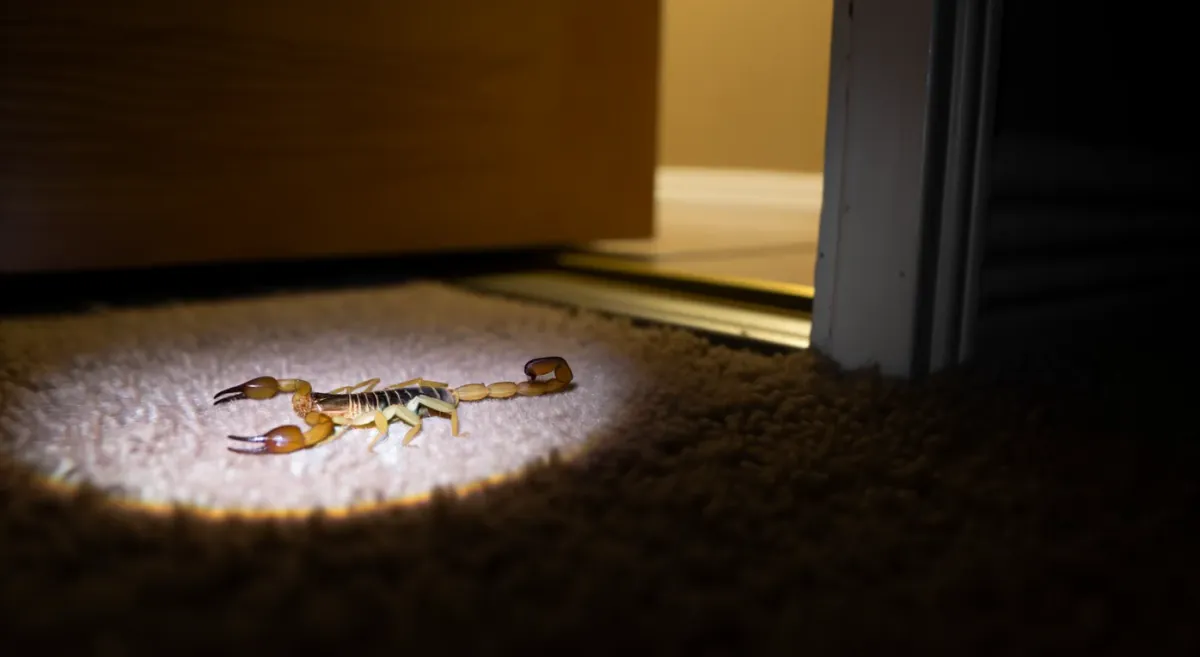
These animals are nocturnal hunters and natural edge walkers. Instead of crossing an open floor, they hug walls, baseboards, and thresholds. That makes their movement surprisingly predictable, which matters a lot when you're trying to find one.
One sighting doesn't automatically mean you have an infestation. But it does tell you something real: the conditions and entry routes that let a scorpion in already exist in your house.
Are scorpions coming inside on purpose—or just wandering?
It's usually a mix of accident and intent. Many scorpions wander in by accident — under a gap beneath the front door, through an open garage, or by hitchhiking inside a cardboard box from the patio. Others come with purpose, hunting insects indoors or seeking cool, damp shelter during a heat wave.
Scorpions are mostly solitary, so finding one rarely means a nest is hiding in your wall. Repeat sightings, though, suggest the same routes and attractants are being used again and again. Skip the panic-spraying. Put your energy into removing what draws them in and blocking how they get in.
What time of night are scorpions most likely to show up indoors?
Scorpions are most active after dark, which is why so many people spot them in the bathroom or kitchen late at night. Peak activity tends to run from evening into the overnight hours, lining up with the times those rooms go quiet.
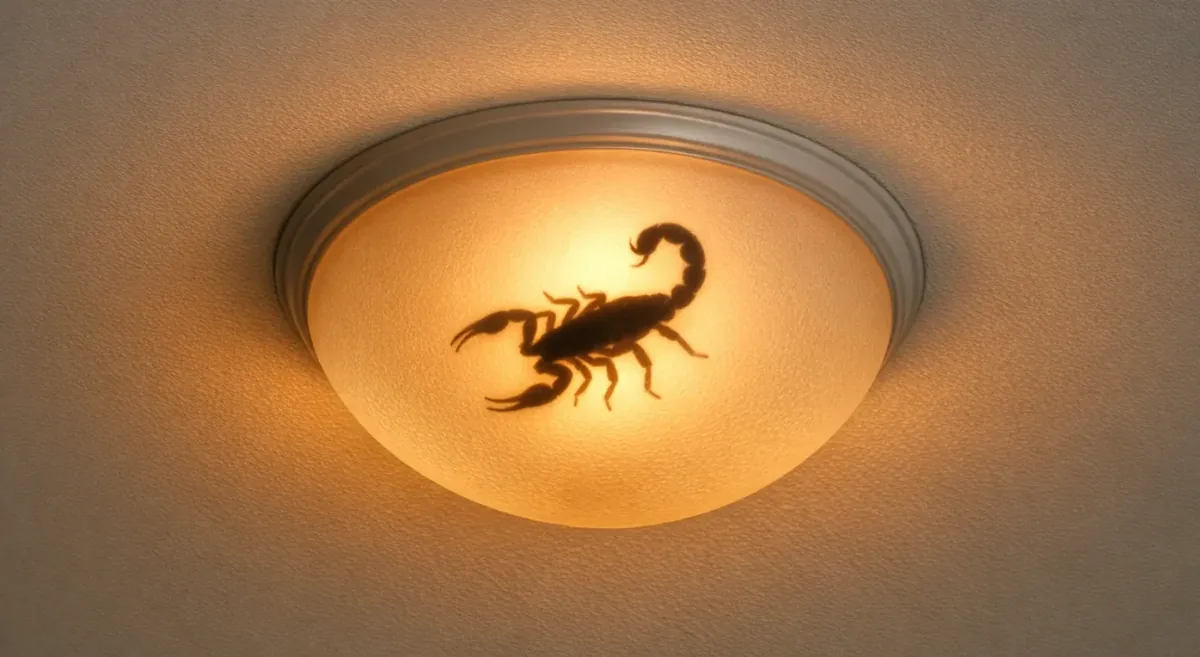
Picture this: you flip on the bathroom light at 2 a.m., and there's a scorpion frozen on the tile by the toilet. It didn't just appear — it was already creeping along the baseboard, and the light caught it mid-route. Because they move at night along predictable edges, checking after dark reveals patterns far faster than random daytime checks ever could.
Why do scorpions hug baseboards and corners?
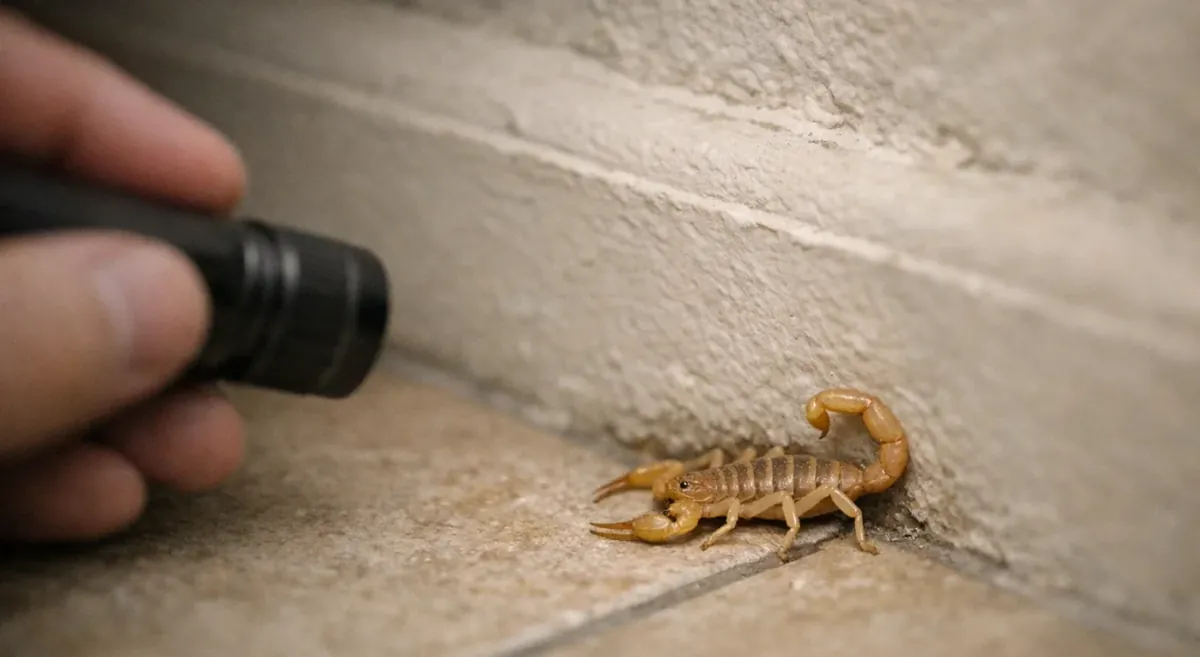
Scorpions are thigmotactic, meaning they prefer to travel with their bodies in contact with a surface. Edges feel safe. Open floors feel exposed. So they trace walls, thresholds, and corners as they explore.
This behavior tells you exactly where to look first: perimeter walls, doorway thresholds, room corners, and cluttered edge zones where they can pause and hide. It's also why perimeter monitoring and sealing work so well — you're targeting the highways scorpions already use.
What attracts scorpions into my house specifically?
No single magic "lure" pulls scorpions inside. It's a chain reaction: insects move in, moisture keeps them comfortable, and clutter gives everyone a place to hide. Remove links from that chain and your home becomes far less appealing. For the full outdoor picture, see the top 5 things that attract scorpions in your home.
Are indoor insects the #1 reason scorpions keep coming back?
Often, yes. Scorpions are predators, and if crickets, roaches, or spiders are living in your garage, pantry edges, or laundry room, scorpions have a real reason to hunt indoors. Cut the prey and you cut the motivation.
Common "indoor buffet" sources include:
- Pet food left out overnight
- Cardboard storage that shelters insects
- Cluttered utility and laundry areas where bugs breed
Fix those and scorpions lose their dinner reservation. Reduce the prey, and the predator has less reason to return.
Does moisture inside the house pull scorpions in?
Moisture matters, but usually in an indirect way. Damp areas attract the insects scorpions eat, and they also create the cool, humid microclimate scorpions prefer. Bathrooms, laundry rooms, under-sink cabinets, slow drains, and humid closets are classic indoor hotspots.
Repair leaks, improve ventilation, and dry out damp edge zones near baseboards. A drier home is simply less hospitable — to the bugs and the predators that follow them.
Can clutter and storage habits create indoor hiding spots?
Absolutely. Scorpions love protected edges: piles stacked against walls, boxes shoved into closet corners, and shoes left by the door. These give them places to pause, hide, and wait out daylight.
Change these high-risk items right away:
- Shoes left on the floor (shake them out before wearing)
- Towel and clothing piles along walls
- Cardboard sitting directly on the garage floor
A simple rule helps: keep a clear lane along your walls so scorpions have fewer spots to stop and hide.
What causes a scorpion infestation (vs. a one-time visitor)?
For most homeowners, an "infestation" doesn't mean swarms — it means repeat sightings and patterns: more scorpions, more often, in the same areas. That repeat traffic usually comes from three things working together: a stable outdoor population nearby, consistent entry routes, and reliable resources in or around the home.
The good news is you can confirm what's really happening over a week or two of simple tracking, instead of guessing and stressing.
If I find one scorpion, are there more nearby?
Not always — but one is a strong prompt to investigate. A single scorpion can be a lone wanderer, yet the same gap and habitat that let it in can let others in later. We dig deeper into this in whether one scorpion means an infestation.
The smart move is to follow the trail. Switch from guessing to tracking — note where, when, and in which room you see activity. That data points you straight to the routes worth sealing.
What patterns suggest a true infestation problem?
Three patterns are worth watching:
- Multiple sightings in the same room or along one exterior wall
- Sightings on consecutive nights
- Sightings in "resource rooms" — bathrooms, laundry rooms, and garages
These patterns usually point to a nearby outdoor harboring zone plus a specific entry point feeding the same path. A simple tracking table keeps it organized:
| Date | Time | Location | Notes |
|---|
| Aug 3 | 11:40 p.m. | Master bath | Near baseboard behind toilet |
| Aug 4 | 12:10 a.m. | Garage door corner | Crawling along seal |
| Aug 6 | 10:55 p.m. | Laundry room | Same exterior wall as garage |
A log like this guides your sealing and yard cleanup so you fix the right spots first.
How can you confirm the pattern without nightly blacklight patrols?
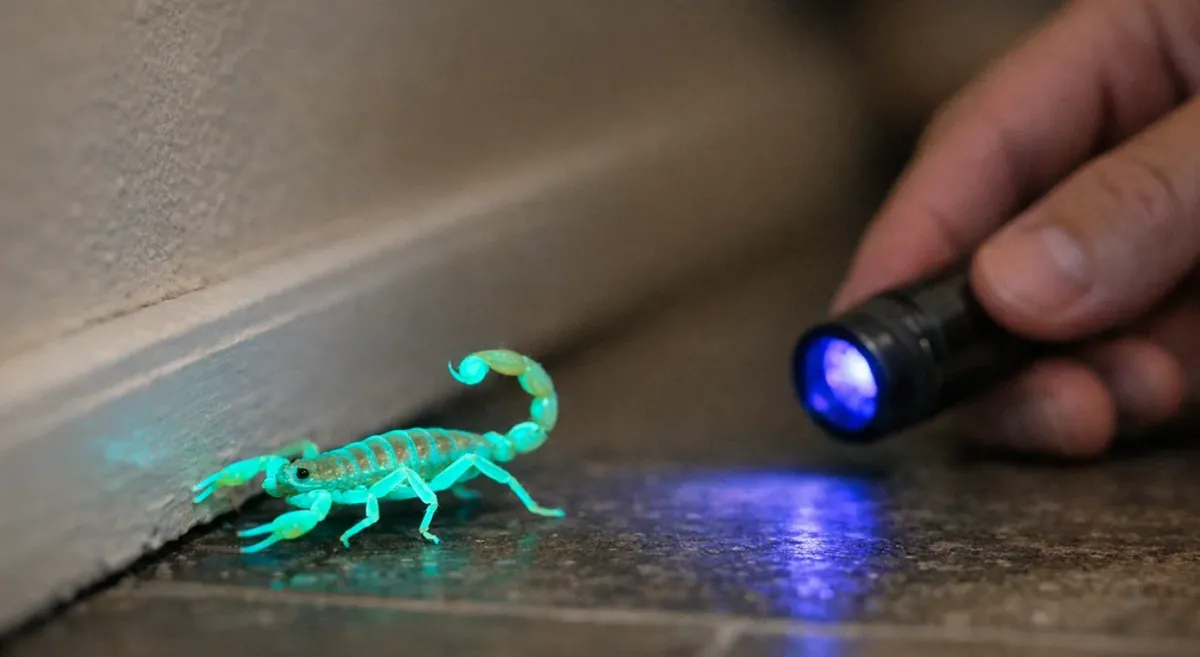
Automated perimeter monitoring confirms patterns without making you walk the house with a UV flashlight every night. It leans on the same biology we covered — scorpions glow under UV light and travel along walls at night — and turns it into evidence you can review on your phone.
That's the idea behind Scorpion Alert. The Detectors plug into standard wall outlets right on the room perimeter, scan the floor with 365nm UV light only when the room is dark, and send a photo-verified alert within seconds of spotting that telltale greenish glow. Start by placing them near likely entry and traffic zones: the front and back doors, the garage door, and bathrooms or laundry rooms.
How are scorpions getting in even when my house seems sealed?
Scorpions need surprisingly small gaps to get inside — far smaller than most people expect. A slightly compressed weatherstrip or a sliver under a door is plenty. Your plan is straightforward: a quick inspection now, deeper sealing later, and monitoring to prove what actually worked.
What are the fastest entry points to check in 10 minutes?
Focus on the big three first, then a few commonly missed spots. For the complete rundown, see the top 5 ways scorpions get into your home.
- Check the gap under every exterior door — even a pencil-width gap is enough.
- Inspect the garage door corners and bottom seal where light leaks through.
- Test sliding door alignment; a misaligned track leaves an open lane.
- Scan window screens for tears and loose frames.
- Look at utility penetrations where pipes and cables enter the wall.
- Press on worn weatherstripping to see if it still seals.
Do this at dusk with a flashlight and mark each gap so you don't forget where the work is.
What is "scorpion sealing," and which fixes matter most?
"Scorpion sealing" means layering barriers in order of impact. Start with door sweeps, then weatherstripping, then caulk or foam for cracks and penetrations. Build the layers from biggest gap to smallest.
Give the garage-to-house door special attention. Garages are common staging areas, so that interior door is a critical barrier — a good sweep there blocks one of the busiest indoor pathways. Just keep expectations realistic: sealing reduces entry, but it won't remove the scorpions living outside. Pair it with habitat changes and monitoring.
Can scorpions come through AC vents or plumbing?
It's possible, but far less common than door and threshold gaps. Most indoor scorpions simply walk in at ground level. Still, any wall or roof penetration is a connected pathway worth screening or sealing.
For detailed diagrams and fixes, see our guides on whether scorpions get in through AC vents and whether scorpions come through plumbing.
What should I do tonight, and how do I keep scorpions out long-term?
Tonight, prioritize safety around sleeping areas, kids, and pets. Long-term, the most effective approach is integrated: reduce prey, reduce harborage, seal the biggest gaps, and monitor results. No single pesticide does all of that.
86.5% of Arizona residential scorpion exposures happen indoors — and 42.5% of those occur in the bedroom, the most-stung room in the house.
— Skolnik & Ewald 2018 (FEARS survey)
Where should you look first inside the house (safely)?
Use their behavior to guide your search. Check along baseboards and corners, behind toilets, under bathroom vanities, near garage walls, and around cluttered edge zones. Scorpions fluoresce under UV light, so a UV flashlight makes them easy to spot — work calmly and systematically, room by room.
While you search, knock out easy prevention: pick up floor clutter and pull beds and pet beds a few inches away from the wall so nothing can get up onto them along the edge.
What if a dog or child gets stung—what's the right next step?
Stay calm and watch for symptoms. For a child, a sting usually causes immediate burning pain and tingling; for severe reactions or any breathing difficulty, contact poison control or seek medical care right away. For a pet, call your vet if symptoms worsen. Children are especially vulnerable — here's why children are more at risk from scorpion stings.
For an exact, time-based plan, follow our bark scorpion sting first aid for the first 30 minutes. In pet households, remove food bowls at night, limit garage and patio access after dark, and keep play areas away from wall edges.
Do glue traps work, and what's a better way to monitor?
Glue traps are passive snapshots at best. They catch some scorpions, but they get dusty, create a mess, and only tell you anything if you remember to check them. They're a finder, not a reliable solution.
They also cause real-world headaches: pets and kids get into them, robot vacuums drag them around, and the insects they attract can actually become scorpion food. A better framework is perimeter-based monitoring that runs automatically at night and shows you evidence. Here's how the options compare:
| Method | Runs at night? | Gives evidence? | Effort |
|---|
| Sticky / glue traps | Passively | Only if you check them | Manual, messy |
| UV flashlight patrol | Only when you walk | Live only | Tedious, nightly |
| Automated UV detection (Scorpion Alert) | Yes, automatically | Photo-verified alerts | Hands-off |
Scorpion Alert's Detectors watch the perimeter all night and send photo-verified alerts, so you can see exactly what triggered the system instead of guessing.
What's the long-term plan that actually reduces sightings?
Work in priority order: (1) reduce insects, (2) remove near-wall clutter and harborage, (3) seal the biggest gaps, and (4) monitor results to confirm what's working.
A realistic timeline keeps it manageable:
- Tonight: safe UV search, pick up floor clutter, pull beds off the walls.
- This weekend: install door sweeps, fix the garage door seal, dry out moisture hotspots.
- Over the next month: caulk smaller cracks, clean up near-wall yard harborage, and let monitoring confirm your fixes held.
To round out your plan, avoid common missteps in what not to do after spotting a scorpion, separate fact from fiction with the top 5 myths about scorpion repellents, and understand timing with the 2026 scorpion season month-by-month guide for Arizona.
Now that you know scorpions usually come inside for shelter, moisture, and food, the next step is spotting what’s attracting them—like humid hiding spots or other pests they follow indoors. If you want a simple way to stay on top of activity and respond faster when conditions shift, Scorpion Alert can help you monitor and protect your home.