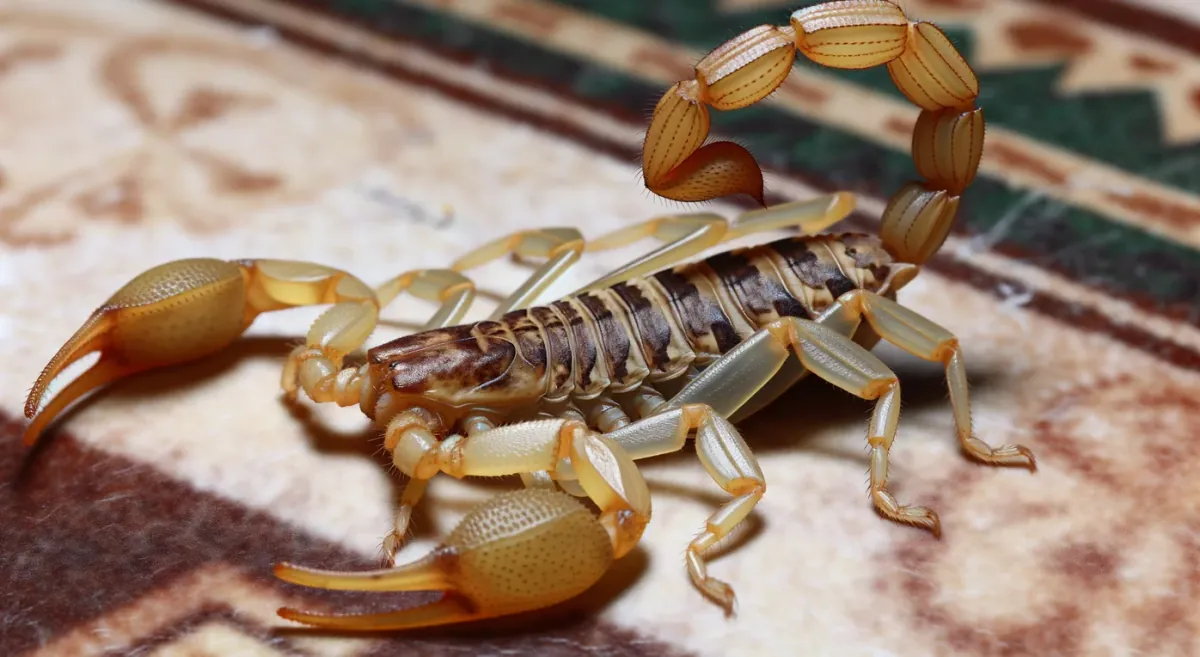
Why does it feel like I kill one scorpion—and another shows up?
Repeat sightings almost always mean you’re living near a local scorpion population that’s using predictable routes into your home—not a string of random, unrelated intruders. Killing one removes that night’s risk, but it doesn’t change the outdoor source that keeps sending scorpions toward your walls. Until you disrupt the whole system, replacements keep arriving.
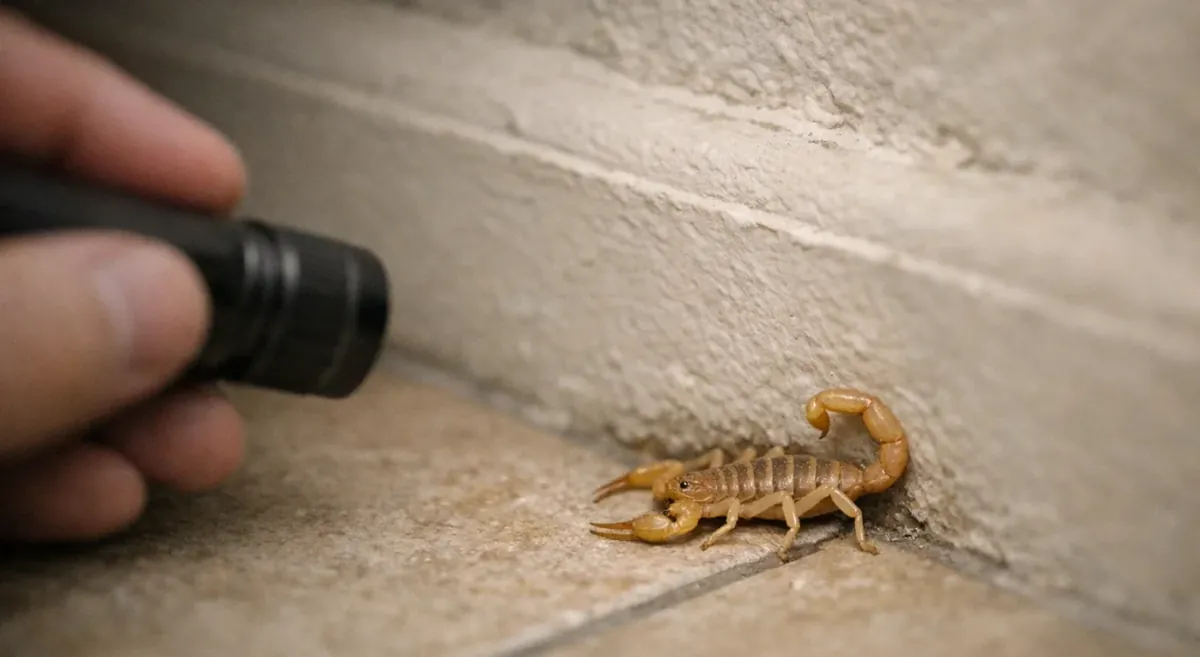
Why the same room, over and over? Scorpions return to spots that offer three things at once: a reliable travel route along an edge, an appealing micro-hiding spot like a baseboard gap or warm appliance, and food or water nearby. Picture a bathroom where the plumbing wall meets cool tile and a dripping pipe keeps the air humid. That’s a destination, not a coincidence.
So yes, smashing one lowers your immediate danger. But the conditions outside—and the gaps that let scorpions in—stay exactly the same. Understanding why scorpions keep coming back comes down to desert science: the population, the routes, and the harborages outside your walls.
Are there actually "more" scorpions, or am I just noticing them now?
Often, it’s the noticing. After one scary find, you start looking harder—and you start looking at night, which is when scorpions hunt. That shift in attention can make a steady population suddenly feel like an invasion.
Disturbance plays a role too. Moving clutter, spraying chemicals, or doing yard work can flush scorpions out of cracks, briefly bumping up sightings even if the real population holds steady. A quick sighting log helps you tell the difference. Jot the date, time, room, weather, and whether you’ve seen extra crickets or roaches. After two weeks, the pattern usually speaks for itself.
What counts as an indoor pattern worth worrying about?
A “pattern” means the same zone keeps producing scorpions: the same bathroom, laundry room, or garage corner, at similar hours (evening to early morning), or spiking right after irrigation or rain. One scorpion is a data point. The same room three times is a route.
Some rooms raise the urgency no matter the count—nurseries, kids’ rooms, and pet areas. The FEARS survey found that 42.5% of indoor Arizona residential stings happen in a bedroom, the most-stung room in the house (Skolnik & Ewald 2018). The plan from here is simple: find the source zones, tighten the routes, cut the prey, and monitor nightly.
Do scorpions live in colonies or come back because of territorial "vacancies"?
Scorpions don’t build colonies the way ants or termites do—they’re largely solitary. But they do cluster around prime harborages: block walls, irrigation boxes, landscape rock, and concrete expansion joints. Remove one scorpion from a great spot, and a neighbor may slide in to claim it, which feels exactly like reinfestation.
That “vacancy” effect is the key insight. Each sighting isn’t an isolated event—it’s a clue pointing back to a nearby harborage and the route that connects it to your home. Want the deeper biology? Here’s a fuller look at whether scorpions are social or solitary.
What does "one means more" actually mean around a home?
It means scorpions pack into microhabitats that offer shade, cracks, stable temperatures, and nearby prey. One good harborage can shelter several. So an indoor scorpion is usually telling you about an outdoor source close to that wall.
Let the indoor room guide your outdoor inspection. A bathroom sighting? Check the exterior plumbing wall and the hose bib zone outside it. A garage find? Look at the perimeter and the stored clutter against the wall. For more on what’s pulling them in, see the top things that attract scorpions to your home.
Can killing one scorpion attract more scorpions?
No. A dead scorpion doesn’t act like bait that summons others. The realistic explanation is the vacancy effect plus a pre-existing neighborhood population that was already there.
What you can trigger is displacement. Spray the yard, move the woodpile, or change harborage conditions, and scorpions shift to new shelter—sometimes toward the house. That’s why consistent monitoring matters: it lets you tell “they moved to a different room” from “the numbers are actually dropping.”
Why don't bug bombs, sprays, and weekend DIY kills stop scorpions long-term?
Scorpions are built to outlast the tactics that wipe out common insects. They have an extremely low metabolism, a tough waxy exoskeleton, and the ability to seal themselves in cracks and voids for long stretches. A weekend treatment kills what’s exposed and leaves the rest untouched.
The bigger trap is overconfidence. After one treatment, people relax—they stop checking shoes and watching bathroom floors at night—even though activity quietly continues. The safer strategy flips the script: detect first, then intervene where it counts, instead of “fumigate and forget.”
Why do foggers and "fumigating a room" often fail on scorpions?
Foggers depend on a brief airborne exposure window. Scorpions tucked deep in wall voids and cracks simply wait it out, then re-emerge once the air clears. The slow metabolism that helps them survive months without food also helps them survive a fogger.
The real danger is the false sense of security. If you assume the room is clear, you stop checking your shoes and walk barefoot at 2 a.m.—right when risk is highest. Targeted perimeter work, prey reduction, and steady monitoring beat a one-time cloud of chemicals every time.
Do sticky traps and UV flashlight hunts have blind spots?
Both help, and both miss things. Sticky traps only work if they sit on an actual travel route; placed wrong, they catch nothing. They also collect dust and lose tack, and a trap full of dead insects can become a snack station that draws scorpions in.
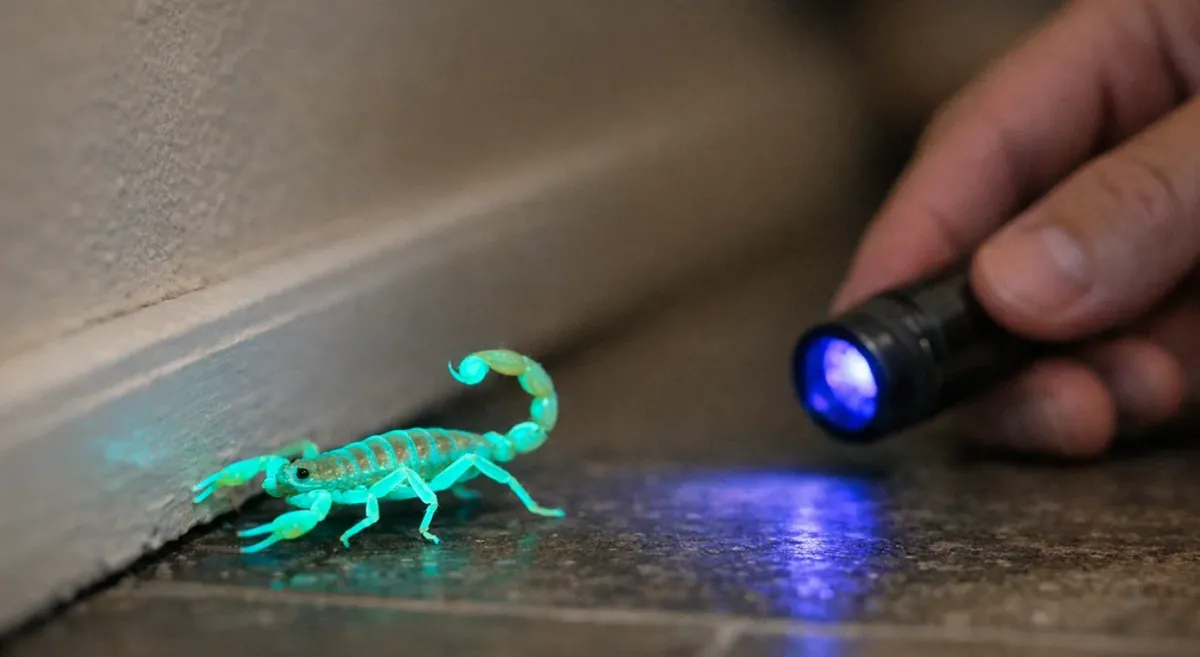
UV flashlight hunts have a different gap: scorpions glow a vivid greenish-blue under 365nm light, but you only find what’s out and exposed at that exact moment. Almost nobody patrols every single night, and visibility varies room to room. Consistent system monitoring bridges the gap between sporadic DIY and pricey escalation.
| Method | Coverage | Consistency | Main blind spot |
|---|
| Foggers / room bombs | Open air only | One-time | Misses scorpions in voids and cracks |
| Sticky traps | Floor edges | Passive, degrades | Must match exact routes; dust ruins them |
| UV flashlight hunts | Wherever you point it | Only when you do it | Only finds what’s exposed that moment |
| Automated UV monitoring | Wall-adjacent lanes | Every night, autonomously | Needs outlet placement near risk rooms |
Why do scorpions show up in the same room, and how are they using the same routes?
Once a route works, scorpions reuse it. Their paths follow edges and reliably lead to shelter and food, so a “good” lane gets traveled again and again—which is exactly why sightings cluster in certain rooms. The behavior driving this is thigmotaxis: scorpions navigate by staying pressed against surfaces and edges.
To cut tonight’s risk, work the room’s edges. Pull furniture a few inches off the walls, close gaps where the baseboard meets the floor, and clear clutter from corners that gives them cover.
Why do scorpions hug walls instead of crossing open floors?
Edge-following keeps them oriented and protected—open floor leaves them exposed to predators. Translate that into where to look: baseboards, door thresholds, room corners, and along any furniture that touches a wall.
It also tells you where traps belong—snug against edges, never in the middle of a room. And it’s why outlet-based monitoring fits so well. Scorpion Alert Detectors plug into standard wall outlets right on the room perimeter, exactly where scorpions actually walk, and run on their own at night once the room goes dark.
Can scorpions climb walls and end up on ceilings?
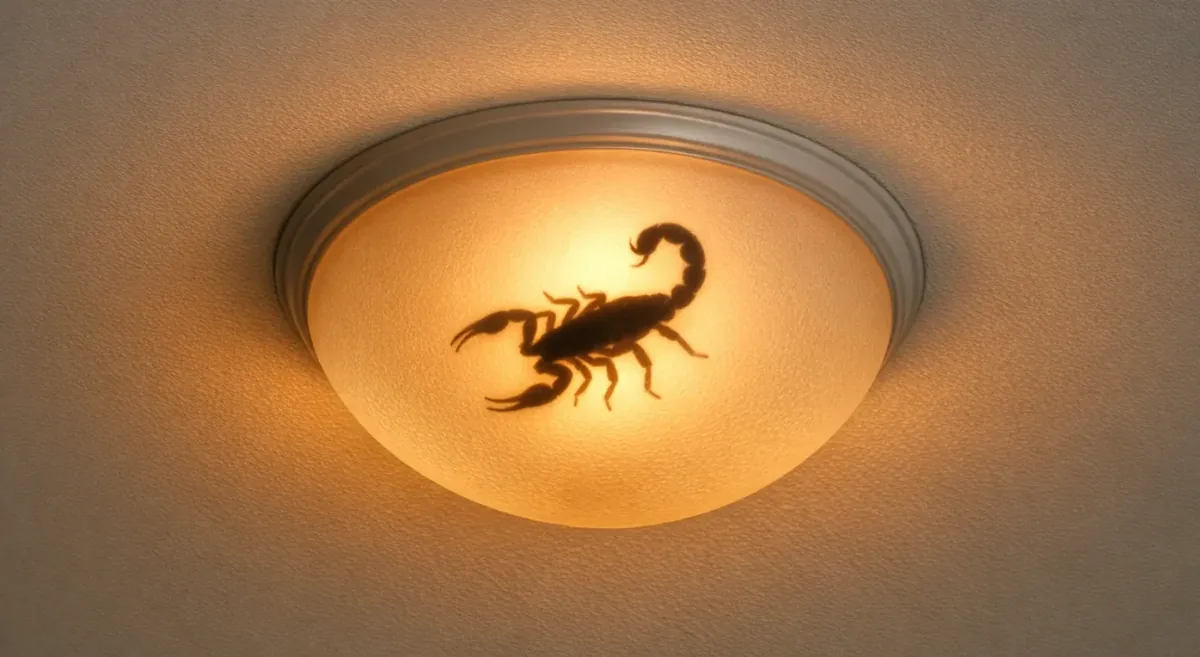
Yes—Arizona bark scorpions are the species most likely to turn up well above the floor, including up on a bed. When one shows up overhead indoors, it has usually traveled the attic and wall voids above and slipped in through the gap around a ceiling fixture. That’s worth knowing without panic. The fix is to remove the bridges they use to reach a bed.
Pull beds a few inches away from walls, and keep curtains, blankets, and bed skirts from touching the floor—anything trailing down becomes a ladder. Hanging linens, backpacks, and pet beds shoved against a wall do the same. The FEARS data is sobering here: of all bedroom stings, 54.7% involved a scorpion in the bed itself (Skolnik & Ewald 2018). A quick nighttime checklist for bedrooms and nurseries: bed off the wall, bedding off the floor, shoes shaken out, floor clear of bridges.
What triggers a sudden wave of scorpions around my house—and what should I do next?
Sudden surges usually trace back to triggers you already notice: a spike in crickets or roaches, monsoon rain or fresh irrigation, AC condensation pooling near the slab, pool decks, and seasonal warmth. Each one nudges scorpions to move and hunt closer to the structure.
Your next steps fit on one hand: reduce prey, dry up moisture hot spots, seal the highest-impact gaps, and monitor every night. Done together, those four turn a scary, random-feeling problem into a routine you can actually manage—and they tell you when it’s time to call a pro.
If I'm seeing more crickets or roaches, does that explain the scorpions?
Often, yes. It’s a simple chain: prey spikes near the house, scorpions follow the food and hunt closer to your walls, and indoor encounters go up. Cut the prey and you cut a major reason they come inside.
Run a 10–14 day prey-control experiment—knock down crickets and roaches, then watch your sighting log. Fewer scorpion sightings over those two weeks is your proof it worked. Pay special attention to garages and laundry rooms, which become buffet zones thanks to pet food, water-heater warmth, and clutter.
Why do water sources (AC lines, irrigation, pools) change scorpion behavior?
In the Sonoran and Chihuahuan Desert, moisture is rare and powerful. A dripping AC line, a leaky bib, or a damp irrigation box creates a micro-oasis that draws prey insects—and the scorpions that hunt them—straight toward your home.
Found one in the pool? Assume it may still be alive; scorpions can survive a surprising while submerged. Scoop it with a net or tool, never your hand. A quick “moisture map” of your property—marking every drip, hose bib, and damp zone—shows you exactly where to prioritize monitoring.
How can I monitor scorpions every night without blacklight patrols?
Good monitoring is consistent, night-timed, focused on wall and edge travel lanes, and it produces usable evidence you can act on. Nobody can deliver that by hand every night—which is the whole point of automating it.
Scorpion Alert is one example of automated monitoring built on the science in this post. The Detectors run autonomously at night once a room darkens, shine 365nm UV light onto the floor to catch that telltale glow, and send photo-verified alerts with an AI confidence percentage so you know what you’re looking at. When one triggers, you grab a UV flashlight and a glass, find the glowing scorpion, trap it, and release it outside.
Practical perks make it livable: push or SMS alerts in seconds, offline alerts if monitoring stops, and the option to place several Detectors near your highest-risk rooms for broader coverage. Pair that with the basics—and read up on what not to do after spotting a scorpion, the most common ways scorpions get into your home, and the month-by-month scorpion season guide for Arizona—and your fear turns into a calm, repeatable routine.
Desert biology makes scorpions persistent: they follow edges (thigmotaxis), shelter in cool cracks, and keep returning when food and moisture are nearby, so prevention works best when you can spot activity where they actually travel. If you want a practical way to confirm hotspots and respond early, Scorpion Alert can help you detect and deter scorpions around your home.