Why are scorpions coming into my house in the first place?
You've spotted a scorpion in your living room, and now you're wondering why it chose your house. The reality is scorpions aren't plotting against you. They're just looking for three basic things: food, water, and shelter. Your home often offers all three more reliably than the harsh desert outside.
Think of it this way: outside, a scorpion has to hunt for crickets while dodging predators and extreme temperatures. Inside your home, there's a steady supply of insects, moisture from that dripping faucet, and countless dark corners to hide in. And getting inside is easier than you'd think—scorpions can squeeze through gaps as small as 1/16 of an inch.
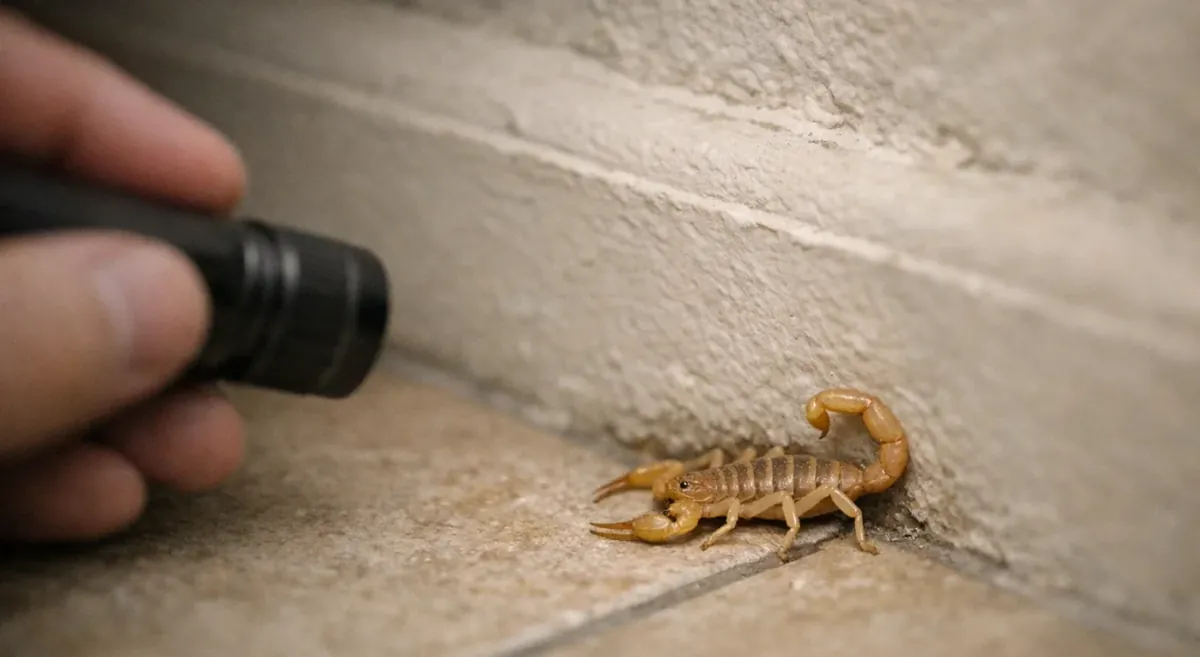
Here's what makes this trickier: scorpions are nocturnal hunters that move along walls and baseboards (a behavior called thigmotaxis). They stick to the edges of rooms, traveling in the shadows where walls meet floors. This perimeter-travel pattern is why you'll often find them near doorways, along baseboards, or tucked behind furniture pushed against walls. It also means they can be in your home for days before you spot one.
A quick "scorpion logic" checklist
Before we dive into specific attractants, let's think like a scorpion for a moment. Is your home offering:
- Food nearby (insects)? Even a few crickets or roaches can make your home worth exploring.
- Water source (leaks/condensation)? That AC drip line or bathroom leak can be a scorpion oasis.
- Tight hiding spots (clutter/landscape)? Boxes against garage walls or rocks near your foundation provide perfect cover.
- Easy entry (gaps around doors/penetrations)? Worn weather stripping might as well be a welcome mat.
Why you usually see them at night (or not at all)
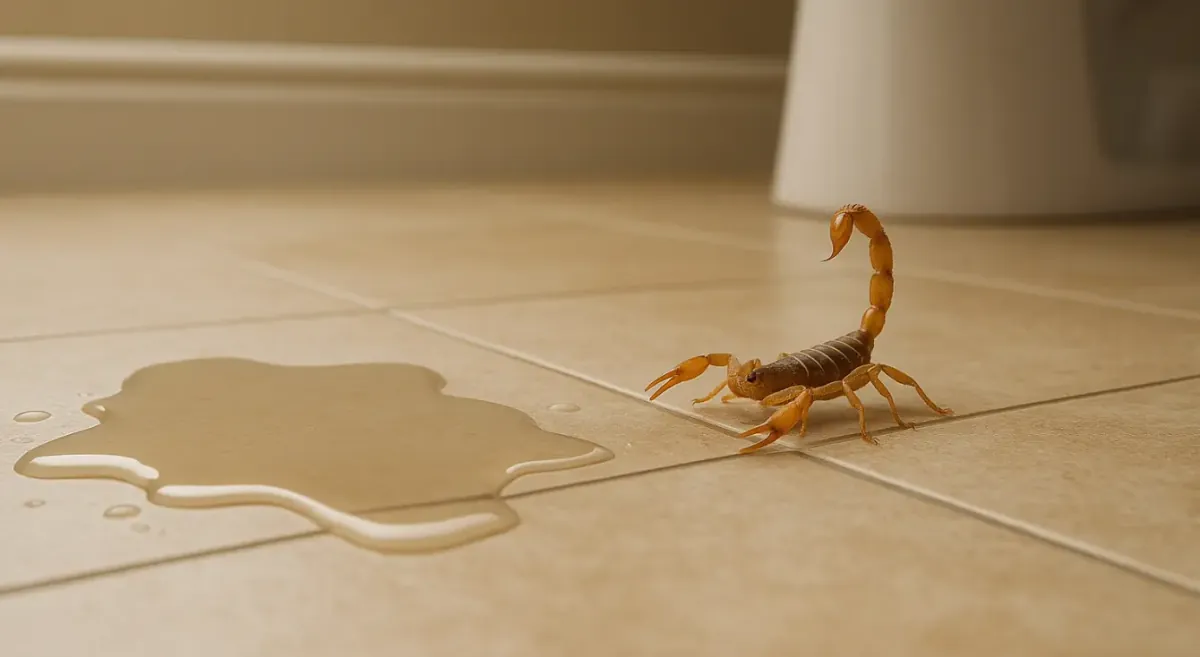
Picture this: it's 2 a.m., you shuffle to the bathroom, and there's a scorpion frozen on the tile. Why does it always seem to happen at night? Scorpions are most active after dark, when they emerge to hunt. During the day, they're tucked away in the tight spaces we mentioned—under appliances, behind baseboards, or in the back of closets.
This nocturnal lifestyle means you could have scorpions for weeks without knowing it. They move quietly along room edges, hunting while you sleep. By the time you spot one, it's probably not the first night it's been inside. That's why the fixes in this guide focus on perimeter areas—doorways, baseboards, and storage along walls. Control these zones, and you control where scorpions can travel and hide.
What food sources attract scorpions inside a home?
Scorpions don't raid your pantry or nibble on crumbs. They're after live prey—the insects already living in your home. Every cricket in your garage, every spider in your bathroom, every roach under your sink is basically ringing a dinner bell for scorpions. Want fewer scorpions? Start by serving fewer meals.
The most common prey items that draw scorpions indoors include crickets (especially in garages), cockroaches (kitchens and bathrooms), spiders (corners and closets), and moths or flies (near lights and windows). These insects gather where they find their own food sources—your food. That forgotten dog kibble in the garage, those crumbs behind the toaster, the sticky recycling bin—they all support an insect population that scorpions follow right into your home.
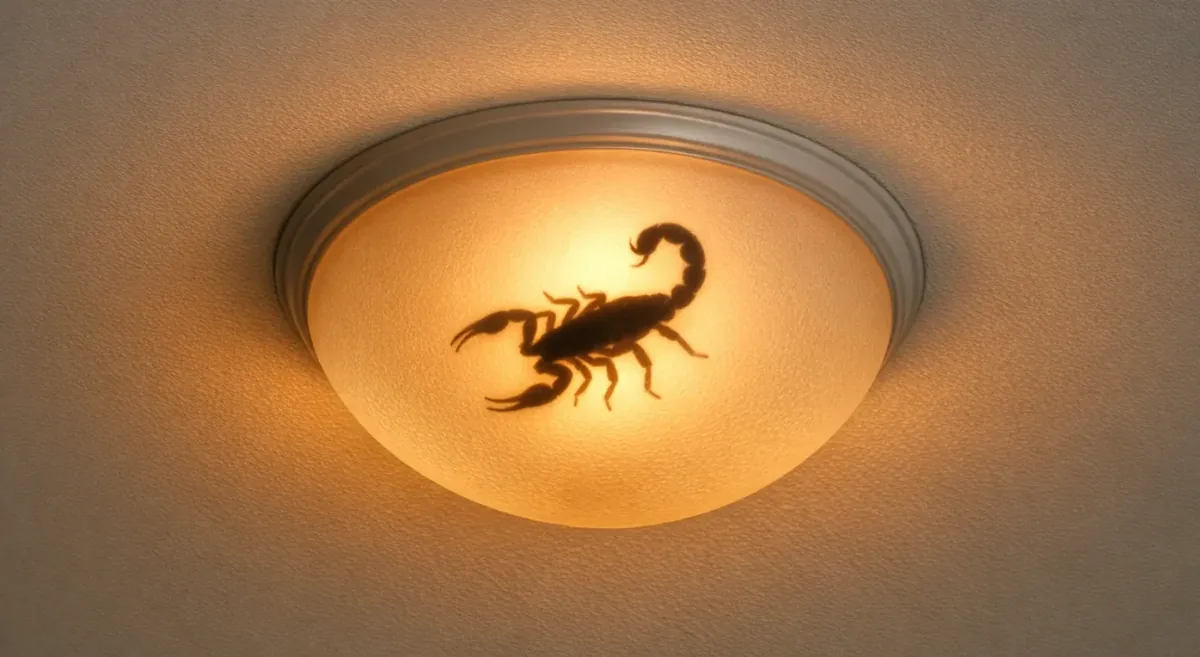
Here's another connection homeowners often miss: outdoor lighting. Bright porch lights and garage floods don't attract scorpions directly, but they do draw moths and other flying insects. Those bugs build up near doorways, creating a buffet zone. Scorpions patrol these areas after dark, and when you open the door, they're already positioned to slip inside.
Where your 'indoor buffet' is coming from
Let's get specific about where insects (and therefore scorpions) find food in your home:
- Kitchens: Crumbs under appliances, unsealed food in pantries, sticky spots near trash cans, and moisture under sinks create roach and ant highways.
- Garages: Pet food bags, stored birdseed, cardboard boxes (roach harborage), and general clutter provide both food and shelter for crickets and spiders.
- Patios/porches: Outdoor lights draw flying insects that pile up near doors; pet water bowls and food dishes extend the buffet outside.
What to do this week (fast, high-impact fixes)
You don't need to fumigate your entire house. Start with these immediate actions that cut off the food chain:
Tighten sanitation: Wipe down counters every night before bed. Switch to sealed containers for pantry items (cereal, crackers, pet food). Use trash cans with tight-fitting lids, and rinse recycling before binning it. In the garage, store pet food and birdseed in sealed plastic tubs, not paper bags.
Reduce insect entry: Check window screens for tears—even small ones let insects in. Install door sweeps on exterior doors, including the door from your garage to your house. Pay special attention to plumbing penetrations where pipes enter walls.
Adjust lighting: Turn off unnecessary outdoor lights at night. If you need security lighting, move fixtures away from doors when possible. Consider switching to yellow "bug light" bulbs or warm-toned LEDs, which attract fewer insects than bright white lights.
When 'spray for bugs' isn't enough
Here's what frustrates homeowners: you can spray for insects, clean religiously, and still see a scorpion weeks later. Why? Scorpions are survivors. They can go months without eating and will hunker down while their food supply dwindles. Plus, they may already be inside when you start your prevention efforts.
This lag time between doing everything right and seeing results is why monitoring matters. You need to know if scorpions are still active while your prevention measures take effect. We'll cover monitoring strategies in the final section, but remember—reducing insects is crucial, even if it doesn't deliver instant results.
What hiding spots do scorpions love indoors and outdoors?
Scorpions aren't picky about amenities. They want one thing in a hiding spot: a tight, dark space where they can rest undisturbed during the day. The tighter the fit, the better they like it. This preference for snug spaces explains why they love the gap under your washing machine but ignore that spacious hall closet.
Remember that perimeter-travel behavior we mentioned? It directly influences where scorpions hide. They move along walls at night, so they tend to hole up near those same walls. That pile of shoes by the front door? Perfect. The stack of boxes against the garage wall? Even better. They're not randomly distributed throughout your home—they cluster in predictable spots along the edges.
Indoors: the most common 'surprise' hiding places
These are the spots where homeowners most often encounter scorpions unexpectedly:
- Shoes, boots, and slippers left on the floor — especially pairs sitting near walls or in closets. Always shake out footwear before putting it on.
- Laundry piles/baskets, towels, and bath mats — damp towels on bathroom floors are particularly attractive. Scorpions slip underneath, looking for moisture and darkness.
- Under/behind furniture pushed against walls and in closet corners — that dresser you haven't moved in years probably has scorpion highways behind it.
Outdoors: what makes your yard a scorpion hotel
Your landscaping choices directly impact indoor scorpion pressure. These outdoor features practically guarantee a scorpion population:
- Woodpiles, stacked lumber, bricks/pavers, rock borders — any stacked materials create layers of hiding spots. The closer to your foundation, the worse the problem.
- Dense ground cover and brush piles — thick vegetation holds moisture and harbors insects, creating scorpion habitat right against your home.
- Bark mulch right up against the foundation — it looks nice, but it provides cover for scorpions to approach your walls undetected.
A simple perimeter declutter rule
Here's a rule that dramatically reduces scorpion hiding spots: maintain a clear zone along all walls, inside and out. Inside, pull storage boxes 6-12 inches away from garage and closet walls. This "clear strip" removes the protected runway scorpions prefer and makes them easier to spot during inspections.
Outside, create an 18-24 inch barrier of gravel or bare soil between landscaping and your foundation. Move firewood, decorative rocks, and stored materials at least 20 feet from the house. Trim bushes so they don't touch exterior walls. Yes, it might look less lush, but you're removing the scorpion highway to your home.
Does moisture attract scorpions, and where are they finding water?
In the desert Southwest, water is life—and scorpions know it. While they're remarkably drought-tolerant, scorpions still seek moisture when they can find it. A single dripping faucet or condensation line can sustain scorpions (and their prey) indefinitely. Fix the leak, and you remove a major attractant.
Moisture problems compound the scorpion issue in two ways. First, the water itself draws scorpions. Second, that same moisture supports the insects scorpions eat. A damp garage corner might harbor crickets, which then attract hunting scorpions. It's an ecosystem you're accidentally creating.
Indoor moisture hotspots to inspect today
Grab a flashlight and check these areas for signs of moisture:
- Under sinks and behind toilets (slow leaks) — look for water stains, warped cabinet bottoms, or actual drips. Even tiny leaks matter.
- Laundry rooms (washer hoses, drain pans) — check where hoses connect and look for standing water in drain pans or on the floor.
- Bathrooms (tub/shower leaks, damp bath mats) and any rarely used guest bath — scorpions can access bathrooms through various routes, and moisture keeps them coming back.
Outdoor moisture sources that quietly raise risk
These outdoor water sources create scorpion-friendly conditions near your home:
- Overwatering and irrigation leaks near the foundation — soggy soil against your house invites both scorpions and their prey.
- Standing water in planters/drip trays — empty these regularly, especially in shaded areas where evaporation is slow.
- Hose bib leaks and shaded, damp spots near exterior walls — fix dripping spigots and improve drainage in perpetually wet areas.
Why moisture control helps twice
Eliminating moisture delivers a double blow to scorpion populations. Less water means fewer insects like crickets and roaches, which cuts the scorpion food supply. A drier perimeter also becomes less attractive as a travel route—scorpions prefer to move through areas with some humidity.
The fixes are usually simple: tighten connections, replace worn washers, adjust sprinklers, and improve drainage. You're not just preventing water damage; you're making your home fundamentally less attractive to scorpions and their prey.
How do scorpions get in—and how can I catch one before I find it?
Even the newest homes have gaps. Scorpions exploit these openings with disturbing efficiency, squeezing through cracks you'd never notice. The good news is most scorpion entry points are predictable and fixable. The challenge is that even after sealing every gap you can find, you still need to know if one made it inside.
This is where many homeowners get stuck. They seal diligently, reduce attractants, and still worry every night. Are scorpions getting in? Did I miss a gap? The answer is a combination of thorough sealing and smart monitoring—especially along those wall perimeters where scorpions naturally travel.
The entry points to check first (most common)
Start with these high-probability entry routes:
- Door thresholds (including garage-to-house door) and worn weather stripping — gaps under doors are scorpion highways. Check at night with a flashlight to spot light leaking through.
- Gaps around plumbing/electrical penetrations and exterior hose bibs — anywhere pipes or wires enter your home needs to be sealed. Expanding foam works well for larger gaps.
- Window tracks, weep holes, and cracks where stucco meets foundation — weep holes need mesh covers, not complete sealing. Foundation cracks require caulk or mortar repair.
Seal it right: the 'outside-in' approach
Work systematically from outside to inside. Start outdoors by walking your home's perimeter with caulk and expanding foam. Seal visible cracks in stucco, gaps where different materials meet, and spaces around pipes or cables. Install new door sweeps on all exterior doors—splurge on quality ones that seal tightly.
Move inside and address interior gaps. Caulk baseboards where they've pulled away from walls. Seal around pipe penetrations under sinks. Add weather stripping to the door between your garage and house. These interior barriers matter because they limit movement if a scorpion does get inside.
Keep expectations realistic, though. No home achieves perfect exclusion. Desert winds shift doors, foundations settle, and weather stripping wears out. That's why combining exclusion with monitoring gives you the best protection.
How to monitor your perimeter while you sleep
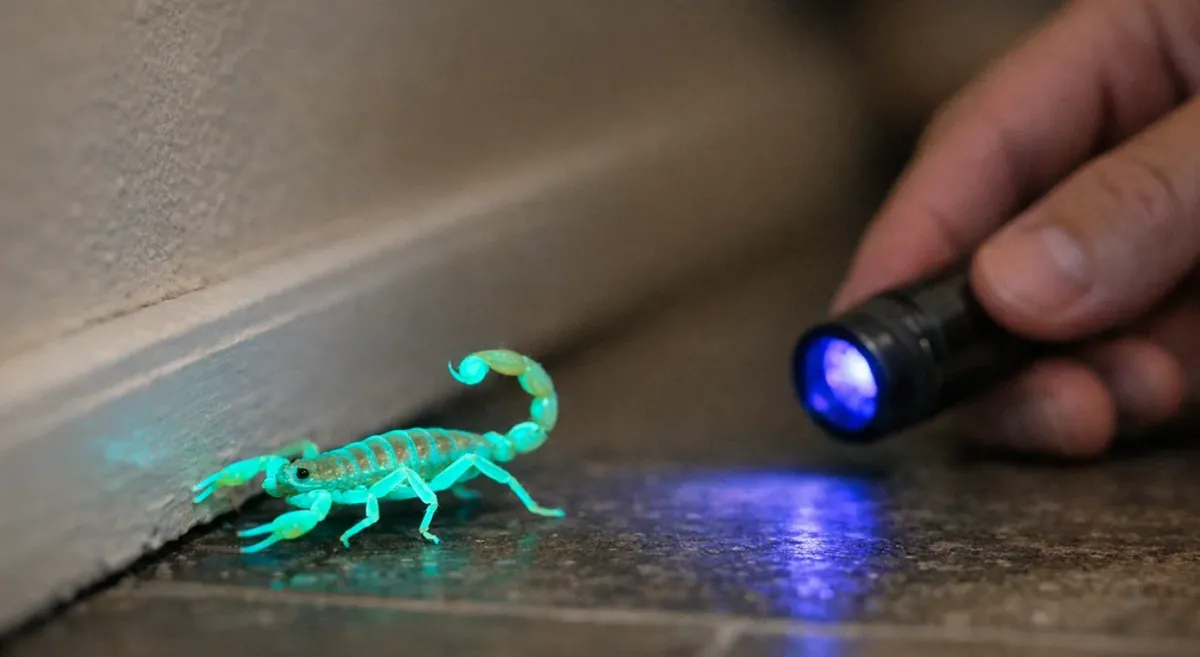
Since scorpions travel along baseboards and walls at night, monitoring these perimeter zones makes sense. You could patrol with a UV flashlight every night, but who has time for that? This is where technology helps. Automated detection systems like Scorpion Alert use the same UV principle but work continuously while you sleep.
The concept is straightforward: plug detectors into outlets along room perimeters where scorpions naturally travel. When darkness triggers the sensors, they shine UV light and watch for the telltale scorpion glow. Advanced systems use two-stage AI detection to reduce false alarms from dust or other objects. Within seconds of detection, you get an alert with a photo and confidence score.
Strategic placement maximizes coverage: near entry points (front door, back door, garage door, pet door), in high-priority rooms (master bedroom, children's rooms, nursery), and near moisture sources (bathrooms, laundry room, kitchen). Since scorpions follow edges, perimeter outlets provide ideal monitoring positions. Instead of wondering what's moving through your home at night, you'll know—and you can respond immediately.
Now that you know how moisture, cluttered hiding spots, and an active insect food source can invite scorpions inside, the next step is keeping an eye on the areas that matter most and tightening up the conditions that attract them. If you want a simple way to stay proactive, Scorpion Alert can help you monitor and respond faster when scorpion activity shows up.