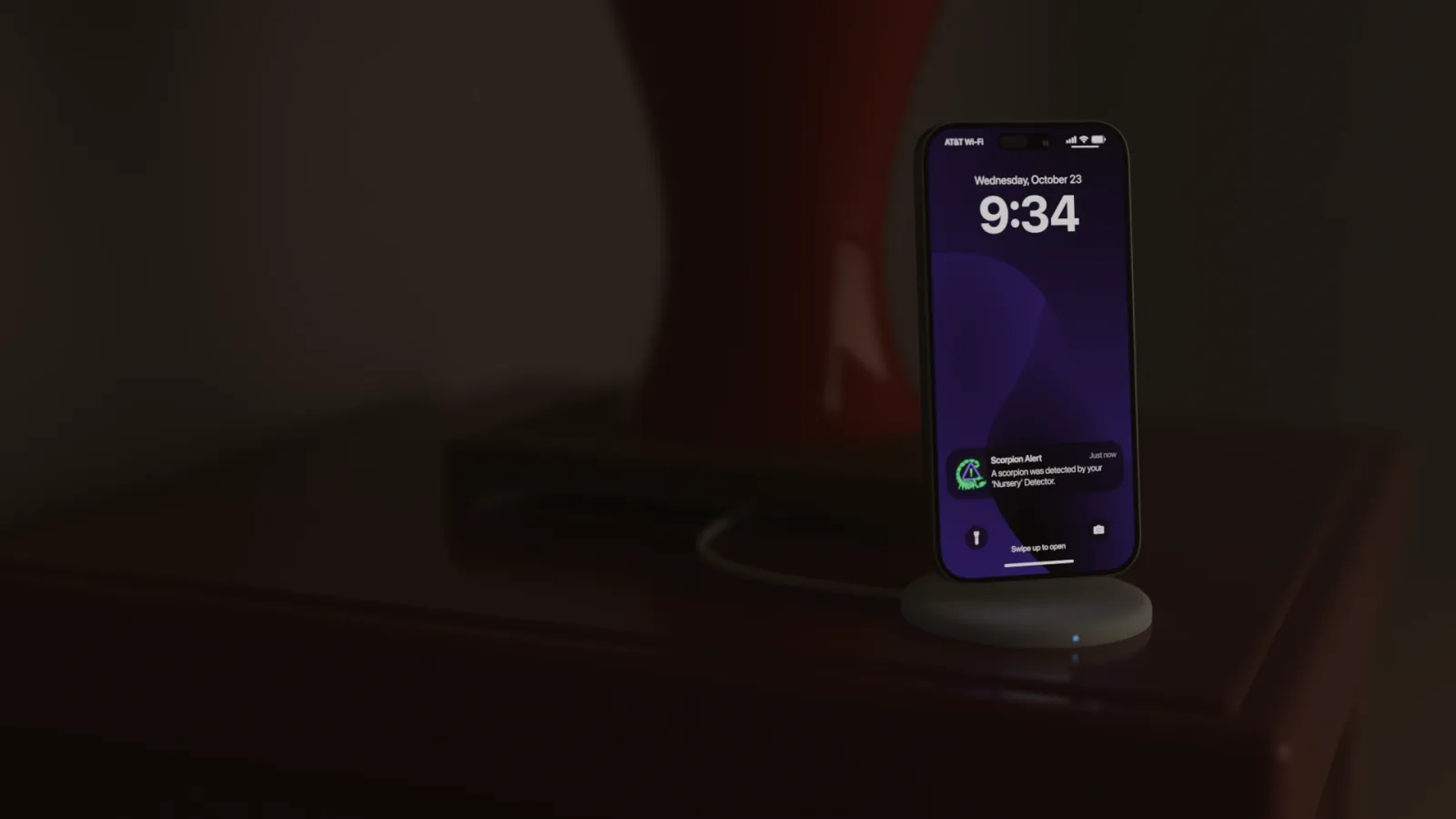
Alerts are sent to your phone the instant a scorpion is detected in your home.
Get StartedWe don’t get as many alerts any more now that we’ve figured out how to seal up our vents, but we were getting a lot of alerts in the beginning.
Leticia
Paradise Valley, Arizona
The mobile app is great, very easy to use. The pictures in the alerts are very helpful (and creepy).
Mrudul
Fountain Hills, Arizona
The Scorpion Detectors are very easy to set up with the app and they work very well.
Rafael
Dripping Springs, Texas
Manage your alerts, Scorpion Detectors, and account settings from a simple, easy-to-use mobile app.
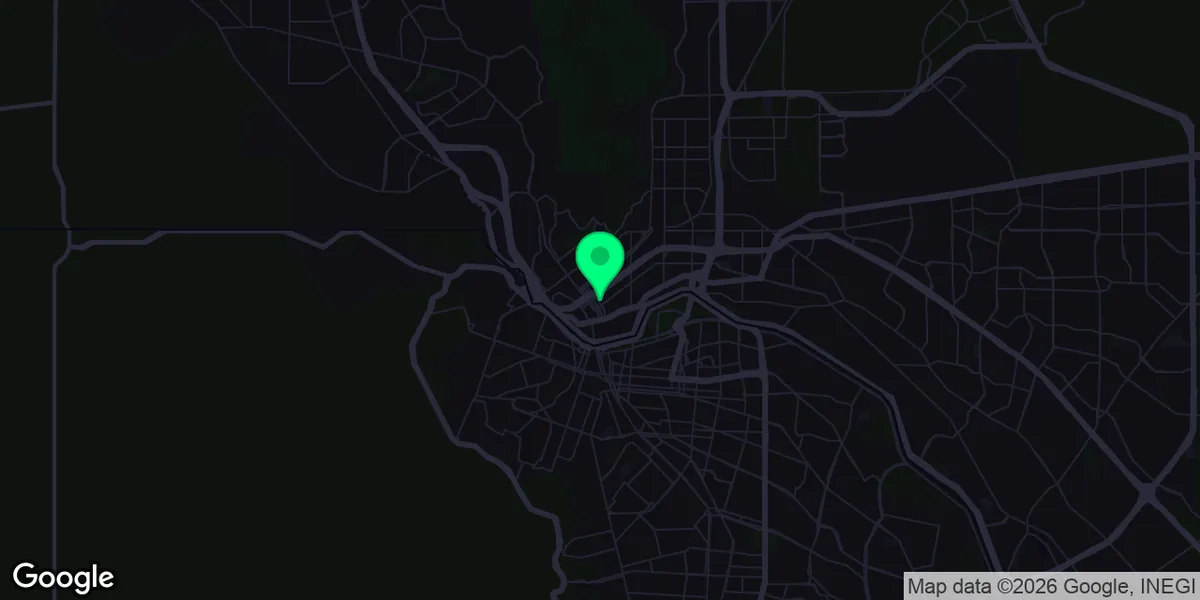
Your alert history shows details of each alert. Each one contains a picture of the scorpion, the name of the Detector that spotted it, and the exact time and date of the alert.
Each Scorpion Detector also remembers how many scorpions it has detected. This can help you understand where more scorpions may be entering your home.


Normally, you don't want your phone waking you up. But if a scorpion gets in, maybe you do. Our app let's you decide if you want a custom alert sound to grab your attention.
You can also choose to receive Scorpion Alerts through text messages. This can be useful for additional family members who don't have the app but still want alerts.

Our mobile app makes it easy to set up and manage your Scorpion Detectors. Just give each Detector a name that will let you know what room it's in, connect it to your home's Wi-Fi, and you're done.
Over time, your alert history reveals where scorpions are getting in. As you seal those entry points, you might relocate your Scorpion Detectors to other rooms. When you do, our app makes it easy to rename them and stay organized.
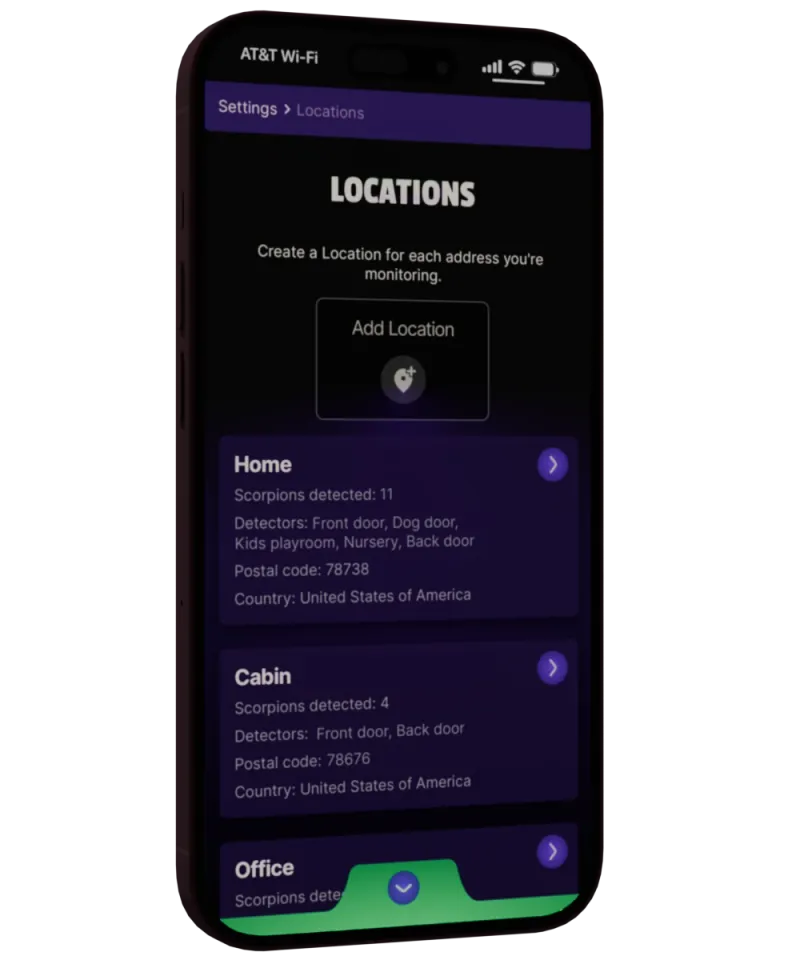
Most people only need to monitor their homes. For those who need to monitor multiple locations, such as apartments, offices, cabins, Airbnbs, hotel rooms, or addresses, our 'Locations' setting is useful. It helps group Scorpion Detectors together for easier management.

If a glue trap catches a scorpion, handle it like it may still be alive—keep kids and pets away, bag the entire trap, and dispose of it carefully to avoid accidental contact. If you get an alert, the advantage is speed: you can locate it quickly and capture it with a container-and-paper method while minimizing sting risk. This section also explains when repeated sightings mean it’s time to escalate and what details to track using a scorpion alert response checklist.
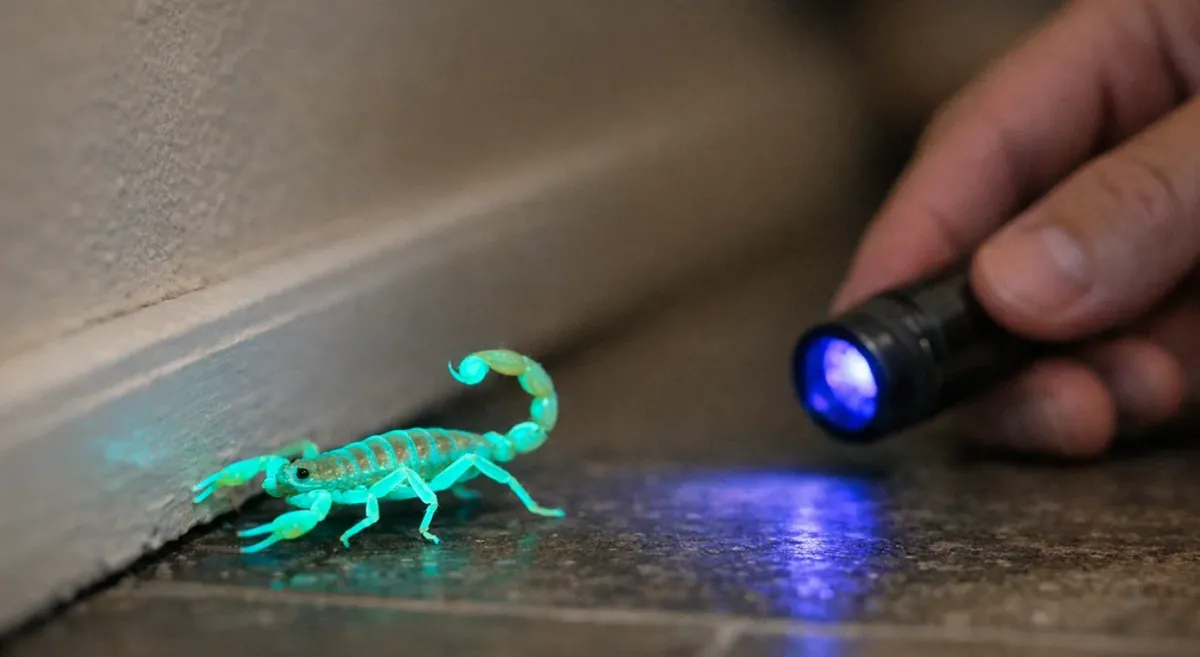
Scorpion detectors use UV light because scorpions naturally fluoresce, allowing a camera to “see” them in the dark without you doing nighttime blacklight walks. When a scorpion is detected, the device captures an image and sends a photo-verified alert (often with a confidence score) to your phone. This section also covers setup needs like outlet placement and stable 2.4GHz Wi‑Fi, plus what UV scorpion detector alert system costs compared with constantly replacing and checking traps.
Glue traps can catch scorpions, but only if the scorpion happens to walk directly onto the adhesive—so they’re better as passive monitoring than full protection. In real homes, dust, debris, kids, pets, and foot traffic can reduce stickiness or move traps, and they only help if you check them frequently. This section explains realistic expectations and when glue traps for scorpion monitoring still make sense as a backup tool.
Seal the entire trap in a sturdy bag or container before carrying it through the house, then place it in an outdoor trash bin and wash hands/tools afterward. One catch could be a lone wanderer or a sign scorpions can enter and travel inside, so it helps to document the date and location and do a focused follow-up check along edges and likely entry routes. This section walks through safe handling, disposal, and next steps in a dispose glue trap with scorpion.
You usually can’t pinpoint exact hours or days, but you can estimate a likely range using multiple clues like posture, body condition, and the trap’s environment (heat, humidity, airflow, sun exposure). A plump body with flexible joints often suggests a more recent catch, while extreme curling, shriveling, and brittleness can point to an older one. Dust, pet hair, and other insects stuck nearby can also hint at how long the board has been sitting, as outlined in this estimate scorpion time in trap.
Assume it can still move and sting until you confirm there’s no motion in the legs or tail, because “looks dead” isn’t a reliable test. The safest approach is to keep your distance, use long tongs to gently tap the trap, and avoid putting your hands or face close (a UV light at night can help you see clearly). This section also explains why bare-handed handling is risky and what to do next if you’re unsure in this glue trap scorpion safety checklist.
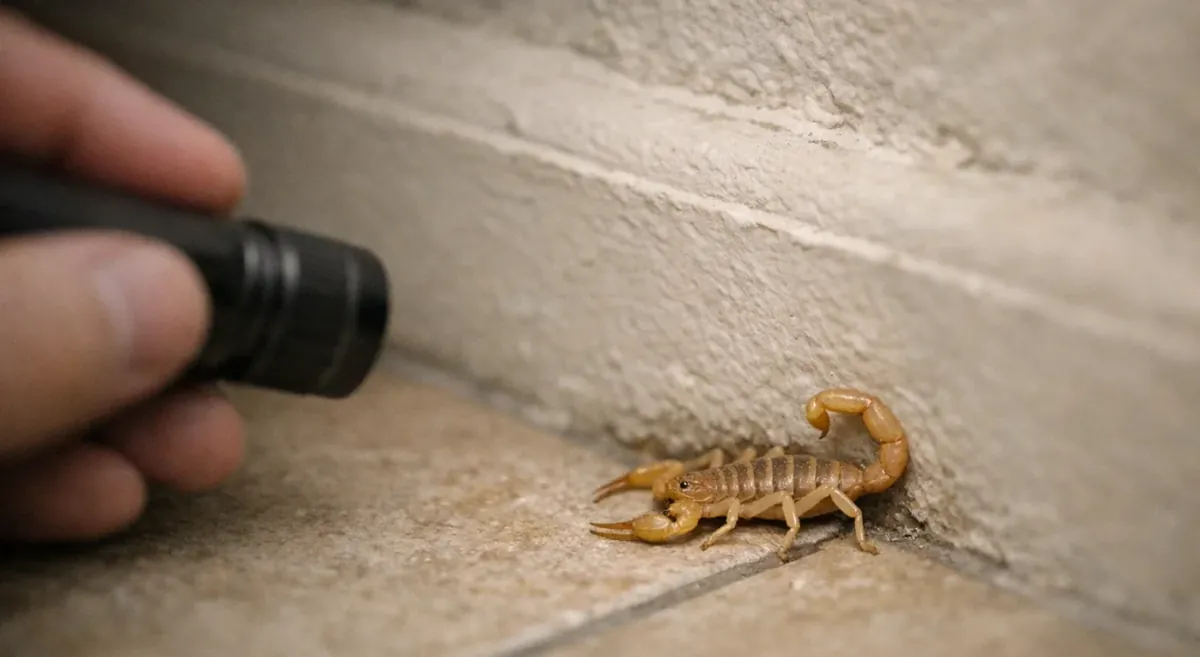
You don’t have to catch scorpions in the act—start with a quick UV flashlight sweep along baseboards, thresholds, and garage edges, where they often travel. If you want a lower-effort approach, passive perimeter monitoring can help you know when one shows up without nightly searches. These nighttime scorpion activity checks focus on the fastest places to scan first and how alerts can reduce guesswork.
Scorpion courtship often looks like a sustained “handshake” where they clasp pincers and move together in short bursts, sometimes pivoting or circling as the male searches for the right surface. That coordinated movement is usually the classic promenade, not a fight—though things can turn risky during separation. This guide to scorpion mating dance steps breaks down what you’re seeing and why you shouldn’t try to break them up with bare hands.
Scorpions don’t “talk,” but they do communicate in the sense that they send signals that can change another scorpion’s behavior—usually for survival, territory, or mating. They rely mainly on chemical cues (pheromones), vibration sensing through the ground/air, and close-range touch and posture once they meet. This overview of scorpion communication and signals also explains why scent strength and vibration patterns can affect what they “notice” at night.
Scorpion Alerts are instant notifications sent to your phone when a Scorpion Detector identifies a scorpion inside your home. Each alert includes a photo and the location of the sighting, so you know exactly where the scorpion was detected and can take action right away. These alerts are designed to give families peace of mind and help prevent stings by making sure you’re aware of scorpions before they become a danger to children or pets.
This is a matter of personal preference. Some people prefer to be woken up. In this case, they use our 'Override Silent Mode' setting to ensure their phone sounds the alarm when an alert is received.
Yes. There are no limits to the number of people you can add to your account. They'll receive push notifications by simply by installing the app and joining your account.
It's free, but our $5 monthly or $50 annual subscription is required to keep your Scorpion Detectors working.
Yes. You don't need to be home to receive alerts about scorpions in your home. As long as your phone has a signal, you'll receive alerts.
The Scorpion Detectors you plug in around your house are your front line of defense, but they don't work alone. They're supported by our cloud-based AI assistant. They get regular health checks and performance updates to make sure they improve, adapt, and evolve automatically.
A few well-placed Scorpion Detectors can help you spot them early, avoid surprises, and stop an infestation before it starts.
No matter how many Scorpion Detectors you use, your monitoring subscription is one simple, flat fee. Choose the subscription that fits you best.
Get as many as you need. It won't change your subscription price.
Get up to three. If you need more, get one free with a 5-pack.
Get a free Scorpion Detector when you buy four.