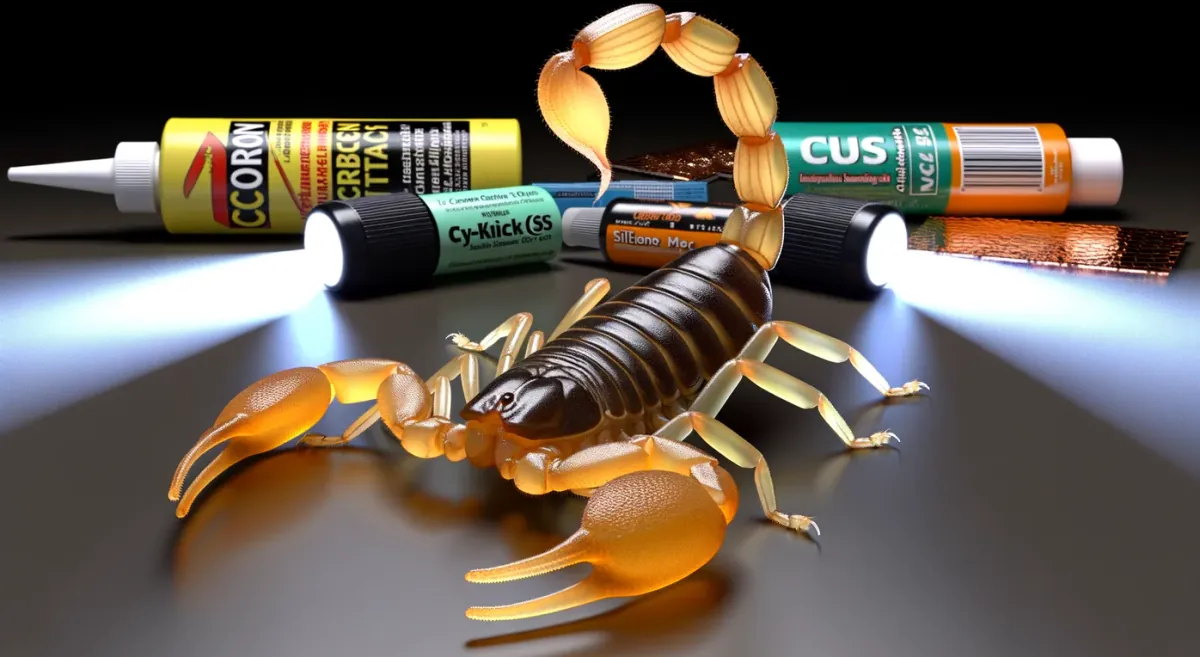
Are Reddit scorpion product reviews more trustworthy than Amazon?
Reddit reviews can be more trustworthy than Amazon listings—but only when they include real desert context. A homeowner who tells you the species, the heat, the home's construction, and exactly where they applied a product is giving you usable data. A five-star Amazon review that just says "works great" tells you almost nothing.
That context matters because an Arizona bark scorpion in a stucco home with weep holes behaves differently than a striped bark scorpion in a Texas garage. Heat breaks down chemicals faster outdoors. And no single product solves a scorpion problem by itself. Real results come from combining three things: killing what you find, blocking how they get in, and finding them fast—before they find you.
What details make a scorpion review "real" (and actionable)?
Skip reviews that don't cover the basics. The useful ones name the species, the location, and what happened after.
- Did they identify a bark scorpion, or just "a scorpion"?
- Was the encounter indoors, in the garage, or out in the yard?
- Where exactly did they apply the product?
- Did they mention follow-up sightings weeks later, or just one dramatic kill?
- What state and home type? Stucco, block, and brick all behave differently.
A single kill proves a product worked once. Whether sightings dropped over the following month tells you whether it actually solved anything.
How we judge best vs worst (for scared homeowners)
We rank products by what matters at 1 a.m., with a scorpion on your tile: speed in an emergency, residual longevity under brutal Arizona sun, realistic re-buy costs over a year, and safety and label discipline when kids and pets share the floor. Above all, we ask whether a product reduces future encounters—or only kills the one you happen to see.
What's the fastest path to fewer sightings?
Three moves, in order: kill, exclude, and detect. Kill the scorpions you encounter, block the entry points letting more inside, and set up monitoring so you find activity along the walls while you sleep. This whole article is organized around buying in that order—tonight, this weekend, then seasonal maintenance.
What is the best scorpion killer for bark scorpions (and where should I spray it)?
The best scorpion killer for bark scorpions is a micro-encapsulated residual insecticide like Cy-Kick CS or Demand CS, applied along baseboards, exterior perimeters, and entry points. These don't kill on contact instantly, but they keep working for weeks—which matters because you rarely see the scorpion that stings you. No spray replaces professional help, but a residual is the backbone of a DIY plan.
Do you need a contact killer, a residual, or both?
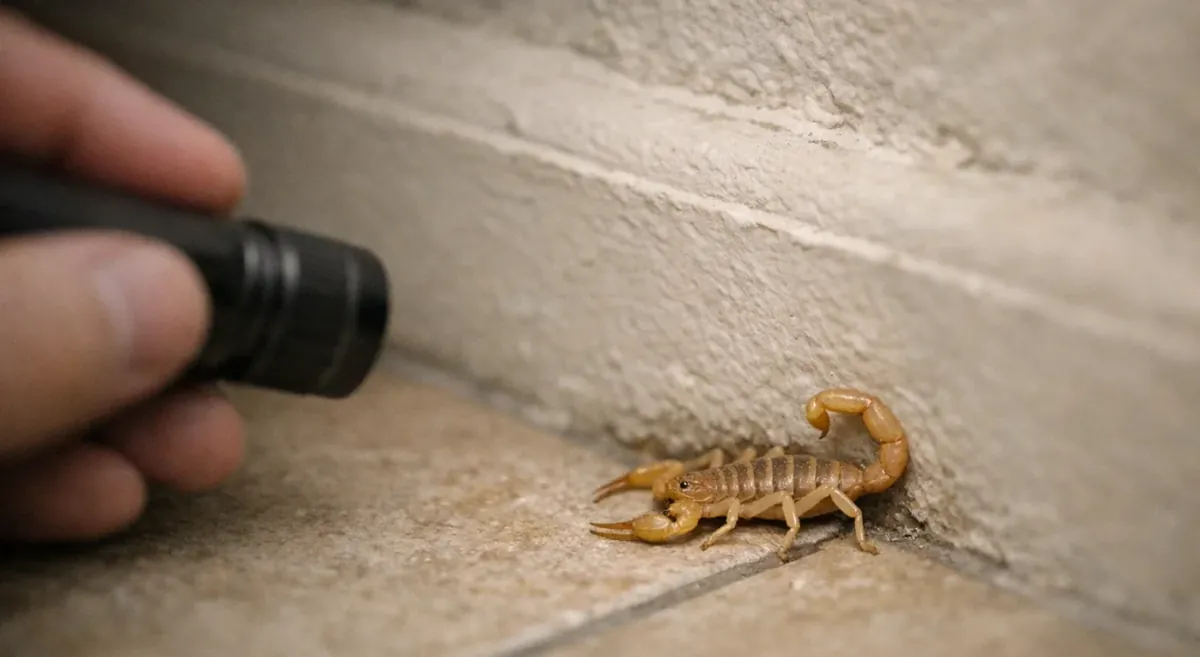
Both, honestly. A contact killer handles the "right now" moment—the scorpion in front of you. A residual handles the scorpions you never see. Bark scorpions are nocturnal and thigmotactic, meaning they hug walls and edges as they travel. That's exactly why placing residual product along baseboards and the home's perimeter makes sense: you're treating the highway they're already using.
Reddit's top 2 sprays: Cy-Kick CS vs Demand CS
Both are concentrates you mix with water. Reddit threads in Arizona and Texas circle back to these two again and again.
| Spray | Where it shines | Re-apply cadence | Common failure |
|---|
| Cy-Kick CS | Indoor baseboards, quick knockdown | Every 4–8 weeks | Under-dosing the mix |
| Demand CS | Outdoor perimeter, longer residual | Every 8–12 weeks | Patchy perimeter coverage |
If you only buy one: choose Demand CS if you want longer intervals and outdoor perimeter durability, or Cy-Kick CS if you want faster indoor knockdown and don't mind re-treating more often.
Where NOT to spray (so you don't waste money or risk exposure)
Residuals reward precision and punish carelessness.
- Don't spray it like an air freshener into open air—it works on surfaces, not vapor.
- Don't treat kids' toys, pet bedding, or food-prep surfaces.
- Don't over-apply inside living areas; a thin perimeter band beats soaking the room.
- Don't skip drying time before kids and pets return.
- Don't eyeball the mix—follow label rates exactly.
If you're tempted to lean on bug bombs or "repellents" instead, read up on the most common myths about scorpion repellents first.
Quick-buy plan for the next 12 months (realistic budget)
Buy in three tiers so you're not panic-ordering everything at once.
- Tonight (emergency): a 365nm UV flashlight and a capture container—roughly $20–$30.
- This weekend (prevention): a residual concentrate plus basic sealing materials for entry points—roughly $60–$100. Pair it with the top ways scorpions get into your home.
- Seasonal (maintenance): a longer-lasting perimeter spray and refills—roughly $80–$150 per year.
That's around $160–$280 a year of DIY, versus $40–$70 a month for recurring professional service. Pick based on how much hands-on work you actually want to do.
Which popular Amazon scorpion products are hit-or-miss (and why do they fail)?
Sorting out the best and worst Amazon scorpion products—the kind of breakdown Reddit threads do well—starts with understanding that hit-or-miss products aren't scams. They just work only in narrow conditions. Knowing those conditions stops you from doom-buying and helps you use each tool for the right job.
Do sticky traps help with scorpions—or attract more problems?
Sticky traps catch some scorpions, but they're a finder, not a solution. They collect dust, bycatch, and dead insects—and a trap full of bugs becomes a snack bar that draws more scorpions in. If you insist on using them: place them tight against walls and edges where scorpions travel, and replace them every few weeks (or sooner once they get dirty).
Does diatomaceous earth (DE) work on scorpions indoors?
DE works inconsistently indoors. It has to stay bone-dry and undisturbed, the bands need to be wide, and any scorpion it affects often crawls off and dies out of sight—so you never get the confirmation you want. DE makes sense in very dry, low-traffic voids like an unfinished crawlspace. In a real family home, it disappoints for two reasons: foot traffic disturbs it, and humidity ruins it.
Are slick barriers worth buying on Amazon?
Slick barriers can work, but only under near-perfect conditions: clean, smooth, vertical surfaces. Textured stucco, block, and a layer of desert dust kill their performance fast. Test before you trust them: pick one smooth choke point, clean it thoroughly, apply the barrier, then verify with a few nighttime UV checks to see whether scorpions are actually stopped—or just routing around it.
Will cats or Bug-A-Salt reduce your scorpion problem?
Not meaningfully. Cats sometimes bat at scorpions, but they're unpredictable and do nothing about entry points. A Bug-A-Salt is fun and fine for spot-treating one scorpion, but it's morale, not a strategy. Use both as add-ons—never as your plan.
What do "scorpion design reviews" mean—and should you care when buying products?
"Design" here means homeowner-relevant product design: ergonomics, placement, reliability, and whether a tool fits how scorpions actually move along walls at night. It's not fluff. A chemically effective product you can't use correctly under stress is a bad product.
Design = can you use it correctly at 12:30 a.m.?
Picture standing in a dark hallway in bare feet, heart pounding, trying to mix a concentrate. That's the real test. Good design means a sprayer that doesn't leak, clear measuring and mixing, a flashlight that grips well and throws a clean beam, batteries that last, and maintenance you don't dread.
What design features matter most for UV blacklights?
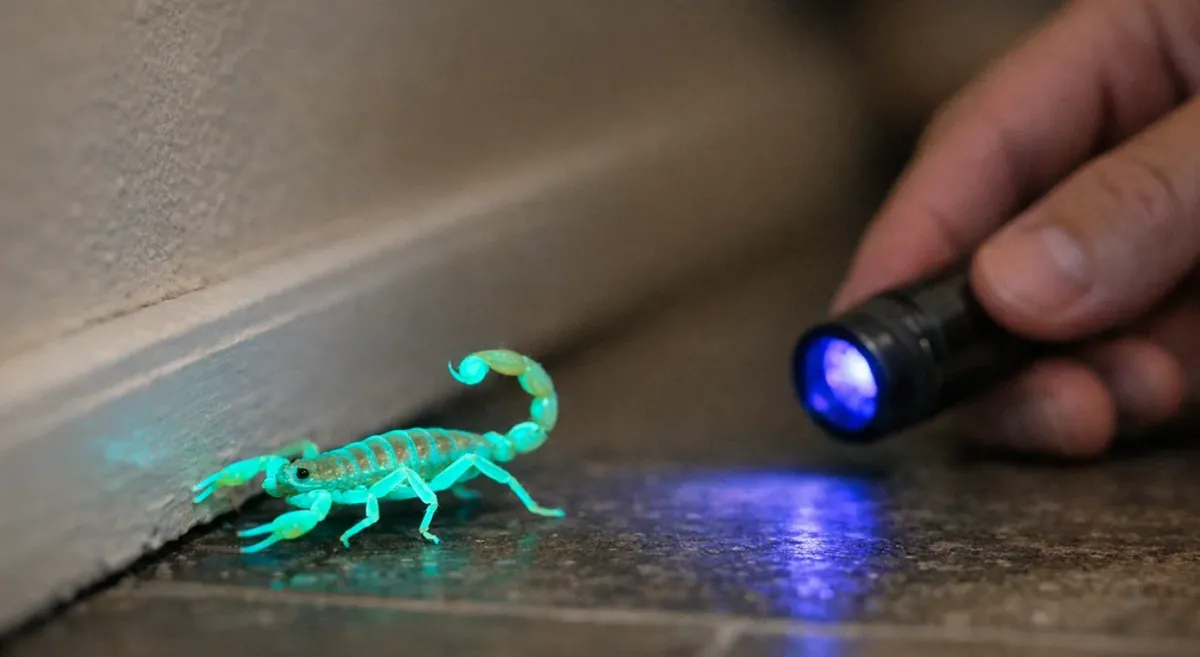
Scorpions fluoresce a vivid greenish-blue under ultraviolet light, and 365nm models make them pop far more than the cheaper 390nm–395nm lights. Beyond wavelength, look for a beam wide enough to sweep baseboards quickly, rechargeable batteries, and a housing tough enough for garage and patio use.
What design features matter for traps and barriers?
For traps, you want a low profile that sits flush to walls, placement that resists dust, and easy, no-touch disposal. For slick barriers, the real design factors are surface-prep requirements, how fast dust, UV exposure, and weather degrade them, and how easily a scorpion bypasses them by using a nearby plant or piece of furniture.
Are scorpion detection technologies worth it vs nightly blacklight walks?
Detection technology is worth it for households that won't reliably do nightly flashlight sweeps. A manual UV walk works, but only on the nights you actually do it—and scorpions don't keep your schedule. Automated detection watches the wall-edge travel paths every night and alerts you, which is a meaningful upgrade over passive traps and human consistency.
97.8% of US scorpion envenomations happen inside the home—not outdoors.
— Kang & Brooks, J Med Toxicol 2017
That's the case for indoor detection. With Arizona accounting for roughly 68.2% of all US scorpion exposures reported to poison centers from 2005–2015, per Kang & Brooks 2017, finding activity sooner genuinely matters in the Southwest.
What "good scorpion tech" should do (and what it can't do)
Set expectations honestly. Detection and alerts don't make scorpions disappear—they help you find activity sooner and respond faster. The core benefit is monitoring the baseboards and wall edges where scorpions travel while you're asleep, so you're not relying on stepping on one to learn it's there.
How Scorpion Alert works (in plain English)
Scorpion Alert Detectors plug into standard wall outlets along the room perimeter—right where scorpions naturally travel. Each one shines 365nm UV light onto the floor and watches for that telltale glow, scanning only when the room is dark and scorpions are active. A custom-trained AI model does two-stage verification—on-device analysis plus cloud confirmation—to cut false positives, then sends a photo-verified alert with an AI confidence percentage to your phone within seconds. Push and SMS notifications plus family sharing mean nobody misses it.
What does it cost, and how many detectors do most homes need?
It's a subscription model with the detectors included in monitoring. Pricing drops with volume. See /pricing for current rates. Most homes do well with 3–5 detectors, covering bedrooms, entry points, and the garage door area. You can cancel anytime and return the units. For exact current numbers, check the pricing page.
What to check before you buy: placement, Wi‑Fi, and "invisible UV" concerns
A few practical caveats: the Detectors need a 2.4GHz Wi‑Fi connection. Place them near entry points and priority rooms—bedrooms, the nursery, and the garage door area where scorpions slip in. The UV light is faint and not noticeable to most people at night. Here's the simple decision rule: if your family won't reliably do nightly flashlight sweeps, automated detection is the better fit. And if you've already spotted one, here's what not to do after spotting a scorpion in your home.
After sorting through the best and worst Amazon scorpion products people debate on Reddit, the biggest takeaway is that sprays, traps, and “repellents” are hit-or-miss unless you know when scorpions are actually showing up in your home. Scorpion Alert helps by using UV-based detection with a built-in camera and real-time alerts, so you can confirm activity and respond quickly instead of guessing. If you want a clearer, less trial-and-error approach, learn more at Scorpion Alert.