Are scorpions a real problem in El Mirage, Arizona?
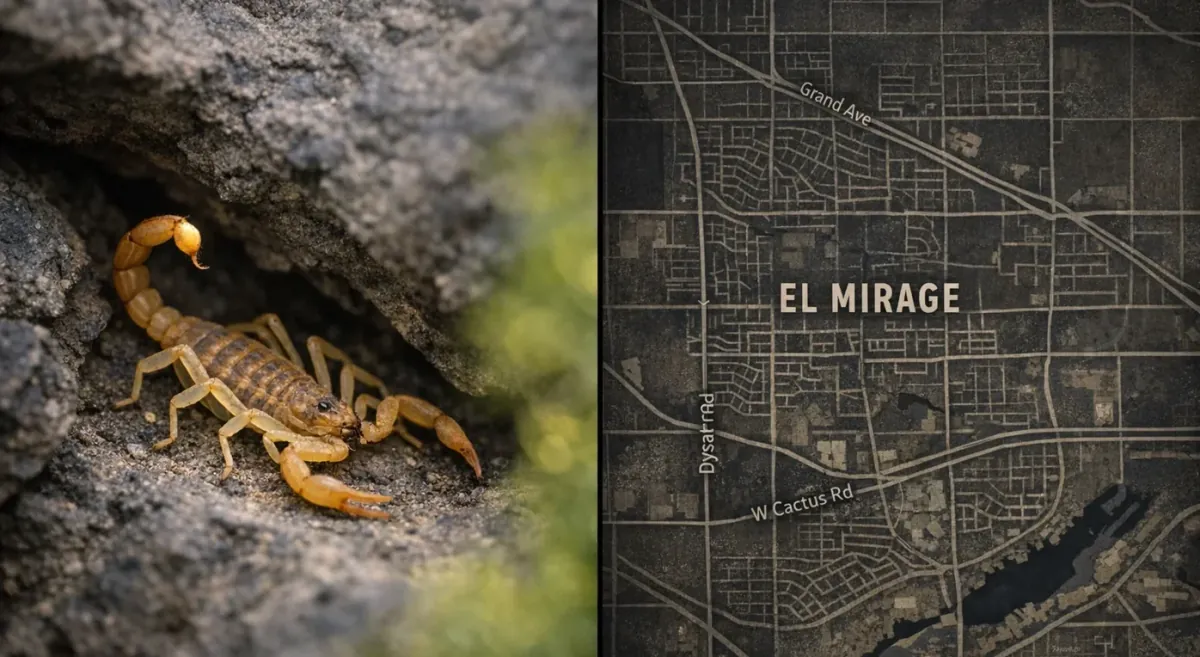
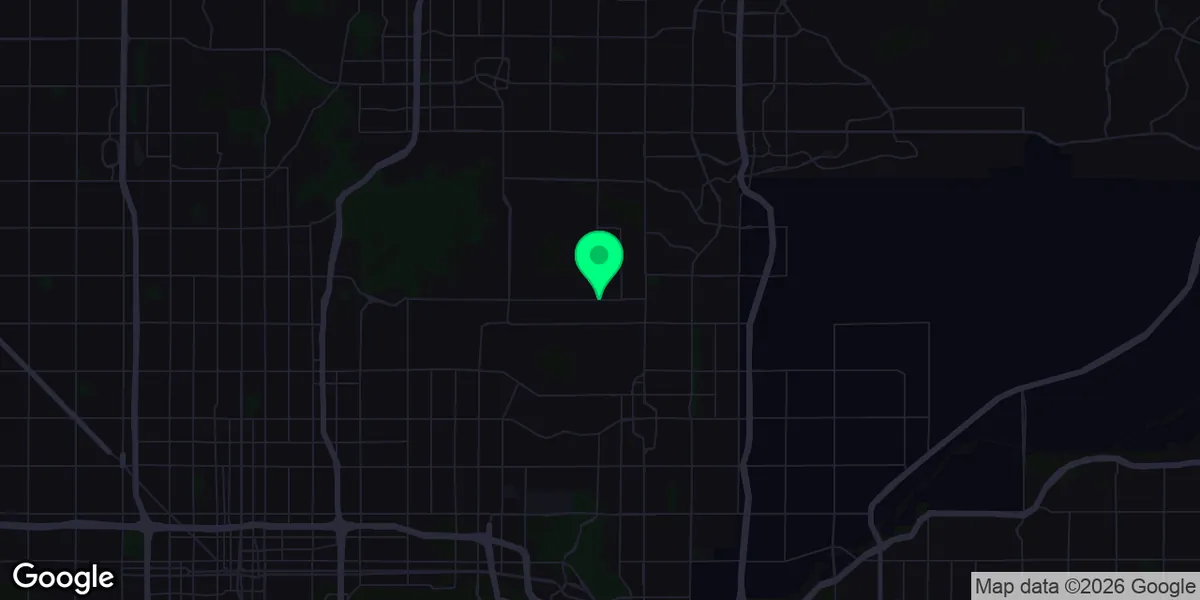
Yes — El Mirage sits in Maricopa County, one of the highest-pressure bark scorpion areas in the country, so seeing one indoors is common and you're not overreacting. The Arizona bark scorpion is the region's only species of real medical concern, and once conditions favor them, repeat sightings in the same home are the norm, not the exception.
The West Valley combines warm nights, block-wall yards, and irrigated landscaping — a near-perfect setup for these scorpions. Repeat sightings usually mean conditions on your property are attracting multiple scorpions. They don't "travel in pairs." A one-off sighting is one scorpion, one time, often in a garage or entryway. An infestation looks different: multiple scorpions showing up again and again, especially in bedrooms and bathrooms where people sleep.
68.2% of all US scorpion exposures reported to Poison Control from 2005–2015 happened in Arizona — roughly 11,500 per year.
— Kang & Brooks 2017
What counts as an infestation versus a one-off sighting?
Treat it as more than a one-off if any of these three thresholds are met: you find more than one scorpion in a single month, scorpions keep turning up in the same room, or you spot one in a bedroom, nursery, or other sleeping or child area. Any one of those is worth acting on.
Clusters often line up with "hot weeks" — the humid monsoon stretch when activity spikes. So if you find three in one August week, that's not bad luck. That's the season doing what it does. Don't dismiss it.
Track each sighting so patterns show up:
- Date and time
- Which room
- Near which wall or threshold
- Weather that night (especially humidity after rain)
- Whether the lights were off
Why do scorpions keep showing up in the same rooms?
Scorpions are thigmotactic — they navigate by hugging walls, baseboards, and the edges of furniture rather than crossing open floors. That perimeter travel funnels them into bathrooms, laundry rooms, and along baseboards, which is exactly where homeowners keep finding them.
Two things drive repeat sightings: entry gaps that let them back in, and micro-habitats that offer the water and prey insects they want. A leaky bathroom or a drain in the laundry room checks both boxes. Fix one and ignore the other, and they'll keep coming.
Anxious tonight? Check these rooms first, along the walls and thresholds:
- Bathrooms (near the tub, toilet base, and vanity)
- Laundry room (behind and under the machines)
- Bedrooms (baseboards and under the bed)
- Garage-to-house doorway
When is scorpion season in Arizona (and when is it worst in El Mirage)?
Arizona scorpion season runs roughly from spring through fall, with the sharpest peak usually during the monsoon months — commonly August and September — when warm nights and humidity push activity to its highest. In El Mirage and across the West Valley, the same window applies, and you may notice a jump in sightings right after summer storms.
The monsoon changes everything because it stacks three factors at once: higher humidity, a surge in the insects scorpions eat, and warm overnight temperatures that keep them hunting longer. More food, more comfort, more movement — straight toward the moisture and prey inside your home.
Arizona scorpion season timeline: what to expect month by month
Here's the compact version of the Arizona season, March through November:
- Early season (Mar–May): Scorpions emerge as nights warm. This is prep time — seal and clear.
- Peak (Jun–Sep): Highest activity, with the sharpest window typically in August and September. This is response time.
- Taper (Oct–Nov): Activity slows as nights cool, but sightings don't stop overnight.
Warm nights are the real trigger. If it's still hot after dark during an unseasonably warm spring or fall, expect activity to start early or run late. For a deeper breakdown, see our month-by-month Arizona scorpion season guide.
Why are scorpions more active at night in summer?
Scorpions are nocturnal, and their busiest hours overlap with your evening routine — bare feet on tile, laundry piles on the floor, kids' toys along the baseboard, and pet bowls left out. Picture flipping on the bathroom light at 2 a.m. and finding one on the floor next to the toilet. That's the collision the night creates.
A simple night routine cuts the risk. Shake out shoes before you put them on. Keep bedding tucked so it doesn't touch the floor. Pull beds a few inches off the wall. Clear clutter along walls where scorpions travel. A UV flashlight walk after full dark — along baseboards and thresholds — can confirm a sighting, but you shouldn't have to run that patrol every single night.
What should I do before peak season hits?
Get ahead of it with three moves before summer:
- Exclusion touch-up: Reseal door sweeps, weatherstripping, and utility gaps.
- Yard cleanup: Clear wood piles, debris, and dense ground cover near the foundation.
- Monitoring plan: Decide how you'll know when one gets inside — before someone steps on it.
Make it a 15-minute monthly "seal + clear + check" habit starting in spring. Do bedrooms and nurseries first — that's where your risk tolerance is lowest.
Are scorpions in Phoenix the same problem as El Mirage?
Largely yes. The Phoenix metro and El Mirage share the same Arizona bark scorpion, the same spring-through-fall season, and the same block-wall-and-irrigation landscape, so homeowners across the Valley see very similar issues. What varies is the local detail: neighborhood layout, older versus newer construction, and how close you are to open desert, canals, or greenbelts.
The species and seasonality are constant. The pressure level is what shifts block to block.
Why Phoenix-area scorpion pressure can feel 'neighborhood-specific'
Scorpions spread through connected yards, and block walls act like highways and hideouts at once. One untreated yard keeps pressure on the next, which is why a whole street can share the problem. Valley features that raise sightings include irrigated landscaping, dense ground cover, and shaded rock features that hold cool, humid harborage.
Upper floors aren't automatically safe, either. Arizona bark scorpions can reach second-floor rooms and beds by traveling through wall voids and attic spaces, so height alone isn't a reliable barrier.
If I see scorpions in El Mirage, should my family in Phoenix worry too?
Run a quick risk check for any Valley home: recent sightings, warm nights, nearby construction or ground disturbance, and indoor moisture. Any of those raises the odds. The core strategy is the same anywhere in the Phoenix metro — seal entry points, reduce prey insects, and monitor along perimeters.
It's worth sharing a "sting plan" with relatives. Put Poison Control (1-800-222-1222) in everyone's phone, review the symptoms that matter most in children, and agree on a simple night routine for shoes and bedding. A five-minute conversation now saves a frantic one later.
How dangerous are bark scorpion stings in El Mirage, and when should you get help?
Most bark scorpion stings cause intense local pain, tingling, and numbness that resolve at home, but they can turn serious — especially in young children and medically vulnerable people. Your first call for any sting should be Poison Control at 1-800-222-1222. They'll tell you whether to stay home or head in, and they can patch in 911 if needed.
One thing not to do: don't waste time chasing or trying to catch the scorpion before you handle first aid. Care for the person first. For the full playbook, read what not to do after spotting a scorpion in your home.
What bark scorpion sting symptoms should I take seriously?
Common, local symptoms include immediate burning pain, tingling, and numbness spreading around the sting site. Pain at the site shows up in 88.9% of stings and local numbness in 62.2%, per an Arizona cohort (Klotz et al. 2021). Those usually stay manageable.
Red-flag systemic symptoms mean you should call for help fast: trouble breathing or swallowing, uncontrolled jerking or muscle movements, abnormal roving eye movements, or severe full-body distress.
Children can escalate faster than adults, and the reasons are physical. According to Dr. Frank LoVecchio, medical toxicologist at Banner Poison and Drug Information Center, "Unfortunately little kids because they have a small airway or a small breathing tube, lots of secretions are a problem for them." Learn more about why children are more at risk from scorpion stings.
Record these details while you wait or call:
- Time of the sting
- Age and weight of the person
- How symptoms change over time
- Any allergy history
What should I do in the first 30 minutes after a sting?
Work this checklist calmly:
- Wash the sting site with soap and water.
- Apply a cold pack to ease pain and swelling.
- Remove tight jewelry or clothing near the site before swelling starts.
- Watch closely for the red-flag symptoms above.
- Call Poison Control at 1-800-222-1222.
Then reset the room for the night: shake out shoes and bedding, clear the floor along walls, and close obvious gaps. For severe cases, ERs carry an effective scorpion antivenom, so escalation exists when it's truly needed. See our full bark scorpion sting first-aid guide.
How do you keep scorpions out of an El Mirage home long-term?
Long-term control works best as a layered plan, in this order: exclusion first, then yard and habitat reduction, then prey reduction, then monitoring. No single step wins alone — but stacked together, they steadily lower the pressure on your home. Some of this is a weekend project; deep sealing and pest control are worth outsourcing.
What are the highest-impact sealing fixes for West Valley homes?
Bark scorpions are slender and can squeeze through gaps thinner than a credit card, so small gaps matter. Prioritize these:
- Door sweeps on every exterior door — including the garage-to-house door
- Fresh weatherstripping around frames
- Sealed plumbing and utility penetrations
- Garage door side and bottom edges
- Weep holes fitted with screens or covers
For the full route-by-route breakdown, see the top 5 ways scorpions get into your home instead of re-listing every gap here.
How should I change my yard if my neighborhood has block walls?
Block walls double as travel corridors and hiding zones — scorpions run the base and shelter in the cavities. You can't move the wall, but you can strip the habitat around it. Focus on habitat reduction:
- Remove clutter and wood piles against the house and wall
- Thin dense ground cover right at the foundation
- Fix leaks and manage moisture that draws prey insects
Here's the shared-wall reality: you can't control your neighbor's yard. Because pressure carries over from next door, your own perimeter sealing and indoor plan matter even more.
What's the most practical way to monitor for scorpions at night?
Monitor perimeter-first — along baseboards, thresholds, corners, and water-adjacent rooms like bathrooms and laundry rooms, since that's the path scorpions naturally follow. The question is how you watch those lines without living on edge every night.
| Method | Effort | Reliability | Alerts you? |
|---|
| Occasional blacklight walks | High — every night to matter | Only when you're awake and looking | No |
| Sticky / glue traps | Low | Catches some; messy and easy to miss | No |
| Automated UV detection (Scorpion Alert) | Set once | Scans the perimeter every dark night | Yes — to your phone |
Scorpions glow greenish under 365nm UV light, and that's exactly what an automated system like Scorpion Alert is built on. The plug-in Detectors sit on wall outlets along the perimeter where scorpions travel, shine 365nm UV on the floor, and scan only when the room is dark — the hours scorpions are active. When one is detected, you get a photo-verified alert on your phone within seconds, so you know exactly which room to check. That's especially useful for bedrooms, nurseries, and entry points, and it beats tedious nightly flashlight patrols or unreliable traps.
Scorpion Alert rents Scorpion Detectors as part of a monthly monitoring subscription — the hardware is included. A one-time shipping fee applies at checkout. See /pricing for current rates. There's no long-term contract — cancel any time by emailing support@scorpionalert.com and returning the Detectors. Get automated scorpion monitoring for your El Mirage home and stop wondering what's crossing your floor at night.
In El Mirage, scorpion activity tends to spike in the warmer months and after dark, so focusing on nighttime habits, sealing entry points, and reducing outdoor harborage can go a long way toward preventing stings—especially for kids and pets. If you want an extra layer of confidence between seasonal surges, Scorpion Alert can help you monitor and stay ahead of scorpion activity so you can respond quickly when conditions change.