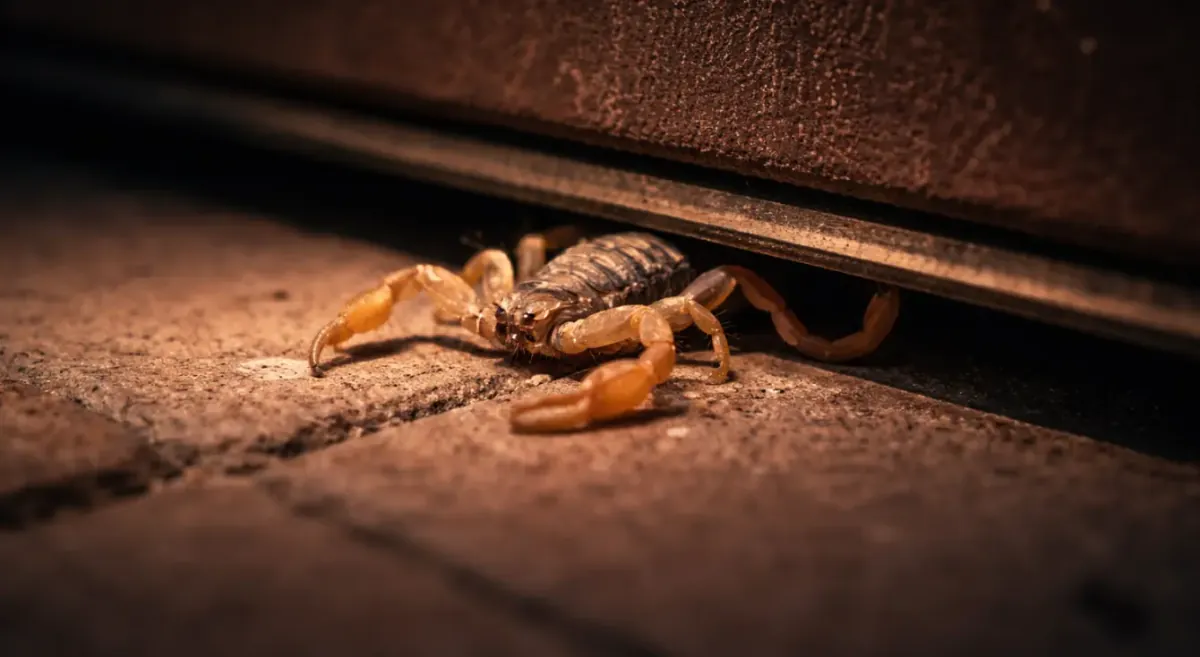
Scorpions get inside because they follow edges while hunting at night and slip through small gaps in your home's perimeter — under doors, along the garage threshold, or around pipes and cables. They're chasing insects and shelter, not you. One sighting is a single data point, not proof of an infestation.
Prevention works when you tackle two things at once: access (the gaps they squeeze through) and pressure (the food and hiding spots that pull them close to your foundation). Random baseboard sprays usually don't do either well, which is why they tend to disappoint — more on that in these common myths about scorpion repellents. Seal, clean up outside, and monitor. That's the plan.
Why are scorpions getting into my house in the first place?
Do scorpions actually live indoors, or do they wander in?
Most scorpions you see indoors wandered in from outside while hunting — they don't set up permanent residence in your living room. A few will hole up in a cool, dark spot like a garage or laundry room, but most are just passing through along the edges of the house.
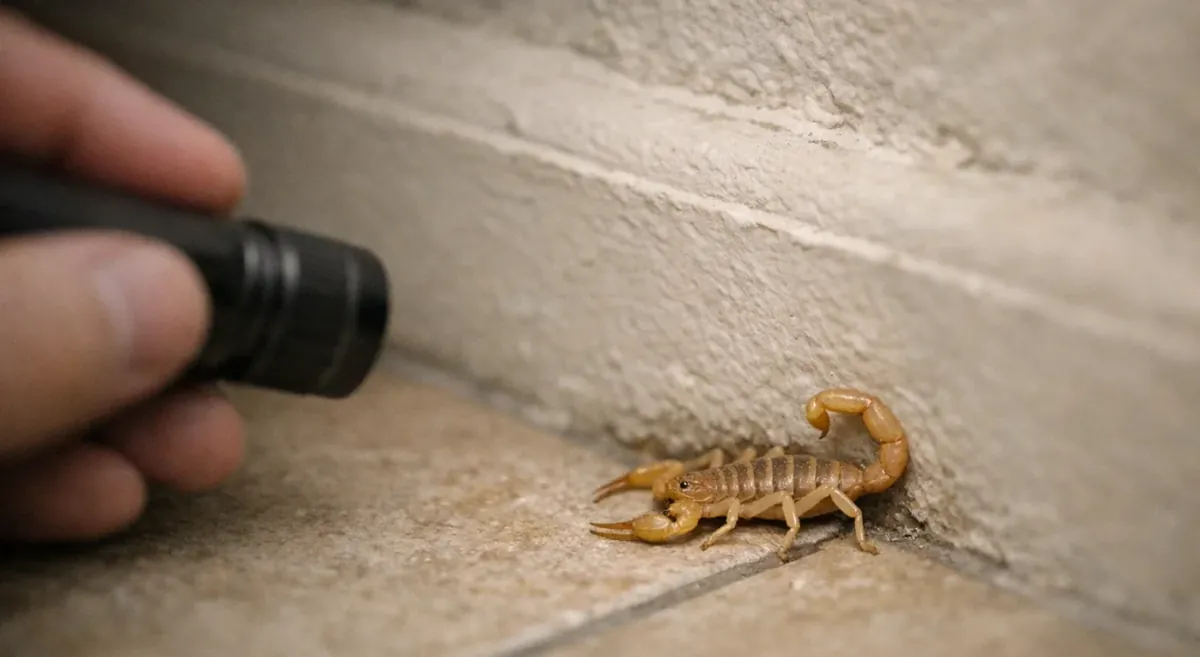
Scorpions are thigmotactic, meaning they navigate by keeping their bodies pressed against surfaces and edges. That's why you find them along baseboards, in corners, and hugging thresholds instead of strolling across open floors. Outside, an edge-following scorpion hits your foundation, traces it, finds a gap, and follows that gap right indoors. Reduce the food and shelter near your walls and seal the gaps, and you cut the whole pipeline.
How small of a gap can a scorpion squeeze through?
If you can see daylight through a gap, it's big enough for a scorpion to get through. A good mental benchmark is credit-card thin — anywhere a piece of paper or a card could slide, a young scorpion can flatten and follow.
The usual suspects are predictable: worn door sweeps and weatherstripping, the gap where the garage door meets the slab, utility penetrations where pipes, cables, and the AC line enter the wall, and weep screed and stucco-to-slab transitions. Don't feel overwhelmed — you'll get a prioritized checklist below so you can seal the highest-impact gaps first.
What should I do tonight if I'm scared there's a scorpion inside?
Tonight, do three quick things: check the spots scorpions travel (baseboards, corners, under sinks), keep shoes, bedding, and pet bowls off the floor, and never reach bare-handed into a dark gap. This won't scorpion-proof the house — that's the weekend project — but it can help prevent a surprise sting while you sleep.
Where should I look first (and where should I not put my hands)?
Start where scorpions travel and hide: along baseboards, in corners, under sinks, inside closets, and around the edges of bathrooms and laundry rooms. Move slowly and bring a light.
Safety rules matter here. Shake out shoes before you put them on. Check bedding and pull it away from the wall. Never stick bare hands into a dark gap, a box, or behind stored items — use tongs and trap the scorpion under a glass if you find one. For a full rundown of mistakes to avoid, read what not to do after spotting a scorpion in your home.
A quick kids-and-pets checklist for tonight:
- Pick shoes and toys up off the floor.
- Don't leave pet bowls out overnight — standing water and food draw insects.
- Keep bedskirts and blankets from touching the floor.
Is a UV flashlight worth using for a quick check?
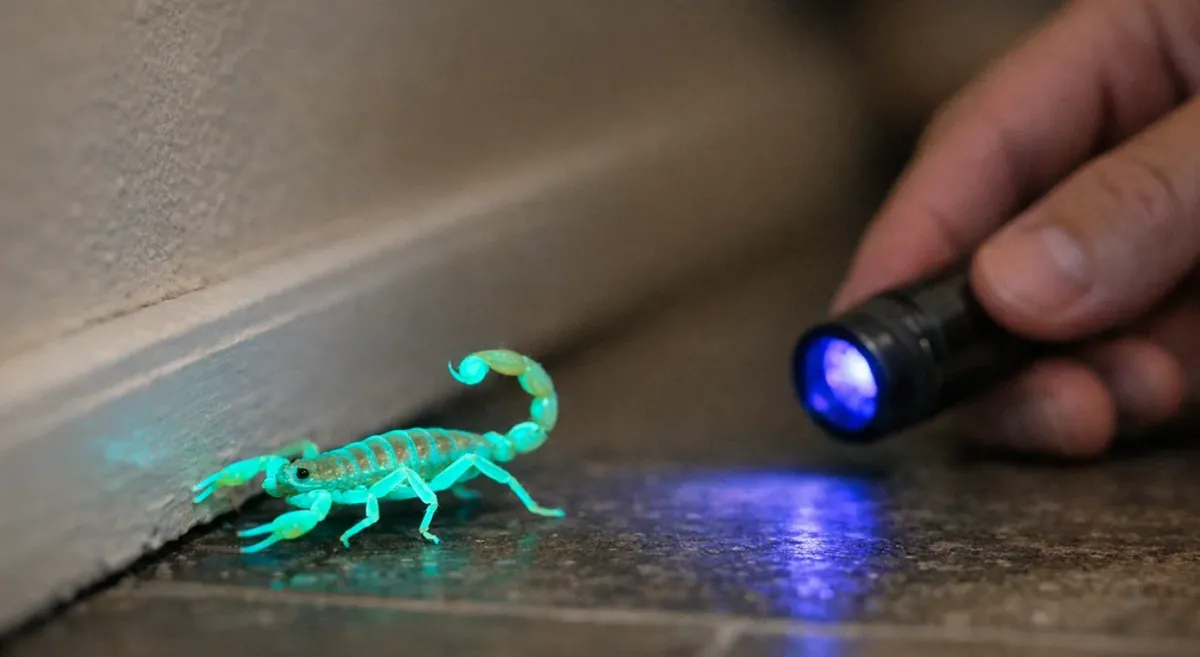
Yes — a UV flashlight is genuinely useful for a one-time check because scorpions fluoresce a bright greenish color under ultraviolet light. A scorpion that's nearly invisible on tile lights up like a glow stick, which makes it much easier to spot.
Turn the room lights off, then sweep the UV beam slowly along baseboards and thresholds where scorpions travel. If something glows, confirm it visually before you get close. A manual check helps tonight, but doing it every single night forever isn't realistic — long-term prevention comes from sealing gaps, cleaning up outside, and having something else handle the ongoing monitoring.
How do I seal my house for scorpions (without missing the big gaps)?
Seal in order of impact: garage door bottom and threshold first, then every exterior door, then utility penetrations, then window screens and weep holes. Do a flashlight audit, close the biggest daylight gaps with door sweeps and sealant, and you'll block most of the routes scorpions use.
Where do I start: garage door, exterior doors, or plumbing penetrations?
Start with the garage door — it's the single highest-traffic entry route because that long rubber bottom seal rarely touches the slab across its full width. Then hit exterior doors, then plumbing and cable penetrations, then screens and weep holes.
Run a 15-minute walk-around audit at night. Shine a flashlight from inside toward each door and gap while a helper watches from outside — visible light means a real hole. Feel for airflow with your hand. Look for daylight along thresholds and under the garage door. For the fuller map of routes, see the top ways scorpions get into your home.
One caution: keep weep holes functional. They drain moisture out of your walls, so don't caulk them solid — use stainless weep-hole covers instead. And leave structural cracks in the foundation or stucco to a pro; sealing those wrong can trap moisture.
What's the best one-trip 'sealing kit' for scorpion-proofing?
One trip to the hardware store covers almost every gap. Grab these:
- Door sweeps — for the bottom gap on exterior doors.
- Adhesive weatherstripping — for door corners and jamb edges.
- Garage door threshold kit — seals the slab-to-door gap across the full width.
- Silicone or urethane sealant plus backer rod — for long cracks and stucco-to-slab lines.
- Escutcheon plates — to cover the ring gap around pipes under sinks.
- Copper mesh or steel wool — packed into larger penetrations around cables and pipes before you seal over them.
Budget a weekend and a modest hardware bill. Saturday for the garage and exterior doors, Sunday for penetrations and screens. Most homeowners finish comfortably in two half-days.
How do I know my sealing work is actually good enough?
Your sealing passes when you see no daylight through any gap, door sweeps make firm contact with the threshold, the garage door seal touches the slab across its entire width, and every penetration is snug with no visible openings. If light gets through, so can a scorpion.
Homes settle and seals degrade in desert heat, so plan a seasonal re-check before activity spikes — the month-by-month scorpion season guide for Arizona shows when that pressure ramps up. Even a tight seal can still miss the occasional hitchhiker riding in on a box or a bundle of firewood, which is why monitoring stays part of the plan.
What changes outside and in the garage actually reduce scorpions near my home?
Cutting the harborage and prey insects near your foundation lowers scorpion pressure more than any spray. Move wood piles and debris away from walls, trim ground cover back, fix leaks, and declutter the garage perimeter. Fewer hiding spots and fewer bugs means fewer scorpions tracing your foundation at night.
What outdoor hiding spots should I remove first?
Remove the cool, damp shelters closest to your walls first: firewood piles, palm fronds and leaf litter, stacked pavers and landscape rock, and dense ground cover touching the foundation.
Move firewood well away from the house and elevate it off the ground. Aim for a clear zone a couple of feet wide along the foundation with nothing pressed against the wall. Fix leaky spigots and adjust irrigation, too — damp soil breeds the insects scorpions hunt, turning that strip into an active feeding zone.
Does reducing insects really reduce scorpions?
Yes. Scorpions follow their food, so fewer crickets, roaches, and spiders near the house means there's less reason for a scorpion to hunt there. The chain is simple: cut the prey, cut the predator's traffic.
Swap bright white porch bulbs for yellow bug lights or motion-activated fixtures, since white light draws the insects that draw scorpions. Keep basic sanitation tight and fix moisture. Think of it as a pressure test — if you flip on the porch light and the doorway is swarming with bugs, a scorpion isn't far behind. The top things that attract scorpions covers the full list.
How do I make my garage less of a scorpion staging area?
Clear the garage perimeter — that's where scorpions stage before slipping under the door. Pull stored items off the floor and away from the walls, swap cardboard boxes for sealed plastic bins, and elevate everything onto shelves.
Cardboard is a scorpion favorite: dark, layered, and full of edges. Reducing floor clutter along the walls and around the garage door removes the hiding spots that let a scorpion linger indoors. Since the garage threshold is a top entry route, re-check that door seal monthly — it takes thirty seconds and catches problems early.
How can I monitor at night to catch scorpions and prove prevention is working?
The reliable way to monitor is automated overnight detection, because scorpions are active in the dark hours when you're asleep. Glue traps and manual blacklight walks both leave gaps in coverage. Real-time, photo-verified alerts tell you exactly when and where a scorpion shows up — and whether your sealing and cleanup are actually cutting activity.
Are glue traps worth it, or do they create new problems?
Glue traps have real drawbacks. Dust and debris quickly kill the stickiness. Curious pets and kids can get stuck to them. And they catch non-target critters like geckos and spiders you didn't mean to trap.
The bigger issue is the information delay. A glue trap only tells you something after you remember to check it — there's no real-time awareness, so a scorpion could be caught for days before you notice. If you still use them, place a few in targeted spots along baseboards near entry points and check them often. Just don't rely on them as your whole monitoring plan.
What's the easiest way to monitor while I sleep?
The easiest way to monitor while you sleep is an automated detection system that watches for you. Scorpion Alert Detectors plug into standard wall outlets right on the room perimeter, where scorpions naturally travel, and take over the job you'd otherwise do by hand every night.
Each Detector shines 365nm UV light onto the floor below and watches for that telltale greenish scorpion glow. They only scan when the room is dark — built for nighttime, when scorpions are most active — and send a photo-verified alert with a confidence score to your phone within seconds of a detection. No nightly blacklight walks, no trap-checking.
Place Detectors where scorpions enter and gather: outlets near the front door, back door, garage entry, and pet door, plus high-risk rooms like bedrooms, bathrooms, and the laundry room. More Detectors mean better coverage of the edges scorpions follow. When one triggers, grab a UV flashlight and a glass, go straight to the room that alerted, trap the glowing scorpion, and release it outside.
How long should I monitor before I know my plan worked?
Give it two to three weeks after you finish sealing and cleaning up. Improvement looks like fewer sightings and alerts over that window — especially indoors, which is where it matters most.
Here's a simple decision rule: if indoor activity stays weekly after all that work, you likely missed an access point or you still have heavy outdoor pressure near the foundation. Photo-verified alerts help you pinpoint exactly which room and which entry route to re-inspect, taking the guesswork out. Keep monitoring seasonally, because settling homes reopen gaps and scorpion movement shifts with the weather — a tight house in spring can develop a new gap by monsoon season.
Once you’ve sealed likely entry points and cleaned up clutter that gives scorpions places to hide, the last step is staying aware of what’s still getting inside. Scorpion Alert makes monitoring simple by letting you place plug-in detectors near doors, the garage, and high-risk rooms like bedrooms and bathrooms—and the child-protection mounting helps keep them secure in busy households. Learn more at Scorpion Alert.