How do scorpions mate, and what is the "mating dance"?
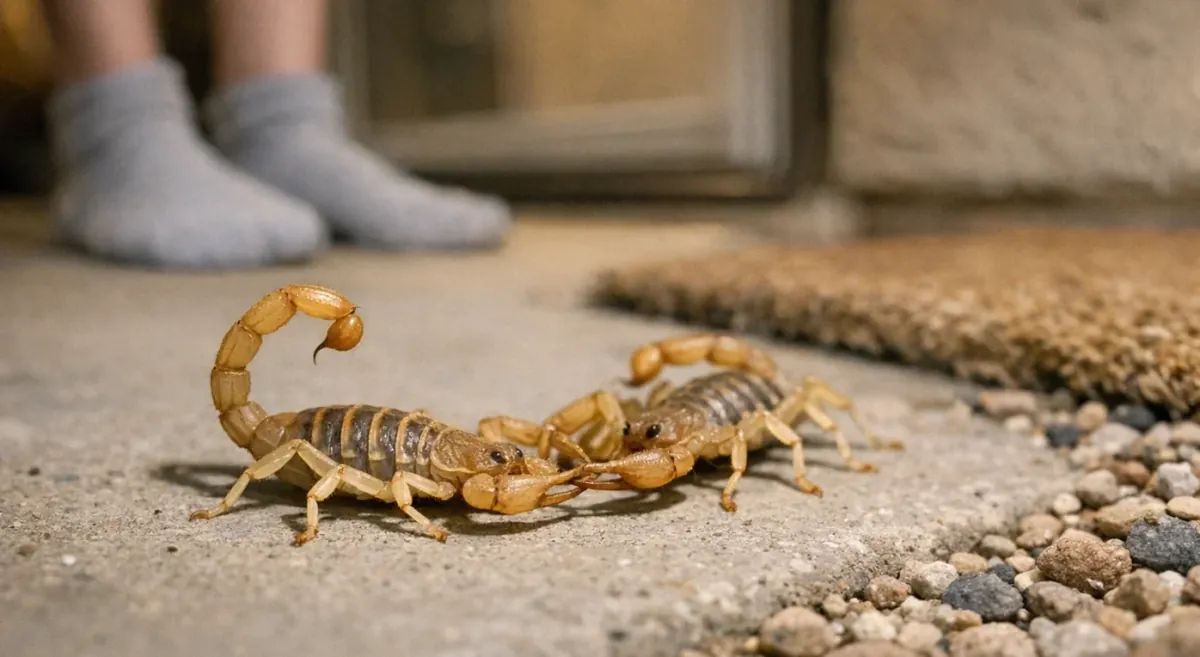
Picture this: You’re letting the dog out after dark, and your flashlight catches two scorpions locked together—pincers clasped—shuffling across your patio. Your first thought might be that they’re fighting. In reality, you’ve just witnessed the start of scorpion courtship, a complex ritual that can last for hours.
The scorpion mating process involves an intricate sequence of movements scientists call the "promenade à deux" (French for "walk for two"). Unlike many creatures that mate quickly, scorpions take their time. The male must convince the female to accept his sperm packet through careful choreography and chemical signals.
What the courtship looks like (pincers, pushing, and guiding)
The mating dance starts when a male scorpion finds a receptive female. He’ll grasp her pincers with his own—it genuinely looks like they’re holding hands. Then begins a slow, shuffling dance where the male leads the female around, sometimes for hours. During this time, he’s searching for the right spot to complete the mating process.
The male uses his pincers to push, pull, and guide the female. Sometimes they’ll move in circles. Other times they’ll travel several feet together. This isn’t random movement—the male is testing surfaces with his body, looking for the right texture and stability. In your yard, this often means concrete patios, paver stones, or smooth surfaces near your garage door.
Different scorpion species have different dance styles. Arizona bark scorpions tend to have shorter courtships (30 minutes to a few hours), while desert hairy scorpions might dance for up to 12 hours. The striped bark scorpions common in Texas fall somewhere in between.
What a spermatophore is (and why they need the right surface)
Here’s where scorpion reproduction gets unusual. The male doesn’t transfer sperm directly to the female. Instead, he deposits a packet called a spermatophore on the ground. Think of it as a small, sticky capsule containing genetic material.
Once the male finds the right spot—usually a hard, relatively smooth surface—he’ll deposit the spermatophore and then carefully maneuver the female over it. She picks it up with specialized structures on her underside. That’s why you’ll often see mating scorpions on your driveway, patio, or walkway rather than in dirt or grass. The spermatophore needs a stable surface to stick to, and the female needs solid footing to position herself correctly.
This helps explain why hardscape areas around Southwest homes can become scorpion courtship hotspots. Your concrete patio isn’t just a convenient hunting ground—it can also be an ideal mating venue.
Do scorpions sting each other while mating?
Scorpions can sting during mating, but it isn’t part of normal courtship. Sometimes a stressed or unreceptive female will sting to reject a male’s advances. Occasionally, males sting females as part of a behavior called "sexual sting"—though scientists debate whether this is meant to subdue or stimulate.
The important thing for homeowners: Never try to separate mating scorpions. They’re already in a heightened state, and disturbing them increases the chance they’ll sting defensively. If you find a pair on your property, keep kids and pets away. Mark the area with a cone or bucket if needed, then handle removal once they’ve separated naturally.
Remember: both scorpions have their stingers free during mating. That’s double the risk if you get too close.
When do scorpions mate, and why does it seem to happen at night?
Scorpions mate when conditions align: warm temperatures, adequate humidity, and darkness. In the American Southwest, this typically means spring through early fall, with peak activity varying by region. For homeowners, this matters because mating activity correlates with when you’re most likely to encounter scorpions around your property.
What triggers mating activity (temperature, humidity, and darkness)
Scorpions become most active when nighttime temperatures stay above 70°F. Add a bit of humidity—like after brief desert rainstorms—and you’ve got favorable conditions for scorpion courtship. That’s why Arizona residents often report more scorpion sightings after monsoon storms, while Texas homeowners notice increased activity during humid summer nights.
Darkness is essential. Scorpions are strictly nocturnal when it comes to mating, and they’ll wait until well after sunset to begin courtship. Unfortunately, that timing lines up with when you’re taking out trash, walking the dog, or enjoying your patio. Those peak scorpion activity months aren’t just about general movement—they’re also prime mating season.
Temperature fluctuations matter too. A warm day followed by a mild night can trigger more surface activity than consistently hot or cool periods. Scorpions that normally stay hidden may venture out when conditions feel right.
Do scorpions mate indoors?
While scorpions prefer to mate outdoors, they can mate inside your home if conditions allow. All they need is darkness, warmth, and another scorpion. If you’ve got conditions that attract scorpions indoors, you could inadvertently host their mating activity too.
Indoor mating typically happens in garages, laundry rooms, or bathrooms—areas with higher humidity and less foot traffic. Finding mating scorpions inside is particularly concerning. It suggests your home provides not just temporary shelter, but suitable breeding conditions. One scorpion might be a wanderer; two scorpions together means they’re comfortable enough to court.
The hard floors scorpions prefer for mating are abundant indoors. Tile bathrooms, concrete garage floors, and even hardwood can serve as mating surfaces.
How long does the mating process take?
Scorpion mating isn’t quick. The entire process—from initial contact to separation—typically takes 2–18 hours depending on species and conditions. The male needs time to find the right surface, deposit his spermatophore, and successfully position the female. If the surface isn’t suitable or the female resists, they might dance for hours without completing the transfer.
What should you do if you spot this hours-long process? First, don’t panic. Mark the area to keep family members safe—an overturned bucket or laundry basket works well. The scorpions will eventually separate on their own. Once they do, you can safely remove them using the proper capture techniques.
Automated detection systems like Scorpion Alert can notify you of scorpion activity without requiring you to patrol your property during peak mating hours. Getting an alert means you can respond safely instead of stumbling upon mating pairs in the dark.
After scorpions mate, how soon are babies born—and how many?
The sight of mating scorpions raises an immediate concern: "Is my house about to be overrun with baby scorpions?" Understanding scorpion reproduction timelines helps set realistic expectations about what comes next.
Do scorpions lay eggs or give live birth?
Here’s a fact that surprises most homeowners: scorpions give live birth. No eggs, no nest, no larvae. Baby scorpions emerge fully formed, just tiny and pale. This happens months after mating—not days or weeks.
Gestation varies dramatically by species. Arizona bark scorpions carry their young for 7–8 months. Desert hairy scorpions might gestate for up to 12 months. The female scorpion you see mating tonight won’t produce offspring until next spring or summer. This delay means a fall mating sighting doesn’t guarantee an immediate population explosion.
A typical brood contains 20–35 babies, though some species produce fewer (8–12) while others birth up to 100. Each baby emerges individually over several hours or even days.
Why baby scorpions ride on the mother's back
Newborn scorpions immediately climb onto their mother’s back, creating what looks like a living backpack. They’ll stay there for 1–3 weeks until their first molt. During this time, they don’t eat or drink—they’re living off stored nutrients while their exoskeleton hardens.
This behavior means finding one adult female could actually mean finding 30+ scorpions. That pale, bumpy texture on her back? Those are her offspring. The babies are small but can still sting, though they rarely leave the safety of their mother during this stage.
Mother scorpions with babies seek especially secure hiding spots. They’re more likely to hunker down in wall voids, under appliances, or in cluttered storage areas rather than wandering in the open.
What happens when the babies disperse (and why sightings can spike)
After their first molt, baby scorpions leave their mother and scatter. This dispersal can lead to a sudden spike in sightings. Where you had one scorpion problem, you now have dozens of tiny scorpions searching for food and shelter.
Juvenile scorpions are hungrier and more active than adults. They need to eat frequently to fuel their growth through multiple molts. This increased activity makes encounters more likely. You might find them in sinks (they fall in while hunting), along baseboards, or in bathrooms where humidity attracts their prey.
The good news? High juvenile mortality means most won’t survive to adulthood. The concerning news? Even a 90% mortality rate leaves several new adult scorpions from each brood. Those typically solitary survivors will eventually mature and restart the cycle.
If I found a scorpion in my house, does that mean there are more (or that they're mating)?
Finding a single scorpion doesn’t automatically mean you have a breeding population. But understanding mating behavior helps you assess whether that lone scorpion signals a bigger issue.
Why males wander more (especially during mating searches)
Male scorpions cover a lot of ground during mating season. While females often stay near established territory, males can travel hundreds of feet searching for partners. This wandering behavior dramatically increases the chances they’ll end up in your home.
A scorpion in your living room might be a traveling male who squeezed under your door, not a permanent resident. Males follow pheromone trails and will investigate any space that might harbor a female. Your home’s perimeter—where scorpions naturally travel thanks to their wall-following behavior—becomes a highway for mate-seeking males.
This helps explain why scorpion sightings often increase during mating season even if you haven’t changed anything about your home maintenance. The scorpions are simply more mobile.
What clues suggest a local population nearby
Certain patterns indicate you’re dealing with a resident population rather than wandering individuals. Finding scorpions of different sizes suggests multiple age groups. Seeing scorpions in the same location repeatedly points to a nearby harborage. Multiple sightings over consecutive nights often means they’re living close by, not just passing through.
Document each sighting: date, time, location, and size. A scorpion in the master bathroom on Tuesday and another in the kitchen on Thursday might be the same wandering individual. But scorpions in the same bathroom three nights running? That suggests they’re emerging from a nearby hiding spot.
Weather patterns matter too. If sightings spike after rain or during humid nights, scorpions are likely emerging from established shelters nearby rather than traveling from distant locations.
How to monitor safely without turning your home upside down
Smart monitoring beats paranoid searching. Always wear closed-toe shoes after dark. Use a tool (not your hand) to move items in storage areas. Shake out shoes, especially those kept near exterior walls. Check bedding before climbing in—scorpions sometimes rest in folds of sheets touching the floor.
Instead of exhausting nightly patrols with a UV flashlight, consider automated solutions. Detection systems like Scorpion Alert monitor common entry points and travel routes continuously, sending alerts only when scorpions appear. This approach is especially valuable during mating season when scorpion movement peaks.
Focus your attention on high-risk areas: bathrooms, laundry rooms, and anywhere pipes enter walls. These spots combine moisture, shelter, and wall access—everything scorpions seek.
How can I reduce scorpion mating and breeding around my home?
You can’t stop scorpions from mating, but you can make your property less appealing for courtship and breeding. The goal isn’t eliminating every scorpion in the neighborhood—it’s reducing the chances they’ll choose your yard as their dating venue and nursery.
Cut down hiding places that support courtship and daytime shelter
Scorpions need secure daytime retreats near their nighttime hunting grounds. Rock walls, wood piles, and dense ground cover provide perfect harborages. The key is that breeding scorpions are especially picky about shelter. They need stable, undisturbed spots where females can safely gestate and eventually release their young.
Start with the obvious: move firewood away from the house, thin out decorative rock beds, and seal gaps in block walls. Pay special attention to areas where you’ve seen scorpion activity. That stack of pavers against your garage? It’s not just shelter—it’s a scorpion maternity ward.
Focus on spots that combine shelter with the hard surfaces scorpions prefer for mating. The gap where your patio meets the house foundation is prime real estate. Seal it or keep it clear.
Reduce prey insects that make a yard "worth it"
Scorpions establish territories where food is reliable. Fewer bugs means fewer scorpions sticking around long enough to find mates. This isn’t about achieving a sterile, insect-free yard—it’s about removing easy food sources that support larger scorpion populations.
Start with outdoor lighting. Bright porch lights attract flying insects, which attract hunting scorpions. Switch to yellow "bug lights" or motion-activated fixtures. Fix leaky irrigation that creates moist spots where crickets breed. Keep your grass short and remove leaf litter where insects hide.
Indoor prey control matters too. If scorpions find reliable food inside, they’re more likely to establish indoor territories and potentially mate there.
When should I call a professional—and what should I ask?
Call a professional after repeated sightings, finding babies, or any sting incident. But don’t just hire the first company that promises to "eliminate scorpions forever." Ask specific questions: Where are scorpions likely harboring on your property? What’s their treatment plan for those specific areas? How will they measure success?
Good pest professionals understand scorpion behavior and can identify likely mating and birthing sites. They should offer integrated solutions—not just spraying baseboards. Ask about exclusion work, habitat modification, and ongoing monitoring strategies.
Before they arrive, document your sightings. Share your monitoring data from tools like Scorpion Alert if you have it. The more information you provide, the better they can target their efforts. A professional who dismisses your observations or won’t explain their approach probably isn’t worth hiring.
Now that you know how scorpions mate—often involving nighttime wandering and a careful courtship “dance”—it’s easier to understand why you might notice more activity around your home during warm months. If you want a simple way to stay on top of local sightings and reduce surprises, Scorpion Alert can help you track risk and take practical next steps.