Why do scorpions come in the house in the first place?
That scorpion you just found? It wasn’t looking for you. Scorpions enter homes for three basic reasons: water, food (the insects they hunt), and safe shelter. Your house offers all three more reliably than the harsh desert outside.
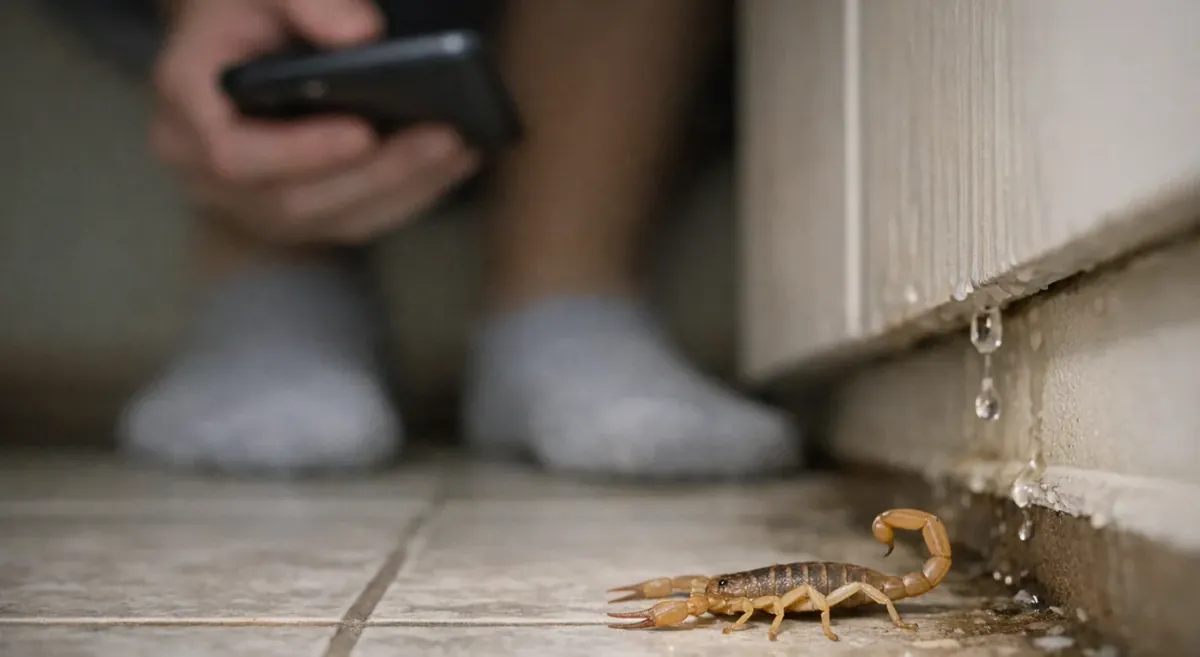
Here’s what many homeowners don’t realize: scorpions follow edges when they hunt at night. They’re thigmotactic, meaning they navigate by maintaining contact with surfaces. This perimeter behavior naturally brings them along exterior walls, under door frames, and eventually into your home—where they keep following baseboards and room edges. It’s not random bad luck. It’s predictable behavior.
This post explains why scorpions come inside and what makes them stay. For the mechanics of how they physically enter (gaps, vents, doors), check out our guide on the top ways scorpions get into your home.
Are scorpions actually looking for people?
No. Scorpions are opportunistic predators hunting crickets, roaches, and other small prey—not humans. They have zero interest in confrontation and would much rather squeeze into a tight crack than cross an open room where you might spot them.
Scorpions prefer protected spaces where they can ambush prey. Think along walls, behind furniture, inside shoes left by the door. They avoid open areas whenever possible, which is why you rarely see one strolling across the middle of your living room floor.
Most scorpion sightings happen at night because that’s when they’re active. The house is quiet and dark—perfect hunting conditions. You flip on the bathroom light at 2 a.m., and there it is, frozen on the tile near the toilet. It wasn’t waiting for you. You just caught it mid-hunt.
Do scorpions "patrol" along walls?
Yes, and understanding this behavior changes how you protect your home. Scorpions use thigmotaxis—maintaining contact with surfaces—to navigate. In your house, this means they travel along baseboards, room edges, and corners. That’s why you find them near walls, in bathroom corners, or along the threshold between rooms.
Picture a scorpion entering your garage. It doesn’t wander randomly across the open floor. Instead, it follows the wall, moves along the baseboard, slips under the interior door, and continues along your hallway baseboard. If you’re only checking the middle of rooms, you’re missing their highway.
The practical takeaway? Focus your inspections along the perimeter. When you do nighttime checks, scan baseboards first. Place sticky traps against walls, not in open spaces. Knowing where scorpions prefer to move helps you catch them before they surprise you.
What makes a house feel like a good habitat to a scorpion?
Your home offers what the desert doesn’t: consistent moisture, stable temperatures, darkness, and plenty of hiding spots. Each of these conditions encourages scorpions to stick around once they’ve wandered inside.
Think about your laundry room. That slow drip from the washing machine connection creates a tiny oasis. The cluttered garage with stacked boxes provides dozens of tight spaces. The pile of shoes in your closet offers perfect daytime hiding spots. We create scorpion habitat without realizing it.
Is water the #1 reason scorpions move indoors?
In the Southwest, absolutely. Even tiny water sources matter to a creature evolved for desert survival. That condensation ring under your bathroom sink, the pet’s water bowl left out overnight, the slow drain in the guest shower—each creates a reliable water source scorpions may not find outside during drought conditions.
Notice a pattern in where scorpions appear? Bathrooms, laundry rooms, and kitchens see the most activity because moisture is consistent there. One homeowner in Tucson kept finding scorpions in the same bathroom corner—turned out a toilet seal was slowly leaking, creating damp conditions along the baseboard.
Quick moisture check: Look for damp spots along baseboards, inspect under-sink areas for drips, and check washing machine connections. Fix these, and you remove a major attractant.
If there are scorpions, does that mean there are bugs too?
Usually, yes. Scorpions are predators—where you find them, you’ll find prey. If your home supports crickets, roaches, or silverfish, it can support the scorpions that hunt them. Think of scorpions as a symptom of a broader indoor food chain.
This clue helps explain persistent scorpion problems. A Phoenix homeowner couldn’t understand why scorpions kept appearing in her garage until she discovered a cricket population thriving in stored boxes. Remove the prey, and scorpions lose a reason to stay.
Addressing scorpion problems means tackling the whole system. Reduce insect populations by sealing food, fixing moisture issues, and clearing clutter. When the buffet closes, scorpions move on.
What indoor hiding spots make scorpions feel safe?
Scorpions crave tight contact on multiple sides—what entomologists call positive thigmotaxis. Your cluttered garage floor provides exactly that. Stacked cardboard boxes create dozens of protected seams. Seldom-moved storage bins offer long-term shelter. That pile of camping gear that hasn’t moved in months? A perfect scorpion hotel.
Here’s what many homeowners miss: it’s not just about having stuff—it’s about how it’s stored. Items stacked directly on the floor along walls create ideal harborage. A scorpion can move from the baseboard into the protection of stored items without crossing open space.
Simple habit change: Elevate storage off the floor, especially along walls where scorpions travel. Keep a 6-inch clear zone between walls and stored items. Moving things regularly also disrupts their sense of security.
Is it normal to see more scorpions during certain times of year or weather?
Weather drives scorpion movement more than any calendar date. Extreme heat sends them seeking cooler spaces. Cold snaps push them toward warmth. Drought concentrates them near water sources. Heavy rains flood their outdoor shelters. Any of these shifts can trigger a wave of indoor encounters.
These patterns stay consistent across the Southwest, though timing varies by location. Instead of memorizing specific months, watch for weather extremes. For detailed month-by-month patterns in your area, see our 2026 scorpion season guide.
Do heat waves or cold nights push scorpions inside?
Your air-conditioned home becomes hard to ignore when outside temperatures hit 115°F. But it’s not just extreme heat—rapid temperature swings can matter even more. When desert nights suddenly drop 40 degrees from daytime highs, scorpions look for the stable temperatures your home provides.
Homeowners often report increased sightings during the first week of running AC in spring or heating in winter. The house becomes a temperature refuge while the outside world fluctuates. That comfortable 72°F you maintain? It’s attractive to scorpions, too.
Watch window tip: Stay extra vigilant during the first few nights after major weather changes. If a heat wave breaks or an unexpected cold front arrives, increase your monitoring. Those are prime nights for scorpion movement.
Can mating season make scorpions wander into houses?
Scorpion mating involves males leaving their usual territories to find females. This wandering increases movement across patios, through gardens, and sometimes straight into garages or homes. Males follow pheromone trails, which can lead them far from their normal hunting grounds.
During mating periods, you might see multiple scorpions even though they’re typically solitary. It’s not a coordinated invasion—just increased individual movement that raises the odds of an encounter. A Scottsdale homeowner found three males in one week during peak mating season, all entering through the same garage door gap.
The mating dance itself is fascinating—males grasp female pincers and lead them in a careful promenade—but you definitely don’t want this happening in your living room. More wandering means more vigilance.
How long do scorpions live—and does that affect repeat sightings?
Scorpions live 3-8 years depending on species—much longer than most household pests. This longevity means that favorable conditions in your home can support the same individuals for years, leading to repeat sightings in the same areas.
Removing one scorpion doesn’t solve the underlying problem. If your home provided water, prey, and shelter for that scorpion, it’ll provide the same for others. You need to change the conditions, not just remove individual scorpions.
Track your sightings over time. Note the room, time, and weather conditions. Patterns emerge quickly—maybe it’s always the master bathroom during heat waves, or the garage after rain. These patterns show what’s attracting them and where to focus your prevention efforts.
I found a scorpion in my house—are there more?
Finding one scorpion doesn’t automatically mean you have an infestation. It could be a lone wanderer that slipped inside during last night’s hunt. But—and this is important—it does mean your home offers conditions that attracted at least one scorpion. Those same conditions could attract more.
The key is understanding what “more” actually means. You’re probably not dealing with a nest or colony. Scorpions don’t work that way. Instead, you might have multiple individuals independently discovering the same attractive conditions—that leaking pipe, those crickets in the garage, that gap under the back door.
Stay calm, but stay alert. Check the area where you found the first one, inspect similar spaces (other bathrooms, utility rooms), and monitor over the next few nights. If you see multiple scorpions or repeated sightings in the same spots, you’re dealing with favorable conditions that need to be addressed.
Are scorpions social or solitary in homes?
Scorpions are solitary hunters. They don’t form colonies or work together. But here’s what confuses homeowners: multiple scorpions can independently discover and use the same good habitat. Find three scorpions in your laundry room over a month? They’re not roommates. They each found the moisture and crickets.
Good indoor habitat means consistent water, available prey, and safe hiding spots. When your home provides all three, different scorpions may set up territories in the same general area. They’re not socializing—they’re competing for resources.
For a deeper dive into scorpion behavior patterns, check out our guide on whether scorpions are social or solitary. Understanding their nature helps you respond appropriately to sightings.
Can scorpions climb walls and reach beds?
Scorpions handle rough surfaces like stucco, brick, and wood far better than smooth ones—they struggle with glass, metal, and finished drywall. But here’s what matters for your bedroom: they don’t need to reach it from above. They get onto a bed by way of the frame (especially wooden ones) or a blanket that drapes down to the floor.
Bedroom safety doesn’t require extreme measures. Pull your bed a few inches from the wall, keep bedding from touching the floor, and shake out shoes before putting them on. Store clothes in sealed containers or hanging up, not in floor piles.
Remember their perimeter behavior—scorpions typically enter bedrooms along baseboards, not from overhead. They end up in beds when blankets create a bridge from floor to mattress, or when they make their way up a bed frame while hunting. A few simple adjustments remove these pathways.
What can I do right now to make scorpions less likely to come back?
You’ve learned why scorpions enter homes—water, prey, and shelter. Now let’s turn that into action. The goal isn’t just removing scorpions you see, but changing the conditions that attracted them.
Start with the fastest wins: eliminate water sources, reduce prey insects, clear hiding spots along walls, and improve your ability to detect scorpions at night when they’re active. Sealing entry points matters too, but that’s covered in our entry prevention guide.
Most importantly, set up monitoring so you know if your changes are working. Scorpions are nocturnal—without night monitoring, you’re flying blind.
What kills scorpions (and what actually helps long-term)?
Everyone searches for “what kills scorpions instantly” after finding one. The truth? Quick-kill solutions don’t solve the real problem. Diatomaceous earth works slowly, if at all. Sprays kill individuals but don’t stop new ones from entering. Sticky traps catch some but miss others.
Long-term success comes from prevention plus monitoring. For an immediate response when you spot one, keep a simple kit ready: a clear jar or container, long tongs or gloves, and a UV flashlight to track it if it moves. Trap it, then relocate it far from the house. For more response tips and common mistakes, see our guide on what not to do after spotting a scorpion.
Skip the harsh chemicals and mythical repellents. Focus on making your home less attractive to scorpions in the first place.
How do I reduce the 'reasons' scorpions like my house?
Water: Fix every drip, no matter how small. Dry damp areas with fans. Remove standing water before bed—yes, even pet bowls if practical. Check under sinks monthly. That persistent moisture in the laundry room? It’s a scorpion magnet.
Food (prey insects): Clean crumbs nightly, especially in garages where crickets thrive. Seal pantry items in containers. If you see crickets or roaches, you’re keeping a scorpion buffet open. Address the prey problem first.
Shelter: Clear clutter along all baseboards—this is where scorpions travel. Replace cardboard storage with plastic bins. Maintain that 6-inch clear zone between walls and stored items. Less clutter means fewer hiding spots, which means fewer scorpions.
How can I monitor at night so I'm not guessing?
Scorpions hunt at night. If you’re not monitoring then, you’re missing most of their activity. Manual checks with a UV flashlight can work, but they take commitment—every night, every room, along every baseboard. Miss a night, and you may miss a scorpion.
This is where automated detection helps. Scorpion Alert detectors plug into outlets along room perimeters—exactly where scorpions travel. Using 365nm UV light, they make scorpions fluoresce and capture that glow with AI-powered cameras. When a scorpion passes by, you get a photo alert on your phone within seconds.
The detectors activate only when rooms are dark, matching scorpion activity patterns. Place them in key areas and let the system handle the nightly vigilance. No more wondering if scorpions are moving through your home—you’ll know quickly and can respond while they’re still there.
Where should I focus monitoring if scorpions are coming inside for water?
Prioritize moisture-rich rooms for monitoring: bathrooms, laundry rooms, kitchens—anywhere water accumulates or drips. These rooms often see the most scorpion traffic because they offer what scorpions need in the desert.
Also monitor near common entry points without obsessing over sealing every possible gap. Focus on high-traffic areas where scorpions naturally travel. Our entry points guide covers the specifics.
For Scorpion Alert users, multiple detectors provide whole-home coverage. The system activates when rooms darken, running all night while you sleep. Place detectors in each bathroom, the laundry room, garage entry points, and bedrooms for comprehensive monitoring. The app tracks detection history, helping you identify patterns and problem areas over time.
Now that you know scorpions come inside for shelter and tend to follow walls and edges until they find tiny gaps, the next step is making it easier to catch activity early and focus your sealing and cleanup where it matters most. If you want a simple tool to stay on top of sightings and reduce surprises, visit Scorpion Alert.