Are scorpions in Las Vegas really getting worse—or are we just noticing them more?
Vegas has a scorpion problem, and it doesn’t get talked about much. While Phoenix residents swap horror stories and prevention tips, Las Vegas homeowners are left wondering if they’re the only ones finding these nocturnal predators in their bathrooms.
A recent Reddit thread titled "Just moved to Vegas" blew up when someone asked about scorpions. Dozens of replies poured in from panicked newcomers sharing sightings, asking about species identification, and looking for advice. The thread revealed something striking: Vegas residents feel blindsided by scorpions because the city lacks the established scorpion-awareness culture Phoenix has built over decades.
Here’s the reality: scorpions are definitely in Las Vegas, they’re nocturnal hunters that are great at staying hidden, and yes—you need a plan. But you don’t need to panic. The same strategies that work in Phoenix work here. Vegas just needs to catch up on implementation.
Why Vegas is an untapped scorpion-content market
Search for "scorpions in Phoenix" and you’ll find hundreds of detailed guides, local pest control blogs, and community forums. Search for "scorpions in Las Vegas" or "bark scorpions Las Vegas" and the results thin out fast. This content gap leaves Vegas residents feeling like pioneers in uncharted territory.
Phoenix homeowners benefit from years of collective knowledge—they know to check shoes, install door sweeps, and monitor with UV light. Vegas residents often learn these tactics only after their first scary encounter. The irony? Both cities face similar desert scorpion challenges. Vegas just hasn’t built the same information infrastructure yet.
This knowledge gap has real consequences. Without established local guidance, Vegas homeowners resort to ineffective DIY solutions or expensive emergency pest control calls that could’ve been prevented with better information.
What scorpion sightings typically mean (and what they don't)
Finding a scorpion doesn’t automatically mean you have an infestation. Sometimes you’re dealing with a “traveler”—a lone scorpion that wandered in while hunting. Scorpions exhibit thigmotaxis, meaning they navigate by maintaining contact with surfaces. They’ll follow your baseboards, hug wall edges, and slip through tiny gaps where surfaces meet.
One sighting could point to nearby harborage areas like rock landscaping or woodpiles. Or it might just mean a door was left open too long. The challenge is figuring out which scenario you’re facing—without spending every night patrolling with a UV flashlight.
What matters most is understanding where scorpions are showing up in Vegas, why they’re appearing now, and what immediate steps will keep your family safe while you build a longer-term strategy.
Are bark scorpions actually in Las Vegas, and how did they get here?
The Arizona bark scorpion—the most medically significant species in the Southwest—has indeed made its way to Las Vegas. Community reports confirm sightings across multiple neighborhoods, particularly in newer developments pushing into desert areas.
How did they arrive? That Reddit thread raised an intriguing theory: bark scorpions hitchhiked on palm trees and landscaping materials imported from Arizona nurseries. This isn’t just speculation. Pest professionals regularly find scorpions in nursery stock, mulch deliveries, and decorative boulders transported between states. One infested palm tree can introduce a breeding population to an entire neighborhood.
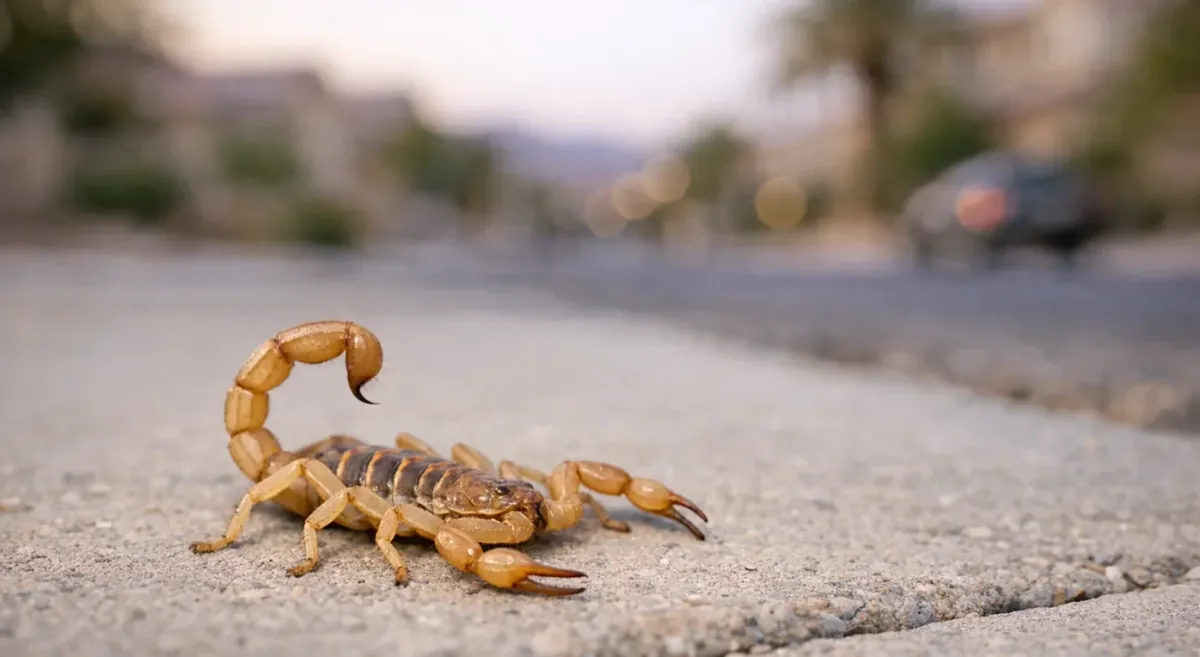
Bark scorpions feel particularly threatening because they’re small and masters of concealment. At barely three inches long, they slip through gaps other scorpions can’t navigate. Their pale tan color provides near-perfect camouflage against stucco and concrete. They’re also unusual among U.S. scorpions in that they aren’t limited to ground level—they can reach higher areas rather than staying on the floor.
Invasive vs. native: why that distinction matters for homeowners
When a pest species arrives somewhere new, the community lacks established defenses. Phoenix learned its scorpion lessons through decades of trial and error. Residents there grow up knowing to shake out shoes and check bedding. Builders understand which construction details prevent entry. Pest control companies know exactly what attracts scorpions and how to eliminate those factors.
Vegas doesn’t have that institutional knowledge yet. New residents arrive from scorpion-free states with no awareness of the threat. Builders use Phoenix-area landscaping trends without understanding the scorpion risks they create. Even local pest control companies may lack specific bark scorpion expertise if they’ve primarily dealt with less dangerous desert species.
The good news? Vegas doesn’t need to reinvent the wheel. The Phoenix playbook works here too—we just need to implement it faster and more comprehensively than our neighbors did.
Why you see them at night (and why daytime checks miss them)
Scorpions are strictly nocturnal hunters. During daylight, they wedge themselves into the tightest spaces imaginable—under baseboards, behind outlet covers, inside wall voids. You could inspect your home for hours in broad daylight and never spot the scorpion that emerges to hunt along your bedroom wall at 2 a.m.
This nocturnal behavior explains why UV detection became the go-to method for finding scorpions. Their exoskeletons fluoresce bright green under ultraviolet light, particularly at 365nm wavelength. A scorpion invisible to the naked eye glows like a neon sign under UV illumination.
Picture this: you decide to check your garage with a UV flashlight one night. As you scan along the base of the wall, three glowing shapes appear—scorpions you never would’ve noticed otherwise. They’re following the wall-floor junction, using their thigmotactic behavior to navigate your home’s perimeter. Without UV light, they’re essentially invisible against concrete and shadows.
Where are scorpions showing up in Las Vegas neighborhoods right now?
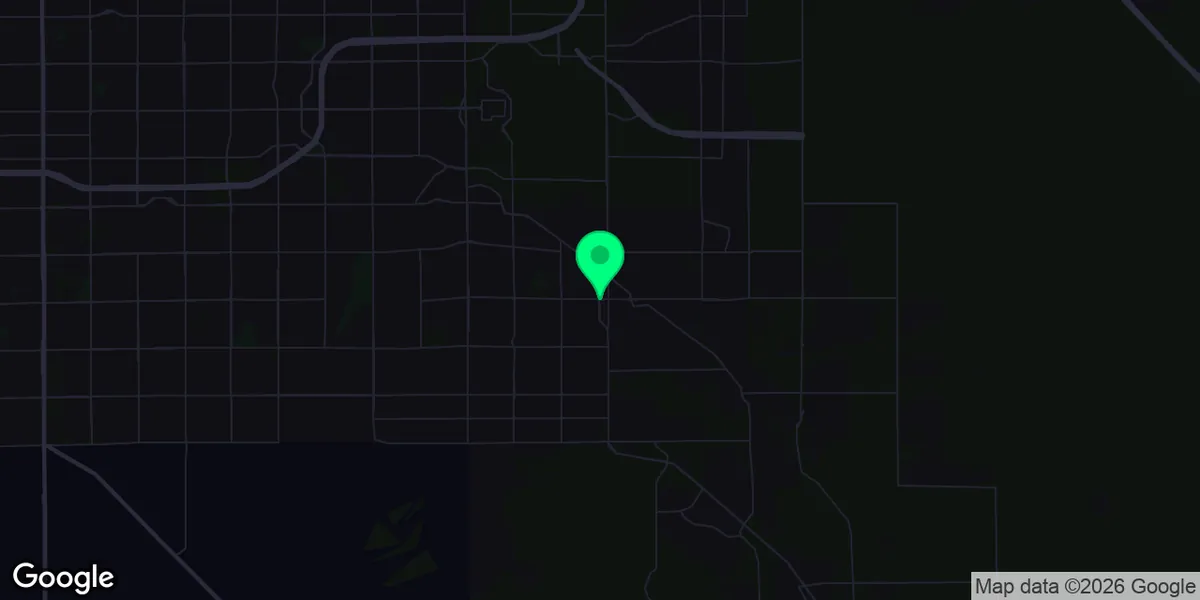
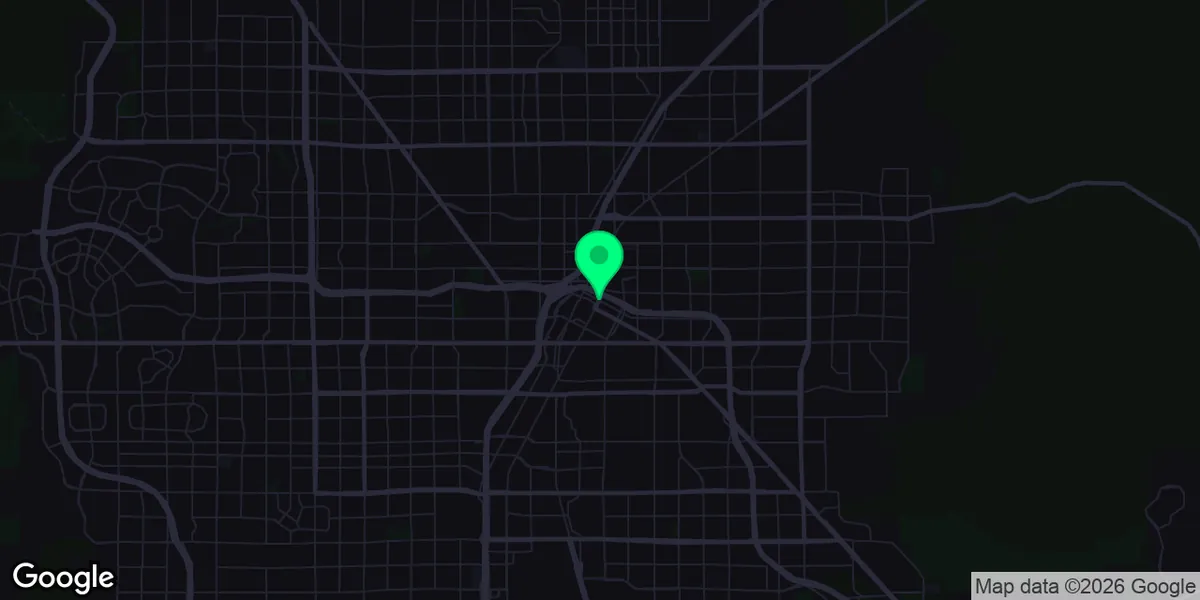
Community reports paint a clear pattern: desert-edge developments see the most scorpion activity. Henderson’s expanding neighborhoods and the outer edges of Summerlin consistently top the list for sightings. These areas sit right where human development meets native desert habitat.
That Reddit thread documented reports from across the valley—from newly built communities in the northwest to established neighborhoods in Henderson. The common thread? Proximity to undeveloped desert, recent construction, or both. Scorpions don’t respect property lines, and they’re excellent at exploiting the resources our homes provide.
Understanding scorpion behavior helps predict where they’ll appear. Think like a scorpion for a moment. You emerge from your desert hiding spot at dusk, hungry and searching for prey. You encounter a block wall—perfect for following with your edge-hugging navigation. That wall leads to a house with gaps under doors, weep holes in the stucco, and insects attracted to porch lights. Why stay in the harsh desert when this buffet awaits?
Why desert-edge developments get hit first
Construction destroys scorpion habitat. Bulldozers level their hiding spots, forcing survivors to seek new territory. Where do they go? Toward fresh construction sites with irrigation, landscaping, and an abundance of prey insects.
New builds compound the problem. Despite modern construction standards, homes still have entry points—weep holes for moisture drainage, gaps under garage doors, spaces where stucco meets foundation. Landscapers often install rock features and desert plants that create perfect scorpion harborage just feet from your walls.
Even brand-new homes need scorpion-proofing. That new construction smell doesn’t repel scorpions, and those pristine walls won’t stop them from exploiting any available entry point.
The Vegas "micro-hotspot" checklist (use this to assess your block)
Evaluate your immediate area for these scorpion risk factors:
- Direct adjacency to desert washes or undeveloped lots
- Block walls with debris, woodpiles, or dense vegetation at the base
- Extensive rock landscaping, especially river rock and boulders
- Bright exterior lighting that attracts clouds of insects at night
- Neighboring properties with obvious scorpion habitat (overgrown yards, construction materials)
- Community irrigation that creates moisture zones near desert edges
Check your neighborhood’s social media groups and HOA forums for “scorpion” mentions. If multiple neighbors report sightings, you’re likely in a micro-hotspot that requires active management rather than passive hope.
One telltale sign: if you see neighbors doing “blacklight walks” with UV flashlights after dark, they’ve already discovered what you’re just learning—your street has scorpion activity that demands attention.
I just moved into a Vegas apartment or rental—what should I do in the first week?
Renters face unique challenges with scorpion control. You can’t seal exterior gaps, modify landscaping, or install permanent monitoring systems without landlord permission. But you’re not helpless. A strategic first week can dramatically reduce your risk while you navigate tenant-landlord dynamics.
That Reddit thread highlighted the legal uncertainty many renters face. Can you break a lease over scorpions? What constitutes uninhabitable conditions? While this guide covers Arizona tenant rights, Nevada laws differ. Document everything and consult local tenant resources for state-specific guidance.
Your immediate goal isn’t eliminating every scorpion—it’s preventing stings and surprises while you work toward longer-term solutions. Seven days of focused action can turn a scary situation into a manageable one.
Fast safety steps (night routine + kid/pet precautions)
Tonight, before bed, implement these non-negotiable safety habits. Move shoes off the floor onto shelves or into sealed containers. Shake out any clothing, towels, or bedding that touched the floor. Pull beds at least six inches from walls—scorpions travel along edges, so a bed pushed against a wall gives them a path onto it.
Create safe zones for vulnerable family members. Position cribs and playpens closer to the center of the room, away from walls. Keep pet beds elevated and away from baseboards. Teach older children to check shoes and avoid reaching into dark spaces without looking first.
Establish a bathroom protocol. Scorpions seek water and often appear in tubs, sinks, and near toilets. Check before sitting, shake out bath mats, and keep towels hung up rather than puddled on floors.
How to document the problem (without starting a war with your landlord)
Professional documentation beats emotional complaints every time. Photograph each scorpion you find, noting the exact date, time, and room location. Dead scorpions in a jar prove the problem better than verbal descriptions. If possible, identify the species—bark scorpions require more urgent attention due to their venom potency.
Submit maintenance requests in writing, and keep copies of everything. Frame the issue as a safety concern requiring professional pest control, not a minor nuisance. If your landlord dismisses the problem, your documentation trail becomes crucial for escalation or legal consultation.
Scorpions appear intermittently, which makes proof essential. One sighting might be dismissed as a fluke. Three documented sightings over two weeks demonstrate a pattern that requires action.
Monitoring that doesn't rely on nightly blacklight walks
Phoenix learned this lesson years ago: manual UV flashlight patrols every single night aren’t sustainable. You’ll do them religiously for a week, sporadically for a month, then give up entirely. Modern monitoring technology offers a better way.
Automated detection systems like Scorpion Alert work on the same principle as manual UV checks but operate continuously without human effort. These plug-in devices use 365nm UV light to scan floor areas where scorpions travel, leveraging their thigmotactic behavior. When the room goes dark and scorpions emerge to hunt, the system watches for that telltale fluorescent glow.
Within seconds of detection, you receive a photo alert on your phone showing exactly what triggered the system. No more wondering if that shadow was a scorpion or checking every room every night. Monitoring happens automatically while you sleep, with documented proof of any activity.
What's the most effective Vegas game plan to detect and control scorpions long-term?
Effective scorpion control follows a clear hierarchy: detect current activity, reduce entry points and harborage, eliminate prey insects, and bring in professionals when needed. Vegas homeowners can compress decades of Phoenix trial-and-error into a proven system that works from day one.
Success looks different than you might expect. It’s not about achieving zero scorpions forever—desert living makes that unrealistic. Instead, success means early detection before scorpions reach bedrooms, fewer overall sightings, and most importantly, sleeping soundly knowing you have systems in place.
The Phoenix mindset treats scorpion control as an ongoing process, not a one-time fix. This review of scorpion products shows why single solutions fail—you need integrated detection, exclusion, and monitoring working together.
How to set up detection at the perimeter (where scorpions actually travel)
Position monitors where scorpions actually go—along room perimeters where walls meet floors. Priority locations include entry doors, garage access points, bedrooms, and moisture sources like bathrooms and laundry rooms. These aren’t random choices. They’re based on scorpion behavior patterns observed across thousands of homes.
Scorpion Alert’s detection system leverages multiple proven principles. The devices use 365nm UV light—the exact wavelength that makes scorpions fluoresce brightest. They scan continuously when rooms are dark, matching scorpion activity patterns. Most critically, they differentiate between actual scorpions and false triggers, sending photo alerts with confidence scores so you know exactly what was detected. The system activates within seconds, allowing immediate response while the scorpion is still in the detection zone.
Traditional sticky traps miss scorpions that avoid the glue. Manual UV flashlight checks require nightly dedication most people can’t maintain. Automated perimeter monitoring fills these gaps, providing consistent coverage without constant effort.
What to do when you get a night alert or find one indoors
Stay calm and move deliberately. Scorpions aren’t aggressive, but they’ll sting if threatened. Keep children and pets away from the area. Grab a clear glass or plastic container and a stiff piece of cardboard—your capture tools.
Approach slowly with your UV flashlight to maintain visual contact. Place the container over the scorpion, then slide the cardboard underneath. Once secured, you can relocate it far from your home or dispatch it if necessary. Never attempt capture with your hands, even with gloves.
If someone gets stung, don’t panic. Most scorpion stings cause localized pain similar to a wasp sting. However, bark scorpion stings require closer monitoring, especially in children. Know the symptoms that warrant medical attention: difficulty breathing, muscle twitching, or unusual eye movements.
When it's time to call a pro (and what to ask them in Vegas)
Call a professional when you experience repeated indoor sightings, any stings, discoveries in multiple rooms, or activity near sleeping areas. One scorpion might be random. Three scorpions indicate a pattern requiring intervention.
Ask potential pest control companies specific questions. Do they inspect and seal exterior entry points, or just spray chemicals? Will they reduce yard harborage areas like rock piles and debris? What’s their plan for ongoing monitoring versus one-time treatment? Companies experienced with bark scorpions understand that exclusion and habitat modification matter more than pesticide application.
Request a thorough exterior inspection focusing on common entry points: door sweeps, weep holes, utility penetrations, and garage seals. Effective professionals think like scorpions, following potential travel routes from yard features to interior access points. They should offer integrated solutions, not just quarterly spraying.
As Las Vegas sees more scorpion activity, the most practical next step is improving nighttime detection—especially along baseboards and room edges where they tend to travel. If you want a simple way to spot and respond faster (particularly in homes with kids or pets), Scorpion Alert is a tool designed to help you monitor and catch movement where scorpions are most likely to show up.