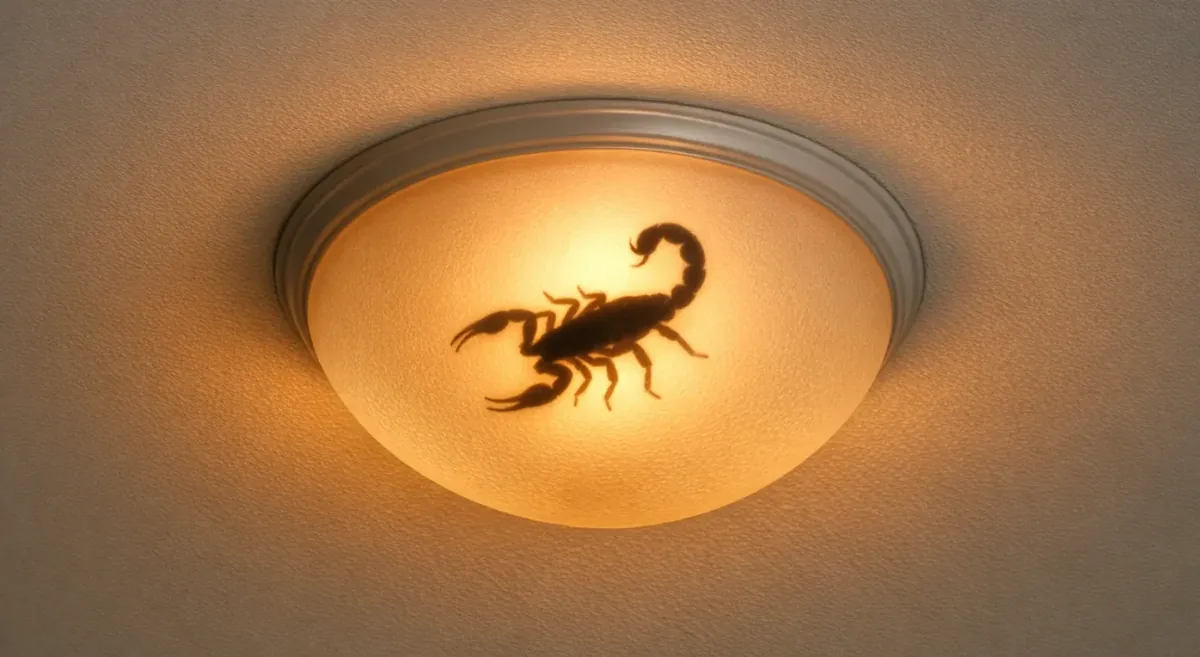
Where should I check first if I'm worried about a scorpion sting?
Check the three highest-risk spots first: shoes left on the floor near doors and the garage, the bed and its "bridges" to the floor, and the driver's footwell in your car. These are the places where people accidentally press a hand or foot against a hiding scorpion, which triggers most stings. Clear those three first, then work outward.
The common thread is simple: scorpions want tight, dark edges and seams — not open floor. Once you understand that, their hiding spots become predictable, and your search gets fast.
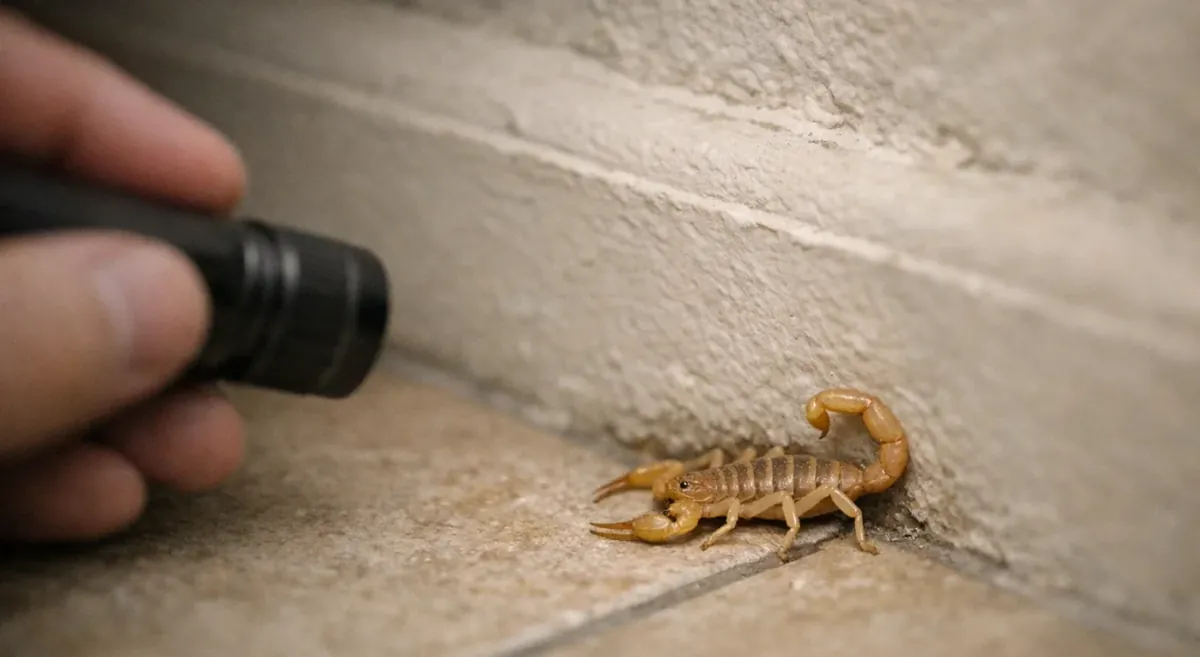
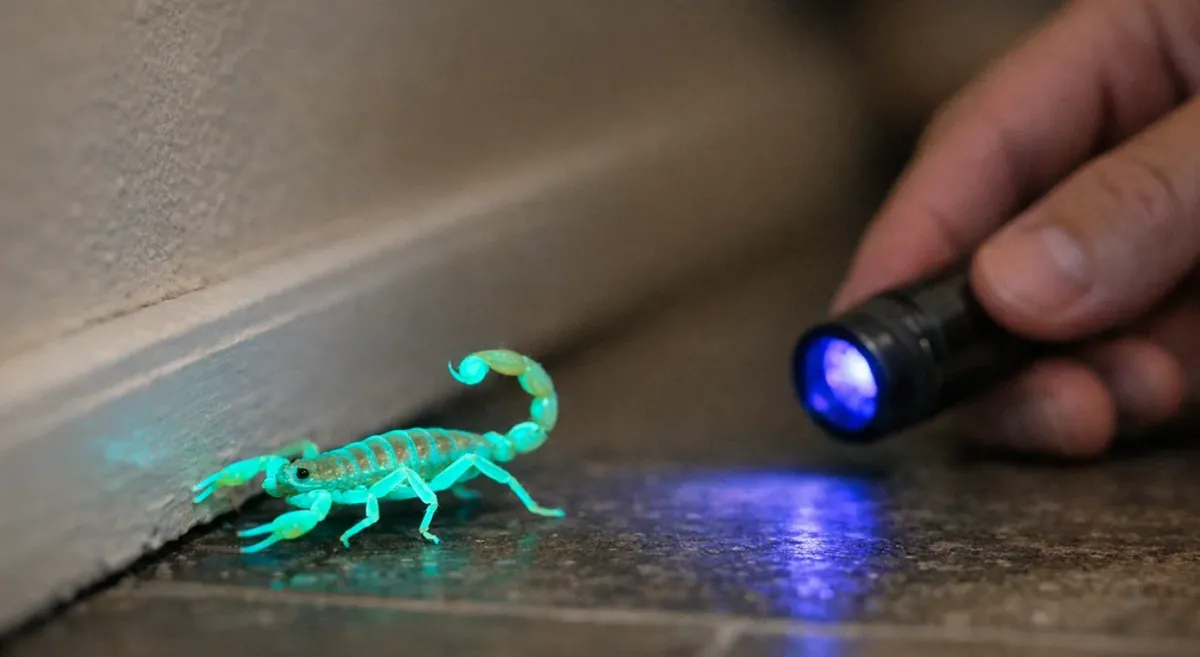
Grab a small kit before you start: a bright flashlight (a UV flashlight makes them glow greenish, which helps), long tongs or a grabber, a wide-mouth container, and a stiff card. One safety rule above all: never use bare hands, and never reach into a dark space before you look.
Body location matters here. In Arizona residential data, 34.5% of stings land on the foot, and Skolnik & Ewald 2018 found 81.9% of those happened while the person was barefoot. That's why shoes and beds top the list.
What's the 60-second safety routine before you touch anything?
Before you lift, shake, or reach, do a slow "look before you lift" pass with a bright light, and keep your hands above the item — never underneath it. Move slowly; sudden grabs are how people get stung.
- Shine a light into the space or item first. Look for the greenish UV glow if you have a blacklight.
- Keep hands above and clear of the strike zone. Tilt or nudge with a tool, not fingers.
- Keep kids and pets out of the room or garage until every check is done. Children face a higher risk of severe reactions — here's why children are more at risk from scorpion stings.
Which 3 places cause the most surprise stings?
Three spots account for most of the "I never saw it coming" stings:
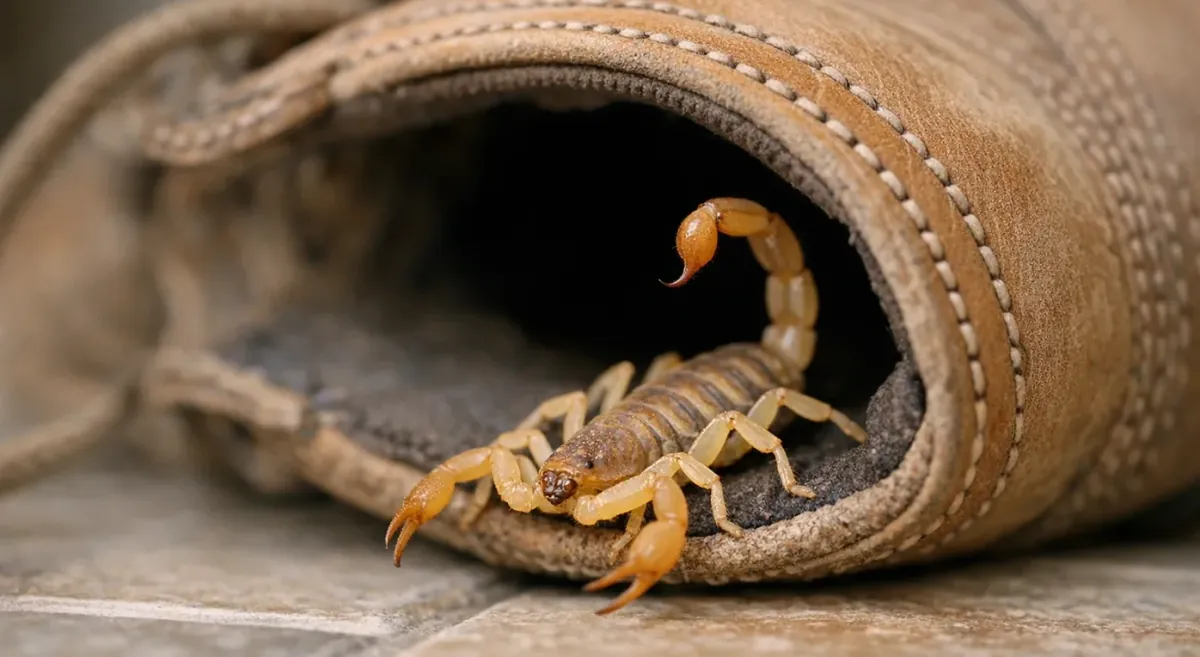
- Shoes and boots left on the floor against a wall. You slide your foot in and press down on whatever's in the toe box.
- Bedding and bed skirts touching the floor, plus nightstand "bridges." Rolling over in your sleep is a classic mechanism.
- The driver area in your car — pedals, floor mat edges, and seat rails. Bare or thin-soled feet are exposed here.
Why would a scorpion hide in my car, shoes, or bed?
Scorpions hunt at night, then retreat fast at dawn into the nearest tight, dark crevice they can find. A shoe, a fold of bedding, or the seam of a car seat all feel like a natural rock crack to them. They aren't seeking you out — they're seeking shelter, and your stuff happens to offer it.
This behavior is driven by thigmotaxis, and it's the reason their hiding spots are so easy to predict. In the Southwest, the Arizona bark scorpion adds one wrinkle: it's an agile climber, so above-floor surfaces like curtains and headboards can matter, too.
What is thigmotaxis—and how does it predict hiding spots?
Thigmotaxis means scorpions feel safest when their bodies touch surfaces on multiple sides at once. A crack, a seam, a fold — anywhere they're wedged snug. Open floor leaves them exposed, so they avoid it.
That gives you a simple homeowner rule: edges, seams, folds, and contact points beat open surfaces. Search the borders — baseboards, seat rails, the crease where bedding meets the mattress — and skip the middle of the room entirely.
Do bark scorpions really climb walls and end up above beds?
Yes. Bark scorpions are strong climbers and can scale textured walls, curtains, and bed frames, so they can end up above floor level — including near or above a bed. That's why a floor-only search isn't enough for this species. Check curtains, wall décor, headboards, and any fabric that runs from floor to higher up.
The reassuring part: when one drops from a curtain or a wall, it's losing its grip or reacting to a vibration — not launching an attack. Scorpions have no interest in you. They just want out of the light and back into a dark seam.
How do scorpions get into cars—and where do they hide inside?
Scorpions enter cars through door and weatherstripping gaps, vents, and open windows — and the risk climbs when you park inside or beside a garage, near landscaping, or against a block wall. Once inside, they wedge into seams and rails exactly the way they'd wedge into a rock crack. For the bigger picture on entry, see the top ways scorpions get into your home.
Where should I check first in my car (a 3-minute checklist)?
Start with the driver's side, since that's where your feet go, then sweep the seams.
- Driver footwell: floor mat edges, the pedal and firewall area, and the door sill seam.
- Seat tracks and adjustment rails, plus the gaps around the center console.
- Door pockets and map slots.
- Rear seat seams, then the trunk lip and spare-tire well.
Can scorpions hitchhike into a car on bags, towels, or kids' gear?
Absolutely. Soft bags, beach towels, and sports gear stored on a garage floor or leaned against a wall are prime hiding spots — dark, layered, and full of folds. Load them into the car the smart way: shake the item out, tap it firmly, and give it a quick visual look before it goes in. Better yet, store gear in sealed bins or up on shelves so nothing sits at scorpion level.
What's the safest way to remove a scorpion from a car?
Use the long-tool-and-container method, never your hand. Approach slowly with tongs or a grabber, coax or lift the scorpion into a wide-mouth container, slide a stiff card over the opening, and carry it outside to release. A motionless scorpion can still sting, so keep fingers well outside strike range, and don't try to crush it in a cramped interior — you'll only bring your hand closer. For a full breakdown of the moves to avoid, read what not to do after spotting a scorpion in your home.
What's the safest way to check shoes, laundry, and clutter every day?
The safest daily habit isn't perfection — it's getting items up off the floor and away from baseboards, then doing a fast check on the few things you can't. Fewer floor-level hiding spots means fewer surprises. It also helps to know what draws them in; here are the top things that attract scorpions in your home.
What's the fastest shoe check that actually works?
Turn the shoe toe-down and give the heel two firm whacks, then take a quick flashlight look into the toe box before your foot goes in. Ten seconds — and it works because the toe box is exactly the tight, dark pocket a scorpion favors. Prioritize shoes left near exterior doors, garage entries, or along walls — those get "visited" most.
Do scorpions hide in towels, hampers, and piles of clothes?
Yes. Folds and layered fabric mimic the natural crevices scorpions seek, so a heap of towels or a pile of laundry on the floor is an open invitation. Run a nightly reset: use a lidded hamper, hang towels flat, and keep bathmats and robes off the floor. If a towel has been sitting out, shake it before use. Bathrooms and laundry rooms deserve extra attention because scorpions are drawn to moisture.
Can scorpions really get into your bed—and how do you stop it tonight?
Yes, and the fix tonight is to turn your bed into an island. Pull the frame a few inches off the wall, remove the bed skirt, tuck bedding so nothing touches the floor, and clear away the "bridges" — nightstands, cords, and clutter that let a scorpion walk up from the floor. Cut the pathways and the bed stops being reachable.
42.5% of indoor Arizona scorpion stings happen in the bedroom — the most-stung room in the house.
— Skolnik & Ewald 2018 (FEARS survey)
That same survey found that of all in-bed stings, 72.7% happened while the person was asleep. If it does happen, stay calm and act fast — here's bark scorpion sting first aid for the first 30 minutes.
How does a scorpion get from the floor to your sheets?
It uses a bridge — something that connects the floor to the mattress. The usual culprits are bedding or a bed skirt draping onto the carpet, a nightstand touching both the wall and the bed, and cords or clutter piled against the frame. Take ten minutes tonight to remove them: pull the bed off the wall, lift the comforter clear of the floor, and separate the nightstand so nothing forms a continuous path to your sheets.
What bedroom spots should I check besides the mattress?
Do an edge-and-seam sweep, because that's where a hiding scorpion actually sits:
- Headboard and bed-frame joints.
- Behind and under the nightstand.
- Curtain folds — remember, bark scorpions climb.
- Baseboards and room corners.
- Under-bed storage: boxes and shoes, especially anything touching both the wall and the frame.
How can I monitor scorpions at night without blacklight walks?
Since scorpions patrol room perimeters at night, monitoring the perimeter is far more efficient than wandering the middle of a room with a blacklight. That's the whole idea behind Scorpion Alert Detectors: they plug into standard wall outlets on the room's edge, shine 365nm UV light onto the floor, and scan for the greenish scorpion glow automatically — only when the room is dark, when scorpions are most active.
The question of scorpions in cars, shoes, and beds comes down to one problem: you won't know one is there until you reach in. Each Detector sends a photo-verified alert with a confidence score straight to your phone within seconds of detecting movement, so you can respond quickly instead of sleeping next to an unknown. For this kind of coverage, place Detectors in bedrooms and near entry points and garage doors, plus bathrooms and laundry rooms where water-seeking scorpions tend to show up.
It's rented as a monthly monitoring subscription with the hardware included, plus a one-time shipping fee at checkout. See /pricing for current rates. There's no long-term contract — cancel any time by emailing support@scorpionalert.com and returning the Detectors. If the fear of what you can't see is keeping you up, automatic overnight monitoring is one of the simplest ways to get your peace of mind back.
Now that you know the common hiding spots—like under car seats, inside shoes near entryways, and along bed frames or bedding—making a quick check part of your routine can help prevent a painful surprise. If you want an extra layer of confidence, Scorpion Alert is a simple tool to help you stay aware and respond quickly when scorpions show up around the places you use every day.