Do scorpions even "hate" smells the way people do?
Not really. There’s no single scent that reliably keeps scorpions out of a home — any deterrent effect is short-lived and limited to the exact spot you treated. Scorpions don’t experience smell the way mammals do, and they navigate mostly by touch and vibration, so a strong odor rarely changes where they go.
That’s tough to hear when you’ve just found one on the kitchen floor and want a quick fix. But understanding how these animals actually move can save you a lot of wasted peppermint oil — and a lot of frustration. We dig deeper into this in our roundup of the top myths about scorpion repellents.
How do scorpions find prey and move around indoors?
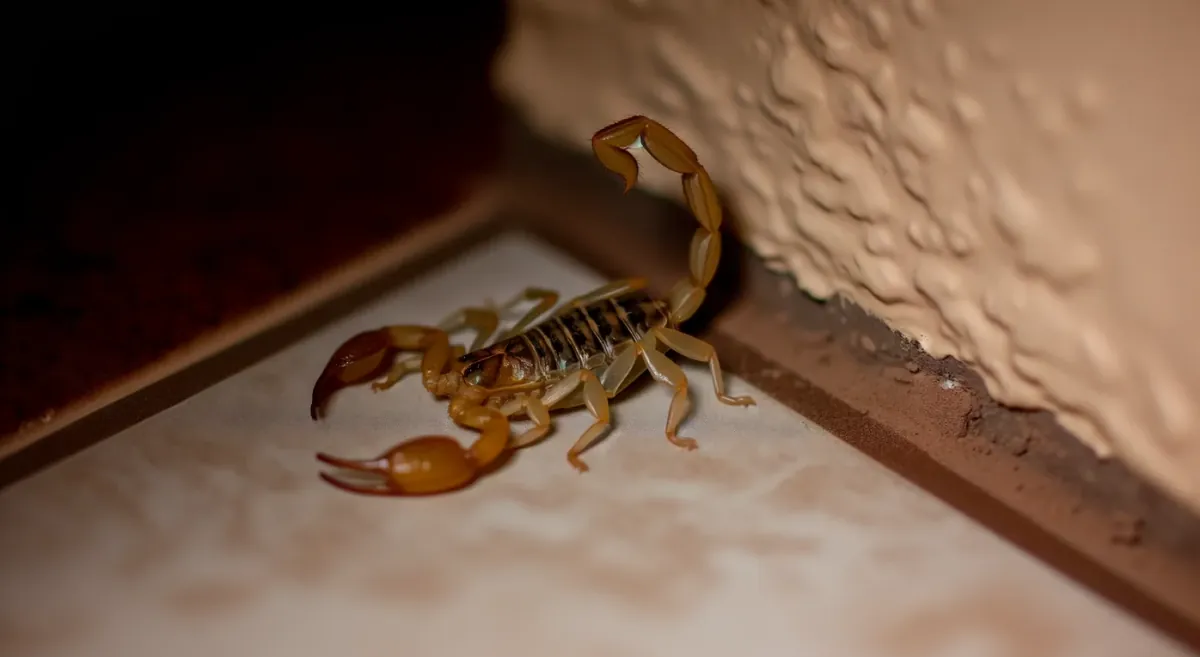
Scorpions hunt by sensing vibration and air movement, not by sniffing out a meal across the room. Tiny hairs on their pincers and legs, called trichobothria, pick up the faintest stir of air from a passing cricket. They’re built to feel their world, not smell it.
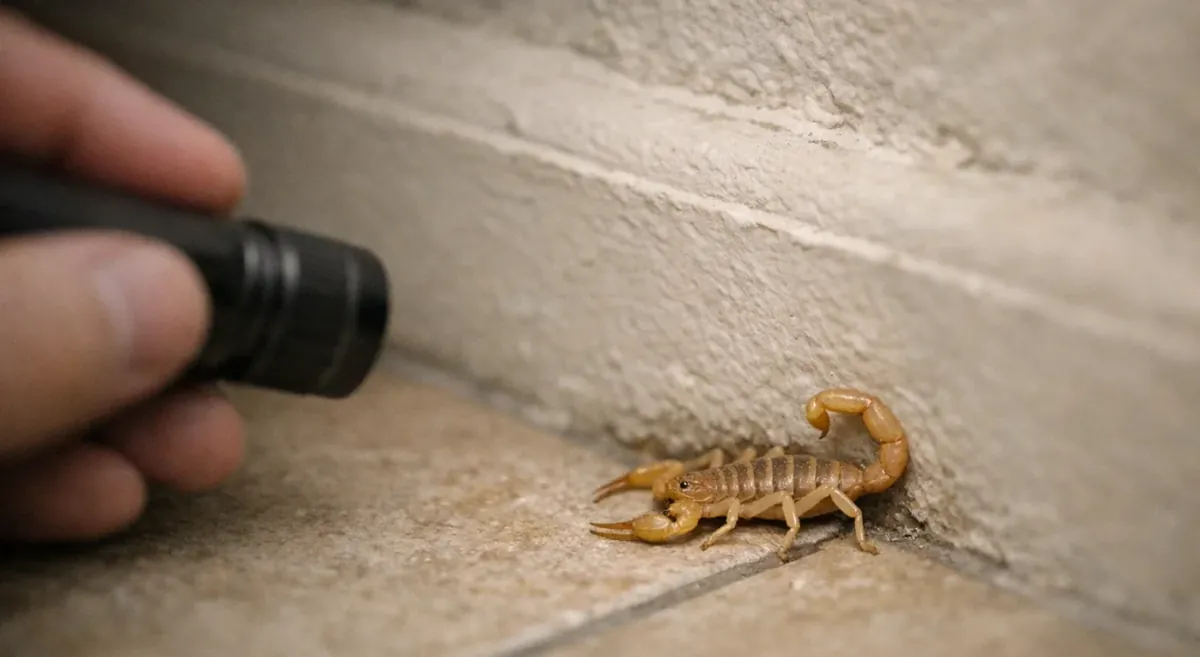
They also follow edges. Scorpions are thigmotactic, meaning they stay pressed against surfaces as they travel — baseboards, wall corners, the gap under a vanity. Because they hug physical edges and react to motion, an airborne scent in the middle of a doorway is easy to skirt around.
Does species matter (Arizona bark scorpion vs. others)?
It can. An Arizona bark scorpion (Centruroides sculpturatus) and a Texas striped bark scorpion (Centruroides vittatus) don’t always behave the same way, and juveniles can react differently than adults. That’s exactly why one neighbor’s “peppermint worked for me” story doesn’t translate into reliable control for your home.
Across US poison-center data from 2005 to 2015, 68.2% of all reported scorpion exposures came from Arizona, with Texas and Nevada following well behind (Kang & Brooks 2017). Different regions, different species, different results — anecdotes don’t scale.
What "repelled" really means in a house
Picture this: You spray a strong oil across your back door threshold at bedtime. A scorpion approaches, hits the fresh scent, and turns away. Success? Not quite. It simply follows the baseboard to the next gap, slips under the door to the garage, and ends up inside anyway. You didn’t stop it. You rerouted it.
What smells actually deter scorpions (even temporarily)?
A few strong odors — peppermint, cedar, citrus, lavender, eucalyptus, cinnamon, and harsh cleaners — may briefly discourage a scorpion from crossing a freshly treated spot. The effect is temporary and localized, fading fast in Southwest heat and airflow. None creates a dependable whole-house barrier, so set your expectations accordingly.
Do peppermint and other essential oils keep scorpions away?
A heavy, fresh application of peppermint oil might make a scorpion avoid a small surface for a little while. The problem is staying power. In hot, dry climates, that oil evaporates quickly, and porous surfaces like concrete or unsealed grout soak it up unevenly.
To keep even a weak effect going, you’d be reapplying every day or two, all around the room’s edges, indefinitely. That’s a lot of effort for a barrier a scorpion can walk around.
Do cedar, citrus, lavender, eucalyptus, or cinnamon work any better?
Each has trade-offs, and none is a clear winner. Cedar oil tends to linger longer than peppermint. Citrus oils can soften or cloud certain plastics and finishes. Cinnamon can stain light grout and tile fast. Here’s how a few common choices stack up:
| Scent | Longevity | Main drawback |
|---|
| Peppermint | Very short | Evaporates fast in heat |
| Cedar | Longer | Still spot-only coverage |
| Citrus | Short | Can damage plastics/finishes |
| Cinnamon | Moderate | Stains grout and tile |
If you want to experiment, limit it to a small, contained area — not a whole-house perimeter you’re counting on.
Will vinegar, ammonia, bleach, or harsh cleaners repel scorpions?
People reach for these because the smell is overpowering, but any protection is brief and the risks are real. Bleach and ammonia produce dangerous fumes, and mixing them creates toxic gas. None of these will hold scorpions back overnight. You’re far better off focusing on sealing entry points and monitoring than dousing baseboards in cleaner.
Are scent-based repellents safe if you have kids or pets?
Not always. “Natural” doesn’t automatically mean safe. Concentrated essential oils can irritate a child’s or pet’s airways and skin, and harsh cleaners pose obvious hazards. If you’re reacting to a recent sting or near-miss, the goal is to solve the scorpion problem without creating a new one for your family.
Can essential oils harm dogs and cats?
Yes, they can. Many concentrated oils — including peppermint, citrus, and eucalyptus — can irritate a dog’s or cat’s airways or skin, and some are harmful if licked off paws or fur. Cats are especially sensitive. If you use any scent, keep it well out of reach, spot-test surfaces first, and ventilate the room.
What should you do if your dog gets stung again?
Stay calm and act quickly. Use this short checklist:
- Move your dog away from the area so it can’t get stung a second time.
- Watch for symptoms — drooling, pawing at the face, whining, tremors, or trouble breathing.
- Call your veterinarian or an animal poison control line, especially for small dogs, cats, or worsening signs.
- Shift your focus to reducing nighttime encounters, since pets explore floors and edges where scorpions travel.
Where NOT to spray scents indoors
Some spots should stay scent-free, no matter how worried you are. Keep oils and cleaners away from:
- Bedding, pillows, and mattresses
- Cribs and nursery surfaces
- Food and water bowls
- Litter boxes and pet bedding
- HVAC intakes and return vents
- Anything kids or pets mouth, lick, or rub against
Why are scorpions still coming inside even after I use strong smells?
Because odors don’t override the reasons scorpions come in. They follow prey, moisture, shelter, and hidden routes — and a scent on one surface doesn’t change any of that. To actually reduce encounters, you have to address the conditions, not just mask them.
Does finding one scorpion mean there are more?
Not necessarily, but it’s a warning sign. Scorpions aren’t social, so one indoors doesn’t mean a colony — we cover this in why scorpions are solitary, not social. Still, one sighting tells you conditions allow them in. In Arizona’s FEARS survey, 81.8% of homes where someone was stung had already seen scorpions on the property (Skolnik & Ewald 2018). Do a same-night check of the bathrooms, laundry room, and garage edges.
Where do scorpions travel and hide that scents don't reach?
They move along edges and tuck into tight, dark spaces. Think baseboards, the cavity under a bathroom vanity, behind the refrigerator, along garage walls, and around the water heater closet. Many of these are micro-gaps a spray never coats evenly, and indoor airflow dilutes any scent before it ever reaches them.
Does climate make scent control less effective in the Southwest?
It does. Heat and low humidity speed up evaporation, so outdoor applications fade within hours. Dust coats surfaces and keeps oils from adhering. Indoors, your air conditioning constantly moves and disperses any airborne scent. In Arizona, New Mexico, Texas, Nevada, and California conditions, whatever benefit you get is short-lived at best.
What works better than smells for long-term scorpion control?
Lasting control rests on three things: exclude scorpions by sealing gaps, reduce the reasons they come in, and verify your results through monitoring. That’s a calmer, more reliable plan than spraying oils and hoping. Scents can play a tiny supporting role, but they’re never the foundation.
How can I make my home harder to enter (without relying on scent)?
Focus on the physical openings scorpions use. The priorities are door sweeps and tight thresholds, the gaps along garage doors, sealed pipe and cable penetrations, and snug window screens. For the full walkthrough, see our guides on the top ways scorpions get into your home and the things that attract scorpions indoors.
How do I know if my scorpion problem is getting better?
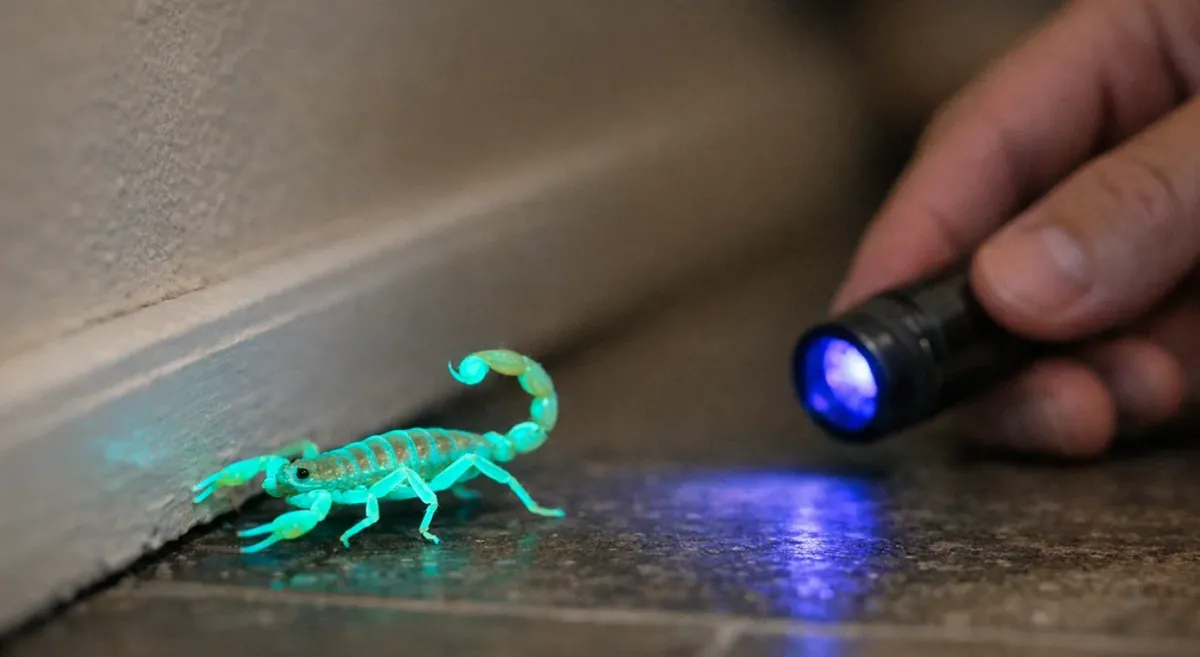
Monitoring is the missing piece. Instead of guessing whether peppermint “worked,” you track when and where scorpions actually show up over time. Scorpions glow under UV light, and they travel along walls — which is exactly what automated detection is built on. A system like Scorpion Alert watches the room’s perimeter at night, when scorpions are most active, and sends a photo-verified push or SMS alert within seconds of a detection. That turns a vague worry into clear answers.
Are glue traps or scorpion detectors better than repellents?
Both beat scent for real results, but they do different jobs. Here’s the comparison:
| Approach | What it does | Effort |
|---|
| Scent repellents | Briefly discourage one spot | Constant reapplication |
| Glue traps | Catch some that wander across them | Placement and messy upkeep |
| Scorpion detectors | Early warning of when/where they appear | Plug in once |
Glue traps can catch a passing scorpion, but they’re a finder, not a solution, and they need regular checking. Detectors give you early warning so you can respond with certainty. Scorpion Alert plugs into a standard outlet, uses UV light with an AI confidence score to flag a real scorpion, then alerts your phone — and the app lets you share with family and cover multiple locations. When you get the alert, you grab a UV flashlight and a glass, find the glowing scorpion, and release it outside. And if you do spot one before any of that, our guide on what not to do after spotting a scorpion will keep you safe.
Scents like citrus, lavender, and peppermint can be a useful piece of the puzzle, but they work best when paired with the basics—sealing entry points, reducing hiding spots, and keeping prey insects down. If you want a simple way to stay proactive and know when scorpions are active around your home, Scorpion Alert helps you monitor and respond before a surprise encounter.