If I found one scorpion, does that mean there are more?
Finding a single scorpion in your home doesn't automatically mean you have multiple scorpions, but it does confirm at least one entry route exists and your home offers conditions they can use. Scorpions are solitary hunters that don't travel in groups, so that lone scorpion might truly be alone — or it could be the first visible sign of others using the same access points.
The real answer depends on what you see over the next week or two. A single sighting falls into the "low risk" category for an ongoing problem. If you see another scorpion within 7-14 nights, especially in the same area, you've moved into "medium risk" territory. Multiple sightings in different rooms, or any baby scorpions, push you firmly into "high risk" — that's when you likely have an established population nearby that's regularly entering your home.
Think of that first scorpion as an early warning. It's telling you something important: scorpions can get into your home, and at least one already has. What it can't tell you is whether more are waiting outside or if this was just a random wanderer. That's why monitoring over the next couple of weeks is so important.
Does one scorpion automatically mean an infestation?
No — one scorpion doesn't equal an infestation. In homeowner terms, a true scorpion infestation means you're seeing them repeatedly in the same areas, finding evidence they're breeding nearby (like juveniles or egg sacs), or encountering multiple scorpions within a short timeframe. A single scorpion is more like finding one mouse — it's a signal to investigate, not panic.
Picture this: you're brushing your teeth before bed and spot a scorpion on the bathroom wall. That's unsettling, but it doesn't mean your house is crawling with them. It means one scorpion found its way inside, likely following moisture and the prey insects that bathrooms attract. The difference between a one-time visitor and an ongoing problem comes down to what happens next.
Your immediate goal isn't to solve scorpions forever — it's to set a simple monitoring window and see whether this was an isolated incident or the start of a pattern. Most homeowners who find just one scorpion and never see another can chalk it up to bad luck. But if you start seeing them weekly, it's time for a more aggressive response.
What that first scorpion tells you (and what it doesn't)
That scorpion in your living space tells you three critical things: there's at least one entry point scorpions can use, your home has at least one spot where a scorpion can hide during the day, and the conditions inside were attractive enough for it to enter. These are facts you can work with.
What it doesn't tell you is just as important. You don't know how many scorpions might be living around your property, where exactly they're getting in, or whether they're actively breeding nearby. One scorpion can't reveal whether you have a nest under your back porch, or if this was just a hungry hunter that wandered too far from its usual territory.
According to research from Arizona poison centers, 81.8% of households where someone was stung had previously seen scorpions on the property. That's why patterns matter so much more than single encounters. Your monitoring over the next two weeks will show whether you're dealing with a one-time event or the beginning of a real scorpion problem.
What should I do immediately after seeing a scorpion in my house?
Your first priority after spotting a scorpion is reducing the immediate sting risk for everyone in your home. Check and shake out all shoes before wearing them, pull bed sheets and blankets away from walls and floors, keep kids and pets out of the area where you saw the scorpion, and set a temporary "no barefoot" rule until you've assessed the situation. These simple steps prevent most accidental stings while you figure out your next move.
Once everyone's safe, you'll want to deal with the scorpion itself (if it's still visible) and capture a few quick details. Here's your immediate action checklist:
- Decide whether to capture or kill the scorpion — both are valid options
- Take a clear photo from a safe distance for later identification
- Note the exact time and location where you found it
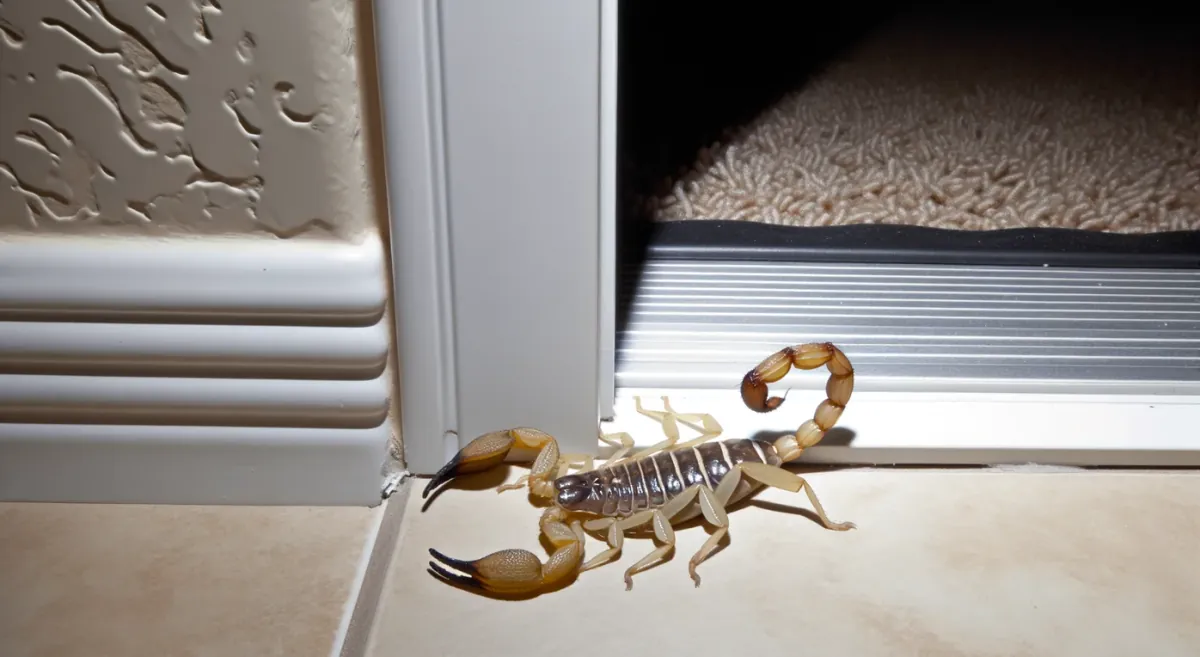
- Do a quick visual check along nearby baseboards and door frames
- Place sticky traps along the walls where you saw it
Tonight's goal is simple: keep everyone safe and gather basic information. You're not trying to scorpion-proof your entire house in the next hour. Focus on immediate safety first, then use the next week or two to determine whether this was an isolated incident or part of a bigger pattern.
How do I deal with a scorpion safely right now?
The safest capture method uses a clear glass or plastic container and a piece of stiff cardboard. Wearing closed-toe shoes and work gloves, approach the scorpion slowly — sudden movements can make it dart under furniture. Place the container over the scorpion, then slide the cardboard underneath to trap it. Keep the cardboard pressed tight against the container opening as you flip it over. Then you can release the scorpion outside, well away from your home.
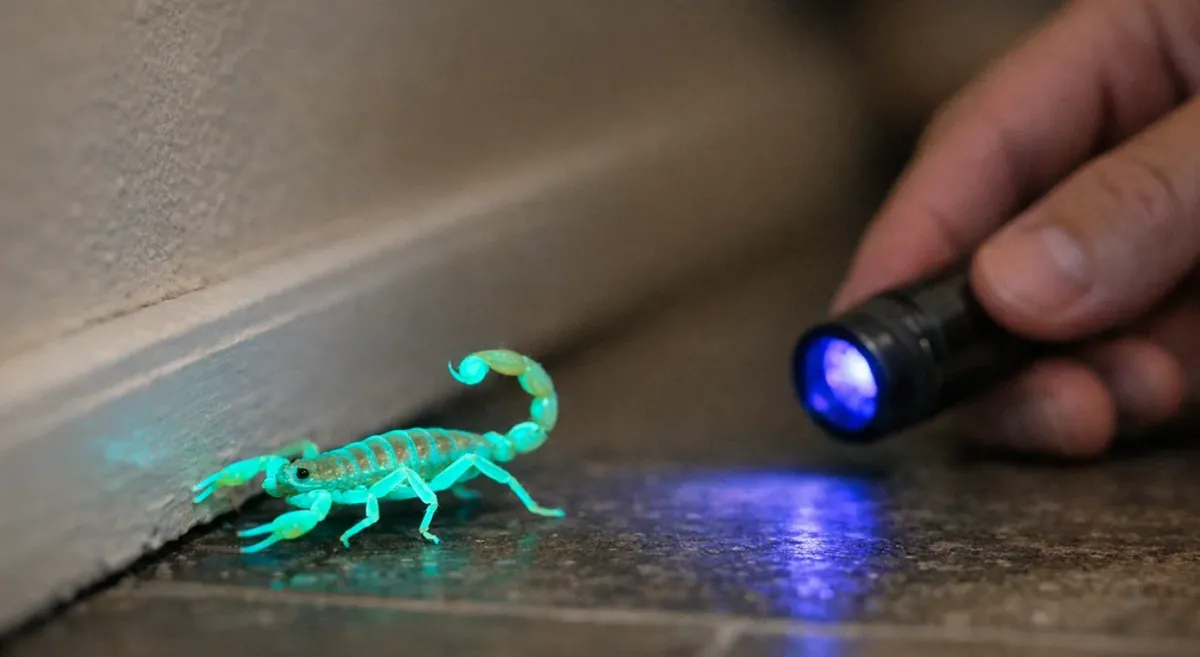
If the scorpion disappears under furniture or into a crack, don't start moving everything around frantically. Mark the spot, reduce clutter in that area if possible, and plan to check with a UV flashlight after dark, when scorpions are more active. Scorpions glow bright green under ultraviolet light, which makes them much easier to spot in a darkened room.
While scorpion stings are rarely life-threatening to healthy adults, certain mistakes can make the situation worse. If anyone does get stung, apply ice to reduce pain and call your regional poison control center (1-800-222-1222) for guidance. They can assess whether medical attention is needed based on the person's age, symptoms, and your location.
What quick info should I record before you forget?
Write down the exact time, specific room, and precise location where you found the scorpion — was it on the baseboard, in the middle of the floor, or up on a wall? Note any nearby features that might be entry routes: exterior doors, garage access, bathroom plumbing walls, or AC vents. This location data becomes incredibly valuable if you see another scorpion in the coming nights.
Take a clear photo from about 2-3 feet away, ideally showing the scorpion's body shape and tail position. You don't need to get dangerously close — modern phone cameras can capture enough detail for identification. If you're in Arizona, you're likely dealing with a bark scorpion. Texas residents probably have a striped bark scorpion. But confirming the species helps you understand the risk level.
This information forms the baseline for pattern detection. If you spot another scorpion in the same bathroom three nights later, you've identified a likely entry route. If the next sighting is across the house in a bedroom, you might have multiple entry points. Random sightings suggest occasional visitors, while repeated encounters in the same spots point to established travel routes.
Why would a single scorpion show up indoors?
Scorpions enter homes primarily by following prey insects and seeking water, especially during extreme weather when outdoor conditions get harsh. Hot, dry spells drive them indoors searching for moisture and the crickets, roaches, and spiders that thrive in our climate-controlled spaces. Recent construction, new landscaping, or even leaving a door open too long can suddenly make your home accessible to a wandering scorpion.
The timing of your sighting can offer useful clues. Night encounters usually mean you've spotted an actively hunting scorpion — they're nocturnal predators that emerge after dark to patrol for food. Daytime discoveries typically happen when you disturb a hiding scorpion by moving boxes in the garage, reaching into a cluttered closet, or pulling out rarely worn shoes. Each scenario suggests different entry patterns and hiding spots.
Before you start implementing solutions, make sure you're actually dealing with a scorpion. Several insects can trigger false alarms, especially in dim lighting or when people are already anxious about scorpions. Understanding what attracts scorpions helps, but first confirm you've got the right pest.
Does it matter if I saw it at night or during the day?
Night sightings usually indicate an actively hunting scorpion that entered your home recently — likely within the last few hours. When you see a scorpion walking across your floor at 10 PM, you're seeing normal behavior. It's following walls and baseboards (a behavior called thigmotaxis), searching for prey insects. This scorpion likely has a clear route in and out of your home.
Daytime encounters tell a different story. That scorpion you found while moving boxes in the garage at noon was hiding, not hunting. It might have been there for days or even weeks. Common daytime hiding spots include stored boxes, piles of laundry, bathroom cabinets, and cluttered closets — anywhere dark and undisturbed. According to Arizona poison center data, 42.5% of indoor scorpion stings happen in bedrooms, often when people encounter a hidden scorpion.
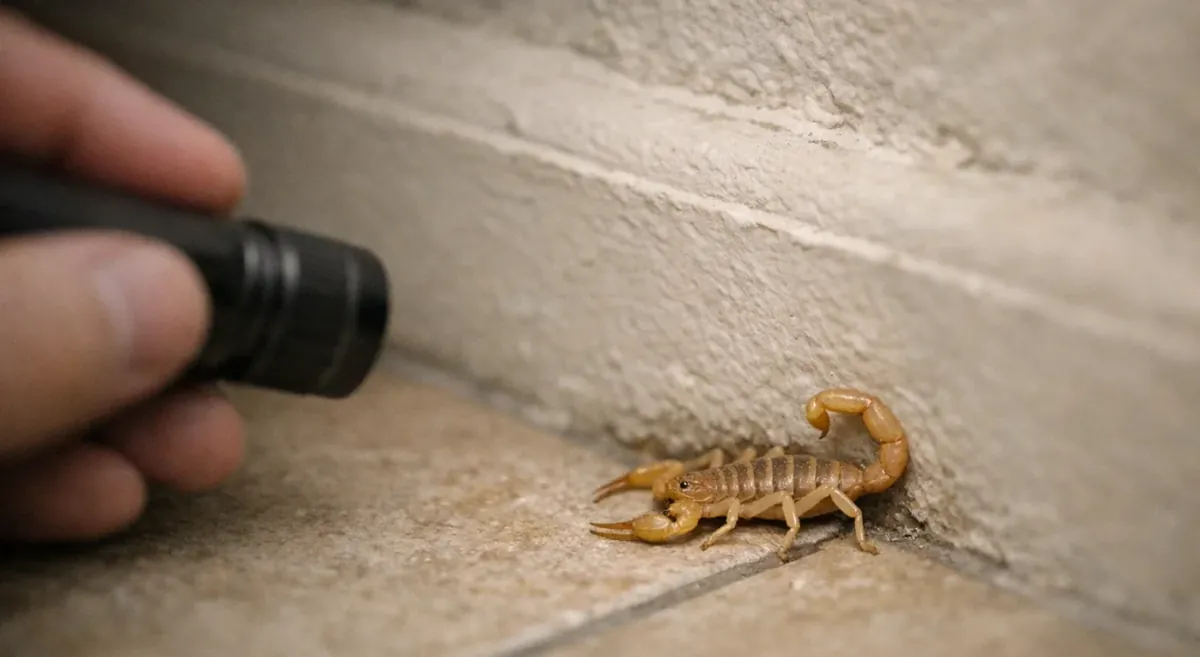
The best time to check for more scorpions is after dark, between 9 PM and midnight, when they're most active. Use a UV flashlight to scan along baseboards, door thresholds, and the edges of rooms. Scorpions fluoresce bright green under ultraviolet light, making them visible from several feet away. If you found one during the day, checking that same area at night can help reveal whether others are using the same route.
Are scorpions attracted to my house—or to the bugs around it?
Scorpions don't care about your house itself — they're following their food supply. Where you have crickets, roaches, spiders, and other small insects, scorpions won't be far behind. Your outdoor lighting plays a bigger role than you might think: lights attract flying insects, which attract the spiders and ground insects that scorpions hunt. It's a whole food chain converging near your entry points.
Moisture is the other major draw. Scorpions can survive months without food but need water regularly. Leaky pipes, AC condensation, pet water bowls, and even well-watered potted plants create the humid microenvironments scorpions seek. Bathrooms and laundry rooms offer both moisture and prey insects, making them common scorpion hotspots.
Reducing the insect population around your home's perimeter naturally reduces scorpion activity, but that's a longer-term project. For now, focus on figuring out whether this scorpion was hunting (following prey inside) or seeking shelter (already living in your stuff). The answer shapes your immediate response strategy.
How can I tell it's actually a scorpion (not a lookalike)?
True scorpions have three unmistakable features: a pair of pincers (called pedipalps) at the front, eight legs for walking, and a segmented tail that curves over the back with a stinger at the tip. If you can see all three, you've definitely got a scorpion. Size varies by species — Arizona bark scorpions reach about 3 inches, while some desert species grow larger.
Don't let size fool you about danger level. Smaller scorpions often pack more potent venom than their larger cousins. In the Southwest, the most medically significant species is the Arizona bark scorpion (Centruroides sculpturatus), identifiable by its slender build, tan to light brown color, and a tendency to turn up off the ground, on walls and furniture. Striped bark scorpions (Centruroides vittatus) dominate in Texas and have distinctive dark stripes running down their backs.
Common lookalikes include pseudoscorpions (tiny, with pincers but no tail), sun spiders or wind scorpions (no pincers or tail, just large jaws), and even some beetles in poor lighting. When in doubt, take that photo from a safe distance. Local extension offices, pest control companies, or online forums can help with identification. Knowing exactly what you're dealing with helps you assess the real risk level and choose appropriate responses.
How can I tell if this was a one-time visitor or an ongoing scorpion problem?
The only reliable way to distinguish between a one-time scorpion encounter and an ongoing problem is systematic monitoring over 7-14 nights. Set up a simple tracking system: check the same areas each night, log any sightings with date and location, and watch for patterns. Two sightings within a week suggests active routes into your home. Multiple rooms affected, or any juvenile scorpions, means you're dealing with more than random visitors.
Think of this monitoring period as evidence gathering. One scorpion tells you almost nothing definitive. But if you spot another scorpion along the same bathroom wall four nights later, you've identified a travel route. If scorpions appear in different rooms on different nights, you might have multiple entry points or scorpions entering through your AC system. No additional sightings after two weeks of monitoring? You probably had a one-time visitor.
Monitoring doesn't have to consume your evenings. You can use UV flashlight sweeps, strategically placed glue traps, or automated detection systems like Scorpion Alert. Each method has trade-offs in effort, reliability, and coverage. The key is consistency — whatever method you choose, use it the same way each night so you can trust the results.
What should I track during the next 7–14 nights?
Create a simple scorpion log with four data points for each sighting: date and time, room name, exact location (north wall baseboard, under bathroom sink, etc.), and proximity to potential entry points (exterior door, garage access, plumbing penetration). This basic information reveals patterns that random observations miss.
Patterns tell the real story. Three scorpions spotted along the same garage entry wall points to an obvious route. Scattered sightings across multiple rooms suggest either multiple entry points or scorpions already living inside various hiding spots. Baby scorpions or females carrying young indicate breeding populations nearby — that's when you need professional intervention.
Set a clear action threshold before you start monitoring. Many homeowners use this rule: one scorpion = monitor carefully, two scorpions in the same area within a week = seal that entry route immediately, three or more scorpions or any juveniles = call a professional. Having a plan helps you avoid overreacting to a single sighting — and avoids dangerous delays if you do have a real problem.
Is a UV flashlight inspection reliable for finding more?
UV flashlight inspections work because scorpions fluoresce bright green under 365nm ultraviolet light — they're hard to miss once you know what to look for. The fluorescence comes from compounds in their exoskeleton and makes them visible from several feet away in a dark room. For best results, turn off all lights and let your eyes adjust for a minute before scanning.
The limitation is that UV sweeps only find scorpions that are exposed and active. You won't spot the ones hiding deep in wall voids, under heavy furniture, or inside stored boxes. Scorpions are thigmotactic, meaning they navigate by maintaining contact with surfaces. Focus your UV sweeps along baseboards, door thresholds, and where walls meet floors — the highways scorpions use to move through your home.
A thorough UV inspection route covers all room perimeters, paying special attention to exterior wall baseboards, bathroom and kitchen plumbing areas, and anywhere you've seen insects. Check window frames, door sweeps, and the garage-to-house entry. UV flashlights are useful tools, but nightly manual inspections can get tedious fast. Most homeowners drop them after a few nights, which is why automated monitoring often makes more sense for ongoing vigilance.
Should I use glue traps for scorpions?
Glue traps work as short-term sampling tools to confirm scorpion activity and identify travel routes. Place them flush against baseboards where scorpions naturally travel, especially near doors, in bathrooms, and along garage walls. Check them daily — a trapped scorpion tells you that specific route is active. After 7-14 nights, you'll have a map of scorpion highways through your home.
The downsides make glue traps a poor long-term solution. They're messy when you catch something, pose risks to pets and children who might step on them, and require constant replacement. Dust and debris reduce their effectiveness within days. Plus, scorpions are solitary hunters, so catching one doesn't prevent another from using the same route tomorrow.
Many homeowners start with glue traps for an initial assessment, then shift to other methods once they understand their scorpion patterns. If you're seeing consistent catches in the same locations, you've identified priority areas for sealing or ongoing monitoring. If traps stay empty for two weeks, your scorpion encounter was likely an isolated incident. Either way, glue traps provide useful data — they just shouldn't be your only strategy.
How can I monitor for scorpions without nightly blacklight walks?
Automated scorpion detection eliminates the nightly chore of manual UV flashlight patrols while providing more reliable coverage. Systems like Scorpion Alert use the same UV fluorescence principle but monitor continuously throughout the night, when scorpions are most active. Instead of checking once and possibly missing activity an hour later, automated detectors watch all night and alert you right away when they spot a scorpion.
The technology addresses a fundamental problem: scorpions are nocturnal and unpredictable. You might patrol with a UV flashlight at 10 PM and see nothing, then have a scorpion cruise through your bedroom at 2 AM. Manual checking also means disrupting your family's sleep, and most people stop doing nightly flashlight walks after a few days. Automated monitoring works like a security system for scorpions, watching the perimeter while you sleep.
Strategic placement in a typical home can confirm whether that single scorpion was truly alone or part of ongoing activity. Start with entry routes and high-risk rooms. Within your 7-14 night assessment window, automated detection gives you clear data: either you get more alerts (confirming active routes) or you don't (suggesting an isolated incident). This evidence-based approach replaces anxiety with actionable information.
What is Scorpion Alert and how does it detect scorpions at night?
Scorpion Alert detectors plug into standard wall outlets and use 365nm UV light to illuminate the floor area where scorpions travel. When a scorpion's fluorescent body enters this UV zone, the device's camera and AI system analyze the distinctive green glow pattern. Within seconds of confirming a scorpion, the system sends a photo-verified alert to your phone showing exactly what triggered the detection, plus a confidence percentage.
The system only activates in darkness, when scorpions are active and their fluorescence is easiest to see. During the day, the detectors remain dormant. Each device covers the floor area beneath and around the outlet — right where scorpions travel due to their thigmotactic behavior. Multiple detectors can monitor different rooms simultaneously, all reporting to a single app that keeps a history of detections with dates, times, and locations.
Setup involves plugging detectors into outlets, connecting them to your home WiFi, and positioning them in strategic locations. The app guides you through placement for maximum coverage. Unlike glue traps that require daily checking and disposal, or UV flashlights that demand nightly patrols, Scorpion Alert provides "set it and forget it" monitoring. You only take action when you receive an alert, with photographic proof of what triggered it.
Where should I place monitors if I'm trying to learn whether there are "more"?
Start with three priority zones: entry points where scorpions access your home, bedrooms where family members are most vulnerable, and moisture areas like bathrooms and laundry rooms. For entry monitoring, place detectors near exterior doors, the garage-to-house doorway, and any sliding glass doors. These can catch scorpions as they enter, helping you identify active routes before they move deeper into living spaces.
Bedrooms deserve special attention since 42.5% of indoor scorpion stings occur there. Position detectors along the wall where the bed is located and near doorways. Children's rooms and nurseries are the highest priority. In bathrooms, use outlets near the vanity or along walls shared with exterior spaces — scorpions often follow plumbing routes.
A typical monitoring plan for an average home uses 4-6 detectors: one at the main entry, one at the garage door, two in priority bedrooms, and one or two in bathrooms. This setup turns anxiety about "are there more?" into measurable data. After your assessment period, you can relocate detectors based on what you've learned or keep coverage in proven hotspots.
When should I escalate beyond DIY monitoring?
Escalate to professional pest control when monitoring reveals patterns: multiple detections in the same area within a week, scorpion activity in different rooms suggesting multiple entry points, or any sighting of juvenile scorpions or females carrying babies. These patterns point to established populations that DIY efforts alone won't resolve.
The data from systematic monitoring also makes professional treatment more effective. Instead of generic perimeter spraying, a pest control technician can focus on proven entry points and active routes. Show them your detection history — dates, locations, and photos help them understand your specific situation. Many professionals appreciate customers who've already narrowed down problem areas instead of just saying, "We saw a scorpion somewhere."
Remember, the goal isn't zero scorpions forever — it's fewer encounters and fewer surprises. Effective monitoring helps you measure progress. If you started with nightly alerts and now see one every few weeks, that's progress. If activity stays high despite sealing efforts and professional treatment, you may need ongoing monitoring as an early warning system. Either way, you're making decisions based on evidence, not fear.
Finding that first scorpion was unsettling, but now you've got a clear plan. Monitor for patterns over the next two weeks, focus on proven entry routes if you find them, and use technology to watch for scorpions while you sleep. Most homeowners find their single scorpion really was alone. If you do find more, early detection leads to targeted solutions that actually work.
Finding one scorpion often means you should assume there may be more, so the real goal is confirming activity and catching patterns over time—not just reacting once. Scorpion Alert helps by watching for scorpions automatically at night using 365nm UV and sending photo-verified alerts, so you can act with evidence instead of guesswork—learn more at Scorpion Alert.