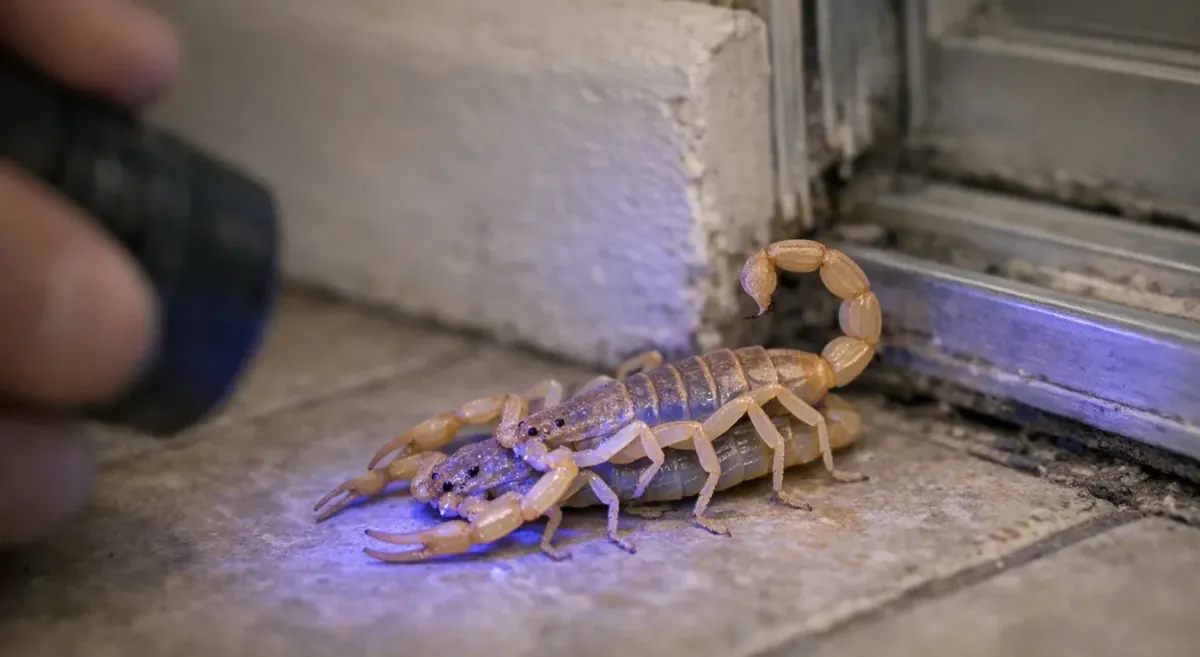
How do scorpions mate, step by step?
Finding two scorpions locked together on your patio can be alarming. Are they fighting? Mating? About to invade your home? Understanding scorpion mating behavior helps you figure out whether you’re dealing with a seasonal encounter or a sign that multiple scorpions are living near your property.
Scorpion reproduction involves a complex courtship ritual that’s unlike what you’ll see with common household pests. The process can take hours and often happens right where homeowners might stumble upon it—along walls, near doorways, or in covered outdoor spaces. Knowing what’s normal courtship behavior versus an aggressive interaction helps you respond without increasing your risk of getting stung.
What is the scorpion "dance" people talk about?
The scorpion mating dance, scientifically called the promenade à deux, doesn’t look like typical insect reproduction. Two scorpions face each other, clasp pincers (pedipalps), and move together in what looks like a slow, coordinated waltz. The male leads while searching for suitable ground to deposit his sperm packet.
This “dance” can last anywhere from 20 minutes to several hours. The scorpions move in circles and back and forth, sometimes looking like they’re gently wrestling as the male guides the female over different surfaces. They often do this along edges and walls, following their natural thigmotactic behavior even during courtship. If you spot two scorpions moving slowly with interlocked pincers near your foundation or patio edge, you’re likely seeing this mating dance—not a territorial dispute.
Do scorpions mate like insects (or do they lay eggs)?
Scorpions reproduce differently from most bugs you’ll encounter. Instead of quick mating, the male deposits a spermatophore (sperm packet) on the ground after finding the right spot during their dance. He then maneuvers the female over it so she can take it up into her body. This indirect fertilization method means the whole process requires stable footing and takes time.
What surprises many homeowners is that scorpions don’t lay eggs. They give live birth to fully formed babies after a gestation period that can last several months. This strategy is more similar to mammals than to the insects and spiders that share desert habitats. Understanding this also explains why a single pregnant female scorpion in your home could potentially lead to dozens of babies months later.
Can mating turn violent (and do they sting each other)?
Scorpion courtship carries risks—for the scorpions. If the female isn’t receptive or becomes stressed, she might attack and even eat the male. Males sometimes sting unreceptive females, though this is less common. The dance itself involves careful positioning to avoid triggering defensive responses from either partner.
For homeowners, the danger isn’t the mating itself—it’s getting too close. Mating scorpions are focused on each other but will defend themselves if disturbed. Both scorpions may have their stingers raised during parts of the courtship, which can make them quicker to sting if startled. Never try to separate or kill mating scorpions with your hands or feet; their defensive reflexes stay sharp even during courtship.
What does scorpion mating look like in a yard or house?
Recognizing mating behavior helps you avoid dangerous encounters and make sense of seasonal scorpion activity around your property. Many homeowners who spot mating scorpions describe initial confusion—the slow, linked movement doesn’t match what they expect from a dangerous arachnid.
How can I tell if two scorpions are mating or fighting?
Mating scorpions show specific behaviors that distinguish courtship from combat. Look for these signs: pincers clasped together (not striking), coordinated movement where one leads and the other follows, frequent pauses as they test surfaces, and slow circular or back-and-forth patterns. The male often appears to pull or guide the female rather than attack her.
Fighting scorpions move erratically. You’ll see rapid strikes, attempts to escape, aggressive tail positioning, and frantic scrambling. One scorpion clearly tries to get away while the other pursues. Mating pairs stay connected for extended periods—sometimes hours—while fights typically end quickly with one scorpion fleeing. If you see two scorpions maintaining contact and moving slowly together, especially during warm evening hours, you’re likely witnessing courtship.
Where are scorpions most likely to mate around a home?
Scorpions prefer stable, protected surfaces for mating. Common locations include along block walls where they naturally travel, patio edges with overhead cover, landscape rock areas that retain evening warmth, garage floors near walls and corners, and exterior door thresholds where concrete meets stucco. They need relatively flat ground for the male to deposit his spermatophore successfully.
Inside homes, mating might happen along baseboards in garages, laundry rooms, or bathrooms—anywhere with moisture and established scorpion traffic. The behavior follows their typical movement patterns along edges and walls. If you’ve been seeing single scorpions in certain areas, those same spots can become likely mating grounds when males start roaming in search of females.
Is it safe to kill or separate them while they're mating?
Trying to kill or separate mating scorpions can dramatically increase your sting risk. Both scorpions are already in a heightened state, with stingers often raised. Sudden movements or vibrations can trigger an immediate defensive response. In dim lighting—when most people encounter mating pairs—it’s easy to misjudge distances or accidentally make contact with one while targeting the other.
The safest approach is to back away slowly and keep children and pets clear of the area. Turn on bright lights if possible, since this often causes scorpions to separate and seek cover. If you must remove them, use long-handled tools like tongs or a stick to guide them into a container from a safe distance. If you can, wait until they separate naturally before attempting removal; that lowers the chance of defensive stings and prevents common mistakes that lead to indoor infestations.
When is scorpion mating season, and does it cause more sightings?
Homeowners often notice increased scorpion activity during certain months and wonder if they’re dealing with an infestation. In many cases, you’re simply seeing natural mating behavior that brings normally hidden scorpions into the open. Understanding seasonal patterns helps you tell the difference between a temporary spike in sightings and a real population problem that needs intervention.
Do scorpions mate year-round in the Southwest?
Scorpion mating activity varies by species and location, but it generally peaks during warmer months when nighttime temperatures stay above 70°F. In Arizona, peak mating typically occurs from late spring through early fall. Texas sees similar patterns, with slight variations based on humidity and rainfall. California and Nevada scorpions often concentrate mating in late summer when desert nights are warmest.
Unlike strict seasonal patterns you might expect, some Southwest scorpions can mate whenever conditions allow. Mild winters or unusually warm periods can trigger mating behavior outside the typical months. Indoor populations in climate-controlled spaces might mate year-round, which helps explain why some homeowners find baby scorpions in winter months.
Why would mating season bring scorpions closer to my house?
Male scorpions abandon their usual territories during mating season and travel much farther than normal in search of females. This roaming behavior brings them across yards, over walls, and, unfortunately, through gaps into homes. A male that typically stays in the desert wash behind your property might venture onto your patio or through your garden during his search.
Your home’s features can become attractive waypoints during these travels. Block walls provide elevated pathways for roaming males. Landscape lighting attracts insects that scorpions eat while traveling. Moisture from irrigation or air conditioning condensation offers vital water sources during long journeys. These same attractants that draw scorpions year-round become especially important during energy-intensive mating searches.
Can scorpions climb walls when they're searching for mates?
During mating season, roaming males aren’t limited to ground level as they explore every possible route in search of females, so they can turn up well above the floor. Arizona bark scorpions, the most medically significant species in the Southwest, are the ones most likely to be found up off the ground; most other Southwest species tend to stay near the floor, which is a useful clue when you’re trying to identify what you’ve found.
This helps explain seemingly impossible sightings during mating season—scorpions that turn up well above ground level, including in second-story bedrooms. Roaming males aren’t limited to ground-level entry and can enter through gaps around windows, roof joints, or ventilation openings. Foundation cracks that seemed too high to matter can become entry points once motivated males are on the move in search of mates.
After scorpions mate, how long until babies—and what happens next?
Successfully mated female scorpions begin a long process that can affect your home for months or even years. Understanding scorpion reproduction timelines and early life stages helps you spot potential population issues before they turn into serious infestations.
How long are scorpions pregnant (and do they give live birth)?
Scorpion gestation varies dramatically by species and environmental conditions, typically ranging from 3 to 18 months. Arizona bark scorpions usually gestate for 5–6 months, while some desert species carry young for over a year. Temperature, food availability, and the female’s overall health all influence gestation length. This extended pregnancy means a female that mates in spring might not give birth until fall—or even the following year.
Female scorpions give live birth to 20–40 babies on average, though some species produce smaller or larger broods. The birthing process itself can take several hours as each tiny scorpion emerges. Newborns are soft, white, and completely dependent on their mother for protection during their vulnerable first weeks. This reproductive strategy—long gestation followed by live birth—means one pregnant female in your home represents a significant future population risk.
Why do baby scorpions ride on the mother's back?
Newborn scorpions immediately climb onto their mother’s back, where they’ll remain for 1–3 weeks until their first molt. During this time, they don’t eat or drink independently; they survive on nutrients from their embryonic fat reserves. The mother’s back offers protection from predators and environmental hazards while their soft exoskeletons harden.
After molting, young scorpions disperse to establish their own territories. This dispersal period can create sudden increases in scorpion sightings as dozens of tiny scorpions spread throughout an area. If you spot miniature scorpions in your home, it suggests a recent birth nearby—possibly in wall voids, attics, or cluttered storage areas. Finding babies means addressing both the immediate population and understanding whether you're dealing with solitary individuals or a breeding population.
If I see one scorpion, does that mean there's a breeding pair?
Seeing a single scorpion doesn’t automatically mean there’s a breeding pair, but context matters. Scorpions are generally solitary and come together only for mating. That said, suitable habitat can attract multiple individuals independently. If you spot one scorpion, others may be in the same area without forming actual pairs or groups.
Consider timing and location when assessing risk. A scorpion found during peak mating season (late spring through fall) suggests others might be nearby. Multiple sightings over several weeks point to an established population rather than a random encounter. Female scorpions can store sperm for months, so even a lone female might be pregnant from an earlier mating. With scorpions living 3–8 years depending on species, a small initial population can persist and grow over time without proper management.
What should I do at home during mating season to prevent a bigger problem?
Mating season often means adjusting your scorpion management strategy. Increased nighttime movement and roaming behavior can lead to more encounters—often at the worst times, like walking barefoot to the bathroom or letting dogs out at night. Focus on immediate safety measures while building longer-term prevention.
How can I reduce encounters when scorpions are roaming at night?
Start with habits that protect your family during peak activity hours. Shake out shoes before wearing them, especially pairs kept near exterior doors or in garages. Pull beds away from walls and make sure bedding doesn’t touch the floor—roaming scorpions follow wall edges and can make their way up using draped bedding. Keep floors clear along baseboards where scorpions naturally travel.
Moisture attracts both scorpions and their prey during dry mating-season months. Fix leaky faucets, air conditioning condensation issues, and poor drainage around foundations. Pay special attention to laundry rooms and bathrooms where humidity creates ideal conditions. These changes lower the odds of surprise encounters when scorpions are actively searching for mates and water.
What's the best way to monitor for scorpions without nightly blacklight patrols?
Effective monitoring means knowing when and where scorpions enter your living spaces. Sticky traps placed along walls can catch some scorpions, but they miss others that walk around them. Manual UV flashlight checks work, but they take dedication—scorpions are most active between 10 PM and 2 AM, which is exactly when you’d rather be sleeping. Missing even one night can mean missing a scorpion that enters and hides.
Modern detection technology offers a more practical option. Automated systems like Scorpion Alert use the same UV fluorescence principle as handheld blacklights but work continuously without human effort. These plug-in detectors activate in darkness, monitor the floor area where scorpions travel along walls, and send immediate alerts to your phone when they spot a scorpion’s telltale glow. During mating season, when scorpion movement peaks, automated monitoring can provide peace of mind without nightly patrols or constant vigilance.
Where should I focus prevention if I'm worried about mating-related activity?
Target your efforts on high-traffic scorpion pathways and priority living spaces. Focus perimeter sealing on common entry routes: gaps under doors, openings around plumbing penetrations, and spaces where walls meet foundations. Concentrate on transitions between the garage and living space, where many scorpions accidentally wander inside while following wall lines.
Prioritize protection in vulnerable rooms where family members are barefoot or sleeping: master bedrooms, children’s rooms, nurseries, and bathrooms. These spaces deserve the most attention for both monitoring and prevention. Reduce hiding spots by eliminating floor clutter and storing items in sealed containers instead of cardboard boxes. For comprehensive prevention strategies beyond mating-season concerns, address the key factors that make your property attractive to scorpions year-round.
Now that you know how scorpions mate—from the courtship “dance” to the spermatophore transfer and the mother carrying her young—it’s easier to understand why they may show up in specific areas at certain times of year. If you’d like a practical way to spot scorpion activity early and respond quickly, Scorpion Alert can help you detect scorpions around your home.