I just saw a scorpion—what should I do first (and what should I avoid)?
You flip on the bathroom light at 2 a.m., and there it is — a scorpion on the tile next to the toilet. Your heart pounds. Maybe you’re in Phoenix, maybe Las Vegas, maybe Austin. Doesn’t matter. That scorpion is right there, and what you do in the next 60 seconds can mean the difference between catching it safely and spending the rest of the night wondering where it went.
Most Southwest homeowners make critical mistakes in those first moments after a scorpion sighting. Those errors don’t just increase the risk of a sting — they often turn a visible scorpion into a hidden one. Here’s what to avoid and what to do instead.
Mistake #1: Panicking and making sudden moves
Panic triggers two risky outcomes. First, you might startle the scorpion into darting under furniture or into a crack where you can’t reach it. Second, rushed movements increase your chances of accidentally touching it and getting stung. Scorpions aren’t aggressive, but they’ll defend themselves if they feel threatened.
Instead, take a breath and move deliberately. If kids or pets are nearby, calmly guide them out of the room — don’t shout or make them run. Close the door behind them. If someone else is awake, have them stand watch while you gather supplies. The scorpion won’t vanish in five seconds, but it might if you start stomping around.
Mistake #2: Trying to be a hero with bare hands
Never attempt a bare-hand capture. Not even if it’s tiny. Not even if you’ve done it before. Arizona bark scorpions — the most venomous species in the U.S. — are often small and pale, so they’re easy to underestimate. Their sting can send children to the hospital.
Grab tools instead: long kitchen tongs, thick work gloves, or a wide-mouth jar. If the scorpion starts moving toward furniture or a wall crack, don’t chase it. Switch to monitoring mode — keep eyes on it while you regroup. Sometimes backing off and watching is smarter than forcing a confrontation.
Mistake #3: Leaving the room and hoping it’s gone
Here’s what happens when you leave: the scorpion keeps hunting, following baseboards and walls throughout your home. By morning, it could be anywhere — under your couch, in your closet, or worse, in your bed. Scorpions aren’t limited to the floor, and can scale walls and furniture to reach it.
If you absolutely must leave the room, stuff a towel tightly under the door first. This creates a temporary barrier while you grab supplies or wake someone to help. But remember — that towel won’t hold forever, and scorpions can squeeze through surprisingly small gaps.
Should I swat it, stomp it, or spray it with bug spray?
Your instinct might be to grab a shoe or the nearest can of Raid. Stop. Those common reactions often backfire with scorpions, turning a manageable situation into a game of hide-and-seek you’ll probably lose.
Most insect sprays barely faze scorpions. Their tough exoskeletons and low metabolic rate mean they can survive doses that would kill other bugs instantly. Swatting and stomping are even riskier — one wrong move, and they’ll scurry into hiding.
Mistake #4: Swatting and turning one scorpion into a hiding scorpion
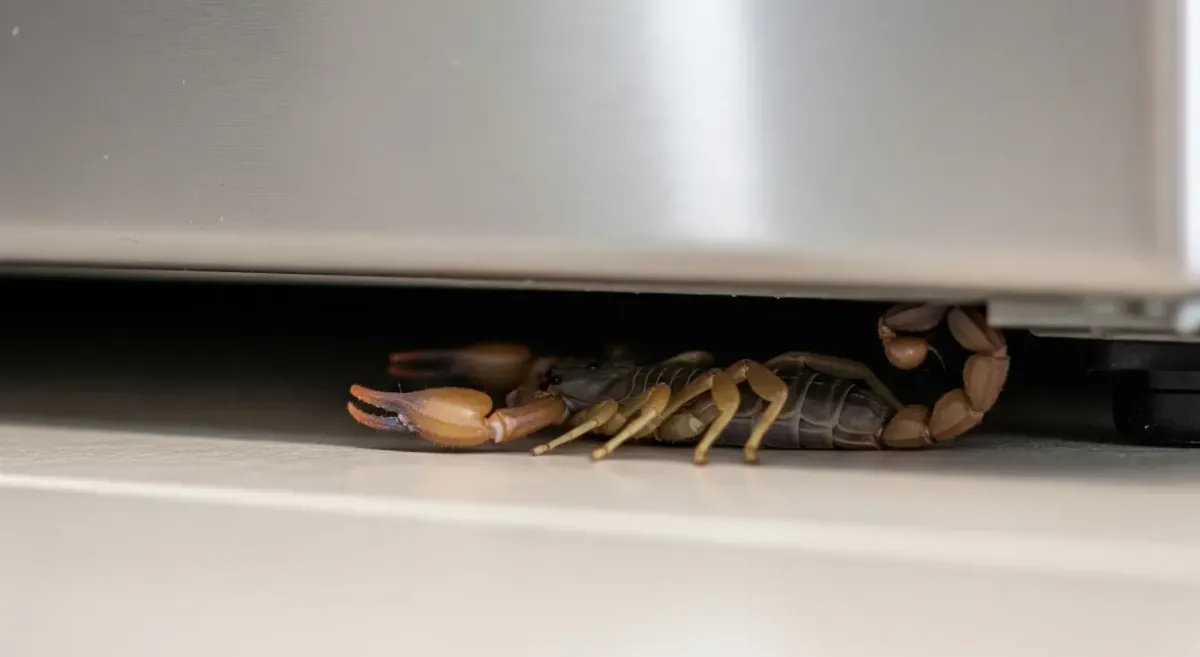
Picture this: you swing a rolled-up magazine at a scorpion on your kitchen floor. You miss by an inch. The scorpion darts sideways, disappears under your refrigerator, and now you’re moving appliances at 3 a.m. Or worse — you clip it but don’t kill it, and now you’ve got an injured, defensive scorpion somewhere in your kitchen.
Scorpions instinctively flee toward edges and crevices when threatened. They’ll slip under baseboards, squeeze behind furniture legs, or vanish into piles of shoes. Once they’re hidden, finding them becomes nearly impossible. Keep them contained in open space instead of driving them toward escape routes.
Mistake #5: Spraying first and searching later
Standard bug sprays won’t reliably kill scorpions. You might empty half a can on one, watch it stumble around for a few minutes, then lose sight of it behind your entertainment center. Now you’ve got a chemically irritated scorpion somewhere in your living room — not exactly a win.
Physical control beats chemicals for indoor scorpions. Focus on containing or removing the scorpion you can see instead of hoping spray will solve the problem. Save the pesticides for outdoor perimeter treatment, where they’re more effective.
Safer option: The wide-glass capture method
Here’s the technique that actually works. Find a wide-mouth glass or clear container — something with an opening at least 3 inches across. Approach slowly from above. Place the glass over the scorpion in one smooth motion, trapping it against the floor.
Slide a piece of stiff paper or cardboard under the glass, keeping your fingers flat and away from the edges. Once the scorpion is fully on the paper, carefully flip the whole setup over. The scorpion drops into the glass, and you can release it outside or dispose of it. This method keeps your hands safely away while giving you complete control.
What if the scorpion disappeared—where should I look next?
Lost sight of it? Don’t panic. Scorpions move predictably indoors, following walls and edges rather than crossing open floors. This behavior — called thigmotaxis — means they travel along baseboards, furniture edges, and room perimeters. Understanding that pattern turns random searching into strategic tracking.
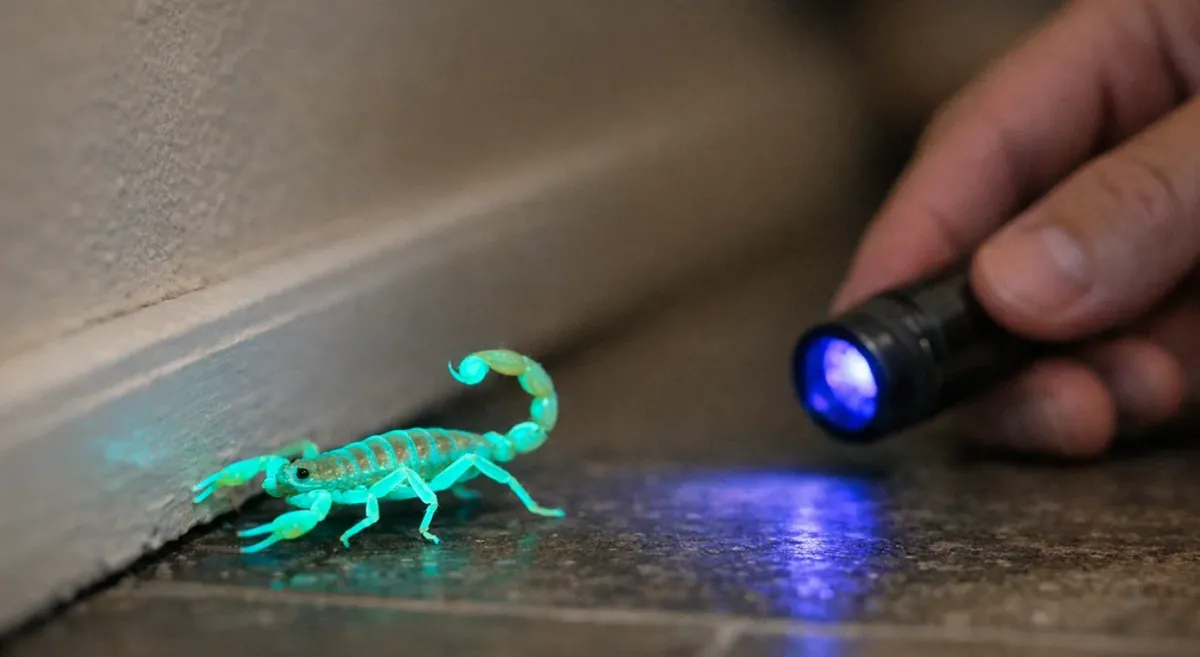
The good news? Scorpions glow bright green under ultraviolet light, which makes them much easier to spot in the dark. A UV flashlight turns you from fumbling in shadows to scanning likely routes.
Start with the perimeter (baseboards, corners, thresholds)
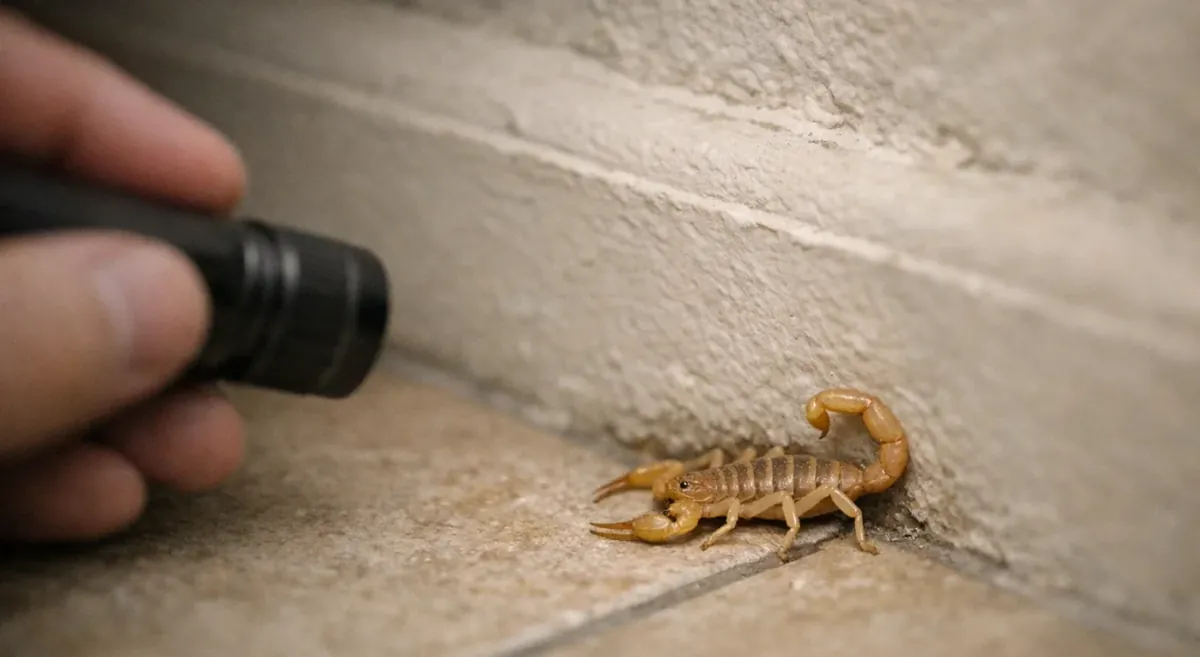
Scorpions navigate by maintaining contact with surfaces. They’ll follow your baseboard from the spot where you lost them, hugging the wall as they move. Start your search at the last known location and work clockwise around the room’s perimeter.
Check every corner thoroughly — scorpions often pause where two walls meet. Look under door thresholds, behind furniture legs that touch walls, and along the edges of area rugs. Move slowly and systematically. If you skip a section, you might skip the scorpion.
Use UV the right way (without turning it into a chaos hunt)
Turn off the lights first. Scorpions fluoresce brightest in darkness, and room lighting washes out their glow. Hold your UV flashlight at a low angle, almost parallel to the floor, and sweep slowly along the wall-floor junction. The 365nm wavelength used by detection systems like Scorpion Alert produces the strongest fluorescence — if you’re buying a flashlight, look for this specification.
Don’t wave the light around randomly. Systematic scanning beats frantic searching every time. Work in sections, overlapping your sweeps slightly. When you spot that telltale green glow, stop and plan your capture before you move in.
Check high-probability rooms if you lose it
Scorpions need water, so bathrooms and laundry rooms rank high on their destination list. They might emerge from drains or congregate near leaky pipes. Check these water sources first if your search comes up empty.
Until you locate the scorpion, take precautions in bedrooms. Shake out shoes before putting them on. Pull beds slightly away from walls. Check bedding edges before climbing in. These simple steps help prevent surprise encounters while you confirm whether the scorpion left the area or found a new hiding spot.
How do I know if this was a one-time visitor or an ongoing problem?
Finding one scorpion inside often points to a bigger issue. If one found a way in, others can follow the same path. The real challenge? Scorpions are nocturnal hunters. While you sleep, they emerge from hiding spots and explore your home along baseboards and walls.
Monitoring for patterns over the next two weeks can tell you whether you’re dealing with a lone wanderer or an invasion. But there’s a catch — manual monitoring means prowling your house with a UV flashlight every night. Most people quit after a few nights, which leaves them blind to ongoing activity.
Mistake #6: Assuming "one scorpion" means you’re in the clear
That scorpion didn’t teleport into your bathroom. It found an entry point — maybe a gap under the door, a crack in the foundation, or space around a pipe. Those same vulnerabilities are still open for the next scorpion to exploit. Without addressing the root cause, you’re playing scorpion roulette.
Focus on two immediate priorities: identifying entry points and reducing what attracts them inside. Common scorpion attractants include moisture, clutter, and other insects. Tackle those issues while monitoring for additional activity.
A simple monitoring setup that works while you sleep
Scorpion Alert Detectors solve the nightly patrol problem by monitoring automatically. Each detector activates when your room darkens, scanning the floor below with 365nm UV light — the same wavelength that produces maximum scorpion fluorescence. The system captures images every 500 milliseconds, analyzing them through two-stage AI to minimize false alarms.
When a scorpion crosses beneath a detector, you’ll get an instant alert on your phone. The notification includes a photo of what triggered it plus a confidence percentage, so you know exactly what you’re dealing with. No more wondering whether that movement was real or imagined. No more exhausting flashlight patrols that you’ll abandon after three nights.
Where should I place detectors after an indoor sighting?
Start with entry points where scorpions most commonly enter: front door, back door, garage entrance, patio slider, and pet doors. These high-traffic thresholds need constant monitoring since scorpions can slip in when doors open at night.
Next, protect vulnerable rooms. Bedrooms, nurseries, and playrooms get priority — anywhere family members could encounter a scorpion while barefoot or sleeping. Add detectors in bathrooms and laundry rooms, too, since scorpions seek moisture and often show up near water sources. This strategic placement creates an early warning network throughout your home.
When should I call pest control or seek medical help?
Some situations call for professional help. If you’re getting repeated scorpion alerts, finding multiple scorpions, or have young children or elderly family members at home, don’t wait for an incident. Professional pest control can treat entry points and create defensive barriers that DIY methods can’t match.
Medical decisions are even clearer. Any scorpion sting requires immediate attention — especially for children, who face higher risk from venom. Don’t take a “wait and see” approach with stings.
Mistake #7: Waiting until someone gets stung to take it seriously
One indoor scorpion sighting might be random. Two suggests a pattern. Three or more? You’ve got an active problem that needs attention right away. Each scorpion increases the odds of a painful encounter, especially if you have curious kids or pets who might not notice the danger.
Risk compounds quickly. Children under 10 face the most severe reactions to scorpion venom. Pets can suffer serious complications, too. When monitoring reveals ongoing activity, professional pest control becomes cheap insurance against emergency room visits.
If a sting happens, what’s the safest next move?
Never try to “tough out” a scorpion sting. The pain might seem manageable at first, but venom effects can escalate quickly — especially with Arizona bark scorpion stings. Children may experience severe symptoms within minutes.
Follow a proven first-aid protocol immediately. Get comprehensive guidance on bark scorpion sting first aid and what to do in the first 30 minutes. Those initial steps can make the difference between a manageable situation and a medical emergency.
After you spot a scorpion, the biggest mistakes are rushing in bare-handed, trying to smash it, or assuming it was a one-time visitor—slow down, use a UV light to check nearby hiding spots, and contain it safely if you can. If you want an extra layer of confidence while you stay focused on the right next steps, Scorpion Alert can help you stay aware of activity in your home so you’re not relying on guesswork.