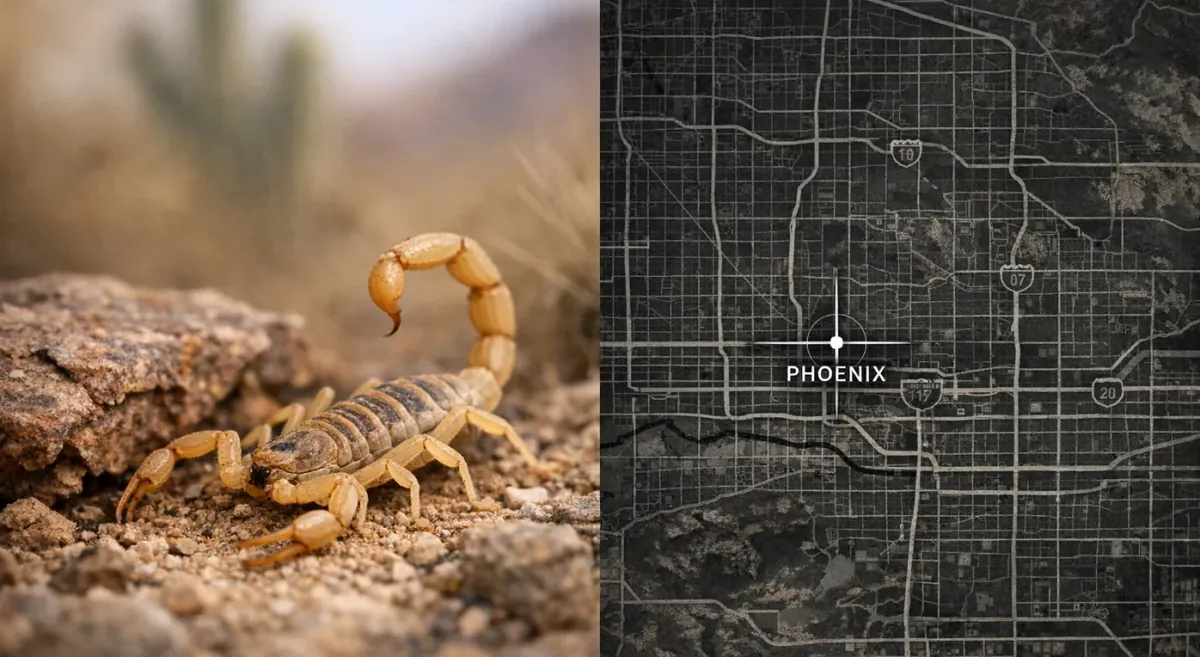
Are scorpions a problem in Phoenix?
Yes, scorpions are a real problem for Phoenix homeowners. Arizona accounts for 68.2% of all scorpion exposures reported to US poison control centers — and the Phoenix metro area in Maricopa County drives much of that number. The Banner Poison Center logged 518 scorpion exposures and 794 envenomations in Maricopa County in just the first three months of 2026.
Those numbers tell only part of the story. Nearly all scorpion stings — 97.8% nationwide — happen inside homes, not outdoors. Phoenix's mix of desert heat, urban irrigation, and block-wall construction creates perfect conditions for scorpions to thrive near (and inside) houses. They're nocturnal hunters that follow prey insects attracted to moisture and light around homes.
Why Phoenix homes see scorpions more than you'd think
Phoenix's extreme summer heat pushes scorpions to seek cooler, humid microhabitats — exactly what they find in air-conditioned homes with bathroom moisture and kitchen water sources. Monsoon season brings humidity shifts that trigger more scorpion movement as they hunt and seek mates. Meanwhile, irrigated yards in the desert create artificial oases that support the crickets and roaches scorpions prey on.
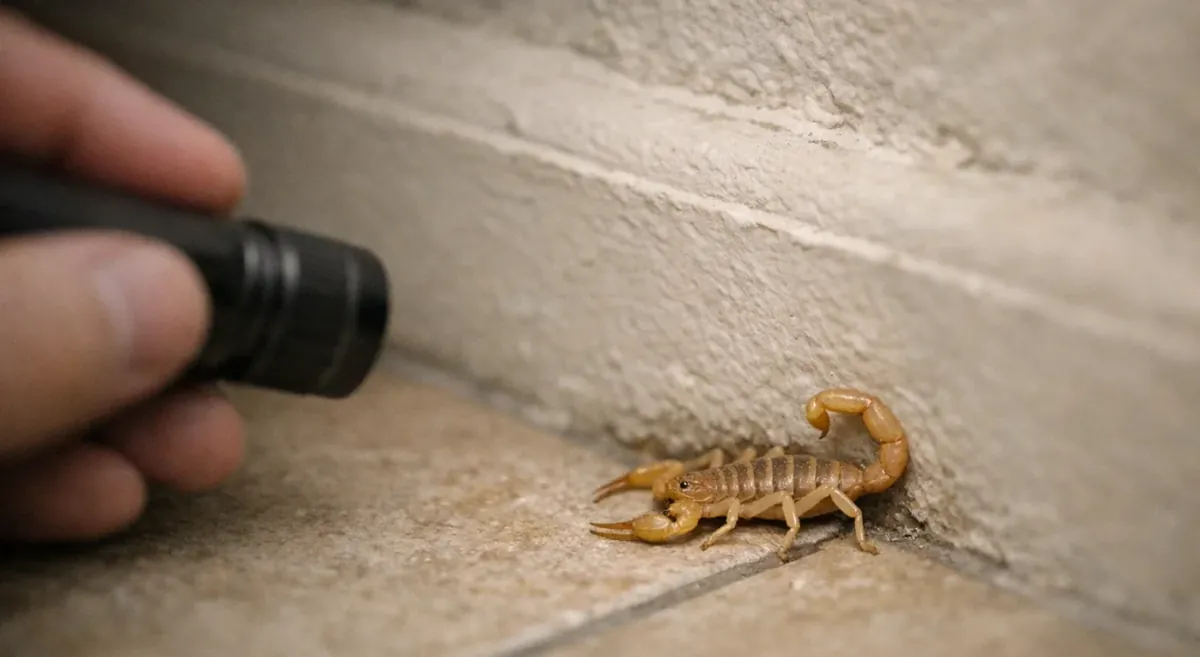
You might go months without seeing one, then flip on the bathroom light at 2 a.m. and there it is — a scorpion on the tile next to the toilet. They're experts at staying hidden during daylight hours, then emerging after dark to hunt along baseboards and room edges. Because they're active at night, many homeowners don't realize they have scorpions until that first startling encounter.
Is it "just one," or a sign of a bigger issue?
Finding a single scorpion doesn't automatically mean you have an infestation, but certain patterns suggest ongoing activity. If you're seeing scorpions repeatedly in the same room, finding them weekly rather than monthly, or spotting baby scorpions (which means adults are breeding nearby), you likely have an established population. Location matters too — scorpions in bedrooms or bathrooms indicate they've found reliable entry points and water sources.
Scorpions exhibit thigmotaxis, meaning they navigate by maintaining contact with surfaces. That's why you'll typically spot them along walls, in corners, or where the floor meets baseboards. If you're consistently finding them in these edge zones throughout your home, they're likely using established travel routes from outdoor harborage areas.
Where in Maricopa County are scorpions most likely?
Scorpion activity varies dramatically by neighborhood. Homes built against desert preserves, near washes, or with natural desert landscaping see more scorpions than established neighborhoods with grass lawns. North Phoenix, Scottsdale, Cave Creek, and newer developments in Queen Creek and San Tan Valley report frequent activity. Properties with rock landscaping, block walls, and minimal vegetation maintenance create ideal scorpion habitat right against the home.
Even in high-activity areas, your specific property matters more than your ZIP code. A meticulously sealed home in Cave Creek might see fewer scorpions than a gaps-everywhere house in central Phoenix. Track where you're seeing them — scorpions appearing repeatedly near the same door, window, or room wall can reveal entry points and travel patterns.
Which scorpion species lives in Phoenix?
While comprehensive species data for Phoenix proper isn't available through iNaturalist citizen science reporting, regional experts consistently identify the Arizona bark scorpion (Centruroides sculpturatus) as the primary species Phoenix homeowners encounter. This matters because the bark scorpion is the only scorpion in the United States capable of producing life-threatening envenomation, particularly in children.
The species Phoenix homeowners hear about most (and why)
The Arizona bark scorpion dominates Phoenix scorpion concerns for good reason. It's the most medically significant scorpion in North America, with venom that can cause severe systemic effects. Unlike other local species that deliver painful but medically minor stings, bark scorpion envenomation can progress to difficulty breathing, muscle twitching, and vision problems — especially in children under 10.
Identifying features include a slender build (2-3 inches long), thin pincers, and a tendency to reach higher areas that most other scorpion species stay below. They're typically tan to yellowish, though color varies. One reliable clue is where you find it: a scorpion up on your bathroom wall, rather than down on the floor, is almost certainly a bark scorpion.
Other scorpions you might see in Phoenix
Phoenix hosts several other scorpion species, including the stripe-tailed scorpion, desert hairy scorpion (the largest in North America), and yellow ground scorpion. While these species can deliver painful stings, they don't cause the severe systemic symptoms associated with bark scorpion envenomation. The giant desert hairy scorpion looks intimidating at 5-6 inches long but actually has relatively mild venom.
Don't rely on color alone for identification — scorpions of the same species can range from pale yellow to dark brown. If you need a definitive ID, safely capture the scorpion under a clear glass and take photos before releasing it away from your home. Your local pest control professionals can identify species from clear photos.
Can scorpions climb walls (and does species affect that)?
Yes — and the part that matters for your home is their reach. Bark scorpions aren't limited to ground-level entry the way other species are: they can make their way to second-story windows and upstairs bedrooms, and reach beds by way of skirts or bedding that touch the floor. They can't grip perfectly smooth surfaces like clean glass, but textured stucco, drywall, and fabric are within reach.
Other scorpion species in Phoenix typically stay near ground level. That difference matters for prevention strategies. While door sweeps stop ground-dwelling species, bark scorpions call for additional measures: moving beds away from walls, eliminating bed skirts, and sealing upper-level entry points. Their vertical reach, combined with their medical significance, makes comprehensive sealing and monitoring essential for Phoenix homes.
When are scorpions most active in Phoenix?
Phoenix scorpions show peak activity from May through October, with the highest sting rates in August and September. But "scorpion season" in Phoenix doesn't mean scorpions appear and disappear — they live here year-round. The season refers to when they're most actively hunting, mating, and accidentally encountering humans inside homes.
Scorpion season Phoenix: what "active" really means
The term "active" refers to movement patterns, not population changes. During cooler months, scorpions hunker down in protected spots and venture out less frequently. Come May, rising temperatures and humidity trigger increased movement as scorpions hunt for prey and seek mates. They don't suddenly appear — they've been there all along, just hidden.
This seasonal movement explains why August and September see the most stings statewide. Scorpions cover more ground during mating season, increasing the odds they'll wander through gaps into your home. A scorpion that spent winter in your block wall might venture inside during summer heat, following the cool air and humidity from your air conditioning.
Nighttime behavior: why you rarely see them in daylight
Scorpions are strictly nocturnal, with 49% of stings occurring between 6 PM and midnight when they're most active. During daylight, they hide in cracks, under rocks, or in cluttered areas. After dark, they emerge to hunt, traveling along walls and baseboards — a behavior called thigmotaxis where they maintain contact with surfaces for navigation.
This edge-following behavior explains why most indoor encounters happen along room perimeters. A scorpion entering through a gap under your door won't cross the middle of the room — it'll follow the baseboard, potentially ending up in your bedroom closet or bathroom. Understanding this pattern helps focus prevention efforts on sealing perimeter gaps and monitoring those high-traffic scorpion highways.
Phoenix-specific spikes: heat waves, monsoon humidity, and drought
Phoenix's extreme weather triggers predictable scorpion activity spikes. When temperatures exceed 110°F for consecutive days, scorpions seek cooler indoor environments more aggressively. Monsoon storms create different pressures — the humidity surge after months of dry heat stimulates scorpion movement, while flooding can drive them from outdoor hiding spots into homes.
Extended drought can increase scorpion encounters as they follow prey insects drawn to irrigation and indoor water sources. Watch for increased activity after: the first monsoon storm of the season, heat waves exceeding 115°F, and during severe drought when your irrigated yard becomes the neighborhood oasis. These are prime times to check weather stripping, run UV detection, and remind family members about safe scorpion protocols.
How dangerous is a scorpion sting in Phoenix?
Most scorpion stings in Phoenix cause intense localized pain that subsides within hours, but Arizona bark scorpion stings can progress to serious systemic symptoms. The state's high hospitalization and ICU admission rates for scorpion envenomation — the highest in the nation — reflect the medical significance of our predominant species. While most healthy adults recover without treatment, certain groups face substantially higher risk.
What a scorpion sting can feel like (common symptoms)
Initial symptoms typically include immediate, intense pain at the sting site — 88.9% of patients report significant pain, while 62.2% experience local numbness or tingling. For many adults, symptoms remain localized: burning pain, mild swelling, and numbness that gradually improves over 24-48 hours.
However, bark scorpion venom can cause systemic symptoms within 30-60 minutes: muscle twitching, difficulty swallowing, blurred vision, random eye movements, excessive salivation, and difficulty breathing. These neurological effects signal serious envenomation requiring immediate medical attention. The fear and anxiety that can come with these symptoms — especially when breathing is affected — can make the experience feel even worse.
Who is most at risk in Phoenix?
Children under 10 face the highest risk of severe envenomation, hospitalization, and ICU admission. The smaller the child, the greater the danger — their lower body weight means a higher venom concentration. Approximately 200 Arizona children per year need intensive medical treatment for severe scorpion envenomation.
Other high-risk groups include adults over 65, people with compromised immune systems, and those with cardiovascular conditions. Pets, especially small dogs and cats, also face serious risk. Children are particularly vulnerable because they're more likely to encounter scorpions on the floor — 53.5% of pediatric stings involve floor-level contact compared to 35.0% for adults.
When a sting is an emergency vs. a painful nuisance
Call 911 immediately if the victim experiences: difficulty breathing, severe muscle twitching or jerking movements, vision problems or roving eye movements, excessive drooling or difficulty swallowing, or intense full-body symptoms in any child under 10. These symptoms indicate systemic envenomation requiring emergency treatment.
For localized pain without systemic symptoms, call the Poison Help line at 1-800-222-1222 for guidance. They'll assess symptoms and advise whether home management is appropriate or if medical evaluation is needed. Never take a "wait and see" approach with young children — their condition can deteriorate rapidly. When in doubt, seek medical attention rather than risking serious complications.
What to do if you're stung in Phoenix
Stay calm and act quickly. Most scorpion stings in Phoenix can be managed at home with proper first aid and monitoring, but you need to watch for signs of systemic envenomation that require emergency care. Having a clear action plan reduces panic and helps ensure appropriate treatment.
Immediate first aid steps (first 5–10 minutes)
First, wash the sting site with soap and water to reduce infection risk. Apply a cool compress — not ice directly on skin — for 10-minute intervals to reduce pain and slow venom spread. Remove rings, watches, or tight clothing near the sting site in case swelling develops. Take a photo of the scorpion if you can safely do so, but don't risk another sting trying to capture it.
Start monitoring symptoms right away. Note the time of the sting and watch for progression beyond local pain. Have the victim sit down and stay calm — anxiety can raise heart rate and increase circulation. Give over-the-counter pain medication as directed on the package, but avoid aspirin, which can increase bleeding risk.
Who to call in Phoenix and what information to have ready
Call the Poison Help line at 1-800-222-1222 for immediate expert guidance. They'll ask for: the victim's age and approximate weight, time of the sting, current symptoms and whether they're worsening, medical history especially allergies or heart conditions, and description of the scorpion if known. Keep this number saved in your phone — they provide 24/7 free consultation and can advise whether emergency care is needed.
Have your insurance card and a list of current medications ready if you're heading to the ER. If you captured or photographed the scorpion, bring that information. The poison control specialists can connect directly with the ER to communicate treatment recommendations, potentially speeding care upon arrival.
Reduce the chance of a second sting tonight
After dealing with the immediate sting, take quick precautions to prevent another incident. Move all shoes, clothing, and towels off the floor. Pull beds away from walls and remove bed skirts. Shake out any clothing or towels before use. Keep lights on when moving through the house tonight — scorpions tend to flee from sudden illumination.
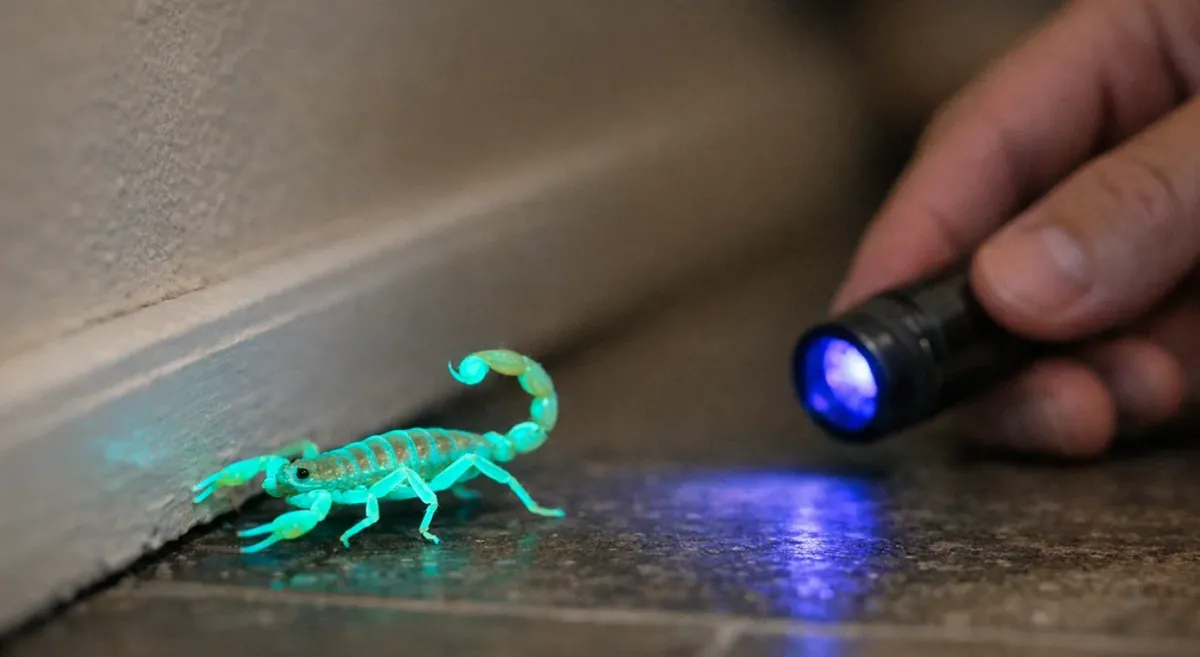
If you didn't find the scorpion that stung you, it's likely still in your home. Set up UV flashlights or detection near the room where the sting occurred. Scorpions glow bright green under ultraviolet light, making them easier to spot against baseboards and in corners. Consider installing automated detection that monitors those perimeter zones when rooms go dark — where scorpions naturally travel at night.
How to keep scorpions out of your Phoenix home
Effective scorpion control in Phoenix starts with understanding exactly where and how stings happen. The data is sobering: 86.5% of Arizona residential scorpion stings occur indoors, with 42.5% happening in bedrooms. Even more concerning, 72.7% of bedroom stings that happen in the bed occur while the person is sleeping. These aren't random encounters — they follow predictable patterns you can interrupt.
Seal the gaps Phoenix scorpions use most
Start with door sweeps — the gap under your door is a scorpion highway. Install tight-fitting sweeps on all exterior doors, especially between the garage and house. Check weatherstripping around doors and windows; if you can see daylight, scorpions can get in. Pay special attention to plumbing and electrical penetrations through exterior walls, sealing gaps with caulk or steel wool.
For Phoenix's common stucco and block construction, inspect where walls meet the foundation, around outdoor electrical outlets, and where irrigation lines enter the home. Weep holes in brick veneer need mesh screening, not complete sealing. Focus weekend effort on the garage-to-house entry, back sliding door, and master bedroom exterior wall — these are high-impact areas based on where stings typically occur.
Yard and block-wall fixes that reduce scorpion pressure
Phoenix's signature block walls provide perfect scorpion habitat — cool, dark spaces in every hollow core. While you can't eliminate block walls, you can reduce their appeal. Clear vegetation, wood piles, and debris away from walls. Trim palm skirts completely — they're scorpion apartments. Remove river rock touching the foundation; maintain a clear perimeter of 2-3 feet.
Address moisture sources that attract prey insects: fix leaky irrigation, eliminate standing water, and avoid overwatering. Scorpions follow their food supply, so reducing crickets and roaches indirectly reduces scorpion pressure. Switch exterior lighting to yellow bulbs or sodium vapor to attract fewer insects. If you have a pool, be especially vigilant about equipment areas where moisture and shelter combine.
Monitoring and "proof you have a problem" (without nightly blacklight walks)
Here's a key insight: 81.8% of households where someone was stung had previously seen scorpions on the property. Past sightings are the strongest predictor of future stings. That's where strategic monitoring becomes essential — not exhausting nightly UV flashlight patrols, but automated detection along the baseboards and room edges where scorpions naturally travel.
Modern UV-based detectors can monitor those perimeter zones continuously when rooms darken, sending photo-verified alerts to your phone when they spot a scorpion's telltale green glow. Place detection in bedrooms where 54.7% of stings happen in the bed itself, bathrooms where moisture attracts them, and any room where you've previously seen scorpion activity. This targeted approach to monitoring turns reactive panic into proactive protection.
What kills scorpions (and what's usually a waste of time)?
Physical removal remains the most reliable method — capture under glass and release far from your home. Professional-grade exterior perimeter treatments can reduce populations when applied by licensed pest control operators familiar with Phoenix scorpion behavior. Interior spraying is less effective and potentially hazardous; scorpions often walk through dried residues unaffected.
Skip the common myths about scorpion repellents: diatomaceous earth, essential oils, and ultrasonic devices show no reliable efficacy. Sticky traps catch some scorpions but miss many more, and you'll often find them days later, still alive. Focus instead on exclusion, habitat modification, and early detection. The most successful Phoenix homeowners combine professional exterior treatment with thorough sealing and automated monitoring — addressing the problem from multiple angles rather than relying on any single solution.
Living with scorpions in Phoenix means the biggest risk often shows up after dark, when they’re most active and easiest to miss. If you want a practical way to spot them sooner, Scorpion Alert uses UV light and two-stage AI detection to help identify scorpions automatically at night—learn more at Scorpion Alert.