Are scorpions common in New Mexico—and in Rio Rancho specifically?
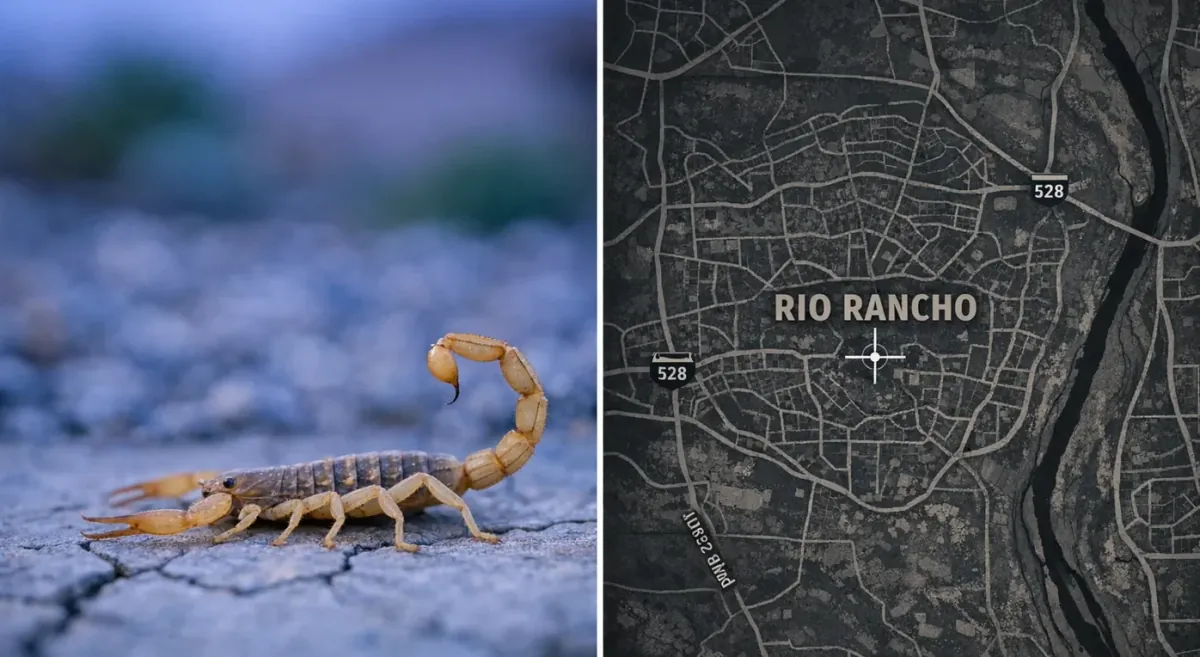
Yes. Scorpions are a normal, established part of the landscape across much of New Mexico, including Rio Rancho. Most of the state sits in warm, dry, high-desert terrain that suits several scorpion species, so a sighting inside your home doesn't automatically mean an infestation. Usually, it means one scorpion wandered in from the yard.
Take a breath. Finding a scorpion is unsettling, but it's a manageable problem—not an emergency. The rest of this guide walks you through what lives here, when they're active, how worried to be about a sting, and a simple system to keep them out.
Where scorpions live in New Mexico (high desert vs. mountains)
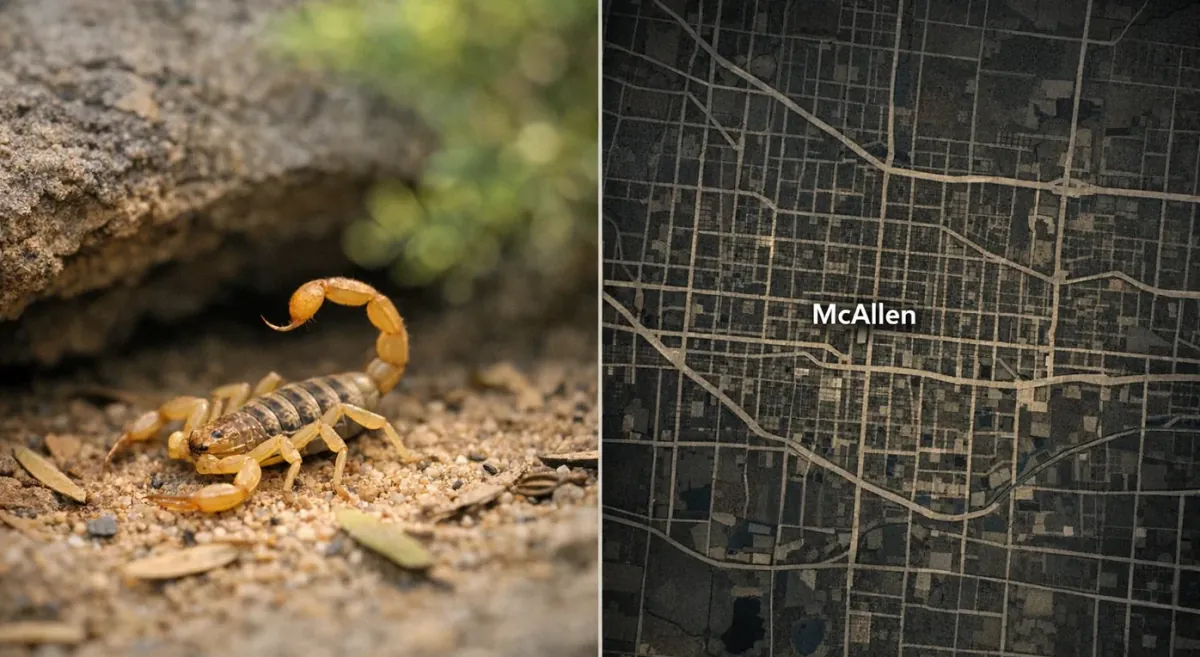
Many New Mexico communities sit in high-desert environments with rocky soil, dry washes, and sparse vegetation—exactly the kind of habitat scorpions thrive in. From the Rio Grande valley up into the foothills, warm nights and plenty of ground cover give them what they need. Higher, cooler mountain elevations tend to see fewer scorpions, but the broad point holds: in most warmer parts of the state, scorpions are simply part of the ecosystem. That includes Sandoval County and Rio Rancho, which sit squarely in that high-desert zone.
Are scorpions a problem in Rio Rancho?
Scorpions are established in Rio Rancho, but that doesn't mean every home is overrun. Sightings are common; heavy infestations are not. The proof is in the local record: there are 119 research-grade iNaturalist observations of scorpions within 30 km of Rio Rancho. That's solid evidence they live and breed nearby and may wander toward homes when conditions push them there. For most households, you're dealing with the occasional intruder, not a colony.
What do Rio Rancho homeowners usually notice first?
The first sign is almost always a nighttime sighting. Picture this: you pad into the bathroom at 1 a.m., flip on the light, and spot one sitting motionless along the baseboard. Others turn up in the garage, near the laundry, or outside along block walls and decorative rock beds. That pattern isn't random—scorpions are thigmotactic, meaning they navigate by hugging walls and edges as they travel. Knowing that gives you a real plan, which the later sections lay out.
What kinds of scorpions are in New Mexico—and which ones are in Rio Rancho?
New Mexico is home to several scorpion species, most of them small, ground-dwelling desert scorpions whose stings hurt but rarely cause serious harm to healthy adults. The exact mix varies by region. Around Rio Rancho, two species dominate the local record, and knowing which one you're looking at changes how much you need to worry.
Which scorpion is most common around Rio Rancho?
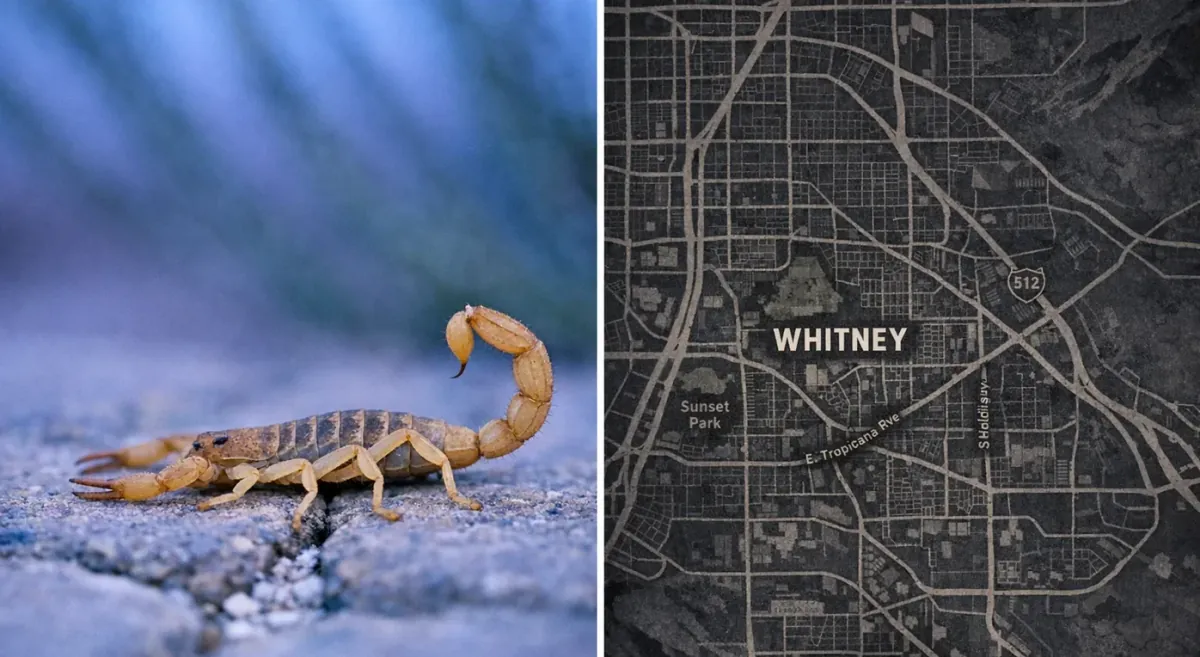
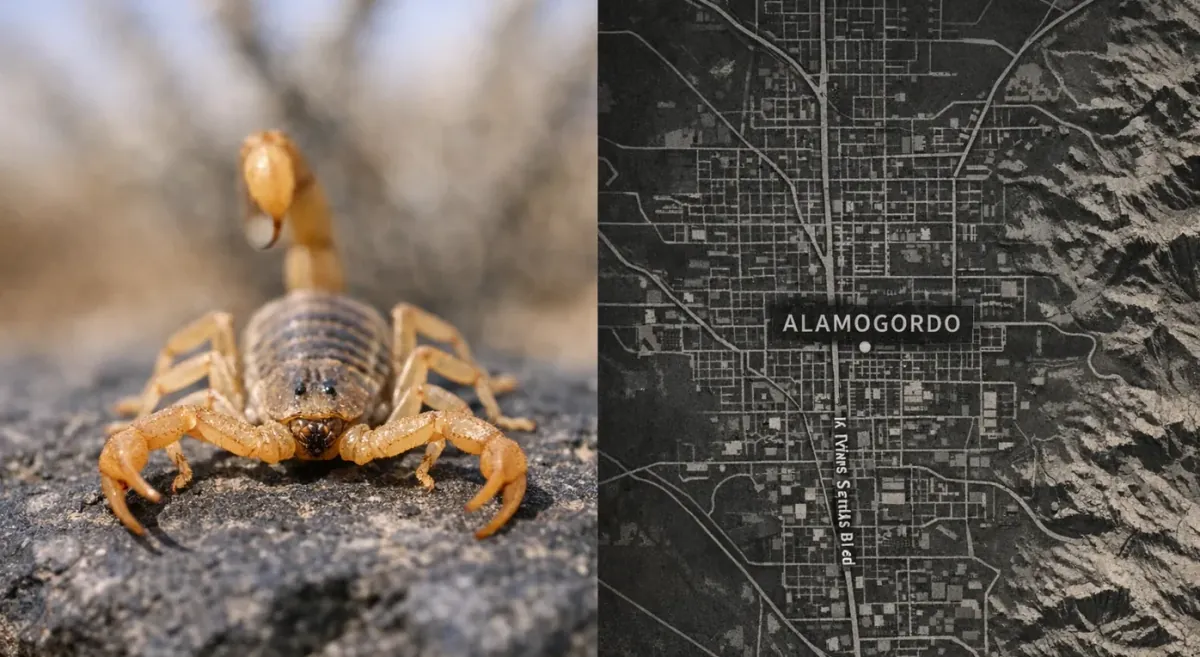
The Lesser Stripetail (Chihuahuanus coahuilae) is the most commonly observed scorpion near Rio Rancho, accounting for 64 of those 119 research-grade iNaturalist observations within 30 km. It's a modest desert scorpion. Its sting can be genuinely painful—think a bad bee sting—but it doesn't carry the same medical concern as the Arizona bark scorpion that makes headlines further west. For most people, a sting means local pain, not a hospital trip.
Are bark scorpions in Rio Rancho?
The striped bark scorpion (Centruroides vittatus) does show up locally, making up 23 of the 119 nearby observations. It's the most widely distributed scorpion in North America, and its stings produce sharp local pain that typically fades within 15 to 20 minutes, with severe systemic reactions being rare (Yamashita & Rhoads 2017). The safe takeaway: don't handle any scorpion you can't identify. Snap a clear photo from a safe distance instead.
Quick ID rule: what actually helps (and what doesn't)
Don't rely on color alone—lighting, life stage, and even a recent molt can change how a scorpion looks. Focus on these instead:
- Size and proportions — note the body length and whether the pincers are slender or stout.
- Where you found it — on the floor or ground versus up on a higher surface.
- A clear photo — taken from a safe distance, so an expert or an app can confirm the species.
When is scorpion season in Rio Rancho and New Mexico?
Scorpion activity in Rio Rancho ramps up in late spring, peaks in mid-to-late summer, and tapers through fall. You can encounter one nearly year-round, but the overwhelming majority of indoor sightings cluster in the warm months when nights stay mild. The same pattern holds across much of New Mexico's warmer, lower-elevation regions.
What months are worst in Rio Rancho?
Expect a slow build in April and May, the heaviest activity from June through August, and a gradual fade in September and October. Warm nights matter more than hot days here—scorpions hunt after dark, so a string of mild evenings drives more movement than a single scorching afternoon.
Why do scorpions show up at night and after weather shifts?
Scorpions are nocturnal hunters, so they come out to feed and explore once the sun's down. Sudden weather changes—a heat spike or a monsoon rain—can push them to relocate, and a home's cool, sheltered edges make an appealing detour. For practical purposes, what matters most is that they travel along floor-level pathways, baseboards, and wall perimeters. That's where they enter and where you'll find them.
How should I time prevention and monitoring for best results?
Match your effort to the season with a simple three-step rhythm:
- Early season (spring): handle exclusion—seal gaps and clean up the yard before activity peaks.
- Mid-season (summer): stay vigilant indoors, especially at night in bathrooms, garages, and bedrooms.
- After rain or a heat spike: check the perimeter, since weather shifts trigger movement.
The hard part is catching them when they're actually moving—after dark, when you're asleep. That's where automated night monitoring earns its keep: detectors that switch on when a room darkens and watch the perimeter where scorpions travel, so you're not relying on luck.
How dangerous are scorpion stings in New Mexico (for adults, kids, and pets)?
For a healthy adult, a sting from a Rio Rancho scorpion is usually painful but not life-threatening. Expect local pain and irritation that eases over hours. The bigger concern is with young children, older adults, and pets, who can react more strongly. Knowing the red flags—and when to call for help—takes the guesswork out of a scary moment.
What a typical Rio Rancho sting feels like
Most stings produce immediate burning pain at the site, often followed by redness, tingling, or numbness spreading a short distance around it. For local species, symptoms typically peak early and then improve over several hours. Ice and an over-the-counter pain reliever are usually enough.
Who should take a sting more seriously in New Mexico homes?
Young children, older adults, and anyone with an allergy history should treat a sting more seriously, and pets deserve extra caution too. Part of the reason is exposure: scorpions move at floor level after dark, right where small kids play and pets sniff around. If you have little ones at home, it's worth understanding why children face higher risk from scorpion stings and what to watch for.
When should I call Poison Control or seek urgent care?
Call the free Poison Help line at 1-800-222-1222 if symptoms move beyond local pain. Seek urgent care right away for any of these red flags:
- Difficulty breathing or swallowing
- Involuntary muscle jerking or twitching
- Roving or uncontrolled eye movements
- Excessive drooling, slurred speech, or trouble seeing
- Signs of an allergic reaction (swelling, hives, faintness)
Simple decision rule: if it's a child or a pet and you're unsure, call early. It costs nothing, and the experts will tell you what to do next.
How do I keep scorpions out of my Rio Rancho home (without guessing)?
This homeowner guide to scorpions in Rio Rancho, New Mexico comes down to a three-part system: reduce entry points, reduce hiding spots, and verify activity so you're acting on facts instead of fear. Do the first two once, keep them up, and let monitoring handle the part you can't watch—the middle of the night.
Step 1: What should I fix first around doors, garage, and plumbing gaps?
Start with the highest-value gaps. A scorpion only needs a sliver of space to slip inside.
- Door sweeps on exterior doors, especially the garage-to-house door.
- Weatherstripping around the full garage perimeter and any warped door frames.
- Plumbing penetrations under sinks and behind appliances, sealed with caulk or foam.
- Vents and weep holes screened so they let air through but not pests.
For the complete rundown, see the full breakdown of the top ways scorpions get into your home.
Step 2: What yard features in Rio Rancho help scorpions hide?
Rio Rancho landscaping offers plenty of shelter. Decorative rock beds, block walls, stored lumber, and clutter stacked against the foundation all create cool, dark harborage right where scorpions travel. Irrigation leaks make it worse by drawing in the insects scorpions eat. Pull clutter away from the walls, fix drips, and think twice about deep rock beds hugging the foundation. For more, read up on the things that attract scorpions to your home.
Step 3: How can I monitor scorpions at night when they're actually moving?
An occasional flashlight sweep only tells you about the seconds you're standing there. Scorpions glow a bright greenish-blue under UV light—a genuinely useful quirk—but they move while you sleep, so spot checks miss almost everything.
That's the gap Scorpion Alert fills. The plug-in detectors sit on room perimeters, right where scorpions travel, and shine 365nm UV onto the floor to reveal that telltale glow. When one's detected, you get a photo-verified push notification or SMS alert within seconds, so you know exactly which room to check instead of guessing. The detectors scan only when a room is dark, and the app keeps a history of past detections with date, time, and location.
What should I do tonight if I just saw one scorpion?
One sighting doesn't mean panic. Run through this quick checklist before bed:
- Shake out any shoes before putting them on.
- Lift and check bathroom mats and towels on the floor.
- Clear floor clutter along baseboards where scorpions travel.
- Wear slippers for late-night trips instead of going barefoot.
- Keep a glass and a UV flashlight handy in case you spot another.
Then avoid the common missteps—review what not to do after spotting a scorpion in your home so one sighting doesn't turn into a bigger headache.
Scorpion Alert rents plug-in Scorpion Detectors as part of a simple monthly monitoring subscription—the hardware's included. A one-time shipping fee applies at checkout. See /pricing for current rates. There's no long-term contract; cancel any time by emailing support@scorpionalert.com and returning the Detectors. See how Scorpion Alert works and get covered before peak season.
In Rio Rancho, a lot of scorpion control comes down to reducing hiding spots and finding them early—especially at night, when they’re most active and easiest to miss. If you want an extra layer of help beyond routine sealing and yard cleanup, Scorpion Alert uses 365nm UV light to make scorpions fluoresce and can automatically monitor dark rooms, so you’re not relying on luck or late-night flashlight checks; learn more at Scorpion Alert.