Are scorpions common in Enterprise, Nevada?
Yes, scorpions are a normal part of life in Enterprise. This community sits in Clark County, within a documented southern Nevada scorpion zone, so an occasional sighting on a patio or in a garage doesn't mean your home is infested. The goal isn't zero scorpions outdoors — it's keeping them out of your living space and reducing sting risk indoors.
One scorpion isn't a crisis. A pattern is a signal. Knowing the difference helps you stay calm and take the right next step.
What counts as "normal" vs. a real problem?
A single scorpion in the garage or on the back patio is ordinary in a desert-edge neighborhood. Repeated sightings inside your home — especially in the same room — mean scorpions have found a reliable pathway and food source, and that's worth acting on.
Even spotless homes get scorpions. They can squeeze through gaps thinner than a credit card, and they follow the insects they hunt. Clean doesn't mean sealed.
Escalate right away if any of these happen: a scorpion turns up in a child's room, you see them repeatedly in one area, or anyone in the house gets stung.
Where do Enterprise homeowners usually find scorpions first?
Scorpions often show up first in the coolest, most humid, most sheltered spots inside a house. Garages, bathrooms, and laundry rooms top the list, followed by baseboards, closets, and around the patio door and block wall.
The pattern makes sense. Those areas offer moisture, tight hiding places, and steady insect traffic. Peer-reviewed poison-center data confirm that bathrooms, laundry rooms, garages, and bedrooms are common indoor harborage sites, driven by the bark scorpion's preference for cool, dark, humid micro-habitats.
Why is Enterprise specifically prone to scorpion encounters?
Enterprise is one of the fastest-growing corners of the Las Vegas valley, and new subdivisions push right up against open desert. That desert edge, combined with block-wall fencing, rock landscaping, and irrigated yards, creates ideal shelter and prey habitat close to homes.
Scorpion pressure in southern Nevada is real and rising. Nevada logged roughly 707 scorpion exposures a year to poison control between 2005 and 2015, and a follow-up analysis showed growing exposure counts specifically in Clark County (Kang & Brooks 2017). Growth plus desert-edge living is the recipe.
Which scorpion species are in Enterprise—and which one is dangerous?
You don't need to become an amateur arachnologist. You do need to recognize one species — the Arizona bark scorpion — because its sting is handled very differently from every other scorpion you'll meet here.
Is the Arizona bark scorpion in Enterprise?
Yes. The Arizona bark scorpion (Centruroides sculpturatus) is the medically significant species in the Enterprise area and is commonly documented across southern Nevada. Its range has expanded into parts of Nevada, California, and other neighboring states in recent decades.
"Medically significant" means its venom can cause more than local pain — especially in small children. It's not cause for panic, but it's the reason families here take stings seriously and keep Poison Control's number handy.
How can I quickly ID a bark scorpion without getting close?
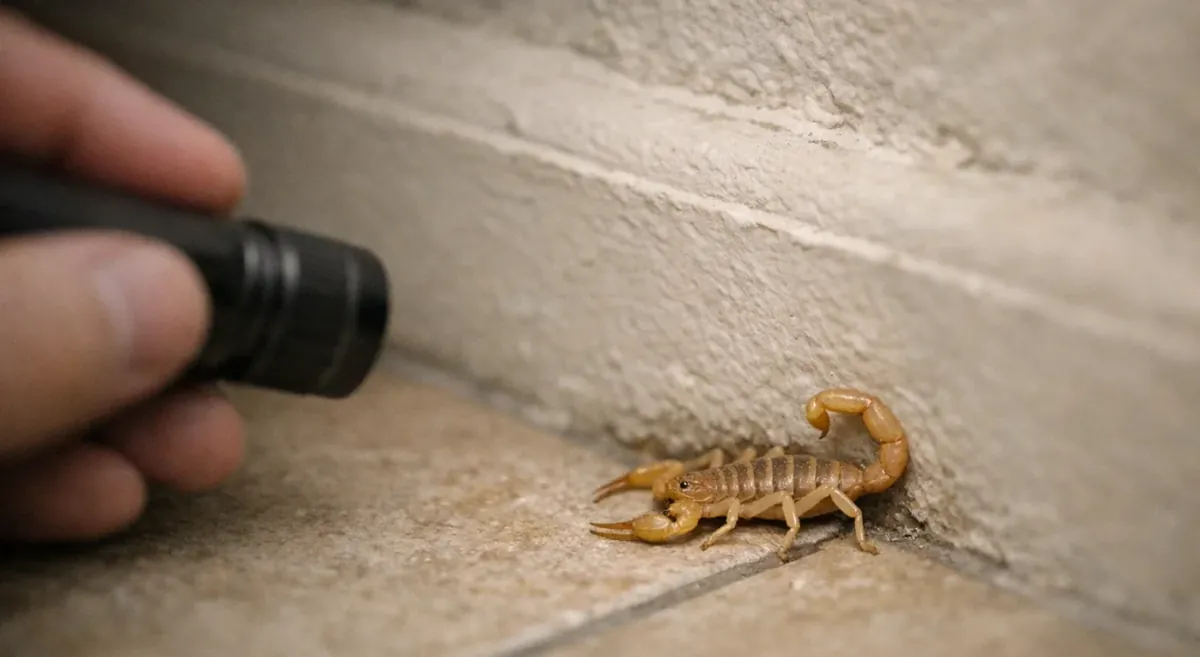
You can flag a likely bark scorpion from a safe distance by its build. Look for these traits:
- Slender body rather than bulky and thick.
- Thin, delicate pincers instead of crab-like claws.
- A thin tail and a small-to-medium size (about 2–3 inches).
- Light tan to yellowish color, though shade varies.
Don't rely on color alone. Snap a zoomed-in photo from a few feet away and let a pest professional confirm the ID.
Can bark scorpions climb walls and reach upstairs bedrooms?
Yes — bark scorpions are skilled climbers. Rough stucco, block walls, and textured surfaces give their claws plenty of grip, which is why people find them in tubs and sinks and on second floors. They can work their way up to upstairs bedrooms.
The takeaway for homeowners: don't assume height keeps you safe. Treat every perimeter transition and entry gap seriously, from the garage threshold to the gaps around upstairs windows.
When are scorpions most active in Enterprise, NV?
Scorpions are active in Enterprise from spring through fall, with the heaviest pressure in midsummer. Their nightly window — evening through midnight — overlaps with your family's bedtime routines, which is why timing matters.
What months are "scorpion season" in Enterprise?
Activity ramps up in spring as temperatures rise, peaks from roughly July through September, tapers through fall, and slows in winter. Warm garages, though, can keep scorpions moving even in the cold months.
Get ahead of the peak in May and June with a quick checklist: replace worn door sweeps, seal obvious gaps, clear clutter near doors, and address any irrigation leaks before the summer surge.
What time of night are scorpions most active?
Scorpions hunt after dark, with the busiest stretch running from early evening through midnight. That's the same window when families make barefoot trips to the bathroom, tuck kids in, and pad around the kitchen — which is why so many encounters happen at home at night.
Why do scorpions hug baseboards at night (and how does that help you find them)?
Scorpions are thigmotactic, meaning they instinctively keep their bodies against a surface as they travel. So instead of crossing open floor, they trace walls, baseboards, corners, and thresholds.
Use that against them. Focus any inspection on room perimeters, door thresholds, corners, and garage entries — not the middle of the room, where scorpions rarely wander.
How can I monitor scorpions at night without walking the house with a blacklight?
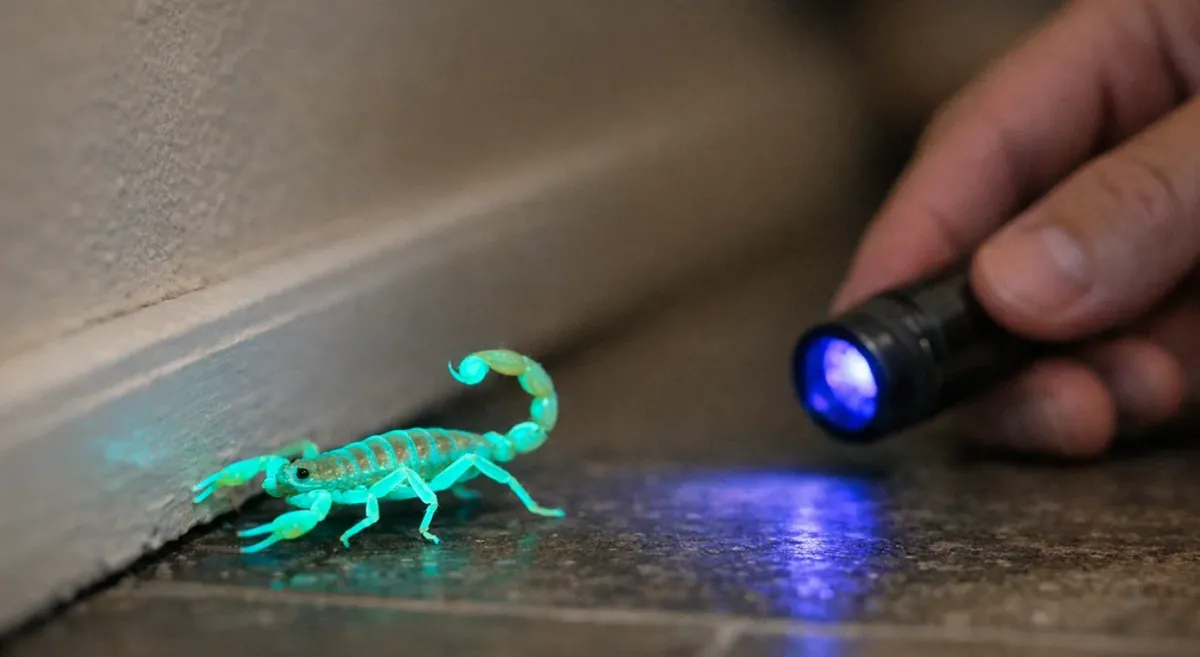
For high-risk homes — those with kids, pets, or repeat sightings — an automated detection system like Scorpion Alert adds a monitoring layer without any nightly work from you. The Detectors plug into standard outlets on the room perimeter, and they activate automatically when a room goes dark.
Each Detector shines 365nm UV light onto the floor, the wavelength that makes scorpions glow bright green, and captures and analyzes images roughly every 500 milliseconds — twice a second. When it spots a scorpion, you get a photo-verified alert with an AI confidence score, so you're not chasing false alarms. Good placements include bedrooms, a nursery or playroom, the bathroom hallway, the garage entry, and the patio door.
How dangerous is a scorpion sting in Enterprise, and what should I do first?
Most scorpion stings in Enterprise cause painful but manageable local symptoms, and the great majority are handled at home. The exception is a bark scorpion sting in a young child, which can turn serious quickly. Knowing the difference — and having Poison Control on speed dial — keeps a scary moment from becoming an emergency.
What does a typical sting feel like vs. an emergency?
Common local symptoms most people experience:
- Immediate burning or sharp pain at the sting site.
- Tingling or a pins-and-needles sensation.
- Numbness spreading around the area.
Red-flag symptoms that signal an emergency — take these seriously, especially in children:
- Trouble breathing or swallowing.
- Severe muscle twitching or jerking of the arms and legs.
- Uncontrolled, roving eye movements.
- Excessive drooling.
- Whole-body symptoms rather than pain confined to the sting site.
Pain at the sting site shows up in 88.9% of stings, and local numbness in 62.2% (Klotz et al. 2021) — so discomfort is expected. The systemic red flags are the ones that change your plan.
What should I do in the first 5 minutes after a sting?
Stay calm and work through these steps in order:
- Wash the sting site with soap and water.
- Apply a cold pack or ice wrapped in a cloth to ease pain and swelling.
- Remove any tight rings, watches, or jewelry near the sting in case of swelling.
- Watch closely for any of the red-flag symptoms above.
- Call Poison Control at 1-800-222-1222 for free, expert guidance.
Do not cut the wound, try to suck out venom, or apply bleach, gasoline, or other home chemicals — they do nothing but cause harm. For a fuller walkthrough, read our guide on bark scorpion sting first aid in the first 30 minutes.
When should I go to urgent care or the ER near Enterprise?
Go to the ER immediately if you see any red-flag symptom — trouble breathing or swallowing, severe twitching, roving eyes, or drooling — or if the person stung is a young child showing whole-body effects. For everyone else, Poison Control can usually guide you through care at home.
Enterprise residents have several hospitals within a short drive, including Spring Valley Hospital, Southern Hills Hospital, and the emergency departments serving the southwest Las Vegas valley. When symptoms are severe, don't wait — head to the nearest one.
Who is most at risk in Enterprise homes (kids, seniors, pets)?
Children under 10 have the highest rates of systemic effects, hospitalization, and ICU admission after a bark scorpion sting. The elderly are also more vulnerable. Pets live at floor level and investigate with their noses and paws, which puts them right in a scorpion's path.
That's why prevention should start with kids' rooms and pet areas. Learn more about why children are more at risk from scorpion stings and plan your defenses accordingly.
How do I reduce scorpions around my Enterprise home long-term?
Lasting control works from the outside in: shrink the food supply, remove shelter and water, then seal the gaps that let scorpions inside. You can start most of this in a single weekend.
What's the most effective Enterprise-specific game plan (outside-in)?
Think in three layers:
- Reduce prey. Scorpions follow insects. General insect control around the home shrinks their food supply.
- Reduce water and harborage. Clean up the yard, cut clutter, and fix irrigation leaks or overwatering — standing moisture draws both prey and scorpions.
- Seal and maintain key gaps. Install tight door sweeps, seal the garage threshold, and caulk around pipe and utility penetrations.
For deeper dives, see the top 5 things that attract scorpions in your home and the top 5 ways scorpions get into your home. And before you buy a spray, know the myths about scorpion repellents — many don't work as advertised.
What should I do about block walls, palms, rock beds, and patio clutter?
Block walls and rock landscaping are the classic southern Nevada trade-off: they look great, and they give scorpions and their prey endless cracks to hide in. Patio furniture, stored boxes, potted palms, and dense plantings become shelters too.
Work in priority order. Clear resting places near doors first — move stored items away from entries, lift patio cushions off the ground, and thin plantings that touch the house. The closer the harborage is to a doorway, the sooner it becomes an indoor problem.
When is it time to hire a pro for scorpion control in Enterprise?
Call a professional when you hit any of these triggers: repeated indoor sightings, a scorpion found in a child's room, a sting event, or activity that continues after your DIY steps. These are the same signals covered in our guide on what not to do after spotting a scorpion in your home.
When you interview a pro, ask where they'll focus their inspection, how they treat the perimeter, and what follow-up cadence they recommend during the July–September peak. A one-and-done spray rarely holds through peak season.
How can I add peace-of-mind monitoring in bedrooms and entry points?
Monitoring is the final layer for high-stakes rooms, and it's where a system like Scorpion Alert shines. Setup is plug-in with no hub — the Detectors go straight into wall outlets and start watching the floor when the lights go out. Alerts are photo-verified so you can see exactly what triggered them, and multiple Detectors cover several entry points and rooms at once, with push notifications plus optional SMS so a detection doesn't slip past you.
For a typical Enterprise two-story, consider placing Detectors at the garage entry hall, the downstairs bathroom, the upstairs hallway outside the bedrooms, the nursery or playroom, and near the patio slider. That coverage puts eyes on the exact paths scorpions travel at night — so you get an alert on your phone instead of a surprise under your bare foot.
Managing scorpions in Enterprise, Nevada covers everything from season timing and species ID to sealing, professional treatment, and automated monitoring — and Scorpion Alert is built for exactly that last piece. The service rents Scorpion Detectors as part of a monthly monitoring subscription — the hardware is included. A one-time shipping fee applies at checkout. See /pricing for current rates. There's no long-term contract; cancel any time by emailing support@scorpionalert.com and returning the Detectors. Get automated scorpion monitoring for your Enterprise home.
In Enterprise, scorpion activity tends to ramp up in the warmer months, so staying consistent with sealing entry points and doing quick nighttime checks can make a real difference in preventing stings. If you want an extra set of eyes when they’re most active, Scorpion Alert uses UV-based monitoring and smart detection to help you spot scorpions sooner and respond before they become a bigger problem.