Are there scorpions in Roswell—and in New Mexico overall?
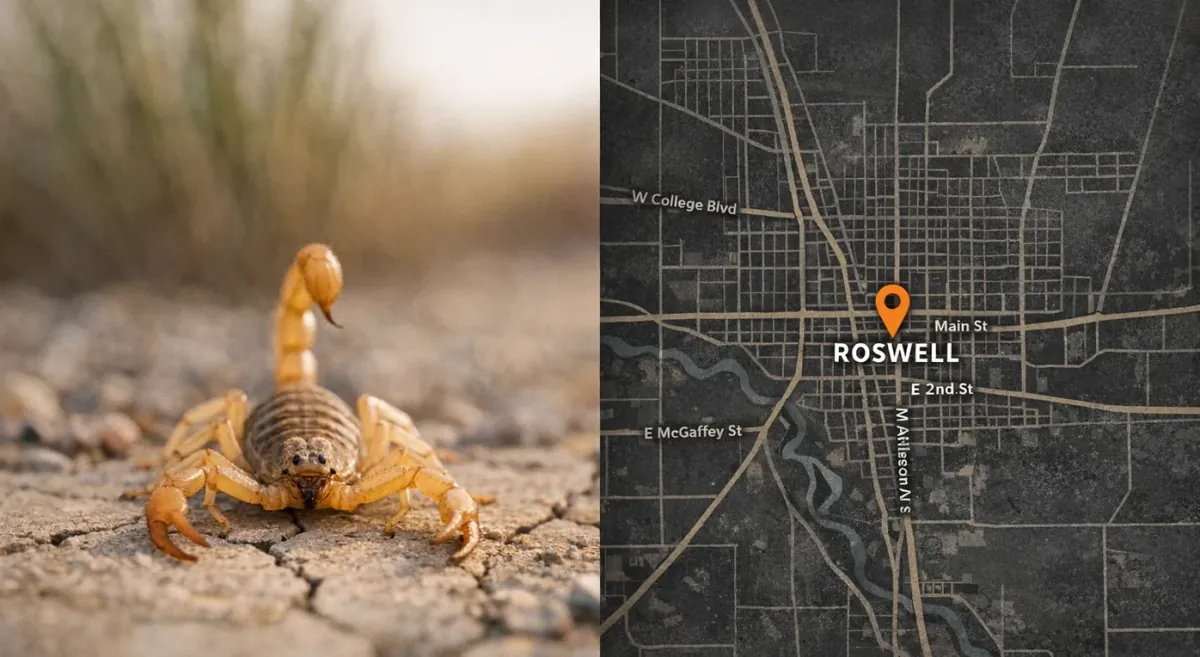
Yes, scorpions live in Roswell and across most of New Mexico. Chaves County's warm, dry lowlands and irrigated yards make great scorpion habitat, so sightings are common—especially at night. Statewide, several native species turn up around homes, but the striped bark scorpion is the one Roswell residents run into most.
New Mexico's mix of desert basins, river valleys, and mountain foothills supports a range of scorpions. Roswell sits in a lower, warmer stretch, which usually means more consistent activity than you'll see up in the cooler high country.
Why Roswell yards and neighborhoods can feel "scorpion-prone"
Warm, dry lowlands paired with green, irrigated yards create the perfect microhabitat. Scorpions want shade, moisture, and prey—and a watered lawn next to dry desert delivers all three. Older neighborhoods with mature landscaping, block walls, and dense ground cover tend to report more sightings because there are simply more places to hide.
Scorpions are thigmotactic, meaning they navigate by hugging surfaces and edges. After dark, they travel along walls, fence lines, and foundations as they hunt. That perimeter-following habit is exactly why they end up slipping through a door gap and into your living space.
What do Roswell homeowners usually notice first?
The first sighting almost always happens in a garage, laundry room, bathroom, or just outside an exterior door. These rooms combine the three things scorpions love—moisture, darkness, and easy access from outside. Picture this: you walk into the garage barefoot to grab something from the freezer, flip the switch, and there's a scorpion frozen against the baseboard.
An indoor sighting usually means there's harborage nearby in the yard plus a gap letting them in. Understanding how scorpions get into your home is the first step toward keeping them out.
Which scorpions are native to New Mexico, and which one is in Roswell?
New Mexico is home to several native scorpions, including the striped bark scorpion, the Arizona bark scorpion on the state's western edges, and various desert hairy and stripe-tailed species. Around Roswell, the striped bark scorpion (Centruroides vittatus) is by far the most likely homeowner encounter.
Which New Mexico scorpion is most likely in Roswell?
The striped bark scorpion dominates eastern New Mexico. It's the most widely distributed scorpion in North America; Yamashita & Rhoads 2017 list Texas, Oklahoma, and eastern New Mexico among its strongholds. You'll recognize it by two dark stripes running down its back and a slender, tan body.
Species ID mostly shapes your expectations—how a sting tends to feel, whether the scorpion can reach a countertop, and where to look. Other New Mexico species exist, but they're less likely to share your bathroom.
How can I confirm it's a scorpion (and not a cricket or spider)?
The fastest, most reliable confirmation is a UV light. Scorpions fluoresce a bright greenish-blue under a 365nm UV beam, glowing in a way nothing else in your home does.
- Turn off the room lights so the UV glow stands out.
- Sweep the beam slowly along baseboards, door thresholds, and the edges of furniture—the routes scorpions follow.
- Check dark corners, behind boxes, and under low storage.
- If you find one, snap a quick photo from a safe distance for identification.
That photo helps take the panic down a notch and makes it easier for you (or a pest pro) to confirm the species later.
Why did the scorpion look clear or pale?
A scorpion that looks clear, pale, or almost translucent has usually molted recently. After shedding its old exoskeleton, the new one stays soft and light-colored for a day or two before it hardens and darkens. Don't rely on color alone to identify a scorpion—use the UV glow and the classic body shape (pincers, segmented tail, stinger) instead.
When is scorpion season in Roswell, and what makes activity spike?
Scorpion season in Roswell runs from spring through fall, peaking in the hottest weeks of summer. Activity climbs with heat, moisture, and available insect prey. You might spot one in nearly any month, but warm evenings drive the vast majority of encounters.
Roswell scorpion season by month: what to expect
Expect the first sightings as nights warm in April and May. Activity builds through June and peaks during the hottest stretches of July and August. Sightings taper off in the cooler weeks of fall, and scorpions largely lie low through winter. A warm spell can extend the window in either direction, so a mild October night can still produce a visitor.
Does rain or irrigation make scorpions worse in Chaves County?
Yes—indirectly. Moisture boosts the insect population, and more insects mean more food that draws scorpions toward your foundation. Three practical adjustments help break that chain:
- Water early in the day so the soil isn't damp and cool at night, when scorpions hunt.
- Fix leaky spigots, drips, and pooling near the house.
- Pull mulch, gravel, and planters back a foot or two from the foundation.
For a fuller picture, see the top things that attract scorpions to your home.
Can Roswell scorpions climb walls or reach beds?
Yes. Striped bark scorpions climb rough vertical surfaces well—stucco, cinder block, and textured paint all give them grip. That means a scorpion can reach a bed by climbing a wall-adjacent bed skirt or hanging blanket. Protect your sleep space with a few simple moves: pull the bed a few inches off the wall, keep bedding from touching the floor, clear wall-adjacent clutter, and shake out stored items before bringing them near the bed.
How dangerous are scorpion stings in Roswell, and when should I worry?
For a healthy adult, a striped bark scorpion sting is painful but not life-threatening—think intense local pain that fades over a few hours. Children, seniors, allergic individuals, and pets deserve more caution and faster escalation. When in doubt, call Poison Control at 1-800-222-1222.
What does a typical Roswell scorpion sting feel like?
The usual pattern is immediate, sharp burning at the site, followed by tingling, numbness, and mild swelling. Striped bark scorpion stings tend to produce sharp local pain that lasts roughly 15–20 minutes on average, with serious systemic reactions being rare. Symptoms vary from person to person.
Normal: localized pain, tingling, a little redness or swelling. Not normal: trouble breathing or swallowing, roving eye movements, muscle twitching, or drooling—those warrant emergency care.
Who is at higher risk (kids, seniors, allergies, pets)?
Higher-risk groups include young children, older adults, people with known venom allergies, and small pets. Their smaller size or weaker systems make severe reactions more likely. As Dr. Meghan Spyres, medical toxicologist at Banner Poison and Drug Information Center, puts it, "The young, like little kids, and then more elderly. So, the extremes of age are more at risk for these more severe reactions."
Don't wait it out with a small child—call Poison Control right away. Learn more about why children are more at risk from scorpion stings.
What should I do in the first 10 minutes after a sting?
Stay calm and work through a short checklist:
- Wash the sting site with soap and water.
- Apply a cold pack wrapped in cloth to ease pain and swelling.
- Remove any tight jewelry near the sting in case of swelling.
- Monitor for symptoms beyond local pain, especially in kids.
Head to the ER immediately for trouble breathing or swallowing, uncontrolled muscle movements, or roving eyes. For the complete plan, read our bark scorpion sting first aid guide.
What's the best scorpion control plan for Roswell (and other NM cities)?
The best approach is layered and works outside-in: remove outdoor harborage, reduce moisture and prey, seal entry gaps, and monitor the rooms where scorpions actually travel. No single step wins—stacking them is what keeps scorpions out.
How should scorpion control change in Albuquerque, Santa Fe, and Alamogordo?
The core plan stays the same everywhere; elevation and climate just shift the emphasis. Lower, warmer areas see more consistent activity, so they need year-round vigilance. Higher, cooler areas often see fewer—or more seasonal—encounters.
| Area | Elevation / climate | Activity pattern | What to emphasize |
|---|
| Roswell / Alamogordo | Lower, warmer | More consistent, long season | Moisture control, perimeter sealing |
| Albuquerque | Mid elevation | Strong warm-season spikes | Landscape clutter, entry gaps |
| Santa Fe | Higher, cooler | Fewer, more seasonal | Seasonal sealing, damp-spot fixes |
No plan guarantees zero scorpions, but matching your effort to your climate makes it much more effective.
What should I fix first around my Roswell home—this weekend?
Start with the highest-impact tasks:
- Remove wood, rock, and debris piles resting against the foundation.
- Declutter perimeter edges and clear tall weeds along walls.
- Fix damp spots, drips, and leaks.
- Add door sweeps and fresh weatherstripping to exterior doors and the garage.
- Keep garage and closet storage up off the floor.
For the complete rundown of gaps to close, see the ways scorpions get in guide. And skip the gimmicks—here's the truth about scorpion repellent myths.
How can I monitor for scorpions at night without constant blacklight walks?
Monitoring works best at night, when scorpions move, and along perimeters, where they travel—but nobody wants to patrol with a flashlight every single night. That's exactly the problem automated detection solves. Scorpion Alert Detectors plug into standard wall outlets on the room perimeter, activate automatically when a room darkens, and scan continuously using 365nm UV light to catch the scorpion's telltale glow.
When a Detector spots one, it sends a photo-verified alert to your phone with an AI confidence score, using two-stage confirmation to cut down on false alarms. Place Detectors where scorpions actually enter and gather: near exterior doors and the garage, in bedrooms, and in bathrooms or laundry rooms close to water.
Why did Google show me "scorpions in Montana"—should I be worried?
No—search results often mix regions and pull in content that isn't local to you. If you're dealing with scorpions in Roswell, New Mexico, the season and safety basics are clear: focus on harborage removal, moisture control, sealing, and monitoring. If you're relocating, check your destination's extension office or health department guidance, and inspect moving boxes and garage clutter after you arrive. And if you just spotted one, avoid the common mistakes in our guide on what not to do after spotting a scorpion.
In Roswell, scorpions are most likely to turn up on warm nights from late spring through early fall—so focusing your safety habits around after-dark checks and reducing daytime hiding spots can go a long way. If you want extra peace of mind during peak season, Scorpion Alert can help you monitor for scorpion activity so you can respond quickly and keep nighttime routines safer.