Do I have to disclose scorpions when selling a home in Arizona?
In Arizona, you must disclose known material facts about your property, and repeated indoor scorpion activity can qualify. The goal isn’t panic — it’s accurate, factual disclosure. Report what you actually know: dates, locations, and how often. The Arizona Seller's Property Disclosure Statement (SPDS), along with your agent or attorney, can guide exactly what and how to disclose.
This article is practical guidance, not legal advice. Every deal is different, so lean on your REALTOR and, when needed, a real estate attorney for your specific obligations.
The good news: scorpions are common across much of Arizona, especially in the Sonoran Desert and its peak summer months. A single scorpion in the yard rarely tanks a deal. Trouble usually comes from patterns — repeated indoor sightings — combined with poor documentation.
What does “material adverse fact” mean in plain English?
A “material” fact is anything a reasonable buyer would consider important for safety, value, or their decision to buy. One scorpion spotted near the woodpile probably isn’t material. Repeated indoor stings, or scorpions showing up in the bedroom month after month, likely are.
Think facts over feelings. Instead of writing “we’re infested,” record dates, rooms, frequency, and what you did next. Avoid broad labels you can’t support. A defensible record protects you far better than a scary word.
A simple rule of thumb: indoor, frequent activity that requires ongoing treatment escalation is more likely to be material. Outdoor sightings that are rare and easily explained usually are not.
Should I tell my listing agent before showings?
Yes — loop your agent in early. Surprises during showings or the inspection are what damage deals. When your agent knows the history, they can build a calm, accurate narrative that highlights how you’ve managed things.
A simple agent script sounds like this: “This is Arizona desert, and the sellers have taken it seriously. They’ve kept up a documented pest service, sealed entry points, and can share a full record of activity and treatments.” That normalizes reality while showing control.
One reminder: your agent and attorney know your exact disclosure duties. Confirm the specifics with them before you finalize any SPDS language.
When does scorpion activity become a deal-breaker for buyers (or inspectors)?
The difference between “normal desert presence” and a real problem comes down to a pattern you can measure. Make the assessment concrete, and the fear usually shrinks.
Is an occasional scorpion a disclosure issue?
An occasional scorpion — especially outdoors or in the garage — is generally treated as normal in Arizona markets, though context still matters. Rare sightings tied to a woodpile or a monsoon-season spike read very differently than steady indoor activity.
What changes the interpretation? Repeat indoor sightings, scorpions in bedrooms or bathrooms, and a history of scorpion-specific escalation — multiple service visits, switching providers, or special treatments.
Start logging now. For every sighting, note:
- Date and time
- Room or exact location
- A photo, if you can safely take one
- The action you took
What patterns make buyers take it seriously?
Buyers get nervous over a handful of red flags: frequent indoor sightings, scorpions in bedrooms or bathrooms, visible entry gaps, known harborage nearby, and any history of an indoor sting. Bedrooms carry extra weight — Arizona data shows they’re the most-stung room in the house.
42.5% of indoor Arizona residential scorpion stings happen in the bedroom — the most-stung room in the house.
— Skolnik & Ewald 2018 (FEARS)
Why do patterns matter so much? Buyers fear an unknown, ongoing problem far more than a known, managed one. A documented, controlled situation is reassuring. A vague “we see them sometimes” invites worst-case imagination.
Neighborhood context helps, too. Homes on the desert edge, near washes, or in new construction naturally see more activity. Present that neutrally as area reality, paired with your management plan — not as an apology.
What should I do 30 days before listing to reduce scorpions and protect the deal?
A month of steady prep means fewer sightings during showings and clean documentation for disclosure and negotiations. Focus on high-impact moves, then lean on existing guides for the deeper detail.
What’s the fastest pre-list checklist to lower sightings before showings?
The fastest wins are exclusion, decluttering, and cutting off the food supply. Do these first:
- Install door sweeps and fresh weatherstripping, and seal penetrations around pipes, wires, and vents — the most common ways scorpions get into your home.
- Declutter along baseboards, closets, and garage edges where scorpions travel and hide.
- Reduce insect prey, since a bug problem is one of the top things that attract scorpions.
- Schedule pest service early so you can show a consistent cadence, not a last-minute scramble.
- Take before-and-after photos and keep every receipt for your seller packet.
Should I get a nighttime UV inspection before I list?
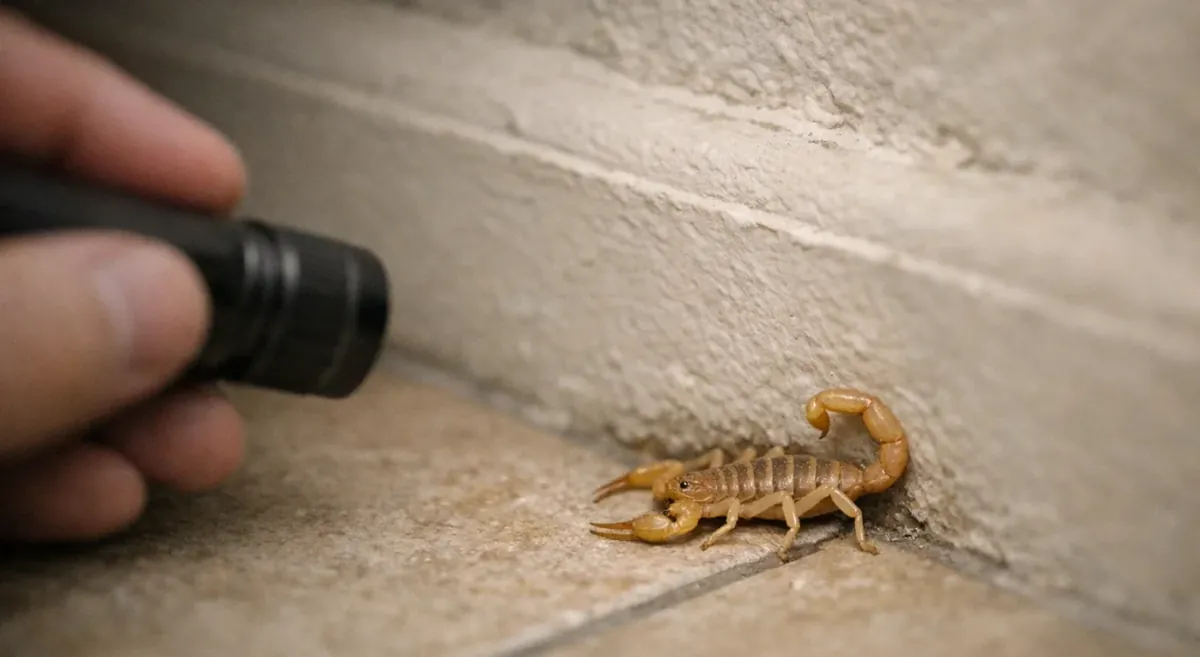
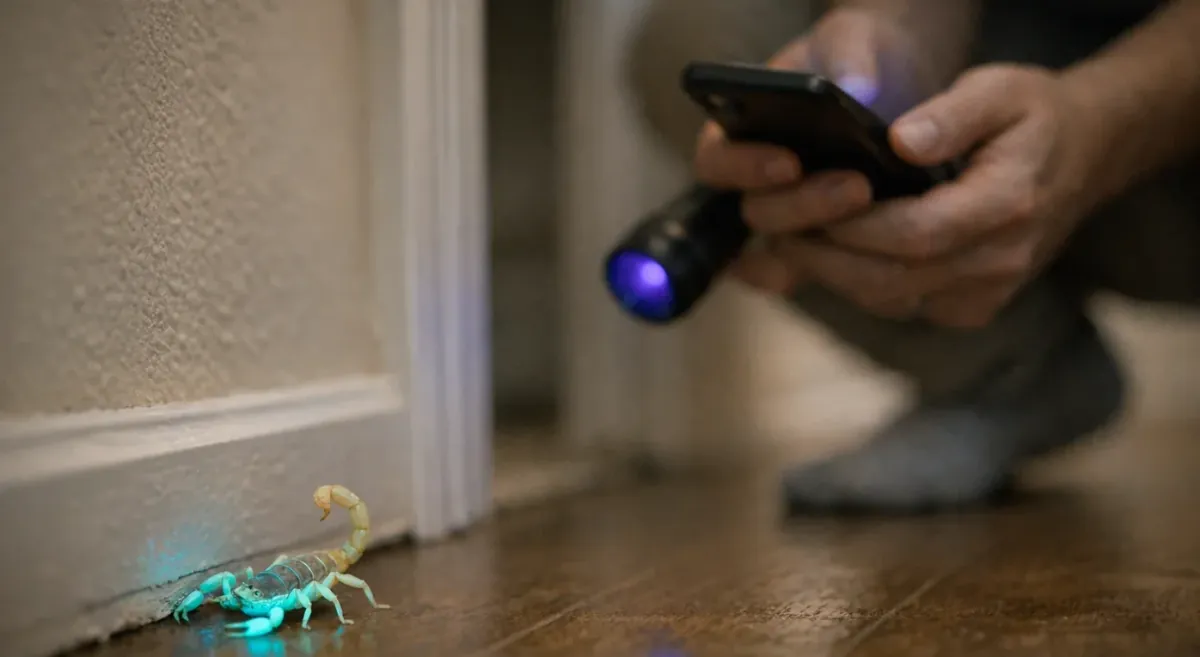
A nighttime UV inspection is worth it if you’ve had recent indoor sightings, sit on the desert edge or in a new build, or you’re listing during peak season. Scorpions glow bright green under UV light, so a walkthrough after dark reveals what daytime hides. Just remember it’s a snapshot, not a lifetime guarantee.
Read results with context. Finds along the outdoor perimeter are often normal desert life. Indoor living-space finds should trigger a documented response plan — treatment, sealing, and a follow-up check.
A clean report can become a selling asset. Proof reduces buyer fear better than any reassurance you could give in conversation.
How do I organize pest-control history so it helps (not hurts)?
Build a one-page summary so the story reads like routine maintenance, not desperation. Include:
- Company name and contact
- Service dates and treatments performed
- Notes specifically about scorpions
- Warranty details and whether service is transferable
- The forward schedule
Frame it like caring for an HVAC system or a pool — steady, planned upkeep. A regular cadence looks far better than a burst of panicked emergency visits. Keep the records factual and consistent with what you disclose on the SPDS.
How can I disclose scorpions without scaring buyers away?
Truth builds trust when it’s paired with documentation, mitigation, and a clear next step. Give buyers and agents what they actually want, and anxiety turns into confidence.
What should I include in a “scorpion packet” for buyers and agents?
A strong packet contains your sightings log, exclusion receipts and photos, the pest service contract and schedule, a UV inspection report if you did one, and a one-page summary of your current protocol.
Why does a packet work? It replaces vague dread with concrete facts and shows proactive care. Buyers stop imagining the worst when they can read exactly what happened and what you did about it. Keep it relevant and factual — share what matters, not your entire diary.
Which seller concessions help the most (and which backfire)?
The best concessions are specific and forward-looking. Offer to pay for a defined exclusion scope, prepay several months of pest service, or provide a credit tied to a named vendor and a written scope of work.
Vague credits backfire. A line like “$500 for pest control” signals that you couldn’t define or solve the problem. Tie every concession to verifiable actions and documentation instead — “seller to prepay 12 months of scorpion service with [company], transferable at close” reads like a solution, not a shrug.
Can 24/7 monitoring help during a listing (without looking like a red flag)?
Yes — framed correctly, monitoring reads as documentation and peace of mind, not alarm. You’re reducing uncertainty during showings and due diligence by tracking what actually happens at night, when scorpions are most active.
Systems like Scorpion Alert make this easy. Detectors plug into standard wall outlets — no hub required — and activate when a room goes dark. Each shines 365nm UV light on the floor, watches for the telltale greenish glow, and sends a photo-verified alert to your phone within seconds, complete with an AI confidence percentage. That beats messy sticky traps or tedious nightly flashlight patrols.
For a sale, place Detectors at entry points and high-priority rooms like bedrooms and bathrooms. Most homes use several units — often three to five — for solid coverage. The app’s detection history doubles as clean, timestamped documentation you can share.
What should buyers (and agents) ask for during due diligence in scorpion-prone areas?
Anticipate the buyer-side questions and you can answer calmly, with paperwork in hand, instead of scrambling. That keeps the deal moving.
Should buyers request a nighttime UV inspection, and should sellers agree?
Yes on both counts — a nighttime UV inspection is a reasonable request in scorpion-prone areas, and sellers should cooperate. Agree on an access window, keep safety in mind, and set expectations up front.
Know the limits. One night is a snapshot, so interpret findings with context: outdoor perimeter finds are often normal, while indoor living-space finds deserve attention. Sellers should respond with a remediation plan, not defensiveness. “Here’s what we found and here’s how we’re handling it” keeps trust intact.
What questions will buyers ask about treatments and sealing?
Buyers in the know will ask a predictable set of questions. Have answers ready:
| Buyer asks about | What to have ready |
|---|
| Service frequency | Contract showing regular cadence |
| Scorpion-specific vs. general pest | Notes on scorpion treatments performed |
| Warranty / transferability | Terms and whether it transfers at close |
| What was sealed and when | Exclusion receipts, photos, dates |
| Sightings since sealing | Your dated sightings log |
| Neighborhood risk factors | Neutral notes on washes, desert edge, new build |
Hand these documents over the same day to reduce friction. And keep everything consistent — what you say, what’s documented, and what you disclose should all line up.
How can buyers reduce sting risk during move-in week?
New owners can cut risk fast with a simple first-week plan. Re-check door sweeps and thresholds, start a sightings log on day one, continue or schedule pest service, and clear clutter along walls and baseboards where scorpions travel.
Monitoring makes a good move-in habit, too. Photo-verified, real-time night alerts take the guesswork out of those first uncertain weeks in a new desert home. And it helps to know what a scorpion sighting predicts.
81.8% of Arizona households where someone was stung had already seen scorpions on the property beforehand.
— Skolnik & Ewald 2018 (FEARS)
For deeper prep, review our month-by-month scorpion season guide and know what not to do after spotting a scorpion. Keep bark scorpion sting first aid handy, just in case — a calm, prepared owner sleeps a lot easier that first week.
When you’re selling a home in Arizona, scorpion disclosures are easier to handle when you can speak to what you’ve actually seen and done—clear documentation and consistent monitoring help keep surprises from becoming deal-breakers. Scorpion Alert uses 365nm UV light and AI detection to help you spot nighttime activity so you can take informed steps before listing and share updates with confidence; learn more at Scorpion Alert.