Are scorpions a common problem in Apache Junction homes?
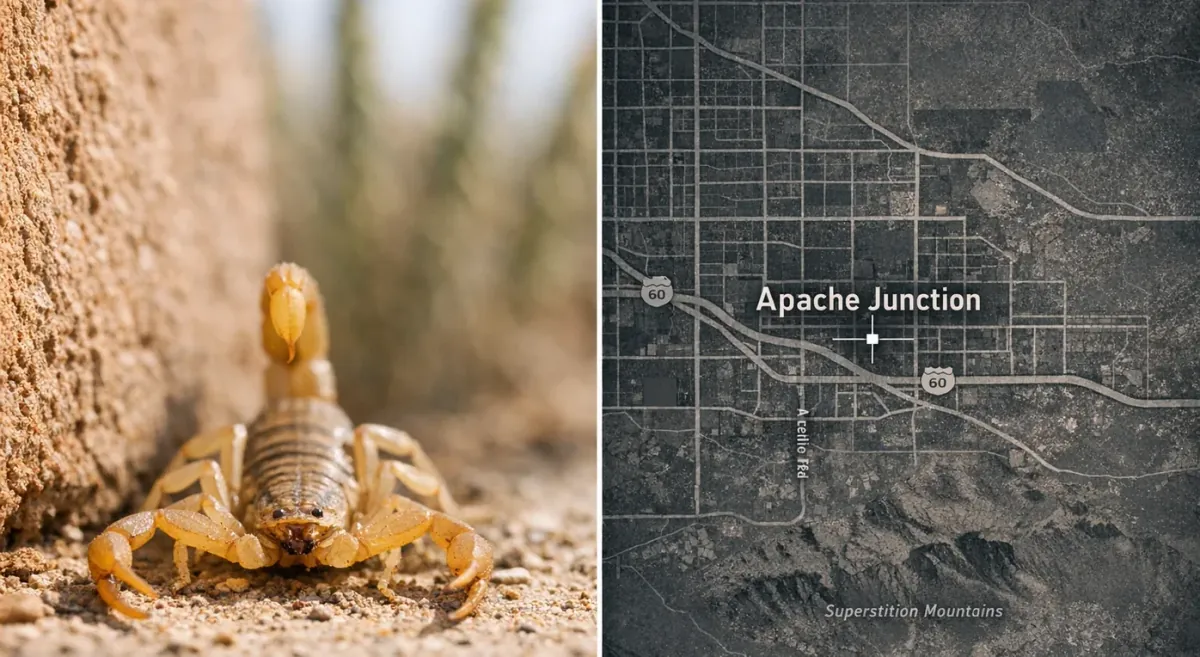
Yes—scorpions are common in Apache Junction, and finding one indoors doesn’t mean your home is unusual. This desert-edge city sits right up against the Superstition Mountains, so bark scorpions are part of the local ecosystem. The best response is prevention and monitoring, not panic.
You flip on the bathroom light at 2 a.m., and there it is—pale and still on the tile. Scary? Sure. But it’s also a normal part of living where the Sonoran Desert meets the suburbs. Let’s walk through why sightings happen here and what actually reduces them.
Why do scorpion sightings cluster near the desert edge and washes?
Sightings cluster near the desert edge and washes because that’s prime scorpion habitat—rocky ground, natural cover, and easy access to prey. Homes backing onto open desert, dry washes, or the Superstition foothills tend to see more activity than neighborhoods deeper inside town.
New builds near untouched desert often see a spike in the first few years as the surrounding land settles. The features that make Apache Junction yards attractive to us are the same ones scorpions love. Block walls hold cool, shaded gaps. Gravel and decorative rock create thousands of tiny hiding pockets. Irrigated plants draw insects, and insects draw scorpions.
What local and statewide numbers put the risk in perspective?
Arizona dominates the national picture for scorpion encounters, and Pinal County—which includes Apache Junction—reports its share every year. These numbers help, but keep in mind: most encounters never get reported to anyone.
68.2% of all US scorpion exposures reported to poison-control centers from 2005–2015 happened in Arizona.
— Kang & Brooks 2017
An “exposure” simply means someone had contact with a scorpion and a poison-control call was made—usually after a sting. It’s not the same as how many scorpions live in an area. Pinal County logged 71 exposures in 2025, but the true number of encounters is far higher, because most people who get stung and feel fine never make the call.
Do scorpions mean your house is "dirty" or neglected?
No. A scorpion indoors says nothing about how clean your home is. Spotless, brand-new houses get scorpions just like older ones. What draws them is food and shelter—not clutter or mess.
Scorpions follow their prey. More crickets, roaches, and other bugs mean more scorpions willing to move in and hunt. That’s the core control idea for the rest of this guide: cut down insect pressure and remove hiding spots, and you’ll make your home far less appealing.
When is scorpion season in Arizona—and when do scorpions come out in Apache Junction?
Scorpion season in Arizona runs from spring through fall, ramping up as temperatures climb and peaking in the hot, humid monsoon months of July through September. In Apache Junction, expect the most sightings on warm summer nights. Winter slows them down, but it never stops them completely.
When is scorpion season in AZ (month-by-month, in one quick timeline)?
Activity wakes up in spring (March–May), climbs through early summer, and hits its peak in the July–September monsoon window. Fall brings a gradual taper, and winter sees the fewest sightings—though a warm January night can still stir one up. For a detailed breakdown, see our month-by-month Arizona scorpion season guide.
When do scorpions come out in Arizona during a typical day?
Scorpions are nocturnal—they come out after dark, most actively from dusk through the overnight hours. That’s why you’ll “suddenly” spot one at night when you never see them during the day. They spend daylight tucked into cool, dark cracks.
The early-evening window carries real risk. Picture stepping out to the patio barefoot right after sunset—that’s exactly when a scorpion is starting to hunt along wall edges. Bare feet and dim light are a common sting combination.
Do monsoon storms push scorpions inside in Apache Junction?
Yes. Monsoon rain and humidity shift insect movement and push scorpions to wander in search of prey and shelter, and some end up indoors. August and September are Arizona’s peak sting months for exactly this reason.
During monsoon weeks, watch the usual surprise spots: garages, ground-floor bathrooms, and laundry areas where it’s cool and a little damp. Shake out shoes left by the door, and be extra careful reaching into dark corners after a storm.
Which scorpions live in Apache Junction—and how can you identify a bark scorpion safely?
Apache Junction is firmly inside Arizona bark scorpion territory, and that’s the species that matters most for safety. You can make a good-enough identification from a safe distance using a few visual cues plus a UV light—no need to get close.
Is the Arizona bark scorpion the one you should assume it is?
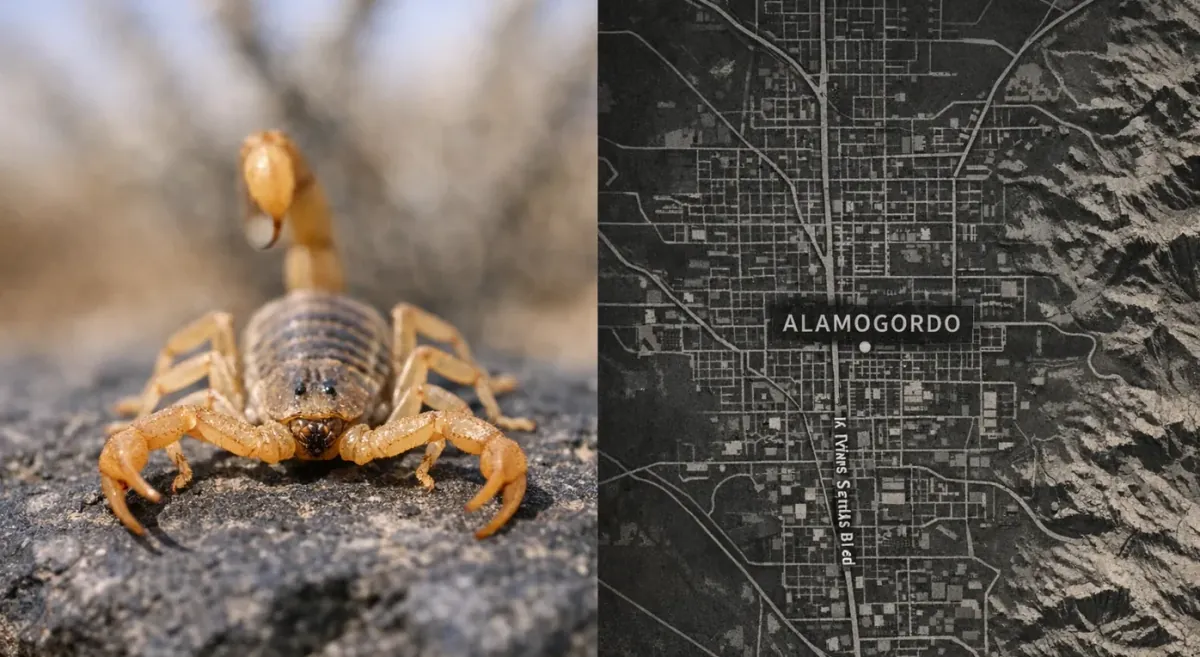
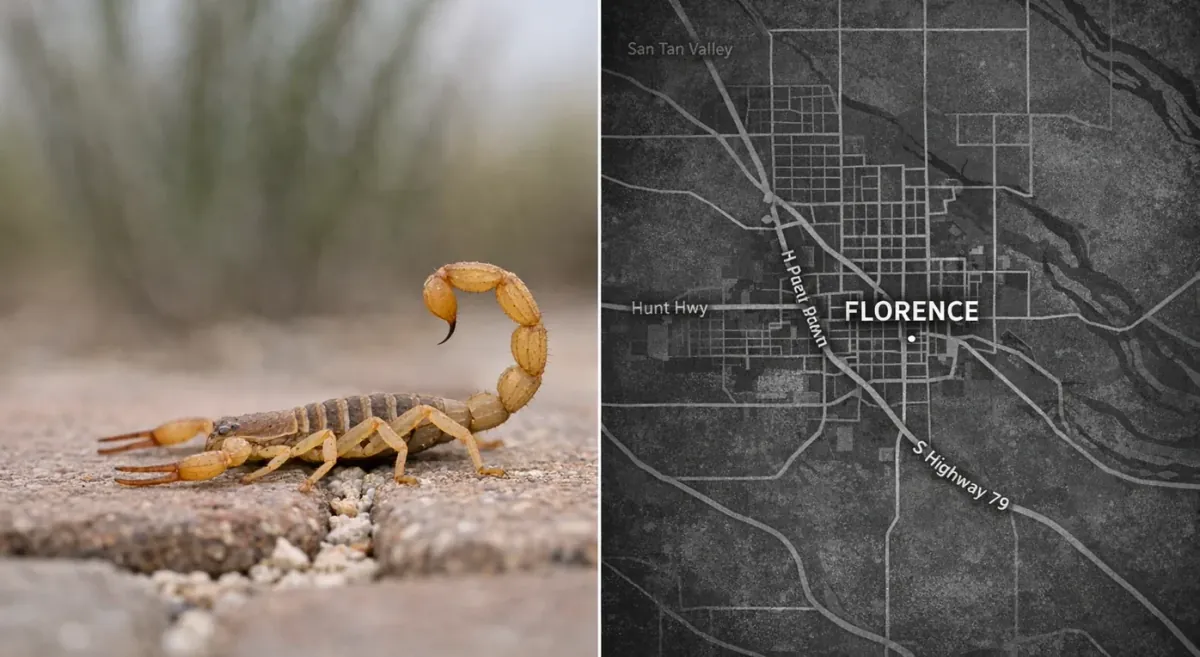
Yes—treat any slender, pale scorpion as a bark scorpion until proven otherwise. The Arizona bark scorpion (Centruroides sculpturatus) is the region’s medically significant species. Look for a slim, light tan to straw-colored body with thin pincers and a thin tail. When in doubt, assume it’s a bark scorpion and act accordingly.
What are the common lookalikes in Pinal County and how are they different?
Bulkier desert scorpions live in Pinal County too, and they’re generally less concerning. The giant hairy scorpion is large, thick, and hairy-looking. The stripe-tailed scorpion has a noticeably heavier body and darker stripes on its tail segments. The rule of thumb: thin and pale points toward bark scorpion, while stout and chunky usually doesn’t.
How can you confirm a scorpion without getting close?
Confirm from a safe distance. Use your phone’s zoom to snap a photo instead of leaning in. At night, a UV or blacklight makes scorpions glow a bright greenish color—an easy way to spot and confirm one across the room.
Keep your hands out of gaps and clutter. Scorpions don’t stay on the floor; a bark scorpion can climb and turn up on a wall, a shelf, or inside a laundry pile, so don’t reach blindly into dark spaces. When you do need to respond to a sighting, read what not to do after spotting a scorpion in your home first.
How dangerous are bark scorpion neurotoxins in Apache Junction?
Bark scorpion venom is neurotoxic, meaning it acts on the nervous system rather than just causing local pain. Most stings in healthy adults stay mild, but neurological symptoms are a red flag that needs urgent care—especially in children. Deaths are extremely rare with modern treatment.
What does a bark scorpion sting feel like—and which symptoms are neurotoxin red flags?
A bark scorpion sting usually brings immediate burning pain, followed by tingling and numbness around the site. In an Arizona cohort, pain was reported in 88.9% of stings and local numbness in 62.2% (Klotz et al. 2021).
Those local symptoms are one thing. Systemic, neurotoxic symptoms are another—and they demand attention: muscle twitching or jerking, drooling, trouble swallowing, and roving or abnormal eye movements. According to Dr. Meghan Spyres, medical toxicologist at Banner Poison and Drug Information Center, "They can also cause involuntary muscle movement — so jerking of the arms and legs — and even more severe, in some cases, it can cause difficulty swallowing. People's eyes can move around in weird directions." If you see those signs, get help right away.
Who is at higher risk for severe symptoms at home?
Young children are the highest-risk group by far—their small bodies react more strongly to the venom. Older adults and people with heart or respiratory conditions also face greater risk of severe symptoms. For more on why kids need faster action, see our guide on why children are more at risk from scorpion stings.
Most stings happen in ordinary moments: sliding on a shoe left by the door, folding warm laundry, handling pool equipment, or rolling over onto one that got into the bedding. Bare feet on a dark floor are a classic scenario.
Are scorpion stings fatal in Arizona—and what treatments exist?
Fatalities are extremely rare in Arizona today thanks to modern care. Most stings are managed with pain control and observation. For severe cases—especially in small children—an FDA-approved antivenom (Anascorp) can reverse dangerous symptoms fast.
If a sting looks serious, don’t waste time trying to catch or kill the scorpion. Prompt triage matters far more. Call the Arizona Poison and Drug Information Center or head to the ER, and review bark scorpion sting first aid for the first 30 minutes so you know the steps ahead of time.
How do you keep scorpions out of your Apache Junction house—and how do you know it's working?
The most reliable plan has three steps in order: exclude entry points first, reduce prey and hiding spots second, then monitor to confirm whether activity is actually ongoing. Exclusion keeps them out, harborage reduction makes your property less appealing, and monitoring tells you if it’s working.
What's the fastest 'weekend checklist' to reduce indoor sightings?
You can knock out the biggest gaps in a single weekend. Focus on these:
- Seal obvious cracks and gaps around pipes, cables, and foundation edges.
- Install or tighten door sweeps—scorpions slip through gaps as thin as a credit card.
- Repair torn window and door screens.
- Pull clutter and stored boxes away from interior walls.
- Move firewood and stacked materials well away from the house.
- Fix dripping irrigation and outdoor faucets that create moisture.
For the deeper breakdown, see the top 5 ways scorpions get into your home.
How do you lower scorpion pressure in the yard without overhauling landscaping?
You don’t need to rip out your desert landscaping. Target the two things that draw scorpions: shelter and food. Break up stacked pavers, rock piles, and debris that collect along block walls—these are prime daytime hideouts in Apache Junction yards.
Cut prey by watering only what your plants need; overwatering breeds the insects scorpions eat. Swap bright white exterior bulbs for warm-toned or yellow lighting, which attracts fewer bugs. Small changes to shelter and prey do more than any single “fix.”
How can you monitor scorpion activity without nightly blacklight walks?
Monitoring matters because one sighting and an ongoing pattern call for very different responses. You can do periodic UV checks by hand, but that’s tedious and easy to skip—and scorpions only show up on the nights you happen to look.
Hands-off systems like Scorpion Alert Detectors handle night monitoring for you. Each Detector plugs into a wall outlet along the room’s perimeter—exactly where scorpions travel, since they hug walls and edges (a behavior called thigmotaxis). It turns on only when the room goes dark, shines 365nm UV light most people never notice, and scans the floor every 500 milliseconds. When it catches the telltale glow, it confirms the detection in the cloud and sends a photo-verified alert to your phone. Place Detectors at entry points, bedrooms, playrooms, and bathrooms—the spots where surprise encounters and stings most often happen. Instead of guessing, you’ll know exactly when, where, and how often scorpions are active in your home.
Living in Apache Junction means scorpions can be a regular part of desert life, so the goal is catching activity early and staying consistent with nighttime checks and prevention. If you want a simple way to make those checks easier, Scorpion Alert uses 365nm UV light detection and runs autonomously after dark to help you spot scorpions when they’re most active—learn more at Scorpion Alert.