Are scorpions common in Florence, Arizona?
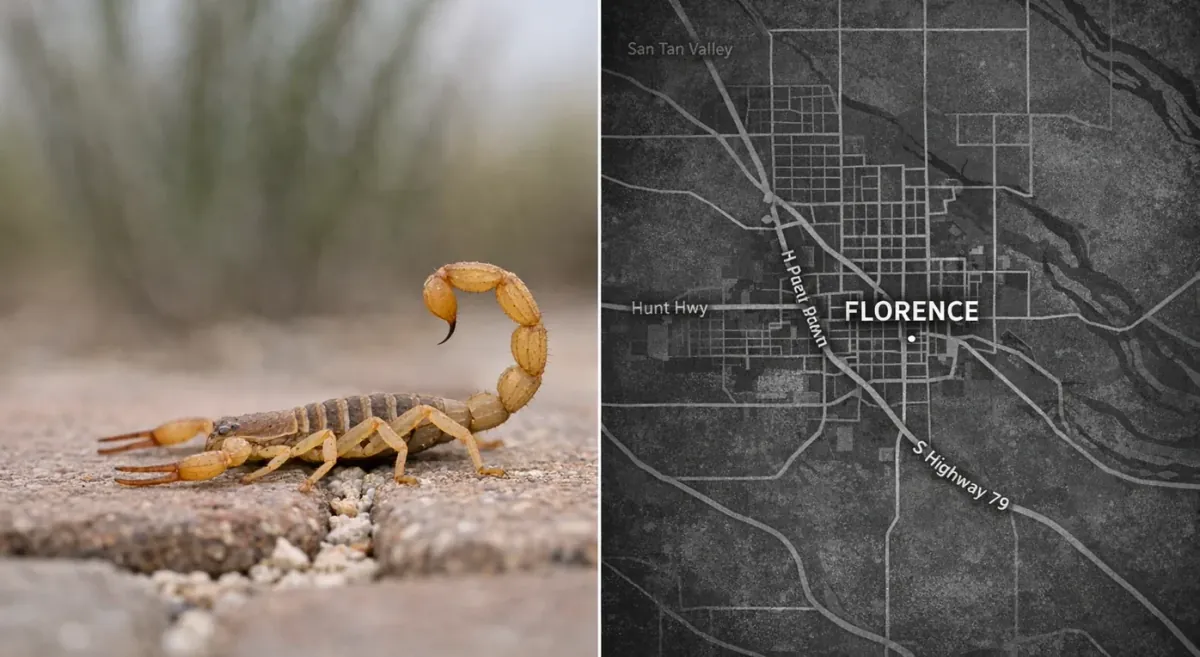
Yes—Florence sits in prime Sonoran Desert scorpion habitat, so scorpions are common here. The town’s mix of block walls, attached garages, irrigated yards, and nearby open desert gives scorpions food, moisture, and easy travel routes right up to your foundation. If you live in Florence, seeing one indoors sooner or later is normal—not unusual.
The layout matters more than most people expect. Block walls act like highways that guide scorpions toward structures. Garages offer cool, dark shelter. And irrigated landscaping pulls in the crickets and roaches scorpions hunt. Add a lot at the edge of undeveloped desert, and you’ve got steady pressure most of the year.
What you’ll notice first tends to follow a pattern:
- The garage wall or threshold—usually the first sighting
- The garage-to-house door area
- Laundry rooms and bathrooms
- Baseboards and dark corners in living spaces
Run through this quick Florence risk factors checklist to gauge your home: Is there open desert or a wash next to your lot? Do you run heavy irrigation? Do crickets swarm your outdoor lights at night? Is clutter stored right against your exterior walls? Every “yes” nudges your scorpion pressure higher.
Where do Florence homeowners usually see the first scorpion?
The garage is ground zero. It’s the darkest, coolest, most cluttered room in many Florence homes, and it connects straight to the outdoors through gaps around the big door. From there, scorpions follow the path of least resistance: the garage-to-house door threshold, then along baseboards into laundry rooms and bathrooms where extra moisture draws them in.
It usually starts like this: you head out early, flip on the garage light, and spot a scorpion frozen near the base of the wall. That’s the classic first encounter.
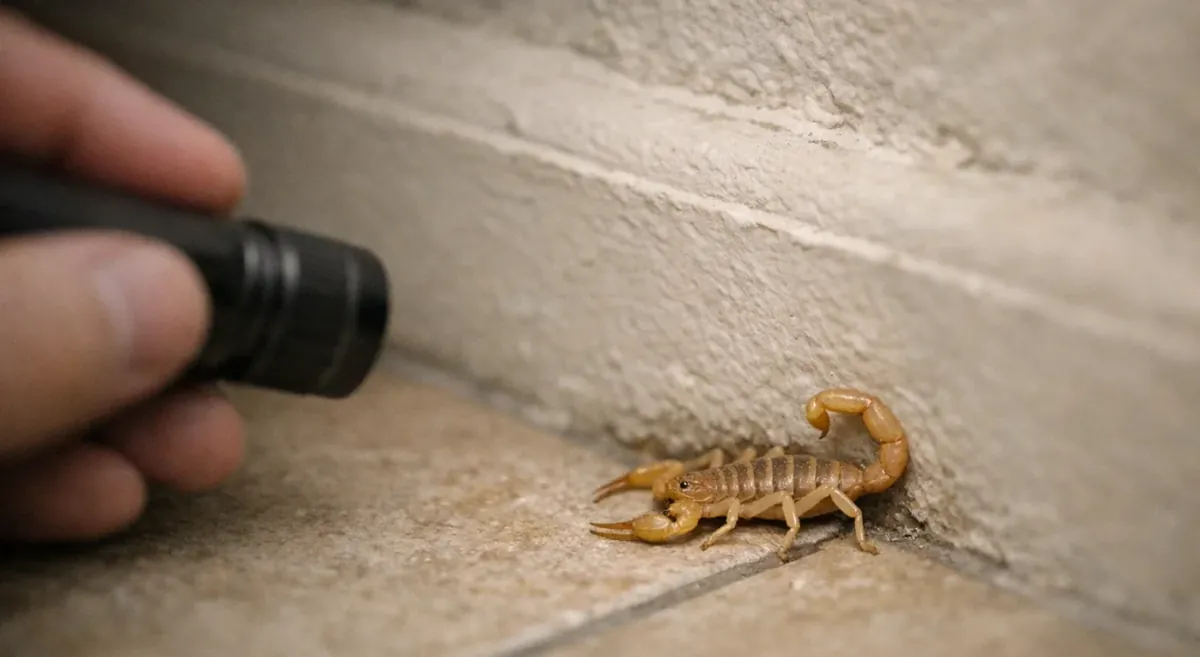
Tonight, do three quick things: clear clutter off the garage floor, pull stored boxes and bins a few inches off the walls, and grab a flashlight to check the gap under your garage-to-house door. If light leaks through, a scorpion can, too.
Does living near open desert or irrigation increase scorpion pressure?
Yes. Homes at the edge of open desert, a wash, or an undeveloped lot sit on prime “edge habitat,” where scorpions naturally spill over into yards. Heavy irrigation makes it worse by boosting both humidity and the insect prey scorpions feed on. More bugs plus more moisture equals more scorpions near your walls.
A few yard adjustments can help without turning your whole property upside down. Water deeply but less often instead of keeping soil constantly damp. Move woodpiles, decorative rock stacks, and stored items away from the foundation. And swap bright white exterior lights for warmer bulbs that attract fewer insects. For the full picture, see our guide to the top ways scorpions get into your home.
What kinds of scorpions might you find in Florence—and can they climb into beds?
The safest approach is to treat any scorpion you find as a stinging risk—don’t try to sort “dangerous” from “harmless” by eye at night. That said, a simple homeowner ID framework helps: note the body shape, color, and size from a distance, snap a photo, and never handle it with bare hands. In central Arizona, the species that actually drives indoor risk is the Arizona bark scorpion.
Here’s the big question answered directly: yes, bark scorpions and similar species can climb rough surfaces and reach bedrooms. That one fact should shape your prevention. It’s why experts say to skip the bed skirt and pull your bed away from the wall—fabric touching the floor becomes a ladder.
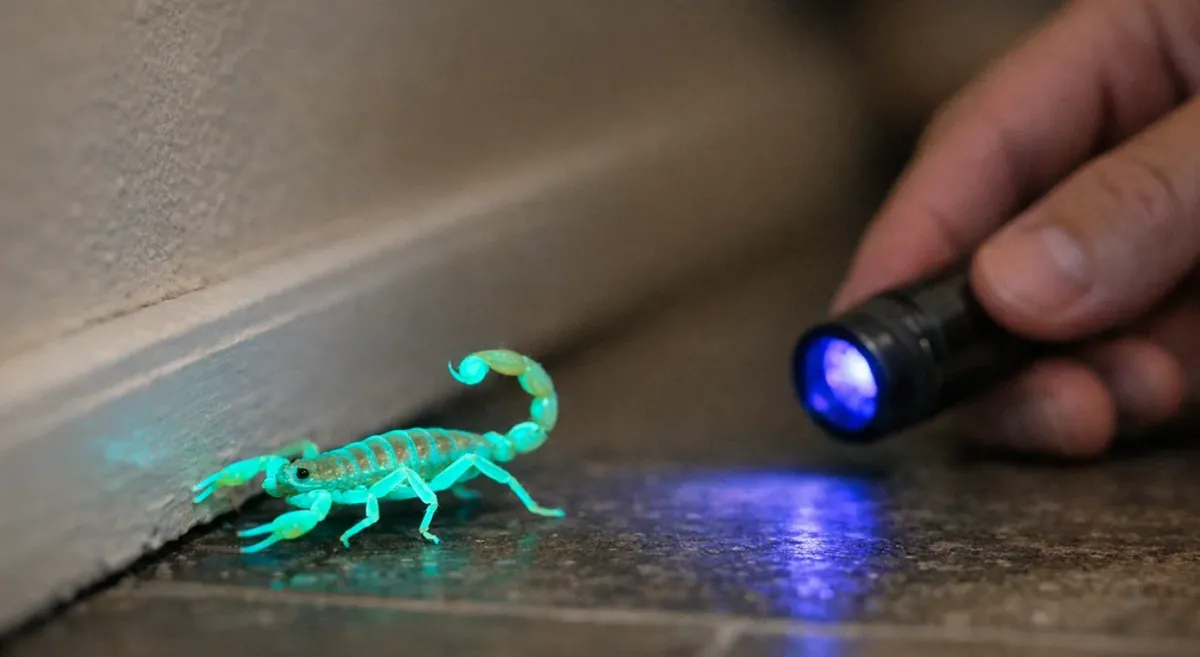
Whenever possible, go photo-first. UV light makes this easy, because scorpions fluoresce a bright greenish glow under 365nm ultraviolet light—they light up like a highlighter in the dark.
Is the Arizona bark scorpion likely in Florence?
Practically speaking, assume yes. The Arizona bark scorpion (Centruroides sculpturatus) is the species most likely to end up inside central Arizona homes, and it’s the only US scorpion whose sting can cause serious systemic symptoms. It tends to be slender and lighter tan in color, with thin pincers, and it’s far more comfortable indoors than most desert scorpions.
Still, colors and sizes vary, and lighting plays tricks at 2 a.m. A clear photo beats guesswork every time—you can zoom in safely later or share it with a professional.
Can scorpions climb walls and get upstairs?
Yes. Arizona bark scorpions are strong climbers and can grip stucco, block, rough wood, and fabric, which lets them reach second-floor bedrooms and upper living spaces. This is exactly why in-bed stings happen—a scorpion climbs a bed skirt, a draped comforter, or a laundry pile and ends up where you sleep. Arizona poison-center data shows the bedroom is the single most-stung room in the house, and many of those stings happen to people who were sleeping (Skolnik & Ewald 2018).
Three bedroom habits cut that risk fast: shake out shoes and slippers before putting them on, keep the floor clear of clothing piles and towels, and make sure bedding and bed skirts never touch the floor.
How can you identify a scorpion safely at night?
Identify from a safe distance—never with your hands. Follow these steps:
- Keep at least an arm’s length away and don’t corner it in a panic.
- Take a clear photo with your phone for later ID or a pro.
- If you need to remove it, trap it under a smooth-sided glass or jar so it can’t climb out, then slide a stiff card underneath.
- Release it well away from the house, or dispose of it safely.
A UV flashlight is a great spot-check tool here, since scorpions glow under UV light—sweep the beam along baseboards and it’ll pop right out. Just as important is knowing what not to do after spotting a scorpion.
When is scorpion season in Florence, AZ—and what nights are the worst?
Scorpion season in Florence runs roughly from spring through fall, with activity climbing as nights warm up. The summer peak lands in the hottest stretch, and August and September bring a sharp spike that lines up with monsoon humidity. Activity tapers off through fall as nights cool. You can see one year-round, but summer nights are by far the busiest.
Why tonight, specifically? Heat, warm overnight lows, and monsoon moisture all push scorpions to move and hunt more. After a big storm or heat wave, run this quick 48-hour checklist: shake out shoes and towels, check garage bins, and inspect patio cushions before bringing them inside. For the full breakdown, see our month-by-month Arizona scorpion season guide.
As for where to look: scorpions are thigmotactic, meaning they travel hugging walls and edges. So scan baseboards, corners, and the base of furniture rather than the middle of the room.
Are scorpions nocturnal in Florence?
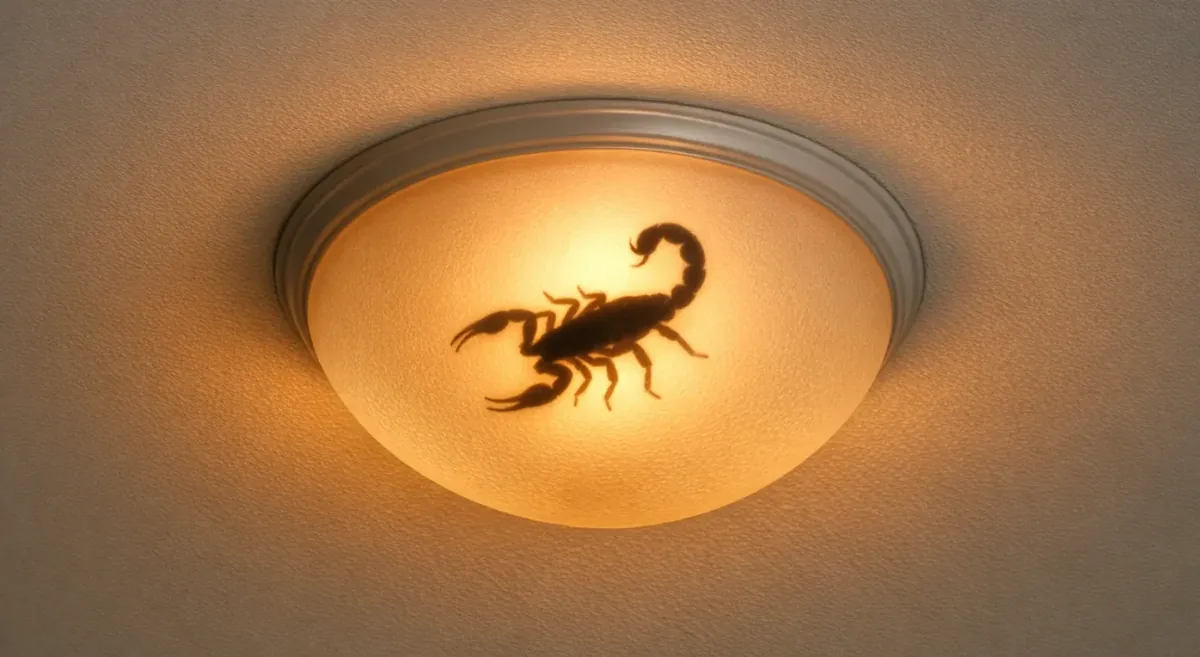
Yes—scorpions in Florence are nocturnal, hunting and exploring after dark and hiding during the day. That’s why most sightings happen at night or in the early morning, and why you rarely see one out in the open at noon.
Use that behavior to your advantage when you search. Because scorpions prefer the perimeter (thigmotaxis), follow the edges: run your eyes and your flashlight along baseboards, wall corners, and the seams where cabinets meet the floor. That’s their travel network.
What weather makes scorpions show up more?
Warm overnight temperatures and monsoon humidity are the biggest triggers. Muggy summer nights mean more insect prey and more comfortable conditions for scorpions to roam, which is why calls climb during monsoon season.
After a storm rolls through, keep a simple tonight’s routine: shake out shoes and slippers, snap towels before use, peek inside garage bins, and check patio cushions and folded chairs before you sit or bring them in.
How dangerous is a scorpion sting in Florence—and when should you get medical help?
Most scorpion stings in Florence are painful but manageable at home, causing local burning, tingling, and numbness that fades over hours. Severe, whole-body reactions are less common but urgent—especially in young children. The single most important step for any sting is to call Poison Help at 1-800-222-1222; they’ll tell you whether to stay put or head in.
Watch for these red flags, which signal a systemic reaction:
- Trouble breathing or swallowing
- Uncontrolled, roving eye movements
- Heavy drooling or excessive secretions
- Muscle twitching, jerking, or spasms
Any of those, or a sting to a small child, means don’t wait—get medical care fast. According to Dr. Meghan Spyres, medical toxicologist, Banner Poison and Drug Information Center, “The young, like little kids, and then more elderly. So, the extremes of age are more at risk for these more severe reactions.”
What does a scorpion sting feel like and how long does it last?
A scorpion sting usually causes immediate, sharp burning pain right at the site, followed by tingling and numbness that can spread nearby. In Arizona cases, pain is reported in about 88.9% of stings and local numbness in about 62.2% (Klotz et al. 2021). For most healthy adults, the worst eases within several hours.
Don’t do any of these: don’t cut the wound, don’t try to suction the venom, and don’t rely on folk cures. They don’t help and can make things worse. For the step-by-step, read our bark scorpion sting first-aid guide.
What should you do in the first 5 minutes after a sting?
Stay calm and keep it simple. Follow these steps:
- Wash the sting site with soap and water.
- Apply a cold pack wrapped in cloth to ease pain and swelling.
- Keep the stung limb still and at rest.
- Note the time and jot down any symptoms as they appear.
- Call Poison Help at 1-800-222-1222 for guidance.
Treat small children, older adults, and anyone medically fragile as higher urgency—their reactions can escalate faster. Learn why in our overview of why children are more at risk from scorpion stings.
When should you go to urgent care or the ER in Florence?
Go straight to urgent care or the ER—or call 911—if you or a child shows any of these red flags:
- Difficulty breathing or swallowing
- Roving, uncontrolled eye movements
- Excessive drooling or secretions
- Muscle twitching, jerking, or restlessness that won’t settle
Effective antivenom exists for severe cases, so don’t try to wait out systemic symptoms. Make Poison Help your first call for any sting—they coordinate directly with emergency services when it’s needed.
How do you keep scorpions out of a Florence home—and how do you know your plan is working?
A solid plan has three layers, in order: seal them out, remove the yard harborage and prey that draw them in, and monitor so you’re not guessing. Sealing cuts entry points, yard work lowers the pressure at your walls, and monitoring tells you whether it’s actually working.
Monitoring is the layer most people skip, and it’s what closes the loop. Because scorpions travel the perimeter (thigmotaxis), watching walls and edges after dark is where the real information lives. That’s the gap automated systems like Scorpion Alert fill—photo-verified, night-active detection with real-time alerts, so you find out a scorpion is inside within seconds instead of by stepping on it.
What's the fastest 'weekend' sealing plan for Florence homes?
Knock out the highest-value gaps in a single weekend:
- Install a door sweep on the garage-to-house door and all exterior doors
- Replace worn weatherstripping around door and window frames
- Caulk gaps around plumbing penetrations, cable lines, and where pipes enter walls
- Screen or cover weep holes, vents, and other appropriate openings
A Florence reality check: scorpions can exploit gaps as thin as a credit card, so consistency and thoroughness beat one big spray day. Seal well once and you cut off the routes for good.
What habits reduce sting risk inside the home?
Small daily habits matter more than any gadget. In the bedroom, pull your bed a few inches off the wall, skip the bed skirt so fabric doesn’t reach the floor, and keep the floor clear of clothing and towels.
During the day, shake out shoes, slippers, and towels before using them, wear closed-toe slippers when you get up at night, and reduce clutter along the base of walls where scorpions travel. These are the low-effort moves that keep the most common stings—feet and hands—from happening.
What's the best way to monitor for scorpions without nightly blacklight walks?
The problem with manual checks is timing: scorpions are nocturnal and silent, so a once-a-night flashlight sweep usually finds them after they’ve already been roaming your home for hours. You can’t be awake watching every baseboard all night.
That’s the gap Scorpion Alert fills. Small Detectors plug into standard wall outlets right on the perimeter where scorpions travel, and each one shines 365nm UV light onto the floor to catch the greenish scorpion glow. The Detectors only scan when the room is dark—tuned for the exact hours scorpions are active—and they watch continuously so you don’t have to.
The homeowner benefit is speed and certainty. When a Detector spots a scorpion, you get an alert with a photo and an AI confidence score, delivered by push notification and/or SMS within seconds. You grab a UV flashlight and a glass, go to the room that triggered, and handle it—no guessing whether that shadow was a scorpion.
Where should you place monitors first in a Florence house?
Start with the entry-adjacent and highest-risk rooms: the garage entry, bedrooms, kids’ playrooms, and the laundry room or bathrooms. These are where Florence scorpions enter and where stings most often happen, so covering them first gives you the biggest safety return.
Multiple locations matter because a single Detector only watches one room’s perimeter, and scorpions can slip in through several routes. A good rule of thumb for a typical home is 3 to 5 monitoring points—enough to cover the main entry path and the rooms where people sleep and children play.
In Florence, scorpions tend to show up most from late spring through fall—especially at night—so it helps to stay consistent with simple habits like sealing entry points, reducing hiding spots, and checking dark areas before kids and pets do. If you want an extra layer of confidence during peak season, Scorpion Alert can help you stay on top of activity and respond quickly when they turn up.