Are scorpions a problem in Mesquite?
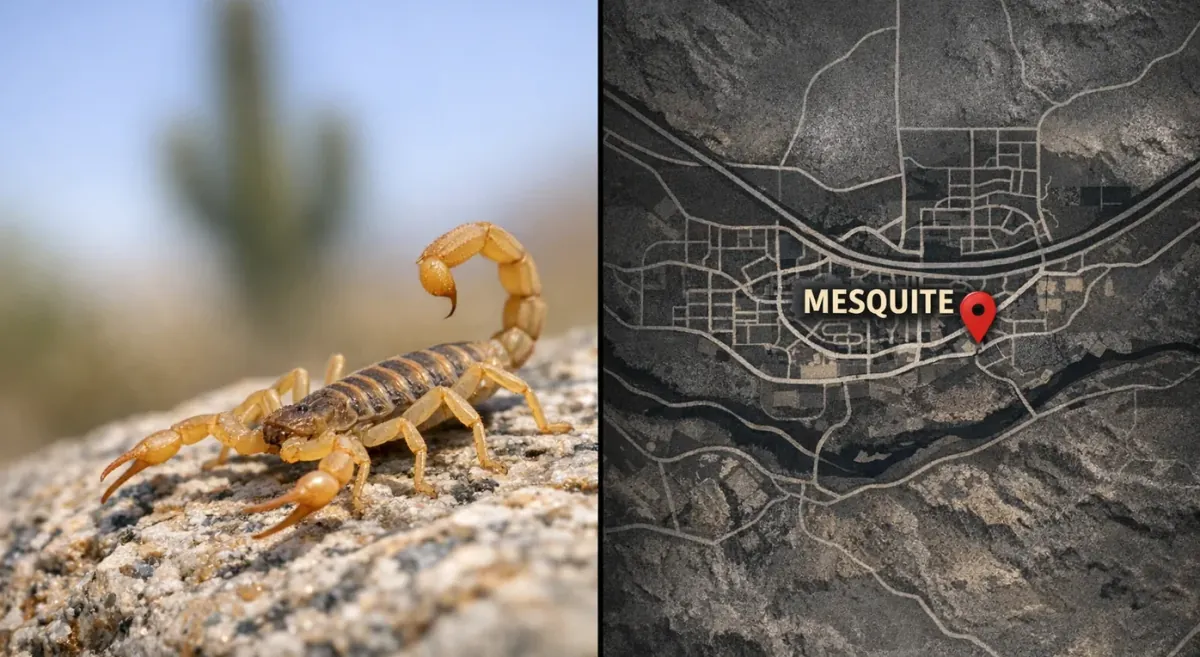
Yes — scorpions are a real and common issue in Mesquite, Nevada. Sitting in the far northeast corner of Clark County on the edge of the Mojave Desert, Mesquite gives scorpions exactly the warm, dry habitat they thrive in. Homeowners here regularly find them in yards, garages, and occasionally indoors — especially during the hot months.
Within 30km of Mesquite, iNaturalist observers have logged 46 research-grade scorpion sightings, with the Desert Hairy Scorpion the most-reported species (iNaturalist). Nevada isn't Arizona, but it's no lightweight either. Between 2005 and 2015, Nevada logged roughly 707 scorpion exposures a year — about 4.2% of the national total (Kang & Brooks 2017). A follow-up study specifically flagged southern Nevada's Clark County as an area of growing scorpion exposure (Kang & Brooks 2017).
Sightings tend to cluster by neighborhood and yard condition. Homes backing onto desert washes, undeveloped lots, or golf-course edges often see more activity than tightly built interior streets.
What makes Mesquite a scorpion-friendly area?
Mesquite sits squarely in Mojave Desert country — hot summers, mild winters, and low humidity. That climate suits scorpions perfectly. What really tips the scales is the micro-habitat around a typical Mesquite home: rock and gravel landscaping, decorative boulders, block walls, and stacked firewood all create cool, dark hiding spots.
Irrigation can make it worse. Drip lines and lawn watering create damp, shaded pockets in an otherwise bone-dry environment, and those moist spots draw in the insects scorpions eat. Give a scorpion food, shelter, and a little water, and it has every reason to stick around.
Are scorpions more common in certain parts of town?
Absolutely. Properties near desert washes or open lots sit next to prime scorpion habitat, so encounters are more frequent there. Newer developments can see short-term spikes too — construction disturbs the ground and pushes displaced scorpions toward whatever shelter is closest, which is often a brand-new home.
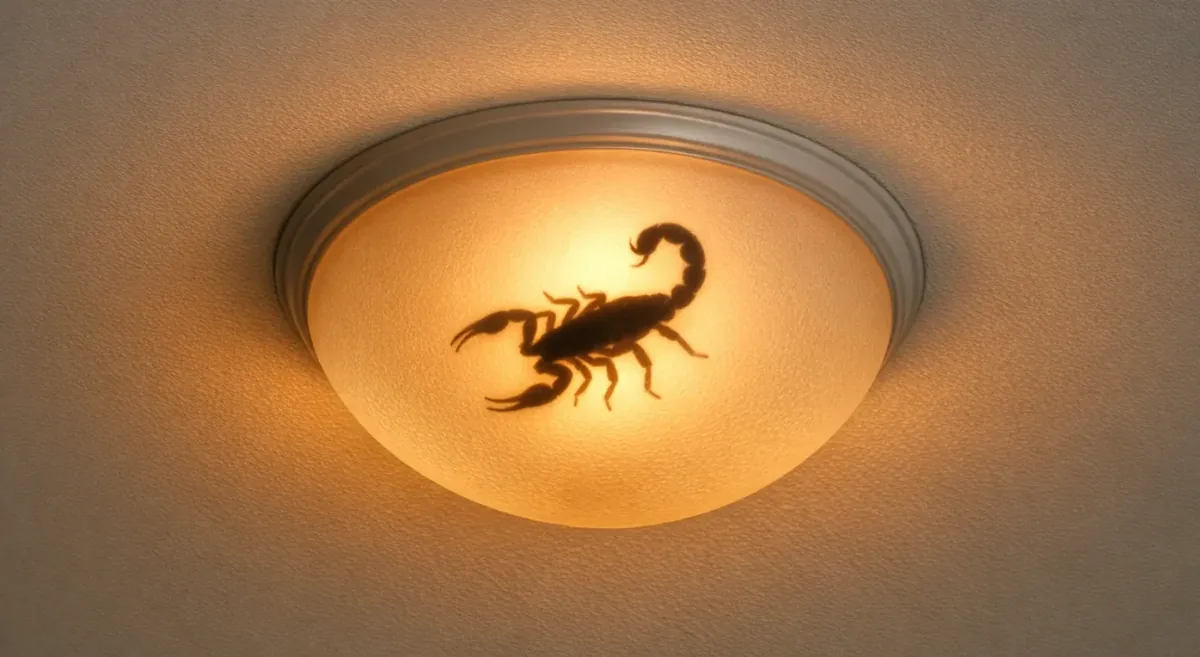
Heavy landscape lighting can play a quiet role as well. Bright exterior lights attract moths, crickets, and other insects — and where the prey gathers, the predators follow. A well-lit patio can turn into an all-night buffet line.
How do scorpions get into Mesquite houses in the first place?
Scorpions can squeeze through gaps far smaller than you'd expect. The most common entry routes are worn door sweeps, weep-screed gaps at the base of stucco, garage thresholds, plumbing and electrical penetrations, and attic or soffit openings. Because scorpions are thigmotactic — they navigate by hugging edges and surfaces — they naturally follow foundation lines and wall bases straight to these openings. For a deeper look, see our guide to the top ways scorpions get into your home.
Which scorpion species lives in Mesquite?
The primary scorpion around Mesquite is the Desert Hairy Scorpion (Hadrurus arizonensis), which accounts for 22 of the 46 local iNaturalist records — nearly half. It's the largest scorpion in North America, and while it looks intimidating, its sting is generally mild. A handful of Arizona bark scorpion (Centruroides sculpturatus) records also show up in the area, so it pays to know the difference.
Meet the Desert Hairy Scorpion (primary Mesquite species)
The Desert Hairy Scorpion is a big, ground-dwelling species — adults can reach five to six inches long. It has an olive-to-tan body with darker markings and fine sensory hairs on its tail and legs, which give it its name. It spends most of its time outdoors, burrowing in loose soil, but it will wander into garages and homes in search of prey or moisture, especially in the heat of summer.
Where they hide around Mesquite homes
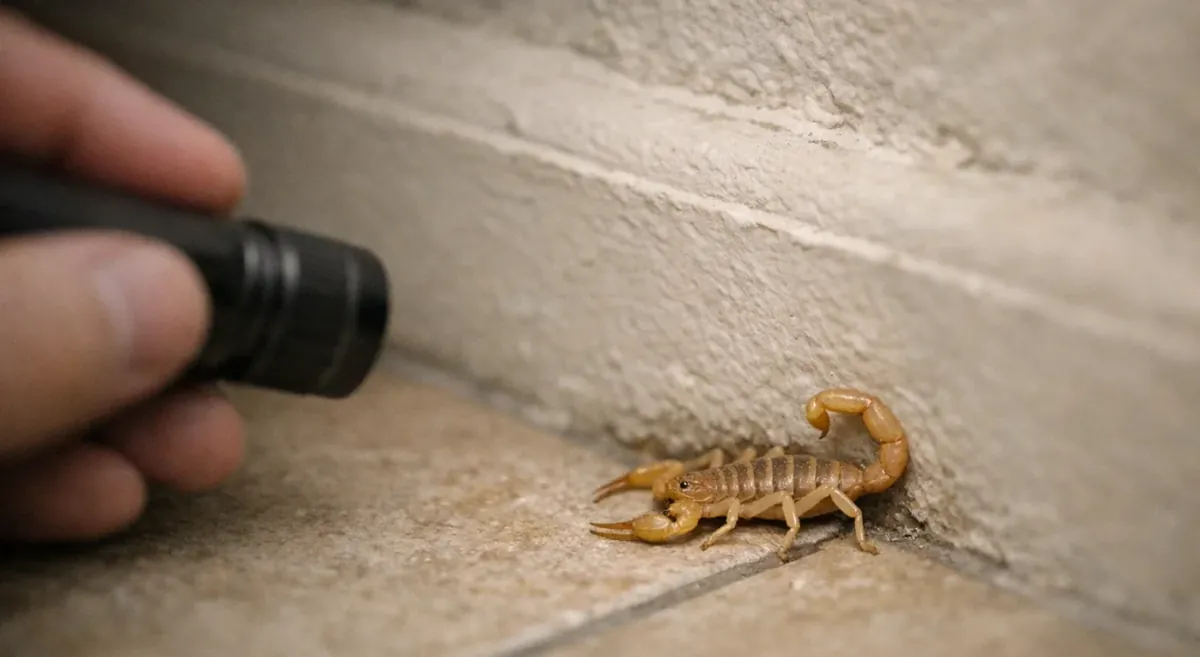
Look for harborage in cool, dark, protected spots. Common hideouts include under landscape rocks and pavers, beneath stacked firewood, around pool equipment, and inside cluttered garages. Indoors, they favor edges — expect them along baseboards, in corners, and tucked behind furniture at night, thanks to that same perimeter-hugging instinct.
Can scorpions climb walls (and end up in beds or tubs)?
Yes, many scorpions can climb rough vertical surfaces like stucco, block walls, and wood, using texture and edges for grip. That's how one occasionally turns up in a bathtub or on a bedspread. Smooth surfaces like glazed porcelain defeat them, which is why a scorpion that falls into a slick tub often can't climb back out. Since climbing is part of their toolkit, the real fix is reducing access and sealing entry routes — the exclusion steps we cover near the end of this guide.
When are scorpions most active in Mesquite?
Scorpions in Mesquite are active from early spring through fall, with a clear peak in the hottest summer months. As nighttime temperatures climb in May and stay warm through September, scorpion movement ramps up sharply. Summer accounts for the overwhelming majority of scorpion cases nationwide (Kang & Brooks 2017).
Mesquite scorpion season: what months feel the worst
Think of it as a temperature curve. Activity wakes up in spring as days warm, builds to a peak from roughly June through August when Mesquite bakes, then tapers through fall before scorpions go quiet in winter. Warm nights are the trigger — the hotter the evening, the more likely you are to spot one crossing a patio or slipping under a door.
Why you see them at night (and along baseboards)
Scorpions are nocturnal hunters. They ride out the daytime heat in shelter and emerge after dark to feed.
49% of scorpion envenomations happen between 6 PM and midnight — the peak activity window.
— Isbister & Bawaskar, N Engl J Med 2014
When they do move, they don't stroll across open floors. They stick to edges, corners, and tight paths — following baseboards and wall bases the same way they follow foundation lines outdoors. That predictable travel pattern is exactly why perimeter monitoring works so well.
Do rainstorms or irrigation change activity?
They can. Rain and monsoon moisture can push scorpions to move as burrows flood or humidity shifts, and a wet spell often brings a wave of prey insects that scorpions follow. In Mesquite, your own irrigation can mimic this effect on a smaller scale. Watering late in the evening keeps soil damp overnight — prime foraging conditions. Shifting irrigation to early morning lets the surface dry out before scorpions get active.
How dangerous is a scorpion sting in Mesquite?
For most healthy adults in Mesquite, a scorpion sting is painful but not dangerous. The dominant local species, the Desert Hairy Scorpion, delivers a sting often compared to a bad bee sting — sharp pain and localized swelling that fades within hours. The bigger concern is the less-common Arizona bark scorpion, whose venom can cause more serious systemic symptoms, particularly in vulnerable people.
What a sting can feel like (common symptoms)
Expect immediate pain at the site — reported in 88.9% of stings — often followed by tingling or numbness, which shows up in about 62.2% of cases (Klotz et al. 2021). Swelling and redness are common. Anxiety and a racing heart can be normal reactions too, and they can amplify how bad everything feels. Red-flag symptoms are a different matter: trouble breathing or swallowing, uncontrolled muscle twitching, roving eye movements, and intense full-body reactions.
Who should take a Mesquite scorpion sting more seriously?
Certain groups face higher risk and should be watched closely: very young children, older adults, anyone with a known venom allergy, and anyone showing systemic symptoms. Children under 10 have the highest rates of serious effects, hospitalization, and ICU admission in both Arizona and Nevada data (Kang & Brooks 2017). If a small child is stung, treat it as urgent. Our article on why children are more at risk from scorpion stings explains the reasons.
Is it the same risk as Arizona bark scorpions?
Not quite. Risk varies by species. The Desert Hairy Scorpion that dominates Mesquite is far less venomous than the Arizona bark scorpion, so a typical local sting is milder. That said, bark scorpions do occur in the area, and you can't always identify the culprit in the moment. The safe rule: any severe or escalating symptoms deserve medical evaluation, regardless of which scorpion you think stung you.
What to do if you're stung in Mesquite
Stay calm, wash the area, apply something cool, and watch for symptoms. Most Mesquite stings can be managed at home, but knowing your escalation triggers matters. Keep the Poison Help line handy: 1-800-222-1222, staffed 24/7 with expert guidance.
Immediate first aid: the first 5–10 minutes
- Wash the sting site thoroughly with soap and water.
- Remove any rings, watches, or tight clothing near the sting in case swelling develops.
- Apply a cool compress or ice pack wrapped in cloth to reduce pain and swelling.
- Keep the person calm and still — panic and movement can make symptoms feel worse.
- Take an over-the-counter pain reliever if needed, and monitor closely for the next few hours.
When to call Poison Control or seek urgent care
Call Poison Control at 1-800-222-1222 right away if the person stung is a young child, or if you see any of these: severe or spreading pain, numbness that keeps expanding, trouble breathing or swallowing, vomiting, muscle spasms or twitching, or facial and eye symptoms. For breathing difficulty or a collapse, call 911. Mesa View Regional Hospital at 1299 Bertha Howe Ave in Mesquite — about 2.7 miles from the city center — is your nearest emergency care, reachable at 702-346-8040.
If you can do it safely: how to contain the scorpion for ID
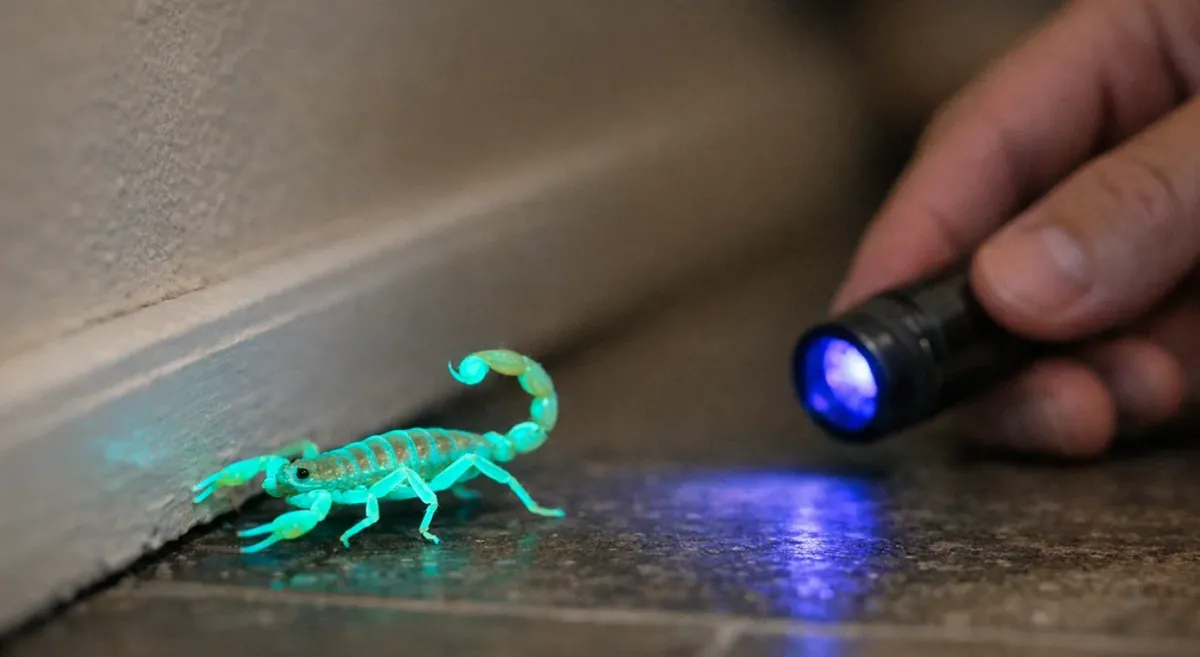
Identifying the scorpion helps, but never handle one directly. Drop a wide glass or clear container over it, then slide a stiff piece of paper or cardboard underneath to seal it in. Scorpions glow a bright greenish color under UV light, which makes them much easier to spot and contain in a dark room. For what to avoid in the heat of the moment, read our guide on what not to do after spotting a scorpion.
How to keep scorpions out of your Mesquite home
Effective scorpion control in Mesquite works from the outside in: seal the home, strip away outdoor harborage, cut off the food supply, and add nighttime monitoring indoors. Since 97.8% of scorpion envenomations happen inside the home (Kang & Brooks 2017), keeping them out of your living space is the whole ballgame.
Mesquite exclusion checklist (doors, garage, and slab gaps)
- Install tight door sweeps on every exterior door, including the garage-to-house door.
- Reseal thresholds and add fresh weatherstripping where light shows through gaps.
- Check the garage side and overhead door for gaps and worn seals.
- Inspect the weep screed at the base of stucco and seal oversized gaps.
- Caulk around plumbing and electrical penetrations, under sinks, and behind appliances.
Yard + landscape changes that reduce scorpions fast
Outdoor harborage is what feeds an indoor problem. Clear out rock piles and decorative-stone clutter near the foundation, move firewood off the ground and away from the house, and trim shrubs and tree limbs so they don't touch the walls. Dial in your irrigation too — avoid persistently damp zones by watering in the early morning so the soil dries before dark.
Reduce their food: insect control that actually helps scorpion control
Scorpions go where the prey is. Crickets and roaches are the main draw in Mesquite yards, so cutting their numbers cuts scorpions. Swap bright white exterior bulbs for yellow "bug" LEDs that attract fewer insects, keep trash sealed, and use targeted pest control around the perimeter. Our roundup of the top things that attract scorpions covers more, and if you've heard about spray-on repellents, read the myths about scorpion repellents before spending money.
Nighttime monitoring for peace of mind (without sticky traps)
Sealing and yard work reduce the odds, but they can't tell you when a scorpion actually gets inside. That's the gap Scorpion Alert fills. Each Detector plugs into a standard wall outlet along the room perimeter — right where scorpions travel — and shines a 365nm UV light on the floor below. When a room goes dark, it scans for that telltale greenish glow and sends a photo-verified alert to your phone within seconds. No sticky traps to check, no nightly flashlight patrols. Place Detectors near entry points, in bedrooms, and in water-source rooms like bathrooms and laundry areas. Pricing is a monthly subscription that drops with every Detector you add; see the live rates at scorpionalert.com/pricing.
Living in Mesquite, Nevada means scorpions can be an occasional reality—especially on warm nights when they’re most active—so it helps to have a simple way to check dark corners before you or your pets do. Scorpion Alert uses 365nm UV light and automatically runs when it’s dark to make scorpions easier to spot around the home. Learn more at Scorpion Alert.