What does it mean if there's a scorpion in my light fixture?
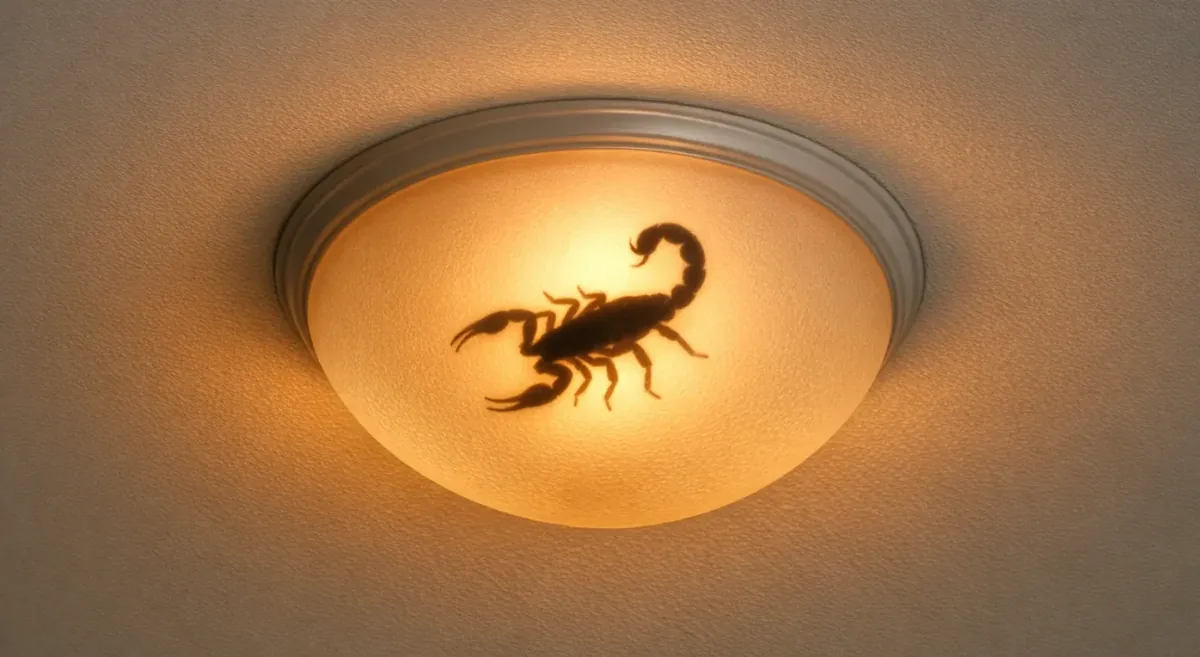
A scorpion in your ceiling light almost always means it came from inside your ceiling. It was traveling the attic or wall voids above the room and dropped into the fixture through the gap around the electrical box, where the wiring enters — it did not climb up your wall and into the light from below. That direction matters: the fixture is fed from the dark space overhead, so a scorpion in the dome is a sign they're already getting into your attic and wall cavities, not a stray that wandered in.
First, gauge urgency. Is it alive or dead? A live scorpion overhead calls for careful, hands-off removal. A dead one is lower risk, but it's still worth understanding how it got there. Have you spotted others lately? Say you saw one in the bathroom last week, and now there's a dark shape inside the kitchen dome — that pattern points to an active route through your ceiling, not bad luck.
Does this mean there are scorpions in my walls or attic?
Almost certainly — that's essentially the only way one reaches a ceiling fixture. There's no opening on the room side big enough to matter; the route in is from the void above, through the gap where the wiring drops into the junction box. So a scorpion in the dome means the space over your ceiling — the attic and wall cavities — is open to them.
This doesn't mean your walls are packed with scorpions. It means at least one is using that highway, and others can follow the same path. Knowing how scorpions get into your home helps you trace the route back to where they're climbing in instead of guessing.
Is it more concerning if it's a bark scorpion?
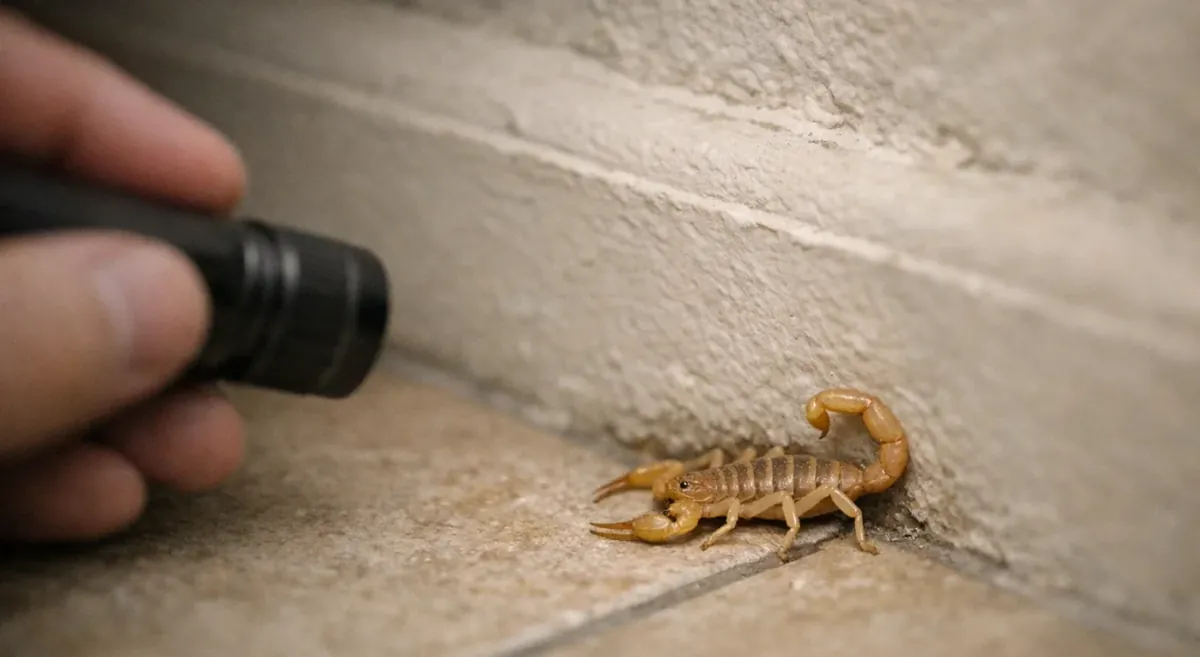
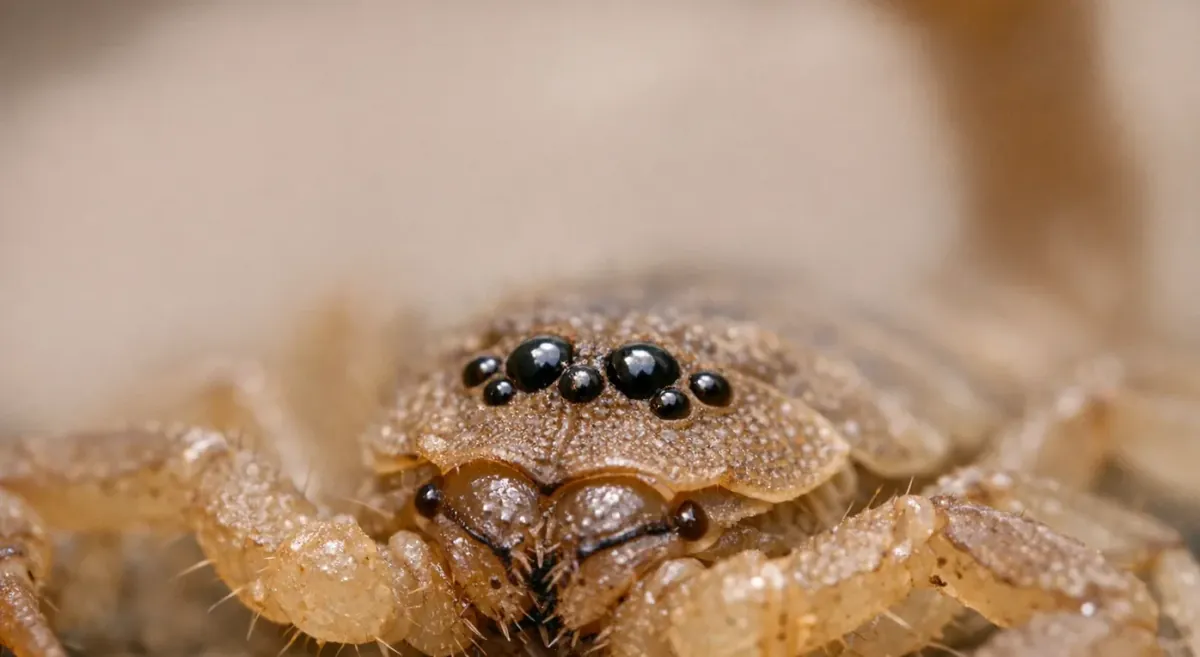
Yes. The Arizona bark scorpion is the most dangerous species in the Southwest and the most capable climber — which is exactly how it reaches your attic in the first place, scaling exterior walls and slipping inside. It's also the species most likely to turn up high in a fixture. A quick ID checklist:
- Color: light tan to yellowish, often translucent.
- Size: roughly 2 to 3 inches including the tail.
- Profile: slender pincers and a thin tail, rather than thick, lobster-like claws.
Bark scorpions climb walls and hang upside down with ease, so the void above your ceiling is easy terrain for them. Treat any uncertain ID as higher risk, especially since children face greater danger from scorpion stings than adults do. When in doubt, handle it like a bark scorpion.
What clues tell me how it got into the fixture?
Look up, not down. The scorpion came in through the gap around the ceiling electrical box — the opening where the wiring or conduit drops into the junction box, plus the seam where the fixture's canopy meets the drywall. Those gaps connect straight to the void above, and even a credit-card-width opening is enough to pass through.
Scorpions travel those tight, dark spaces looking for shelter and prey. The box gap let this one drop into the dome — and once it was inside the smooth glass, it couldn't climb back out.
Why would a scorpion end up in a ceiling light fixture?
Because the fixture sits at the bottom of a route scorpions already travel. They climb a home's exterior — slipping between the stucco and the wall sheathing — into the attic and wall voids, then move along those voids until they hit an opening. The gap around a ceiling electrical box is one of the easiest, so they squeeze through and drop into the dome. Warmth from the housing and the dark crevices around the box make it a natural place to end up.
Are they attracted to the light, the heat, or the bugs?
Mostly the route and the shelter — not the light. It's easy to assume the bulb lures them up, but a scorpion in an interior ceiling fixture arrives from the dark void overhead before the light matters at all. The real draws are the warmth the housing holds and the tight, dark gap around the box. Insects that gather at a glowing fixture can add to the appeal, but the scorpion reaches the dome from inside the ceiling, not by following the glow up a wall.
Can scorpions really get all the way up there?
Yes — but not by climbing your interior walls. They reach the ceiling from above. Scorpions are excellent climbers, and bark scorpions in particular scale exterior stucco, brick, and block, slip into the attic, and travel the voids over your ceilings. So a fixture sighting reflects a climber that got into the space above your ceiling, not one that scaled your living-room wall to the light.
How do electrical conduit gaps and junction boxes become entry routes?
Wiring has to pass through the ceiling at the junction box, and that penetration rarely seals perfectly. The gap around the conduit, cable, and box links the attic void directly to the fixture below, so it works like a trapdoor. The areas to remember for sealing later are the canopy edges, the wire knockout holes, and any attic penetrations above the fixture.
What should I do right now if I find a scorpion in a light fixture?
Keep people and pets clear, kill the power at the breaker, and remove the scorpion without bare-hand contact using tongs and a sealed container. Handle a live one with extra caution and a dead one with gloves. If the fixture is hard to reach or you can't kill the power safely, stop and call a professional.
Step 1: Make the area safe (kids, pets, and power)
- Move children and pets out of the room.
- Put on closed-toe shoes and don't stand directly under the fixture.
- Turn off the light switch.
- Shut off the circuit breaker for that fixture before touching any hardware.
How do I remove a LIVE scorpion without getting stung?
Work slowly and keep your hands far from the tail.
- Grab long tongs or forceps, a wide-mouth container, and a rigid card or lid.
- Gently guide or lift the scorpion into the container without shaking it loose.
- Slide the card over the opening and seal the lid.
- Place the sealed container or a zip-top bag into an outdoor trash bin, or release it well away from the house.
Resist the urge to swat it overhead. Knowing what not to do after spotting a scorpion keeps a tense moment from becoming a sting.
How do I remove a DEAD scorpion trapped inside the dome?
With the power off, there are two scenarios. If the glass dome is removable, loosen the finial or screws, lower the dome carefully, and tip the carcass into a bag. If the fixture is sealed, flush-mounted, or awkward to access, call an electrician rather than forcing it and risking the wiring or mount. Either way, wear gloves, wipe the area, and don't crush the carcass with bare hands.
When should I call a pest control company or electrician?
Escalate if the fixture is high or unstable to reach, if you can't confidently shut off the breaker, if you've seen multiple scorpions over several days, or if you suspect a wall-void or attic problem. Snap a photo first. It helps with identification and future prevention planning, and a pest control company can pinpoint where they're getting into the attic.
Is a scorpion in a light fixture dangerous (stings, fire risk, and myths)?
The two real concerns are getting stung during removal and whether the scorpion poses an electrical hazard. The sting risk is manageable with careful, hands-off technique. The fire risk is low for a properly enclosed fixture. Most of the scary advice online doesn't hold up.
Can a scorpion in a fixture cause an electrical or fire hazard?
A single scorpion is unlikely to short a properly enclosed fixture. Debris and carcasses inside can cause odors, attract other pests, or interfere with contacts in certain designs, but that's usually a nuisance, not a fire. The conservative move is to power off and remove it safely. If you ever see scorch marks or flickering, stop and call an electrician.
Does crushing a scorpion attract more scorpions?
This is often exaggerated. Scorpions can leave chemical cues, and they sometimes cluster in shared shelters, but one crushed scorpion does not guarantee an invasion. If you're curious whether scorpions are social or solitary, the truth is nuanced. Gentle containment is still best — it's less messy, less risky, and leaves no guesswork.
Should I leave the light on to kill it with heat?
Skip it. A standard LED bulb rarely gets hot enough to reliably kill a scorpion, the lit fixture keeps drawing insects all night, and it does nothing about the gap the scorpion entered through. Controlled removal is faster, safer, and actually addresses the problem. This "leave the light on" tip is one of several popular ideas covered in our roundup of scorpion repellent myths that don't deliver.
How do I prevent scorpions in my home—and what role does UV detection play?
Prevention here means closing the route from the void above, sealing where scorpions climb into the attic in the first place, and catching the ones already inside as they move at night. Sealing the gap around the electrical box removes the trapdoor into the fixture, and UV detection handles the nighttime watch so you're not relying on luck.
How do I seal electrical gaps around ceiling fixtures and junction boxes?
With the power off, work the fixture from the canopy inward.
- Inspect the canopy edge where it meets the ceiling for daylight-width gaps.
- Check the screw holes and the wire-entry knockouts on the junction box.
- Fill small cracks with paintable caulk rated for the location.
- Use foam gaskets or appropriate sealant where larger gaps or attic penetrations exist.
Remember that even a credit-card-width opening is enough for a scorpion to slip through, so don't skip the small stuff.
How do I use UV light scorpion detection to inspect my home at night?
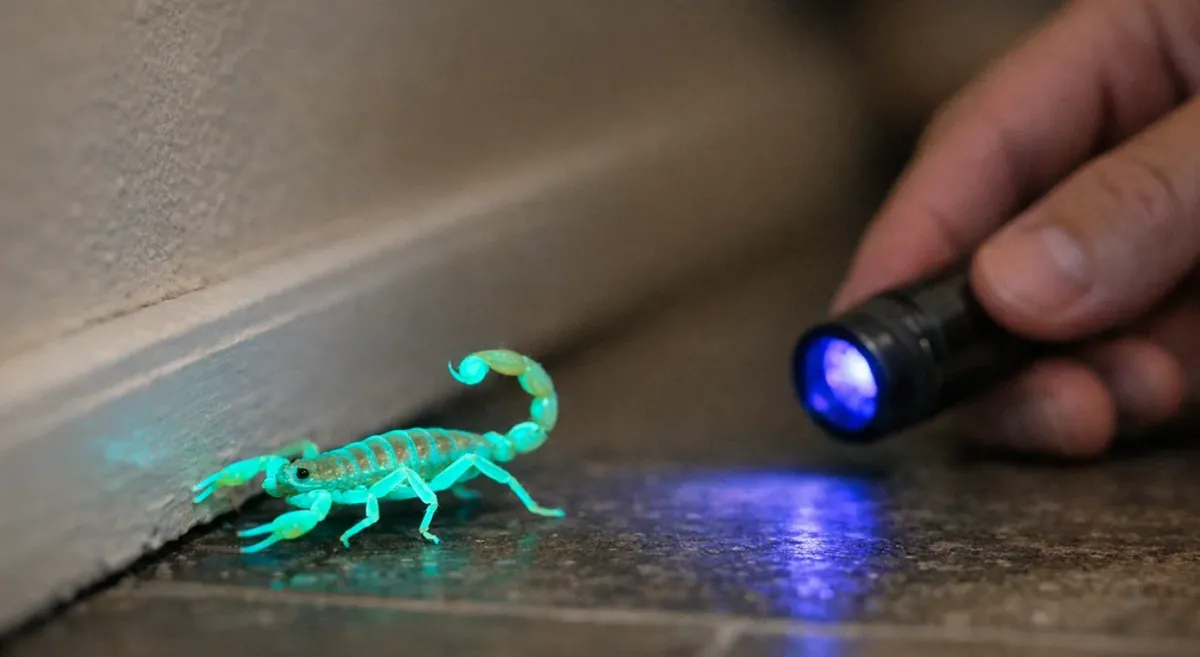
Scorpions glow a bright greenish color under UV light, which makes a nighttime blacklight sweep surprisingly effective. With the room dark, scan the baseboards, corners, door thresholds, garage edges, and the floor below or near the problem fixture. The glow turns a hard-to-spot pest into an obvious one.
Do scorpion detectors actually help keep homes safer?
Continuous monitoring beats the occasional manual check, because scorpions are most active after dark and travel room perimeters as they hug walls and edges.
68.2% of all US scorpion exposures reported to poison centers from 2005 to 2015 happened in Arizona.
— Kang & Brooks 2017
Scorpion Alert detectors plug into wall outlets along that perimeter and shine 365nm UV light onto the floor below — the wavelength that produces the strongest scorpion glow. They activate only in darkness, when scorpions roam, and send photo-verified alerts to your phone within seconds, so you can respond fast without nightly blacklight walks.
Where should I place detectors and what should I do after an alert?
Put detectors near entry points and in high-risk rooms like bedrooms, nurseries, laundry rooms, and bathrooms. Whole-home coverage with several devices catches scorpions that slip past one room. When an alert comes in, follow a simple response plan:
- Grab a UV flashlight and a glass with a stiff card.
- Head to the room that triggered the alert and find the glowing scorpion near that detector.
- Trap it under the glass, slide the card underneath, and carry it outside to release.
That turns a scary 2 a.m. discovery into a calm, controlled response — with a record of where and when it happened.
Finding a scorpion in a light fixture usually means they're moving through the attic and wall voids above your ceiling, so it's worth checking nearby ceiling penetrations, edges, and other tucked-away spots along that route. If you want a simple way to keep tabs after an encounter, Scorpion Alert uses UV-based monitoring with photo-verified alerts to help you spot activity early.