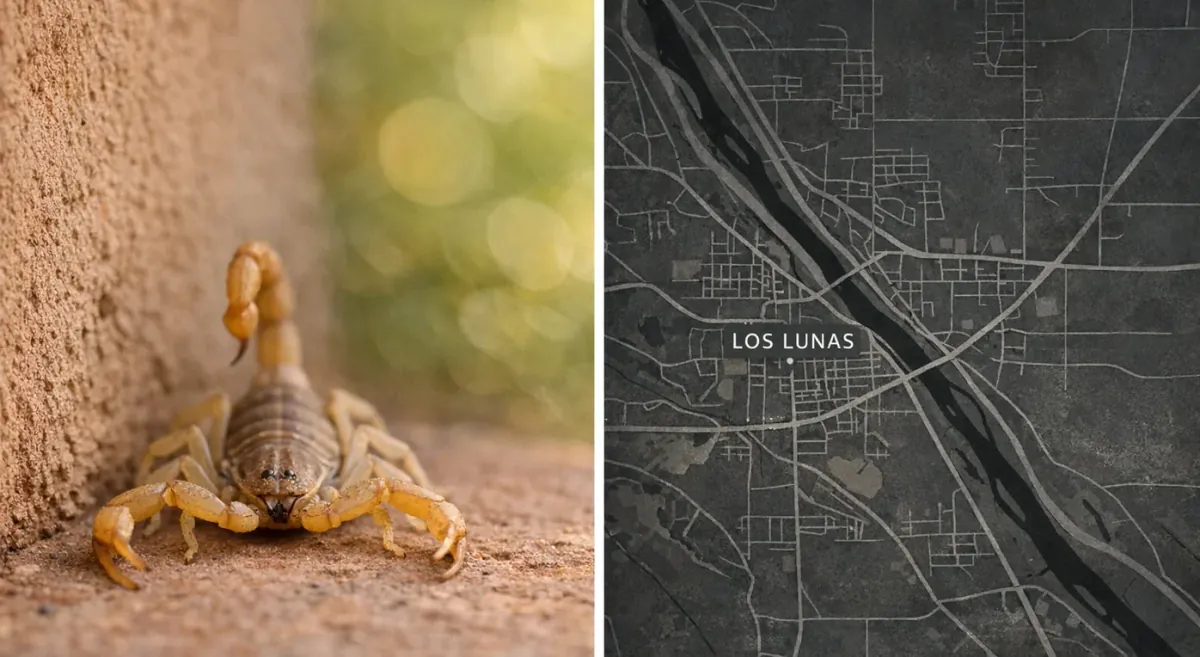
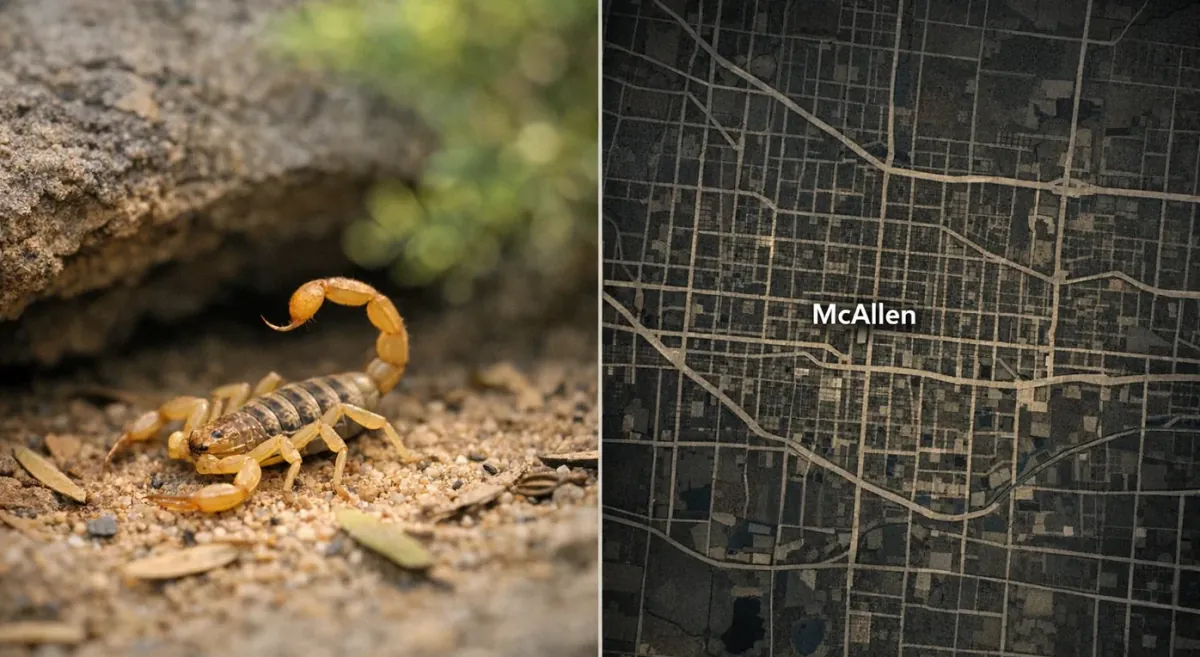
Are scorpions a problem in Los Lunas?
Yes — Los Lunas sits in scorpion country, and homeowners here do run into them, especially along the desert edges of Valencia County. Sightings tend to spike in the warm months and near homes that back up to open land. It's a real presence, but it's manageable with the right plan.
That "sudden" scorpion on the bathroom tile usually isn't random. Homes near arroyos, undeveloped lots, and irrigated yards give scorpions both cover and moisture. New Mexico as a whole reports far fewer scorpion cases than Arizona, where Kang & Brooks 2017 found 68.2% of all US scorpion exposures occur — but "fewer" doesn't mean "none." Scorpions in Los Lunas, New Mexico are very much a block-by-block reality.
Where Los Lunas homeowners tend to run into scorpions
Scorpions love edges. Rock borders, stacked firewood, block walls, and the damp soil around irrigated lawns all make ideal daytime hiding spots. From there, they move at night while hugging surfaces — a behavior called thigmotaxis. Because they navigate by keeping their body against a wall, indoor scorpions almost always show up along baseboards, in door thresholds, and in dark corners, not the middle of a room.
Picture a scorpion slipping in under a garage door and following the wall straight into a laundry room. That's not bad luck — it's exactly how they travel.
Why you might see one scorpion… and then another
A single scorpion can be a lone wanderer that slipped past a door sweep. But two or three in a week usually means your home is offering something they want: prey insects, moisture, and clutter to hide in. Crickets, silverfish, and other bugs draw scorpions in — and the top things that attract scorpions to your home almost always trace back to food and water.
Ask yourself a few quick questions: Do you have leaky faucets or damp bathrooms? Piles of boxes, shoes, or laundry on the floor? Insects showing up at night? If you answer yes to two or more, you likely need ongoing control, not a one-time swat.
What 'Valencia County scorpions' means for your house
County-level presence tells you scorpions are in the area — it doesn't tell you what's happening on your street. Landscaping, home age, and construction gaps can make one house a magnet and the house next door nearly scorpion-free. So don't panic over the "Valencia County scorpions" label. Instead, focus on the two things you can control: detecting activity around your home and sealing the ways scorpions get inside.
Which scorpion species lives in Los Lunas?
The most-documented scorpion within 30km of Los Lunas is the Lesser Stripetail Scorpion (Chihuahuanus coahuilae), based on research-grade iNaturalist observations. Striped bark scorpions (Centruroides vittatus) also turn up nearby. Don't assume danger at a glance — snap a photo and identify it before you worry.
Lesser Stripetail Scorpion: what it looks like
The Lesser Stripetail is a small, modest desert scorpion — typically pale tan to yellowish-brown, often with faint darker striping down the back and a slender tail. Adults stay on the smaller side, and the pincers are relatively thin rather than crab-like and bulky.
Don't confuse it with a couple of lookalikes. The striped bark scorpion has two clear dark stripes running its length and slimmer pincers. The desert sand scorpion (Paruroctonus utahensis), also recorded near town, is stockier and pale. A clear photo of the tail and pincers usually settles the ID quickly.
Do scorpions in Los Lunas glow under blacklight?
Yes. Every scorpion species in the area glows a bright greenish-blue under ultraviolet light because of compounds in their outer shell. Shine a UV flashlight across a dark floor and a hidden scorpion lights up like a tiny neon sign — much easier than spotting a tan bug against tan tile.
That fluorescence is exactly what Scorpion Alert Detectors are built around. They use 365nm UV — the wavelength that produces the strongest glow — and capture photo-verified alerts, which over time can also help you confirm which species keeps visiting.
Does species change how you should do scorpion control?
Not much. Sting severity varies between species, but the prevention playbook is the same across all of them: reduce hiding spots, seal entry points, and watch the room perimeter. Focus your effort where scorpions actually travel — along walls and baseboards — not the open middle of a room. Nail the edges and you've covered where nearly every indoor scorpion moves.
When are scorpions most active in Los Lunas?
Scorpions in Los Lunas are most active on warm summer nights, generally from late spring through early fall, and most of that movement happens after dark. Summer accounts for the overwhelming majority of scorpion encounters nationwide, per Kang & Brooks 2017 — warm evenings are when to be most alert, especially with kids and pets.
Scorpion season Los Lunas: the months to watch
Peak activity runs roughly May through September, with the shoulder months of April and October seeing lighter, temperature-dependent movement. Two local trigger events reliably line up with sightings: the first genuinely hot nights of the year, and rain followed by warm, humid evenings. After a summer storm, scorpions and the insects they hunt both get moving.
What time of night do scorpions move most?
Encounters cluster after lights-out. Research on sting timing found the peak window falls between 6 PM and midnight, accounting for nearly half of envenomations, per Klotz et al. 2021 and related data. Scorpions are nocturnal, and they hug walls as they hunt — which is why so many people meet one at midnight on the way to the bathroom.
Scorpion Alert Detectors are designed for exactly this window. They activate when a room goes dark and scan continuously through the night, matching peak scorpion activity instead of relying on you to be awake.
Are scorpions more common during mating season?
You may spot two in one week during warm-weather mating periods. Scorpions don't travel in pairs, but males roam more widely searching for females, and courtship involves a slow, side-by-side "walk" before mating. More roaming means more chances to wander indoors. That's when perimeter checks and entry-point monitoring matter most.
How dangerous is a scorpion sting in Los Lunas?
For most healthy adults in Los Lunas, a scorpion sting is painful but not dangerous — think of it like a bad bee sting that stays local. The species documented around town aren't associated with the severe, life-threatening reactions seen with Arizona bark scorpions. Still, young children, older adults, people with allergies, and pets deserve extra caution.
Typical symptoms vs. red-flag symptoms
Pain at the sting site is nearly universal — reported in 88.9% of stings, with local numbness in 62.2%, according to Klotz et al. 2021. Most people feel burning, tingling, mild swelling, and numbness that stays near the sting. The pain can feel intense even when the reaction stays local — that's normal and not the same as danger.
Red flags are different: trouble breathing or swallowing, severe muscle twitching or jerking, roving eye movements, drooling, or intense full-body symptoms in a small child. Any of those warrant urgent care right away.
Are kids and pets at higher risk in Los Lunas homes?
Yes. Smaller bodies absorb a bigger dose relative to size, and kids and pets spend more time at floor level, where scorpions travel. Children face the highest rates of systemic effects and hospitalization, per Kang & Brooks 2017 — one reason children are more at risk from scorpion stings. Bedrooms, nurseries, playrooms, and pet areas are the rooms to monitor first.
Does size or color tell you how dangerous it is?
No — and this trips people up. A small scorpion isn't automatically harmless, and a big one isn't automatically dangerous. Venom potency depends on species, not body size or color. That's why a clear photo beats guesswork: it lets you get a real ID and track whether the same kind of scorpion keeps showing up.
What to do if you're stung in Los Lunas
Stay calm. Most stings in Los Lunas can be managed at home with simple first aid, and the vast majority never need an ER visit. Clean the area, apply cold, manage pain, and watch for red-flag symptoms. Keep the Poison Help line handy: 1-800-222-1222, free and available 24/7.
First 10 minutes: simple first aid that helps
Work through these steps right away:
- Wash the sting with soap and water.
- Apply a cold pack or ice wrapped in a cloth for 10 minutes at a time to reduce pain and swelling.
- Take an over-the-counter pain reliever like acetaminophen or ibuprofen if appropriate for you.
- Keep the limb still and slightly elevated, and stay calm to keep symptoms manageable.
Skip the folk remedies. Don't cut the wound, don't try to suck out venom, and never apply a tourniquet — those can cause harm without helping. For more, see our scorpion sting first-aid guide for the first 30 minutes.
When to call Poison Control or go to urgent care/ER
Call Poison Control at 1-800-222-1222 for any sting involving a young child, an older adult, or someone with allergies — they'll tell you whether to stay home or go in. Head to urgent care or the ER for trouble breathing, spreading numbness, severe or repeated vomiting, muscle jerking, or signs of an allergic reaction.
When you call, have this ready:
- Time the sting happened and where on the body
- The victim's age and any health conditions or allergies
- How symptoms have changed since the sting
- A photo of the scorpion, if you got one safely
What to do about the scorpion (without getting stung again)
If the scorpion is still visible, trap it — don't grab it. Place a glass or cup over it, slide a stiff piece of paper underneath, and you've contained it safely for a photo or release. Never chase a scorpion barefoot, and never reach into a dark gap with your hand. Photo-verified detection also cuts down on risky late-night searches by confirming whether the scorpion is still active in a room.
How to keep scorpions out of your Los Lunas home
The most reliable approach is layered: seal the ways scorpions get in, remove the outdoor hiding spots that draw them close, and monitor the rooms where you're most likely to meet one. No single step does it alone, but stacked together they work. This matters even more in Los Lunas homes near open desert or on irrigated lots.
Seal the gaps: the biggest entry points to fix first
Start where scorpions actually cross the threshold:
- Install tight door sweeps on exterior and garage doors — the garage threshold is a top entry route.
- Replace worn weatherstripping around doors and windows.
- Screen or seal weep holes, and caulk around utility penetrations where pipes and wires enter.
- Check window tracks and the gaps around AC units.
Because scorpions hug edges, sealing the perimeter blocks the exact routes they use. Our guide to the top 5 ways scorpions get into your home walks through each in detail.
Yard and landscape tweaks that reduce hiding spots
Outside, take away the cover. Move firewood and stacked materials well away from the house. Thin out dense ground cover, clear debris piles, and rethink decorative rock borders right against the foundation. Fix irrigation leaks and dripping spigots — standing moisture pulls scorpions in.
Cutting insects cuts scorpions. Fewer crickets and other prey around your foundation and exterior lights means less reason for a scorpion to hang around and hunt.
Inside the home: bedrooms, bathrooms, and nightly habits
Bathrooms and laundry rooms attract scorpions because of water; bedrooms matter because sleep leaves you exposed. Common indoor harborage sites include bathrooms, laundry rooms, garages, and bedrooms, per Kang & Brooks 2017. Pull beds a few inches off the wall, skip the bed skirt, shake out shoes before slipping them on, and don't step onto a dark floor barefoot at 2 a.m.
Since past sightings are the strongest predictor of a future sting, this is where automatic detection earns its keep. Scorpion Alert Detectors plug into standard outlets on the room perimeter, scan the floor with 365nm UV whenever the room is dark, and send a photo-verified alert to your phone within seconds — so you're not relying on stepping on one to know it's there. Place one in any room where a scorpion has already been spotted.
When to call a pro for Los Lunas scorpion control
Scorpions are tough, and pesticide alone rarely solves the problem — lasting results come from exclusion plus habitat reduction. Call a pest control professional if you're getting repeated indoor sightings despite sealing and cleanup, if anyone has been stung, or if you have high-risk household members like young kids or older adults. Even a good treatment works best paired with the sealing and monitoring steps above. Before you do anything, read up on what not to do after spotting a scorpion in your home so a small problem doesn't become a bigger one.
In Los Lunas, scorpions can slip in from the desert edge and hide in garages, block walls, and cool indoor corners—so the best next step is turning “maybe” into “I know where they are.” If you want an easier way to spot activity early, Scorpion Alert helps you monitor with UV-based detection so you can respond quickly and keep problem areas under control.