Are scorpions common in San Luis, AZ (and why are they showing up indoors)?
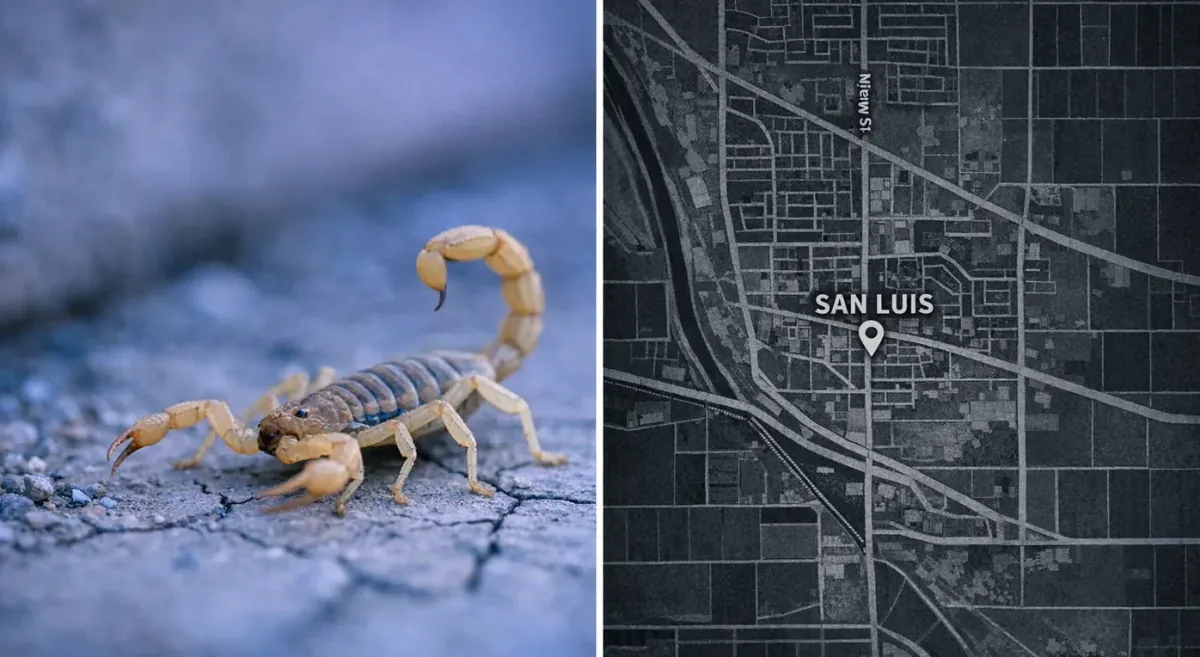
Yes—scorpions are common throughout hot, dry Yuma County, and San Luis is no exception. Finding one in your home doesn't mean your house is dirty. It means the desert is right outside your door, and a scorpion followed water, food, or shelter inside. The good news: a sighting is a signal you can act on, not a sign of failure.
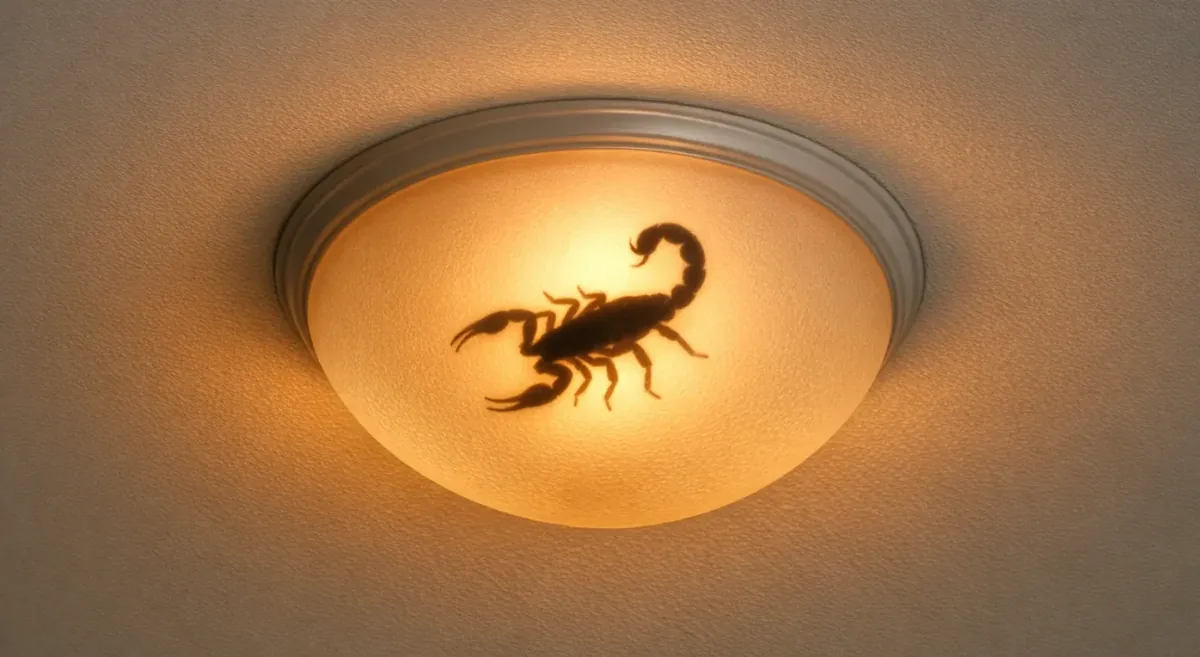
Three things pull scorpions indoors: water, prey, and shelter. In San Luis, that often looks like a leaky drip line along the foundation, a pet bowl left out overnight, or the cluster of insects that gather under a bright porch light—easy hunting for a scorpion. Garages, block walls, and cool tile floors add the dark, sheltered seams they love.
Tonight, keep it simple. Grab a flashlight before any dark-room trips, don't walk barefoot, shake out shoes and towels before use, and clear clutter away from baseboards where scorpions like to travel.
Why do scorpions come into houses in San Luis?
Scorpions come inside chasing water, prey, and shelter—the same three drivers everywhere in the Sonoran Desert. A dripping faucet, condensation under a sink, or an outdoor drip irrigation leak gives them moisture. Insects drawn to porch lights give them dinner. Cool, dark corners give them a place to wait out the heat.
Fewer bugs in and around your home means less food for scorpions, so anything that reduces general insect activity helps. For the full picture, see the top things that attract scorpions to your home.
This week, try three no-tool fixes:
- Bring pet bowls in at night and wipe up standing water.
- Switch bright white porch bulbs for warmer, less bug-attracting light.
- Move boxes and shoes off the floor near exterior doors.
Can scorpions climb walls and reach second floors?
Yes. Scorpions can grip rough surfaces like stucco, block, and interior corners, so an upstairs bedroom isn't automatically safe. If you live in a two-story home in San Luis, treat the upper floor with the same care as the ground floor.
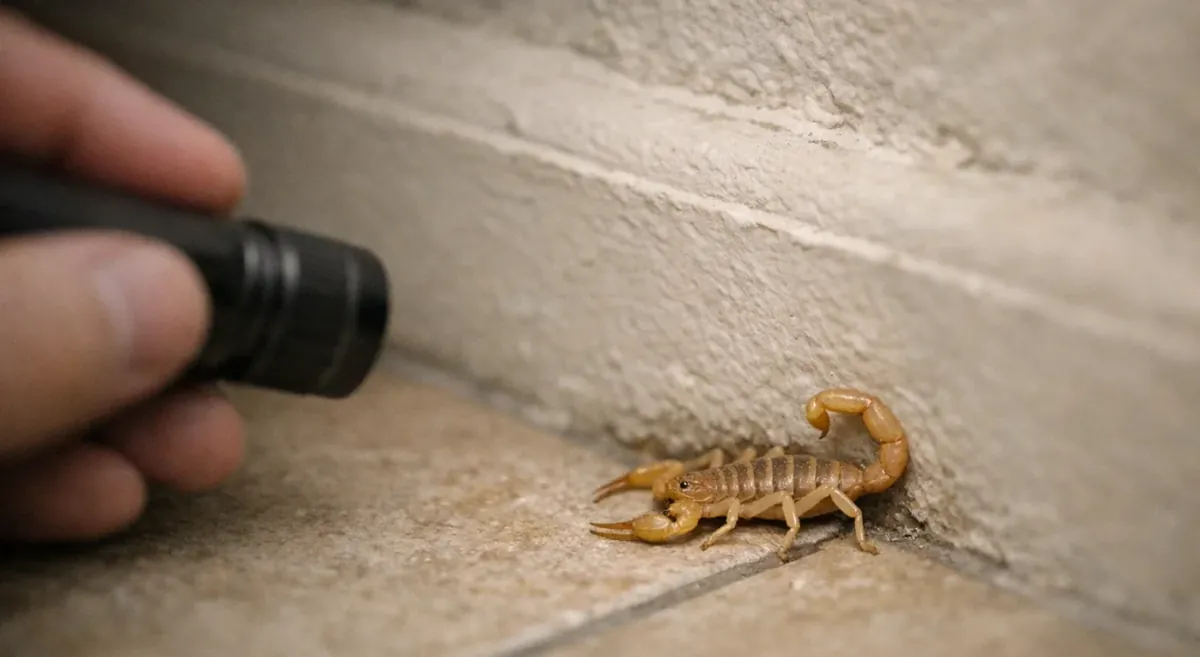
Here's the useful part: scorpions rarely wander across open floors. They hug edges—baseboards, thresholds, and corners—as they explore. On each floor, focus your attention on bathrooms, kids' rooms, closets, and the laundry area, where those edges meet dark, quiet space.
Where are scorpions most likely to hide indoors?
The most likely indoor hiding spots are cool, dark, and slightly humid: bathrooms, laundry rooms, closets, and the edges of the garage. According to poison-center data, bathrooms, laundry rooms, garages, and bedrooms are the most common indoor harborage sites for the Arizona bark scorpion.
Edges matter because scorpions pause in tight seams and along walls, not in the middle of a room. That's where you'll find them tucked behind a hamper, under the water heater, or wedged where the baseboard meets the tile. When you clean these zones, wear gloves, move items instead of reaching blindly, and keep a flashlight handy.
When is scorpion season in San Luis—and what time of night is riskiest?
Scorpion activity climbs with the heat, and in San Luis the busiest stretch runs through late summer. Across Arizona, August and September are the peak months for stings, coinciding with monsoon humidity and warmth. Risk is overwhelmingly after dark, when scorpions leave their hiding spots to hunt.
Translate that into your daily routine. The trips that matter are the ones you already make: heading to bed, letting the dog out, a middle-of-the-night bathroom run. Those are exactly the moments to slow down and light your path.
What months are worst for scorpions in Southwest Arizona?
Plan for your highest vigilance in August and September, the peak envenomation months across Arizona. Activity ramps up through late spring, holds through the hot months, and quiets as nights cool in fall.
68.2% of all US scorpion exposures reported to poison control from 2005–2015 happened in Arizona.
— Kang & Brooks 2017
For a full month-by-month breakdown, see the Arizona scorpion season guide. Before the heat sets in, tackle two seasonal prep jobs: install door sweeps and weatherstripping, and declutter the yard and foundation line ahead of monsoon.
What hours do scorpions roam most—and when do stings happen?
Most stings happen after dark. Research shows the peak window is roughly 6 p.m. to midnight, which is exactly when households are most active—cooking, showering, letting pets out. Three simple rules cut your risk fast: never walk barefoot at night, carry a flashlight, and shake out shoes, towels, and bedding before contact.
One extra habit for late-night walks through the house: scan the edges and thresholds first, not the open floor. That's where scorpions travel.
Why do scorpions hug walls at night (and how does that help you)?
Scorpions are thigmotactic—a fancy word that just means they like to keep their bodies against a surface. At night, they navigate by following baseboards, walls, and the edges of furniture instead of crossing open rooms.
This predictability is your advantage. If scorpions run the same travel lanes every night, you can focus your sealing and monitoring on those room perimeters instead of the whole house. That perimeter-first mindset is the backbone of a smart long-term plan, which we'll get to shortly.
Is it the Arizona bark scorpion—and should you assume it's dangerous?
In Arizona, treat any unidentified scorpion as potentially medically significant until you know otherwise. The Arizona bark scorpion is the one species in the region capable of serious stings, and it's common statewide. Rather than gambling on a perfect ID, focus on safe behavior: don't handle it, keep kids and pets clear, and document it from a safe distance.
Should I assume any scorpion in San Luis could be medically significant?
Yes—make that your default. Don't pick one up, keep children and pets away, and treat every sting seriously until symptoms tell you otherwise. Children under 10 have the highest rates of severe reactions, so caution matters most in a house with little ones.
A simple household log helps, too. Jot down the date, time, and room of each sighting. Patterns—like repeated finds in the laundry room after dark—tell you exactly where to focus prevention.
How can I document or contain a scorpion safely for identification?
Photograph first, then contain it if you can do so safely. Here's the method:
- Take a clear, well-lit photo from a safe distance before doing anything else.
- Place a wide-mouth glass or clear container over the scorpion.
- Slide a stiff piece of paper or thin cardboard under the opening to seal it.
- Keep it contained if a sting occurred, so a provider or Poison Help can reference it.
What not to do: never use bare hands, and avoid blindly vacuuming or reaching along baseboards where you can't see. For a fuller list, read what not to do after spotting a scorpion.
Are small scorpions more dangerous?
Size isn't a reliable danger signal. A small, slender, pale scorpion can be just as medically significant as a larger one—the Arizona bark scorpion is itself fairly small and light-colored. Don't judge risk by size; judge by behaving safely with every scorpion you find.
Want the detail? See our dedicated article on whether smaller scorpions are more dangerous.
What should you do right now if someone gets a scorpion sting in San Luis?
Stay calm, wash the area, apply a cool compress, and call Poison Help at 1-800-222-1222—especially for young children or older adults. Most stings can be managed at home, but watch closely for red-flag symptoms, and don't put yourself at risk trying to catch the scorpion.
What does a scorpion sting feel like—and what symptoms are red flags?
A scorpion sting usually causes immediate, sharp burning pain, followed by tingling and numbness spreading around the site. For most healthy adults, it stays local and fades over hours.
Call for emergency help right away if you see any of these red flags:
- Trouble breathing or swallowing
- Severe muscle twitching or jerking of the arms and legs
- Uncontrolled drooling or vomiting
- Roving or jerking eye movements
- Symptoms that worsen quickly, especially in a child
Treat the symptoms in front of you—not internet photos of stings that look nothing like yours.
First 10 minutes: a simple sting plan for San Luis households
Move through these steps calmly:
- Wash the sting site with soap and water.
- Apply a cool compress or ice pack, wrapped in cloth, to ease pain and swelling.
- Remove tight jewelry or clothing near the site before swelling sets in.
- Keep the person calm and still—anxiety and movement can make symptoms feel worse.
- Call Poison Help at 1-800-222-1222; call early if the person stung is a child.
For the full protocol, see our bark scorpion sting first aid guide, and read why children are more at risk from scorpion stings.
Should you try to catch the scorpion after a sting?
Only if you can do it without risking a second sting—care for the person always comes first. If the scorpion is easy to reach and you're not the one who was stung, snap a photo and contain it under a glass with paper slid underneath.
Whether or not you catch it, jot down when the sting happened and how symptoms progress. That timeline is genuinely useful if you call Poison Help or head to urgent care.
How do you keep scorpions out of your San Luis home long-term (without relying on luck)?
A durable plan works in layers: reduce water and prey, remove harborage, seal gaps, declutter along edges, and monitor the high-risk perimeters where scorpions travel. No single step is a silver bullet, but stacked together they turn your home from an easy target into a hard one. For anyone dealing with scorpions in San Luis, AZ, the season, stings, and control methods all connect—address one layer and the others get easier.
What are the fastest wins you can do this week?
Start outside, since that's where scorpions come from. Clear wood piles, debris, and clutter away from the foundation, fix obvious irrigation or plumbing drips, and cut down the insects swarming your exterior lights.
Inside, install door sweeps and weatherstripping, declutter along baseboards, and keep bedding pulled off the walls so nothing can act as a bridge onto the mattress. For the complete rundown, see the full attractants checklist.
Where should you focus sealing and prevention inside the house?
Go perimeter-first. Work through these spots in order:
- Thresholds—front, back, garage, patio, and pet doors.
- Baseboards and room corners.
- Bathrooms and the laundry room, plumbing penetrations included.
Seal the gaps you find with weatherstripping and caulk. For the details, see the top ways scorpions get into your home, and skip the guesswork on sprays by reading the common scorpion repellent myths.
Can automated perimeter monitoring help you catch scorpions before a sting?
It can, and it plays right into scorpion biology. Because scorpions hug room edges (thigmotaxis), monitoring those perimeters is far more efficient than watching open floors. That's the idea behind Scorpion Alert.
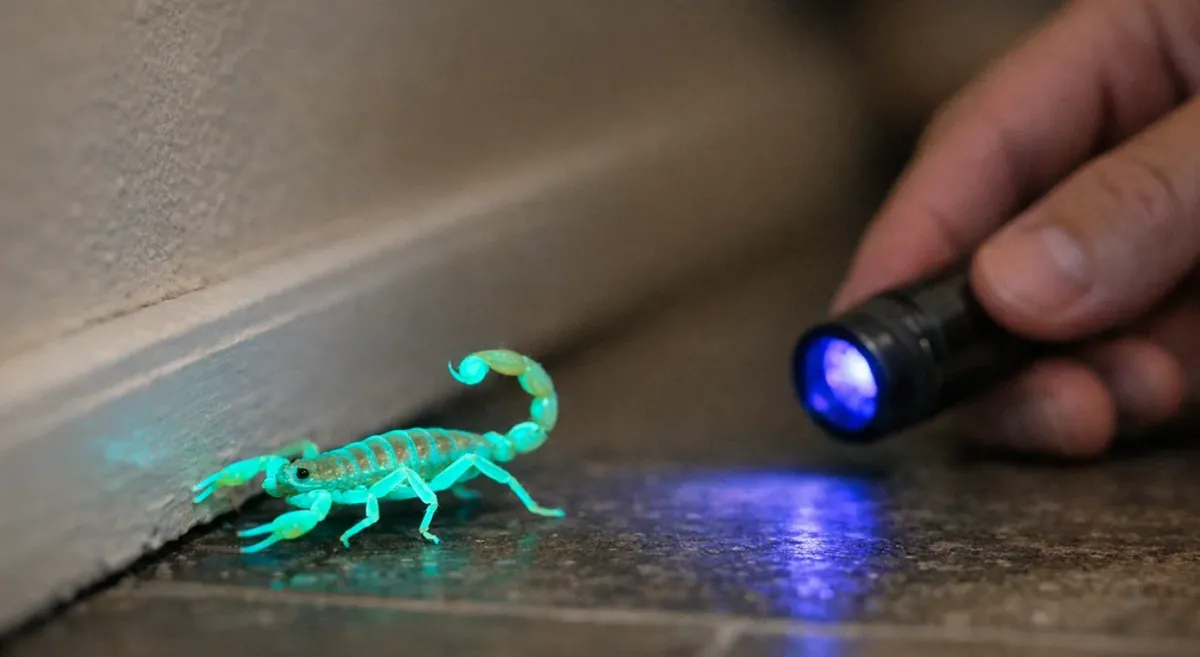
Each Detector plugs into a standard wall outlet on the room perimeter and shines 365nm UV light onto the floor below—the wavelength that makes a scorpion glow an eerie green. It scans continuously in the dark, when scorpions are active, and sends a photo-verified alert with a confidence score to your phone within seconds. In a San Luis home, the highest-value spots are entry points, bedrooms and kids' rooms, and bathrooms and the laundry area.
If you use Scorpion Alert, what should you look for in a good alert system?
A good system earns its keep on three fronts: it alerts you within seconds, it verifies with a photo so you're not chasing false alarms, and it sends both push and optional SMS so anyone in the household can respond. When you get an alert, you grab a UV flashlight and a glass, go to the Detector that triggered, and safely trap the scorpion.
| Method | Speed | Effort | Reliability |
|---|
| Sticky/glue traps | Slow | Low | Catches some; messy |
| Manual UV flashlight checks | Slow | High—every night | Only when you're looking |
| Automated UV monitoring | Seconds | Low after setup | Scans every dark hour |
Setup is quick and guided; you'll just need 2.4GHz Wi-Fi. Scorpion Alert runs on a rental subscription—the Detectors are included, pricing varies by how many you use, and there's no long-term contract. See current details on the pricing page, and cancel any time by emailing support@scorpionalert.com and returning the Detectors.
In San Luis, AZ, scorpions are most active at night and often hug baseboards and room perimeters—exactly where they’re easiest to miss until a painful sting becomes a risk for kids and pets. If you want a practical way to add visibility and peace of mind to your control plan, visit Scorpion Alert to see tools designed to help you detect and monitor scorpion activity at home.