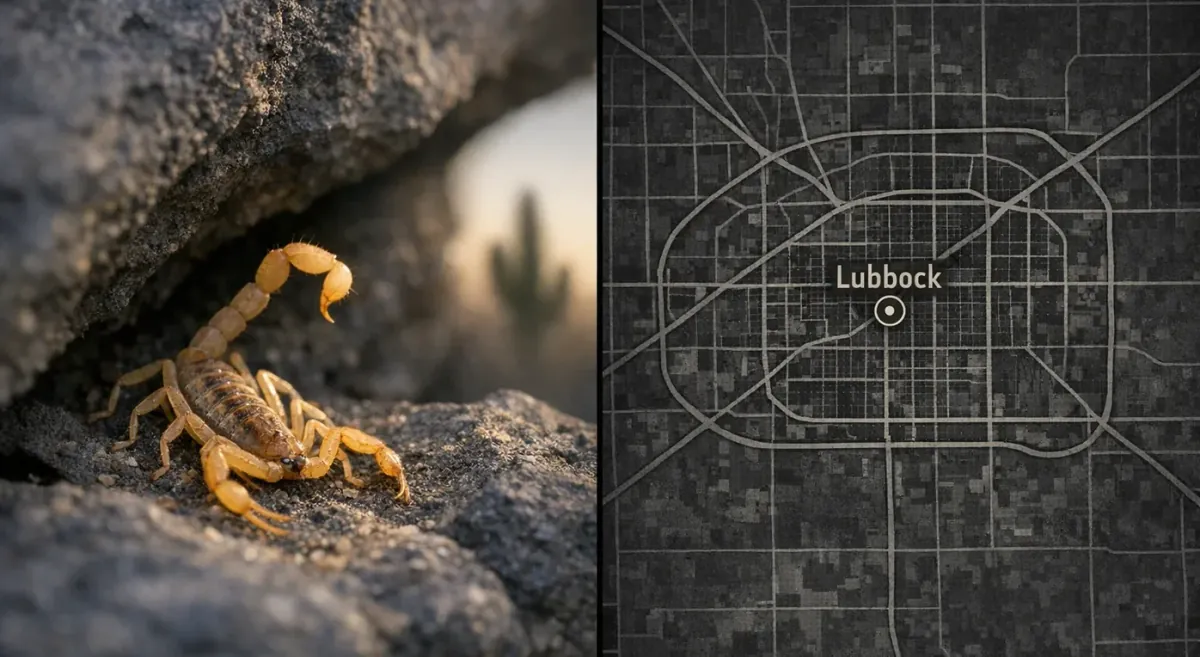
Are there scorpions in Lubbock, Texas?
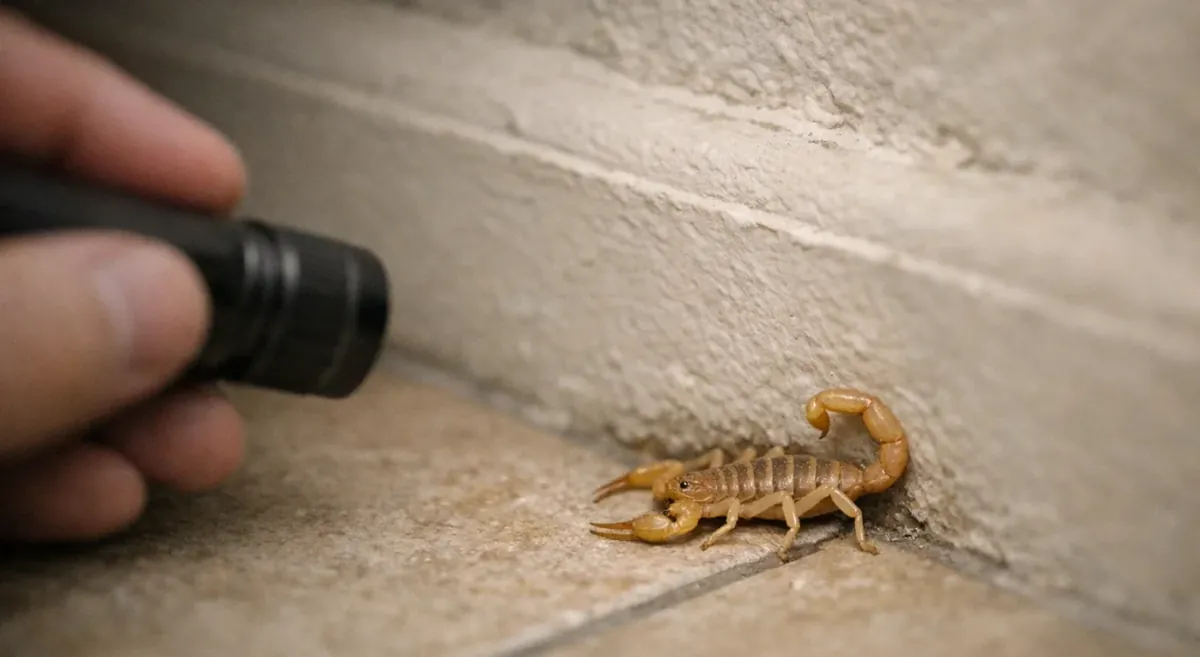
Yes—scorpions live in and around Lubbock, and most homeowner encounters happen at night along edges like baseboards and door thresholds. The species you're most likely to see is the striped bark scorpion, whose sting is painful but rarely dangerous for healthy adults. A single sighting in warm months is usually an occasional visitor, not an infestation.
Community wildlife logs like iNaturalist show striped bark scorpions recorded across the South Plains, and it's the dominant species in the region. For most homes, that means the occasional encounter—especially from late spring into early fall. Repeat sightings along the same wall week after week are different; that points to an ongoing problem worth addressing.
Saw one tonight? Here's a quick plan. Right now: flip lights on before walking through a room, keep shoes off the floor, and check pet bowls and the garage threshold. Tomorrow: start a sealing and decluttering plan around doors, baseboards, and stored boxes.
Why do scorpions show up in 'clean' homes?
Scorpions come inside for three simple reasons: food, water, and shelter. They eat insects, so a home with crickets or roaches is a buffet. They seek moisture in bathrooms, laundry rooms, and near irrigation. And they hide in clutter—stacked boxes, garage storage, and dark corners.
Cleanliness isn't the deciding factor. Cracks, moisture, and available prey matter far more than how tidy your kitchen looks. The good news: controlling insects and reducing damp spots can lower scorpion activity naturally. If you want the full picture, here are the top things that attract scorpions in your home.
Where do Lubbock homeowners most often find them indoors?
The high-probability zones are garage edges, door tracks and thresholds, baseboards, bathrooms, laundry rooms, and closets. These share one trait: they're along the perimeter of a room.
Scorpions are edge-huggers. They travel along walls and surfaces rather than crossing open floors, which is exactly why they turn up in those spots. That perimeter pattern is the foundation of smart prevention later in this post.
One safety habit for warm months: don't grab clothing or towels off the floor without shaking them out first. A scorpion tucked into a folded shirt is a classic surprise sting.
Which scorpion species is common in Lubbock—and should I worry?
The most common scorpion in Lubbock is the striped bark scorpion (Centruroides vittatus). Its sting hurts—sharp, burning pain—but it typically doesn't carry the same risk profile as the Arizona bark scorpion. For healthy adults, a sting is usually a painful nuisance rather than a medical emergency.
This species is small and slender, tan to yellowish, with two darker lengthwise stripes down its back. It has a thin tail and narrow pincers—not the bulky build of some larger scorpions. You don't need to handle one to identify it; just look.
C. vittatus is the most widely distributed scorpion in North America, dominant across Texas, Oklahoma, and New Mexico.
— Yamashita & Rhoads 2017
Why does species matter? It shapes what to expect from a sting and how aggressive you need to be about prevention. Knowing you're likely dealing with a striped bark scorpion helps you stay calm instead of panicking over every glimpse.
How can I identify a striped bark scorpion safely?
Use this quick visual checklist from a safe distance:
- Tan to pale yellow body color
- Two dark stripes running down the back
- Slender tail and narrow pincers
- Typically 2–3 inches long
Take a photo from a few feet away rather than getting close. And never handle a "dead" scorpion with bare hands—they can play possum, and even a truly dead one can still deliver venom through its stinger.
Lookalikes exist, and low light makes any ID harder. If you're unsure at 11 p.m., that's normal—treat any scorpion with the same careful respect.
Do scorpions in Lubbock glow under UV light?
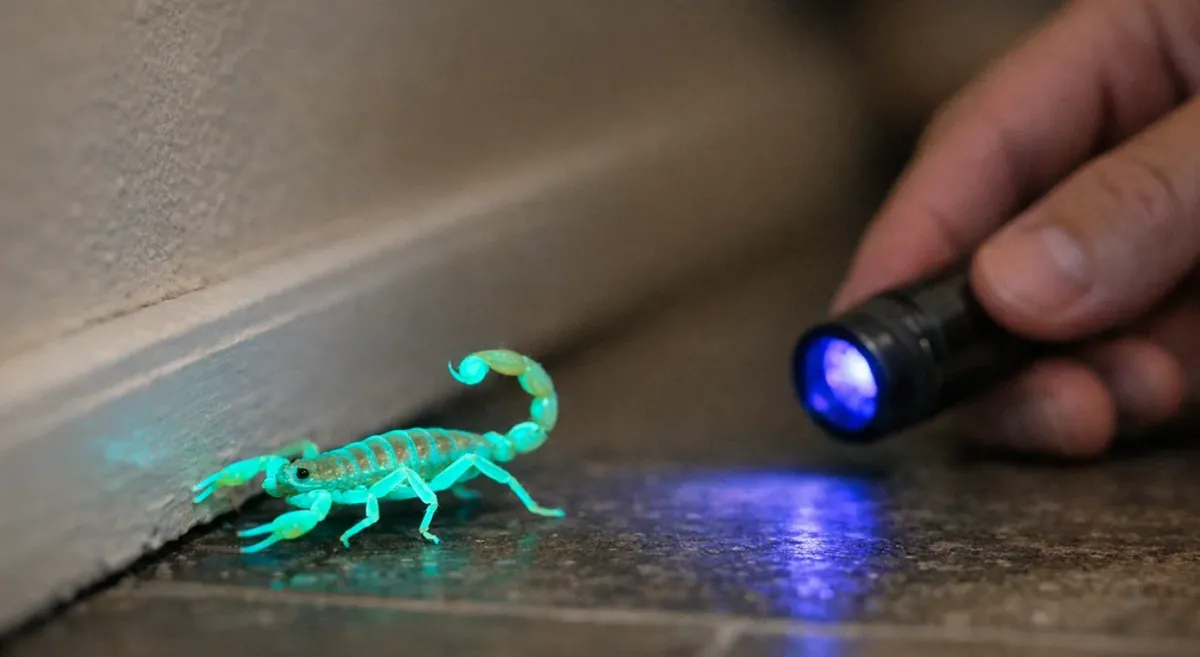
Yes. Like all scorpions, the striped bark scorpion fluoresces a bright greenish-blue under ultraviolet light. Compounds in the exoskeleton light up under UV, which turns an almost-invisible pest into an obvious glowing target.
A 365nm UV wavelength produces a strong, reliable glow and is commonly used for scorpion detection. That's a genuine advantage: UV helps you find a scorpion that's already inside—even one tucked against a baseboard in the dark.
Just remember the limit: UV helps you detect and confirm, but sealing entry points is what stops new scorpions from getting in. Detection and exclusion work together.
Why do they stick to baseboards and corners?
Scorpions are thigmotactic—they prefer to travel with their bodies pressed against a surface or edge. Open floor feels exposed; a wall or corner feels safe.
That behavior tells you where to look (thresholds, corners, behind stored items) and where to defend (door sweeps and garage weatherstripping). It also explains why perimeter-focused control beats random indoor spraying, which we'll get into below.
When is scorpion season in Lubbock, and what triggers indoor sightings?
Scorpion season in Lubbock runs from late spring through early fall. Warm nights mean higher odds of a nighttime encounter, and summer evenings are the peak window. Nationwide poison-center data shows summer accounts for the overwhelming majority of scorpion cases, with warm-month evenings dominating.
Outdoor activity and indoor sightings aren't the same thing. Scorpions are busy outside all summer, but heat, drought, sudden rain, and spikes in insect numbers can push them toward the cooler, moister interior of your home.
High-alert hours are dusk through bedtime, especially around doors, the garage, and the kitchen. That's when scorpions are on the move—and when barefoot homeowners are most likely to cross paths with one.
What does 'peak season' look like inside vs. outside?
Outdoors, you'll see more movement once nights stay warm, plus more insect activity swarming around exterior lights—which draws scorpions that hunt those bugs.
Indoors, sightings climb as scorpions follow prey and moisture into cooler rooms. A few signals worth watching:
- More bugs gathering at exterior lights
- More scorpions turning up in the garage
- Repeat appearances along the same wall or corner
Are scorpions more active at night in Lubbock?
Yes—scorpions are nocturnal, which is exactly why they catch people off guard. The barefoot trip to the bathroom, the reach into a dark garage bin, the shoe slipped on without a shake—these all happen after dark.
Picture this: you pad into the kitchen at 1 a.m. for a glass of water, and there's a scorpion tracing the baseboard near the fridge. At night, they patrol edges and thresholds, so perimeters are where trouble concentrates.
Build a few simple habits during warm months:
- Wear slippers for nighttime trips
- Shake out shoes before putting them on
- Keep beds and bedding off the floor
How dangerous is a scorpion sting in Lubbock, and what should I do?
For most healthy adults, a striped bark scorpion sting is very painful but not life-threatening. Risk is higher for small children, older adults, allergic individuals, and pets. Striped bark scorpion stings produce sharp local pain that usually eases within 15–20 minutes, and serious systemic reactions are rare.
Use a simple framework: typical symptoms versus red flags. "Typical" means localized pain you can manage at home. Red flags mean it's time to call for help right away—especially for a child.
What symptoms are normal—and what symptoms are an emergency?
Typical, expected symptoms include immediate burning pain at the site, some swelling and redness, and tingling or numbness nearby. Uncomfortable, but manageable.
Red-flag symptoms—especially in kids—demand immediate attention: trouble breathing, severe weakness, uncontrolled muscle twitching, unusual eye movements, or rapidly worsening full-body distress. Children face higher risk of severe reactions, which is worth understanding in detail: read why children are more at risk from scorpion stings.
Pets can be stung too. Watch for pawing at the mouth, limping, whining or vocalizing, and drooling—call your vet or a pet poison line if you see these.
What should I do in the first 10 minutes after a sting?
Act calmly and follow these steps:
- Wash the area with soap and water.
- Remove any rings or jewelry near the sting in case of swelling.
- Apply a cool compress to reduce pain and swelling.
- Consider an over-the-counter pain reliever if appropriate for the person.
- Note the time of the sting and track how symptoms change.
Don't cut the wound or try to suck out venom, and skip harsh chemicals or home remedies. For a fuller walkthrough, see bark scorpion sting first aid for the first 30 minutes.
When should I call Poison Control or go to urgent care/ER in Lubbock?
Call Poison Control (1-800-222-1222) if you're unsure, if the person stung is a child or older adult, if there's an allergy history, if the sting is on the face or neck, or if symptoms are escalating.
Go straight to the ER for breathing difficulty, severe neurologic-like symptoms, or any rapidly worsening condition. When in doubt, make the call—poison specialists can tell you whether to stay home or seek care.
One safety tip if you want to identify the culprit: photograph it from a distance. Never handle a scorpion with bare hands to get a better look.
How do I keep scorpions out of my Lubbock home—and when do I call a scorpion exterminator?
A practical control plan layers four steps in order: seal gaps, reduce insects, cut outdoor harborage and moisture, and monitor to confirm whether activity is actually continuing. Each layer supports the next, and monitoring tells you whether the first three are working.
Know when to escalate. A one-off sighting is usually manageable with sealing and cleanup. Repeat sightings, a scorpion in a bedroom or nursery, an actual sting, or obvious insect pressure mean it's time to bring in help.
This is also where always-on monitoring earns its keep. Instead of guessing what moved through the house overnight, a system that watches room perimeters can tell you what triggered, where, and how often—with photo confirmation—so you're not relying on "we just haven't noticed lately."
What are the fastest sealing fixes that actually reduce sightings?
Start where scorpions actually enter. Prioritize these fixes:
- Install door sweeps on exterior doors and the garage-to-house door.
- Seal the garage door's side and top gaps with weatherstripping.
- Close threshold gaps under doors.
- Seal utility penetrations where pipes and cables enter.
- Re-caulk window and door frames, and address weep holes appropriately.
Why does this work? Scorpions exploit tiny gaps, and blocking the perimeter cuts their entry opportunities dramatically. For more on this, see the top ways scorpions get into your home.
What yard and garage changes reduce scorpions near the foundation?
Move clutter—firewood, rock piles, stacked materials—away from exterior walls to eliminate hiding spots. Fix irrigation overspray and leaks so the foundation line stays as dry as possible.
Reduce the insect draw, too. Rethink exterior lighting so it's not pulling bugs (and their scorpion predators) toward the house, and keep garage storage up off the floor on shelves. And be skeptical of quick fixes—here's the truth about common scorpion repellent myths.
How can I monitor scorpion activity without nightly blacklight walks?
The core idea is simple: scorpions travel room perimeters, and they fluoresce under 365nm UV light. That makes wall outlets along the perimeter a strategic place to watch. Good monitoring runs autonomously at night, scans only while the room is dark, and sends photo-verified alerts so you know exactly what set it off.
Scorpion Alert works on exactly this logic. Each Detector plugs into a standard outlet, shines 365nm UV on the floor below, and pings your phone within seconds when it spots the telltale glow—no nightly flashlight patrol required.
Place Detectors where scorpions enter and where people are vulnerable: entry points (front, back, garage, patio), bedrooms, nurseries, and playrooms, and near water sources like bathrooms and laundry rooms.
When should I hire a scorpion exterminator in Lubbock?
Call a pro when you hit clear triggers: repeat sightings within a week, scorpions in bedrooms or a nursery, any sting, or heavy insect activity feeding the problem.
Ask the right questions before hiring. Does the company treat the prey insects, not just the scorpions? Do they perform exclusion work to seal entry points? And do they offer a follow-up plan through peak season? These separate real solutions from a one-time spray.
Measure success by the trend: sightings should decline steadily over weeks. Monitoring makes that measurable—so you can confirm that scorpions in Lubbock, Texas are genuinely on the decline in your home rather than just hoping they are. And if you've already spotted one, avoid the common mistakes in what not to do after spotting a scorpion in your home.
In Lubbock, scorpions are most active from spring through fall, so focusing on nighttime checks and the most common entry points can go a long way toward preventing stings in high-risk rooms. If you want an extra layer of confidence alongside sealing gaps and reducing hiding spots, Scorpion Alert helps you spot activity early so you can respond quickly and keep your home under control.