Why do scorpions hide during the day—and what does that mean for your home?
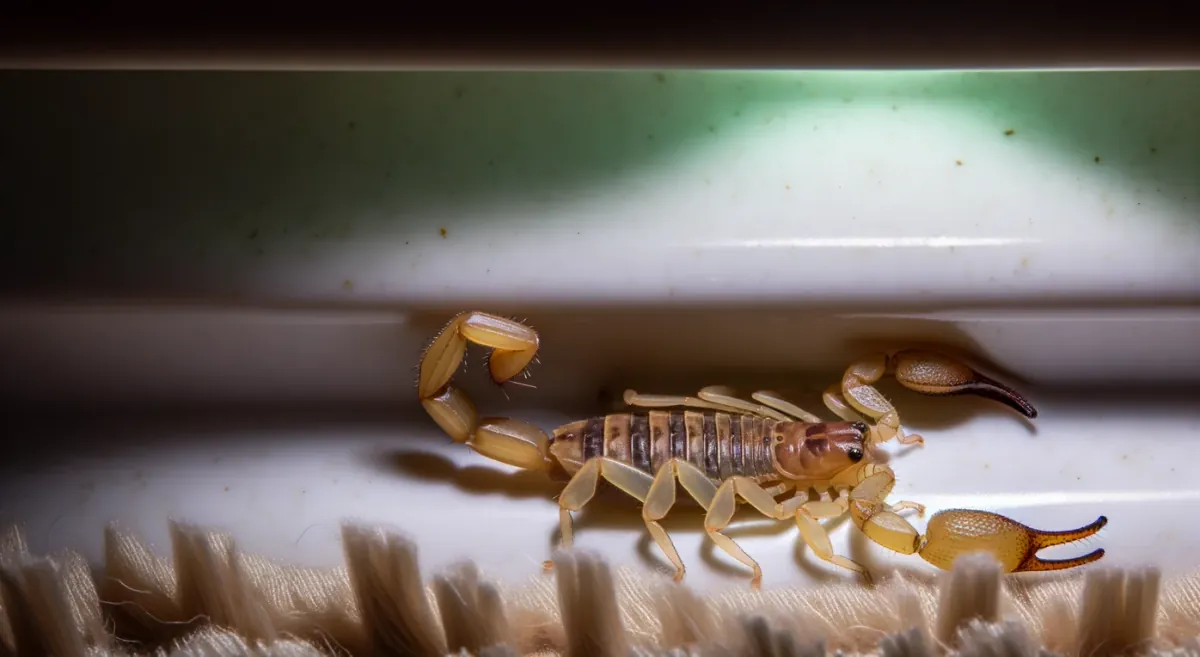
Scorpions are nocturnal, so during daylight hours they rest in cool, dark, tight hiding spots and wait for nightfall to hunt. A daytime sighting usually means you disturbed a hideout nearby—a shoe, a towel, a box against the wall—rather than catching a scorpion out on patrol. The takeaway: there's likely shelter close to where you saw it.
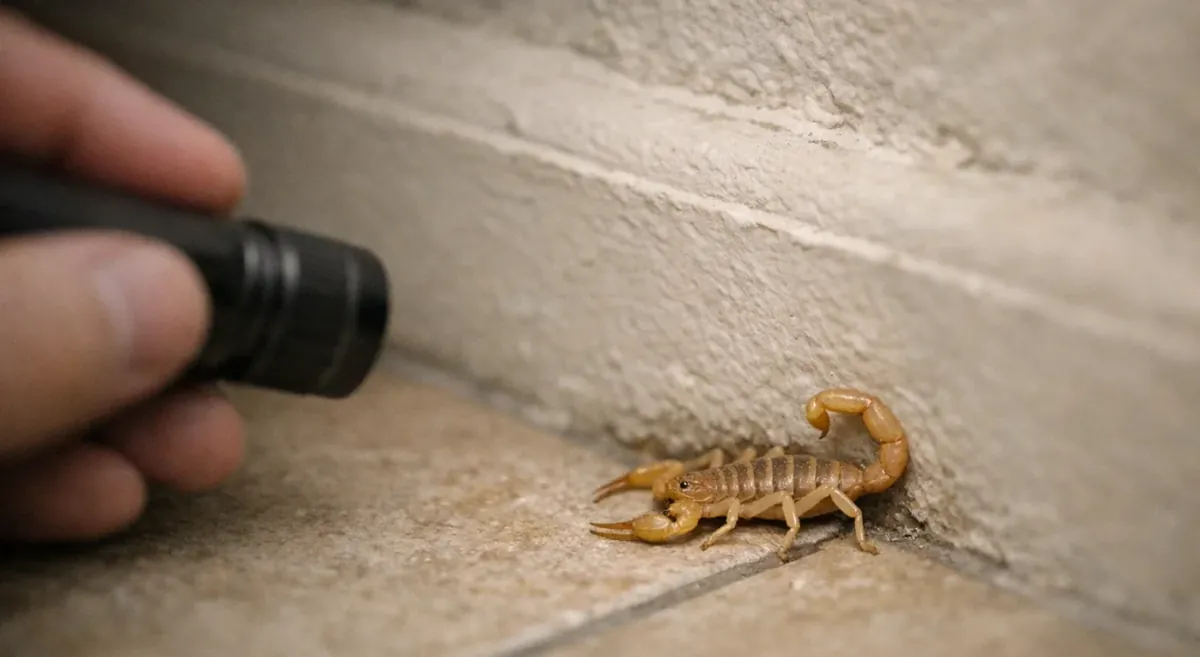
Scorpions seek out microhabitats—small spaces that stay cool, dark, and slightly humid. They're thigmotactic, which means they like firm contact with surfaces on multiple sides. A scorpion wedged tight against a wall or under an object feels safe. That's why the edges of your rooms matter far more than the open floor.
The goal here isn't to panic-search every corner of the house. It's to recognize the likely zones, inspect them safely, and remove the hiding places that make your home attractive. Knowing where scorpions find shelter and prey inside your home turns a scary surprise into a manageable problem.
What makes a "perfect" daytime scorpion hiding spot?
The ideal hideout offers tight contact on several sides, darkness, and a stable temperature. Think of a slipper pressed against a baseboard or a folded towel on the bathroom floor. The scorpion can press its body flat against multiple surfaces, which calms it and keeps it hidden.
Clutter near baseboards multiplies these safe spots fast. Every cardboard box, laundry pile, or stack of shoes touching a wall creates a new sheltered pocket. One messy corner can hold a dozen viable hiding places. Reduce the clutter, and you reduce the options.
Is seeing a scorpion in daylight a bad sign?
Not necessarily an infestation—but it does strongly suggest a harborage zone nearby that's worth inspecting today. Scorpions don't wander in daylight by choice, so a daytime sighting usually means one was forced out of a hiding spot close at hand. Treat it as a clue, not a catastrophe.
Note the exact location: wall edge, under an item, or near water. That detail helps predict the hiding pattern. Most scorpions are solitary rather than social, so one sighting doesn't mean a swarm—but it does mark a spot to check carefully.
Where are scorpions most likely hiding in each room during the day?
The highest-risk daytime hideouts are the places people put hands and feet without looking: shoes, gloves, towels, bath mats, under-sink cabinets, toe-kicks, and garage storage along walls. Work from most likely to least likely, and never grab blindly into a dark space. Move items with a tool, not bare fingers.
86.5% of Arizona residential scorpion encounters happen indoors—and 42.5% of those occur in the bedroom, the most-stung room in the house.
— Skolnik & Ewald 2018, FEARS survey
A short high-risk object list to keep in mind: shoes, gloves, towels, bath mats, cardboard, and anything stored flat on the floor. These give scorpions exactly the tight, dark contact they crave.
Bedroom & closets: can scorpions get into shoes and laundry piles?
Yes—shoes, boots, slippers, clothing piles, and under-bed clutter are classic hideouts, especially items stored touching a baseboard. In Arizona data, the foot is the single most commonly stung body part, and most foot stings happen to bare feet. Bed skirts and blankets pooling on the floor can give scorpions a ladder up onto the bed.
Elevate shoes off the floor, store clothes in closed bins, and keep bedding and bed skirts from touching the carpet. Shake out shoes before slipping them on. Small habits, big payoff.
Bathroom & laundry: do scorpions prefer damp spots like bath mats and under sinks?
They do. Moisture zones—under-sink cabinets, behind the toilet, laundry utility edges, and towels left on the floor—offer the humidity scorpions seek. The cool, dark space beneath a vanity is prime real estate.
Quick fixes go a long way. Hang bath mats and towels to dry instead of leaving them on the tile, fix dripping faucets and pipes, and clear floor-level storage out from under sinks.
Kitchen & pantry: where do they hide behind appliances and toe-kicks?
Toe-kicks—the recessed gaps beneath your cabinets—act as perimeter highways that let scorpions travel the room while staying hidden. Add the gaps behind the fridge, stove, and dishwasher, plus the plumbing voids under the sink, and the kitchen has plenty of cover.
The pantry is its own concern. Pet food and bulk goods stored on the floor create both shelter and a draw for the insects scorpions eat. Move dry goods into sealed containers and get everything up onto shelving.
Garage & storage: why is this usually the #1 indoor harborage zone?
The garage typically tops the list because it combines wall-stacked boxes, cardboard, lumber, holiday bins, and a door threshold that connects to the outdoors. It's dark, cluttered, and rarely disturbed—everything a scorpion wants.
A simple action plan: swap cardboard boxes for lidded plastic bins, add shelving to get storage off the floor, and maintain a clear strip along every wall. That clear perimeter removes the edge-hugging routes scorpions rely on.
Can scorpions hide inside walls, ceilings, or vents—or just behind things?
Scorpions don't burrow through drywall or "live in walls." Instead, they exploit existing gaps—at baseboards, around outlets, at pipe penetrations, and in trim voids—as hidden shelters and travel routes. They slip into the spaces your house already has, not new ones they dig.
Because they follow edges, even tiny construction gaps can connect rooms and create hidden highways. A crack under a sink can link to the wall void behind it. For a deeper look at how they get in, see the most common ways scorpions get into your home.
What common wall gaps are big enough for a scorpion?
Typical problem spots include baseboard gaps, cracks along door jambs, the openings behind outlet and switch plates, and plumbing cutouts under sinks. A scorpion can flatten itself into a startlingly thin gap.
Even a "tight-looking" gap becomes usable when it runs continuously along an edge. The scorpion doesn't need a wide opening—it needs a narrow, connected one that hugs a surface the whole way.
Why do scorpions follow baseboards instead of crossing rooms?
Edge-hugging navigation is built into their behavior. Open floor leaves them exposed to predators and offers no surface contact, which feels unsafe. A baseboard gives them a guide wall to follow and shelter within reach.
The practical takeaway: focus your inspections and prevention along perimeters, corners, and wall-adjacent storage. That's where the traffic is.
How can you find scorpion hiding spots safely (day vs. night)?
Light the area first, use tools instead of hands, wear closed shoes and gloves, and never make a blind reach into a dark space. Daytime inspection finds harborage—the resting spots. Nighttime monitoring reveals movement routes, since that's when scorpions are active. The two approaches answer different questions.
For ongoing nighttime coverage, automated options exist. Scorpion Alert Detectors activate automatically once a room goes dark and send photo-verified alerts with an AI confidence score, so you learn where scorpions actually travel without standing guard.
What's the safest way to inspect clutter and tight spaces in daylight?
Work the room methodically, perimeter first, with light and a tool in hand.
- Start at the room's edges and corners, where scorpions shelter, not the open center.
- Shine a flashlight into the gap before you reach anywhere.
- Use a stick, grabber, or broom handle to shift boxes, shoes, and piles—never your bare hand.
- Work from most likely to least likely: garage, bathrooms, and closets before living areas.
- Stop and reset if kids or pets wander in, and keep them clear until you finish.
Is a UV flashlight worth using at night?
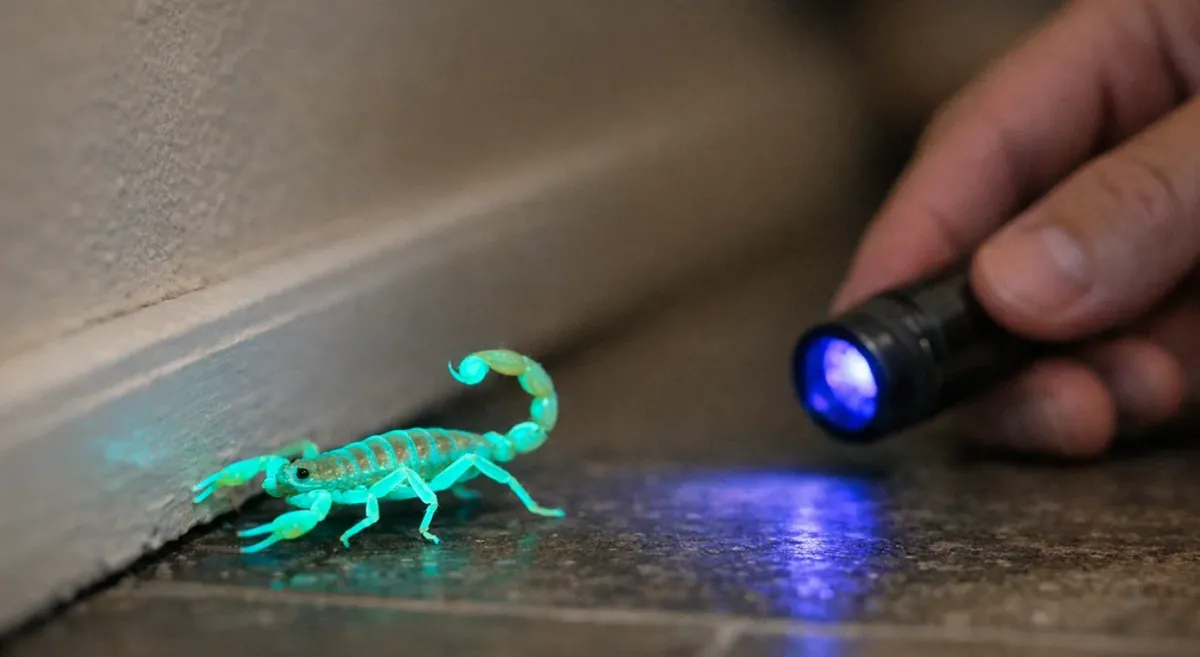
Yes, for confirmation. Scorpions fluoresce a vivid greenish-blue under 365nm UV light, so a 5–10 minute perimeter sweep after dark can reveal one glowing along a baseboard. It's a genuinely useful tool for verifying a sighting.
Set your expectations, though. A UV flashlight is great for confirming what's there right now, but nightly patrols are hard to sustain. Miss a few nights and you miss the activity—which is exactly the gap automated monitoring fills.
Should you use Scorpion Alert, glue traps, or both?
Each tool does something different. Here's how the common options compare.
| Method | What it tells you | Coverage | Safety |
|---|
| Scorpion Alert Detectors | Photo-verified alert showing where and when activity happens | Multiple rooms, every dark night | No contact, kid- and pet-safe |
| Glue traps | Shows where something died, not where it's coming from | One spot per trap | Messy; non-target catches can attract predators |
| UV flashlight sweep | Confirms a live scorpion on the spot | Only while you're walking | Safe, but hard to sustain nightly |
The best-use plan: use monitoring to learn your home's movement patterns, then focus prevention and sealing where activity is actually proven. Guessing wastes effort; data targets it.
Where should you place detectors to reveal the pattern quickly?
Prioritize the routes and exposure points that matter most: the garage entry where scorpions come in, hallway baseboards they travel along, and bedrooms and bathrooms where barefoot stings are most likely. Those placements surface the pattern fast.
A couple of constraints to know: Detectors are built to scan when a room is dark, so they work as intended at night. They plug into standard wall outlets and connect over 2.4 GHz Wi-Fi, which means no wiring and no extra hardware.
After you find one scorpion, how do you keep them from hiding inside again?
Spend the next 48 hours on three things: reduce indoor hiding spots, reduce moisture, and reduce the prey insects scorpions feed on. Then move into exclusion work. A scorpion sighting is a strong predictor of a future encounter, so acting now genuinely matters.
This page focuses on hiding spots, so the sealing guidance here is brief—lean on deeper resources for the full picture. Detection or sightings tell you where to focus, so you're not sealing random cracks across the whole house.
What immediate changes reduce daytime hiding spots the fastest?
Pull stored items 2–4 inches off the baseboards so scorpions lose their tight edge contact. Clear floor clutter, switch cardboard for sealed bins, and elevate shoes and pet food off the ground.
Dry out the damp zones, too. Hang bath mats and towels to dry, and fix obvious leaks under sinks and behind toilets. Removing moisture removes one of the three things a hideout needs.
What are the most effective long-term fixes?
Exclusion is the durable fix: install door sweeps, add weatherstripping, seal plumbing and utility penetrations, and tighten gaps where trim meets the wall. These close the hidden routes scorpions use to move between rooms.
Let confirmed activity guide the order of work. Sightings or monitoring photos tell you which doors, walls, and rooms to seal first—an approach that pairs naturally with cutting down on the things that attract scorpions indoors.
What should you do if you see a scorpion during the day?
Keep kids and pets back, then capture it safely without touching it.
- Move children and pets away from the area first—they're at higher risk from scorpion stings.
- Place a glass or sturdy container over the scorpion.
- Slide a piece of stiff cardboard underneath to seal it in, then release it well outside or dispose of it.
- Avoid all barehand contact and quick swipes that risk a defensive sting.
Once it's handled, inspect the immediate perimeter—the hiding spot is usually within a few feet. For mistakes to sidestep in the moment, read what not to do after spotting a scorpion in your home.
Now that you know scorpions spend the day tucked into tight, dark spots like baseboards, thresholds, and corners, the next step is making those perimeter hiding routes easier to check and track. Scorpion Alert helps you turn what you’ve learned into a simple, repeatable way to monitor the edges of your home—learn more at Scorpion Alert.