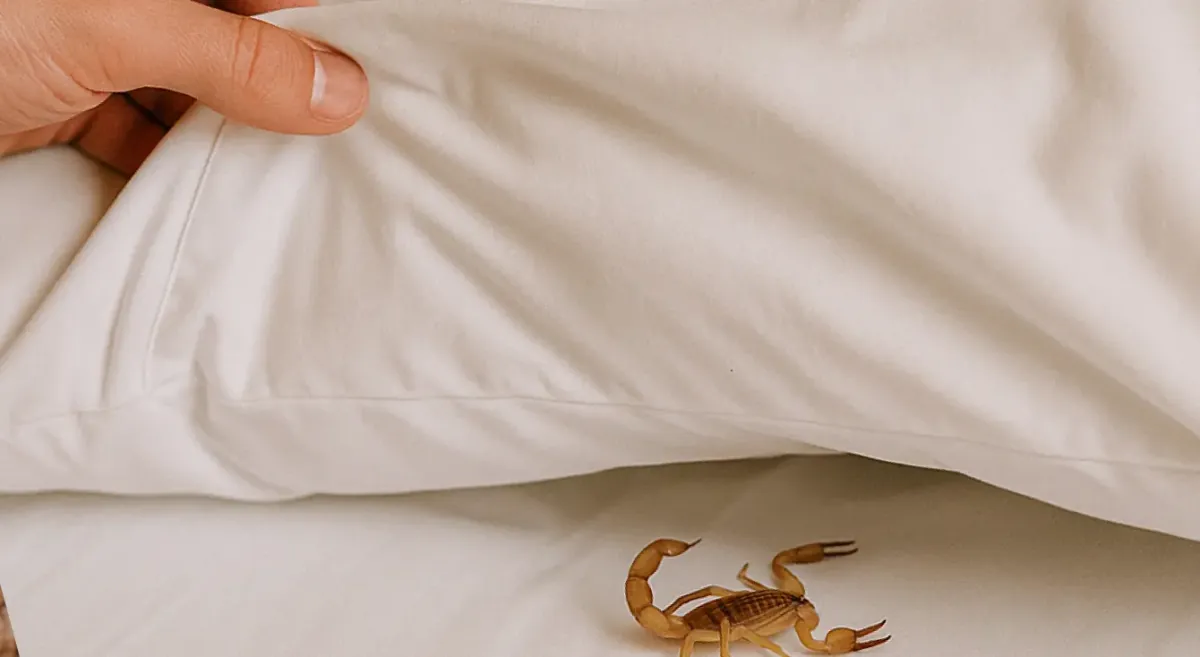
Can scorpions really get into hotel rooms or Airbnbs?
Let’s start with the good news: finding a scorpion in your hotel room or vacation rental is uncommon. But if you’re staying in Arizona, New Mexico, Texas, Nevada, or California — especially during the warmer months — it’s absolutely possible. A quick 5-minute inspection before you unpack can save you from an unwelcome midnight encounter.
The reality is that scorpions don’t care whether you’re paying $50 or $500 a night. They’re looking for water, shelter, and prey. Your temporary home might offer all three.
Which stays are higher-risk?
Ground-floor rooms pose the biggest risk. Scorpions can slip under exterior doors or through tiny gaps around windows. Picture those charming desert casitas with French doors opening onto a patio — beautiful, but they often have more entry points than a third-floor hotel room.
Older buildings tend to have more cracks and gaps where scorpions can squeeze through. That vintage Airbnb with original 1950s charm? It might also have original 1950s weatherstripping. Properties with desert landscaping, especially decorative rock beds near doorways, create perfect scorpion habitat just inches from your entrance.
Guest houses and rentals with attached garages or laundry rooms deserve extra attention. These spaces typically have more gaps around pipes, vents, and utility connections — basically highways for scorpions traveling from outside to inside.
When are scorpions most likely to show up?
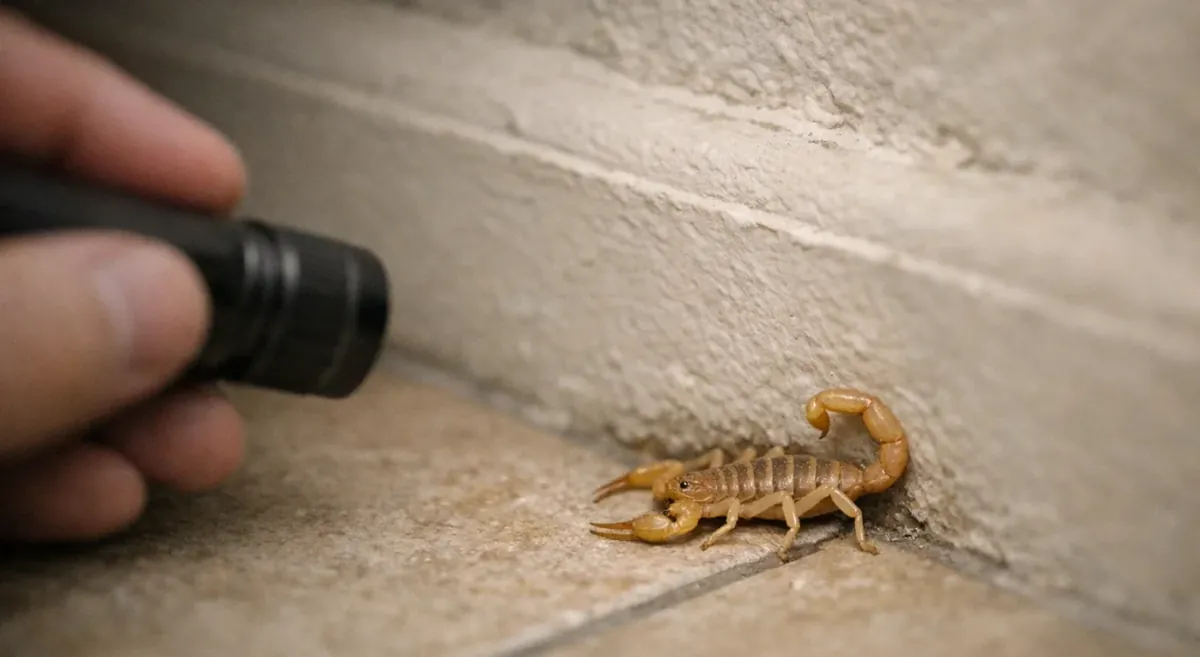
Scorpions are nocturnal hunters. They emerge after dark to search for crickets, spiders, and other prey. During their nighttime wanderings, they might slip under your door looking for water or simply follow the edge of a wall into your room.
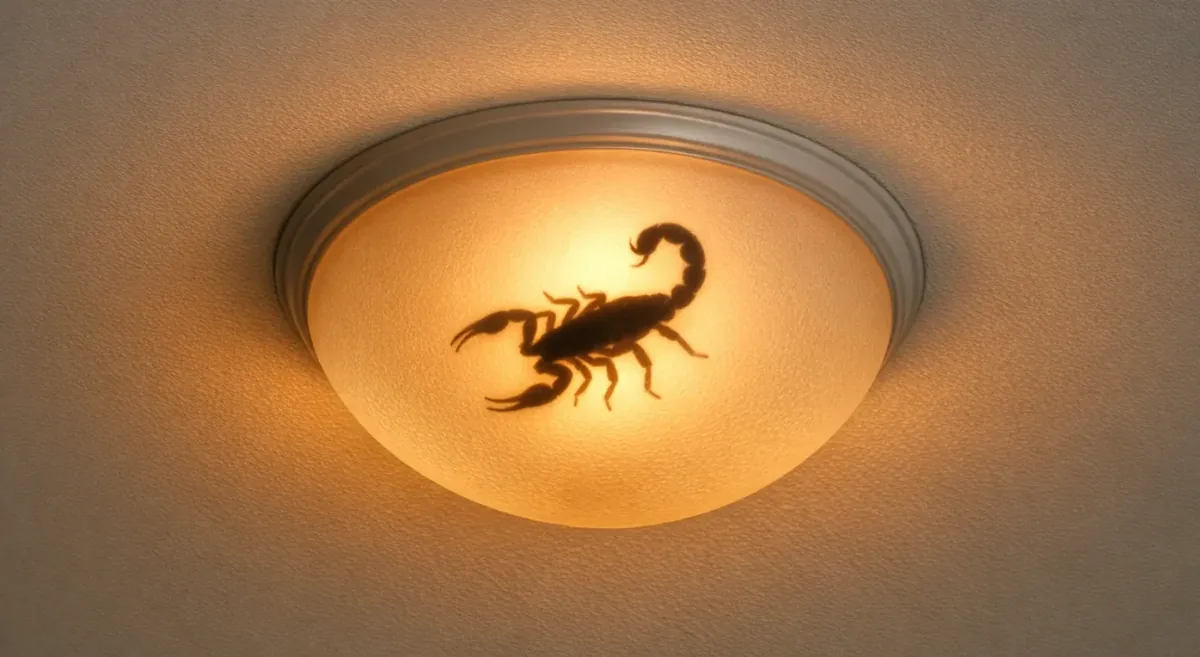
This timing explains why most scorpion encounters happen at night — you flip on the bathroom light at 2 a.m., and there it is, frozen on the tile. Understanding their schedule also helps you time your inspection. A quick check right after sunset, when scorpions become active, gives you the best chance of spotting any unwelcome visitors before bedtime.
What should I do in the first 5 minutes after I arrive (before I unpack)?
Here’s your arrival routine — six simple steps that take less time than waiting for room service. Do these in order, and you’ll sleep better knowing you’ve checked the most likely hiding spots.
First, keep the lights on and your luggage elevated. Second, do a visual scan of the bed area and bathroom. Third, check the gap under the exterior door. Fourth, look behind the curtains. Fifth, inspect the closet floor and any stored linens. Sixth, if you brought a UV flashlight, do a quick perimeter scan with the lights off.
What should I bring in a simple 'scorpion-safe' travel kit?
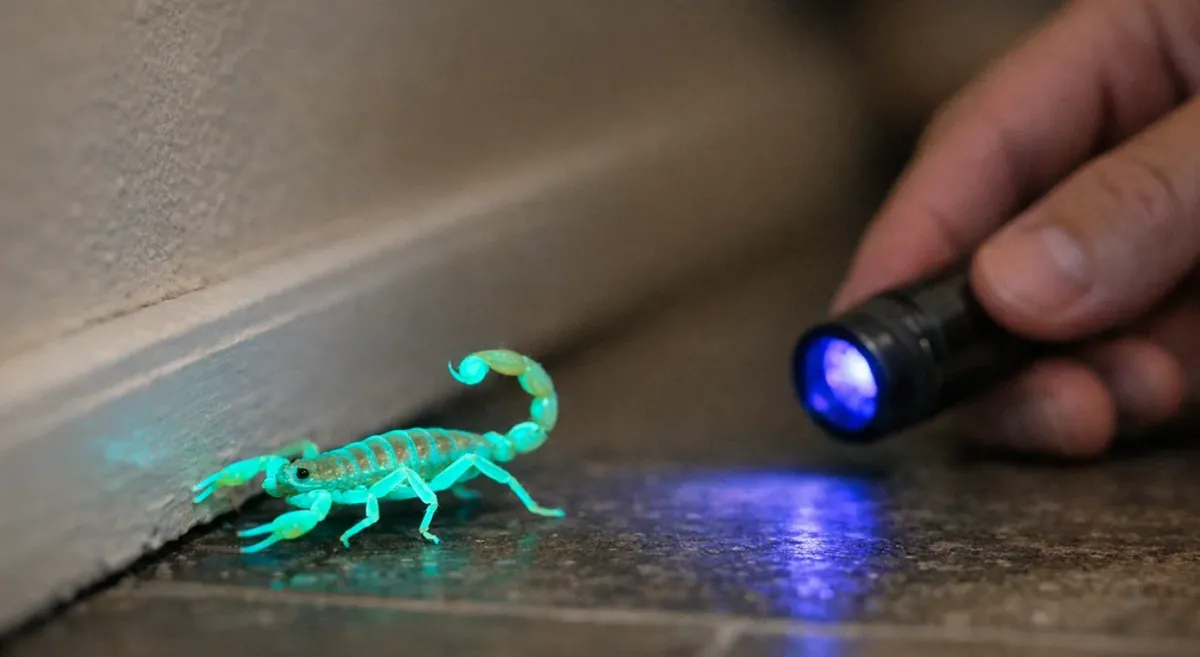
A small UV flashlight is your most valuable tool — scorpions glow bright green under ultraviolet light, making them hard to miss in a dark room. Choose a compact 365nm wavelength model that fits in your carry-on. They’re about the size of a lipstick tube and cost around $15-25.
Pack closed-toe slippers or lightweight shoes for nighttime bathroom trips. Include a gallon-size zip bag or small plastic container for trapping, plus a stiff piece of cardboard or plastic card to slide underneath. Throw in a hand towel to block the gap under your door — it doubles as a draft stopper and a scorpion barrier.
This entire kit fits in a sandwich bag and weighs less than your phone charger. Worth it? Absolutely.
Where should I put my luggage while I check the room?
Never set your open suitcase on the floor, especially on carpet. Use the luggage rack if there is one — most hotels position these away from walls where scorpions travel. No rack? Place bags on a hard table, desk, or dresser.
The bathtub works as temporary luggage storage, too. It’s a smooth surface where you’d easily spot any movement, and scorpions rarely climb porcelain walls. Just remember to move your bags before that first shower.
Keep suitcases zipped during your inspection. An open bag on the floor is an invitation for any creature looking for a dark hiding spot.
How do I do a fast UV flashlight sweep for scorpions?
A UV flashlight turns scorpion detection from guesswork into something much more reliable. In five minutes, you can check an entire room with confidence. Here’s exactly how to do it.
Why does UV light help you spot scorpions?
Scorpions contain fluorescent compounds in their exoskeleton that glow bright green under ultraviolet light. Scientists aren’t entirely sure why they evolved this trait, but for travelers, it’s helpful. Even tiny scorplings light up like neon signs.
The 365nm wavelength produces the strongest glow — that eerie green is unmistakable against almost any background. While scorpions are nearly invisible on tan carpet or wood floors under normal light, UV makes them stand out from 10 feet away. It works through thin curtains and can even highlight scorpion traces on surfaces.
What's the quickest scan pattern that actually works?
Start with the perimeter. Scorpions exhibit thigmotaxis — they navigate by maintaining contact with walls and edges. Turn off the lights and sweep your UV beam slowly along every baseboard, starting at the entry door and working clockwise around the room.
Pay special attention to corners where walls meet floors, gaps around door frames, and the threshold under the exterior door. Move your light in overlapping arcs about 6 inches wide. After the perimeter, scan inward: under the bed edges, behind the headboard, around nightstands, and along curtain bottoms.
The bathroom needs its own careful sweep. Circle the toilet base, check under the vanity toe-kick, and scan around the tub. Don’t forget to peek behind the toilet — that dark gap between porcelain and wall is scorpion-friendly territory.
What are the most common hiding spots in hotels vs. Airbnbs?
Hotels have predictable problem areas. The space behind the headboard tops the list — it’s dark, undisturbed, and often has gaps where the bed frame meets the wall. Curtain folds near the floor can harbor scorpions seeking darkness. Under the bathroom vanity, especially that recessed toe-kick area, provides perfect cover. Check baseboards along any wall that faces outside.
Airbnbs present different challenges. Laundry rooms are scorpion magnets — warm, humid, and full of hiding spots behind machines. Garages attached to living spaces create easy entry routes. Scan any stored linens or extra towels in closets, especially if they’re on lower shelves. Outdoor furniture cushions brought inside can also carry hitchhikers.
Patios and their doors deserve extra scrutiny in rentals. Those sliding glass doors rarely seal completely, and scorpions can follow the track right inside.
How can I reduce the chance of a scorpion getting in (or stinging me) overnight?
After your inspection, a few simple habits will keep you safer through the night. These precautions take seconds but can prevent those heart-stopping 3 a.m. encounters.
How should I set up the bed, shoes, and clothes?
Pull the bed away from the wall by at least 6 inches. Tuck sheets and blankets tightly so they don’t touch the floor — scorpions can’t jump, but they can use draping fabric as a bridge onto the bed. If the bedskirt drags on the ground, fold it up onto the mattress for the night.
Keep every piece of clothing off the floor. Hang items or store them in sealed luggage. Place shoes on a luggage rack or inside a sealed bag — never leave them on the floor beside the bed. That goes double for slippers you might reach for in the dark.
Before putting on any clothing or shoes, give them a quick shake. Before using towels, snap them once or twice. These movements take one second but could save you from a painful sting.
What entry points can I temporarily block in a rental or hotel?
Roll up a towel and press it firmly against the gap under the exterior door. Even a quarter-inch space is enough for a scorpion to squeeze through. Check that windows close completely and screens don’t have tears.
Keep bathroom and sink drains closed when not in use. While scorpions rarely emerge from drains, they can enter through dry p-traps in vacant rentals. A simple rubber stopper eliminates this route.
Always zip luggage between uses. An open suitcase on a luggage rack might seem safe, but scorpions can make their way up onto it. That designer leather bag won’t stop a determined arachnid.
If I own a vacation rental, how do I monitor for scorpions between guests?
Managing scorpion risk across multiple properties or between guest stays requires consistent monitoring. Automated detection systems like Scorpion Alert work around the clock, using the same 365nm UV technology that makes manual searches effective. These plug-in detectors monitor room perimeters where scorpions naturally travel, activating only in darkness when scorpions emerge.
The real value comes from instant notifications. When a detector spots that telltale green glow, it captures an image and sends an alert with location details and a confidence score. Property managers can respond immediately or coordinate with local staff, preventing negative reviews and keeping guests safe. For owners juggling multiple rentals, it beats driving out for nightly UV flashlight patrols.
What should I do if I find a scorpion in the room (or someone gets stung)?
Stay calm. Finding a scorpion doesn’t mean your room is infested — it means one wandered in. Here’s your action plan.
How do I safely trap a scorpion without chasing it?
Grab a clear glass or plastic cup and approach slowly. Scorpions can sprint up to 12 inches per second when startled, usually toward the nearest dark hiding spot. Place the cup over the scorpion in one smooth motion — hesitation gives it time to bolt.
Slide a stiff piece of paper or cardboard under the cup, keeping the cup pressed firmly down. Credit cards work, but they give you less room for error. Once the scorpion is on the paper, flip the whole assembly over. Now it’s trapped in the cup, and you can relocate it outside or show it to management.
Never attempt to grab or smash a scorpion. They’re surprisingly hardy, and a wounded scorpion can still sting. Plus, they can disappear into impossibly small cracks when threatened.
Should I ask for a different room, and what should I request?
Contact the front desk or host immediately. Take a photo of the scorpion for documentation — it helps identify the species and shows your concern is legitimate. Request a room that’s not adjacent to your current one, since neighboring rooms might share the same entry points.
If possible, avoid ground-floor alternatives. Upper floors mean fewer direct entry points from outside. Ask about recent pest control treatments and whether other guests have reported sightings. A reputable property will take your concern seriously and accommodate your request.
What if someone is stung—especially a child or pregnant traveler?
Scorpion stings require immediate attention, particularly for vulnerable individuals. Children face higher risks from scorpion venom due to their smaller body mass. Pregnant women should seek medical evaluation quickly, as scorpion stings pose unique risks during pregnancy.
For any sting, follow proper first-aid protocols in the first 30 minutes. Call Poison Control (1-800-222-1222) for immediate guidance. They’ll assess symptoms and advise whether emergency care is needed. Don’t wait to see if symptoms worsen — some reactions escalate quickly.
Keep the affected limb still and remove any jewelry before swelling begins. Take a photo of the scorpion if possible — Arizona bark scorpions cause more severe symptoms than other species. When in doubt, seek urgent care, especially during peak scorpion season when medical facilities are familiar with treatment protocols.
After you’ve done your quick flashlight/UV sweep and checked the usual hiding spots, the hardest part is staying vigilant once the lights go out and you’re trying to sleep. If you want an extra layer of peace of mind in scorpion-prone areas, Scorpion Alert uses a 365nm UV light and automatically monitors in the dark—learn more at Scorpion Alert.