Are scorpions a problem in Fountain Hills?
Yes — scorpions are a common concern in Fountain Hills. The town sits in Maricopa County, the heart of Arizona's scorpion country, and its desert-adjacent lots, rock landscaping, and warm summer nights make sightings routine rather than alarming. Finding one doesn't mean your home is uniquely infested.
Statewide, the numbers make the point. 68.2% of all US scorpion exposures reported to Poison Control between 2005 and 2015 happened in Arizona, according to Kang & Brooks 2017. Homes near washes and natural desert edges tend to feel more exposed because that's exactly where scorpions and their insect prey already live.
A quick reality check helps: scorpions are nocturnal, so you'll rarely see them during the day. They gravitate toward spots with food and cool hiding places. None of that means panic — it means a plan.
What counts as a scorpion issue vs. a one-off sighting?
A single scorpion crossing your garage floor is a wanderer, not an infestation. An ongoing issue looks different: repeated sightings in the same rooms, several scorpions over a few weeks, or a steady supply of prey insects like crickets and roaches.
Because Fountain Hills carries a high relevance rating, a proactive response makes sense even after one or two sightings. Scorpions are thigmotactic, meaning they navigate by hugging edges and surfaces. That's why you'll spot them tracing baseboards, wall bases, and the seams of furniture rather than strolling across open floor.
Why Fountain Hills homes can feel high-risk
Ground-level access points do most of the work: garage doors, exterior door gaps, and weep screeds along the foundation. Add desert-adjacent yards with rock borders, block walls, and outdoor storage, and you've built a network of cool crevices scorpions love.
This is the backdrop behind so many searches about scorpions in Fountain Hills, Arizona — the town sits squarely inside the county where scorpion questions come up constantly. The right baseline isn't fear. It's a simple mix of nighttime awareness and a layered prevention plan, which the rest of this guide walks through.
Which scorpion species lives in Fountain Hills?
There isn't a single dominant iNaturalist species signal for Fountain Hills specifically, so the honest answer is this: treat any unidentified scorpion as potentially medically significant until you know otherwise. In Maricopa County, the species residents worry about most is the Arizona bark scorpion (Centruroides sculpturatus), the one with real medical significance.
Other, less dangerous scorpions live in the area too — bulkier species with thick pincers whose stings hurt but rarely turn serious. The problem is that a frightened homeowner glancing at a scorpion on the tile can't reliably tell them apart in the moment. Don't handle it. Snap a clear photo or trap it under a glass, and let local pest control confirm the ID if you're unsure.
What homeowners should assume when species data is unclear
With no clean species data for this city page, focus your energy on risk reduction and entry prevention rather than perfect identification. Here's a practical checklist for a closer look — from a safe distance:
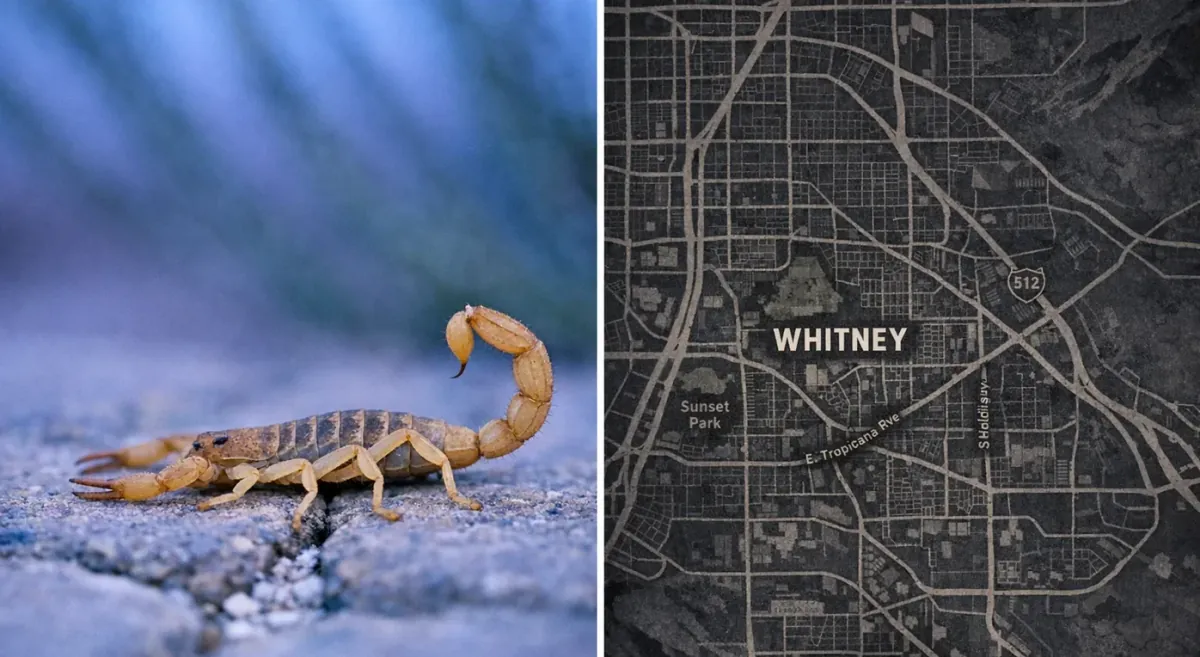
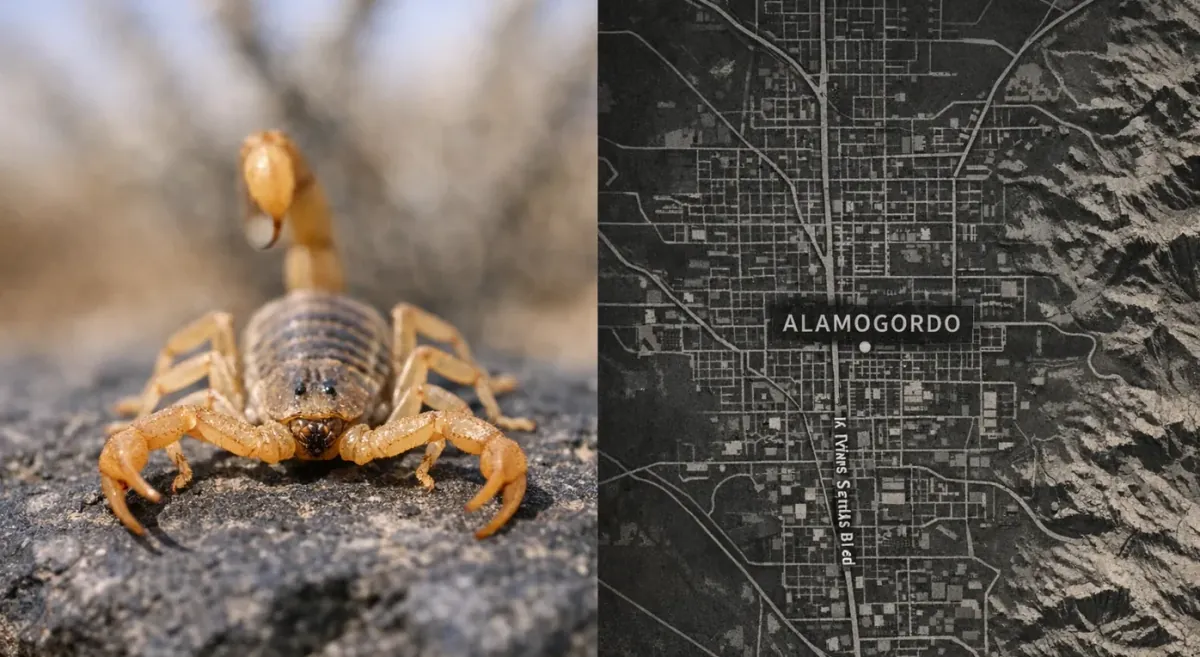
- Size: bark scorpions are relatively small, often around 2 to 3 inches including the tail.
- Color: light tan to yellowish-brown, easy to lose against desert tile.
- Shape: slender pincers and a thin tail, versus the thicker, crab-like pincers of less risky species.
Visuals can mislead, so log each sighting — date, time, and where in the home you saw it. That record makes your Fountain Hills scorpion control decisions much easier.
The species most tied to sting concerns in Maricopa County
When residents say they "have bark scorpions," they usually mean the Arizona bark scorpion — the species behind most sting worries in the Valley. It prefers cool, dark, humid harborage like bathrooms, laundry rooms, garages, and bedrooms, per Kang & Brooks 2017. The good news? Whatever species you're dealing with, the same exclusion and habitat-reduction steps help.
When are scorpions most active in Fountain Hills?
Scorpions in Fountain Hills are active from spring through fall, with the sharpest peak in August and September when monsoon humidity and heat drive movement, according to Kang & Brooks 2017. Warm nights are the trigger. They come indoors chasing food, water, and comfortable temperatures.
Daily timing matters as much as the calendar. Roughly 49% of envenomations happen between 6 PM and midnight, with a second bump from 6 AM to noon, per Isbister & Bawaskar 2014. In short: the scorpion is a night creature. For a full statewide breakdown, see our month-by-month Arizona scorpion season guide.
What "scorpion season" means in Fountain Hills
Peak season runs through the hottest months, with shoulder activity on either side in spring and early fall. Monsoon conditions matter because they bring humidity and a surge of insect prey — more food means more scorpions on the move. Plan your yard cleanup, seal-ups, and monitoring before the first stretch of warm nights, not after.
Nightly patterns: where they go after dark
After dark, scorpions patrol edges and baseboards far more than open floors, following their thigmotactic instinct to stay against surfaces. That's why bedtime routines matter: shake out shoes, check towels left on the floor, and keep an eye on kids' rooms.
Here's the tricky part: scorpions are most active exactly when you're asleep and can't watch for them. That's the gap nighttime monitoring closes — Scorpion Alert Detectors switch on when a room goes dark, so you're not guessing about what crossed the floor at 2 a.m.
How dangerous is a scorpion sting in Fountain Hills?
Most scorpion stings in Fountain Hills cause painful but manageable local symptoms, and the large majority are handled at home without a hospital transfer. Severity depends on the species, how much venom was injected, and the person stung — with young children, older adults, and anyone with breathing problems facing higher risk.
Arizona bark scorpion venom is the one that can cause more serious effects. Kang & Brooks found Arizona had the highest rates of sensory, neuromuscular, and respiratory effects among all reporting states. Pain at the sting site shows up in 88.9% of cases and local numbness in 62.2%, per the Arizona cohort in Klotz et al. 2021.
97.8% of US scorpion envenomations happen in the home — and 90.1% are managed on-site without an emergency transfer.
— Kang & Brooks, J Med Toxicol 2017
Typical sting effects vs. red flags
Most adults report burning pain, tingling, and numbness that fades over hours. Watch for red flags that warrant urgent evaluation: trouble breathing or swallowing, severe muscle twitching or jerking, roving or uncontrolled eye movements, and intense full-body symptoms — especially in a child.
Children under 10 have the highest rates of systemic effects, hospitalization, and ICU admission, according to Kang & Brooks 2017. Skip the home remedies and lean on credible guidance — the Poison Help line at 1-800-222-1222 is free, staffed around the clock, and can tell you whether you need the ER.
Why Fountain Hills residents may worry more than other areas
With a high relevance rating, plenty of yard access, and kids and pets in the mix, Fountain Hills households tend to plan for stings. Often "dangerous" really means "scary and disruptive," even when outcomes are usually good with prompt care. Effective antivenom exists — which sets up exactly what to do the moment a sting happens.
What to do if you're stung in Fountain Hills
Stay calm and act quickly: wash the sting with soap and water, apply a cool compress, and keep the person still while you watch for symptoms. Call Poison Control at 1-800-222-1222 for guidance, and head to emergency care if severe symptoms appear — especially in a child.
First 10 minutes: practical first aid steps
- Wash the sting site thoroughly with soap and water.
- Apply a cool compress or ice pack wrapped in cloth to reduce pain and swelling.
- Remove tight jewelry, rings, and shoes near the sting in case of swelling.
- Keep the person calm, seated, and still — panic makes symptoms feel worse.
- Do not cut the wound, try to suck out venom, or apply a tourniquet.
- If symptoms escalate or the person stung is a young child, seek urgent medical guidance right away.
For a deeper walkthrough, our bark scorpion sting first-aid timeline covers the first 30 minutes, minute by minute.
Who to call and what details to have ready
Call the Poison Help line at 1-800-222-1222 first — the toxicologists there can tell you whether home care is enough or whether you need the ER, and they can loop in 911 if it's serious. When you call, have ready: the person's age and rough weight, the time of the sting, where on the body it happened, and the symptoms you're seeing.
If it's safe, take a clear photo of the scorpion for identification — but never handle it, and don't chase it barefoot across the room. Whatever you do next, resist the urge to make things worse; our guide on what not to do after spotting a scorpion is worth a look.
How to keep scorpions out of your Fountain Hills home
The most effective Fountain Hills scorpion control stacks three layers: seal the entry points scorpions use, remove the food and hiding spots that draw them, and add nighttime monitoring so you're not guessing after dark. No single step does it alone — together, they work.
Seal the routes they actually use (inside + outside)
Start where scorpions slip in at ground level:
- Doors: add door sweeps and fresh weatherstripping; check garage door seals and pet doors, a common weak point.
- Walls and penetrations: seal gaps around plumbing lines, utility entries, vents, and weep screeds along the foundation.
- Windows: repair torn screens and caulk gaps in the frame.
Rather than re-list every pathway, our breakdown of the top 5 ways scorpions get into your home covers each route in detail.
Reduce food, water, and hiding spots around the house
Outside, clear wood piles and brush, keep vegetation trimmed off exterior walls, and pay attention to rock feature crevices where scorpions shelter. Adjusting outdoor lighting helps too, since bright lights draw the insects scorpions hunt. Learn more about what attracts scorpions to your home.
Indoors, cut floor clutter — especially along baseboards, where scorpions patrol. Shake out shoes and towels before use, swap laundry piles for sealed bins, and pull beds slightly away from the wall. Because scorpions hug room edges, the perimeter is exactly where monitoring pays off.
Add monitoring so you're not guessing at night
Scorpions glow a bright greenish color under ultraviolet light — that's the biology that makes nighttime detection work. Scorpion Alert Detectors plug into standard outlets along your room perimeter, shine 365nm UV onto the floor below, and scan only when the room is dark, sending a photo-verified alert to your phone within seconds of spotting one.
Place them near entry points and in bedrooms, where a fast response matters most. Since past sightings are the strongest predictor of a future sting, any room where you've already seen a scorpion is a smart spot to monitor. You can size a plan for your home on the pricing calculator — layer it alongside sealing and professional service for real peace of mind.
Living in Fountain Hills means sharing the desert edge with bark scorpions, so the goal is spotting them early—especially along dark baseboards, garages, and entry points at night when they’re most active. Scorpion Alert uses UV-based detection that takes advantage of their natural fluorescence to help you quickly identify activity without doing constant flashlight sweeps; learn more at Scorpion Alert.