Are scorpions a problem in Alamogordo?
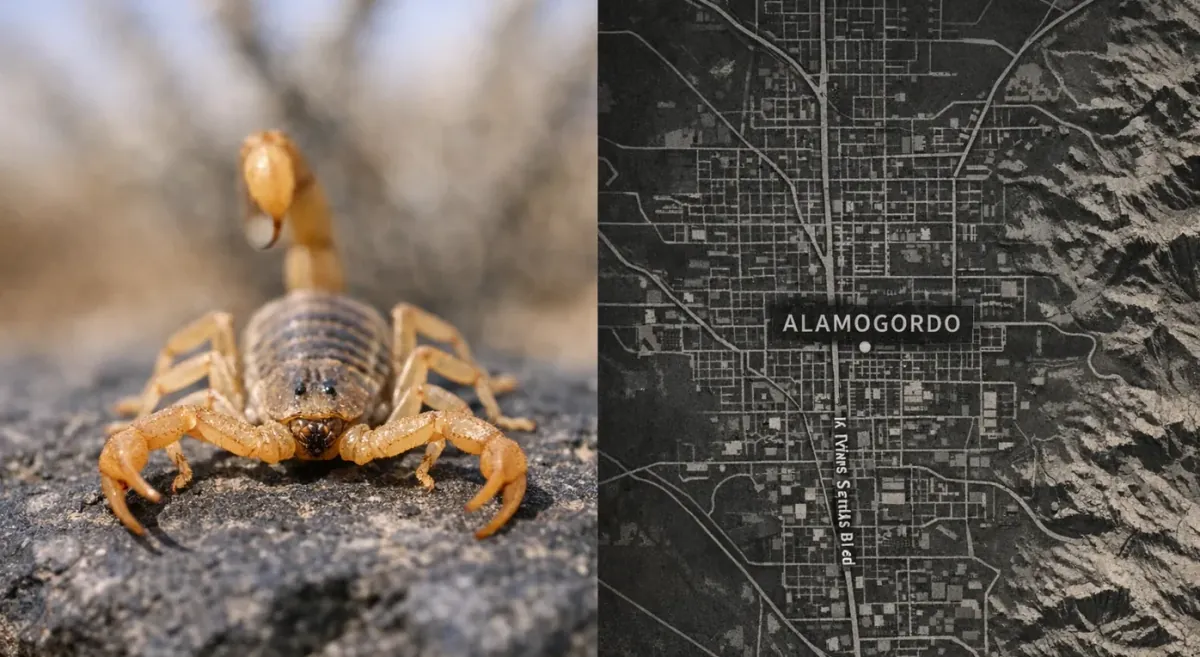
Yes. Scorpions are a real concern for Alamogordo homes, and the local desert environment supports several species year-round. Most residents in Otero County spot them along baseboards, in garages, and near landscaping at night — which is normal for the region, not a sign your home is uniquely infested.
Within 30 km of Alamogordo, iNaturalist logs 21 research-grade scorpion observations, spanning several desert species. Sightings cluster where scorpions find shelter and food: rocky yards, block walls, woodpiles, and the edges of older homes on the desert fringe. Seeing one every few weeks in warm months is typical. Seeing several a night — especially indoors — is worth acting on.
How common are scorpions in Otero County compared to nearby areas?
Otero County sits squarely in Chihuahuan Desert scorpion country, so activity here is comparable to other southern New Mexico communities like Las Cruces or the Tularosa Basin. The iNaturalist records near Alamogordo show a mix of species, with the Striped Bark Scorpion making up the largest share.
Sightings don't spread evenly. One block backed up to open desert or a rock wall can see far more scorpions than a block a quarter-mile away, depending on shelter and how many insects are around to hunt.
Why are scorpions showing up in homes even when it feels clean?
Scorpions come indoors chasing prey and cooler, humid shelter — not crumbs. A spotless kitchen can still draw them if the yard outside has crickets, roaches, and other insects to eat. Cut the bug population and you cut the reason scorpions wander in.
They're also stealthy and almost entirely nocturnal. During the day, they tuck into dark cracks, and at night, they slip along walls to hunt. That's why you rarely see them until you flip on a light at 2 a.m. For the full picture of what draws them in, see our guide on the top things that attract scorpions to your home.
Does one scorpion mean there are more?
Often, yes — but not always. One scorpion usually means conditions are right for at least a few, since they share harborage and breed in the warm season. It's rarely a sudden swarm, though.
Give it a two-week watch window. Each time you see one, jot down the time, the room, and the recent weather. That simple log helps you tell the difference between an occasional wanderer and a repeat pattern worth targeting with a real control plan.
Which scorpion species lives in Alamogordo?
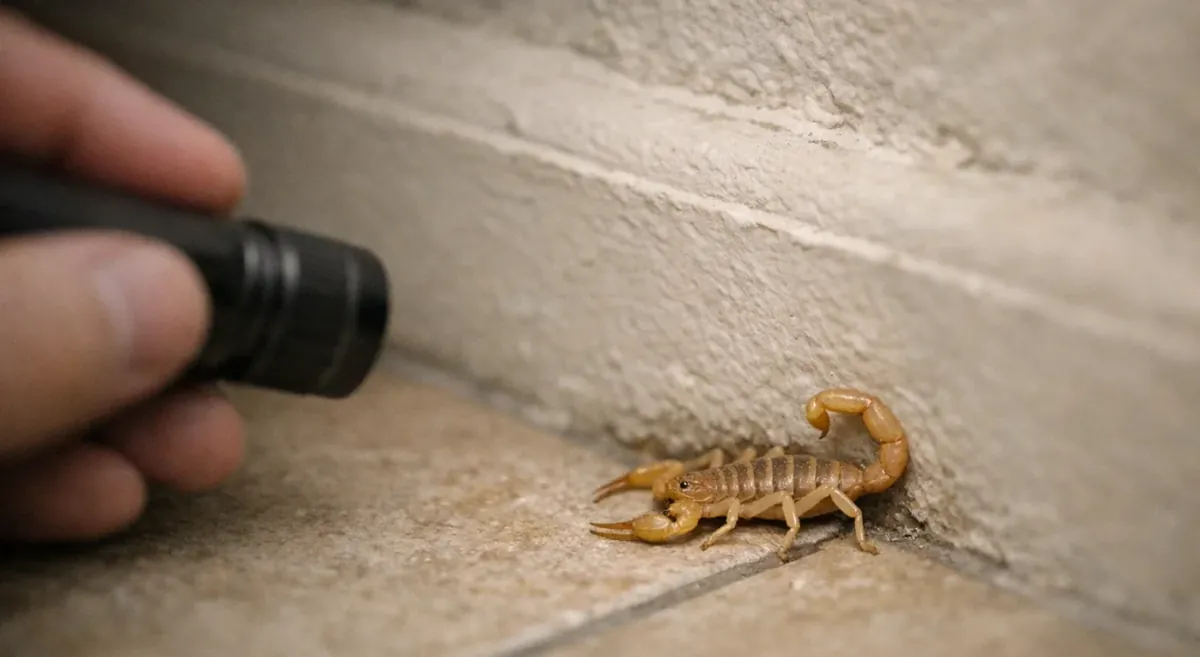
The primary scorpion in Alamogordo is the Striped Bark Scorpion (Centruroides vittatus). It's a tan scorpion with two dark stripes down its back, and it accounts for most local research-grade sightings. Other Chihuahuan Desert species turn up too, including Chihuahuanus coahuilae and the sand-loving Paruroctonus utahensis.
Is the Striped Bark Scorpion the main one in Alamogordo?
Yes. Of the 21 scorpion observations logged near Alamogordo, 12 are Striped Bark Scorpions — the clear majority. As a "bark" scorpion, it's a strong climber and a night hunter, so it turns up on walls, in garages, and occasionally in higher living spaces rather than staying only at ground level.
How can I tell a striped bark scorpion from other scorpions?
Use this quick, non-technical checklist:
- Color: pale tan to yellowish-brown, not dark.
- Stripes: two lengthwise dark bands running down the back.
- Size: roughly 2 to 2.75 inches long as adults.
- Build: slender pincers and a thin tail, not thick and crab-like.
Never pick one up to get a closer look. Even a dead-looking scorpion can sting reflexively, and a clear photo from a safe distance does the job for identification.
Where do Alamogordo scorpions hide during the day?
Indoors, they favor cool, dark, humid spots: bathrooms, laundry rooms, garages, closets, and behind stored boxes. Outdoors in Alamogordo yards, look in landscaping rock, block-wall gaps, woodpiles, dense shrubs, and the space under sheds and A/C units. These daytime hideouts are exactly where a control plan should start.
When are scorpions most active in Alamogordo?
Scorpions in Alamogordo are most active on warm summer nights, roughly late spring through early fall, and they're most active after dark. Summer accounts for the overwhelming majority of scorpion encounters nationwide, and evening is peak time — one review found about 49% of stings happen between 6 PM and midnight, per Kang & Brooks 2017.
What is scorpion season in Alamogordo (month by month)?
Early season (April–May): scorpions become active as nights warm and sightings begin climbing. Peak season (June–September): warm nights and abundant insect prey put activity at its highest. Late season (October): activity tapers as temperatures drop, though a warm spell can trigger a brief return. Through Alamogordo's mild winter, scorpions mostly shelter and go quiet.
Are scorpions nocturnal—and what time are they most active?
Yes, scorpions are nocturnal, and the busiest window is roughly 6 PM to midnight. Practical habits go a long way: never step into shoes left on the floor without shaking them out, don't leave towels crumpled on bathroom tile overnight, and keep pet bowls off the floor after dark so you're not reaching into a scorpion's path in the dark.
Do weather changes (monsoon storms, heat waves) change activity?
They can. Rain and rising humidity push insect prey — and the scorpions hunting them — to move and often head toward the moisture around your home. A stretch of extreme heat can also drive scorpions indoors looking for cooler shelter. After a big summer storm or the first day of a heat wave, run a 48-hour heightened-vigilance plan: be extra careful with shoes and bedding, and take a closer look along baseboards at night.
How dangerous is a scorpion sting in Alamogordo?
For most healthy adults in Alamogordo, a Striped Bark Scorpion sting is painful but not dangerous — closer to a bad wasp sting than a medical emergency. Unlike the Arizona bark scorpion, C. vittatus has not been linked to life-threatening envenomation. Serious reactions are rare, but young children, older adults, and anyone with allergies deserve closer watching.
What does a striped bark scorpion sting feel like?
Expect immediate, sharp burning pain at the site, often followed by tingling, numbness, and mild swelling. In one large Arizona cohort, pain at the sting site showed up in 88.9% of stings and local numbness in 62.2%, per Klotz et al. 2021. Intensity varies by person and by where you're stung — a hand or foot tends to hurt more.
Who should take a scorpion sting more seriously?
Lower your threshold to call for help for these groups:
- Children, especially young kids.
- Older adults.
- Anyone with a known sting or insect allergy.
- Pets, particularly small dogs and cats.
Kids carry the most risk of severe, body-wide effects, which is why we cover it in depth in our piece on why children are more at risk from scorpion stings. Call now if you see trouble breathing, severe muscle twitching or jerking, roving eye movements, difficulty swallowing, or intense full-body symptoms in a child.
When should I go to urgent care or the ER in Alamogordo?
Go straight to emergency care for any red-flag symptoms above, or when symptoms in a child rapidly worsen. The nearest hospital is Presbyterian Medical Center at 76 James Canyon Hwy in Cloudcroft, about 13 miles away, reachable at 575-682-2542. For anything less clear-cut, call Poison Control first at 1-800-222-1222 — it's free, staffed 24/7, and they'll tell you whether you can manage at home.
What to do if you're stung in Alamogordo
Stay calm — most stings are managed at home. Wash the area with soap and water, apply a cold pack, take an over-the-counter pain reliever if appropriate, and watch for anything beyond local pain. Keep Poison Control's number handy: 1-800-222-1222.
First 10 minutes: what to do (and not do)
Follow these steps in order:
- Move away from where you were stung so it can't sting again.
- Wash the site with soap and water.
- Apply a cold pack or ice wrapped in cloth for 10–15 minutes to ease pain and swelling.
- Stay still and calm; keep the limb relaxed.
- Start a simple log: time of sting, body part, and pain level (0–10) every 15 minutes.
Do not cut the wound, do not try to suck out venom, and skip folk remedies like tobacco or bleach. Our bark scorpion sting first-aid guide walks through the first 30 minutes in detail.
Who to call in Alamogordo (Poison Control vs doctor vs 911)
Call Poison Control at 1-800-222-1222 first for most stings — they'll guide you in real time. Call your doctor or head to urgent care if pain is severe or symptoms are spreading. Call 911 immediately for trouble breathing, severe muscle jerking, difficulty swallowing, or a young child with rapidly worsening, whole-body symptoms.
If the scorpion is still inside: how to handle it safely
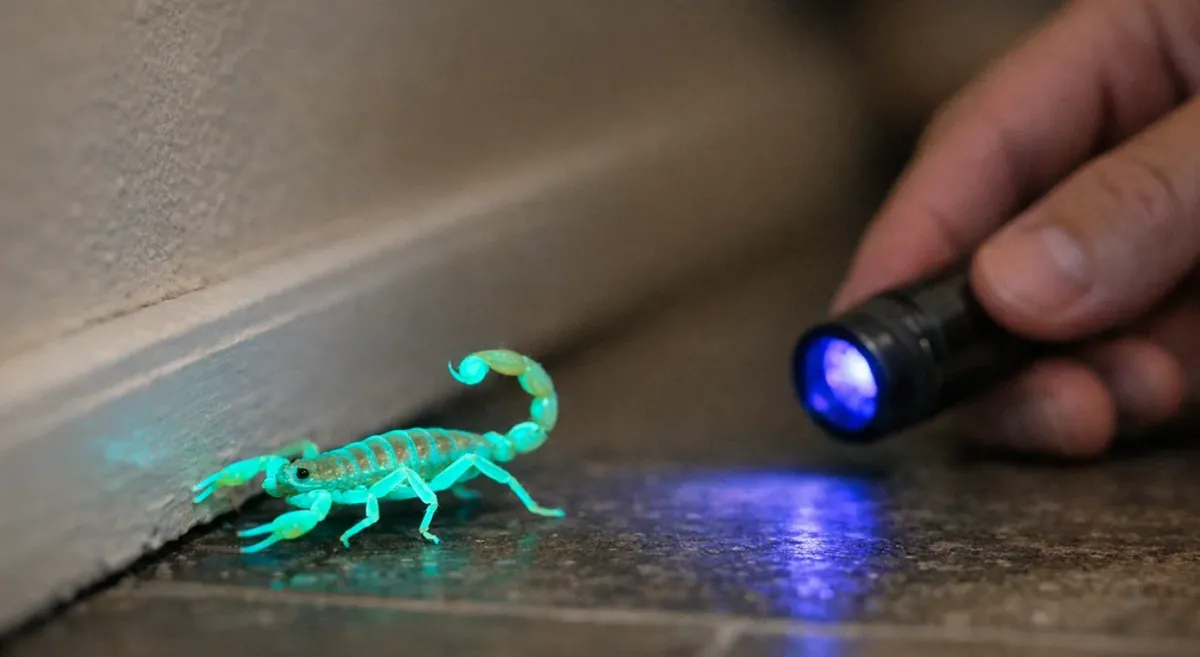
Contain it, don't chase it. Scorpions travel tight along walls and edges — a behavior called thigmotaxis — so you'll usually find one hugging a baseboard. Trap it under a sturdy glass, slide a stiff card underneath, and release it well away from the house, or keep it contained for identification. A UV flashlight helps you spot it, since scorpions glow greenish under UV light. For photo confirmation of nighttime activity you'd otherwise miss, monitoring tools can flag where a scorpion is moving before you ever step near it.
How to keep scorpions out of your Alamogordo home
The best approach for dealing with scorpions in Alamogordo, New Mexico is layered: cut outdoor harborage, reduce the insect prey that draws scorpions in, and tighten your home's exterior. Because scorpions travel along room edges and glow under UV light, perimeter-based nighttime monitoring can confirm activity in your highest-risk rooms — a huge advantage given that 97.8% of envenomations happen inside the home, per Kang & Brooks 2017.
What matters most in Alamogordo yards (rocks, block walls, sheds)?
Yard harborage is the biggest lever here. Try this weekend checklist:
- Move woodpiles and stored materials off the ground and away from walls.
- Trim shrubs and grass back from the foundation.
- Seal or fill gaps in block walls where scorpions shelter.
- Rake back decorative rock near doors and clear clutter under sheds and A/C units.
- Reduce standing water and overwatering that draw insect prey.
How do I make my house less scorpion-friendly without over-spraying?
You don't need to soak your home in chemicals. Declutter garages, closets, and laundry areas; store boxes off the floor; fix leaks and run a fan or dehumidifier in damp rooms. Seal the common entry points — door sweeps, weep holes, and gaps around pipes — covered in our guide to the top ways scorpions get into your home. When sightings keep repeating, a targeted visit from a local scorpion control pro beats blanket spraying. And before you react to a sighting, read what not to do after spotting a scorpion.
Where should I monitor indoors during peak season?
Focus on the rooms scorpions favor: bedrooms, bathrooms, the laundry room, and the garage — cool, dark, often humid spaces near where they enter. Because scorpions hug walls and edges, perimeter monitoring catches them on their natural travel routes. Plug-in detectors like Scorpion Alert sit on the room perimeter, shine 365nm UV light on the floor after dark, and send a photo-verified alert to your phone within seconds of spotting that greenish glow. That takes the guesswork out of nighttime activity and lets your family respond fast instead of stepping into a dark room and finding out the hard way. It's worth prioritizing any room where a scorpion has been seen before, since past sightings are the strongest sign of future encounters.
In Alamogordo’s warm nights and desert landscaping, scorpions can be hard to spot before they end up in garages, shoes, or around pets—so the biggest win is simply finding activity early. If you want a practical way to check your property after dark, Scorpion Alert uses UV detection with AI to help you locate scorpions by their natural glow so you can respond fast and confidently.