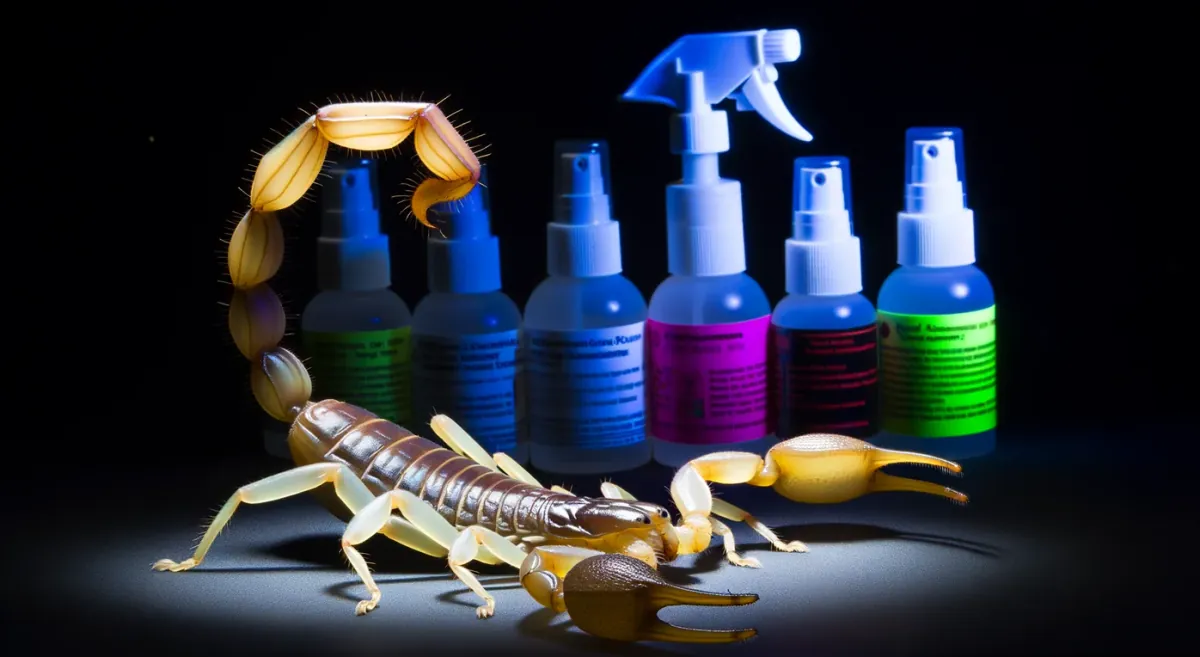
Why do scorpion "cures" fail unless you use a layered plan?
Single-product fixes fail because no spray, dust, or trap addresses every part of the problem. Scorpions get inside, eat the bugs already living there, and hide in cracks a mist never reaches. Real, lasting results come from stacking four things: sealing entry points, cutting their food supply, laying a residual barrier, and monitoring to confirm it's working.
Picture the classic Reddit thread: someone sprays their whole yard, sees a scorpion on the kitchen floor a week later, and declares the product useless. The product wasn't the problem. The plan was. Scorpions are stubborn, nocturnal, and hard to catch, so one lever rarely makes a dent.
Quick safety note before we go further: read and follow every product label, keep kids and pets off treated surfaces until dry, and call a licensed pro if you're unsure. This tier list ranks tools by how reliably they contribute to fewer scorpions indoors — not by how loudly people online praise them.
What did we count as a real endorsement vs. noise?
We counted a mention as a real endorsement only when it showed up repeatedly across multiple threads, included specifics, and reported a measurable change. That means details like where someone sprayed, their mix rate, how often they reapplied, and whether indoor sightings actually dropped afterward.
We filtered out vague praise ("this stuff is amazing"), obvious shilling, one-off miracle stories, and gimmicks with no plausible mechanism. Ultrasonic plug-ins and essential-oil sprays fall here — see our breakdown of the top myths about scorpion repellents for why those keep disappointing people.
Why do scorpions keep showing up along walls and edges?
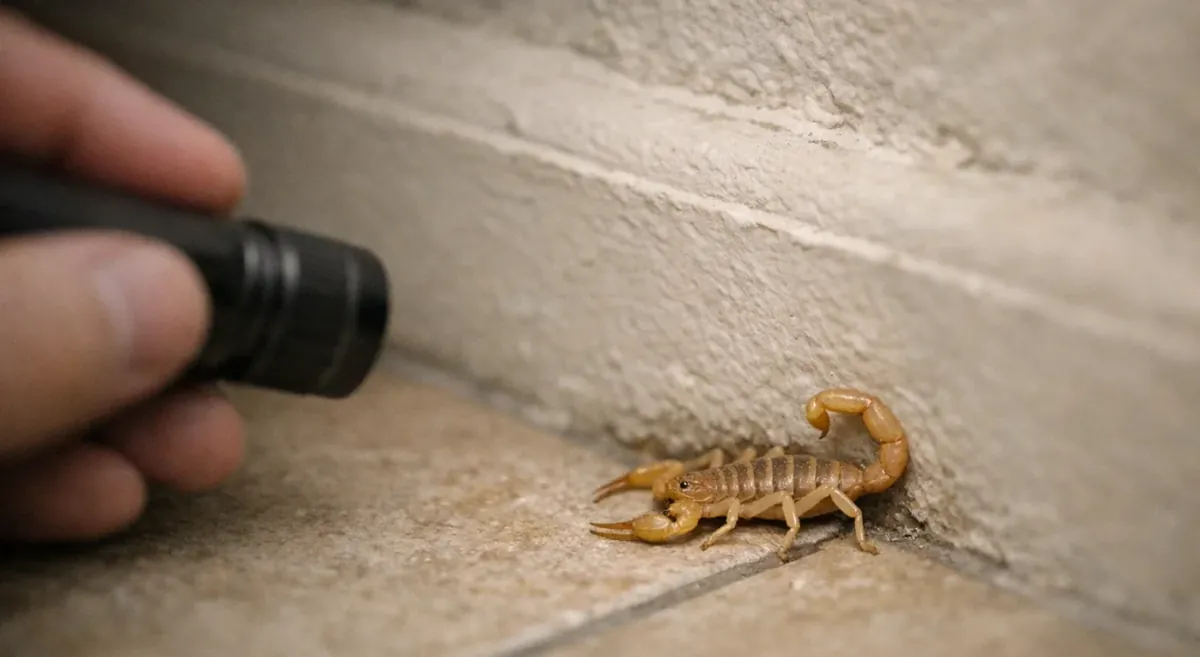
Scorpions are thigmotactic, meaning they navigate by keeping their bodies pressed against surfaces and edges. At night, they hunt by tracing baseboards, thresholds, and the bottoms of walls rather than wandering across open floors.
This one behavior explains almost everything about what works. Treating the open middle of a yard or room does little. Focusing your sealing, spraying, and monitoring on those perimeter travel lanes hits scorpions exactly where they actually move.
Safety first: what should you do before using any chemical product?
Every residual insecticide is only as safe as the person applying it. Cover the basics before you mix anything.
- Read the full label and use the exact rate listed — stronger isn't better and can violate the label.
- Wear gloves and eye protection, and mix in a ventilated area.
- Keep children and pets away from treated surfaces until they're completely dry.
- Avoid overspray near water, storm drains, or edibles to prevent runoff.
- Call a licensed pest control company if you have chemical sensitivities, infants, or exterior zones you can't reach safely.
Which options deserve Tier 1 if your goal is fewer scorpions indoors?
Tier 1 holds the highest-confidence levers Reddit credits again and again for stopping indoor sightings: professional-grade sealing and two microencapsulated residual sprays applied to perimeter travel lanes. These do the heavy lifting. Everything else supports them.
Is professional sealing really worth $1K–$3.5K?
Yes — for most homes with recurring indoor sightings, sealing is the closest thing to a permanent fix. It's the one lever that reduces entry instead of just killing scorpions after they're inside. Door sweeps, weatherstripping, garage thresholds, pipe penetrations, and weep areas are the usual culprits.
Sealing also multiplies everything else. Fewer gaps means fewer scorpions slipping past your barrier spray, which means monitoring stays quiet. For the full rundown of gaps to close, see the top ways scorpions get into your home.
Do Cy-Kick CS and Onslaught FastCap actually work, and where should you apply them?
Both work well when applied to edges rather than open ground. Cy-Kick CS and Onslaught FastCap are microencapsulated residuals that cling to surfaces scorpions brush against as they travel.
Treat the foundation band, door and window thresholds, interior baseboards, and structure and fence lines. Reapply roughly every 60 to 90 days, and more often in peak summer months when activity climbs. The most common failure mode is spraying the open yard instead of the edges — that wastes product on ground scorpions never touch.
When should you call a pro instead of going DIY?
Some situations tilt toward professional help. Reach for a pro when you hit any of these triggers:
- Frequent indoor sightings despite your own efforts
- An older home with many cracks or extensive weep areas
- Anyone in the house with allergies or chemical sensitivity
- Households with infants or pets
- Key exterior zones — rooflines, second-story gaps — you can't safely reach
What belongs in Tier 2 if you want strong DIY results on a budget?
Tier 2 is where value, availability, and rotation live. These products slot into the same layered plan — prey control plus a solid residual perimeter plus consistency — at a friendlier cost per finished gallon.
Are Cyzmic CS and Demand CS good stand-ins when Tier 1 isn't available?
Yes. Cyzmic CS and Demand CS are dependable perimeter residuals homeowners lean on when Tier 1 products are out of stock. Both are encapsulated, so they hold up on exterior surfaces. Choose based on three factors:
- Availability — whichever you can actually get shipped
- Cost per finished gallon — concentrates stretch far, so compare the diluted price
- Rotating actives — alternate ingredients over the season so you don't overuse one chemistry
Is Bifen IT pointless for scorpions, or does it help indirectly?
Bifen IT isn't pointless — it just plays a supporting role. It's excellent at knocking down the crickets, roaches, and other insects scorpions eat. Cut the food supply and a property becomes far less attractive.
Don't expect it to be your primary scorpion stopper, though. Think of it as prey control that pairs with a scorpion-focused residual. If you want to understand why food matters so much, our list of things that attract scorpions in your home covers it.
What does "apply where they walk" actually mean?
It means putting product on the surfaces scorpions physically contact: interior baseboards, door and window thresholds, and the exterior foundation perimeter. Because they hug edges, a treated one-to-three-foot band along walls does more than a broadcast spray across a lawn.
Picture your home from above and trace a continuous line around every wall base, inside and out. That line is your application map. Keep it consistent through the season and you'll see the difference add up.
Which Tier 3 tools help with detection, quick wins, or special situations?
Tier 3 answers two questions every homeowner asks: how do I know this is working, and how do I catch one before someone gets stung? These tools shine at verification and targeted use — not whole-house protection.
Do sticky traps actually catch scorpions—and what are the tradeoffs?
Sticky traps do catch scorpions, and they're genuinely useful for mapping where activity is heaviest. Place them along baseboards and in corners, and the catches show you which rooms and edges to target.
The tradeoffs are real, though. They don't prevent entry, they need frequent checking, they snag lizards and other non-target animals, and they get messy. Use them as data, not as a barrier.
Does diatomaceous earth work on scorpions if you apply it correctly?
Diatomaceous earth can work, but only as a wide band in protected, dry indoor spots like garage edges, crawl spaces, and under sinks. A thin dusting does nothing — scorpions need to cross a broad, undisturbed layer for the abrasive powder to wear down their exoskeleton.
It fails outdoors because wind scatters it and rain clumps it into paste. It's also slow-acting, so it's a supporting player, never a fast fix.
When do Slick Barrier, Phantom, and other niche tools make sense?
These are precision tools for specific problems. Slick Barrier creates a surface scorpions struggle to grip — useful on crib legs, bed legs, or window wells where you need one clean zone protected. Phantom, a non-repellent, works on identified travel corridors because targets don't sense it and can't avoid it.
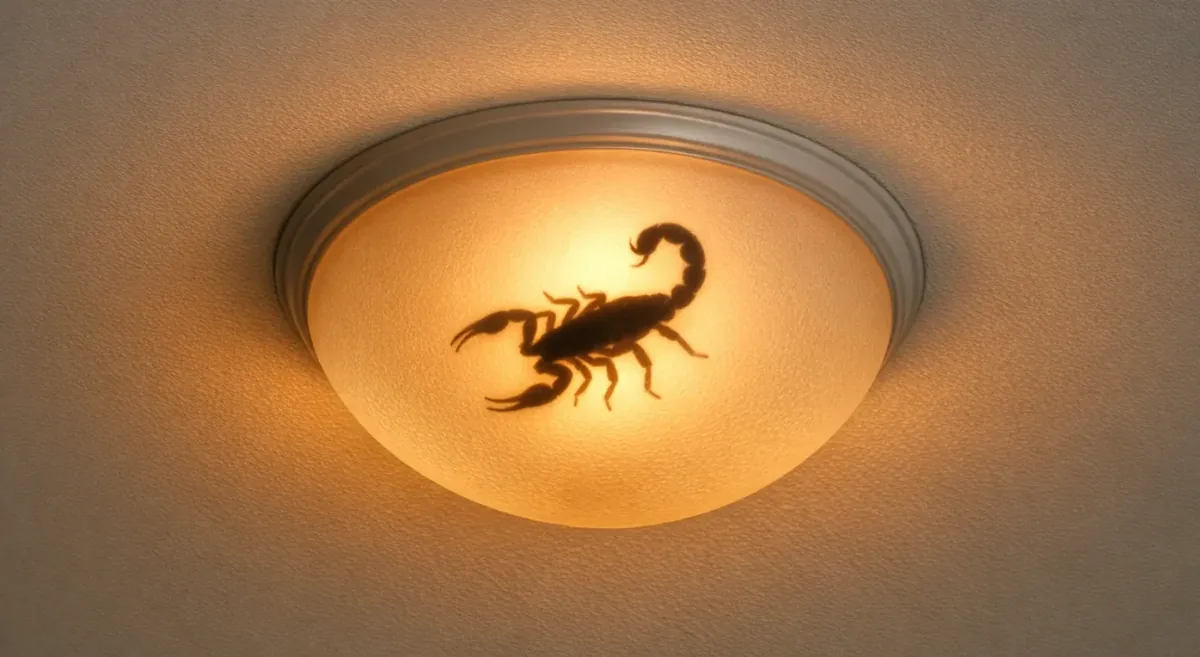
Don't mistake any of them for a whole-house solution. They solve pinpoint problems. If a scorpion turning up in a bed or an upper floor worries you, our guide on whether scorpions climb walls, beds, and ceilings explains what they can actually reach.
How can you monitor scorpions without constantly checking traps?
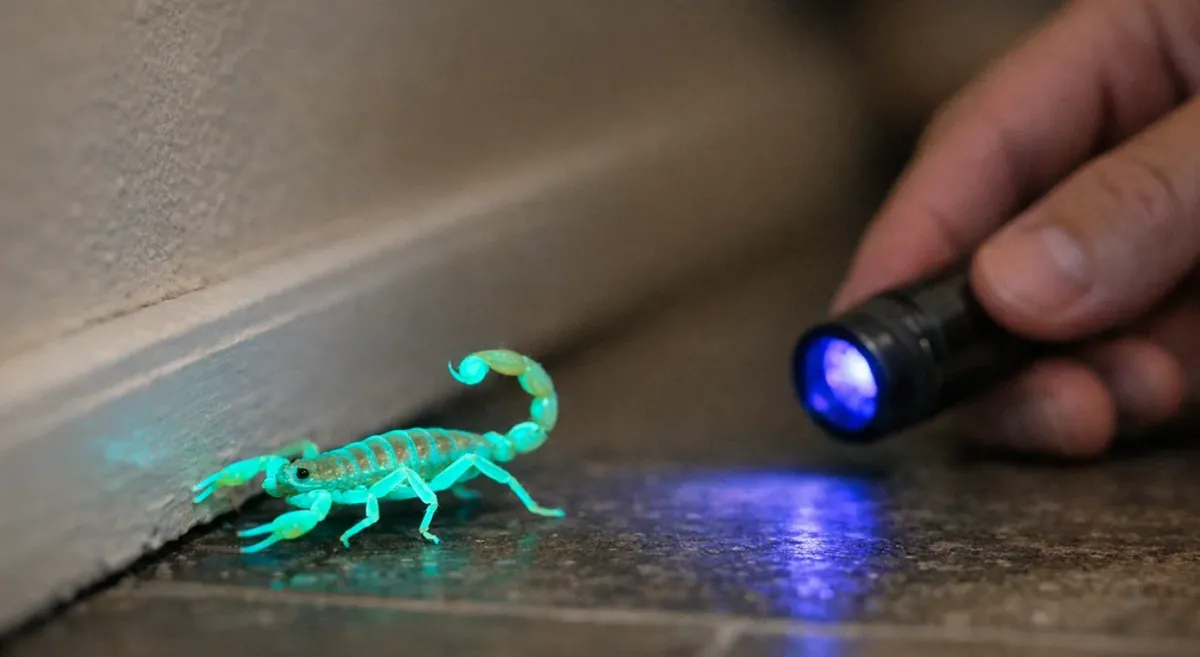
Automated UV detection lets you skip the trap-checking chore entirely. Scorpions fluoresce a striking greenish glow under 365nm ultraviolet light, and they travel along room perimeters — the exact spot an outlet-mounted detector watches.
Scorpion Alert Detectors plug into standard wall outlets on the room's edge, shine 365nm UV onto the floor below, and scan automatically once the room goes dark, which is when scorpions are most active. When one glows, you get a photo-verified push or SMS alert within seconds. That replaces squinting at sticky boards and turns "I think it's getting better" into a dated, timestamped record.
What should you do when you get an alert or find one inside?
Stay calm and follow a simple protocol. Rushing is how people get stung.
- Keep bare feet off the floor and put on closed shoes.
- Grab a UV flashlight and a glass or jar, and go to the spot that triggered the alert.
- Trap the scorpion under the glass, slide a stiff card underneath, and release it well outside — or dispatch it if you prefer.
- Check the nearby baseboards and edges, since scorpions rarely travel alone.
- Log the location and time so you can target your sealing and spraying there.
For more on what to avoid in that first tense moment, read what not to do after spotting a scorpion in your home. If someone is stung, our bark scorpion sting first aid guide walks through the first 30 minutes.
How do you stack these tiers into a realistic 30-day scorpion plan?
Layering the tiers on a timeline is what actually clears a home. The Reddit tier list for scorpion control only pays off when you sequence the pieces — here's how they fit, plus a quick comparison of the three verification tools most people weigh.
| Tool | Effort | Best use |
|---|
| Sticky traps | Manual checks | Mapping activity hotspots |
| Nightly UV flashlight sweep | Tedious, every night | Spot-confirming one sighting |
| Scorpion Alert Detectors | Automatic, hands-off | Photo-verified alerts while you sleep |
Tonight: what's the fastest way to reduce sting risk?
Focus on removing surprises. The single most-stung body part is the foot, and most foot stings happen to bare feet, so the fastest wins protect where you walk and sleep.
34.5% of scorpion stings land on the foot — and 81.9% of those happen when the person is barefoot.
— Skolnik & Ewald, J Med Toxicol 2018 (FEARS)
Tonight, declutter floor edges, shake out shoes and bedding before use, add a couple of temporary detection points, and prioritize kids' rooms and bedrooms. Bedrooms are the most-stung room in the house, so start there.
This weekend: what gives you the biggest drop in indoor sightings?
Do it in order, because sequence matters. Seal the big obvious gaps first — door sweeps, garage thresholds, visible penetrations. Next, apply your perimeter residual correctly along interior baseboards, thresholds, and the exterior foundation band. Finally, treat prey insects so scorpions lose their food source.
Sealing first means the spray you apply after isn't wasted covering entry points you could've closed. Order turns three okay steps into one strong result.
Weeks 2–4: how do you know if your plan is working?
You track it instead of trusting your memory. Note every sighting and detection by location and time. A dropping trend across two to four weeks tells you the plan is landing; a cluster in one room tells you where to seal or spray next.
Sticky-trap catches and Scorpion Alert photo alerts both give you that record, timestamped and location-tagged. Expect a few stragglers even with good treatment — scorpions already inside can persist briefly. Falling numbers matter more than zero overnight.
Ongoing: how often should you reapply or re-check things?
Keep a simple seasonal cadence. Refresh the perimeter residual every 60 to 90 days, and re-check your seals after monsoon storms and big temperature swings, since materials shift and new gaps open. Keep prey control steady so scorpions never find an easy meal near the house. With exclusion, prey reduction, a residual barrier, and steady monitoring all running together, indoor sightings keep trending down instead of bouncing back.
Want to confirm your 30-day plan is actually working — without checking traps every night? Scorpion Alert rents UV Detectors as part of a simple monthly monitoring subscription: they plug into your wall outlets, scan the floor edges automatically when rooms go dark, and send photo-verified alerts to your phone within seconds of spotting that telltale glow. A one-time shipping fee applies at checkout. See /pricing for current rates. No long-term contract — cancel any time by emailing support@scorpionalert.com and returning the Detectors. See how it works at scorpionalert.com.
Reddit tier lists make one thing clear: sprays and powders can help, but the real win is finding scorpions early and consistently—especially at night when they’re most active. Scorpion Alert builds on what works in the real world by using UV glow plus two-stage AI detection to spot scorpions fast so you can act before they become a repeat problem. If you want a practical way to turn “what works” into a routine, see how it fits your setup at ScorpionAlert.com.