What keeps away scorpions—and what's just a myth?
Scorpions are best kept away by removing what attracts them (insects, moisture, shelter) and sealing entry points like door gaps, utility penetrations, and worn weatherstripping. Effective prevention combines yard cleanup within 10 feet of the house, switching to amber outdoor lights that attract fewer bugs, and monitoring indoors along walls where scorpions naturally travel at night.
Here's the straight answer: scorpions usually aren't deterred by a single magic spray or repellent. They're best kept away by removing what attracts them (food, water, shelter) and blocking entry points into your home. Most homeowners get the best results with a layered approach that starts outside, seals the perimeter, and monitors indoors for the occasional intruder.
What homeowners mean by "keep scorpions away"
When you say you want to keep scorpions away, you're really after three things. First, you want fewer scorpions patrolling around your foundation at night. Second, you want to stop seeing them inside your house—especially in bedrooms and bathrooms. Third, when one does slip through, you want to know about it fast so you can deal with it before anyone gets stung.
Most deterrent methods work by reducing scorpion activity and limiting their opportunities to enter, not by creating an invisible force field around your property. That's good news—it means you can take concrete steps that produce real results.
Which approaches usually disappoint
Bug sprays alone rarely solve a scorpion problem long-term. Scorpions are resilient—they can survive underwater for days and go months without food. A perimeter spray might knock down some individuals, but it won't address why they're showing up in the first place.
Home remedies scattered around entry points (cedar oil, cinnamon, diatomaceous earth) might feel proactive, but they don't tackle the real drivers. You'll still see scorpions if your yard offers great hunting grounds and your weatherstripping has gaps.
A simple 3-layer plan (outside, seal, monitor)
The most effective approach works in three layers. First, reduce prey insects and hiding spots in your yard—especially within 10 feet of the house. Next, focus on "scorpion sealing" by closing the specific gaps they use to enter (door sweeps, pipe penetrations, weep holes). Finally, monitor inside your home at night when scorpions are active.
This last part matters because scorpions are thigmotactic—they navigate by staying close to walls and edges. They'll travel along your baseboards and room perimeters, which tells you exactly where to focus prevention and monitoring.
Why do scorpions come in the house in the first place?
Scorpions enter homes for three basic reasons: they're following prey insects, seeking water, or looking for cool shelter during hot days. Understanding these motivations helps you target prevention where it'll actually make a difference.
Since scorpions move along edges and walls (that thigmotactic behavior again), your perimeter becomes the main battleground. Random treatments in the middle of rooms or yards don't match how scorpions actually navigate your property.
Food: how insect problems turn into scorpion problems
Scorpions eat crickets, roaches, spiders, and other small arthropods. If your home attracts these prey insects, you're essentially ringing the dinner bell for scorpions. For example, crickets gathering under a porch light aren't just annoying—they can draw scorpion hunters right to your door.
Common insect magnets include pet food left outside overnight, cluttered storage areas that shelter roaches, and bright exterior lights that create bug buffets. Even something as simple as a pile of Amazon boxes in the garage can harbor enough crickets to keep scorpions interested.
Water and humidity: the hidden scorpion attractor
In the Southwest's dry climate, almost any moisture source can become a scorpion magnet. Check for leaky hose bibs that create damp soil near your foundation. Look for dripping irrigation heads and AC condensation. Inside, examine under-sink areas, water heater closets, and that corner of the garage where you rinse off muddy boots.
Pet water bowls left outside overnight can be a reliable water source. The fix is simple: bring bowls in after dark, repair leaks within a week of noticing them, and redirect AC condensation away from the foundation.
Shelter and travel routes: what scorpion pincers tell you
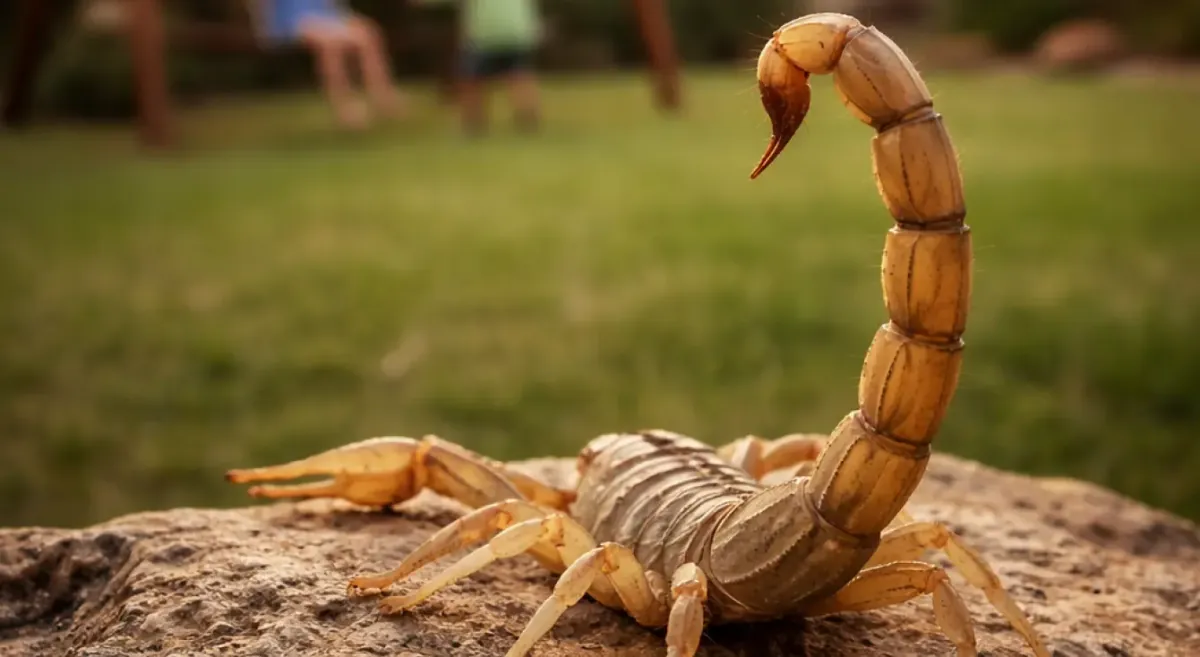
Those prominent pincers serve two purposes: gripping prey and navigating tight spaces. Scorpion pincers are well-suited for squeezing through gaps and clinging to rough surfaces. That's why you find them in storage boxes, along baseboards, and tucked into door frames.
The same pincers scorpions use for hunting also give them a strong grip. They'll squeeze behind picture frames and work through small gaps around windows. Understanding how well they hold on helps explain why traditional barriers often fail—scorpions can grip and slip through where some other pests can't.
Are there scorpions in Nevada (and what about Austin, Texas)?
Yes, there are scorpions in Nevada—the entire state falls within scorpion territory. Nevada scorpions include several species, with the Arizona bark scorpion being the most medically significant. 4.2% of all US scorpion exposures reported to Poison Control Centers from 2005-2015 occurred in Nevada Kang & Brooks 2017. The same prevention principles apply whether you're dealing with scorpions in Nevada, Arizona, or Texas.
Austin homeowners face similar challenges with different species. Instead of memorizing every regional variant, focus on the universal behaviors: scorpions hunt at night, seek moisture, and travel along edges. For a detailed breakdown of Central Texas species, check out this guide to the most common types of scorpions in Travis County.
What's the best way to keep scorpions out of the house long-term?
Long-term scorpion prevention starts in your yard. By making the area around your home less attractive to both scorpions and their prey, you'll see fewer scorpions testing your defenses. This outdoor work often produces the biggest reduction in indoor encounters—fewer scorpions near the foundation means fewer opportunities for entry.
Yard cleanup that actually matters for scorpions
Focus your efforts within 10 feet of the house. Move woodpiles onto racks at least 18 inches off the ground. Those decorative boulders touching your stucco? Create a 6-inch gap. Dense groundcover like ivy can provide a direct path to your walls—trim it back or replace it with gravel.
Storage is another issue. Bins of holiday decorations against the exterior wall can turn into scorpion shelter. Move them inside the garage or shed, or at least pull them 2 feet away from the structure. Even a stack of empty planters can harbor scorpions.
Lighting choices: reduce bugs to reduce scorpions
Your porch light can work against you. Bright white lights attract flying insects all night, creating a scorpion hunting area right at your threshold. Switch to amber or warm-white LED bulbs—they attract fewer bugs while still providing security lighting.
Better yet, install motion-activated lights that stay off most of the night. Position fixed lights to shine away from doors and windows rather than directly above them. One homeowner cut scorpion sightings in half just by moving their front door light 10 feet away onto a post.
Target prey insects first (the scorpion food chain)
Start with basic sanitation. Secure trash can lids, bring pet food inside at dusk, and clear out cardboard clutter that roaches love. Fix moisture issues that attract crickets, including overwatered lawns and clogged gutters.
Once you've removed the buffet, consider targeted treatment for persistent cricket or roach problems. When prey insects decline, scorpions often move on to better hunting grounds. It's ecosystem management on a micro scale.
How do I do "scorpion sealing" so they can't get in?
Scorpion sealing differs from general pest exclusion because scorpions can flatten themselves to slip through very small gaps. A gap that looks sealed to you might still be a scorpion route. Focus on the specific entry points they actually use, rather than trying to seal every possible crack.
Start with doors: the highest-traffic entry points
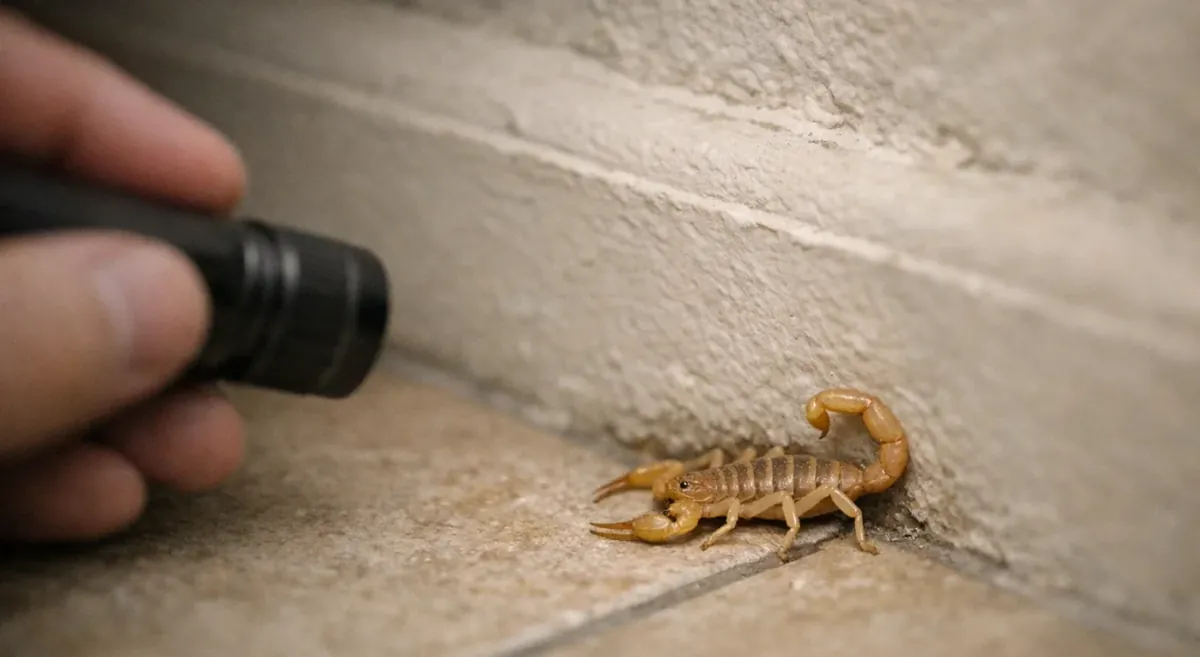
Grab a flashlight, turn off the lights, and check your door gaps from inside. See light? That's a scorpion entrance. Install new door sweeps that actually touch the threshold—no light should pass underneath. Add weatherstripping to the sides where doors meet frames.
Don't forget the garage door. That rubber bottom seal wears out and creates gaps scorpions use. Replace it every few years, and add a threshold seal where the concrete might be uneven. One scorpion in the garage can easily become one scorpion in the kitchen.
Seal the 'utility ring' around the house
Every pipe, wire, and cable entering your home creates a potential gap. Check where AC refrigerant lines penetrate walls, where irrigation control wires enter the garage, and where cable TV lines come through. These utility penetrations often lead directly into wall voids where scorpions can travel unseen.
Use appropriate materials—expanding foam for larger gaps, caulk for smaller ones, and steel wool plus caulk where you need extra protection. Pay special attention to plumbing penetrations under sinks, which combine entry points with moisture attraction.
What about AC vents and plumbing routes?
Homeowners often worry about scorpions entering through AC vents and plumbing systems. While it's possible, these usually aren't the primary routes. For detailed information about these specific pathways, see our guides on whether scorpions can get through AC vents and if scorpions can come through plumbing. Most scorpions enter through simpler routes—doors, windows, and exterior wall penetrations.
Do glue traps for scorpions work—or is there a safer way to monitor indoors?
Glue traps can catch scorpions, but they're not the monitoring solution most homeowners actually want. They come with downsides that often outweigh the benefits, especially in homes with children or pets. There's also a more effective approach that aligns with how scorpions move through your home.
Pros and cons of sticky traps (and why they can backfire)
Sticky traps might confirm you have scorpions, but they can create new problems. They collect dust and debris, reducing effectiveness within weeks. Dead insects stuck to the edges can attract scorpions to investigate. Kids' curious fingers and pets' paws find them too easily—ever tried to remove glue trap adhesive from a dog's snout?
Robot vacuums can also turn glue traps into moving problems. And finding a half-dead scorpion struggling on a trap isn't a great "notification system." You want something that helps you act quickly, not something that creates a mess in a closet.
A smarter indoor strategy: detect scorpions at night along room edges
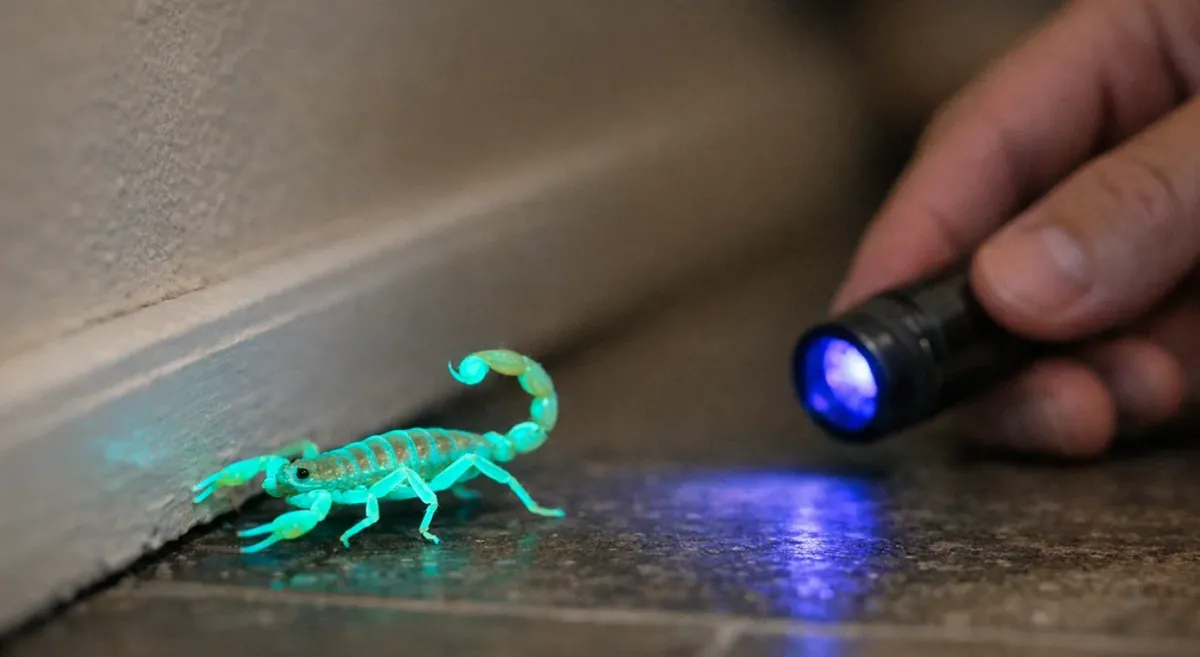
Modern detection works with scorpion behavior, not against it. Since scorpions naturally travel along walls (that thigmotactic behavior), the most efficient monitoring happens at the room perimeter. Scorpions also glow under UV light—particularly at 365 nanometers, which produces the strongest fluorescence.
Automated detection systems like Scorpion Alert use these facts to your advantage. Detectors plug into standard wall outlets right where scorpions travel, shine UV light onto the floor below, and watch for that telltale glow. When the room is dark and a scorpion passes by, you get an alert on your phone within seconds—no daily patrols needed.
Where to place monitors for the best chance of catching entry patterns
Strategic placement improves detection. Start with outlets near exterior doors—front, back, garage, and especially sliding patio doors. Add coverage near dog doors, which create year-round entry opportunities. Bathrooms and laundry rooms also deserve monitoring due to moisture attraction.
Bedrooms and nurseries should be a priority for safety reasons. 42.5% of indoor scorpion exposures in Arizona happen in a bedroom—the most-stung room in the house Skolnik & Ewald 2018. Place detectors where they'll scan the natural travel paths along walls. Since these devices only activate when rooms are dark enough, they're a strong fit for nighttime monitoring when scorpions are most active.
If I find one scorpion, are there more—and what should I do next?
Finding one scorpion doesn't automatically mean you have an infestation, but it does suggest there's a gap in your prevention system. Your immediate checklist: re-examine door seals, check for new exterior cracks, and reduce outdoor harborage near where the scorpion likely entered. Increase monitoring around the detection point to see whether it's a one-time visitor or an ongoing issue.
For a complete analysis of what one scorpion means for your home, see our guide on whether one scorpion means an infestation. The short version: don't panic, but do act quickly to tighten your defenses.
How to protect pets (including 'dog stung by scorpion' concerns)
Dogs investigate with their noses and paws—exactly where scorpion stings tend to happen. Bring pet food and water bowls inside at dusk. Before letting dogs out at night, do a quick UV flashlight sweep of the yard, especially around doorways and favorite potty spots.
Keep pet bedding elevated off the floor when you can. Shake out any blankets or beds that touch the ground before use. If your dog does get stung, watch for excessive drooling, difficulty breathing, or unusual behavior and contact your veterinarian immediately. Most dogs recover fine, but smaller breeds and puppies need closer monitoring.
If you want an easier way to monitor indoors, Scorpion Alert detectors provide 24/7 detection without the mess of glue traps or nightly flashlight patrols. The system watches for scorpions along walls and sends instant alerts to your phone, so you can address issues quickly when one is detected. Learn more about automated scorpion detection and join thousands of homeowners who've upgraded their scorpion defense.
Keeping scorpions away usually comes down to removing what attracts them (food, water, hiding spots) and tightening up entry points—but it also helps to know when one slips through. Scorpion Alert adds a practical layer of detection with UV-based monitoring and real-time phone alerts so you can respond quickly in the areas that matter most. Learn how it fits into your prevention plan at Scorpion Alert.