What is a scorpion identification chart—and why use one?
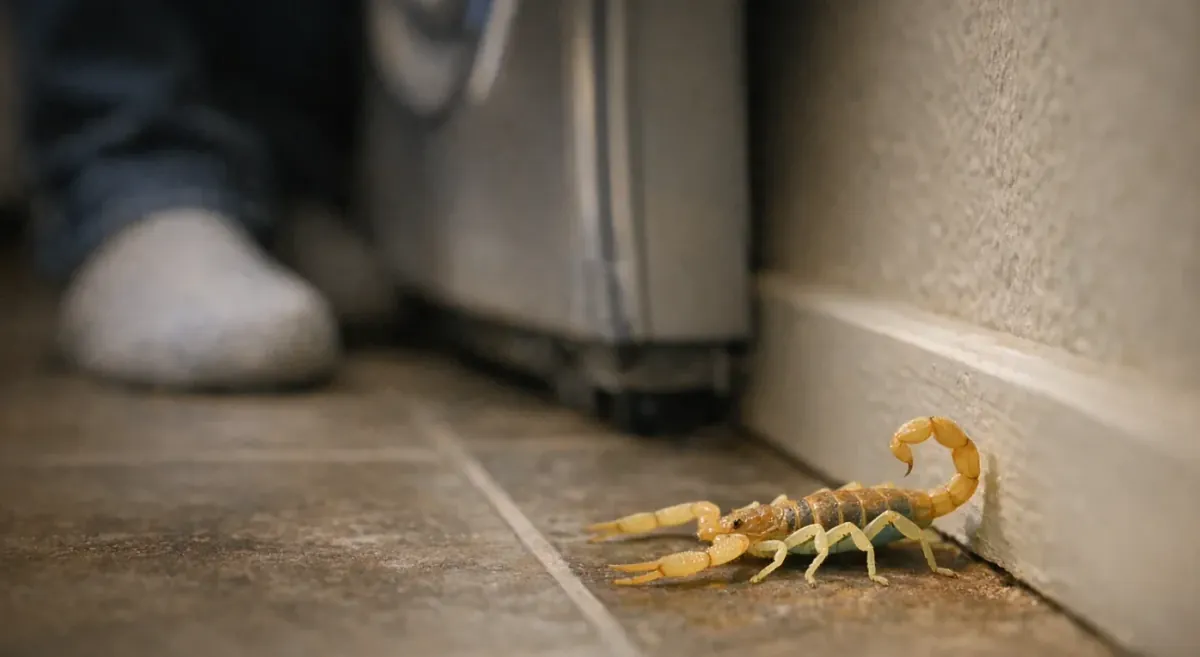
A scorpion identification chart gives you a visual checklist so you can quickly compare key features across scorpion species. Think of it as a field guide designed for homeowners—not entomologists. The best charts pair clear photos with simple comparison tables that highlight traits you can actually see from a safe distance: body shape, color patterns, pincer size, and tail thickness.
Here's what a good identification chart can tell you: which species you’re likely dealing with, whether it’s known for medically significant stings (especially important with Arizona bark scorpions), and what behaviors to expect. What can’t it do? It can’t give you a definitive ID from a blurry photo or tell you exactly how dangerous one specific scorpion might be. You’re looking for probability, not certainty.
The most practical charts focus on three main features. First, body shape—especially the proportion between the pincers and tail. Second, coloration and patterns that still show up in poor lighting. Third, behavioral clues, like whether you found it up on a wall or hiding under debris. These observable traits matter more than trying to measure exact length or count body segments.
Is scorpion identification about "danger level" or just curiosity?
Species identification directly affects how urgent your response should be. Finding an Arizona bark scorpion in your bathroom calls for a different plan than spotting a chunky desert hairy scorpion on your patio. Bark scorpions account for the vast majority of serious envenomations in the Southwest, while many larger desert species deliver painful but medically manageable stings.
Nearly all scorpions are venomous—that’s how they subdue prey. The real question is medical significance. Bark scorpions can cause systemic effects, including numbness, difficulty swallowing, and muscle twitching. Other common species typically cause localized pain and swelling, similar to a wasp sting. Don’t fall for the “venomous versus non-venomous” framing you might see online.
Children and pets face higher risks even from species that adults handle relatively well. Their smaller body mass means venom concentrates more heavily in their system. If you have kids or pets at home, understanding why children face greater risk from scorpion stings becomes essential context for any identification effort.
Why photos beat memory (especially at 2 a.m.)
Picture this scenario: You stumble into the bathroom at 2 a.m., flip the light switch, and spot a scorpion near the toilet. Your adrenaline spikes. By the time you’ve grabbed something to catch it with, you’re trying to remember—were those pincers thick or thin? The tail seemed long, but was it actually slender? Stress and poor lighting wreck accurate recall.
Take a quick photo from at least three feet away, then zoom in later for details. A clear shot that shows the pincers and tail tells you far more than trying to estimate overall length. Most smartphones handle low-light conditions well enough to capture identifying features—especially if you can add a bit more light without getting too close.
Create a dedicated album on your phone labeled “Pest Sightings” (or similar). Include the date and location with each photo. This helps if you need professional pest control later, and it builds your personal reference library for faster identification next time. Property managers and real estate agents often find these records especially useful.
How do I use a scorpion identification chart at home?
Start with a simple process: observe from a safe distance, note four to five key traits, then match those traits to your chart. Never try to handle or closely inspect a live scorpion. Your safety matters more than a perfect ID.
The safest observation method combines good lighting with distance. Use your phone’s flashlight or a bright LED to illuminate the scorpion from several feet away. Take multiple photos if you can—different angles reveal different features. If the scorpion moves, let it go rather than chasing it into tight spaces where you could accidentally make contact.
Common identification questions come up naturally during this process. Can scorpions reach higher areas like walls? Some species excel at it, while others rarely leave the ground. Where you found it—ceiling, wall, floor, or inside an object—becomes another data point for narrowing down the species. Each location preference ties back to specific anatomical adaptations.
What 5 traits should I look at first?
Trait 1: Examine the pincers. Thin, delicate pincers often indicate a species that relies more on venom than crushing power. Thick, lobster-like pincers suggest the opposite—more crushing, less potent venom. This single feature can eliminate a big chunk of your possibilities.
Trait 2: Check tail thickness and the final segment. A uniformly slender tail that barely widens at the stinger suggests certain species. A tail that dramatically thickens toward the end points to others. The stinger itself might look like a sharp point or a more bulbous structure.
Trait 3: Note overall color and patterns. Solid tan or yellow coloration differs from distinct stripes running lengthwise down the back. Some species show mottled patterns, while others appear uniformly colored. Keep in mind that juveniles often look paler than adults of the same species.
Trait 4: Assess body proportions. A slender, elongated profile (the classic “bark scorpion” look) contrasts sharply with the bulky, compact build of many desert species. Think greyhound versus bulldog—same basic structure, very different proportions.
Trait 5: Document behavior and location. Finding a scorpion high on a wall or ceiling strongly suggests certain species. Others rarely leave the ground and stick to ground-level hiding spots. Time of discovery matters too—some species actively hunt at night, while others stay hidden unless disturbed.
Can scorpions climb walls—and does that help me identify them?
How high a scorpion can reach varies dramatically between species, and it’s a useful identification clue. Arizona bark scorpions reach walls, ceilings, and curtains with ease. Their specialized tarsal claws grip surprisingly smooth surfaces. Desert hairy scorpions rarely leave the ground, despite their intimidating size.
Document where you found it as one piece of your identification puzzle. A scorpion on your bathroom ceiling suggests different species than one under a rock in your garage. But remember: the ability to reach higher areas isn’t absolute proof. Occasionally, typically ground-dwelling species end up in sinks or bathtubs after falling from fixtures.
If you’ve seen a scorpion up on your walls, widen your safety checks. Examine hanging towels before use. Shake out bedding that touches walls. Check inside shoes stored against baseboards. Species that reach higher areas can cover more of your living space than ground-dwellers.
Should I trust size as an identification clue?
Size misleads more than it helps. A small scorpion might be a juvenile bark scorpion (potentially dangerous) or an adult of a less concerning species. Large scorpions aren’t automatically safe—they can still deliver painful stings. What scorpion size actually tells you about sting danger often surprises homeowners.
Use size only after you’ve evaluated shape-based traits. Thin pincers and a slender tail matter whether the scorpion measures one inch or three. Food availability, age, and sex all affect individual size within a species. A well-fed female might be twice the bulk of a hungry male from the same clutch.
Instead, focus on proportions. Does the tail seem too long for the body? Do the pincers look oversized compared to the overall frame? Those ratios tend to stay consistent within a species, even when individuals vary in size.
Which Southwest scorpions should my chart include?
Your identification chart should cover the species most likely to enter Southwest homes. Prioritize scorpions that show up indoors regularly, not every scorpion in the desert. A practical chart includes the common name, typical colors, pincer type, tail characteristics, whether it reaches higher areas, and a frank assessment of medical concern level.
The most useful comparison charts fit on a single page. Include clear photos showing both top-down and side views. Add columns for “Where Found” (walls/ceilings versus ground level) and “Activity Time” (strictly nocturnal versus occasionally active in daylight). A “Worry Level” scale from Low to High helps homeowners quickly gauge the situation.
Remember that scorpions don’t respect state lines. Species common in Phoenix also show up in Las Vegas and El Paso. Your chart should reflect that regional overlap while noting any strong geographic preferences.
Bark scorpions: what makes them stand out on a chart?
Bark scorpions have a distinctly slender build that sets them apart right away. Their pincers look almost dainty compared to other Southwest species. The body stays consistently narrow from head to tail tip. That streamlined profile helps them squeeze through incredibly tight spaces—weather stripping gaps, window frames, and door sweeps that would stop bulkier species.
For Southwest homeowners, bark scorpions are the top-priority ID. They’re prolific breeders that readily reach higher areas, and deliver the region’s only potentially life-threatening stings. They also show up indoors far more often than other species, so accurate identification matters for response planning.
Your chart needs a bold visual callout for bark-scorpion-like profiles. Consider a highlighted box stating, “If it looks like this, follow enhanced safety protocols.” Include multiple-angle photos since bark scorpions can look quite different from above versus from the side.
Striped scorpions: how do I tell "striped" from "just tan"?
True striping shows up as distinct dark bands running lengthwise along the scorpion’s back—not random blotches or general color variation. These stripes typically contrast sharply with a lighter base color. Random mottling or gradual color changes don’t count as stripes; you’re looking for clear linear patterns.
Lighting can play tricks with pattern visibility. That seemingly solid tan scorpion under harsh bathroom light might reveal clear stripes in your photo later. UV flashlights wash out most color patterns entirely, showing only the characteristic blue-green glow. Always review photos under normal lighting for accurate pattern assessment.
Chart photos should include both standard lighting and close-up dorsal views. Show the same species from multiple angles since stripe visibility can change a lot with perspective. Add notes about which patterns hold up in poor light versus those that disappear entirely.
Hairy & chunky desert scorpions: why big pincers can be a clue
Those thick, powerful pincers tell an evolutionary story. Desert hairy scorpions and their chunky cousins rely more on crushing power than venom potency. Their robust claws can crack beetle shells and grip struggling prey. That hunting strategy means less investment in powerful venom—though their stings still hurt.
The overall “heavyweight boxer” look makes these species relatively easy to spot. Everything about them looks thick and sturdy: wide body segments, muscular pincers, and a tail that seems almost stubby compared to their overall mass. They move deliberately rather than darting quickly like their slender relatives.
Never assume these bruisers are harmless because they look less “scary” than bark scorpions. Their stings can cause significant pain and swelling. Size doesn’t equal safety in the scorpion world—respect all species, even if they look like a WWE wrestler.
Small brown ground scorpions: what to do when it's 'just a little one'
Small brown scorpions are a common ID headache because several species look nearly identical at that size. Juvenile bark scorpions, adult lesser stripetails, and various ground-dwelling species can all read as “small brown scorpions” to worried homeowners. Common myths about what repels these smaller species often lead to wasted effort.
Your chart should emphasize shape and behavior over size for these confusing specimens. Where was it found? Ground-level discoveries in garages or under objects suggest different species than those found up high. Can you see any patterning, even faint? Document as much as you can before the scorpion disappears.
Include a “common confusion” sidebar on your chart. Show a juvenile bark scorpion next to an adult ground scorpion of similar size. Highlight the subtle differences in pincer proportion and tail segments that distinguish them. This helps prevent the dangerous assumption that all small scorpions are “babies” and therefore harmless.
Your printable chart layout (what columns to include)
Design your one-page chart with these essential columns: thumbnail photos (multiple angles), key trait checkboxes, typical hiding spots, ability to reach higher areas (Yes/No/Sometimes), and recommended action if found. Add a confidence rating system so users can mark High, Medium, or Low certainty for their identification.
Include a “Next Action” column that goes beyond generic advice. For bark scorpion matches: “Photograph, contain if safe, check bedrooms immediately.” For ground scorpions: “Photograph, release outside if possible, check entry points.” This action-oriented approach reduces panic and lays out clear steps.
Add this reminder at the bottom in bold: “When uncertain, treat as potentially medically significant. Know your household’s scorpion sting first aid plan before you need it.” This covers liability while keeping the focus practical.
What if I can't get a good look—how can I confirm ID at night?
Nighttime encounters come with extra challenges. The scorpion appears suddenly, your eyes haven’t adjusted, and it might disappear before you can grab proper lighting. Instead of chasing shadows, use a few strategic approaches: UV detection to locate it, safer photography techniques, and documentation of travel patterns.
Scorpions become active hunters after dark, emerging from daytime hiding spots to patrol for prey. They follow predictable routes along walls and baseboards thanks to their thigmotactic behavior—the tendency to maintain contact with surfaces while moving. That predictability helps you anticipate where to look and how to position your light.
Modern technology offers options beyond the traditional “patrol with a blacklight” routine. Automated monitoring systems can capture images throughout the night, building a record of activity patterns and giving you clearer photos for identification later. It beats trying to squint at a moving target in the dark.
Do scorpions really glow under UV light?
Scorpions fluoresce a brilliant blue-green under ultraviolet light—it’s not a myth. The 365nm wavelength produces the strongest glow, making scorpions visible from across a room. This fluorescence comes from compounds in their exoskeleton and remains visible even in shed skins and dead specimens.
This UV response changes nighttime identification. First, locate the glowing scorpion with your UV light. Then switch to white light or carefully photograph it for color and pattern details. Finding it with UV first reduces the chance it’ll disappear while you fumble with regular flashlights.
Practice scanning typical travel routes before you need to find an actual scorpion. Run your UV light along baseboards, door frames, and corners where walls meet floors. Scorpions navigate by maintaining contact with surfaces (thigmotaxis), so these edges become highways for their nighttime journeys.
How do I get a usable photo for identification?
Capture three specific shots for the best identification results. First, a top-down view showing overall body shape and any back patterns. Second, a side profile highlighting pincer size and tail proportions. Third, a context shot showing where you found it—location often helps as much as physical traits.
Prioritize safety over photo quality. Stand at least three feet away and use your phone’s zoom. Wear closed-toe shoes and long pants while photographing. Never lean over a scorpion or put your hands near it for scale. Digital zoom may be grainy, but it’s still safer than getting close enough to risk a sting.
Skip the coin-for-scale trick unless you can place it without approaching the scorpion. The risk isn’t worth the marginal improvement. Your photos’ EXIF data already includes a timestamp (and potentially location), which is useful for tracking patterns over time.
Is there a way to get photo evidence automatically while I sleep?
Plug-in UV detectors can monitor floor areas continuously throughout the night. These devices shine 365nm UV light downward and capture images when they detect the characteristic scorpion glow. Systems like Scorpion Alert take frequent snapshots in darkness, building a record of any scorpion activity in the coverage area.
For identification, automated photos have real advantages. You get consistent lighting, multiple angles as the scorpion moves through the detection zone, and timestamps showing exactly when activity happened. Those controlled conditions often capture clearer identifying features than a panicked, middle-of-the-night phone photo.
Placement also improves identification. Since outlets sit along room perimeters where scorpions naturally travel, the devices can capture side and underbody views as scorpions pass by. That angle can reveal pincer shape and tail proportions better than top-down views. Multiple detectors around high-risk rooms create overlapping coverage that may photograph the same scorpion from different angles.
Once I've identified it, what should I do next?
Your identification confidence level should guide your next steps. High confidence in a species ID allows a targeted response—enhanced monitoring for bark scorpions versus simple relocation for less concerning species. Low confidence means treating the encounter as potentially significant while you gather more information.
Avoid common post-sighting mistakes that can make the situation worse. What not to do after spotting a scorpion includes specific errors that increase risk or drive scorpions deeper into your home. Aim for safe containment and a systematic response, not reactive measures.
Build a simple action checklist based on your identification results. High-risk species should trigger immediate bedroom and bathroom checks, documentation of the sighting, and consideration of professional help. Lower-risk species still warrant entry-point inspection and basic monitoring—just with less urgency.
If my chart points to a bark-scorpion-like species, what changes?
Bark scorpion identification should put your response into high gear. Start with sleeping areas—check under beds, inside closets, and around cribs. Move to bathrooms next, examining towels, shower curtains, and cabinet interiors. Pet beds and play areas need quick inspection too, since children and animals face higher sting risks.
Document every detail: exact time, specific location, scorpion behavior, and which direction it traveled. Plot sightings on a simple floor plan to look for patterns. Multiple sightings near a particular wall might point to an entry spot. Repeated bathroom encounters could suggest moisture issues that attract prey insects.
Keep your family’s sting response plan easy to access. Review the critical first 30 minutes after a bark scorpion sting before you need that information. Post emergency numbers where everyone can see them. Preparation can reduce panic if a sting happens.
If I'm not sure what it is, what's the safest assumption?
When you’re uncertain, default to maximum caution. Treat unknown scorpions as potentially medically significant. That means no handling, no close inspection, and no assumptions about safety based on size or location. If removal is necessary, focus on safe containment using the glass-and-cardboard method.
Keep gathering evidence without chasing the scorpion into risky areas. If it escapes, note which direction it went. Then set up monitoring in that area—whether manual checks or automated detection—so you can intercept it later. Most scorpions maintain territory, so it likely hasn’t gone far.
Unknown species call for the same safety habits as confirmed dangerous ones. Shake out shoes, check bedding, and inspect towels before use. These precautions take seconds and reduce surprise encounters while you work toward a more confident identification.
When should I call a professional (or step up monitoring)?
Certain triggers call for professional intervention or enhanced monitoring. Repeated sightings within a week suggest an established population. Scorpions in bedrooms or bathrooms indicate they’re reaching your core living space. Any sting inside your home warrants immediate professional assessment, regardless of species.
Sightings across multiple rooms are especially concerning. Scorpions in different areas can mean multiple entry points or breeding inside the structure. That’s beyond a simple exclusion fix—you need a more comprehensive evaluation and treatment plan.
Enhanced monitoring also makes sense when you’re seeing patterns. Automated detection along baseboards and near suspected entry points builds data on movement patterns and population density. Coverage of high-risk rooms (bedrooms, nurseries, bathrooms) provides earlier warning of scorpion presence. Multiple monitoring points work together to track movement through your home, helping professionals target treatments more effectively.
Now that you’ve used a scorpion identification chart to narrow down what you’re seeing, the next step is spotting them when they’re actually active—at night—when they can be easiest to miss. Scorpion Alert helps by using UV-based detection and a two-stage AI check to capture and confirm scorpion activity in real time; learn more at Scorpion Alert.