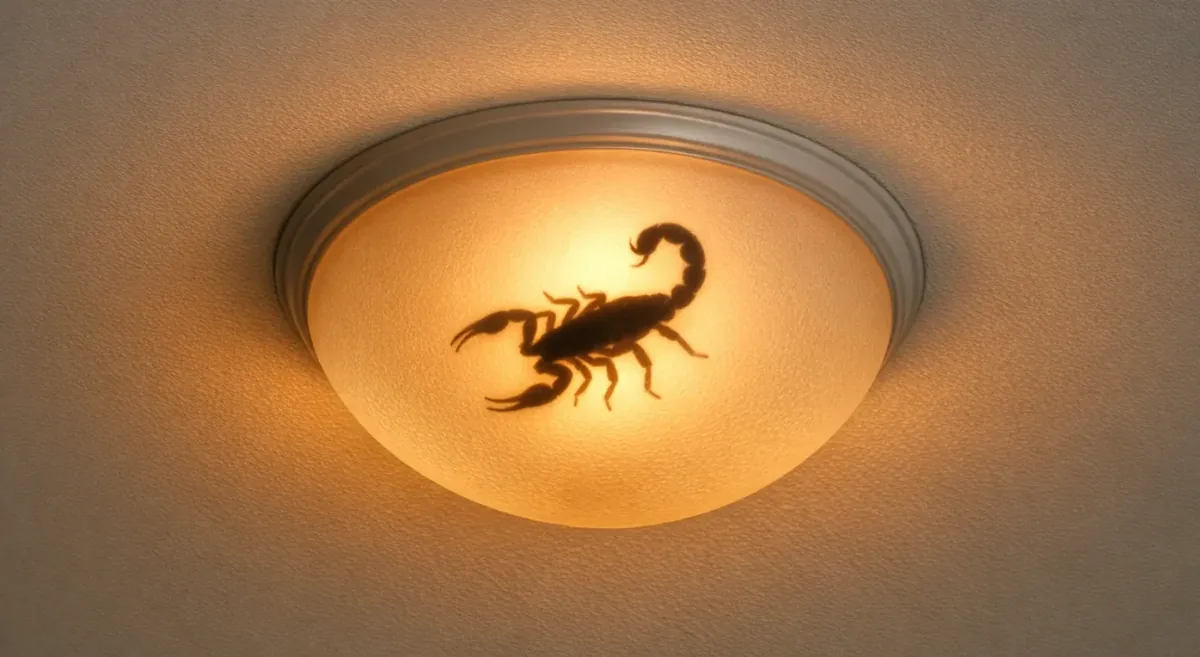
Do scorpions actually climb walls, beds, and ceilings?
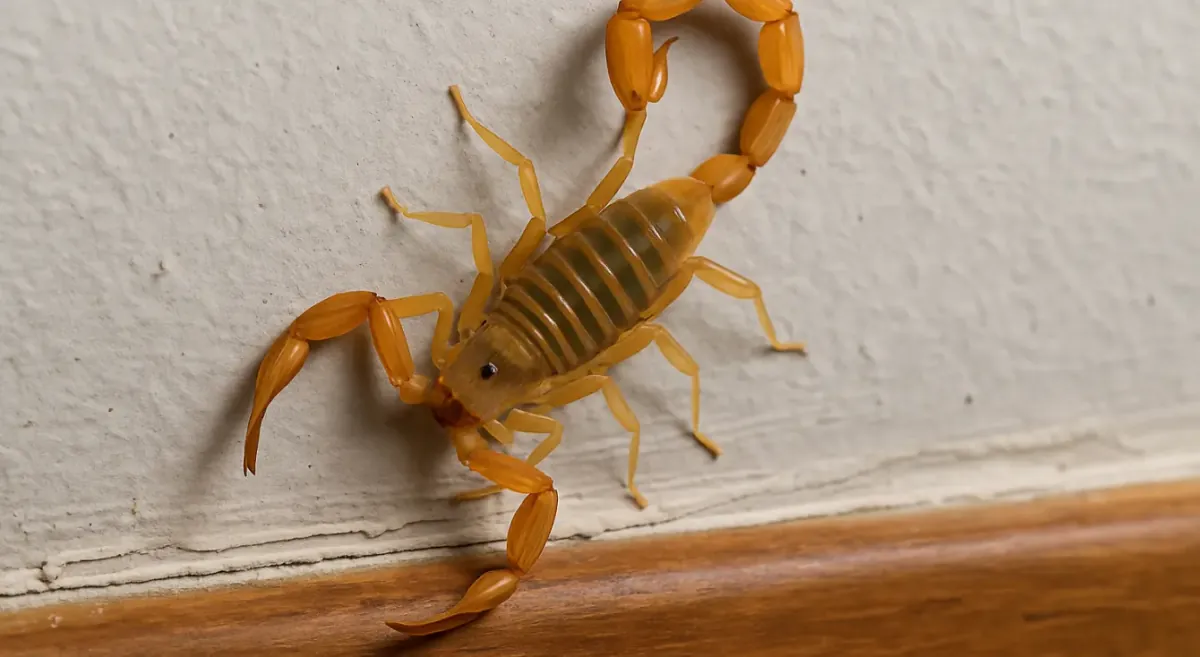
Yes—some species absolutely can climb walls, beds, and even ceilings. This is especially true for bark scorpions, the most common climbing species in Arizona and Texas. While most scorpion sightings happen at floor level along baseboards, bark scorpions have specialized claws that let them scale vertical surfaces. They'll climb curtains, bedding, and textured walls while hunting prey or looking for shelter.
Say you flip on the bedroom light and spot a scorpion halfway up your wall. Your heart races. Should you panic? No. Most elevated scorpion sightings involve bark scorpions following prey (usually small insects) or searching for a cool, dark hiding spot during hot Southwest summers.
If you see a scorpion above floor level, what should you do first?
Don't swipe at it with bare hands—that's how stings happen. First, get kids and pets out of the room right away. Put on closed-toe shoes and work gloves if you have them nearby.
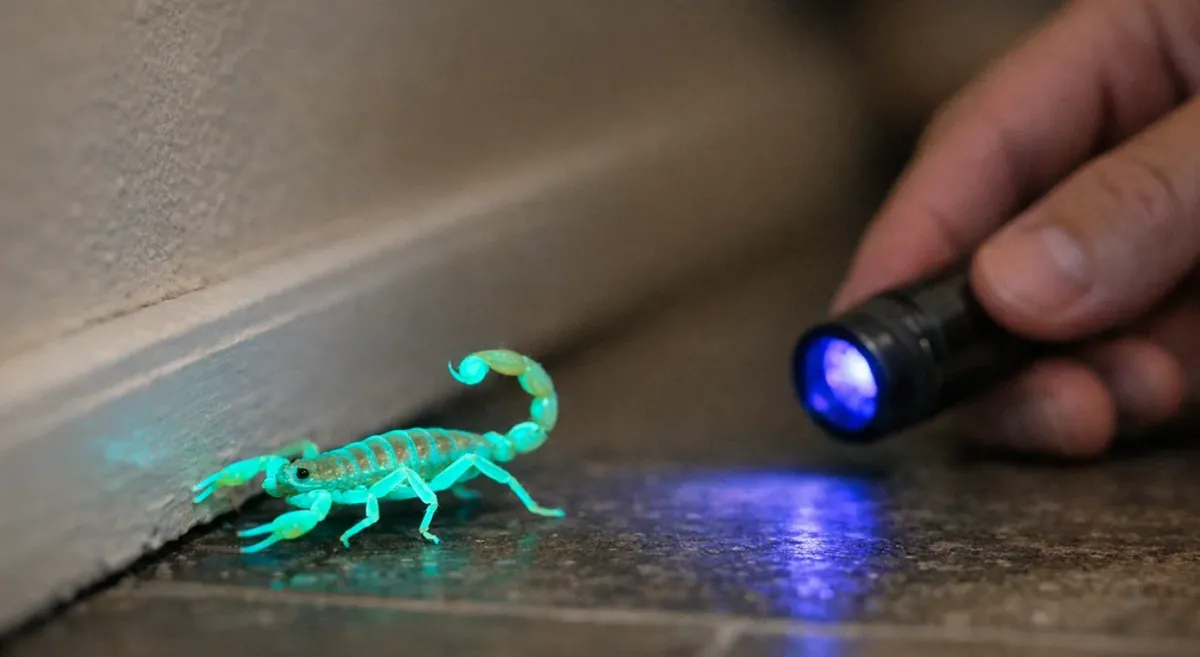
Grab a UV flashlight to confirm what you're seeing (scorpions glow bright green under 365nm UV light). Use the cup-and-paper method: place a clear glass or jar over the scorpion, slide stiff paper underneath, and flip it over to contain the scorpion safely. Once it's trapped, check nearby hiding spots—behind picture frames, in curtain folds, and along the headboard seams. If there's one, there may be more.
Are they climbing to attack people?
Scorpions aren't hunting humans when they climb. They're following prey insects, escaping heat, or searching for moisture. That scorpion on your bedroom wall? It's likely chasing a spider or trying to get out of the 115-degree Arizona afternoon.
Elevated sightings feel scarier because we expect scorpions on the ground, not at eye level. But for bark scorpions, climbing is normal—they're simply following their natural movement patterns along surfaces and edges.
Which scorpions can climb smooth walls or end up on ceilings?
Bark scorpions are the best climbers in the scorpion world. Unlike their ground-dwelling cousins, bark scorpions have evolved to handle vertical surfaces with ease. They grip textured materials like stucco, fabric, and rough drywall much better than slick surfaces like glass or polished metal.
Where you live matters. Arizona residents deal primarily with the Arizona bark scorpion (Centruroides sculpturatus), while Texas, New Mexico, and parts of Nevada see more striped bark scorpions (Centruroides vittatus). Both species climb, but the Arizona bark scorpion is especially known for showing up in unexpected places.
Are bark scorpions the main climbers in the U.S.?
Yes, bark scorpions drive most "found on my wall" reports across the Southwest. The Arizona bark scorpion and striped bark scorpion use tiny claws to grip rough surfaces—stucco exteriors, textured paint, curtains, even ceiling popcorn texture. These adaptations help them hunt prey in trees and rocky outcrops in nature, but in your home, they'll scale drapes and tuck behind wall-mounted picture frames.
Homeowners often find bark scorpions in surprising spots: clinging to bathroom walls, hiding behind hanging artwork, or yes, occasionally on ceilings where walls meet in textured corners. Their ability to climb makes them uniquely troublesome compared to many other scorpion species.
What about giant hairy or other desert scorpions?
Giant hairy scorpions (Hadrurus arizonensis) and most other desert species stay ground-oriented. They might climb landscape rocks or low walls outside, but you won't find them scaling interior walls or dropping from ceilings. Their heavy bodies and digging-adapted claws make them poor climbers compared to bark scorpions.
Here's a practical rule: If you're seeing scorpions on walls, curtains, or ceilings repeatedly, you're almost certainly dealing with bark scorpions. Ground-dwelling species simply don't have the equipment for that kind of climbing.
Can scorpions climb smooth tile, glass, or painted walls?
Texture makes all the difference. Bark scorpions struggle with truly smooth surfaces—think glossy bathroom tiles or glass shower doors. But many surfaces that look smooth to us still offer enough grip for a determined bark scorpion. That "smooth" hallway paint? Up close, it has plenty of texture for tiny scorpion claws.
Test it yourself: Can a small beetle or spider crawl up that surface? If yes, a bark scorpion can probably follow. Glossy bathtub walls can stop them, but lightly textured bedroom walls, stucco exteriors, and even some semi-gloss paints provide enough traction. This helps explain why bathroom scorpion encounters often happen on the floor near the tub rather than in it.
Why would a scorpion climb into a bed or up a wall in the first place?
Scorpions climb for three main reasons: chasing prey, escaping heat, and finding secure hiding spots. That scorpion scaling your bedroom wall at 2 a.m.? It's probably following a trail of small insects or looking for a cool crevice to wait out the desert heat.
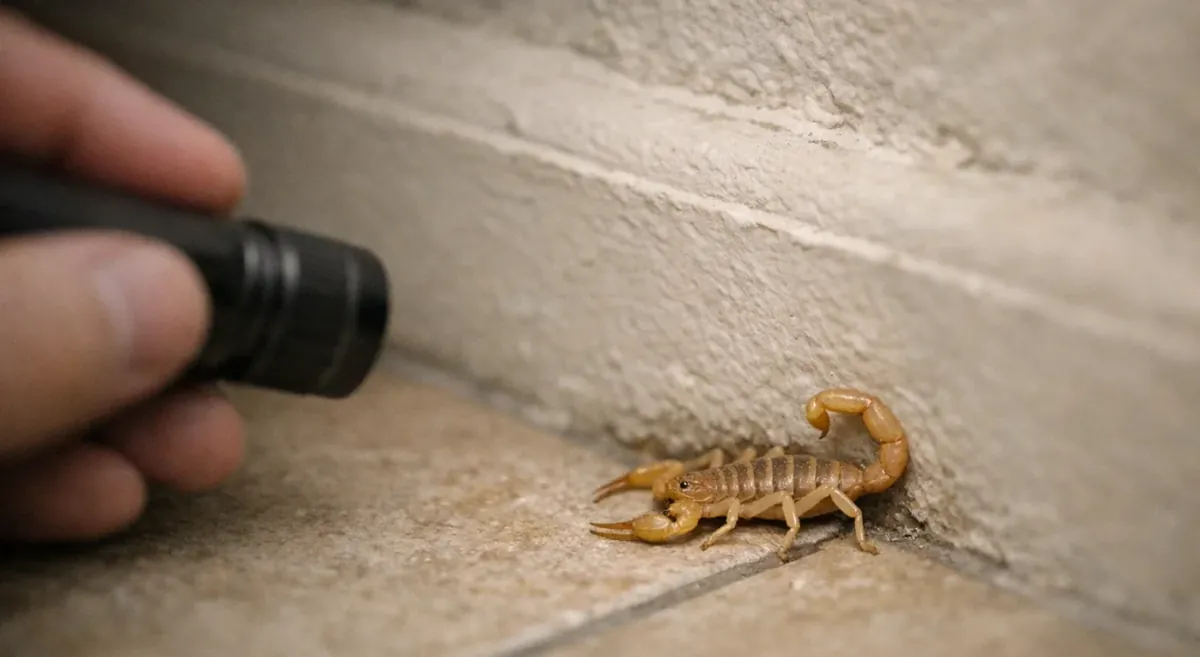
Understanding their behavior helps you predict their paths. Scorpions are thigmotactic—they navigate by maintaining contact with surfaces. At night, they travel along room perimeters, following baseboards and wall edges rather than crossing open floor space. This edge-following behavior can lead them up walls when they hit vertical surfaces.
Common climbing routes include bedding that touches the floor, curtains hanging near beds, piles of clothes, and cluttered nightstands. Each one can act like a bridge from their typical floor-level "highway" to elevated surfaces—right where you don't want to run into them.
Are scorpions more active at night?
Scorpions are strictly nocturnal hunters. They emerge after dark to hunt prey and explore, which is why many bedroom encounters happen while people sleep. During their nighttime wanderings, they follow walls and baseboards—a behavior called thigmotaxis that helps keep them oriented and protected.
This edge-hugging movement pattern means they're far more likely to travel along your bedroom's perimeter than across the middle of the floor. Control the perimeter, remove the climbing aids, and you'll cut your risk dramatically. It's why understanding seasonal activity patterns helps with prevention timing.
What "ladders" let scorpions reach beds and ceilings?
Bed skirts and blankets touching the floor create perfect scorpion routes. Add draped sheets, nearby curtains, backpacks leaning against the bed, or that pile of yesterday's clothes, and you've built a direct path to your sleeping area. Even small items like charging cables or a bathrobe on a bedpost can serve as climbing routes.
Wall decor creates resting points too. Picture frames, crown molding edges, and textured wall treatments offer grip and hiding spots. Bark scorpions especially like the gap between a frame and the wall—dark, protected, and often home to the small insects they hunt.
The good news? Small changes can make a big difference. Pull blankets up, move curtains away from beds, and clear the floor around sleeping areas. You can remove most climbing routes in minutes.
How can I stop scorpions from getting into my bed or crib?
Start with immediate actions you can take tonight, then tackle longer-term solutions this weekend. Children face higher risks from scorpion stings, so nurseries and kids' rooms deserve priority attention.
- Tonight's checklist: Pull beds away from walls, tuck in all bedding, remove anything touching the bed frame, and clear the floor area completely.
- This weekend's list: Seal baseboards and gaps, install door sweeps, and set up monitoring systems.
Taking both immediate and systematic steps gives you the best protection.
How do I "isolate" a bed from scorpions?
Move the bed at least 6 inches from all walls—scorpions can't jump, so this gap becomes an effective moat. Make sure no bedding, blankets, or sheets touch the floor anywhere. Think of your bed as an island; any bridge defeats the purpose.
Remove all climbing aids near the bed. Move curtains away, don't hang clothes or towels on bedposts, and relocate that chair you toss clothes on. Keep the floor around the bed completely clear—no shoes, bags, or toys that could harbor scorpions or the insects they hunt.
What should I seal or repair around the bedroom?
Focus first on gaps where walls meet floors—that's where scorpions travel most. Seal baseboards with caulk, paying special attention to corners and areas where different materials meet. Check window frames and door thresholds; even tiny gaps can let bark scorpions squeeze through.
Weather stripping around doors and windows needs attention too. Utility penetrations—where pipes or wires enter walls—create perfect scorpion entry points. Remember, bark scorpions fit through gaps as thin as a credit card. While sealing helps, combining it with reducing what attracts scorpions indoors works best.
Do sticky traps help in bedrooms?
Sticky traps offer mixed results. They can indicate scorpion activity and occasionally catch one, but they come with significant drawbacks. Traps collect dust and debris quickly, which reduces effectiveness. They might even attract scorpions indirectly by trapping the insects scorpions hunt along room edges.
More concerning: sticky traps only tell you about activity after the fact. Finding a scorpion in a trap means it was already in your bedroom, possibly for hours or days. For bedroom safety, you need immediate awareness when a scorpion enters—not morning-after evidence.
How can I detect scorpions before they climb higher in the house?
Effective detection combines active checking with automated monitoring. Use a UV flashlight for spot checks, focusing on baseboards, entry points, and climbing zones. But manual checking every night isn't realistic for most people—that's where perimeter monitoring technology like Scorpion Alert can provide peace of mind through automatic nighttime scanning.
Smart placement strategy follows scorpion behavior: monitor baseboards where they naturally travel, entry points where they enter, bedrooms where safety matters most, and moisture sources like bathrooms. Scorpions seeking water often show up in these areas first.
Where should I check with a UV flashlight (including ceilings)?
- Start your nighttime sweep at floor level: baseboards and corners where walls meet floors.
- Move up to bed frames, checking the headboard carefully.
- Scan curtains from bottom to top, closet floor edges, and behind any wall decor.
- Don't forget to look up. Check ceiling-wall junctions, around vents and light fixtures, and along curtain rods.
Scorpions fluoresce bright green under 365nm UV light, which makes them easy to spot against most backgrounds. While ceiling scorpions are still relatively rare, bark scorpions can reach these heights by climbing walls and crossing textured ceiling edges.
Can Scorpion Alert help catch them before they reach beds or walls?
Scorpion Alert monitors the exact paths scorpions use—room perimeters where walls meet floors. Since detectors plug into wall outlets right on the perimeter, they watch the floor below where scorpions naturally travel. When a scorpion passes under the UV light, the system captures an image and sends a photo-verified alert to your phone within seconds.
This perimeter-focused approach helps you catch scorpions during their initial exploration, before they find climbing routes to beds or walls. Instead of discovering evidence the next morning, you get real-time alerts with confidence scores while the scorpion is still accessible at ground level. If you want an alert within seconds instead of searching after the fact, automated perimeter monitoring makes sense.
Where should monitors go for the biggest safety payoff?
Prioritize bedrooms and nurseries first—anywhere people sleep vulnerable to stings. 42.5% of indoor scorpion stings happen in bedrooms Skolnik & Ewald 2018, making them the most-stung room in the house. Place monitors along the walls where you've seen scorpions before or near likely entry points. The hallway outside bedrooms can catch scorpions before they reach sleeping areas.
Next, cover entry routes: garage doors, pet doors, and patio entrances where scorpions commonly enter. Add water-adjacent rooms like bathrooms and laundry areas, since scorpions seek moisture. For comprehensive coverage in larger homes, multiple detection points create overlapping safety zones. Focus on protecting where your family spends the most time, especially during vulnerable sleeping hours when quick response to stings matters most.
Now that you know scorpions can climb walls, beds, and even ceilings—and often move along edges and corners—focus your prevention on those travel routes by tightening entry points and paying attention to baseboards, bed frames, and nearby clutter. If you want an easier way to stay on top of sightings and reduce surprises, Scorpion Alert can help you track patterns and respond quickly.