What kills scorpions instantly indoors—without getting stung?
The fastest way to kill a scorpion indoors is physical force—a hard stomp with a solid-soled shoe on tile floors or pinning it with a long-handled tool like a broom before crushing. Chemical sprays rarely kill instantly; scorpions often escape to hiding spots before dying. For safer removal without killing, use the glass-and-paper capture method or long tongs to place the scorpion in a sealed container.
You just spotted a scorpion on your kitchen floor. Your heart's racing, and you need it gone now. But here's the thing: "instant" doesn't mean what most people think it means with scorpions. A truly instant kill requires direct physical trauma—everything else takes time, even if it's only seconds or minutes.
Your first priority is staying safe. That means keeping distance from the stinger, controlling where the scorpion can move, and avoiding the panic-driven mistake of chasing it into a crack where it disappears for good. The worst outcome isn't just getting stung—it's losing track of the scorpion entirely.
Even after you've dealt with it, don't assume it's over. Scorpions can twitch for several minutes after death due to nerve responses. Always confirm it's truly dead before you clean up. Use a tool to nudge it after 30 seconds of no movement. If it twitches, hit it again.
What does "instantly" really mean when you find one in your house?
Most homeowners think "instant" means spray it and watch it die. But that's not how scorpions work. Spray a scorpion with typical bug spray, and it often scurries under your refrigerator before the chemicals take effect. Now you've got a poisoned, angry scorpion somewhere in your kitchen—not exactly the outcome you wanted.
True instant results mean immediate immobilization followed by a confirmed kill—or a secure capture if you prefer the no-mess route. The twitching you'll see after crushing a scorpion is just nerves firing. It can last several minutes, but it doesn't mean the scorpion's alive. Think of it like a chicken running with its head cut off.
Your real goal is simple: stop it from escaping, then verify it's dead or contained. Everything else is details.
Which physical methods work best on tile vs. carpet?
Tile or concrete floors make things easier. A hard-soled shoe delivers a decisive stomp because there's nowhere for the scorpion's body to flex or hide. One solid hit usually does it. Just make sure you're wearing shoes—never go barefoot around a scorpion.
Carpet changes everything. Stomping can drive the scorpion deeper into the fibers without killing it, especially with thick carpet. Instead, pin it first with a broom handle or the edge of a dustpan, then deliver the killing blow. Or skip the mess entirely and go straight to capture.
Whatever you do, avoid these common mistakes: going barefoot, trying close-range swats with a magazine, or—worst of all—trying to grab it with your hands. Even dead scorpions can deliver venom through their stinger if you handle them wrong.
What tools let you kill a scorpion quickly from a safer distance?
It's worth keeping a simple scorpion kit ready to grab. Here's what works: a bright flashlight (scorpions freeze in bright light), a long-handled broom or the edge of a dustpan for pinning, long kitchen tongs or forceps for grabbing, and a rigid container with a lid for capture. Keep these items together in one spot.
Pinning the scorpion first makes the situation much safer. Use your broom handle to press down just behind the tail segment—this controls the stinger and stops the scorpion from running. From there, you can take your time with the killing blow or capture. No more frantic chasing around the bathroom at 2 a.m.
Aim for at least 12 inches of reach with whatever tool you use. Long-handled tongs work well—you can grab the scorpion's body while staying well clear of the stinger. Even better, you can drop it straight into a container without getting close.
How can you confirm it's actually dead and dispose of it safely?
Wait at least 30 seconds after your killing blow. Then use a tool—never your finger—to nudge the scorpion. Any movement means hit it again. Those nerve twitches can fool you into thinking it's still alive, but a truly dead scorpion won't respond to being poked.
Double-bag the remains before tossing them in the trash. Nobody wants to reach into a garbage bag and find a "dead" scorpion that wasn't quite dead. Seal both bags completely. If you've got curious kids or pets, take the bag straight to the outdoor bin.
Before you relax, do a quick perimeter check of the room. Scorpions rarely travel alone. Check along the baseboards, behind the toilet, and in any shoes or clothes on the floor. Finding one often means others are nearby.
Do bug sprays or household chemicals kill scorpions on contact?
Here's the truth about "kills on contact" claims: they're mostly wishful thinking when it comes to scorpions. These arachnids have evolved to survive harsh desert conditions. Your average bug spray might eventually kill them, but "eventually" could mean hours later—long after they've disappeared into your walls.
The real question isn't whether chemicals can kill scorpions—it's whether they'll do it fast enough to matter. Picture this: you spray a scorpion in your bedroom, it runs under the bed, and now you're left wondering if there's a dying (but still dangerous) scorpion somewhere in your sleeping space. That's not a solution—it's a new problem.
Chemical approaches work best as prevention, not emergency response. If you're dealing with a scorpion you just spotted, physical methods beat chemicals every time.
Why do scorpions often run after you spray them?
Scorpions don't drop dead like flies when sprayed. Their tough exoskeleton and slow metabolism mean pesticides take time to penetrate and circulate. Most scorpions will run first, die later—sometimes much later. That initial spray irritates them and triggers an escape response.
Worse, a panicked scorpion heads straight for the nearest crack or crevice: under appliances, into wall voids, behind baseboards—anywhere it can squeeze that 1/8-inch-thick body. Now you've got a poisoned scorpion dying slowly in an inaccessible spot. Not exactly the "instant" result you wanted.
If you must use spray, treat it as a backup plan. Block escape routes first, have your physical tools ready, and only spray if the scorpion's already contained or cornered. Never rely on spray alone for an instant kill.
When does a pesticide approach make sense for scorpions?
Pesticides work best as part of a larger strategy, not as your emergency scorpion remover. Only use products specifically labeled for scorpions—general insecticides often don't work. Follow the label directions exactly. More isn't better when it comes to indoor pesticide use.
Think of pesticides as perimeter defense and prey reduction. Treating entry points and outdoor harborage areas makes more sense than spraying inside your living space. By eliminating what attracts scorpions and reducing their food sources, you'll see fewer scorpions overall.
Got frequent sightings or can't identify where they're entering? Call a professional. They know which products work in your area and where to apply them safely. DIY pesticide experiments rarely end well, especially indoors where your family breathes the air.
Which DIY chemicals do people try—and why is that risky indoors?
Desperate homeowners try everything: bleach, rubbing alcohol, ammonia, even essential oils. None of these are designed or labeled for scorpion control. Bleach might eventually kill a scorpion if you drown it, but the fumes and mess aren't worth it. Rubbing alcohol evaporates too quickly to be effective.
The real danger is indoor air quality and accidental chemical mixing. Bleach plus ammonia creates toxic chloramine gas. Even "natural" essential oils can trigger allergies or poison pets when used in high concentrations. Your lungs matter more than killing one scorpion.
Stick to safer alternatives: mechanical killing or capture, proper home sealing, and monitoring systems like Scorpion Alert that detect scorpions without chemicals. Save the chemical warfare for outdoor perimeter treatments where ventilation isn't an issue.
Are glue traps an instant kill or just a way to find them?
Let's be clear: glue traps don't kill scorpions instantly. A scorpion stuck to a glue board can survive for hours or even days. They're monitoring tools, not execution devices. If you're looking for a quick kill, this isn't it.
What glue traps do well is show you where scorpions travel in your home. Finding trapped scorpions tells you which rooms are active and which walls they're following. This intelligence helps you focus your prevention efforts where they matter most.
But real homes aren't laboratories. Dust, pet hair, kids' toys, and robot vacuums all interfere with trap effectiveness. Understanding these limitations helps you use traps smarter, not harder.
How long can a scorpion live on a sticky trap?
A healthy scorpion can survive days on a glue trap. Their slow metabolism and ability to go without food or water for extended periods means the adhesive alone won't kill them quickly. You might check a trap after a weekend away and find a very alive, very angry scorpion waiting for you.
When you find a trapped scorpion, don't try to pull it off with bare hands. Even stuck scorpions can sting if you get close enough. Use long tongs to fold the trap in half, scorpion inside, then seal it in a bag. Or deliver a killing blow with a tool before disposal.
Remember, "contained but alive" still poses risks. Kids might poke at the interesting creature on the sticky paper. Pets might try to investigate. Even a trapped scorpion can sting anything that gets within reach of its tail.
Where should glue traps go to work as monitoring?
Scorpions follow edges thanks to thigmotaxis—their tendency to navigate by maintaining contact with surfaces. Place traps along baseboards, in corners, and around the perimeter of garages, laundry rooms, and bathrooms. These high-traffic scorpion routes give you the best chance of catching them.
Check traps weekly and replace them when they get dusty. A dust-covered trap won't catch anything. Mark your calendar or set a phone reminder—consistency matters more than trap brand when it comes to monitoring.
Use your trap data strategically. Multiple catches along one wall might indicate a nearby entry point worth sealing. No catches in a room after months? Maybe focus your efforts elsewhere. Traps tell a story if you pay attention.
What sticky-trap downsides matter in real homes?
Dust kills glue trap effectiveness faster than anything. In garages and utility rooms, a trap might last only a week before it's too dusty to catch anything. The more traffic an area gets, the faster traps degrade.
Dead insects stuck to traps create a buffet that can actually attract scorpions to investigate—just not onto the sticky part. They'll circle the trap's edges, feeding on the trapped bugs while avoiding the adhesive. You've accidentally created a scorpion feeding station.
Then there are the practical nightmares: pets getting traps stuck to their paws, children playing with "interesting" trapped bugs, and robot vacuums dragging traps across the house. One homeowner found their Roomba had distributed sticky trap pieces throughout three rooms. Modern homes need modern solutions.
How do you safely catch and remove a scorpion instead of crushing it?
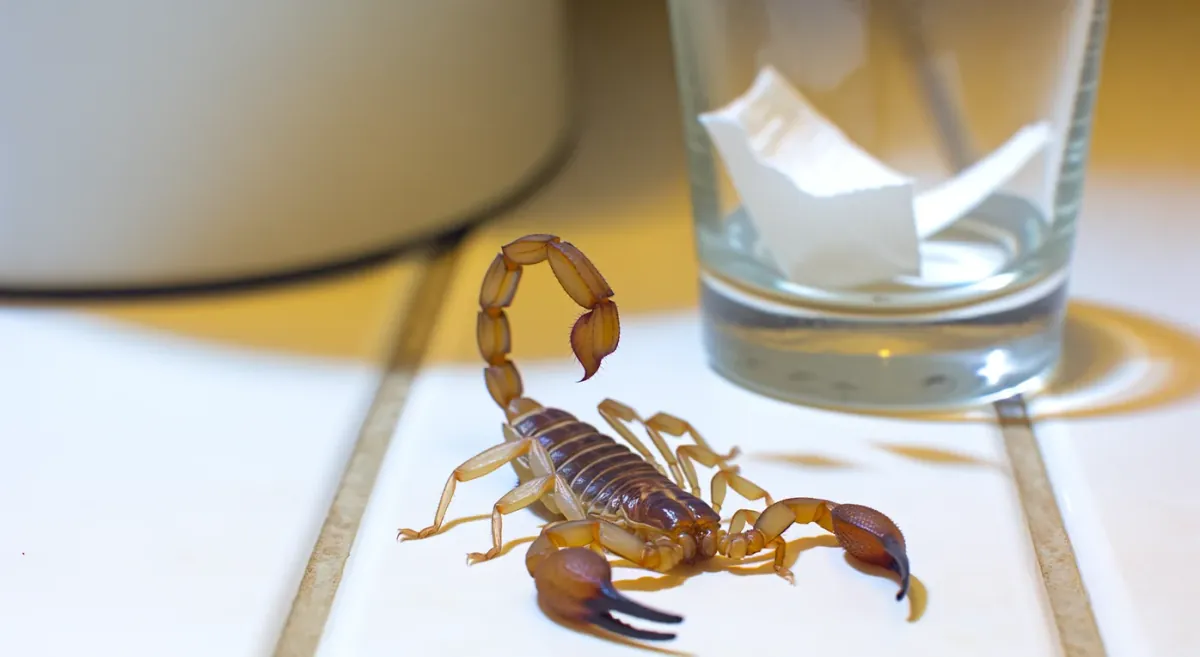
Sometimes capture beats killing. Less mess, less risk of scattering baby scorpions if you've found a mother, and no scorpion guts on your carpet. The classic glass-and-paper method works well when it's done right.
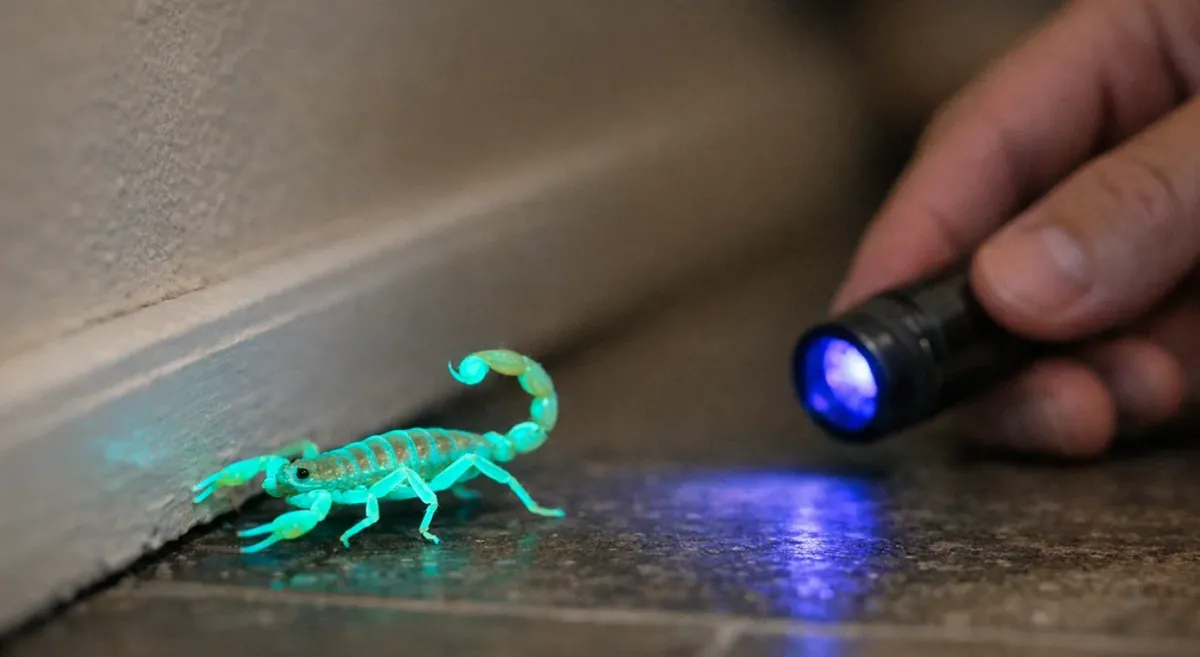
UV light transforms scorpion hunting from terrifying to more controlled. Scorpions glow bright green under ultraviolet light, making them hard to miss in a darkened room. Once you spot that glow, removal becomes a process instead of a frantic chase.
Safety always comes first. A calm, methodical approach prevents stings better than any amount of protective gear. Follow the steps, use the right tools, and you'll have that scorpion outside where it belongs.
How do you catch a scorpion with the glass-and-paper method?
- Grab a wide-mouth glass or clear container—wider is better for nervous hands.
- Approach slowly; scorpions often freeze when spotted.
- Place the glass over the scorpion in one smooth motion. Don't hesitate or you'll miss.
- Slide a stiff piece of paper or thin cardboard under the glass. Manila folders work perfectly.
- Keep the glass pressed down while you work the paper underneath.
- Once the scorpion's fully on the paper, carefully flip the whole assembly.
- The scorpion drops into the glass, and you've got it contained.
This method shines when you can't or don't want to kill. Maybe it's on carpet you don't want to stain. Maybe you see babies on its back—crushing a mother scorpion can scatter dozens of tiny scorpions across your floor. Capture avoids both problems.
Does a UV flashlight help you find scorpions faster at night?
UV light makes scorpions fluoresce—they literally glow green under ultraviolet wavelengths. The 365nm wavelength produces the strongest, most visible glow. It's like putting a spotlight on them. What's invisible in normal light suddenly stands out.
A quick UV scan routine: start with baseboards, check behind toilets, sweep under kitchen cabinets, and trace garage edges. Pay special attention to common entry points. The whole process takes minutes but can reveal scorpions you'd never spot otherwise.
For best visibility, dim the room lights when it's safe to do so. The darker the room, the more that green glow stands out. Some homeowners do quick UV sweeps after turning off lights for bed—better to find them before stepping on them in the dark.
What should you avoid doing during removal?
Never reach blindly into shoes, laundry piles, or cluttered areas. That's how most indoor stings happen. Shake out shoes, use tongs to move laundry, and clear clutter with tools, not hands. Scorpions hide in the most unexpected places.
Don't trust your eyes to confirm a scorpion's dead. Use a tool to test—always. Even experienced pest control professionals get stung by "dead" scorpions they picked up too soon. If you're not 100% certain, treat it as alive.
Avoid smashing scorpions on carpet when capture's an option. You'll need multiple hits to ensure it's dead, risk driving it deeper into fibers, and create a mess. Plus, if it's carrying babies, you've just created dozens of tiny problems. Capture first, decide what to do once it's contained.
How can you spot the next scorpion before it disappears?
One scorpion sighting usually means more are nearby. Instead of living in fear, get proactive about detection. The faster you spot them, the safer your response is—and the fewer surprise encounters you'll have at 3 a.m.
Two scorpion behaviors make detection possible: they travel along room perimeters (thigmotaxis) and they fluoresce under UV light. Whether you're doing manual checks or using automated detection, these behaviors are your best tools.
Modern monitoring options include automated detection systems that watch for scorpions while you sleep. Combined with understanding who's most at risk in your household, early detection becomes your best defense.
Why do scorpions show up along walls and baseboards at night?
Thigmotaxis drives scorpions to maintain contact with surfaces while moving. They navigate by following walls, baseboards, and furniture edges—rarely crossing open floor spaces. This behavior makes their movement predictable once you understand it.
Search where scorpions actually travel: room perimeters first, open floors last. Check where walls meet floors, around door frames, and along large furniture. That scorpion in your bathroom didn't teleport there—it followed the walls from an entry point.
This also explains why center-of-room solutions often fail. A trap or deterrent in the middle of your floor might never encounter a scorpion. Focus on the routes they actually use—the edges and perimeters of your rooms.
What should you do in the first 10 minutes after any scorpion sighting?
- First, secure the area. Shoes on, kids and pets out, grab your tools and UV light.
- Then do a quick perimeter scan of the same room—check baseboards, corners, and under nearby furniture. Where there's one, there might be more.
- Document the encounter. A simple phone note with date, time, and location helps you spot patterns. Three sightings in the laundry room over two weeks? That's actionable intelligence. Random sightings with no pattern? Maybe they're coming from different entry points.
Don't panic-spray the entire room or start moving furniture frantically. Methodical checking beats frantic searching every time. If you need immediate medical attention due to a sting, especially for children, know the proper first aid steps.
How does automated scorpion detection work as an early-warning system?
Automated detection uses the same UV fluorescence principle as manual searching, but it works 24/7 without you lifting a finger. A detector plugged into the wall shines UV light on the floor where scorpions travel. When a scorpion's glow appears, the system alerts you immediately.
Scorpion Alert's Detectors take this concept further with two-stage AI confirmation. The system captures images every 500 milliseconds when rooms are dark, analyzes them for the characteristic scorpion glow pattern, and sends photo-verified alerts within seconds. You get a confidence percentage with each alert, reducing false alarms from dust or debris.
The real value is getting alerted while the scorpion's still there, not hours later after it's vanished. Check your phone, grab your tools, and deal with it immediately. No more morning surprises or wondering if that movement you glimpsed was real.
Where should you place detectors for the best chance of catching nighttime activity?
Start with high-risk rooms and known entry points. Bathrooms, laundry rooms, and garages see the most scorpion traffic. Add detectors near exterior doors, especially those leading to yards or garages. Water sources attract scorpions' prey, making these rooms priority monitoring zones. 81.8% of households where someone was stung had previously seen scorpions on the property Skolnik & Ewald 2018.
More detectors mean more coverage—it's simple math. Four or five Detectors cover major entry points and high-traffic rooms, while a single unit works for testing a specific problem area, and the per-Detector monthly rate drops as you add more. Unlike sticky traps scattered everywhere, detectors provide comprehensive perimeter monitoring without the mess.
The advantage over manual methods becomes clear quickly. No dusty adhesive to replace, no nightly patrol duties, no wondering if you checked thoroughly enough. The system watches while you sleep, sending alerts only when there's something to see. For families in scorpion-prone areas, that peace of mind matters as much as the detection itself.
Knowing what kills scorpions instantly is helpful in the moment, but the safest "fast" option is catching them early—before you're dealing with a surprise encounter at night. If you want a hands-off way to monitor when scorpions are active and get photo-verified alerts, Scorpion Alert can help you stay ahead of the next one.