What should you check before you buy or rent a home in Phoenix?
Before you sign anything in Phoenix, evaluate the systems that can wreck your first summer: the air conditioning, the roof, the drainage, and your electric plan. Cosmetic stuff — paint, backsplash, cabinet handles — can wait. A failing AC unit in July is a real safety issue, not a decorating decision.
During a walkthrough, don't just admire the finishes. Walk the perimeter and look for water stains on ceilings, soft spots near doors, and grading that slopes toward the house. Ask the seller or landlord direct questions: How old is the AC? When was the roof last inspected? Has the yard ever flooded? Written answers matter more than a friendly shrug.
Once you're in, run a quick first 72 hours punch list:
- Swap every AC filter and note the size for reorders.
- Check door sweeps and weatherstripping — gaps let in heat, dust, and pests.
- Hang blackout curtains or shade screens on the west and south windows.
- Build a basic emergency kit: water, flashlight, battery bank, dust masks.
Is the AC system really that big of a deal in Phoenix?
Yes — treat the AC as safety equipment, not comfort. In a Phoenix heat wave, a healthy system should hold your set temperature even at 4 p.m., when the sun is hammering the roof. Uneven cooling, warm back bedrooms, or a unit that runs nonstop but never catches up is a red flag worth investigating before you commit.
Ask for the unit's age, service history, and whether it keeps up late in the afternoon. Ask about duct leaks and room hot spots. A system older than 12 to 15 years may be living on borrowed time.
You can improve comfort for under $1,000 with a smart thermostat, blackout curtains, exterior shade screens, and quality filters. For bigger risks, negotiate a home warranty or a repair credit into the deal — that's cheaper than an emergency compressor replacement in August.
How can you spot monsoon drainage problems before you sign a lease?
Walk the property like a storm is coming. Trace where water would flow off the roof and across the yard, then look for the low spots where it would pool — driveway dips, the garage threshold, and narrow side yards. Confirm the ground grades away from the foundation, not toward it.
Ask directly: Has this property ever flooded, and where does the runoff go? Desert soil is hard-packed and sheds water instead of soaking it up, so even a light rain can send surprising sheets of water toward a door. Sudden pooling isn't a fluke here — it's physics.
Are HOA rules different in desert neighborhoods?
Often, yes. Request the CC&Rs, the fee schedule, the violation log, and any pending special assessments. The fees tell you the ongoing cost, the violation log tells you how strict enforcement really is, and the assessments warn you about looming big bills.
Desert HOAs have their own quirks: shade-screen approvals, approved xeriscape plant lists, watering schedules, solar-install timelines, and RV or trailer storage limits. A simple decision rule: renters should worry most about rules that limit daily comfort (shade screens, pets, parking), while buyers need to weigh long-term restrictions on solar, landscaping, and resale.
How extreme is Phoenix heat—and what does "indoor season" mean for daily life?
Phoenix summers bring weeks of 110°F-plus days, and that reshapes daily life around mornings and evenings. Errands, walks, and yard work shift to dawn or after sunset. Midday becomes indoor season. The two biggest newcomer mistakes? Underestimating how fast dry air dehydrates you, and underestimating how hot surfaces get.
A simple first-summer routine helps: hydrate before you're thirsty, front-load outdoor tasks before 9 a.m., and let the house do the heavy lifting midday. You can cut your bill without suffering — the trick is shade and timing, not roasting yourself to save a few dollars.
Is "dry heat" safer, or does it just feel different?
Dry heat isn't safer — it's sneakier. Because sweat evaporates instantly in low humidity, you never feel soaked, so you don't realize how much fluid you're losing. Dehydration and heat illness can creep up while you feel deceptively "fine."
Surfaces are the other hidden hazard. Asphalt, metal playground equipment, and concrete can burn skin and pet paws within seconds. Press the back of your hand to the pavement — if you can't hold it for five seconds, it's too hot for your dog.
Three rules keep people out of the ER: drink water before you feel thirsty, stay indoors midday, and never leave kids or pets in a parked car — not even for a minute.
Why does your electric bill spike in summer—and how do you lower it fast?
Bills spike because your AC runs for hours against triple-digit heat, often during expensive time-of-use peak windows. Most Phoenix utilities charge more for electricity in the late-afternoon and early-evening peak, and less off-peak. Compare plans on peak hours, peak rates, and any demand charges.
Fast wins: nudge the thermostat up a few degrees before peak, close blinds on sun-facing windows, and run laundry and the dishwasher off-peak. Your first 30 days energy checklist — fresh filters, tight weatherstripping, and shade screens on the hottest windows — pays for itself quickly.
What does a realistic first-summer schedule look like for families and pets?
Structure the day around the sun. A dawn dog walk, indoor time through midday, and patio life after sunset keeps everyone comfortable. Weekends work best with early hikes, splash pads, or indoor outings like museums during the worst heat.
Build hydration into the routine — water bottles by the door, refills before every outing. Keep a basic car heat kit for errands: extra water, a shade for the windshield, and a towel to cover a scorching seatbelt buckle.
What is monsoon season like—and should you worry about haboobs and flash flooding?
Monsoon season runs roughly June through September and brings dramatic dust storms, sudden downpours, and lightning. You don't need to panic — you need a plan. Storms hit fast, so knowing what to do at home versus on the road ahead of time is what keeps you calm when the sky turns brown.
Keep a small monsoon kit ready and tie it back to your move-in prep: spare filters, a flashlight, surge protectors, and clear drains. Prepared homes ride out the season with minor cleanup instead of major repairs.
What should you do if you see a haboob coming while you're driving?
If a wall of dust is approaching, get off the road and wait it out. Visibility can drop to near zero in minutes, and a haboob is a leading cause of highway pileups here. Follow these steps:
- Exit the highway early if you can do so safely.
- Pull completely off the roadway — well past the shoulder.
- Put your car in park and take your foot off the brake.
- Turn off all your lights, including headlights, so trailing drivers don't follow your taillights into you.
- Set the AC to recirculate to keep dust out, and wait until it passes.
After the storm, run a quick reset: swap the HVAC filter, clear the patio drain, and check the pool filter, which clogs fast with airborne grit.
Can Phoenix streets really flood that quickly?
Yes. Hard-packed desert ground doesn't absorb water, so a fast downpour becomes rapid runoff within minutes, and normally dry washes and street dips can fill in seconds. That's why the one rule that matters is Turn Around, Don't Drown — never drive through a flooded wash or dip, no matter how shallow it looks.
Use your first few storms to learn your neighborhood's flood pattern. Notice which intersections pool and which routes stay clear, and you'll always have a safe way home.
How do monsoons affect roofs, power, and home drainage?
Monsoons stress the parts of your home that shed water and carry power. Run a quick inspection before the season: clear gutters and scuppers, confirm grading pushes water away from the foundation, check door seals, and look for gaps under the garage threshold.
Power flickers are common during storms, so plug electronics into surge protectors, keep battery lighting handy, and back up important devices. A small monsoon kit — filters, flashlight, dust mask — covers most of what your first season throws at you.
How will desert living change your yard, your pool, and your weekends?
Desert living isn't "no maintenance" — it's different maintenance. Instead of mowing every week, you'll manage dust, spot-weed after rains, and fine-tune irrigation as temperatures swing. Learning a simple seasonal rhythm keeps the workload light and predictable.
Think in three beats: pre-monsoon prep (trim, secure, clear drains), post-dust cleanup (rinse patios, clean filters), and summer evaporation management (top off pools, adjust drip timers). And here's a bonus — the habits that keep your yard tidy also reduce pests. Less clutter, tight door sweeps, and smart storage give scorpions fewer places to hide.
Is xeriscape actually low-maintenance—or just different maintenance?
Xeriscape trades one kind of work for another. You lose the mowing and heavy watering, but you gain spot-weeding after every rain and occasional drip-system tweaks. Native, drought-tolerant plants and a shade plan get you the biggest payoff for the least fuss.
Dust is the ongoing chore. Decomposed granite drifts, grit collects in corners, and a quick weekly sweep or blow-off keeps things sharp. Plan for it and it's minor; ignore it and it piles up.
Is owning a pool worth it in Phoenix?
A pool can be worth it, but budget honestly for the real costs: water lost to evaporation, more chemicals in the heat, and electricity for the pump. Summer sun burns through chlorine fast, so expect to dose more often than a cooler-climate owner would.
Dust storms are the wild card — a single haboob can clog your filter overnight, so plan extra cleanings after big storms. A simple budgeting framework for first-timers: set aside a monthly amount for chemicals, one for power, and a small reserve for filter replacements and post-storm cleanups.
What does "desert-proofing" a patio look like (comfort + fewer pest surprises)?
Desert-proofing a patio means shade for daytime, lighting for evenings, and smart storage that keeps hiding spots to a minimum. Keep shoes, gloves, and cushions off the ground and stored where critters can't tuck in.
Sealing pays off too. Add tight door sweeps and fresh weatherstripping, and pay special attention to the garage-to-house door, a common gap. For a deeper look, see the top ways scorpions get into your home. So much desert life happens outdoors after dark — exactly when scorpions are most active — and that overlap is worth understanding before your first summer.
Are scorpions in Phoenix really that common—and what should you do your first week?
Scorpions are a normal part of Phoenix life, not a sign your house is doomed. Arizona reports far more scorpion encounters than any other state, so sightings are common across the whole region. Your first-week job isn't to panic — it's to make a simple plan: safe capture, kid and pet precautions, and a way to sleep without listening for footsteps. This guide covers the heat, monsoons, and scorpions side of moving to Phoenix so that first summer doesn't catch you off guard.
68.2% of all US scorpion exposures reported to Poison Control Centers from 2005–2015 occurred in Arizona.
— Kang & Brooks 2017
Which scorpion should Phoenix newcomers know about (and how worried should you be)?
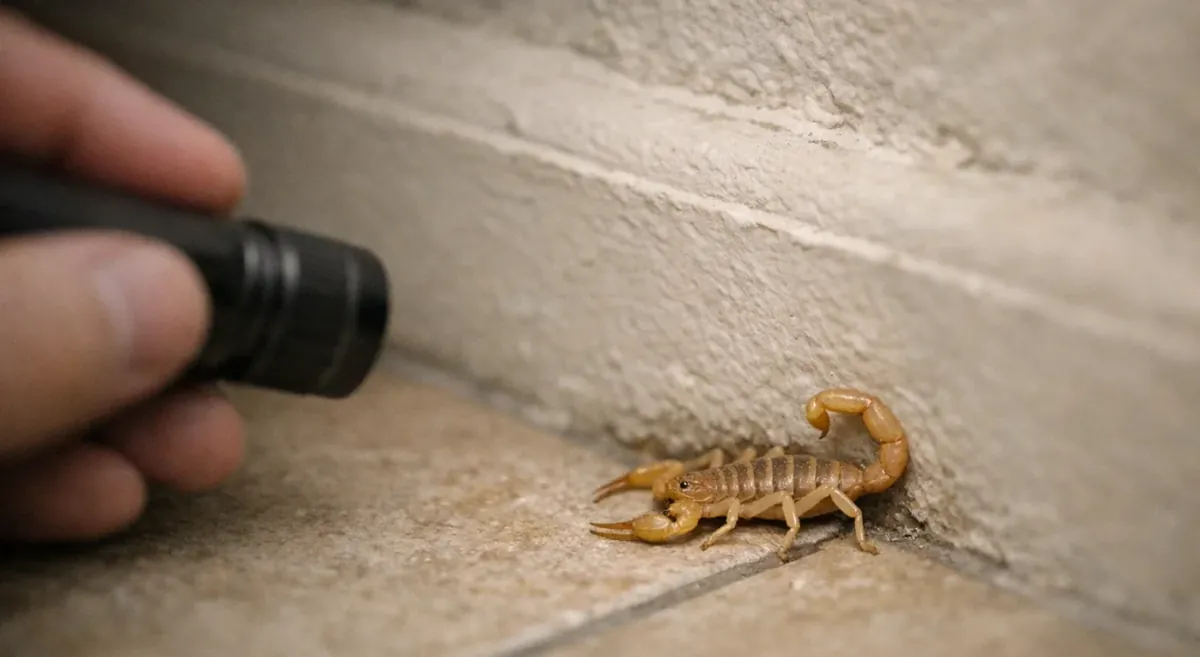
The one to know is the Arizona bark scorpion (Centruroides sculpturatus) — the small, tan, thin-clawed species behind the medically significant stings people talk about. It's the reason Arizona leads the nation in scorpion exposures, but that same statistic means sightings are simply part of the region, not proof of a bad house.
Most encounters happen at night, often along a wall or in a dark corner. Stay alert but not fearful — the vast majority of stings are painful, not dangerous, and Phoenix hospitals treat bark scorpion cases routinely. For a season-by-season sense of activity, see this month-by-month scorpion guide for Arizona.
When are scorpions most active, and why do they show up indoors at night?
Bark scorpions are nocturnal, and they're most active on warm summer nights — which is exactly when Phoenix families spend evenings outdoors and leave doors open. They come inside hunting insects and seeking cooler, humid spots like bathrooms and laundry rooms.
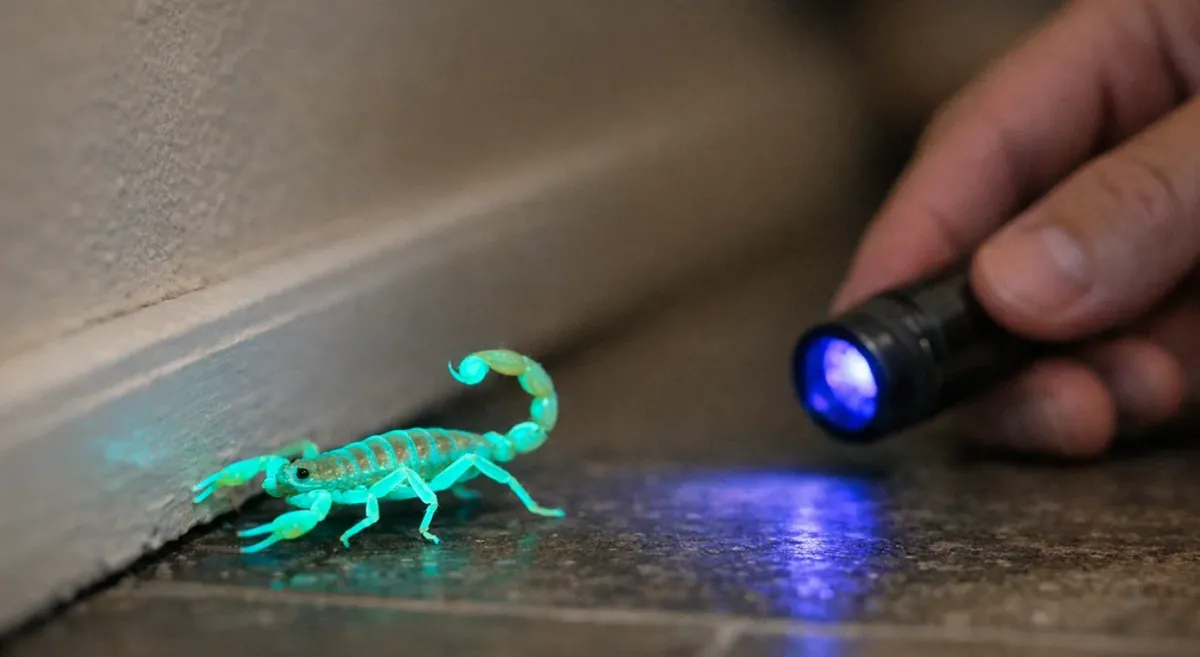
One behavior is genuinely useful to know: scorpions are thigmotactic, meaning they travel along edges and surfaces rather than crossing open floors. They hug baseboards, wall corners, and furniture edges — so those room perimeters are exactly where to look and where monitoring pays off. They also glow a bright greenish color under ultraviolet light, and a 365nm UV source produces an especially strong glow.
What should you do the first time you spot a scorpion in your house?
Stay calm and capture it safely — don't try to grab or crush it barehanded. Follow these steps:
- Move kids and pets out of the room.
- Place a sturdy drinking glass over the scorpion.
- Slide a stiff piece of paper or cardboard underneath to seal it in.
- Carry it outside and release it well away from the house, or dispose of it.
- Note the exact spot and time — repeat patterns tell you where to focus.
Avoid the common missteps in this guide to what not to do after spotting a scorpion. If someone is stung, follow a clear bark scorpion sting first-aid plan and call Poison Control — especially for a young child, since children are more at risk from scorpion stings.
How can you monitor for scorpions at night without doing blacklight patrols?
Automated detectors let you monitor for scorpions overnight without walking the house with a flashlight when you're supposed to be sleeping. The core problem is simple: scorpions move silently in the dark, and patrolling every night is exhausting and unrealistic. Don't rely on repellents that overpromise — see the top myths about scorpion repellents — and hand the night shift to a system built for it.
Scorpion Alert Detectors plug into standard wall outlets right along room perimeters, where scorpions naturally travel. Each one uses a 365nm UV LED with a filter to shine light on the floor below, scanning roughly twice per second — but only when the room is dark enough, which is exactly when bark scorpions are out. When it spots that telltale glow, it sends a photo-verified alert with a confidence score straight to your phone as a push notification or optional SMS, so you can grab a glass and handle it. It runs on a 2.4GHz Wi-Fi network.
Scorpion Alert is a monthly rental subscription with the hardware included, no long-term contract, and cancellation is as simple as emailing support and returning the Detectors. Check current per-Detector rates on our pricing page — for a nervous newcomer, that first summer of good sleep is worth a lot.
Moving to Phoenix means planning for triple-digit heat, fast monsoon shifts, and the reality that scorpions are part of desert living—especially after storms push them to seek shelter. If you want an extra layer of peace of mind as you settle in, Scorpion Alert helps you stay on top of scorpion activity around your home so you can focus on enjoying your new city.