I just got stung—what should I do right now?
For scorpion sting first aid: immediately wash the sting with soap and water, apply ice wrapped in a towel for 10 minutes on/off, take over-the-counter pain relievers if safe for you, and monitor symptoms. Call Poison Control at 1-800-222-1222 for guidance, go to the ER if numbness spreads or muscle twitching occurs, and call 911 for breathing problems or severe allergic reactions.
Most scorpion stings are very painful, but they usually aren't life-threatening. Act quickly and stay as calm as you can. Here's a simple 60-second action plan to handle the situation safely and reduce pain.
Step 1: Get away from the scorpion and keep the person still
First, move to a safe area away from where the sting happened. The scorpion may still be nearby, and you don't want a second sting. Turn on lights and watch where you step. If the sting is on your hand or arm, remove any rings, watches, or bracelets now—before swelling makes them hard to get off.
Once you're safe, sit down and limit movement. Unnecessary activity can increase circulation and may spread venom more quickly. You don't need to lie perfectly still, but avoid extra movement for the next 30 minutes while you assess how your body responds.
Step 2: Wash the sting and apply a cold compress
Clean the sting site with soap and water. Wash it like you would any minor wound, then pat it dry with a clean towel.
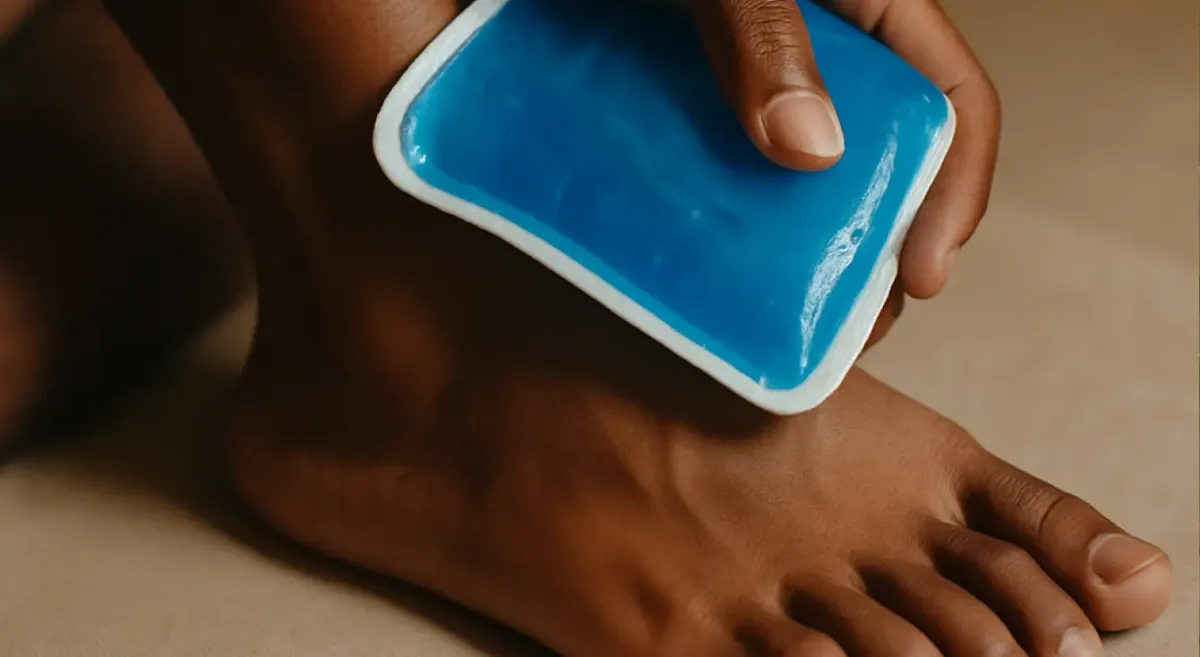
Next, grab some ice or a bag of frozen peas and wrap it in a thin towel. Apply the cold compress to the sting for 10 minutes, then remove it for 10 minutes. Repeat this on-and-off pattern for the first hour. Cold helps numb pain and reduce swelling. If the sting is on your arm or leg, prop it up on pillows while you ice it—elevation can help as well.
Step 3: Manage pain safely while you monitor
The pain from a scorpion sting can be intense—often described as burning or electric, and it may radiate from the sting site. If you normally take over-the-counter pain relievers like ibuprofen or acetaminophen, follow the label directions. The key is to only take medications that are normally safe for you. Skip them if you're allergic or have been told not to take them.
Avoid alcohol— it won't help pain and can make it harder to monitor symptoms. Instead, focus on how your body responds over the next hour. Pain is expected, but certain symptoms mean you need medical help.
How do I know if this sting is serious or just painful?
Not all scorpion stings are the same. Severity depends on the species, where on your body you were stung, and your individual health factors. Most stings cause local pain and discomfort that fades within a day or two. Some stings—especially from Arizona bark scorpions—can trigger more serious reactions.
What symptoms are common after most scorpion stings?
Within the first few minutes, you'll usually feel immediate burning pain at the sting site. It's sharp and intense, often worse than a bee sting. The area may turn red and swell slightly. Many people also experience tingling or numbness that spreads a few inches from the sting—similar to a limb "falling asleep," but more painful. Pain at sting site reported in 88.9% of stings; local numbness in 62.2% (Klotz et al. 2021).
Over the first hour, these local symptoms typically peak. The pain may throb or feel like electric shocks. Mild muscle twitching near the sting is common. By 4–6 hours, the worst pain often starts to fade, though you may have lingering soreness and sensitivity for a day or two.
What symptoms suggest a higher-risk sting (including bark scorpion)?
Certain symptoms can signal that venom is affecting your nervous system, and they warrant medical attention. Watch for uncontrolled muscle twitching or spasms that spread beyond the sting area. Your eyes may dart around involuntarily (called roving eye movements). Some people drool or have trouble swallowing their saliva.
"They can also cause involuntary muscle movement — so jerking of the arms and legs — and even more severe, in some cases, it can cause difficulty swallowing. People's eyes can move around in weird directions."
— Dr. Meghan Spyres, medical toxicologist, Banner Poison and Drug Information Center. Banner Health, 2021
The Arizona bark scorpion, found throughout Arizona and parts of Nevada, New Mexico, and California, can cause intense neurological symptoms. Victims may experience severe restlessness—an overwhelming urge to move that makes it hard to sit still. Repeated vomiting, difficulty breathing, or a sensation like your throat is closing are red flags. These symptoms can develop within 30 minutes to 2 hours after the sting.
Who tends to have worse reactions?
Age and health status make a big difference in sting severity. Young children face higher risks because the same amount of venom affects their smaller bodies more intensely. Children under 10 have the highest rates of systemic effects, hospitalization, and ICU admission (Kang & Brooks 2017). Adults over 65 and people with heart conditions, lung disease, or weakened immune systems also tend to have more severe reactions. Pregnant women need special monitoring since both mother and baby can be affected.
If you've had severe allergic reactions to other stings or bites in the past, take this sting seriously even if initial symptoms seem mild. Your risk profile matters as much as the scorpion species.
Should I call Poison Control, urgent care, or 911?
Deciding whether you need medical help doesn't have to be complicated. Here's a clear roadmap based on symptoms and situation.
Call Poison Control for guidance (even if you're unsure)
The number is 1-800-222-1222. Save it in your phone. Poison Control specialists handle scorpion stings every day and can assess your specific situation. They're available 24/7 and the call is free.
When you call, have this information ready: the person's age and approximate weight, what time the sting happened, where on the body they were stung, current symptoms, any medications given, and (if possible) a photo of the scorpion. The specialists will walk you through what to watch for and whether you need to go to a medical facility. They can also call ahead to the ER if needed.
Go to urgent care/ER if symptoms are spreading or escalating
Go to urgent care or the emergency room if numbness spreads beyond the immediate sting area—like tingling that creeps up your entire arm or leg. Uncontrolled muscle twitching that won't stop, repeated vomiting, or agitation so severe you can't rest can indicate the venom is affecting your nervous system.
Stings on the face, neck, or torso need medical evaluation since swelling in these areas can be dangerous. The same goes for severe pain that doesn't improve after an hour of home treatment. If something feels seriously wrong, don't wait. The ER has antivenom available for severe bark scorpion stings.
Call 911 for emergency symptoms
Some symptoms require immediate emergency response. Call 911 if the person has trouble breathing or feels like their throat is closing. Signs of a severe allergic reaction—facial swelling, lip swelling, hives spreading across the body combined with breathing problems—need immediate treatment.
Seizure-like activity, inability to swallow, or changes in consciousness (confusion, extreme drowsiness, unresponsiveness) are medical emergencies. Don't drive yourself to the hospital with these symptoms—paramedics can start treatment on the way.
Should I try to find, photograph, or catch the scorpion?
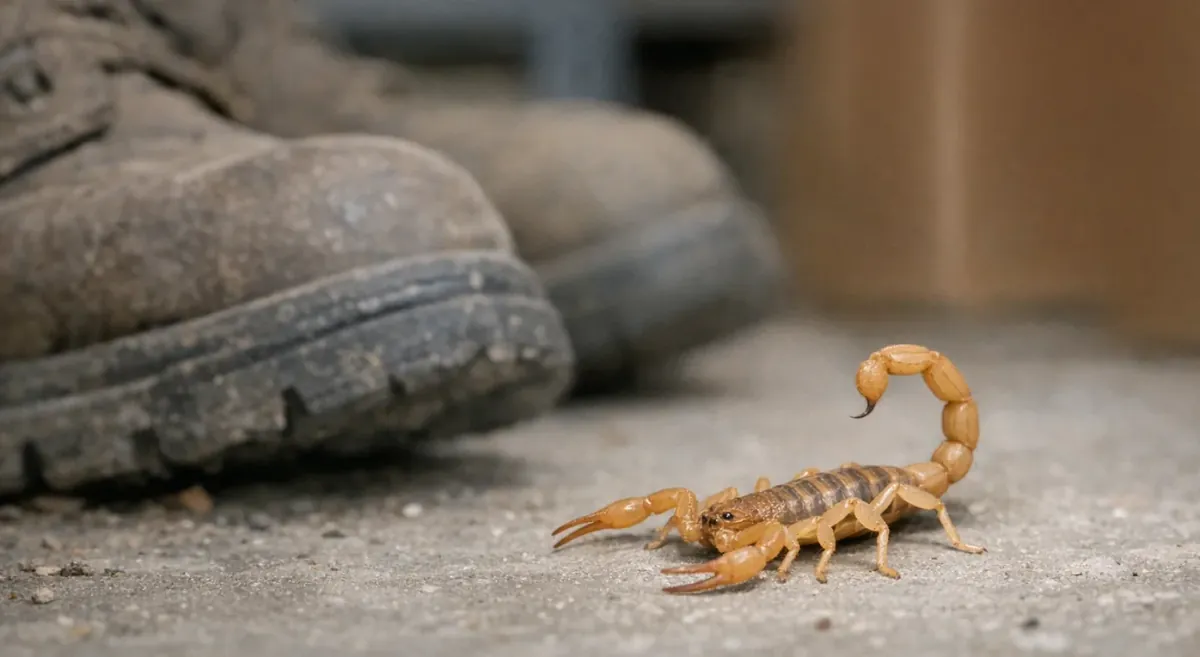
It's common to want to find the scorpion for identification. However, searching while you're already dealing with a sting can lead to additional stings. Here's the safer approach.
If you can safely get a photo, it can help
A clear photo can help medical professionals identify the species, especially in areas where both less dangerous and more dangerous scorpions live. Use your phone's zoom feature and stay at least 3 feet away. Turn on a light—photos taken in the dark rarely turn out well.
Don't flip over furniture or dig through closets to find it. Smaller scorpions can be more dangerous, and they're easy to miss if you're searching quickly. If the scorpion is gone, focus on treating the sting instead of searching.
How to search for a scorpion safely at night
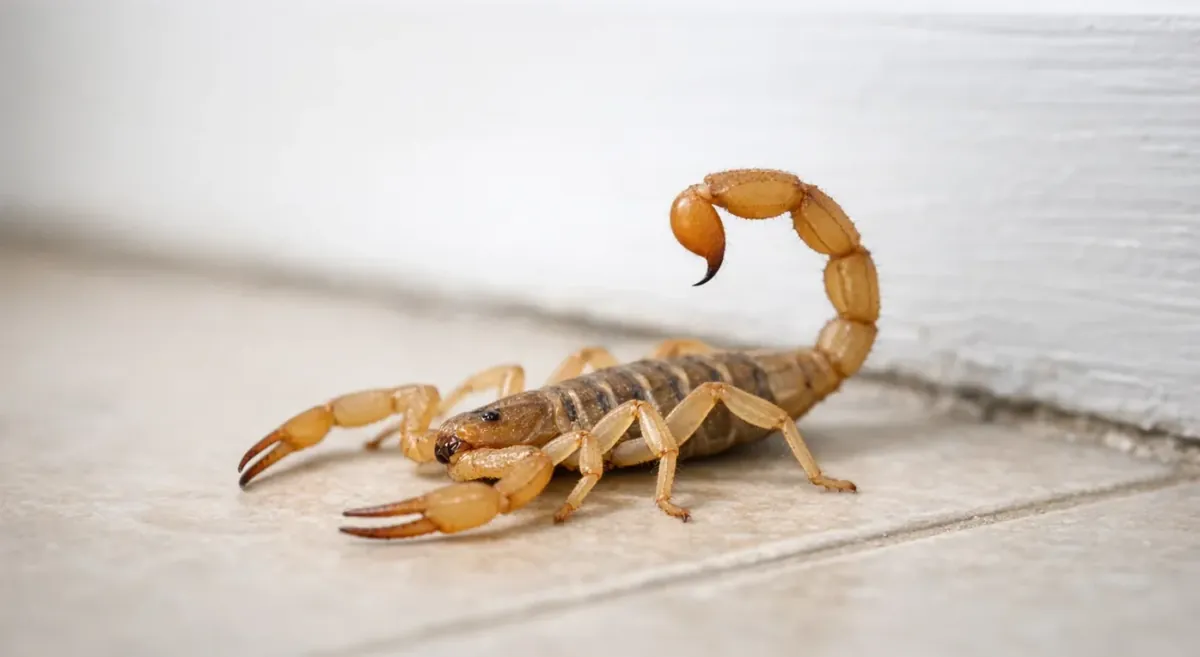
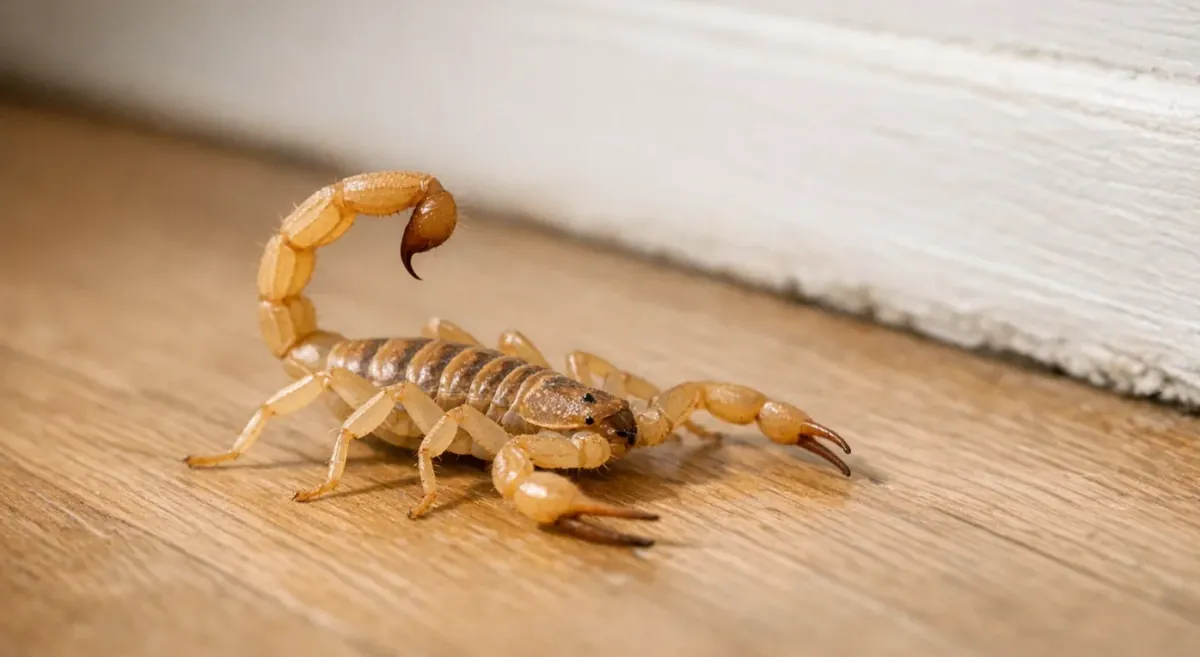
Scorpions glow bright green under UV light. If you have a UV flashlight (365nm wavelength works best), you can scan for them after dark when they're most active. One key detail: scorpions are thigmotactic, meaning they tend to navigate by staying close to walls and surfaces.
- Focus your search along baseboards, door thresholds, and where walls meet the floor.
- Check corners, around clutter near walls, and along the edges of furniture.
- Wear closed-toe shoes and use a flashlight—never search with bare hands or feet.
Finding one scorpion doesn't necessarily mean you have an infestation, but it does mean you should be extra cautious.
If you choose to capture it, use a low-risk method
The lowest-risk capture method uses a clear glass or plastic container and a piece of stiff cardboard. Place the container over the scorpion, then slide the cardboard underneath. Flip the whole setup over so the scorpion falls into the container. Never use your hands, even with gloves—scorpions can sting through thin material.
Once captured, you can photograph it clearly for identification. Then release it far from your home or dispose of it if local regulations allow. Avoid trying to smash it with shoes or rolled newspapers—a wounded scorpion is more likely to lash out.
How do I prevent another sting in my home (especially tonight)?
After a sting, it's easy to feel on edge. Instead of guessing, take practical steps to reduce the chance of another surprise encounter—starting tonight.
Quick habits that reduce surprise stings
Tonight, before bed, shake out your sheets and check inside your pillowcase. Pull your bed a few inches away from the wall—scorpions travel along walls and can make their way onto beds that touch them. In the morning, shake out your shoes before putting them on. Make this a permanent habit.
Keep clothes and towels off the floor, especially near walls where scorpions travel. When reaching into dark spaces—under sinks, into storage boxes, behind furniture—use a flashlight first. These simple habits prevent many surprise encounters. Clear clutter from baseboards and corners where scorpions like to hide during nighttime activity.
Where scorpions commonly enter and hide
Scorpions can squeeze through very small gaps. They slip under doors with worn weather stripping, crawl through AC vents, and even emerge from sink and tub drains. Window frames, garage doors, and any opening larger than 1/16 of an inch can become an entry point.
Inside, they gravitate to dark, undisturbed areas. Check closets, laundry rooms, and bathrooms—anywhere with moisture and hiding spots. 97.8% of US scorpion envenomations happen in the home (Kang & Brooks 2017). Understanding their entry routes helps you focus prevention efforts where they matter most.
How early detection fits into prevention (without replacing sealing)
Sealing entry points is still your first line of defense, but even a well-sealed home can't block every scorpion. That's where detection technology can help. Automated monitoring systems like Scorpion Alert use UV light to detect scorpions as they travel along walls at night—taking advantage of their natural thigmotactic behavior and fluorescent glow.
These detectors plug into standard wall outlets around your home's perimeter and scan continuously when rooms are dark. When they spot a glowing scorpion, you get an alert on your phone. This early warning helps you respond quickly before anyone gets stung, and over time, detection patterns can show you where scorpions enter most often. Consider detection as one part of a comprehensive approach that includes exclusion work and professional pest control when needed.
If you're ever stung, the best next step after cleaning the area, using a cold compress, and monitoring symptoms is making sure you're less likely to face another sting—especially at home. Scorpion Alert helps you stay proactive with practical scorpion awareness and prevention support, so you can focus on recovery and peace of mind. Learn more at Scorpion Alert.
Medical disclaimer: This article is informational and not medical advice. We are not doctors, and portions of this content have been edited with AI assistance. For questions about symptoms, treatment, or medications, consult your doctor. For a scorpion sting with severe symptoms, call 911 or your local emergency service.