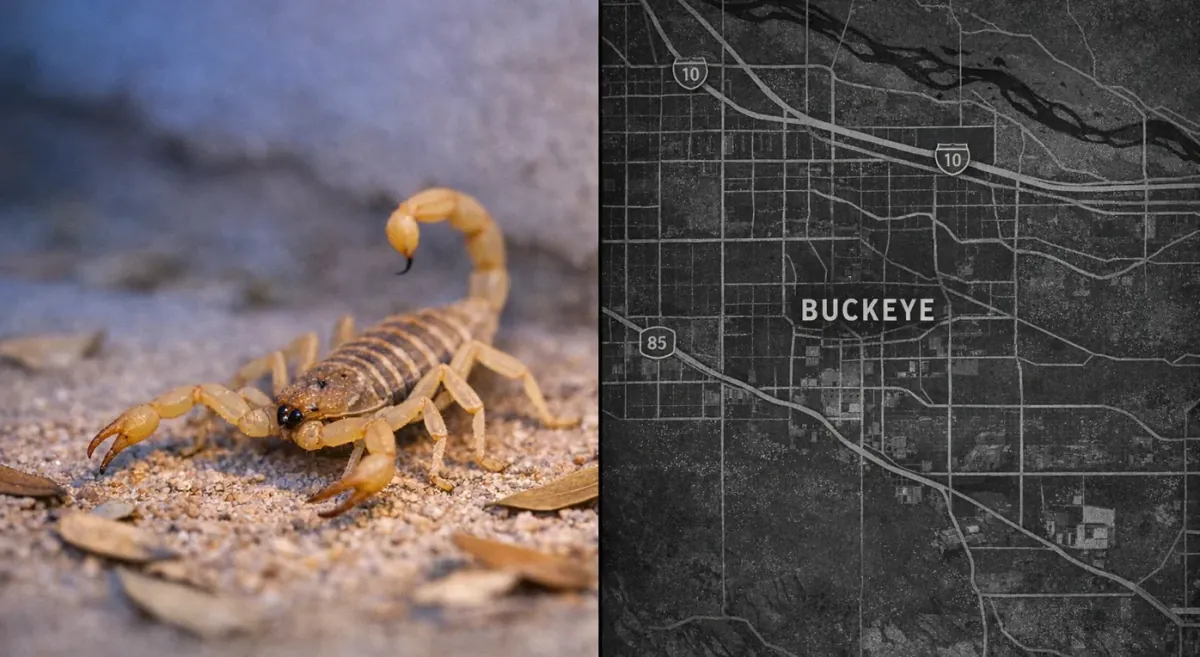
Scorpions in Buckeye, Arizona: Season, Stings & Control

Scorpions in Buckeye, Arizona: Season, Stings & Control

Are scorpions a problem in Buckeye?

Yes, scorpions are a significant concern for Buckeye homeowners. As part of Maricopa County — where the Banner Poison Center logged 518 scorpion exposures and 794 envenomations in just the first three months of 2026 — Buckeye sits in Arizona's scorpion hotspot. The county accounts for a substantial portion of the state's scorpion activity, and Arizona itself represents 68.2% of all scorpion exposures reported to U.S. poison centers.

What makes scorpions "a problem" goes beyond the occasional outdoor sighting. You know you're dealing with a real issue when you spot them inside your home repeatedly, find them in bedrooms or bathrooms at night, or have family members afraid to walk barefoot after dark. Even clean, well-maintained homes in Buckeye can attract scorpions — they aren't seeking dirt or clutter, but water, prey insects, and shelter from extreme temperatures.

Buckeye's rapid development brings its own challenges. New construction disturbs desert habitat, sending displaced scorpions toward nearby homes. Older neighborhoods face different pressures: mature landscaping provides more hiding spots, and aging door sweeps or foundation cracks create easy entry points. Whether your home backs up to open desert or sits in an established subdivision, scorpions can find their way inside when conditions outside become inhospitable.

What "normal" scorpion activity looks like vs. an infestation

Normal scorpion activity means spotting one or two outdoors per month during warm weather — under rocks, near block walls, or in the garage. You might go weeks without seeing any, then find one after a particularly hot night. That's typical desert living.

An infestation looks different. You're finding scorpions inside weekly or even nightly. Multiple family members have close calls. You start checking shoes religiously and scanning floors with a UV flashlight before getting out of bed. At this point, you need professional help identifying entry points and a comprehensive control strategy.

Remember that scorpions are nocturnal hunters. During the day, they hide in cracks, under objects, or in wall voids. The ones you see represent a fraction of what's actually present — which is why repeated indoor sightings signal a bigger problem than many homeowners realize.

Why Buckeye homeowners may see them more than expected

Buckeye's location at the edge of the Sonoran Desert creates ideal scorpion habitat. Rocky outcroppings, desert washes, and native vegetation all harbor scorpions naturally. When summer heat peaks or monsoon rains arrive, these outdoor populations get pushed toward the relatively cool, moist environment of your home.

Weather patterns play a huge role. After a string of 110°F+ days, scorpions seek relief anywhere they can find it — including your air-conditioned home. Monsoon humidity triggers increased activity as prey insects emerge, bringing hungry scorpions out of hiding. Even a single rainfall after weeks of drought can spark a noticeable uptick in sightings.

The desert landscaping popular in Buckeye compounds the issue. River rock, decorative boulders, and drought-tolerant plants provide perfect scorpion shelter just feet from your foundation. Add outdoor lighting that attracts insects (scorpion food), and you've created a scorpion buffet right outside your door.

Are Maricopa County scorpions different from other areas?

Maricopa County scorpions include some of the most medically significant species in the United States. While Texas has striped bark scorpions that hurt but rarely cause serious symptoms, Arizona harbors the Arizona bark scorpion — the only U.S. species whose sting can trigger life-threatening reactions, especially in children.

This distinction matters for Buckeye residents. A sting here carries different risks than one in Houston or Las Vegas. Arizona had the highest rates of neuromuscular symptoms, respiratory effects, and ICU admissions among all states reporting scorpion exposures from 2005-2015. Knowing which species you're dealing with becomes critical for assessing sting risk — which we'll cover next.

Which scorpion species lives in Buckeye?

Without verified local sighting data for Buckeye specifically, residents should be prepared for any of the common Maricopa County species — most importantly the Arizona bark scorpion (Centruroides sculpturatus). This species causes the vast majority of medically significant stings in Arizona and is likely present throughout the Phoenix metro area, including Buckeye. Other possibilities include the stripe-tailed scorpion, giant hairy scorpion, and yellow ground scorpion.

Correct identification matters because species determines sting severity. The Arizona bark scorpion's venom contains neurotoxins that can cause systemic symptoms beyond the sting site — muscle twitching, difficulty swallowing, blurred vision, and respiratory distress in severe cases. Other Arizona scorpions typically cause only localized pain and swelling, similar to a wasp sting.

Since you can't determine species by sting symptoms alone, learning basic identification helps you communicate risk to medical providers if someone gets stung. Size, color, and behavior all provide clues, though you should never get close enough to examine fine details on a live scorpion.

Is the Arizona bark scorpion in Buckeye?

While we lack confirmed sighting records specific to Buckeye, the Arizona bark scorpion almost certainly lives there. This species thrives throughout Maricopa County and adapts well to urban environments. It's the scorpion most likely to enter homes and the one responsible for nearly all serious envenomations in Arizona.

The Arizona bark scorpion earned its reputation for good reason. It's the only U.S. scorpion species that regularly sends people to the hospital. Children under 10 face the highest risk — they have the highest rates of systemic effects, hospitalization, and ICU admission. Of 145 patients who received antivenom treatment in Arizona between 2017-2019, 54.4% were under 5 years old.

This species also exhibits unique behaviors that increase human contact risk. Unlike other scorpions that stay on the ground, bark scorpions climb walls, furniture, and curtains with ease. They're the ones that end up in bathroom sinks, on ceiling corners, or — worst case — in beds after climbing up bed skirts or blankets touching the floor.

Other scorpions you might run into around Buckeye

The stripe-tailed scorpion (Paravaejovis spinigerus) is Arizona's most common scorpion by sheer numbers. Larger and darker than bark scorpions, they have distinctive dark stripes under their tail segments. These ground-dwellers rarely climb and prefer outdoor habitats like wood piles and rock walls. Their sting hurts but doesn't cause the neurological symptoms associated with bark scorpions.

Giant hairy scorpions (Hadrurus arizonensis) — North America's largest scorpions at up to 6 inches — occasionally appear in desert-adjacent Buckeye neighborhoods. Their size alone identifies them, along with visible hairs on their tails and pincers. Despite their intimidating appearance, their stings rarely require medical attention beyond basic first aid.

Yellow ground scorpions (Vaejovis confusus) and related species round out Buckeye's likely scorpion roster. These small, yellowish scorpions stay outdoors under rocks and debris. You might find them while gardening or moving landscape materials, but they rarely enter homes and pose minimal medical risk.

Can scorpions climb walls (and does that help with ID)?

Yes, Arizona bark scorpions excel at climbing any textured surface — stucco walls, curtains, wooden furniture, even glass if it's not perfectly smooth. This ability sets them apart from other Arizona species and explains why homeowners find them in such unexpected places. If you spot a scorpion halfway up your bedroom wall or clinging to the ceiling, you're almost certainly looking at a bark scorpion.

This climbing behavior directly impacts safety. Other scorpions stay near floor level, making them easier to spot and avoid. Bark scorpions can be anywhere — inside shoes on a closet shelf, behind picture frames, or on towels hanging in the bathroom. Their ability to access elevated spaces means standard precautions like checking shoes aren't enough.

Don't assume height equals safety, though. Just because a scorpion is "up high" doesn't mean it can't fall or won't come down to hunt. Bark scorpions often climb walls to reach ceiling corners where they wait for prey, then descend at night to hunt along baseboards — right where bare feet might find them.

How to identify a scorpion safely in your home

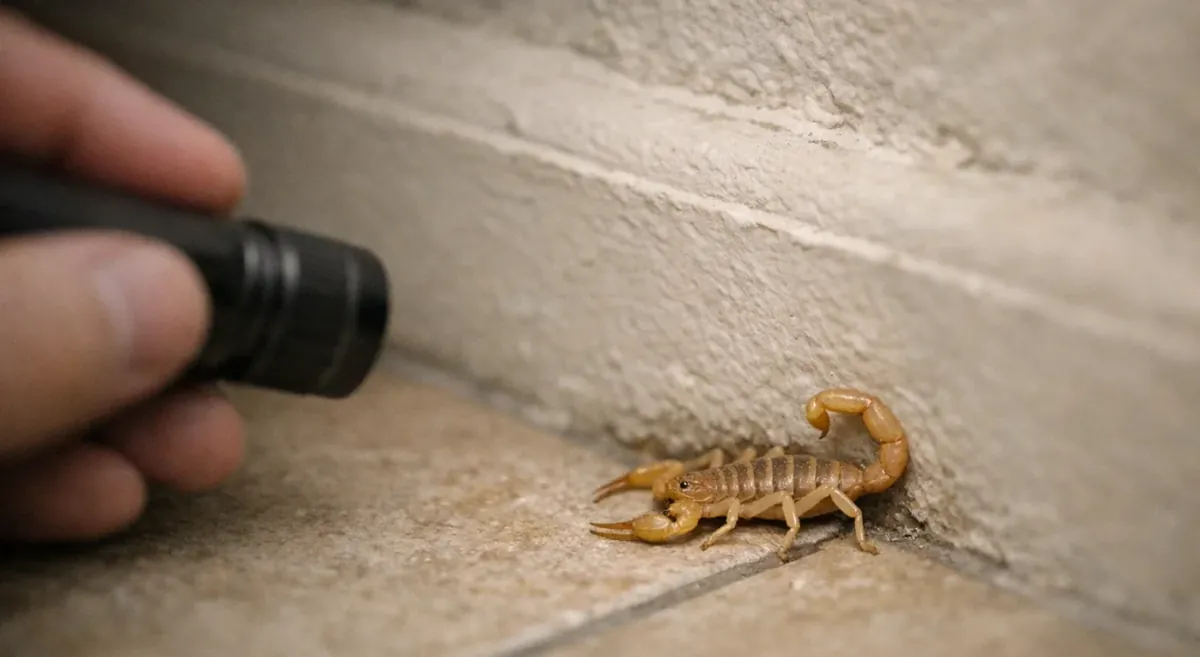
When you spot a scorpion indoors, resist the urge to get close for a better look. Instead, keep at least 3 feet of distance and use these safe identification methods. First, note its location — is it on the floor or climbing a wall? Climbers are almost always bark scorpions. Next, grab your phone and zoom in for photos rather than approaching. The flash won't bother the scorpion, and you'll have images to show pest control professionals or medical staff if needed.

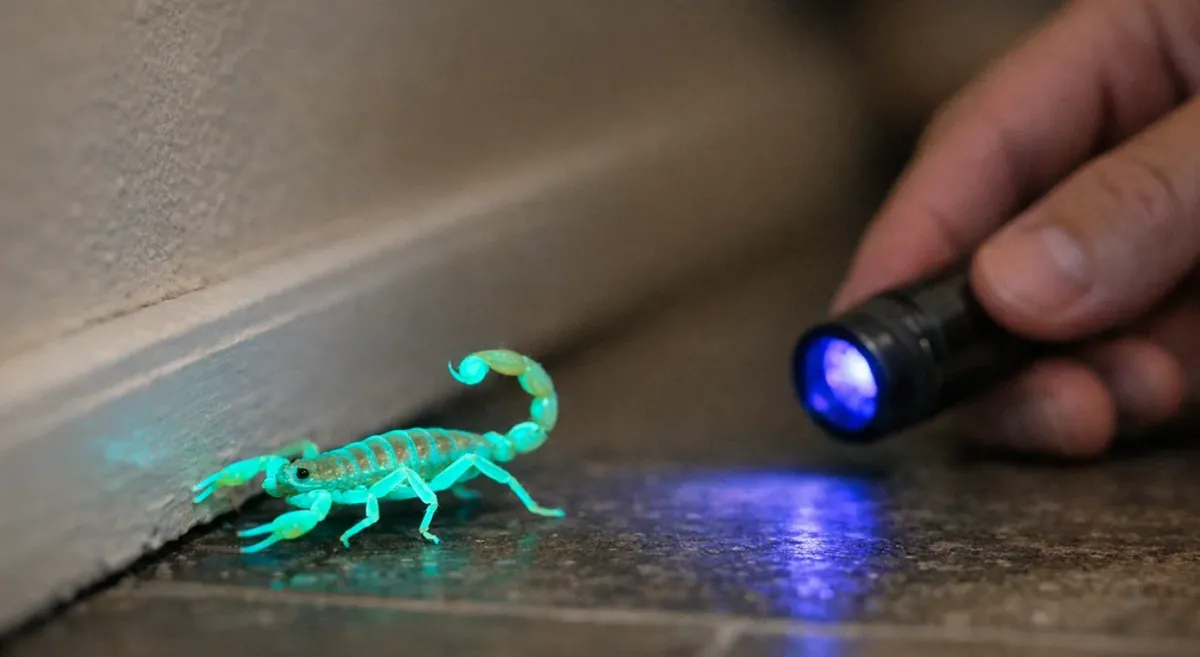
A UV flashlight is one of the safest identification tools. All scorpions glow bright green under ultraviolet light, making them easier to spot and photograph from a distance. Hardware stores sell UV flashlights for under $20 — keep one in your emergency kit. Shine it on the scorpion from several feet away and take photos of the glowing specimen for later identification.

Color and size offer additional clues from a safe distance. Bark scorpions appear tan to light brown and measure 2-3 inches including the tail. Darker scorpions or those obviously larger than 3 inches are likely other species. But remember: when in doubt, treat every scorpion as potentially dangerous. Focus on removing it safely rather than achieving perfect identification. A glass or clear container placed over the scorpion, then sliding cardboard underneath, lets you relocate it outdoors without risk.

When are scorpions most active in Buckeye?

Scorpions in Buckeye follow predictable activity patterns tied to temperature and moisture. Peak season runs from May through October, with the highest activity during August and September when monsoon humidity combines with sustained heat. During these months, scorpions emerge nightly to hunt, and encounters inside homes spike dramatically. Statewide data shows these late summer months account for the majority of scorpion stings, with 49% of envenomations occurring between 6 PM and midnight.

Daily timing matters as much as seasonal patterns. Scorpions are strictly nocturnal in Buckeye's desert climate. They hide during daylight hours in cool, dark spaces — under rocks, inside wall voids, beneath bark or debris. As darkness falls and temperatures drop from the day's peak, they emerge to hunt insects and search for water. This predictable behavior explains why most indoor encounters happen in the evening or early morning hours.

Understanding these patterns helps you adjust your habits during high-risk periods. Check shoes and shake out clothing during peak season. Be extra cautious during the first few hours after sunset. Install weather stripping and door sweeps before monsoon season begins. Simple timing awareness prevents many stings — knowing when scorpions are active is half the battle.

What time of day are scorpions active in Buckeye?

Scorpions begin moving as the sun sets, typically becoming active around 7-8 PM during summer months. Peak activity occurs between 6 PM and midnight, when 49% of stings happen. A secondary activity period runs from 6 AM to noon, accounting for another 30% of stings — these often occur when people encounter scorpions that hunted all night and haven't yet returned to hiding spots.

Indoor discovery moments follow predictable patterns. Late evening encounters happen in bathrooms (scorpions seek water), hallways (they travel along walls), and bedrooms (they climb bed frames or hide in shoes). Early morning run-ins occur when turning on bathroom lights, reaching for towels, or stepping into slippers left on the floor overnight. Garages see activity throughout the night as scorpions hunt crickets and other garage-dwelling insects.

Daytime scorpion sightings inside homes usually mean you've disturbed one from its hiding spot — moving boxes in the garage, pulling out shoes from a closet, or disturbing items that have sat undisturbed. These accidental encounters are a reminder that scorpions are always around; we just don't see them until they're active or we invade their daytime retreats.

Does monsoon season change scorpion activity?

Monsoon season transforms scorpion behavior in Buckeye. The sudden humidity after months of dry heat triggers a feeding frenzy as insects emerge en masse. Scorpions that stayed hidden during the driest months suddenly appear in large numbers, hunting the newly abundant prey. Rain also floods their outdoor hiding spots, driving them to seek shelter — often inside homes.

Post-storm periods pose the highest risk. Within 24-48 hours after monsoon rains, check these vulnerable points: door thresholds where water might have compromised weather stripping, garage edges where flooding pushes scorpions inside, bathroom floors near plumbing penetrations, and any area where you've previously seen scorpions. The combination of displaced scorpions and emerging prey insects creates ideal conditions for indoor encounters.

Humidity itself increases scorpion activity even without rain. Desert scorpions lose moisture quickly in dry conditions, so they become more active during humid nights to hunt and replenish water. This explains why August and September see peak emergency room visits for stings — it's not just the rain but the overall moisture that drives scorpions into homes and increases human contact.

What months feel like "peak scorpion season" in Buckeye?

August and September represent absolute peak scorpion season in Buckeye and across Arizona. These months combine all the factors scorpions love: consistent overnight temperatures above 75°F, monsoon humidity, and abundant prey. If you're going to have scorpion problems in Buckeye, these two months will reveal them.

The season actually begins building in May as temperatures climb. By June, scorpions are actively hunting most nights. July brings the first monsoon moisture, triggering increased movement. But August and September are when everything aligns — heat, humidity, and prey abundance create ideal conditions. Activity remains high through October, then tapers as overnight temperatures drop below 70°F consistently.

For detailed month-by-month patterns and preparation tips specific to Arizona's unique climate, check out the 2026 scorpion season guide. Winter months (December through February) see minimal activity, though scorpions never completely disappear. Even in January, a warm spell can bring them out briefly. Year-round vigilance matters in Buckeye, but focusing prevention efforts on May through October provides the best return on investment.

How dangerous is a scorpion sting in Buckeye?

The danger of a scorpion sting in Buckeye depends primarily on which species stung you and your age. Most adults experience intense localized pain — 88.9% report immediate burning at the sting site — followed by numbness or tingling in 62.2% of cases. However, if an Arizona bark scorpion is responsible, symptoms can escalate to muscle twitching, difficulty swallowing, blurred vision, and respiratory distress. Children face significantly higher risks, with those under 10 showing the highest rates of systemic effects, hospitalization, and ICU admission.

Species identification becomes critical for assessing risk, but you often won't know which type stung you. The Arizona bark scorpion — likely present throughout Buckeye — causes virtually all medically significant envenomations in Arizona. Other species typically produce only localized symptoms similar to a wasp sting. This uncertainty means you should monitor symptoms carefully and be prepared to seek medical care if systemic symptoms develop.

Fear is a natural response to scorpion stings, but panic doesn't help. Most stings, even from bark scorpions, can be managed at home with proper monitoring. The key is recognizing when symptoms cross from uncomfortable to dangerous. Having a clear action plan reduces anxiety and helps you get appropriate care when needed.

What a scorpion sting typically feels like

The immediate sensation is unmistakable — a sharp, burning pain that patients often compare to a hot nail or cigarette burn. Unlike a bee sting that might fade within minutes, scorpion sting pain typically intensifies over the first hour. The site may look deceptively normal with minimal swelling or redness, even as pain radiates outward.

Numbness and tingling follow the initial pain in most cases. These sensations can spread well beyond the sting site — a foot sting might cause numbness up to the knee, while a hand sting could affect the entire arm. Some patients describe feeling like the affected limb is "asleep" but with underlying burning pain. These neurological symptoms distinguish scorpion stings from other insect stings.

Bark scorpion stings add another dimension: systemic symptoms. Beyond local effects, victims might experience restlessness, muscle twitching, excessive salivation, or difficulty swallowing. According to Dr. Meghan Spyres from Banner Poison and Drug Information Center, "They can also cause involuntary muscle movement — so jerking of the arms and legs — and even more severe, in some cases, it can cause difficulty swallowing. People's eyes can move around in weird directions."

When a sting is more serious (red flags)

Certain symptoms signal a medical emergency requiring immediate evaluation. Difficulty breathing or swallowing tops the list — these indicate systemic envenomation affecting crucial functions. Severe muscle twitching or spasms throughout the body, not just near the sting site, also warrant emergency care. Vision problems, including blurred vision or uncontrollable eye movements, suggest nervous system involvement.

In children, the threshold for concern is lower. Excessive drooling, agitation, or inability to calm down after a sting requires medical evaluation. Continuous vomiting, fever, or altered mental status in any age group demands immediate attention. Remember that children's symptoms can escalate quickly — what seems manageable at 8 PM might become critical by midnight.

Call the Poison Help line at 1-800-222-1222 for any sting causing concerning symptoms. These specialists can assess severity and guide your decision about emergency care. They have real-time access to antivenom availability at local hospitals and can alert emergency departments to prepare for your arrival if needed.

Are children at higher risk from scorpion stings?

Children face dramatically higher risks from bark scorpion stings due to their smaller body mass relative to venom dose. The statistics are sobering: children under 10 have the highest rates of systemic effects, hospitalization, and ICU admission in Arizona. Of patients receiving antivenom treatment in Arizona hospitals, 54.4% are under 5 years old and 18.6% are between 5-9 years.

The physiological reasons are straightforward but serious. The same amount of venom that causes localized pain in a 180-pound adult can trigger systemic toxicity in a 40-pound child. Smaller airways mean respiratory symptoms develop faster and more severely. Children also can't always communicate symptoms clearly — they might not be able to tell you about vision changes or numbness spreading up their arm.

For comprehensive information about protecting children and recognizing serious symptoms, see our detailed guide on why children are more at risk from scorpion stings. If a child under 10 is stung, call Poison Control immediately, and have a low threshold for emergency department evaluation if any systemic symptoms develop.

What to do if you're stung in Buckeye

First, stay calm and call the Poison Help line at 1-800-222-1222 immediately — they can assess your symptoms and guide your next steps. Clean the sting site with soap and water, then apply ice wrapped in a thin cloth for 10-minute intervals. Take a photo of the scorpion if it's still visible (don't try to capture it), note the time of the sting, and monitor symptoms closely. Most adults can manage bark scorpion stings at home with guidance from Poison Control, but children and elderly individuals need more aggressive monitoring and often require emergency care.

Avoid dangerous myths that can worsen the situation. Never cut the wound, attempt to suck out venom, apply electric shock, or use a tourniquet — these outdated methods increase tissue damage without removing venom. Don't take aspirin, which can increase bleeding risk. Stick to proven first aid: ice for pain, over-the-counter acetaminophen or ibuprofen as directed, and close symptom monitoring.

Being prepared before a sting happens reduces panic and improves outcomes. Keep the Poison Control number in your phone contacts. Know your nearest emergency room location. Teach children to tell an adult immediately if stung — don't wait to see if it gets worse. Have a basic first aid kit with instant cold packs readily available. These simple preparations can make the difference between a manageable incident and a medical crisis.

Immediate first aid steps (the first 10 minutes)

In the first 10 minutes, your priorities are simple: clean the wound, control pain, and assess symptoms. Wash the sting site thoroughly with soap and water to reduce infection risk. Apply ice or a cold pack wrapped in a thin towel directly to the sting — cold helps numb pain and may slow venom spread. Position the stung limb at heart level, neither elevated nor hanging down.

While applying ice, call Poison Control at 1-800-222-1222. Have this information ready: victim's age and approximate weight, time of sting, location on body, current symptoms, and any medical conditions or medications. If possible, have someone else make the call while you provide first aid. The specialists will guide you through symptom monitoring and help decide if emergency care is needed.

Document everything for medical providers. Take photos of the sting site and the scorpion if visible. Write down symptom progression — when numbness started, how far it spread, any muscle twitching or vision changes. This timeline helps emergency physicians assess envenomation severity and antivenom need. Don't delay first aid to document, but capture what you can safely.

Should you go to urgent care or the ER in Buckeye?

The decision depends on symptoms and victim age. For adults with only local pain and numbness, Poison Control often recommends home monitoring. However, go to the emergency room immediately for: difficulty breathing or swallowing, severe muscle spasms or twitching, vision problems, excessive drooling, or any systemic symptoms in children under 10. Urgent care facilities typically can't handle severe envenomations — go straight to a hospital emergency room.

For Buckeye residents, the nearest emergency rooms equipped to handle scorpion envenomations are in nearby Goodyear, Avondale, or Phoenix. Call ahead if possible so they can prepare antivenom if needed. During peak scorpion season (August-September), these ERs see multiple sting victims nightly and have established protocols. Don't drive yourself if you're experiencing vision problems or severe symptoms — call 911 for transport.

Trust your instincts. If symptoms seem to be worsening rather than stabilizing after 30-60 minutes, seek emergency care. Parents especially should err on the side of caution with children. The cost of an unnecessary ER visit pales compared to the risk of undertreating a severe envenomation. Poison Control can conference call with ER staff to ensure continuity of care.

What to tell a medical professional

Medical providers need specific information to assess envenomation severity and determine treatment. Start with the basics: victim's age and weight (especially critical for children), exact time of sting, and location on the body. Describe symptom progression chronologically — "Pain started immediately, numbness began after 15 minutes and has spread from foot to knee, muscle twitching in the leg started 45 minutes after the sting."

Bring any photos of the scorpion, even blurry ones. While definitive species identification might be impossible, size and climbing behavior (was it on a wall?) provide clues. Mention any previous scorpion stings and reactions — some people develop increased sensitivity. List all medications, especially blood thinners, immunosuppressants, or heart medications that might complicate treatment.

Be honest about home remedies you've tried, even if they now seem unhelpful. Did you apply heat? Take aspirin? Use essential oils? These details matter for treatment decisions. If you've already spoken with Poison Control, give the ER their case number — this allows instant access to their assessment and recommendations, streamlining your care.

How to keep scorpions out of your Buckeye home

Effective scorpion prevention in Buckeye starts with exclusion — sealing the gaps where scorpions enter. Focus on door sweeps first, as worn or missing sweeps account for most entry points. Install new sweeps on all exterior doors, including the garage service door. Seal weep holes with steel wool and caulk, close gaps around plumbing and electrical penetrations, and repair torn window screens. A well-sealed home is your first and best defense against scorpions.

Beyond sealing entry points, modify your yard to reduce scorpion habitat. Remove rock piles, wood stacks, and debris near the foundation. Trim palm trees and bushes that touch the house — scorpions use these as bridges. Switch to gravel or decomposed granite instead of wood mulch near the home. Reduce outdoor lighting that attracts insects (scorpion prey), or change to yellow bulbs that attract fewer bugs. These habitat modifications make your property less attractive to scorpions year-round.

For comprehensive protection, combine exclusion and habitat reduction with targeted monitoring. Since 81.8% of households that experience stings had previously seen scorpions on the property, past sightings are your strongest predictor of future problems. This is where 24/7 monitoring becomes valuable — products like Scorpion Alert detect scorpions automatically at night when they're active, sending photo alerts to your phone so you can respond immediately rather than discovering them by accident.

Start with exclusion: seal the openings that matter most

Door sweeps deteriorate faster in Buckeye's extreme heat, creating gaps scorpions exploit nightly. Check every exterior door by closing it and looking for light underneath — any visible gap needs attention. Install commercial-grade sweeps rated for desert conditions, not basic weatherstripping. Pay special attention to the garage service door, which is often overlooked but responsible for many invasions.

Weep holes in stucco and brick require careful treatment. These drainage openings can't be completely sealed, but steel wool pushed into the opening deters scorpions while maintaining drainage. Follow with clear exterior caulk around the steel wool edges. Check bathroom and kitchen walls where plumbing enters — these penetrations often have gaps hidden by escutcheon plates.

Window screens tear easily in desert sun and wind. Inspect all screens, especially bathroom and bedroom windows where moisture attracts scorpions. Small tears seem insignificant, but bark scorpions can compress their bodies through surprisingly tight spaces. Replace damaged screens entirely rather than patching — the investment in proper screens pays off in fewer scorpion encounters and better overall pest exclusion.

Yard and landscape changes that reduce scorpion pressure

Buckeye's desert landscaping trends can inadvertently create scorpion habitat. River rock and decorative boulders provide perfect hiding spots, especially when placed against foundations. If you must use rock features, position them at least 10 feet from the house and treat the areas with appropriate pest control products. Consider replacing rock mulch near the home with decomposed granite, which offers fewer hiding spots.

Irrigation attracts both scorpions and their prey. Fix leaking sprinklers and dripping hoses immediately. Adjust watering schedules to early morning rather than evening — wet soil at night creates ideal hunting conditions for scorpions. Remove standing water from plant saucers, and ensure proper drainage around the foundation to prevent moisture accumulation that attracts pests.

Dense vegetation near the house shelters scorpions and their prey. Trim palm trees regularly, removing dead fronds where scorpions hide. Keep shrubs pruned away from walls and windows. Replace thick groundcovers near the home with sparse, desert-adapted plants. The goal isn't a barren yard but strategic plant placement that reduces cover while maintaining curb appeal.

What kills scorpions (and what actually helps long-term)?

While many products claim to kill scorpions, long-term control requires more than sporadic spraying. Professional-grade pesticides applied to harborage areas work better than broadcast treatments. Focus applications on block wall bases, expansion joints, and areas where you've seen scorpions. However, pesticides alone won't solve an established problem — they're one tool in an integrated approach.

The most effective long-term strategy combines exclusion (sealing entry points), habitat modification (removing hiding spots), prey reduction (controlling insects), and targeted treatment of active areas. This integrated pest management approach provides longer-lasting results than reactive spraying after each sighting. For specific product myths and what actually works, see our guide on scorpion repellent myths.

Professional pest control services familiar with Buckeye's specific challenges offer advantages over DIY approaches. They understand seasonal patterns, use commercial-grade products, and can identify entry points homeowners miss. Monthly or bi-monthly service during peak season (May-October) combined with your own exclusion efforts provides the most comprehensive protection.

Does diatomaceous earth kill scorpions?

Diatomaceous earth (DE) disappoints many homeowners hoping for a natural scorpion solution. While DE can dehydrate soft-bodied insects, scorpions' hard exoskeletons and low moisture loss make them largely immune to its effects. Scorpions can walk across DE barriers without significant harm, unlike crickets or roaches that succumb to its desiccating properties.

Some homeowners report limited success using food-grade DE in confined spaces like wall voids or under appliances, where scorpions might have prolonged contact. However, DE becomes ineffective when wet and requires frequent reapplication in humid conditions. It's also messy, can irritate lungs if airborne, and provides no residual protection once disturbed.

Rather than relying on DE as a primary defense, focus on proven methods: sealing entry points, reducing habitat, and using targeted pesticides where appropriate. DE might supplement these efforts in specific situations, but it won't replace fundamental exclusion and monitoring strategies. Time spent sealing door gaps provides far better protection than spreading DE around your home's perimeter.

How Scorpion Alert fits into a Buckeye prevention plan

Since past sightings strongly predict future stings, monitoring becomes crucial for Buckeye homes with scorpion history. Place detectors in bedrooms and nurseries first — 42.5% of residential stings happen in bedrooms, with 54.7% of those occurring in the bed itself. Position units along walls where scorpions naturally travel, especially near doors, windows, or anywhere you've previously spotted them.

In Buckeye, scorpion activity can feel unpredictable, so having a simple way to check high-risk spots before they move indoors can bring real peace of mind. Scorpion Alert pairs UV-based locating with a custom two-stage AI detection process to help confirm what you’re seeing while reducing false alarms—so you can act faster and more confidently. Learn how it works at Scorpion Alert.

What is Scorpion Alert?

Get instant alerts when scorpions are detected in your home

Scorpion Detectors watch over your home at night, when scorpions are most active. The moment a scorpion crosses one, you get a phone alert — so you can act before it makes a home out of your shoe, bed, laundy basket, or anywhere else.
  • Detectors arrive ready to plug in
  • Live alerts go straight to your phone or watch, with location
  • Alert multiple family members with a single account
  • One flat monthly monitoring fee — no contract, cancel anytime
Get Scorpion Alert
From our customers

What homeowners are saying

Map of Albuquerque, New MexicoAlbuquerque, New Mexico
We can finally go on offense against these things instead of waiting to find them in our couch and shoes. It really helps us figure out where they're getting in. Love it.
Marcus
18 scorpions detected
Map of Scottsdale, ArizonaScottsdale, Arizona
Thank you for giving us the peace of mind in knowing these things aren't crawling around in our newborn's room at night and hiding in her toys or clothes.
James and Anna
12 scorpions detected
Map of Lakeway, TexasLakeway, Texas
Super easy setup. We just plugged the Scorpion Detectors in, set them up with my phone, and that was it. I love the live feed on my phone to let me know they're always watching.
Paul and Cindy
7 scorpions detected

Frequently Asked Questions

How can I prevent a surprise brood of baby scorpions in my home?

Prevention is a mix of sealing entry points (door sweeps, weather stripping, utility penetrations, garage gaps) and reducing clutter so perimeter edges are easier to inspect. Monitoring matters too because scorpions tend to travel along baseboards and corners, so early detection can stop panic if babies are present. This overview of preventing baby scorpions indoors explains where to watch first and how Scorpion Alert can provide fast nighttime alerts.

How does Scorpion Alert detect scorpions while I’m sleeping?

Scorpion Alert automates the same UV fluorescence method people already trust, using UV + a camera + AI to monitor continuously in dark rooms. When it detects a likely scorpion glow, it sends a photo-verified alert with a confidence score (and can notify you if a detector goes offline). This section also covers practical setup details like plug-in power, 2.4GHz Wi‑Fi, scan frequency, and adjustable sensitivity in automated UV scorpion detection system.

Why am I seeing scorpions in my brand-new home?

New construction doesn’t automatically mean pest-free—especially in fast-growing desert-edge communities where soil, rocks, and harborage are being constantly disturbed. Many homeowners report the heaviest scorpion activity right after move-in because nearby lots are still being worked and scorpions are on the move. This new home scorpion activity guide explains why early sightings are often about movement patterns and entry points, not a “dirty house.”

How much does the app cost?

The app itself is free. You pay for the monitoring service, which is what keeps your Scorpion Detectors working. Pricing is per Detector, per month: it starts at $3.50/Detector/month for a single Detector and slides down to a $2.00/Detector/month floor when you have ten or more. The Detectors themselves are free as part of the subscription — we ship them on a rental basis, and you return them whenever you cancel. See the pricing page for the full slider.

How do I find tiny scorpion entry points without ripping out walls?

Use a repeatable inspection routine: do a daylight exterior walk first, then an interior perimeter check since scorpions tend to travel along edges. Document every gap with photos and room names so sealing becomes a checklist, not guesswork, and use simple tools like a bright flashlight, a thin probe, painter’s tape, and a mirror. This section shows how to find scorpion entry gaps fast, including a quick night check with UV to confirm activity patterns.

What should I do right away if I’m stung by a scorpion in Mesa?

Start with quick first aid: move to safety, wash the area, use a cool compress, remove tight jewelry, and stay calm while tracking symptoms over time. Many stings cause pain, tingling, or numbness, but you should seek help quickly for severe symptoms—or anytime a child is stung or symptoms escalate. This Mesa scorpion sting response guide also covers when to call Poison Control/go to the ER and how to safely contain the scorpion if you find it afterward.

Got questions about scorpion detection?