Are scorpions a problem in Laredo?
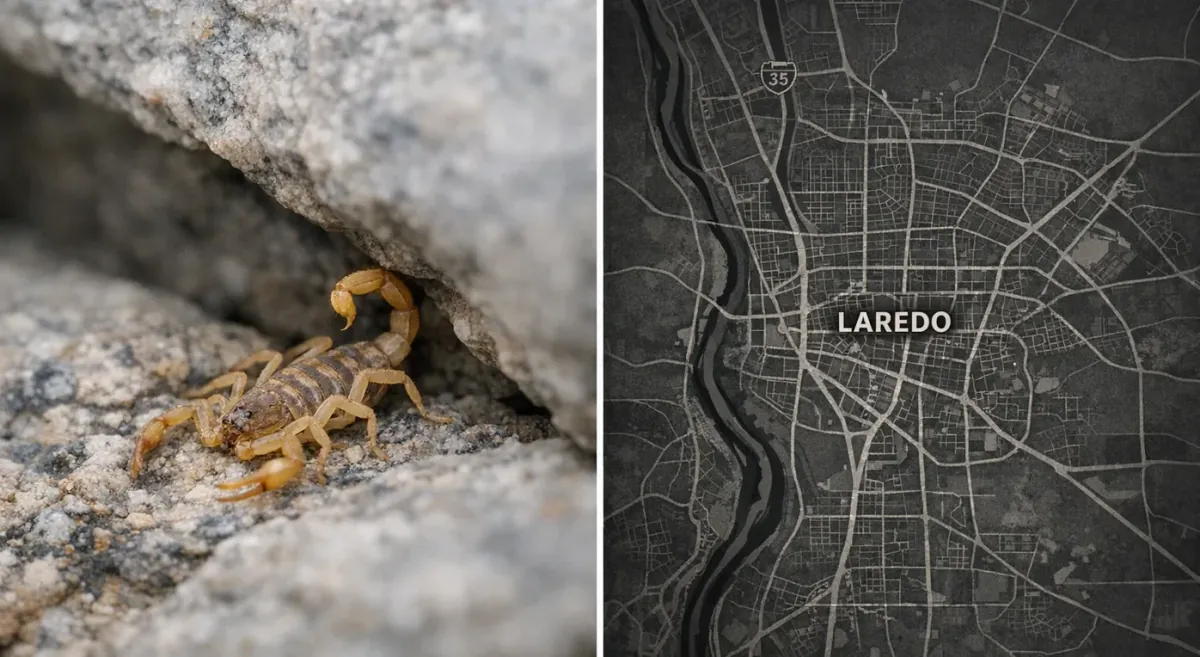
Yes — scorpions are a common part of life in Laredo, and the local risk is considered high. The dry, hot climate of Webb County suits the striped bark scorpion perfectly, and residents regularly spot them in yards and inside homes. Within 30 km of Laredo, iNaturalist has logged 97 research-grade scorpion observations, the vast majority striped bark scorpions.
Texas as a whole reflects that reality. Of the 185,402 scorpion exposures reported to US poison control centers between 2005 and 2015, Texas accounted for 19,168 — roughly 1,743 per year — per Kang & Brooks 2017. Scorpions in Laredo, Texas are not a fringe concern; the city sits squarely inside that active zone.
What homeowners in Webb County typically notice
Most first sightings happen in predictable places. You'll flip on the garage light and see one frozen against the concrete, or find one in the bathroom sink at night. Laundry rooms, closets near exterior doors, and the space behind the washer are all common spots.
Heat and drought push scorpions toward homes. When the ground bakes and prey insects dry up outside, the cool, humid microclimate under your door threshold or beside a leaky pipe starts to look like an oasis. That's when Webb County homeowners often notice a jump in indoor encounters.
Does one scorpion mean an infestation?
One scorpion usually means one scorpion — they're solitary hunters, not colony insects. But repeated sightings over days or weeks are a different signal. That pattern almost always points to two things: an entry point they keep using and a food supply of insects drawing them in.
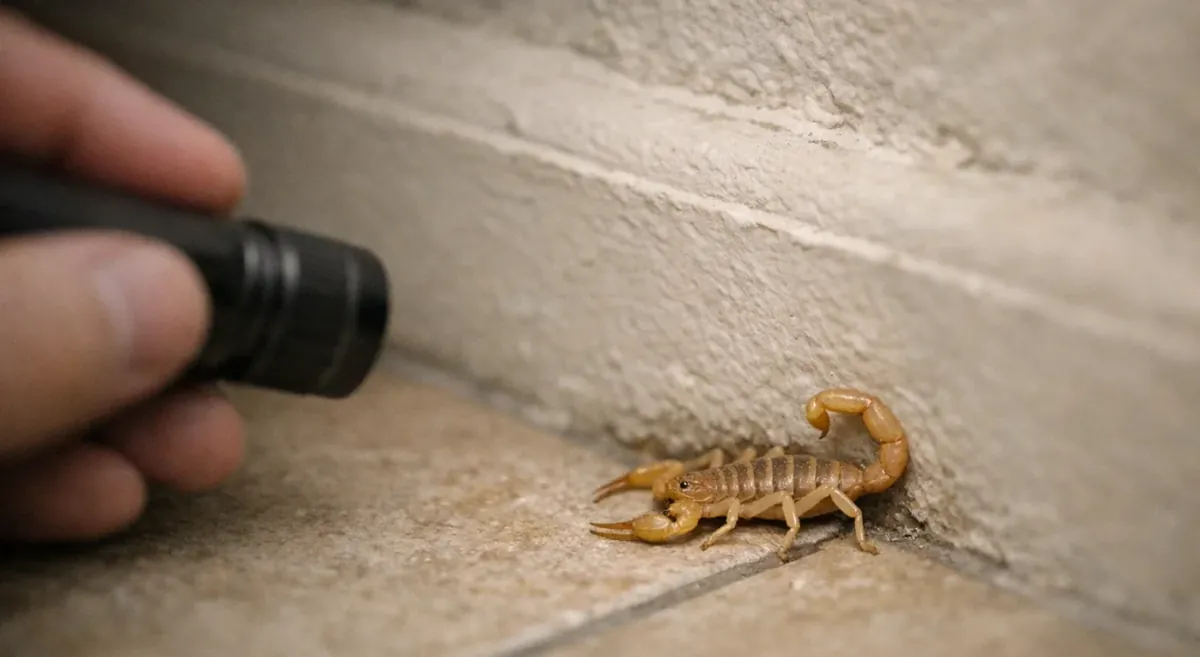
Scorpions travel along walls and edges, hugging surfaces as they hunt. So if you keep finding them along the same baseboard or near the same door, that's a map, not bad luck. Sealing the gap and cutting down insect prey usually breaks the cycle.
When to DIY vs. when to call Laredo scorpion control
You can often handle the situation yourself, but a few factors tip the scale toward professional help. Use this quick checklist:
- Young kids or pets in the home
- More than one scorpion sighting per week
- Anyone has already been stung
- Visible gaps or crumbling weatherstripping around doors
- Heavy insect activity feeding the scorpions
Older homes, homes with block walls, and properties backing onto brush tend to see more activity. Before you commit to a recurring service contract, do a little night monitoring to see how bad things really are — and whether one scorpion was a fluke or the start of a pattern.
Which scorpion species lives in Laredo?
The scorpion you're almost certainly dealing with in Laredo is the striped bark scorpion (Centruroides vittatus). Of the 97 research-grade sightings within 30 km of the city, 94 were this species. It's the most widely distributed scorpion in North America, dominant across Texas, per Yamashita & Rhoads 2017.
Two other species show up rarely in the local data — a couple of Chihuahuanus crassimanus and a single Diplocentrus diablo. For the everyday homeowner, though, ID and prevention should be built around bark scorpion behavior.
Striped bark scorpion Laredo: quick ID tips
The striped bark scorpion is easy to recognize once you know the cues. Look for a tan to yellowish body about 2 to 3 inches long with two dark lengthwise stripes running down its back. The pincers are slender rather than bulky, and the tail is thin.
They love bark, wood piles, cracks in block walls, and any tight, dark gap. As a bark-dwelling species, they wedge into narrow spaces where their flat bodies fit snugly against a surface on both sides.
Where Laredo scorpions hide around homes
Around Laredo yards, harborage is everywhere if you know what to look for. Stacked lumber, the dead skirt of fronds on a palm, rock borders, irrigation and water-meter boxes, and the gap where the AC line enters the wall all make prime hiding spots. Inside, garage clutter and stored boxes on the floor do the same job.
Reducing these hiding spots is one of the top things that attract scorpions to your home that you can control directly.
Do they climb walls in South Texas homes?
Yes — striped bark scorpions are capable climbers, and that matters for South Texas homes. They grip textured surfaces like stucco, brick, and concrete block well, which is exactly what many Laredo homes are built from. So they don't just travel along the ground.
What this changes: prevention can't stop at floor level. Weep holes, second-story window gaps, and the corners of a garage door all become possible routes, so sealing needs to think vertically, too.
When are scorpions most active in Laredo?
Scorpions are most active in Laredo during the warm months — roughly April through October — and almost always at night. Nationwide, summer accounts for the overwhelming majority of sting cases, with warm-month evening hours dominating calls in every reporting state, per Kang & Brooks 2017. Weather swings can trigger sudden spikes.
Scorpion season Laredo: what months to watch closely
Peak activity runs through the hottest stretch of summer, with shoulder activity in spring and early fall. A simple monthly rhythm helps: seal up entry points in spring before things heat up, keep the yard cleared of harborage through summer, and stay alert indoors from June through September when encounters climb. Mild Laredo winters mean you can still spot the occasional scorpion year-round.
Why activity spikes at night (and in certain rooms)
Scorpions are nocturnal hunters. Peak sting hours run from 6 PM to midnight — about 49% of envenomations — with a second bump in the early morning, according to Klotz et al. 2021. Bathrooms and laundry rooms rank high because they offer water and cool floors — exactly the humid microclimate a scorpion seeks after a long, dry day.
The 'after a rain' and 'heat wave' effect
Sudden weather shifts can drive scorpions to seek shelter fast. A hard rain floods their outdoor hiding spots, and a brutal heat wave dries them out — both push them toward the stable conditions inside your home. Garages, the gap under a door threshold, and cool tile floors often see more activity after these swings, so it pays to be extra watchful in the days following big weather changes.
How dangerous is a scorpion sting in Laredo?
For a healthy adult in Laredo, a scorpion sting is painful but rarely dangerous. The striped bark scorpion delivers sharp local pain that averages 15 to 20 minutes, and severe systemic reactions are rare — life-threatening envenomation from this species has never been documented, per Yamashita & Rhoads 2017. Children, seniors, allergic individuals, and pets deserve closer watching.
Typical scorpion sting Laredo symptoms
Expect immediate burning pain at the site, followed by tingling, mild swelling, and sometimes numbness around the sting. Pain at the site is reported in nearly 89% of stings, with local numbness in about 62%, per Klotz et al. 2021. The sharp pain usually fades within 15 to 20 minutes, though tenderness can linger for a day or two.
Who is at higher risk (kids, older adults, pets)
Smaller bodies absorb a proportionally bigger dose of venom, which is why children can react more strongly than adults. Older adults and anyone with heart or breathing conditions also warrant closer attention, and pets that get stung on the paw or face should be watched closely. If you have kids at home, it's worth reading why children are more at risk from scorpion stings.
When to treat it as an emergency
Most stings don't require a hospital visit, but some symptoms mean go now or call now. Seek emergency care for:
- Trouble breathing or swallowing
- Widespread hives or facial swelling
- Severe muscle twitching or jerking limbs
- Uncontrolled vomiting
- Roving eye movements or other concerning neurological signs
- Intense full-body symptoms in a young child
When in doubt, the free Poison Help line at 1-800-222-1222 can guide you 24/7.
What to do if you're stung in Laredo
Stay calm — most striped bark scorpion stings can be managed at home with simple first aid. Wash the area, apply cold, control pain, and watch for red flags over the next several hours. Keep the Poison Help line handy, and know your nearest emergency care options in Laredo before you need them.
First 10 minutes: what to do (and what not to do)
Move quickly through these steps:
- Wash the sting with soap and water.
- Apply an ice pack or cold compress to reduce pain and swelling.
- Remove rings, watches, or tight clothing near the sting before swelling starts.
- Take an over-the-counter pain reliever if you normally can.
- Stay still and keep the limb relaxed while you monitor symptoms.
Skip the risky home remedies — no cutting, no suction, no alcohol. For a fuller walkthrough, see this bark scorpion sting first-aid guide.
When to call Poison Control vs. urgent care vs. 911
Call Poison Control at 1-800-222-1222 for any sting where you're unsure — they'll tell you what to do next. Go to urgent care for worsening local symptoms or a sting in a small child. Call 911 for the emergency signs above: trouble breathing, severe neuromuscular symptoms, or a collapsing patient. Have the person's age and weight, the time of the sting, symptoms, and medical history ready to share.
How to make your home safer immediately after a sting
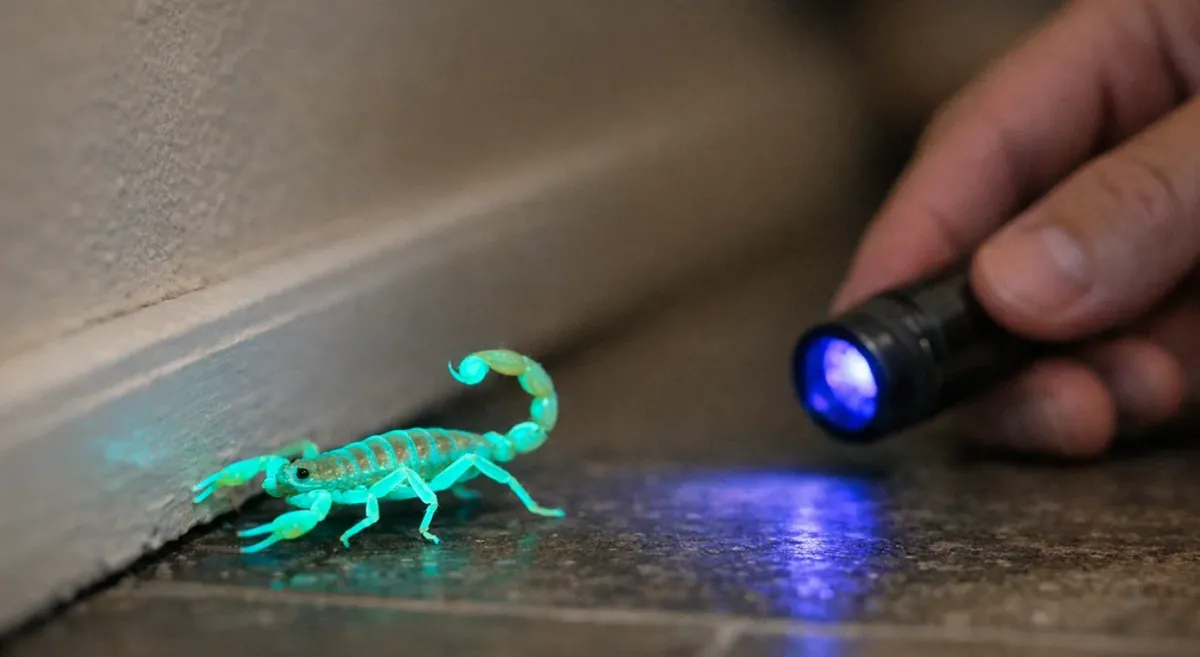
That same night, take a few steps to avoid a repeat. Shake out shoes and slippers before wearing them, check bedding and pull the bed away from the wall, and run a UV flashlight along baseboards where scorpions glow bright green. Clear floor clutter and keep sleeping areas isolated. Before you do all this hunting by hand, read what not to do after spotting a scorpion — and consider adding automatic night monitoring so a scorpion can't sneak up on you again.
How to keep scorpions out of your Laredo home
Keeping scorpions out of a Laredo home takes a layered plan: seal the gaps they use, strip away hiding spots, cut down the insect prey that draws them in, and add night monitoring so you're not caught off guard. Because striped bark scorpions climb textured walls and stay active through the long warm season, no single fix does the whole job.
Seal the entry points scorpions actually use
Start where scorpions actually get in. These are the highest-priority gaps in most Laredo homes:
- Worn door sweeps and threshold gaps
- Cracked or crumbling weatherstripping
- The gap around AC and plumbing line penetrations
- Garage door corners
- Weep holes in brick and block walls
A flat scorpion needs almost no room. For the full rundown, review the top 5 ways scorpions get into your home.
Yard and garage changes that reduce Webb County scorpions
The yard is where the pressure builds. Move woodpiles away from the house and up off the ground, thin out rock borders, trim palm skirts and dead brush, and store garage items in sealed bins raised off the floor. Just as important, reduce the insects scorpions hunt — swap bright white exterior bulbs for warm-toned LED lights that draw fewer bugs, and keep trash areas clean. Fewer insects means fewer scorpions.
Add monitoring so you're not guessing at night
Because scorpions hunt in the dark and hug the walls as they travel, you'll almost never see one arrive — you'll just step on it or find it in a shoe. That's the exact gap Scorpion Alert is built to close. The rented Detectors plug into standard outlets around a room's perimeter, shine 365nm UV light on the floor where scorpions glow, and scan only when the room is dark. When one is detected, you get a photo-verified push or SMS alert within seconds.
Place Detectors near doors, garages, bathrooms, and laundry rooms — the water rooms and entry points where activity concentrates — and you'll catch scorpions early instead of by surprise. Since a past sighting is the strongest predictor of a future one, dropping a Detector in any room where you've already spotted a scorpion is the smartest single move you can make.
In Laredo, scorpions can be hard to spot until you’re face-to-face with one—so it helps to focus on finding them early, not just reacting after a sting. Because scorpions fluoresce under 365nm UV light, Scorpion Alert uses that visibility with always-on monitoring and AI detection to help you pinpoint activity faster; learn more at Scorpion Alert.